Breaking Barriers in STEM: Over 5,000 Students Benefit from Inclusion Initiative

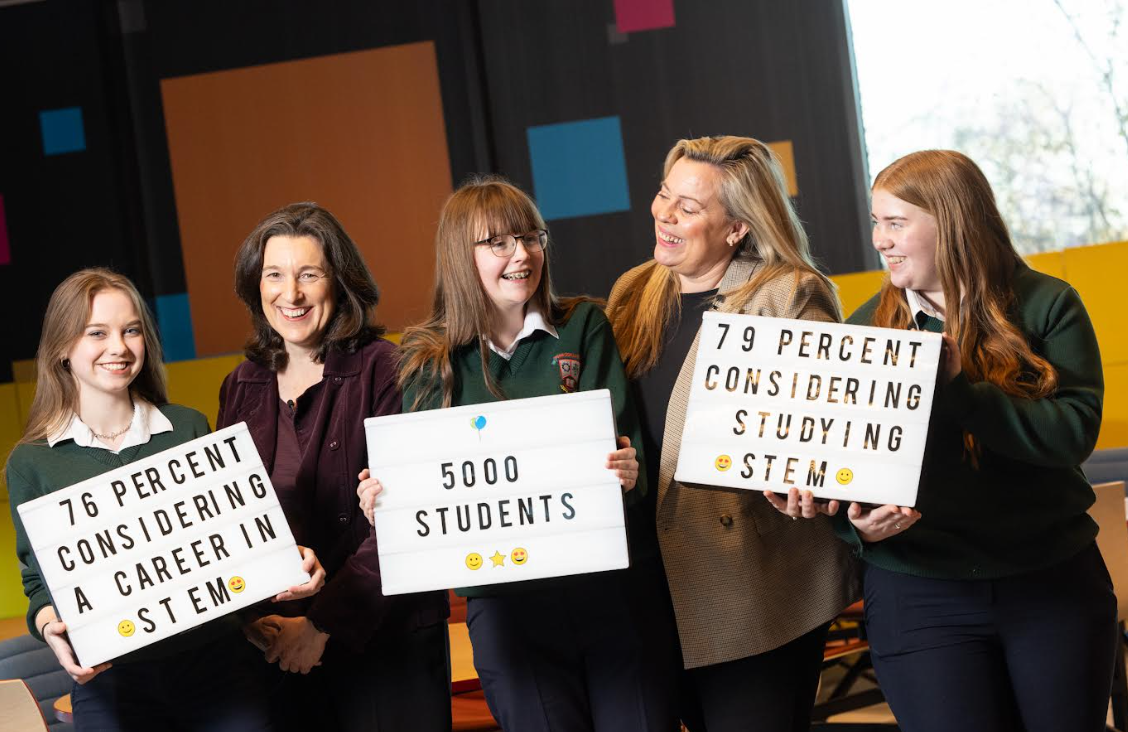
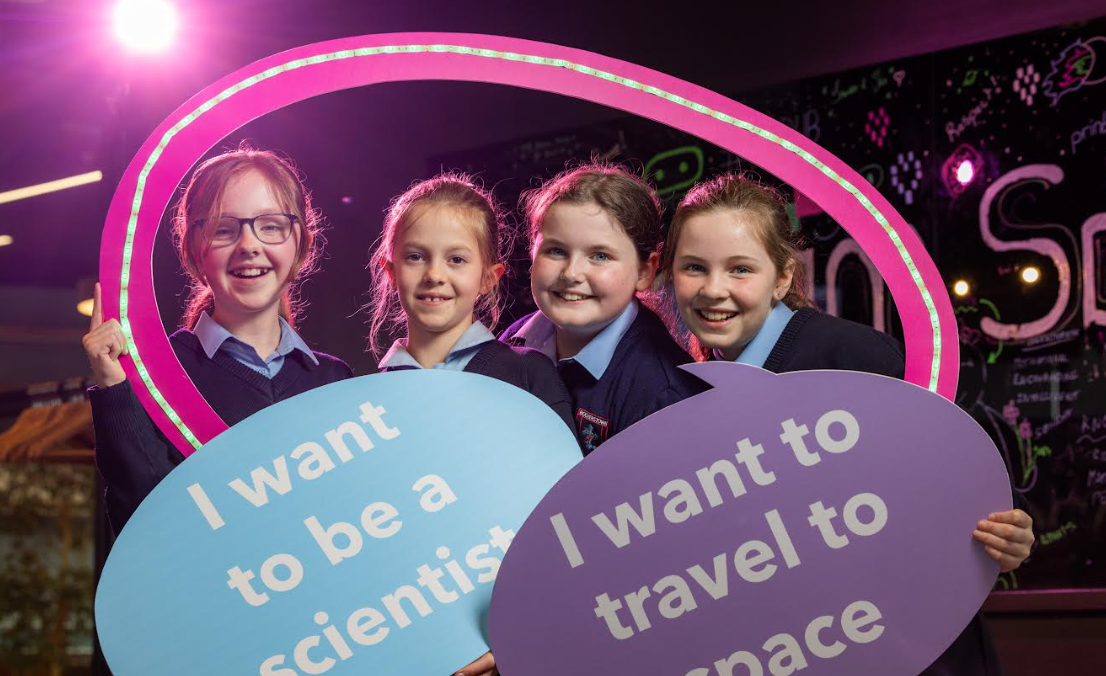
Today, Maynooth University, in partnership with Microsoft Ireland, Taighde Éireann – Research Ireland and the Department of Education, has published the STEM Passport for Inclusion Impact Report which reveals that over 5,000 students from disadvantaged backgrounds have participated in the initiative to date. Notably, 76% of these students are now considering a career in STEM.

The All-Ireland STEM Passport for Inclusion programme is a joint initiative by Maynooth University, Microsoft Ireland, Research Ireland and the Department of Education that addresses inequalities with access to STEM careers among post-primary school students in socially disadvantaged communities. Initially developed as a pilot in 2021, the programme was expanded nationwide in December 2023.

The programme’s innovative approach, which combines a recognised qualification (Level 6 NFQ), education supports, and mentoring from industry role models, provides a unique pathway for female students to progress to third level education and achieve a STEM qualification.

Since its launch, over 5,370 female students from DEIS schools in all four provinces have been engaged, with 50% of participants from rural areas. As part of the programme 1,100 industry mentors have delivered 2,524 mentoring hours. The outcome has been that students from 117 DEIS schools have been empowered to graduate with a university accredited STEM qualification while still in post-primary school.

A survey of programme participants revealed that STEM Passport for Inclusion has positively changed students’ view of STEM with 79% now considering applying to study STEM at third level while 76% are considering a career in STEM.

The programme has also increased students’ knowledge of, and familiarity with, STEM. Only 45% of students reported knowing what STEM was before participating in the programme. This increased to 95% once students completed the programme.

This has helped to reduce the STEM confidence gap between girls in DEIS and non-DEIS schools. Previously, only 3 in 10 girls from DEIS schools were confident they could study STEM in the future while close to 6 in 10 girls from non-DEIS were confident. Once girls took part in STEM Passport for Inclusion, the STEM confidence gap between girls in DEIS and non-DEIS schools was all but eliminated.

While the report details the significant impact of the programme to date, it also includes several informed recommendations to further STEM engagement and the impact of the programme across Ireland.

STEM Impact Recommendations

  • Expand the Programme Across All DEIS Schools: Secure funding to implement the programme in every DEIS school in Ireland – ensure nationwide access to STEM education for disadvantaged students.
  • Provide Necessary Resources to DEIS Schools: Many schools lacked the resources to fully participate in the programme. Supplying these institutions with loaned technology, mobile lab kits, and internet support would help bridge this resource gap.
  • Introduce Funded STEM Work Experience Programmes: Partner with industry to provide work experiences to enhance real-world learning and skill development. This initiative would be particularly valuable for DEIS students, who often lack exposure to STEM career pathways.
  • Fund Longitudinal Research on Programme Impact: Invest in further comprehensive research so stakeholders can gain insights into long-term outcomes, enabling data-driven improvements and enhancing the programme’s sustainability.

The National Skills Strategy identified a need to increase STEM participation to develop the talent and skills that are needed for the future of work. Despite female students accounting for more than half of third-level students, they only make up 35% of STEM students. Moreover, fewer than one in ten graduates in STEM fields are from socioeconomically disadvantaged backgrounds. STEM Passport for Inclusion seeks to address this by ensuring that every student, regardless of background, leaves school STEM prepared.

Speaking about her involvement in the initiative and the success of the programme so far, Dr. Katriona O’Sullivan, Digital Skills Lecturer at Maynooth University, said: “The publication of today’s report represents a milestone in the STEM Passport for Inclusion programme. Since its establishment, I have been lucky to see girls complete the programme with a renewed outlook on their potential and their thoughts about themselves have been transformed by the STEM Passport for Inclusion.

“When building out this initiative, we at Maynooth University set out to develop an evidence based, system solution, to address the underrepresentation of diverse women and girls in STEM. The success of the programme is evidenced by the roll out of the programme to over 5000 girls so far.

“We have been fortunate to receive support from our partners at Microsoft Ireland and Research Ireland throughout this journey. Looking forward, we are excited to work alongside third level colleagues around Ireland as the STEM Passport for Inclusion’s reach expands. With the support of philanthropy and our partners, we are expanding the project from 2025-2027, furthering the program’s positive impact.”

Microsoft is the STEM Passport for Inclusion’s lead industry partner, having contributed €600,000 in match funding to date. In addition, Microsoft’s Dream Space education team co-designed the Level 6-accredited (NFQ) STEM Passport module and has supported the delivery of the STEM Passport curriculum to participating students in Dream Space venues in both Dublin and Belfast. More than 300 of Microsoft’s employees are actively supporting the STEM Passport for Inclusion mentoring programme, alongside other educators and representatives from over 180 private and public sector organisations.

Speaking about Microsoft Ireland’s role in the initiative, James O’Connor, Microsoft Ireland Site Leader and Corporate Vice President Microsoft Global Operations Service Centre, said: “Microsoft Ireland has been involved in STEM Passport for Inclusion since its inception three years ago and we’re extremely proud of the role that the Microsoft Dream Space team has played in the co-design and delivery of the programme. In recent years, mass digitalisation and the era of AI have transformed professional expectations and elevated the importance of the next generation engaging in STEM and AI and pursuing a career in the technology sector.

“At Microsoft, we are passionate about ensuring that every young person, irrespective of their background, has the opportunity to engage in STEM and advancements in technology. STEM Passport for Inclusion does just that. Our involvement in the programme, both from a delivery and mentorship perspective, has been extremely rewarding and has allowed us to open our doors to students who traditionally would not have pursued STEM careers. We’re proud of the impact the initiative has had to date and look forward to working with the team at Maynooth University to continue to drive it forward and reach even more students.”

The project is co-funded by Microsoft Ireland and Research Ireland, the new national competitive research and innovation funding agency and the Department of Education. Dr Ruth Freeman, Director of Research for Society at Research Ireland welcomed the report, saying: “We are delighted to continue our support of this wonderfully successful initiative through our Discover Programme. Research Ireland is committed to empowering women from all backgrounds to access vital routes to STEM careers. I’m so excited to see how these students will contribute and thrive as STEM professionals in the future.”

STEM Passport for Inclusion graduate, Ava Kenny is now a third-year science student at Maynooth University. Commenting on her participation in the programme, Ava said: “Before taking part in the STEM Passport for Inclusion I was unsure if I wanted to pursue a college education, let alone pursue a career in STEM. The realm of science seemed distant and unfamiliar to me, and I didn’t know of anyone working in STEM. From my first day in the programme, I was captivated by the many doors a career in STEM could open for me.

“The STEM Passport for Inclusion guided my path into third level education as I am now studying science at Maynooth University. As I move on to the next stage of my life, I am excited about the prospect of a career in STEM and I know that the lessons I learned throughout the programme will stand to me.”

More details on the programme can be found at: STEM Passport for Inclusion | Maynooth University.

Microsoft announces 550 highly skilled jobs at the cutting-edge of the AI sector in Ireland

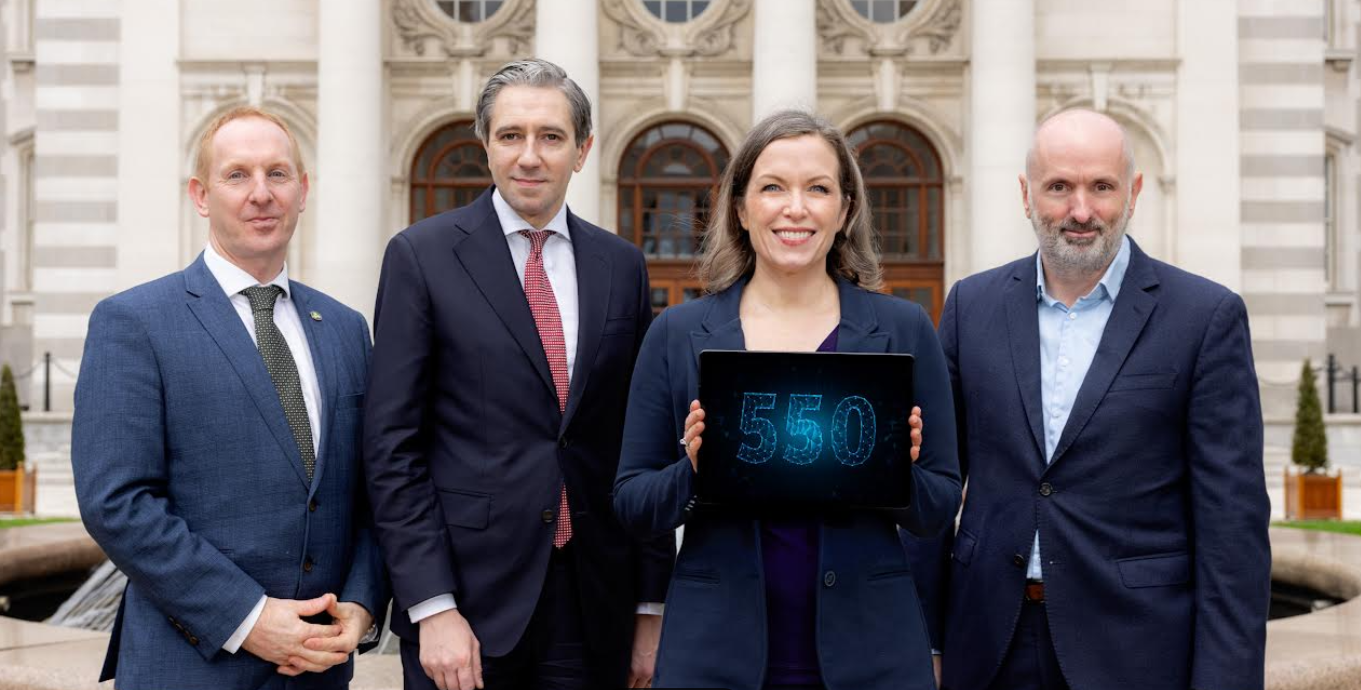
Taoiseach Simon Harris joined James O’Connor, Microsoft Ireland Site Leader and Corporate Vice-President of Microsoft Global Operations Service Centre, and IDA Ireland Chief Executive, Michael Lohan, today to announce that Ireland has been selected as a key location for Microsoft to invest in advancing its global AI innovation. The decision will result in Microsoft adding 550 new Irish based engineering and R&D roles to pioneer the development of new AI technologies.

The investment will see Microsoft, a global leader in the development and use of AI, undertake significant industrial research into AI to develop critical, leading-edge technology in the area of AI and cyber security, which will then be made available to public and private sector organisations all around the world.

Multidisciplinary teams in the areas of Azure Networking & Infrastructure, Business & Industry Copilot, Customer Success Engineering and Cyber Security will be recruited to investigate groundbreaking technologies and the development AI infrastructure that is scalable, responsible, trusted and secure. The new roles will ensure that Microsoft Ireland’s Engineering Hub will have end-to-end AI product development capabilities.

Furthermore, teams will seek to drive new applications for AI across multiple industries and create brand new AI-enabled product offerings and internal solutions for Microsoft, supporting the corporation’s strategic objective to be at the forefront of responsible AI development and cyber security.

This investment will result in an additional 550 new highly skilled jobs at Microsoft Ireland over the next three to four years, across areas such as software engineering, applied sciences, product management, program management, data science, design, technical writing and analytics. 120 of these roles are available to apply for from today in software engineering, applied sciences, security research, product management and program management.

Microsoft first invested in Ireland in 1985 and with the addition of the roles announced today the company will employ more than 6,000 people across a multifunctional campus in Leopardstown, its data centre campus in Grange Castle, and LinkedIn.

This investment is supported by the Government of Ireland through IDA Ireland.

Taoiseach Simon Harris said: “I very much welcome Microsoft’s announcement today.  Not only does this highlight Ireland’s attractiveness as an investment destination, it also promises a significant boost for the AI ecosystem in Ireland. Fostering AI skills and advancing capabilities in the field are core to the Government’s National Artificial Intelligence Strategy and this project will help develop new specialist skills and expertise, thereby positioning Ireland for further investment in this critical area.”

Tara Roth, Microsoft Ireland Executive Site Sponsor and Corporate Vice President, Engineering, Microsoft said: “Today we are delighted to announce a strategic investment in our Irish operations that will strengthen our AI capabilities globally. These new roles span many of Microsoft’s future focused key product areas and services including Security. Security is Microsoft’s top priority, and our Secure Future Initiative (SFI) is the largest cyber security project in history. We’re delighted that these roles will significantly contribute to both Microsoft’s AI development and our security efforts.”

James O’Connor, Microsoft Ireland Site Leader and Corporate Vice President of Microsoft Global Operations Service Centre said: “AI is one of the most transformative technologies of our time – it will unlock profound possibilities for people, industry, and society. At Microsoft, we are delighted to be at the forefront of the AI era – delivering safe, secure and ethical solutions to all industries that will accelerate breakthroughs in healthcare, education, infrastructure and more for the benefit of society as a whole.

“Through this investment, we are building on our almost 40-year presence in Ireland, which has been characterised by continuous investment, transformation and the diversification of our operations from a manufacturing site to a significant international Hub for Microsoft providing software development, engineering, data centres, finance, operations, and sales and marketing for EMEA. Ireland is undoubtedly an established hotbed of engineering and cyber security talent and leadership, with Irish universities producing some of the very best gradates, and this is a significant contributing factor to both our success and continued investment here.

“The creation of 550 new roles enables us to further strengthen our presence here in Ireland and take AI and cyber security innovation to the next level.”

CEO of IDA Ireland Michael Lohan said: “Ireland continues to prove itself as a location where the world’s most innovative AI companies build groundbreaking technologies.  In line with government’s ambitions, by supporting innovative R&D projects like the one announced by Microsoft today, we are helping to shape the future of AI in Ireland and to harness AI as a driver for future economic growth.  This investment by Microsoft is set to deliver exceptional economic benefit alongside 550 highly skilled jobs at the cutting-edge of the AI sector in Ireland.

“Today’s announcement also signals Microsoft’s enduring commitment to Ireland as the location of choice for pioneering, innovative and transformative projects of scale. IDA Ireland and Microsoft have built a longstanding, trusted partnership over four decades of corporate expansion and growth here and we look forward to our continued partnership throughout this very exciting project.”

For more information on the open roles, please visit our careers page.

Microsoft Dream Space engages 300,000 young people in digital skills

At the second annual Microsoft Dream Space Showcase held in Dublin to mark the end of school year, Microsoft announced that it has engaged 300,000 young people and teachers in its immersive Microsoft Dream Space STEM experience which has been designed to help young people pursue their interest in STEM and shift their perceptions about the role technology can play in their future career choices.

This important milestone comes just 18 months after the company pledged to provide almost 1,000,000 students and their teachers across the island of Ireland with the opportunity to develop their digital and AI skills.

Over the past year, the company has introduced a suite of new programmes, which has helped to broaden the reach of Microsoft Dream Space. The company joined forces with RTÉ Learn to present Microsoft Dream Space TV: brAIn_waves – a series exploring the evolution of AI which enabled primary and post-primary students to develop their AI literacy.

The Microsoft Dream Space hub in Leopardstown also hosted the largest ‘Capture the Flag’ cybersecurity event for post-primary school students in Ireland, which sought to inspire the next generation of cyber security leaders.

To address inequalities in accessing STEM careers among post-primary students in socially disadvantaged communities, Microsoft Ireland, together with Maynooth University, Science Foundation Ireland and the Department of Education expanded the STEM Passport for Inclusion initiative nationwide with the ambition to engage a further 5,000 students.

The second annual Microsoft Dream Space Showcase held at One Microsoft Place this week brought together over 400 students from rural areas to demonstrate the many ways in which their digital skills can help to solve some of today’s sustainability challenges.

Other Microsoft Dream Space innovations introduced within the past 12 months include the expansion of the Dream Space Ambassador and Dream Space LIVE programmes, the launch of the Dream Space Minecraft Teacher Academy, the relaunch of the Dream Space Digital Academy and the roll out of bespoke Dream Space events for people with disabilities.

The continued expansion of Microsoft Dream Space builds on Microsoft’s recent commitment to help ‘Skill Up Ireland’ by providing people of all ages, experiences and ambitions with the opportunity to develop their AI fluency and skills.

James O’Connor, Microsoft Ireland Site Leader and Vice-President Microsoft Global Operations Service Centre, said: “As part of our commitment to Skill Up Ireland for the era of AI, we’re incredibly proud to have engaged 300,000 young people from across this island in our Microsoft Dream Space experience.

“With digital technology transforming our lives, work, and education, it’s crucial that every student, regardless of socio-demographics, can engage in STEM learning as early as possible and prepare for our AI future. That’s why 18 months ago, we committed an additional €3 million investment in our innovation and education hub, Microsoft Dream Space, over four years.

“As a result, we’ve been able to significantly expand our Dream Space programming and introduce new innovations to broaden its reach and impact. The significant increases in STEM interest and confidence that we’re seeing as a result, particularly among girls and students from economically disadvantaged backgrounds, highlight the power of the programme.

“Through the continued growth of Microsoft Dream Space, I’m confident that we can provide every student on the island of Ireland with the chance to engage in STEM and AI learning and empower the next generation of digital leaders.”

Speaking about her experience of the Dream Space Student Ambassador programme Isobel Fay, student from Our Lady of Mercy Convent School in Booterstown, said: “Since taking part in the Dream Space Ambassador programme, I’ve learned so much about new technologies like AI and how they can be used to solve different problems in society. All the training has been really helpful in boosting my confidence to speak to students and teachers at my school in Booterstown about all the interesting possibilities that we can use technology for. I’m looking forward to more Dream Space sessions in the future and continuing to learn about the latest developments in technology.”

Reflecting on the engagement of her students in the Microsoft Dream Space TV: brAIn_waves series Nathalia McCarthy a teacher from Grange Community College, Donaghmede in Dublin said: “I loved how the series was linked to the curriculum, so we were able to add it so easily to what we were already doing in the classroom. I have never seen enthusiasm like it in 1st years, 2nd years and our TY students.”

Research undertaken by Maynooth University has indicated the positive impact of Microsoft Dream Space on those who have taken part. Findings show a 42% increase in girls likely to pursue STEM careers and a 40% increase in boys with similar aspirations. Notably, socio-economically disadvantaged girls demonstrated a 30% increase in career aspirations in STEM fields and an 80% boost in confidence regarding their STEM capabilities.

Educators eager to bring this transformative STEM education experience to your students, subscribe to the monthly Dream Space newsletter to stay updated on the latest offerings and opportunities. Join us at aka.ms/dreamspacenews.

Ruth McGuinness wins Microsoft Power Women Award 2024

Microsoft has revealed that Ruth McGuinness, Head of Data and AI at Kainos, headquartered in Belfast has won the Microsoft Power Women Award 2024 in Ireland.

The Microsoft Power Women Awards are part of Microsoft’s ongoing commitment to inspire, promote and invest in a new generation of women tech talent. The awards shine a spotlight on some of the amazing women spearheading greater diversity and inclusion throughout the Microsoft Partner network.

In the second year of the awards, the programme expanded its reach covering Europe, the Middle East, and Africa, with nearly 400 applications from exceptional women who have made significant contributions to technology, and diversity and inclusion.

McGuinness is a prominent leader in the field of AI, overseeing one of Ireland’s largest AI teams with 150 members generating millions of pounds annually through delivery of AI technology programmes in both public and private sector organisations across Ireland, the UK, Europe, and North America. Her focus includes developing AI tooling that is robust, explainable, and trustworthy and advocating for ethical AI adoption.

Passionate about bridging the gap between academic research and industry, McGuinness is also the primary industry partner of the AI Research Centre (AIRC) at Ulster University, supporting 100+ AI researchers in trusted AI applications. She also supports the development of more diverse AI talent as a curator of AI CON, Ireland’s largest annual AI conference, while being a strong advocate for the robust regulation of AI across other public forums, both local and international.

Accepting the award, Ruth McGuinness said, “I’m very grateful to Microsoft Ireland for honouring me with this prestigious award. It is humbling to be included among such an incredible and inspiring cohort of powerhouse women in the Microsoft ecosystem across Western Europe.

“I also welcome the opportunity of accepting an award for my career during a period of extended maternity leave with my second child – it’s great to see how much progress has been made in terms of gender equity despite how much more we need to achieve!

“Women face a multitude of barriers when trying to have children and a career. While we know that only 26% of technology roles are held by women, further data shows that women often then depart those technology careers at this important stage in their lives, due to inadequate parental leave benefits, expensive childcare systems and a lack of access to good quality flexible working.

“The IT industry needs to continue to do more, to not only attract, but also to retain young women, through ensuring job roles come with an inclusive culture, flexible working hours, flexible roles, equity and fairness.

“I feel passionately about the mantra that “you can’t be what you can’t see” and believe that elevating diverse role models for women – such as through Microsoft’s Power Women Award – plays an incredibly important role in empowering others coming into the industry” – said Ruth McGuinness, Head of Data and AI at Kainos.

McGuinness will join the other 18 winners at the Microsoft Women’s Leadership Program 2nd Edition, a customised programme developed by Professor Jennifer Petriglieri at the INSEAD Business School in Fontainebleau, France.

Details of the Microsoft Power Women Awards can be found at: https://aka.ms/MicrosoftPowerWomenAward

Microsoft agrees 30MW renewable energy deal with SSE Renewables and FuturEnergy Ireland

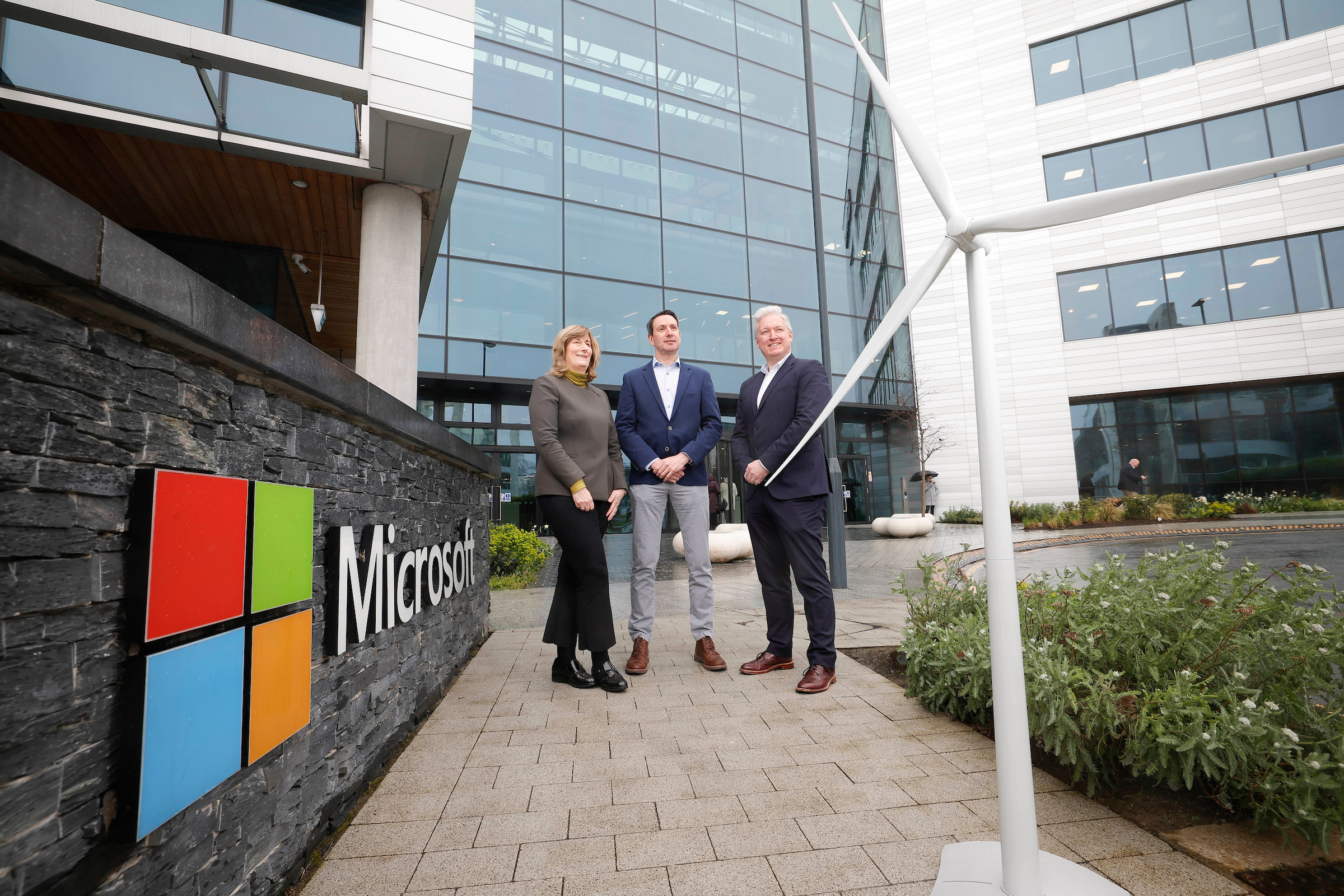
Microsoft announced today that it has entered into a long-term Corporate Power Purchase Agreement (CPPA) with SSE Renewables and FuturEnergy Ireland that will add 30MW of wind energy capacity to Ireland’s electricity grid by way of the newly commissioned Lenalea Wind Farm near Letterkenny, County Donegal.

The renewable energy Corporate PPA secures a sustainable route to market for one of Ireland’s newest onshore wind farms, which was jointly developed by SSE Renewables and FuturEnergy Ireland. SSE Renewables is part of FTSE-listed SSE plc, while FuturEnergy Ireland is a Coillte-ESB joint venture.

Under the terms of the Corporate PPA, the renewable electricity produced by the seven Vestas V117-4.3MW onshore wind turbines at Lenalea Wind Farm will contribute towards Microsoft’s goal of powering its data centre operations with 100% renewable energy by 2025.

Today’s announcement is additional to 900MW of renewable energy CPPAs that Microsoft announced in November 2022. Of that capacity, more than 216MW of onshore wind and solar energy projects have already reached commercial operation, delivering clean energy to Ireland’s grid, with a further 250MW due to reach commercial operation this year.

This agreement is the first long-term Corporate PPA to be jointly entered into by co-development partners SSE Renewables and FuturEnergy Ireland.  CPPAs, such as this one, provide important routes to market for renewable energy developments, and play a valuable role in enabling the development and accelerated delivery of renewable energy generation to underpin Ireland’s decarbonisation targets.

The deal with Microsoft will also provide for a Community Benefit Fund of approximately €150,000 per year, equivalent to €2 for every megawatt hour generated by the project. The allocation of funds by way of annual grants will be overseen by a locally appointed Community Committee, which has already been established. A funding strategy will be developed in conjunction with the Community Committee to inform and shape the structure of the fund.

Today’s announcement follows the completion of construction at Lenalea in December 2023. The 30.1MW onshore wind farm is now fully operational, generating renewable electricity for export to the national grid, and contributing towards Ireland’s 2030 targets for onshore wind.

Eoin Doherty, Vice President, EMEA Regional Leader, Microsoft Cloud Operations + Innovation, said: “At Microsoft, we are committed to playing our part in supporting the decarbonisation of energy grids in markets in which we operate data centres. With the Lenalea Wind Farm achieving commercial operations, we are taking another important step on our journey to achieve 100% renewable energy supply and support wider efforts to add clean energy capacity to Ireland’s energy grid.”

Stuart Donnelly, Director of Corporate Power Purchase Agreements, SSE Renewables, said: “Securing our first long-term Corporate PPA for new onshore wind in Ireland is a satisfying milestone for SSE Renewables and our development partner FuturEnergy Ireland. We are pleased to support Microsoft’s climate and renewable energy goals, while delivering a meaningful contribution to Ireland’s energy targets and security of supply. Working together we will also deliver a positive socio-economic impact through a substantial, locally managed community benefit fund. This agreement is an excellent example of sectors collaborating in Ireland to meet infrastructure and sustainability objectives, supporting the accelerated delivery of renewable energy, which will be vital in the years ahead to enable renewable energy investments and the delivery of 2030 and longer-term net zero targets.”

Mary Lynch, Portfolio Director at FuturEnergy Ireland, said: “Lenalea represents the first project delivered by FuturEnergy Ireland and the very first step towards achieving our 1GW 2030 target. It is also the first of seven projects which we expect to deliver in partnership with SSE Renewables.

“Corporate PPAs are an important part of the Irish electricity market and we are very happy to support Microsoft’s commitment to carbon-free energy targets. Such collaboration and partnerships are critical if Ireland is to meet its climate action goals. We are also looking forward to maximising the local impact of the Community Benefit Fund, which is now live.”

Delivery of the Lenalea Wind Farm represented a total capital investment of more than €40 million by SSE Renewables and FuturEnergy Ireland, providing a significant economic boost locally. Construction and delivery of the project helped to support County Donegal’s economy and employment, with over 150,000 working hours recorded by regional contractors employing a significant local workforce. The positive economic contribution from the project to the region is expected to continue during the wind farm’s operation through a combination of local operational spend as well as annual contributions in commercial rates payments to the local authority.

Microsoft Ireland to mark Girls in ICT Day with live event to inspire participation in STEM

To mark International Girls in ICT Day, Microsoft is hosting a virtual Dream Space event for primary school students across Ireland to inspire them about the opportunities unlocked through STEM and emerging technologies, such as AI.

The unique event will be streamed live from Microsoft Dream Space and feature learning sessions delivered by two fifth class Dream Space Student Ambassadors from Alexandra College, Dublin to peers across the country. Every primary school across the island of Ireland is invited to join the free event on Thursday 25th April between 10am and 12 noon, with the programme suitable for primary school students from third to sixth class (RoI) or P4 to P7 (NI). Teachers can register at the following link to reserve a place for their class.

The immersive event will provide an engaging discussion on the importance of strong women role models in STEM and include an interactive educational experience for students to enhance their STEM skills.

Leadership’ is this year’s Girls in ICT Day theme, which closely aligns with the aims of Microsoft’s Dream Space Ambassador Programme, which is focused on advancing STEM leadership amongst young women. The programme helps students develop leadership and digital skills while promoting STEM education within their schools and communities. More than 1,300 Dream Space Ambassadors have graduated from the programme to date, representing 159 schools across the island of Ireland. Each Ambassador completes a series of virtual training sessions during the academic year as part of the programme, equipping them with the knowledge and skills to become STEM leaders in their local community and support, train, and mentor other students and teachers about the benefits of STEM.

The Ambassador programme is one of many that Microsoft Dream Space offers as it strives to provide almost one million students enrolled in primary and secondary schools across the island of Ireland with the opportunities to learn and develop the STEM and AI skills they will need to become the digital leaders of tomorrow.

Since its launch in 2018, over 100,000 girls across Ireland have engaged with Dream Space, helping to encourage more young women to consider a career in STEM.

Dream Space is one of a number of education and skilling programmes that Microsoft is delivering as part of its ambition to ‘Skill Up Ireland’, providing people of all ages, experiences and backgrounds with the opportunity to upskill for an AI enabled future.

James O’Connor, Microsoft Ireland Site Lead and Vice President of Microsoft Global Operations Service Center, said: At Microsoft, we believe it’s crucial that everyone has the opportunity to thrive in the workplaces of tomorrow. With women currently comprising less than a third of the ICT workforce in Ireland, it’s clear that we need to inspire change among the next generation of the workforce and encourage more young women to consider a career in STEM.

“As an industry leader, we believe we have an important role to play in helping to educate young women from a diverse range of backgrounds and communities about the opportunities provided by STEM and provide them with pathways to develop the digital skills to forge a successful career in technology. That’s why we continue to expand and strengthen Microsoft Dream Space, our ambitious programme that is providing every student across the island of Ireland with the opportunity to engage in STEM learning. Since its launch, over 100,000 girls have engaged with the programme, providing an important avenue for more young women to engage with digital technologies and empowering them to consider a career in STEM.

“This week’s live Dream Space event recognises Girls in ICT Day and provides the opportunity for students across the length and breadth of the country to engage in and enjoy a STEM focused lesson and start to develop the skills that will be essential for tomorrow’s leaders. I would encourage every primary school across the country to consider joining the free event this week.”

Speaking ahead of Girls in ICT Day, Isobel Fay, Dream Space Student Ambassador from Our Lady of Mercy Convent School in Booterstown, said, I’m really excited to take part in the Dream Space Girls in ICT event this week and learn about the importance of technology. Since taking part in the Dream Space Ambassador programme, I’ve learned so much about new technologies like AI and how they can be used to solve different problems in society. All the training has been really helpful in boosting my confidence to speak to students and teachers at my school in Booterstown about all the interesting possibilities that we can use technology for. I’m looking forward to more Dream Space sessions over the coming months and continuing to learn about the latest developments in technology.”

For more information and to register for the Microsoft Dream Space Girls in ICT Day event on Thursday 25th April from 10am – 12pm, please visit: https://www.microsoft.com/en-US/dreamspace/ireland/upcoming-events/.

Microsoft rolls out new initiatives to help skill up rural Ireland for the era of AI

Minister for Trade Promotion, Digital and Company Regulation, Dara Calleary TD, joined Microsoft at a Connected Hub in north Mayo as it announced the rollout of AI Skill-Up-A-Thons to rural communities across the country and AI masterclasses for businesses in the Kerry region. The rural skilling initiatives are a key part of Microsoft’s ambition to ‘Skill Up Ireland’ providing every person in the country with the opportunity to skill up for the era of AI.

The AI Skill-Up-A-Thons are designed to help equip those with little or no understanding of AI with the basic knowledge, skills and competencies in AI. Those who complete the free, 4-hour course will earn an industry recognised Career Essentials Certificate in Generative AI and gain access to LinkedIn Premium to help support those looking to develop a career in AI.

AI Skill-Up-A-Thons are being delivered in partnership with FIT (Fastrack into Information Technology) and with the support of local authorities, ETBs and the large network of Connected Hubs throughout the country.

Learners will be given the opportunity to take part in a series of AI Skill-Up-A-Thons which are taking place in Counties including Cavan, Galway, Kilkenny, Mayo, and Tipperary in the coming weeks with other locations to be announced in the coming months.

The first AI Skill-Up-A-Thon was held at the Connected Hub in Knockmore in north Mayo, where Minister Calleary joined learners as they developed the practical and transversal skills necessary to thrive in an AI age and secured their Generative AI certification.

Microsoft has also announced that it will be rolling out a series of AI masterclasses for businesses in Munster focusing on providing business leaders in rural Ireland with the skills and insights to adopt AI within their organisation.

Developed in collaboration with the RDI Hub, the AI masterclasses will be delivered both in-person and online from now until September.

Speaking at the inaugural AI Skill-Up-A-ThonMinister of State for Trade Promotion, Digital and Company Regulation Dara Calleary TD, said: “I welcome the announcement by Microsoft that it is providing new AI upskilling and reskilling opportunities in communities across rural Ireland, including here in Mayo. AI tools and technology have significant potential to transform how we work and do business. But to fully unlock their benefits and meet the ambition of our National AI Strategy, individuals and businesses must start to develop in-demand AI skills and capabilities. It is only by working together across Government, industry, and the education sector that we can demystify AI and ensure Ireland’s workforce has the AI skills that will be needed now and into the future.” 

James O’Connor, Microsoft Ireland Site Leader and Vice-President Microsoft Global Operations Service Centre, said: AI has the potential to empower people and organisations across the country but it’s critical that everyone, everywhere has the skills to harness its benefits. Last October, we launched our national AI skilling programme to help give everyone in Ireland the opportunity to upskill and reskill. One of our key ambitions as part of the programme is to bring AI skilling directly to people, communities and businesses in rural Ireland and ensure they are given equal opportunity to engage in AI.

 “That’s why today we’re rolling out the first-ever AI Skill-Up-A-Thons across rural Ireland. Through these new AI learning pathways, we want to empower people of all ages, backgrounds and experience with the skills and knowledge to succeed in an AI-enabled economy. Our new AI masterclasses, in collaboration with the RDI Hub in Kerry, will also help businesses develop the tools and skills to adopt AI at speed and support growth into the future.

 By providing these AI rural skilling initiatives, as well as our significant investment in skills more broadly, we will continue to play our part in helping to Skill Up Ireland for the era of AI.”

Danielle Barr, Director of Training & Employment Services at Fastrack into Information Technology (FIT) said: “We’re delighted to be working with our long-term partner, Microsoft, on the delivery of AI Skill-Up-A-Thons across the country. AI is such a powerful tool. But we need to ensure that every person, at all levels, can access and most importantly understand how it can benefit their education and professional journey. By rolling out the AI Skill-Up-A-Thons in Connected Hubs and other venues in rural Ireland, we can ensure that every person is given the opportunity to learn about AI and understand its importance.”

Speaking about her experience in taking part in the AI Skill-Up-A-Thon in north Mayo, Sandra Hennigan said: “AI is everywhere these days, and it is important that we all understand this powerful digital technology and its potential. Taking part in Microsoft’s AI Skill-Up-A-Thon in a local Connected Hub in north Mayo provided the perfect chance to do just that.  As well as gaining new insights into AI, I believe the knowledge and skills I gained during the AI Skill-Up-A-Thon will be very valuable in my own job and help to boost my productivity and creativity. The instructors were incredibly helpful and helped open my eyes to the possibilities of AI in my own daily life. I now feel like I have the confidence to start applying AI tools in my work and I would encourage everyone to use the opportunity to begin developing their AI skills today.”

Liam Cronin, CEO, RDI Hub said: “The RDI hub has always had a powerful connection with the topic of Artificial Intelligence. The RDI hub building itself is named after and dedicated to Professor John McCarthy, as a tribute to the Stanford University computer scientist who was one of the founders of the discipline of artificial intelligence and his father was born in Cromane, near Killorglin in Co Kerry. From our very first year in business, we have run an annual two-day artificial intelligence summer school focusing on both core and applied research, and we are keen to continue this momentum. The collaboration with Microsoft helps us deliver exceptional AI masterclasses at scale across Munster and we look forward to continued growth and meaningful contributions to the AI landscape in 2024 and beyond.”

To learn more about the AI Skill-Up-A-Thons taking place across the country and to register your interest, visit: https://fit.ie/skillsforjobslearningpathways/.

Ex-Microsoft execs launch AR headset and partner with TeamViewer

The popular global leader in remote IT support TeamViewer has signalled its shift to augmented reality (AR) having struck a strategic partnership with AR startup Almer. This news comes hot on the heels of Apple’s entry into the AR market with the launch of their Vision Pro headset next month.
The Almer Arc headset enables collaboration with remote individuals as if they were physically present and augmentation of the wearer’s environment with relevant information for pointing out objects in reality. Almer is also announcing the launch of Arc 2, it’s latest headset which features a 25MP camera, beamforming microphones, built-in speakers, and a holographic see-through screen with 8-hours battery life. As opposed to Apple’s Vision Pro, the Almer Arc 2 is a mere 138 grams, 4 times lighter. Thanks to the completely transparent display of the Arc 2, it can be employed in mission critical task and changing environment, while the Vision Pro is for a static interior environment.
This partnership will enable TeamViewer to expand into untapped opportunities with industrial companies. Meanwhile, Almer will be able to scale its operations and advance AR adoption.
Mei Dent, Chief Product & Technology Officer at TeamViewer: “Approximately 80 percent of the global workforce does not work at a desk but at a company’s frontline, and most of them currently benefit very little from digital transformation. There is immense potential for efficiency and productivity gains by enhancing the frontline work with digital tools and connecting this huge part of the global workforce to their companies’ backend system. Our joint offering with Almer allows companies to explore how Augmented Reality opens new opportunities for business and operations and massively increases the speed of their digitization efforts.”
Almer Arc AR Headset – techbuzzireland
Almer was founded in 2021 by Sebastian Beetschen and Timon Binder. Sebastian was working on the Hololens 2 at Microsoft Research and felt the AR opportunity extended beyond clunky helmet-like apparatus. He felt he could make a more compact, comfortable, and affordable AR device and teamed up with Timon, a former jet fighter pilot, who recognized the potential. Timon brought his experience with AR jet fighter helmets that led to the creation of the Almer Arc headset.
Sebastian Beetschen, CEO and co-founder of Almer commented: “Our headset is much like a jet fighter visor, mounted directly in front of your eyes, featuring a transparent, see-through screen. The Almer Arc is a lightweight, compact, and easy-to-use AR headset. When a problem arises, the frontline worker takes the Almer Arc and contacts a remote expert, who can see and hear what the worker experiences. The expert identifies the issue, highlights objects, and displays documentation in the worker’s view, simulating a collaborative, in-person experience.”
Today, Almer has 21 customers, including Switzerland’s largest defense contractor, which uses the Almer Arc to service fighter jets remotely in the US, as well as several international machine manufacturers. Almer is venture backed startup having raised $7.6m to date from strategic investors including engineering giant Stena and manufacturing leaders Helbling among others. The Almer team consists of top talent from the fields of computer vision and microtechnology, from renowned Swiss institutes of technology, ETH and EPFL.
On the launch of Arc 2, Sebastian Beetschen commented: “We have learned a lot on how to make the headset super adaptable and users can set their preferences on how they wear it. Something new entrants like Apple still have to learn. Not only this, Arc 2 comes with an improved wide angle 25MP camera that can see and understand everything that you see and zoom into tiny details as never before. This makes it possible to understand the environment and assist, enabling superhuman capabilities”.
The global augmented reality market is projected to grow from $62.75 billion in 2023 to $1,1 trillion 2030, at a CAGR of 50.7%. Within this trend, the market for AR headsets is exponentially increasing over the next few years and is set to hit $120 billion in 2026. Initially, Almer is focusing on the Swiss industry and will soon expand into the neighboring DACH region before going global.
Sebastian Beetschen added: “The cost saving potential of using AR to service all installed machines for the 10 largest tooling-machine manufacturers in DACH alone accounts for £7.9 billion per year**. So, the opportunity is very real”.

Microsoft Announces details of new AI Dream Space TV Series: brAIn_waves

Today Microsoft announced details of a newly produced Microsoft Dream Space TV series: brAIn_waves. The series, which is freely available online from today via rte.ie/learn, is designed to develop both AI (Artificial Intelligence) literacy and the skills required for the era of AI in young people.

Microsoft Dream Space TV is an innovative initiative that combines the expertise of the Microsoft education team with RTÉ’s commitment to engage young people in the world of technology and, in this case, AI.

This latest series of Microsoft Dream Space TV is the fifth to be produced in collaboration with RTÉ Learn, with previous episodes focusing on developing digital skills through themes of inclusivity, sustainability, and health and wellbeing.

brAIn_waves

brAIn_waves is comprised of six episodes, two of which have been designed for upper primary school students and four for post primary students. For upper primary school students, the two-part series explores computational thinking, algorithms, data, and how AI works at a basic level. For post-primary students, the four-part series explores the fundamentals of AI and its impact on our everyday lives with specific lesson areas including algorithms, data, machine learning, and ethics.

Post-primary students will have the added opportunity of participating in the Microsoft Dream Space and RTÉ Learn brAIn_waves series competition and will be in with a chance of winning incredible team prizes and competing for the All-Ireland title. The competition element simply focuses on putting the learnings from each episode into practice. Students will be encouraged to work in teams and develop their own AI for Good solutions, which they can then enter into the national brAIn_waves competition. Entries will be evaluated on innovation, data collection, machine learning, impact, creativity, and ethics. 20 teams will win a prize for their school and one overall winner will take home the grand prize and brAIn_waves All-Ireland Title.

Microsoft’s Commitment to Skill Up Ireland
This new online series builds on Microsoft’s recent commitment to help ‘Skill Up Ireland’ for an AI future by way of its national AI skilling programme. The programme is comprised of three initiatives targeted at providing access to industry recognised certificates for adult learners, including in Generative AI, and Microsoft Dream Space AI certificates for student learners.

Commenting on today’s announcement, James O’Connor, Microsoft Ireland Site Leader and Vice-President Microsoft Global Operations Service Centre: “We’re delighted to join the team at RTÉ Learn to announce the fifth series from Microsoft Dream Space TV – brAIn_waves. The series’ focus on AI is particularly important given the technology itself is central to many discussions across business, our education sector, and wider society. Through our STEM education experience, Microsoft Dream Space, we are helping the next generation to develop the skills that are required to succeed in our digital society and economy. AI is no longer a future technology, it is rapidly becoming accessible to all, and therefore it’s really important that we seek to immerse students in all things AI, helping to develop their understanding of and skills in this technology“Our commitment at Microsoft to empower people of all ages, backgrounds and experiences to gain the skills that are required to participate in our AI-enabled economy is the driving force behind our national AI skilling programme, which we launched late last year. As part of this commitment, we are providing every student across the island of Ireland – almost 1 million in total – with the opportunity to engage in Dream Space, our STEM-based learning experience.

“Our aspiration is that teachers and students leverage this free learning resource to bring AI to life in classrooms around the country. Critically though, I hope at the end of the series that the students are inspired to learn more about AI and cultivate their skills in this area. Congratulations to everyone involved in making this series a reality.”

Speaking about the initiative Suzanne Kelly, Group Head of Children’s & Young People’s Content at RTÉ said: “RTÉ are excited to once again team up with Microsoft Dream Space, this time to explore the latest frontier in technology – AI.  AI technology touches almost every aspect of our lives and is continually evolving at breakneck speed, this incredibly timely series showcases how best to harness and understand where AI is going next.

“The Dream Space team have created informative, thought provoking, free learning materials to be used in classrooms across Primary and Post Primary schools and RTÉ Learn are delighted to work with Dream Space to deliver these resources.”  

Microsoft Dream Space TV series: brAIn_waves is available from today via rte.ie/learn. A support guide for educators is being made available to support the delivery of the episodes to students and young people in classroom settings.