LinkedIn Data Shows 1 in 10 Jobs Allow Staff To Work From Home

Ireland continues to lead the way for flexible working according to new LinkedIn data published today, which saw the country ranked first for the availability of remote roles, with 9.1% of job postings on the platform in August. Ireland also ranked second in Europe for hybrid jobs, with 37% of jobs postings on LinkedIn categorised as hybrid working, closely behind the United Kingdom (39.3% share of all job postings.) Remote roles also remain some of the most competitive jobs on LinkedIn, making up 15.4% of job applications in EMEA, with Ireland seeing even greater level of demand at 20.1%.
Women faced with a ‘double edged sword’ as a result of flexible work
While flexible working has brought about many benefits for professionals in terms of work life balance, a new research paper published by LinkedIn has revealed that it also presents a double edged sword for women. LinkedIn international data shows that men consistently advance faster than women, with 10% of men promoted within 65 months, compared to 74 months for women.
The research revealed that this gap varies depending on flexible working, with on-site roles offering the fastest route for a promotion. Flexible arrangements reduce this gap, but only because progression slows for both men and women. On site roles saw 10% of men promoted within 64 months, with 10% of women achieving this within 68 months. Hybrid roles, however, saw delayed promotional opportunities, with men and women being promoted within 70 months and 72 months respectively. So while flexible work roles lead to greater parity between genders, staff based on site are promoted faster at the expense of slower progression for women.
Demand for AI talent continues to soar
LinkedIn’s data continues to highlight soaring demand for AI talent. AI engineering roles now represent nearly 7% of all technical job postings on LinkedIn – a 63% year-over-year increase. Demand is not limited to technical roles – knowing how to work with AI agents is the fastest-growing skill in 2025, and AI literacy capabilities such as prompt engineering have surged more than 70% in postings across fields like marketing and design.
Commenting on the latest data, LinkedIn Ireland Country Manager Cara O’Leary said: “Our data has consistently shown that Ireland continues to lead the way for remote and hybrid work opportunities, demonstrating how flexibility has become firmly established as a defining feature of our jobs market. Professionals are clearly embracing the benefits of choice in how and where they work, with Ireland seeing even stronger demand for remote roles than our European peers. This shows just how fundamental flexible working has become to attracting and retaining top talent, as employers continue to adapt to shifting expectations.”
“At the same time, our research highlights that flexible working is not without its challenges – particularly for women, who continue to face slower progression in the workplace. While hybrid arrangements help to narrow the gender promotion gap, they do so largely by slowing advancement for everyone. These findings underline the importance of companies being intentional about how they support career development in flexible environments, while also preparing for the next wave of change as AI reshapes roles and skills across industries.”

Building a Full-Funnel LinkedIn Ad Strategy: What Most Marketers Miss

Why LinkedIn Demands a Funnel-First Mindset

LinkedIn’s strength as a B2B advertising platform lies in its precision: you can reach decision-makers, influencers, and niche professionals with clarity you won’t find on other social channels. But that precision often leads to a tactical blind spot. Too many marketers focus only on bottom-funnel activity—pushing for demos, sign-ups, or calls—without priming the audience beforehand. The result? Weak conversions, inflated costs, and campaigns that feel like shouting into the void.

A full-funnel strategy changes that. It recognises that most LinkedIn users aren’t ready to buy. They’re browsing, learning, and networking. And when you meet them there—with the right message at the right moment—you create momentum that carries them toward conversion, not just clicks.

Top-of-Funnel: Make Introductions That Actually Land

This is the awareness stage—where most users first encounter your brand. The key here is not to sell, but to signal relevance.

Think about what your target audience cares about, not just what you want them to do. Use this space to spark curiosity, show industry insight, or offer an opinion that cuts through sameness.

Great top-of-funnel content on LinkedIn includes:

  • Short, punchy thought leadership videos
  • Educational carousel ads that walk users through a problem
  • Sponsored posts that share original research or compelling stats

Your goal isn’t leads yet—it’s recognition. When the right people start to associate your brand with useful insight, they’ll remember you when it matters.

Middle-of-Funnel: Build Trust and Give More Than You Take

At this stage, you’re not a stranger—but you’re not quite on the shortlist either. This is your chance to deepen the relationship.

Instead of leading with product features, lean into proof. Testimonials, case studies, or practical guides show that you’re more than just a voice—you deliver results.

One often overlooked tactic here is using retargeting to serve up context-specific content to people who’ve interacted with your top-funnel campaigns. For example, if someone watched 75% of a TOFU video, follow up with a breakdown of how your company helped solve that exact issue.

This is also where ad optimization on LinkedIn becomes more important. You’re not just running awareness campaigns—you’re trying to move people through stages. Optimising for engagement, click-through rate, and time-on-page helps you shape messaging that resonates.

Bottom-of-Funnel: Make the Ask—But Make It Easy

Here’s where most LinkedIn ad strategies begin—and unfortunately, where they often end.

The bottom of the funnel is for people who already trust you. The key is to eliminate friction. You don’t need to dazzle here. You need to convert.

Effective tactics include:

  • Lead Gen Forms that auto-fill details so prospects can convert in two taps
  • Clear calls to action like “Book a Demo” or “Get Your Free Audit”
  • Conversation ads that feel like a warm invite, not a cold pitch

Use urgency sparingly and only if it’s real. Nothing kills trust faster than a fake deadline.

Also—don’t forget about timing. Serving BOFU content too soon can turn people off. If someone’s only engaged once with a top-of-funnel post, they’re likely not ready for a hard sell. Segment your audience and pace your message accordingly.

Where Most Marketers Go Wrong

The biggest miss isn’t budget. It’s sequencing.

Running an isolated lead gen campaign to cold audiences might get leads—but not quality ones. It’s like proposing on the first date. Instead, smart marketers use LinkedIn’s campaign structure to build awareness, nurture interest, and then ask for the conversion.

Another common mistake is treating creative as an afterthought. Each stage of the funnel needs a different tone. Don’t repurpose a whitepaper ad for cold audiences. Don’t ask warm leads to read a blog post when they’re ready to book a call. Context is everything.

How to Pull It All Together

Start by mapping your customer journey. What questions do your ideal clients ask at each stage? What objections do they have? What signals indicate they’re moving closer to a decision?

Then align your creative, targeting, and campaign objective with each stage. Use LinkedIn’s matched audiences and engagement retargeting to move people through the funnel thoughtfully.

And lastly—measure the right things. Top-of-funnel content won’t deliver leads overnight, but that doesn’t mean it’s not working. Look at reach, video completion rates, and engagement. For middle-of-funnel, track clicks, time-on-site, and form starts. For bottom-of-funnel, track lead quality and sales velocity.

Final Thought: Play the Long Game

LinkedIn isn’t just another ad channel—it’s a relationship-building platform. And relationships don’t form in one step. A full-funnel approach means showing up with the right energy, message, and offer depending on where your audience is in the journey.

Get that right, and you won’t just see better campaign results—you’ll see stronger pipelines, warmer leads, and a brand reputation that does half the selling for you.

Let me know if you’d like a second version of this piece tailored to a specific industry (like SaaS, legal, finance, or education).


Why Stryker Sees Talent as the Foundation of Innovation

In today’s MedTech landscape, where technological breakthroughs are redefining what’s possible in-patient care, it’s easy to focus solely on the machines, data, and devices driving that change. Mag O’Keeffe, Vice President of Global Additive Technologies at Stryker explains more

But behind every innovation – whether it’s a surgical robot, a smart implant, or a predictive algorithm – are the people who imagine, build, and continuously improve them. It’s this human engine of progress that often determines whether innovation scales, sustains, and ultimately succeeds.

At a time when competition for talent is intensifying and industries face increasing disruption, how we develop, support, and continuously upskill our people is no longer a ‘nice to have’ – it is a defining strategy.

Ireland’s MedTech leadership has always been grounded in talent, but today, the challenge is evolving. This demands a shift in how we think about talent. It’s no longer enough to hire for existing roles. Instead, it is vital to build adaptable and diverse workforces capable of evolving with new tools, technologies, and expectations.

Diverse pathways into MedTech

Creating a future-ready workforce starts with opening up multiple, accessible routes into the sector – regardless of someone’s background, education, or starting point. Not everyone follows a traditional path into a career, which is why flexibility and inclusivity in attracting and developing talent are so important.

Apprenticeship models are a powerful example. They offer individuals – including school leavers, career changers, and those re-entering the workforce – the opportunity to gain formal qualifications while contributing directly to real-world projects. At Stryker, we’ve seen apprentices progress into engineering, operations, and leadership roles. This is proof that talent can emerge from many directions when given the right support and structure.

Our programme enables participants to pursue degrees in manufacturing engineering while rotating between academic study and on-site learning. It’s not just about gaining a qualification—it’s about reshaping career trajectories and unlocking potential that might otherwise go untapped.

Equally important are graduate entry pathways, which bring fresh energy and new perspectives into the organisation. Each year, we welcome graduates from a range of disciplines to our nine sites across the island of Ireland. Stryker’s graduate programme rotates participants across engineering, finance, and other core functions, giving them exposure to the breadth of the business. It’s not just an onboarding tool—it’s a way to build a pipeline of future leaders who bring curiosity, adaptability, and cross-functional collaboration to their roles.

Together, these pathways – whether through apprenticeships, graduate programmes, or internal mobility – reflect a broader commitment to inclusive growth. By creating multiple entry points into MedTech, including for those coming straight from school or those seeking a new direction mid-career, organisations can tap into a wider talent pool, foster diversity of thought, and build teams that are equipped to lead the future of healthcare.

A learning culture

Offering training and upskilling opportunities is one thing; embedding a culture of continuous learning is another. That means creating systems, time, and initiatives that make development part of the everyday.

Our Training Centre of Excellence in Tullagreen, developed in partnership with IDA Ireland, has been designed to make upskilling a key aspect of transformation.

The three-year training initiative, developed with the support of IDA Ireland, will equip employees at Stryker’s Tullagreen facility with the agility and skills for the future of work, promote innovative thinking, and embed a culture of continuous improvement, and advance sustainability.

But it also reflects something more fundamental: when people feel supported to grow, they stay engaged, motivated, and committed.

That support extends beyond formal programmes. Every employee in Stryker Ireland has access to a LinkedIn Learning licence, providing on-demand access to a wide range of training and development resources. It’s one more way we ensure that learning is not just encouraged—but embedded into how we work, lead, and grow.

Growing talent through opportunity

One of the most pressing challenges for business leaders today is retention. Employees, particularly early career professionals, are seeking to find a workplace that nurture their strengths, provide opportunities to grow and are driven by purpose.

At Stryker, our purpose lies in making innovative products and solutions that make healthcare better for more than 150m patients annually across the globe. It is what drives our employees each day and encourages them to come up with new ideas and find creative solutions to complex medical and surgical problems.

But retention isn’t only about formal programmes. It’s also about creating cultures where people feel seen, supported, and empowered to explore new directions. Our education assistance scheme, for example, has enabled hundreds of employees to pursue new career opportunities, many of them in fields they may never have imagined accessing before.

People powering innovation

The success of any MedTech organisation depends not only on the technologies it develops, but on the people who bring those innovations to life. At Stryker, the commitment to developing talent – through apprenticeships, graduate programmes, continuous learning, and leadership development – isn’t just a cultural value. It’s a business strategy.

These initiatives have helped build and invest in a workforce that is skilled, diverse, and passionate about achieving our mission of making healthcare better. They’ve driven innovation, improved retention, and strengthened our ability to adapt in a fast-changing industry.

But more than that, this investment is creating opportunities for employees – opening doors for individuals to grow, lead, and make a meaningful impact.

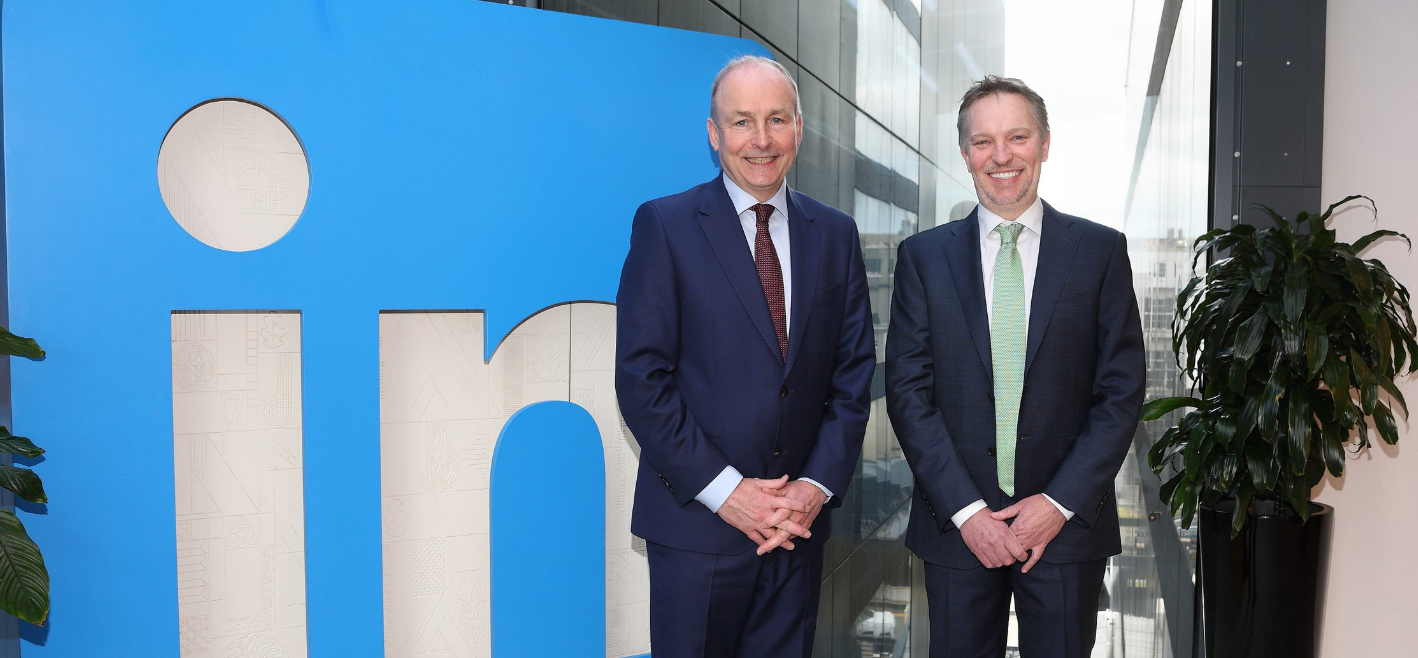
LinkedIn Opens New Dublin Campus

LinkedIn has officially opened its new campus at 4 Wilton Park, consolidating its Dublin operations into a modern, sustainable hub. This brings together LinkedIn’s teams under one roof across 4 and 5 Wilton Park, with a combined footprint of 290,000 sq ft — making Dublin home to LinkedIn’s largest office outside of the United States.
The new campus is designed to support LinkedIn’s evolving ways of working and foster collaboration among its 2,000+ employees in Ireland, who represent 60% of LinkedIn’s EMEA workforce and over 70 nationalities.
Speaking at the opening ceremony, An Taoiseach Micheál Martin TD said:
“I’m delighted to open LinkedIn’s new office at 4 Wilton Park. This expanded EMEA HQ — LinkedIn’s largest office outside the US — is a strong endorsement of Ireland as a destination for global investment. Over the past 15 years, LinkedIn Ireland has grown significantly, now employing over 2,000 people. This is a testament to Ireland’s talented workforce and tech expertise.”
Building on this, LinkedIn CEO Ryan Roslansky added: “When we decided to put our EMEA headquarters in Dublin back in 2010, we started with three employees, and now we’re more than 2,000 strong. None of this would be possible without the support of the Irish government and the wider community. We’re excited to continue shaping a brighter future of work together.”
Sustainability is at the core of the campus, which has been designed to operate at net-zero carbon, and is in the process of achieving LEED Platinum and WELL Platinum certifications — among the highest global standards for environmental performance and employee wellbeing. The site features hydroponic gardens producing over 90kg of fresh ingredients per month, rooftop beehives, and a focus on locally sourced food. The project utilised responsibly sourced materials, such as those with recycled content, take-back programs, and bio-based materials.
Another key feature of the campus is the new LinkedIn Dublin Community Space, a free venue for local nonprofits to host events that help connect underserved communities to economic opportunity. Since launching in the previous building, the Community Space has hosted nearly 200 events for more than 300 organisations in the past year alone, welcoming over 10,000 attendees, with LinkedIn employees also volunteering their time and expertise to support these initiatives.
Sue Duke, Head of LinkedIn Ireland, commented: “The opening of 4 Wilton Park, and the significant investment behind it, highlights the pivotal role our office plays in LinkedIn’s global growth. Our team in Dublin is central to delivering LinkedIn’s vision of creating economic opportunity for everyone, whether that’s developing AI tools to better connect jobseekers and employers or working with policymakers on future skills. 
James Geoghegan TD for Dublin Bay South (Fine Gael) also welcomed the opening, adding:
As a local representative, I welcome LinkedIn’s continued investment in Dublin with the opening of its new offices—now home to over 2,000 employees from 70 nationalities. LinkedIn’s remarkable 15-year journey in our city reflects not only its global success but also its deep commitment to supporting our local community and economy.”

AI Talent is on the rise – new skills required to meet the demands of digital transformation – Labour Market Pulse

IDA Ireland, in partnership with Microsoft and LinkedIn, has today published its latest Labour Market Pulse, which provides an overview of current insights and trends across the Irish labour market to help inform decision makers across business, academia and public policy.

This edition of the Labour Market Pulse highlights the rising importance of Artificial Intelligence (AI) skills among today’s workforces and takes a closer look at the growth of AI in Ireland. AI, and the skills related to it, are central to empowering businesses to digitally transform their organisations.

The growth of AI is anticipated to positively impact jobs and skills across multiple sectors and many businesses are currently in the early stages of identifying their potential use of AI. Demand for AI skills continues to outpace supply and skills availability has been deemed the most important obstacle to the adoption of AI for companies. With the European Year of Skills set to begin in May, the World Economic Forum predicts that 97 million jobs involving AI will be created between 2022 and 2025 and overcoming current skills gaps will require targeted efforts.

The latest Labour Market Pulse also places a spotlight on gender diversity in AI teams. LinkedIn data shows that 1.36% of women and 2.55% of men in Ireland were considered AI talent in 2022. Despite this gap, progress is being made, with the number of women considered AI talent growing faster year-on-year. Between 2016-2022, there was a 40.5% increase in the number of women in AI compared to 34.7% in the number of men considered AI talent.

AI in Ireland

In 2022, LinkedIn members in Ireland working in the Education sector held the highest share of AI talent, at 6.36%, reflecting Ireland’s strong position as a hub for research and innovation. Globally, LinkedIn members employed in Technology, Information and Media possessed the largest share of AI talent.

Ireland is responding to the shortage of AI skills by focusing on employee reskilling and upskilling and introducing initiatives to build capacity in AI, including the appointment of an AI ambassador, the introduction of a National Masters in AI, and a digital strategy for schools.

There are more than 105 courses in AI and related areas available across Ireland, which, combined with the highly skilled workforce and culture of innovation, make Ireland well positioned to lead in the development and adoption of AI.

Employment

Meanwhile, the Pulse also looks at employment rates in Ireland and highlights a continued slowing in the hiring rate from post-pandemic highs. Hiring rates in January 2023 were 27.2% lower than January 2022.

Following rapid hiring during the reopening of the economy post-pandemic, the labour market stabilised in 2022. Continued economic headwinds see employees appear to choose stability over change, with longer tenures also reflected in the decreasing hiring rate.

Simon Coveney TD, Minister for Enterprise, Trade and Employment commented: “AI skills and talent are becoming increasingly vital for Ireland’s economic growth and competitiveness in the global market.  As AI continues to revolutionise industries across the board, those with the skills and expertise to develop and deploy cutting-edge AI solutions will be in high demand.  Ireland has the potential to be a leader in this field, but it will require a concerted effort to cultivate and attract top AI talent to the country.”

“I welcome this latest Labour Market Pulse on AI Talent, and the collaboration between IDA Ireland, Microsoft and LinkedIn, that underpins it.  It highlights the huge growth in demand for AI talent and the opportunities for both individuals and businesses who have identified and invested in the necessary skills.”

“I applaud the work of IDA Ireland in supporting and encouraging businesses to ensure that they have the digital and AI skills they need for the future.”

Commenting on the Labour Market Pulse, IDA Ireland Interim CEO Mary Buckley said: ‘’I welcome the data insights which shows that AI and digital skills are continuing to grow here in Ireland year on year. The increase in female enrolment in AI related education programmes is particularly welcome. Despite global uncertainty, it’s encouraging to see Ireland react to the need to develop AI skills with a focus on upskilling and reskilling all the way from the workforce to a digital strategy for schools.’’

Commenting on the Labour Market Pulse, James O’Connor, Microsoft Ireland Site Lead and Vice President of Microsoft Global Operations Service Center, said: “AI is a defining technology of our time, and we are optimistic about what AI can do for people, industry, and society. Already it is helping to solve some of society’s greatest challenges, be that making farming more sustainable, protecting vulnerable communities from climate change, or cleaning up the world’s oceans. As AI systems evolve, we expect that AI advances will change the nature of some jobs and work, and even create new jobs that didn’t exist before. These shifts are similar to the changes we’ve seen with other major technological advances such as the invention of the telephone or the automobile. And like those changes, we expect this shift will require new ways of thinking about skills and training to ensure that workers are prepared for the future and that there is enough talent available for critical jobs.

“With the Government’s Digital Ireland Framework seeking to have 75% of businesses using AI by 2030, it is welcome to see the strong growth in AI talent in the latest Labour Market Pulse and the new upskilling and reskilling opportunities that are coming on stream to help skill up Ireland for our AI age.”

Head of LinkedIn in Ireland Sharon McCooey added: Despite the slowdown in hiring across the country, there are growth opportunities emerging in areas like AI and the green economy, as outlined in the previous Labour Market Pulse. While AI talent is very much in demand, there is a clear need to develop a pipeline of skilled professionals to take up these roles. Given the current tightness in the labour market, employers should focus on a skills-based approach to hiring. This is particularly relevant in the field of AI given that many of the third level courses available, such as AI for medical research, have only emerged in recent years.”

Full details on the latest insights from Labour Market Pulse can be found at the following link:

https://www.idaireland.com/latest-news/publications/labour-market-pulse-edition-8

The Best LinkedIn Tools for Lead Generation

LinkedIn Automation tools are designed to automate your LinkedIn activities. They help users generate new leads and improve sales. Some even allow message personalization and data tracking — further connecting you with awesome people in your industry.

Today, there are a lot of LinkedIn tools for lead generation. Choosing the best one for your needs can be quite difficult. Lucky for you, we’ve compiled a list of handpicked automation tools. We also discuss their features and how you can benefit from using them.

1. Octopus CRM

Octopus CRM is one of the leading LinkedIn lead generation tools today. With Octopus CRM, generating leads is easy. You can also build your personal lead generation campaigns while boosting your business growth on autopilot.

One thing Octopus CRM does best is creating lead generation funnels on the platform. Through automating tasks with Octopus CRM’s B2B lead generation tool, users can save up to 25 hours per week!

Don’t you just hate LinkedIn’s invite limit? Well, Octopus CRM can help you bypass the invite limit by sending connection requests through email. This is totally safe and you will not risk any bans on your LinkedIn account. Aside from its amazing lead generation capabilities, Octopus CRM can also nurture leads by giving you access to bulk messaging, following-up, and auto-endorsing features.

Another great thing Octopus CRM can do is help you keep an eye on the results of your lead generation campaign. With it, you can watch your LinkedIn stats, evaluate the performance of your lead generation campaigns, and monitor your LinkedIn activity.


2. Dripify

Dripify is a Lead Generation software for LinkedIn. It’s also an automation tool that’s designed to improve LinkedIn prospecting. Like Octopus CRM, it runs on complete autopilot. With Dripify, generating leads on LinkedIn is easy as pie. You can even close deals on LinkedIn even when you’re away from your computer. This is because Dripify provides complete automation plus it works in the cloud. All you have to do is set your sales funnel and then Dripify will do the job for you.

 Dripify is a great tool that’s beneficial for many business owners, sales teams, marketing agencies, and of course, recruiters. We all know how tough it is to run a business these days — and Dripify saves you time by helping you find leads so you can focus on money-making tasks throughout your day. If you have a dedicated sales team, you can automate LinkedIn lead generation with Dripify. You can also use Dripify’s dashboard to manage campaigns and view analytics. You’ll get a bird’s eye view of everything from your control panel.

Dripify’s personalized campaigns are also great for digital marketing agencies. Your messages won’t look automated plus you can easily switch accounts! And if you’re a recruiter, you’ll be glad to know that Dripify can help you find the right talent fast. Did you know that you can reach out to a maximum of 2000+ potential candidates per month? This will surely fill your open vacancies in a short time!

 Furthermore, Dripify’s advanced algorithm will keep your LinkedIn account safe. Whenever a user signs up with a free trial, Dripify gets a unique IP address from their local region assigned to their account. Dripify will always simulate human behavior when it does tasks for you. Its highly personalized drip campaigns use a variety of LinkedIn actions and delays to make your campaign more human and not bot-like. So rest assured that it’s completely safe and secure.

3. Phantombuster

Phantombuster is currently one of the most used automation tools for LinkedIn lead generation. It is often used in combination with LinkedIn Sales Navigator. With Phantombuster,  you can automate almost everything. It’s also very efficient and fast. Like Octopus CRM and Dripify, it runs from the cloud. It benefits mostly salespeople and marketers who do repetitive things each day. With Phantombuster, they can extract the data they want, automate actions, and get the job done lightning quick!

With Phantombuster, the whole web is a source of data. You can use it for your CRM, database, social networks, and more. Once you set up your actions, the program runs automatically. You can also do chain automation to create better and more advanced workflows. There is also an available template for almost all social networks and websites so you don’t have to create workflows

4. Skrapp.io

Do you want to find lead emails in bulk? Try Skrapp.io. This automation tool does one thing really well: finding B2B emails of contacts from Linkedin’s regular or sales navigator search results. So, how does Skrapp.io software actually finds those emails?

According to their website, their algorithm works by indexing public web pages based on LinkedIn accounts. It basically simulates emails based on companies’ email patterns. It’s very accurate too since it verifies the emails by interacting with email servers. With Skrapp.io, you can find thousands of prospects on LinkedIn. If you’re an email marketer, this tool is just a godsend!

5. Zopto

Zopto is an automation tool for scaling your outreach and generating leads on LinkedIn. Like Octopus CRM and Dripify, Zopto is a cloud-based lead generation tool that works on the background.

It can automate various LinkedIn processes to help you find new customers and markets. Zopto is a wonderful choice for people who are just starting their LinkedIn growth journey. Beginners who don’t have any idea about automation will find Zopto’s processes very easy to understand.

Some of Zopto’s best features include full automation of LinkedIn lead generation with delays to simulate human behavior. Zopto also has enabled multi-user profiles and access to team performance. It also has an in-app LinkedIn chat and if you’re not sure how it works, dedicated support to help you out. Unlike other automation tools, Zopto doesn’t have a free trial. However, it does have great integrations through Zapier and webhooks.

6. SocialPilot

SocialPilot is a LinkedIn tool built for marketing teams. It can be used to post on several social channels including Twitter, TikTok, Facebook, and Instagram. SocialPilot is built for social media teams of all sizes. It can improve their workflow and boost their marketing efforts.

SocialPilot also has amazing analytics where you can track and analyze your LinkedIn social performance. It has collaborative features that allow you to work with your colleagues. With SocialPilot, you can manage multiple clients’ accounts effortlessly. You can easily take over ad campaigns and upload 500 posts with bulk scheduling. It also has its own URL shorteners and a social media content calendar.

SocialPilot is very promising and has been growing tremendously throughout the years. It also has very good customer support that is responsive and reliable. Social Pilot is designed to help users boost their marketing campaign in a short time. It is also applicable to many customers including agencies or freelancers. So if you want a tool that can schedule and publish posts for your LinkedIn accounts, try SocialPilot.

Conclusion

Using the LinkedIn lead generation tools above can help you improve your marketing efforts. Not only will these tools increase traffic and engagements, but also improve the effectiveness of your other LinkedIn marketing strategies. At the end of the day, LinkedIn is just a social channel. Using it to generate leads can be easy by using the right techniques, knowing the right time to post, and tracking your activities to see which works best through trial and error.

The Importance of LinkedIn in Today’s B2B Environment

Over the recent years, LinkedIn has emerged as one of the most effective social media platforms for brands, professionals, and businesses. The platform allows employers and employees to network and share insights. 

As a result, most B2B business owners now recognize LinkedIn as a trusted platform to generate leads, build reputation, and increase brand awareness. If you are yet to embrace LinkedIn as a marketing strategy, here are several reasons why you should.

  • Lead Generation

LinkedIn can be a valuable tool to generate leads for B2B businesses. It allows you to connect with business owners who can become potential customers. However, to make the most out of LinkedIn, you must have an optimized profile, actively engage with other users and posts, and connect with as many users from your industry as possible.

While you can do all this yourself, a LinkedIn automation tool such as Salesflow can offer a good way to automatically send your connection request and follow-up messages.

Automation tools also allow you to see who viewed your profile, meaning you can take that opportunity to send them a personalized message to understand what they are interested in. 

Better still, LinkedIn automation tools can help you narrow down your potential leads based on the location, title, industry, or company. This can be an excellent strategy to get your foot at a potential customer’s door.

  • Helps Create Brand Awareness and Build Reputation

With more than 810 million members and nearly three professionals joining the platform per second, LinkedIn is an excellent place to grow your business contacts.

The professional network enables you to share your business information and promotional offers such as B2B rewards programs, through articles, links, or posts, thereby enhancing brand awareness and fostering customer loyalty. In addition, staying active in LinkedIn community groups, sharing valuable insights, and answering questions will help you reach the right audience and emerge as an industry authority. 

  • Thought Leadership and Influencer Marketing

LinkedIn has several features that allow individuals to position themselves as thought leaders in a specific domain.

From participating in LinkedIn communities. providing high-quality content, improving your profile, and answering questions, the platform is a fertile ground for thought leaders who aim to present themselves as trusted industry advisors to potential prospects.

  • Traffic Building 

Apart from generating leads on LinkedIn, the platform can also help you build traffic for your company website. An excellent way to do this is by creating high-quality and engaging content, the kind that will leave your audience wanting to read more about your company and products.

For instance, if you publish a post on LinkedIn, you can link other popular content at the end of your article. Exciting content will entice prospects to visit your website to read more articles about your company, thus increasing your website traffic. 

  • Networking

Networking is critical in the B2B industry. Although in-person networking is helpful, finding money, time, or motivation to attend many networking events can be challenging. In addition, you can never be sure your target audience will attend the event.

Using LinkedIn, it’s possible to network with other professionals and businesses at your convenient time. You will be able to connect with people without spending a lot of money or taking a break from your busy schedule to attend events.

Better still, you can specifically target a business that you have the potential to benefit from.

  • Industry Research

LinkedIn is not only a networking platform but a helpful resource as well. You can expand your knowledge about a specific industry through articles posted on the networking platform and by asking questions.

Also, by following and learning from what your favorite brands and companies share, you can easily stay updated with your industry research and interests.

Featured image source