SIRO Launches Broadband Product For Property Developers

Wholesale broadband operator SIRO has announced it is launching a bespoke broadband product  created for developers building new homes across Ireland. SIRO’s new product, OpenPort, will streamline the delivery of fibre broadband services to housing developments by instead providing a shared access broadband infrastructure onsite. This will avoid, as currently occurs, the costly over duplication of telecom infrastructures amongst multiple operators seeking to provide services to new housing estates.

Under forthcoming regulations, the Gigabit Infrastructure Act which will take effect in Ireland from February 2026, developers are required to provide a fibre broadband infrastructure onsite which is accessible to multiple telecoms network operators.

SIRO’s new product, OpenPort, responds to this requirement by providing developers with a shared access fibre broadband service for their new developments, which will be compliant with these regulations.

Currently, to enable multiple operators serve a housing development, developers have been required to accommodate multiple broadband infrastructures onsite.

The negative impact of this method of rolling out fibre broadband in new developments has been the unnecessary duplication of broadband infrastructure onsite. This can lead to not only excessive expenditure, but also the avoidable use of limited site space to facilitate these multiple infrastructures.

With SIRO’s OpenPort, developers will still be able to accommodate multiple fibre broadband operators on their developments but with the advantage of using a single network infrastructure, substantially reducing the cost of deploying fibre broadband networks to new homes across the country. A developer moving to SIRO’s OpenPort product will also enjoy environmental benefits by reducing the construction works needed to facilitate fibre broadband rollouts.

For homeowners and tenants, they will continue to enjoy choice and competition by maintaining access to multiple telecoms retailers.

SIRO has announced that its first OpenPort new development site will be at Monaleen in Limerick city. The development, known as The Orchard, is being constructed by one of Ireland’s leading developers, Homeland, and will see 131 new homes constructed at the site. These homes are expected have first occupancy by Spring 2026.

With Homeland Group’s The Orchard development, the first new development to adopt OpenPort, SIRO has confirmed that the product will be available to all developers from 2026 onwards.

Commenting on OpenPort, SIRO CEO John Keaney said: “Delivering fast and future proofed fibre broadband infrastructure and services to new homes is a small but essential part of the construction of new homes overall. A high-quality fibre to the home broadband connection is now a non-negotiable for all homes, supporting how we now live and work.

 “Like all the component parts of developing new homes, rolling out fibre broadband infrastructure comes at a cost – environmental, financial, resource and time – to broadband operators, developers and consumers.”

 “Initiatives, like OpenPort, which can streamline the delivery process, reduce the timelines, and maintain efficiency and effectiveness of building fibre broadband network in new developments are key. By reducing overduplication of broadband networks on new development sites, SIRO’s OpenPort will also give back much needed site space to developers and provide wider sustainability benefits.

 “SIRO is excited to bring this product to market for developers from next year. We have already had incredibly positive feedback from key stakeholders in the construction industry who understand the benefits it can offer,” added Mr. Keaney.

 Homeland Construction Director Mike Quaid added:

Homeland has worked with SIRO to deliver fibre broadband to our new homes across the country for several years now. The construction industry is constantly challenged to innovate, build more sustainability and efficiently, whilst maintaining affordability for home buyers. In terms of delivering fast, reliable and future proofed full fibre broadband for our home buyers and tenants, we see the huge potential of SIRO’s OpenPort to meet these objectives.”

SIRO is a wholesale network operator, rolling out a fibre to the premise network across Ireland now available to almost 700,000 premises in 143 cities and towns. It network is built on the ESB’s existing electricity network, utilising both its overhead and underground ducting infrastructure.

Nokia brings Wi-Fi 7 with launch of Beacon 4 and 9 home devices

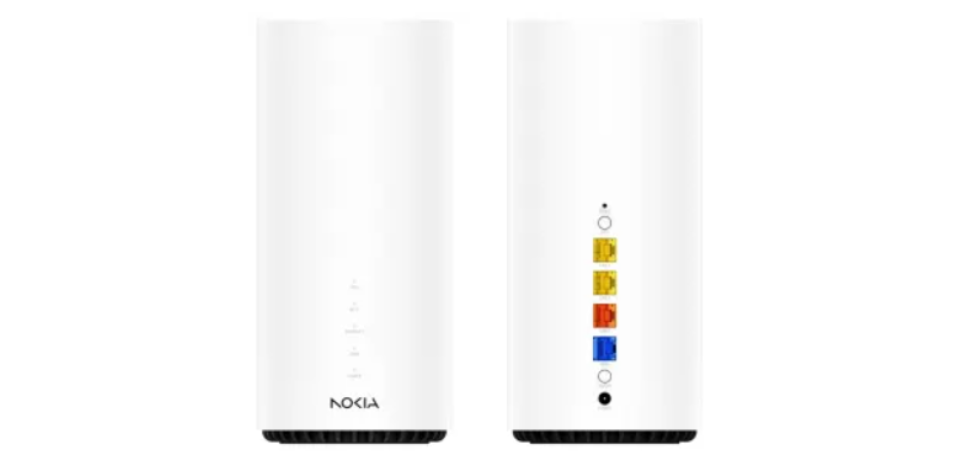
Today, Nokia launched two new Wi-Fi 7 gateways designed to deliver, reliable, ultra-fast broadband to every corner of the home. Nokia’s entry level Beacon 4 and mid-tier Beacon 9 offer gigabit speeds over Wi-Fi – essential for supporting the expanding demands of streaming, online gaming, video, smart home, and security applications in the home.

As XGS-PON and 25G PON services grow, Wi-Fi upgrades are essential to delivering multi-gigabit speeds into homes.   Nokia’s new Beacon 4 and 9 are designed specifically for this purpose, allowing service providers to offer an affordable, best-in-class Wi-Fi 7 experience for the masses. Incorporating Wi-Fi 7’s full capabilities, the dual-band Beacon 4 gateway delivers 3.6Gbs speeds over Wi-Fi while the tri-band Beacon 9 gateway delivers blazingly fast 9.4Gbs speeds that help eliminate slowdowns and buffering issues. Both Beacons are powered by its Corteca software which allows operators to create and monetize better broadband experiences.

“As the connected home ecosystem grows increasingly complex, Wi-Fi 7 emerges not just as a technological upgrade, but as a strategic necessity. To unlock the full market potential of Wi-Fi 7, it is essential to accelerate its availability across a wider range of devices. Expanding access – while preserving opportunities for service providers to differentiate and monetize premium offerings – will be key to driving adoption at scale and delivering the elevated experience consumers expect.” said Alzbeta Fellenbaum, Practice Leader, Service Provider – Consumer at Omdia.

“Wi-Fi 7 is a pivotal new technology that will power the connected home of the future. Operators can now make Wi-Fi 7 a reality for customers, with two new affordable solutions that ensure multi-gigabit speeds are delivered to every corner of the home for the ultimate experience,” said Dirk Verhaegen, Head of Broadband Devices, Fixed Networks at Nokia.

The new gateways expand Nokia’s portfolio of Wi-Fi 7 devices which now include the Beacon 4, Beacon 9, Beacon 19 and Beacon 24 models, each designed to meet the varying demands of operators and end-users globally.

Multimedia, technical information and related news 

Web Page: Nokia Wi-Fi

Web Page: Nokia Beacon 9

Web Page: Nokia Beacon 4

Nokia introduces Beacon 10, its first Wi-Fi 6E gateway for a multi-gigabit world #MWC23

Nokia has today launched the Beacon 10, its first gateway supporting Wi-Fi 6E to provide seamless, high-capacity mesh networking. The Beacon 10 is a true tri-band device which can provide Wi-Fi throughput of 10Gbps. It includes a 10G WAN interface to pair with 10 Gb/second fiber modems for multi-gigabit services to the home. The new gateway is shown for the first time at Mobile World Congress, Barcelona.

Widespread roll-out of 10G fiber powered by XGS-PON requires upgrades to home and business Wi-Fi to deliver super high speeds to enabled devices. The ‘E’ in Wi-Fi 6E means faster speeds and lower latencies, ideal for the latest office applications, home entertainment and home working experiences.

Additionally announced at the show, Nokia has upgraded its Nokia WiFi Cloud Controller to act as a User Services Platform (USP) controller. USP is the industry standard protocol (also known as TR-369) to manage services and configurations in network devices (either remotely by a cloud application or locally by a mobile app). Nokia’s USP agent in the Beacon 10 is based on the open-source OB-USPA so it can be managed by any USP controller, including the Nokia WiFi Cloud Controller.

Nokia’s presentation at MWC also highlights its newly developed, all-in-one console for Wi-Fi management and optimization. The console will be available to customer care operators, network administrators, onsite technicians and level 3 support staff to provide advanced WiFi optimization, troubleshooting and management.


Nokia has established a complete eco-system of app developers to ensure CSPs can offer the value-add services they need to their customers on their Wi-Fi units. The Beacon 10 supports the latest, fully integrated cybersecurity application from F-Secure which is delivered as a containerized application.

Dirk Verhaegen, VP Broadband Devices, Nokia, said: “We are proud to introduce Nokia’s first Wi-Fi 6E product for premium, high-performance Wi-Fi in the home and office. Not only does it offer faster speeds, but it also supports 3rd party applications and a USP agent to be fully compatible with multiple controllers, making it much easier for operators to manage. Third party apps and USP are both of strategic interest to Nokia and we will include them in all new broadband devices we introduce, as well as retro-fitting to select existing equipment”

Michael Philpott, Research Director, Digital Consumer Services at Omdia, said: “Vendors like Nokia are paving the path for the next generation of in-home broadband devices with a container application framework that separates the application from the operating system. F-Secure is the first partner to fully leverage Nokia’s application ecosystem to bring its cybersecurity solution to Nokia broadband devices using this innovative and open environment.”

An integrated approach to realise a 5G future

By Marc O’Regan, Chief Technology Officer for EMEA at Dell Technologies

5G is set to completely transform the mobile communications network. Yet rarely discussed are two key components to its success: edge and cloud. The reality is that cloud solutions facilitate the cost efficiencies and pace of innovation that make 5G such an exciting prospect – and hybrid cloud is the firm favourite amongst organisations seeking new network speeds.

But businesses, like telecom operators, for example, can’t simply adopt existing available cloud technology. Instead, they need a bespoke cloud platform designed for their requirements and challenges. If 5G Private Mobility and associated technologies are to achieve their true potential, telecom operators need to incorporate highly scalable cloud-native infrastructure into their rollouts. This is a complex task, requiring expertise from trusted technology partners.

The 5G Challenge

Understanding that software is just one piece of the cloud is important. Hardware, services, and additional tools are needed to bring a cohesive cloud strategy together. Therefore, collaboration with experts and integration with other technologies are important parts of the 5G ecosystem in order to achieve a successful outcome.

Many need to question their understanding of 5G – it’s often not what they think. It is software driven, born from and Native to Cloud – and it’s still relatively young. It is the transformer and provider of new cloud-based services. One of the first beneficiaries of this will be rural broadband services. 5G will help progress rural connectivity by using mobile networks to close digital divides, bringing broadband to homes at a reduced cost – without the disruptive need to drag fibre up the driveway.

Meanwhile, 5G will also power a new range of devices and services across industries. In high-density areas such as a Rugby or football stadium – where previously signal bars would be low – now, not only will fans have accessible signal, but they will also have entirely new content-driven experiences. For example, streaming a try or goal via mobile phone from a close-up viewpoint will augment the in-stadium experience. Similarly, at live gigs, concert goers will be able to stream close-ups of their favourite musicians and players live.

The opportunities

These opportunities are driven by fundamental cultural shifts – we have moved from an era of content consumption to content creation, transforming our technological needs.

As businesses respond to the potential offered by lower latency, capturing these new enhanced services will enable organisations to monetise 5G networks. But in order to do this, they need to be nurtured, provided with technological expertise and develop a good level of business savvy.

In the industrial world, 5G will be an enabler of smart factories, providing connectivity for devices in remote locations and streamlining processes. Industrial IoT (Internet of Things) and automation powered by edge technologies are key in this context. Automation has a role to play in the network itself, helping service providers deploy their work. For enterprises looking to leverage automation in their factories, such as warehouse automation for retailers, 5G accelerates that automation with an immediate impact on both the bottom line and the top line of an enterprise. It will be possible for businesses to achieve more in a shorter time because the robots will go faster, and because the response to any needs or obstructions will be resolved faster.

We also have the intersection between 5G and other Emerging Technologies like Machine Learning and Intelligence that will allow us to build and scale new digital services at the point of Data creation. Using new blends of algorithms, Data Scientists can work in teams of OT and IT personnel to scrum their way toward new essential services delivered through information that is extracted from the Edge, near the sensors, alarms, pumps and actuators powered by new and powerful AI Models that are driven by architecture that combines the ability to drive high yield and draw low power in the factory environments and beyond.

Bespoke cloud technologies for telecoms

Underpinning everything is the quest to modernise networks and embrace cloud operating models which provide more choice, speed, and agility – especially in the vital sector of telecommunications. Ultimately, telecom operators want Open Radio Access Network (RAN) technologies that offer better performance and efficiency. The growing open ecosystem offers telecoms greater choice in their technologies and partners as they modernise to cloud-native networks. Telecoms need the various technologies of the open ecosystem to work together seamlessly to offer differentiated edge services and reduce costs.

That’s where Dell Technologies can help and add value. We began building telecom-grade servers and partnering with telecom cloud vendors to create telecom cloud platforms that are pre-integrated, pre-validated, and proven to work out of the box. We have added infrastructure automation tools to make it simple to deploy and manage virtualised network functions at the edge, in the RAN, and the core on purpose-built, standards-based, bare-metal servers. This will give cloud and service providers a scalable cloud foundation. Also, with the introduction of Dell Telecom Multi-Cloud Foundation, we are providing telecoms with a simple way to build and deploy open, cloud-first networks faster with less cost. We’re laying the cloud foundation for an open software ecosystem.

According to Government targets, all Irish households and businesses are set to be covered by a Gigabit network no later than 2028 and all populated areas by 5G by 2030. 5G is an indispensable part of our data-driven future and can unlock the value of data in unprecedented ways. However, to get there, telecommunications companies and the public sector alike need expert partners and a solid foundation of cloud and edge. By adopting this approach, they can deliver agility and reduce operational and capital expenditures, with an open, software defined, cloud native, and data centric approach that can bring innovation to market and allow them to realise the vast opportunities presented by the 5G future.