Irish fintech increased almost 300% in 2024

2024 was a positive year for the Irish fintech market, with funding reaching $237.95 million across 25 deals; this was a significant increase (291%) compared to last year were $60.83 million was raised across 11 deals, according to the Pulse of FinTech H2’24—a bi-annual report published by KPMG highlighting global fintech investment trends.

The data includes the $109 million buyout of Dublin-based software company SoftCo by Keensight Capital, making it the largest fintech deal in Ireland in 2024. Other notable deals for the period were ones by mobile payment platform CleverCards and CreditLogic, a Dublin-based fintech both raising just over $8.6 million and $3.7 million respectively.

But fintech levels in Ireland was an outlier. Global investment dropped from $119.8 billion across 5,382 deals in 2023 to a seven-year low of $95.6 billion across 4,639 deals in 2024. A perfect storm of factors combined to soften investor appetite, including macroeconomic challenges, geopolitical conflicts and tensions, a year of elections in major jurisdictions, and concerns about valuations and the lack of exits.

Fintech investment in EMEA region sinks to $20.3 billion—lowest total since 2016

Fintech investment in the EMEA region fell from $27.6 billion across 1,833 deals in 2023 to just $20.3 billion across 1,465 deals in 2024. H2’24 also saw a significant drop compared to H1’24—from $13 billion across 820 deals to just $7.3 billion across 645 deals.

Irish fintech ecosystem shows resilience

Commenting on fintech activity in Ireland during 2024, Ian Nelson, Head of Financial Services & Regulatory at KPMG in Ireland, said: “The Irish fintech sector’s remarkable growth in 2024, with a staggering 291% increase in investment to $237.95 million, underscores its resilience and potential. Despite global investment falling to a seven-year low, Ireland’s innovative spirit and robust ecosystem have set it apart as a beacon of progress in a challenging economic landscape.”

Nelson adds“Early-stage deals are thriving, driven by interest in AI and innovative business modelsThis growth is even more impressive given the macroeconomic challenges, geopolitical conflicts, and election uncertainties that have dampened investor appetite globally, and a testament to the strength and adaptability of our fintech ecosystem.”

Focussing on H2’24, Ireland’s fintech sector recorded $97.15 million in M&A, venture capital and private equity transactions across five deals. This reflects a significant increase from the $1.61 million for the same period last year.

Global Highlights 2024 

  • Global fintech investment fell from $119.8 billion across 5,382 deals in 2023 to $95.6 billion across 4,639 deals in 2024.
  • The Americas attracted $63.8 billion in fintech investment across 2,267 deals in 2024, of which the US accounted for $50.7 billion across 1,836 deals; the EMEA region attracted $20.3 billion across 1,4645 deals, while the ASPAC region attracted $11.2 billion across 896 deals.
  • Global M&A deal value fell from $60.2 billion to $49.6 billion between 2023 and 2024; while H2’24 was softer than H1’24, M&A deal value rose from $7.4 billion to $14.2 billion between Q3’24 and Q4’24.
  • PE investment declined significantly, falling from $10.5 billion in 2023 to just $2.6 billion in 2024, while VC investment saw a modest drop from $49.2 billion in 2023 to $43.4 billion in 2024.
  • Payments was the strongest area of fintech investment globally in 2024, with $31 billion in investment compared to just $17.2 billion in 2023; other sectors that saw investment rise year-over-year included digital assets and currencies —from $8.7 billion to $9.1 billion, regtech—from $4.4 billion to $7.4 billion, proptech—from $1.9 billion to $3 billion, and wealthtech—from $190 million to $400 million.
  • Corporate VC-participating investment globally fell from $26 .9 billion in 2023 to $19.6 billion in 2024; only the EMEA region saw corporate investment in VC deals rise—from $5.1 billion to $5.8 billion year-over-year. The Americas saw CVC drop from $13.8 billion to $9.9 billion, while ASPAC saw CVC investment drop from $8.0 billion to $3.9 billion.

EMEA Trends to watch for in H1’25

  • Continued investment in regtech given the ongoing evolution of regulations and the complexities associated with compliance.
  • Growing interest in the development of AI agents able to act independently, particularly in areas like AML and financial crime detection.
  • Increasing regulatory burden acting as a potential driver for consolidation.
  • Continued focus on secondary transactions given subdued IPO environment
  • Further development of the digital euro and its ecosystem changing the game for investment, use case development, and the enhancement of an ISV ecosystem.

Report

Revolut reaches 50 million customer milestone

Revolut, the global financial technology company and licensed European bank, has today announced that it has hit 50 million customers globally.

The company has reached the 50 million milestone at high-speed, growing by over 10 million customers in 2024 so far and becoming the most downloaded financial app in Europe.  It follows a bumper year for Revolut, which in 2024 received a $45 billion valuation, was awarded a UK bank licence with restrictions from the Prudential Regulation Authority (PRA) whilst in the mobilisation stage, and announced its 2023 Group revenues had surpassed $2.2 billion with record profits before tax of $545 million.

Revolut has aggressive plans to continue to grow its customer base towards the 100 million milestone, while also rolling out new and innovative services to become the primary bank of choice for its customers. 

Nik Storonsky, CEO of Revolut, commented: “Revolut exists for one reason: to simplify money for everyone, everywhere. This year we’ve taken huge steps forwards — breaking records, accelerating the speed at which we’re launching products and continuing to disrupt financial services globally. We’re moving faster than ever because we know the opportunity to revolutionise global financial services for our customers is still massive.”

Later this week Storonsky will take to the stage at the company’s The Revolutionaries event in London to celebrate its 50 million milestone, speaking alongside co-founder and CTO Vlad Yatsenko and entrepreneur Steven Bartlett. 

An exclusive event featuring revolutionary names across music, business, fashion, sport, gaming, travel and entertainment, The Revolutionaries will close with a headline performance from the iconic Charli XCX ahead of her sold-out UK tour.

For those outside of the UK, the event will be broadcast across YouTube and other streaming platforms.

Revolut Bank UAB (Irish Branch) was recognised by financial comparison site Bonkers.ie as ‘Ireland’s Best Consumer Business’ and ‘provider of the Best Current Account’ in 2024, while the company ranked 9th as part of the Ireland RepTrak® 2024 study earlier this year.


Two thirds of businesses believe ‘legacy banks’ are too slow to adapt to modern business needs — Revolut

Revolut Business, the global financial superapp trusted by hundreds of thousands of businesses worldwide, has conducted a study in partnership with market research firm Dynata, highlighting that international businesses are turning away from ‘legacy banks’ to manage their financial needs, echoing the sweeping changes seen across consumer banking. The findings come as the company launches Revolut Business 5 — the fifth generation of its financial management platform for businesses.

The recent survey of 2,850 business decision-makers from seven European countries, including respondents from every county in Ireland, found that close to two thirds (63%) of businesses believe ‘legacy banks’ are too slow for their financial needs.

Nearly four out of five (79%) respondents reported issues with ‘legacy banks’, including high fees, slow transactions, and poor mobile experiences, and three out of five (64%) large businesses are worried they will be left behind competitors without enlisting a fintech.

These concerns are driving businesses to fintechs like Revolut, where innovation and agility are founding principles. Revolut is reinforcing its focus to support large enterprise clients with Revolut Business 5, which provides an enhanced user experience across both mobile and desktop platforms to meet the evolving needs of industry leaders. Revolut Business has been redesigned to save enterprises more time and money.

James Gibson, General Manager at Revolut Business, commented on the recent survey findings and emphasised Revolut Business’s capabilities: “When we started Revolut Business in 2017, we knew that businesses wanted a banking product that evolved with their needs and provided a customer experience you’d expect in this day and age. The demand for customer-orientated business accounts has only increased since then.

“As we launch Revolut Business 5, we know we’re giving customers the ability to find features faster, spend with precision, and manage payments easily. Revolut Business is continuing to grow, and look forward to welcoming more customers who are fed up with the existing status quo in Ireland and want a solution that moves with the technology of the day.”

In Ireland, specifically, the survey also found that:

  • 72% of business leaders believe that ‘legacy banks’ are too slow to adapt to modern business needs, notably much higher than the European sample size average of 64%.

  • More than half (52%) of businesses use the services of a fintech, while a further 30% are willing to trust and are actively looking to use a fintech to manage their finances.

  • A quarter (25%) of hospitality businesses and close to one in five retail businesses (19%) now no longer use a traditional bank in Ireland.

  • Looking outwardly, more than three-quarters of business leaders (77%) said they were seeing more industry peers turn to fintechs for their business banking needs, while 81% of these already use a fintech provider (such as Revolut) personally outside of work.

  • Notably, nearly a third (31%) of business leaders in Ireland would prefer to manage their business’ financial needs solely with their fintech provider.

Revolut Business 5 offers faster navigation, personalised layouts, and easy access to card details and analytics right from the home screen. Updated features notably include B2B SEPA Direct Debits, streamlined payment tools for online and in-person sales, dedicated treasury tools for currency exchange, and multi-layered approval options for managing team spending across departments.

Revolut Business is already contributing 15-25% of the company’s overall gross profit, with some of Revolut’s notable customers in Ireland including Aer Lingus, O’Neills, and DID Electrical. The company also recently announced that global annualised revenue for Revolut Business has surpassed $500M (€461m). This growth is a testament to the demand for Revolut Business, as more companies turn to digital banks for a faster, more flexible way to manage their financial needs.

For more information, please visit: www.revolut.com/business

FinTech Depowise, platform handling €800bn in assets, enters the UK and Irish market

Depowise, the Estonian-founded oversight and process automation startup for financial services firms, is expanding into the United Kingdom and Ireland. The company aims to increase its current 5% market share tenfold in the domiciled funds market of Luxembourg, Ireland, and the UK, valued at more than €16.5 trillion. Over the next five years, Depowise plans to achieve a volume of assets on the platform of €8 trillion and become a market leader.

Leading this significant expansion is Leonid Belov, the newly appointed Managing Director for the UK and Ireland. Belov has a wealth of experience across front-to-back and cross-asset-class solutions, having worked in leading financial institutions such as BlackRock, State Street, MSCI, and Bloomberg.

“Having known Leo since our Bloomberg days, I have always admired his drive and insight. During one of our chats, I brought up my ambition to develop Depowise, and this resonated strongly with Leo, who thought we could disrupt the status quo and bring about meaningful change,” says Artur Reiter, Co-Founder and Co-CEO of Depowise. “We are beyond delighted to welcome Leonid Belov to our team. His exceptional talent in growth engineering, coupled with his strategic approach, sales expertise, and extensive financial technology knowledge, will undoubtedly secure our success in these new markets.”

Mr Belov shares the excitement: “Depowise has incredible growth potential that I couldn’t resist being a part of. The dedication and achievements of the team in just three years – developing a market-leading end-to-end tool for the depositary market – are truly impressive.

Market starving for automation

The global asset servicing and management industries are in dire need of technological advancement. “Despite the significant pace of automation, a meaningful proportion of the industry still relies on manual processes for critical tasks. We see this as a big market opportunity for Depowise – our modern technology can unlock scale and achieve viable efficiency for our customers,” notes Belov.

In Queen Elisabeth II’s time, asset custody and oversight were managed primarily in Excel; in King Charles’s time, we aim to move it into Depowise, and by the time Prince William picks up the reigns, it will be largely driven by AI,” says Belov.

Depowise offers a comprehensive automation solution that streamlines compliance, oversight, safekeeping, reporting, and record-keeping tasks, significantly reducing manual efforts and inherent inefficiencies.

Unicorn-size market potential

Based on discussions with Depowise clients and prospects, we note that around a third of asset servicing and management companies in the UK and Ireland currently use multiple service providers to manage different parts of operations, around another third use in-house solutions, and nearly every organisation still heavily relies on Excel. The market size for automation in this sector is projected to grow to over €7bn by 2027, and with no complete, end-to-end competitors, Depowise aims to become the market leader within five years.

Our 2022 customer survey showed that Depowise increased efficiency for our customers by up to 82%. “You don’t have to spend your mornings searching for discrepancies because Depowise does the checks for you in the background,” Sven Peekmann, Co-Founder and Co-CEO of Depowise, explains the efficiency phenomenon. “Now, when nearly 90% of daily work is done automatically, Depowise allows you to focus on the issues with the most significant business impact.”

Iconic Belfast and Dublin venues to host first ever Transatlantic Fintech Exchange

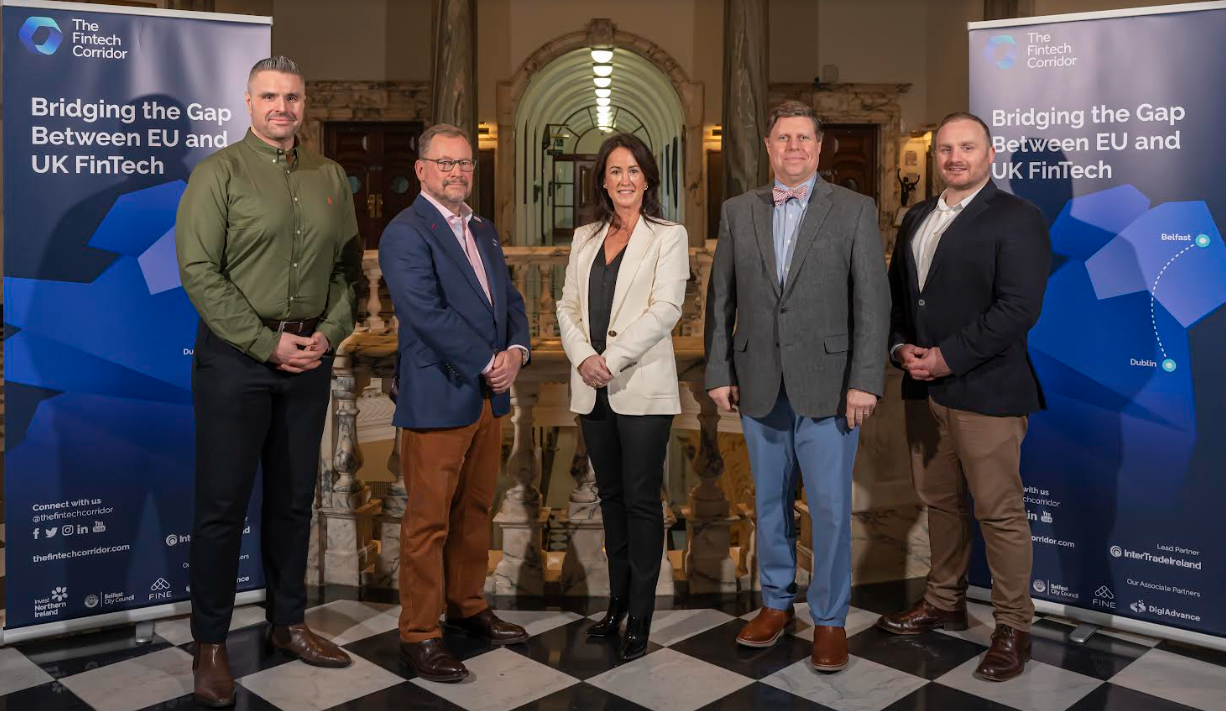
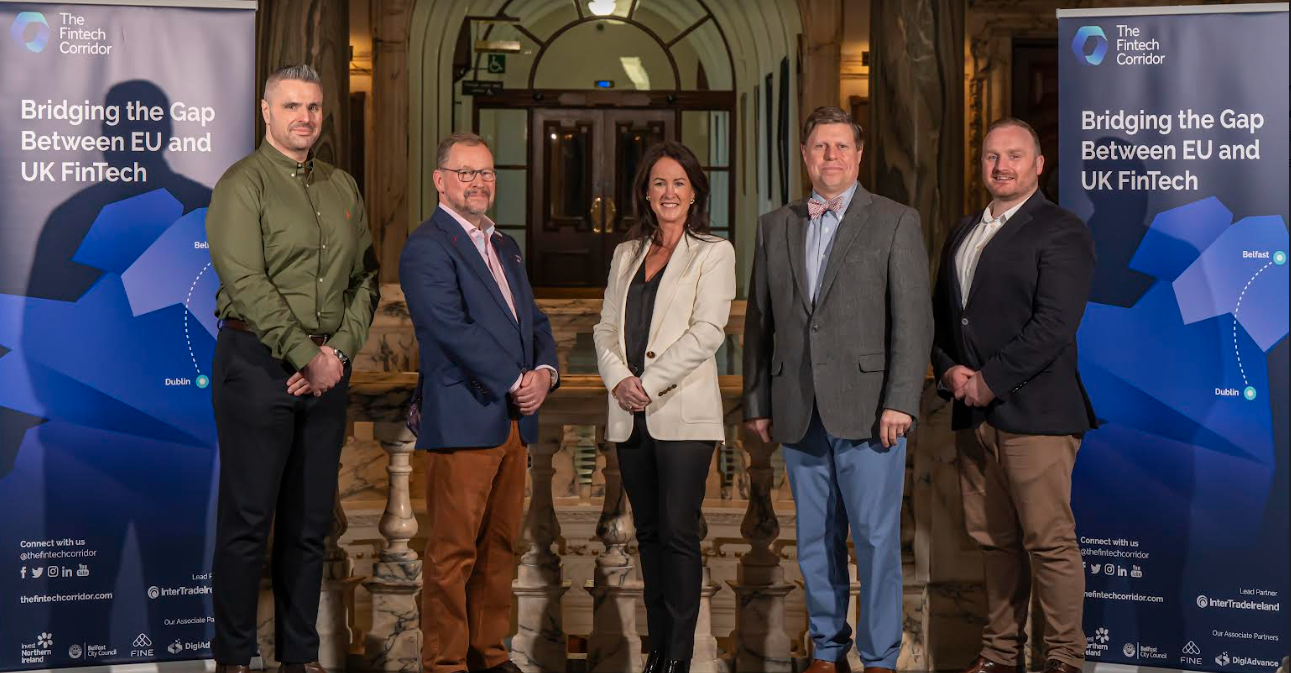
The Fintech Corridor and the American Transaction Processors Coalition (ATPC), are set to welcome around 100 delegates from across the globe to the first ever Transatlantic Fintech Exchange in iconic venues across Belfast and Dublin, on May 13-16, 2024.

Venues including the Guinness Storehouse, Belfast City Hall and Killeavy Castle will serve as historic backdrops for the conference.

It will see senior leaders from the finance and technology sector come together with government development agencies to drive collaboration across the Republic of Ireland, Northern Ireland and the US, share best practice and increase investment in the island of Ireland’s fintech industry.

Headline speakers include:

  • Karen O’Leary, Head of Payments and Securities at Central Bank of Ireland
  • Neale Richmond TD, Minister of State with responsibility for Financial Services, Credit Unions and Insurance
  • Conor Murphy MLA, Economy Minister
  • Paul O’Hare, Tech & Finance Lead, Google
  • Karl Hanlon, Chief Commercial Officer (CCO), FinTrU
  • Margaret Hearty, CEO, InterTradeIreland
  • Kieran Donoghue, CEO, Invest NI
  • Maeve Monaghan, CEO, NOW Group
  • Alison Donnelly, Director, Fscom
  • Richard Swales, Chief Risk and Compliance Officer, Paysafe
  • Stephen Groarke, Chief Financial Officer, Elavon/US Bank EMEA
  • Hartwig Gerhartinger, Global Head of Regulatory and Government Affairs, Paysafe

Key event themes are the future of payments, workforce development and the regulatory and legislative intersections between the EU, UK, and US. It’s designed to be an intimate event which will build real relationships and understanding in a focused group of fewer than 100 senior industry executives, government representatives, and academic institutions.

Hilary Moran, CEO of The Fintech Corridor, commented: “The island of Ireland is fast becoming a global centre for fintech. The distinctive blend of skilled individuals with experience in both technology and finance, coupled with proactive government support, has enabled a wave of startups to thrive and harness their potential in an exceedingly business-friendly atmosphere. The Transatlantic Fintech Exchange is designed to provide a forum to build connectivity across the UK, Europe and US and bolster investment in fintech across the island.”

ATPC Executive Director H. West Richards, commented: “This unique cross-border proposition connects US, EU, and UK fintech ecosystems and will help drive deeper understanding of opportunities in each governance. Brexit profoundly changed how EU and UK fintech companies interact with each other, and access to companies in both jurisdictions will enable us to work closely to develop common solutions and increase cooperation and opportunities on both sides of the Atlantic, especially as US regulators work on cybersecurity, data privacy and other critical issues.”

Belfast Lord Mayor Councillor Ryan Murphy said: “I am really looking forward to hosting the Transatlantic Fintech Exchange event at City Hall as it will help promote co-operation in the Fintech sector on both sides of the Atlantic and across the island of Ireland.

“It’s a valuable opportunity to showcase our growing Fintech industry in Belfast and along the Dublin Belfast Economic Corridor and to build partnerships with like-minded networks in the US. Belfast has a developing cluster of fintech businesses, and we have an excellent track record of inward investment. As a council, we’re building on that and raising the profile of Belfast internationally through co-operative events like the Transatlantic Fintech Exchange.”

“Belfast will be the final part of this week-long visit to Ireland and it’s fantastic to collaborate with The Fintech Corridor and our Dublin Belfast Economic Corridor partners, with meetings hosted in both Dublin and Newry. Together, we’re presenting a very attractive investment proposition.”

In welcoming the event, Minister Neale Richmond said: “Fintech and digital finance are of huge potential as we work towards the digital transition and this event is a fantastic opportunity to develop this work across our island. Fintech is a key priority of the Ireland for Finance strategy and so I am looking forward to welcoming delegates from the Fintech sector here in Ireland and abroad to keep up the momentum and strengthen our connections in this area across the island and indeed, across the globe.”

Co–Chair of the Dublin Belfast Economic Corridor (DBEC) partnership, Councillor Pete Byrne, Newry, Mourne and Down District Council, said: “This visit by representatives from the American Transaction Processors Coalition provides a platform to proudly showcase the entire Dublin to Belfast Economic Corridor including our strengths in tech, innovation, talent, education, cultural and excellent quality of life for those who live and work along the Corridor.”

Co–Chair of DBEC Councillor Adrian Henchy of Fingal County Council, commented: “This visit presents a welcome opportunity to celebrate the many very special connections we have with the US from diplomatic relations to investment, knowledge sharing, tourism, education, and cultural exchange.”

More conference details are available at www.atpcoalition.com

and www.thefintechcorridor.com

The Fintech Corridor and ATPC launch one-of-a-kind transatlantic exchange

(Dublin/Belfast/Atlanta, GA) – The Fintech Corridor (TFC) and the American Transaction Processors Coalition (ATPC), today announced a new partnership to offer a one-of-a-kind exchange driving transatlantic workforce developmentpolicy best practices, investment, and internationalization between Belfast and Dublin, and the United States of America.

American companies continue to invest in Ireland due to a strong historical relationship and its unique access to both Europe and UK following Brexit. The transatlantic exchange was set up to strengthen these relationships, develop common goals and create structured initiatives to enable fintechs in the US, EU, and UK access to new global value chains.

The Fintech Corridor and ATPC will explore these relationships, policy themes and regulatory schemes in a summit which takes place in Dublin and Belfast between May 13-16, 2024. The venues will for the events will be the Guinness Storehouse, Belfast City Hall and Killeavy Castle, not Hillsborough Castle and Leinster House and will serve as historic and interactive backdrops for the conference which will see senior leaders from the finance and technology sector as well as government development agencies to explore collaboration and hot topics like cybersecurity and AI.

The 2024 Transatlantic Exchange will focus on ‘elevating fintech; to drive a program that goes beyond mere policy and economic transactions. Instead, the goal is to build real relationships and understanding among an exclusive group of fewer than 75 industry executives, government representatives, and academic institutions. The organisation expects to announce multiple formal Memos of Understanding during the conference that will forever change the fintech and payments processing industries.  

“Our organizations established a desire to build connectivity between payments and fintech corridors and drive visibility; foster relationships; share technology and policy best practices; and bolster international investment,” said TFC CEO Hilary Moran“A successful program of events will drive greater connectivity and collaboration within the US, EU and UK, while allowing participants to build meaningful relationships in a relaxed ‘exchange’ environment.”

“This unique cross-border proposition connects US, EU, and UK fintech ecosystems and will help drive deeper understanding of opportunities in each governance zone,” said ATPC Executive Director H. West Richards. “Brexit profoundly changed how EU and UK fintech companies interact with each other, and access to companies in both jurisdictions will enable us to work closely to develop common solutions and increase cooperation and opportunities on both sides of the Atlantic, especially as US regulators work on cybersecurity, data privacy and other critical issues.”

The ATPC, founded in 2014 and headquartered in the State of Georgia’s “Transaction Alley,” served as a blueprint for The Fintech Corridor’s work. And the two organizations became acquainted during the pandemic as TFC sought to build an education workforce development platform modeled on the Georgia Fintech Academy. A relationship grew from there and the conference was born in order to promote the spirit of cooperation, networking, education partnerships, new business opportunities, and knowledge sharing using the power of the most unique business cluster on the island of Ireland (Republic of, and Northern Ireland).

More conference details are available at www.atpcoalition.com and www.thefintechcorridor.com.

Swoop and Sage unveil global partnership

Swoop, a fintech company specialising in funding solutions and Sage, the leader in accounting, financial, HR, and payroll technology, are excited to announce their global partnership aimed at helping businesses and accountants access a wide range of funding opportunities. Navigating the complex landscape of funding opportunities can be daunting for businesses. The partnership aims to bridge this gap by providing a user-friendly platform that connects businesses and accountants with the financial resources they require.

In addition, the partnership will help businesses to identify opportunities to reduce costs in areas such as energy, banking and foreign exchange, providing a significant impact on the bottom line.

By integrating their Sage accounting software once, businesses can identify more accurate funding opportunities, streamline the funding process, unlock business savings, and benefit from tools such as cash flow forecasting.

Businesses often face challenges in securing the financial capital they need to grow and thrive. Research conducted by the Sage Foundation has highlighted that the lack of financial resources remains one of the most significant obstacles businesses encounter on their journey to success.

Recognising the importance of overcoming this challenge, Swoop and Sage have joined forces to simplify and expedite the process of accessing vital funding for businesses and their advisors. This innovative partnership will enable advisors and businesses worldwide to effortlessly explore and tap into various funding options that suit their unique needs.

The global partnership brings a wide range of funding opportunities for businesses, including grants, loans, and equity investments, whilst streamlining the application and approval process. Trusted advisors, such as accountants and financial professionals, will also benefit from this partnership, gaining the tools and resources to guide their clients effectively through their funding journeys.

Andrea Reynolds, CEO of Swoop, said: “We are thrilled to partner with Sage to bring our funding expertise to businesses and advisors worldwide. Together, we will simplify the path to financial empowerment for businesses of all sizes.”

“In a world full of fluctuations, with inflation and interest rates on the rise, businesses are facing unprecedented challenges, so it is important to make business finance more accessible and less daunting,” said Chip Mahan, Global Commercial Head, Fintech, Payments & Banking at Sage. “This partnership with Swoop aligns perfectly with our mission and will make accessing essential financial capital quick and easy, ensuring businesses have the support they need to succeed.”

Micheál Martin, Tánaiste and Minister for Foreign Affairs, Ireland, said: “I am delighted to acknowledge both Swoop and Sage in the development of an effective funding platform for the small and medium enterprise sector. The innovative combination of the advanced technology platform of Swoop combined with Sage’s globally recognised cloud-based accounting software will provide great assistance to company leaders as they look to funding options.”

Paul O’Riordan, VP Partners, Ireland, Sage, said: “We’re excited about this partnership as we know from our research that access to finance is one of the biggest hurdles businesses currently face, yet it is crucial to any future economic recovery in Ireland. Businesses that can access finance have a bigger range of opportunities facing them to grow than those that don’t. I’m excited to see Irish businesses grab this opportunity with both hands and use it to reach their full potential.”

The partnership marks a significant step towards levelling the playing field for businesses and underscores their importance in driving global economic growth. With this collaboration, the future looks brighter for entrepreneurs and businesses worldwide.

Fintech VS Traditional Banks: Difference And Cooperation

Traditional banks and fintech companies are two distinct kinds of financial organizations. Financial technology, or fintech, is the use of technology to enhance and automate financial services. On the other hand, conventional banks are physical establishments that provide financial services including loans, deposits, and investments.

New technological developments open the daily door to creating innovative financial systems that compete with existing banks.

The great majority of the current banking infrastructures are supported by financial technology and the products that are part of that industry. Despite widespread concerns that fintech may threaten conventional banking, there is no match for the benefits it offers. We’ll look at the parallels and contrasts between traditional banks and fintech companies in this article.

Why is Fintech Needed?

As a financial organization, banks have long been seen as the exclusive means of conducting transactions involving money, with the expansion of technology and the modernization of practically all conventional practices. We believe that there is still a lot of space for innovation and growth in our banking sector.

Tragic events also occur because the global banking sector has experienced several crises as a result of regulatory problems. The lack of regulation and innovation made it necessary to find more sophisticated alternatives to banks. This is where fintech and financial software development companies become necessary. combining banking services with contemporary technology to make it simple for individuals to conduct transactions and access additional financial services.

What Are the Differences Between Traditional Banking and Fintech?

Regulations

There isn’t really a single regulatory body that specifically oversees fintech businesses. One of the most significant causes for the rise in fintech businesses is this. Moreover, in the absence of stringent regulation, these fintech companies are free to modify their operations and are not subject to rigid requirements. This makes it extremely easy for fintech businesses to respond quickly to the needs of their clients in this dangerous sector.

An origin country’s central or national bank oversees the global financial system. Also, the regulatory agencies demand that a conventional bank follow all applicable laws, rules, and regulations in order to protect the client’s money. In order to maintain openness between customers and financial organizations, banking rules are used.

Growth Prospects

Fintech businesses and banks both have enormous growth potential, but the rate and direction of that development are yet uncertain.

One of the industries with the quickest growth is the fintech sector, which has an annual growth rate of around 25%. However, by implementing features like mobile payments, digital security, peer-to-peer lending, and crowdfunding, conventional banks have reacted to the digital shift and the threat of fintech.

Customer Experience

Consumers don’t need to be physically present to transact or use financial services since fintech operates remotely. This makes using fintech a practical choice. Consumers may sign up on their computer or, in most circumstances, using a mobile app. Fintech provides speedy consultations, 24/7 access, remote account opening, and overall improved client communication. They have developed as a result of their emphasis on the user experience, which is where banks have lagged.

The majority of the time, opening an account or applying for financial services at a bank requires your actual presence. Not every bank has the tools necessary to check your identification online. Customers will have a less satisfying experience with conventional banking as a result of this inconvenience.

Cost

Because of their lower operational expenses than conventional banks, fintech businesses may provide their clients with fewer fees and better interest rates. Conventional banks sometimes charge more for their financial goods and services because of their greater overhead expenses, such as rent and staff.

Security

Both conventional banks and fintech businesses are required to adhere to stringent security standards and safeguard the financial and personal information of their clients. Fintech firms have drawn criticism for lacking knowledge and experience in security and fraud prevention, however.


How to Properly Invest in Fintech

In recent years, there has been a dramatic increase in the number of people investing in Fintech companies. This is no surprise, as Fintech represents a huge opportunity for investors to make money while also helping to improve the financial industry. In this article, we will discuss some of the reasons why investors are so excited about Fintech. Finally, we will offer our advice on how best to invest in Fintech companies.

Wealth Management Is Important

One of the main reasons why investors are so excited about Fintech is that it can provide an incredibly efficient way to manage wealth. With the use of advanced algorithms, automated investment platforms, and other predictive tools, investors have far greater control over their investments than ever before. By taking advantage of these technologies, investors can make better decisions with less effort and less risk. In addition, when your wealth is managed by professionals, the potential for greater returns increases significantly. It is clear why this is so attractive to investors.

Security and Transparency Are Key

In addition to improving wealth management, Fintech companies also offer unparalleled security and transparency. Many investors have had their trust in financial institutions shaken by events such as the recent global financial crisis. With Fintech companies, investors can be confident that their money is safe, secure, and fully transparent. This provides peace of mind that is invaluable in the modern financial landscape.

How To Invest In Fintech

Investing in Fintech companies is not as simple as it might seem. After all, these companies are relatively new and their business models can be complex. It is therefore important to do your research and understand what you are getting into before investing any money.

Our advice is to start by looking at the company’s financial statements and business plans. This will give you an idea of their current situation and future prospects. You should also consider the management team, as well as their track record in similar sectors. Finally, it is important to ensure that the company has sufficient capital to execute its plans.

Once you have done your research, it is time to decide how much money you want to invest. If you are confident in the company’s prospects, then investing a significant amount of money could be a wise decision. However, it is also important to diversify your investments so that you are not putting all your eggs in one basket. When in doubt, it is best to consult with a financial advisor before investing.


In conclusion, Fintech represents a great opportunity for investors to make money while also helping to improve the financial industry. The potential for improved wealth management and greater security are just two of the compelling benefits that make Fintech so attractive. But as with any investment, it is important to do your research and understand what you are getting into before taking the plunge. With the right advice, investing in Fintech could be a great way to boost your portfolio. By taking our advice, you should be able to make the right decisions and capitalize on this exciting trend. We hope that this article has been useful in helping you understand the potential for investing in Fintech companies.