ESB ecars announces price decreases of up to 13% for tariffs across its EV charging network

ESB ecars has today announced a planned price decrease across its public EV charging network in the Republic of Ireland, which will be effective from Friday, 21st June. This will see unit rates for High-Power (200kW) chargers reduce by 13%, Fast chargers reduce by 12% and Standard chargers reduce by 8%.

Contactless payments will also be available on High-Power Chargers from the end of this week.

The existing one-off overstay fee of €8 has been replaced by a more progressive, incremental fee to further encourage drivers to free up charge points for other drivers when finished charging.

ESB’s most recent customer survey found that 76% of respondents support the overstay fee. The new overstay fee structure is 50c/min and kicks in after 45 minutes on High-Power and Fast chargers and after 10 hours on Standard chargers.

Commenting on the price reduction, John Byrne, Head of eMobility at ESB, said: “We are pleased to announce a reduction of prices across our extensive EV public charging network.

We are lowering our prices following reductions in wholesale energy costs while continuing to upgrade and improve our charging infrastructure across the country. We keep our prices under constant review and are committed to providing value to our customers with competitive prices.”

To ensure customers are notified of when overstay fees would apply, ESB is encouraging all drivers to turn on notifications on the ESB ecar connect app. Customers will receive push notifications as a reminder about the overstay fee when they start their charge.

ESB has installed 42 multi-vehicle, high-power charging hubs nationwide over the past two years and replaced over 300 chargers to increase the speed and capacity of the charging network.

ESB now has over 1,600 public charge points in place across the country with an average reliability rate of 98%.

For more information, visit esb.ie/ecars

Michael McAteer joins leading Irish EV charging company EasyGo

Erapid Charger Company Limited, trading as “EasyGo”, the largest private car charging network operator in Ireland, has today announced the appointment of Michael McAteer, former Managing Partner of Grant Thornton, as a member of its Executive Committee.

With in-depth technical and practical experience across numerous sectors including retail, aviation, leisure, construction and IT, Mr McAteer was Managing Partner of Grant Thornton, from 2018 to 2023, after previously leading the firm’s Advisory Services practice.

Commenting on the news, Chris Kelly, co-founder and CEO of EasyGo said: “This strategic move by one of Ireland’s most prominent business leaders underscores the enormous opportunities, confidence and growth trajectories within the Electric Vehicle (EV) sector, and specifically in EasyGo.

“Our mission is to decarbonise transport by providing accessible and efficient EV charging solutions across Ireland. We welcome Michael’s expertise, experience and insights, as we make a significant leap forward in our expansion plans. By 2032, we will roll out over 3,000 fast DC chargers onto the national charging network while adding over 20,000 commercial AC chargers into apartment buildings, hotels and other key locations.

Mr McAteer added: “I am excited to be part of EasyGo, a company that is playing a pivotal role in delivering a decarbonised transportation future in Ireland. With a focus on sustainability and innovation, EasyGo is well-poised to lead the charge in the EV sector by enhancing infrastructure, network reach and charging options. I look forward to contributing to the company’s continued success.”

In addition, EasyGo has announced that David Fitzgerald will join the company as Chief Revenue Officer, working alongside Gerry Cash, co-founder and commercial director. Mr Fitzgerald has over two decades of experience building and managing high-performing sales platforms across the digital and software sectors for market leaders such as Microsoft and Siemens. His role at EasyGo will be to lead the sales and marketing function for all of the company’s B2B and B2C products and services.

Mr Cash said: “We are delighted to add David to our executive suite. With EV adoption rates continuing to grow, there is an urgent need to expand the charging network nationwide. Building on recent investment and the work EasyGo has delivered to date, David’s deep industry knowledge will no doubt accelerate the delivery of much-needed infrastructure and technology, helping Ireland meet its 2030 Climate Action Plan targets.”

Today’s news follows the recent funding announcement of €30 million by Aviva Investors, the global asset management business of Aviva plc, leading to the creation of 60 new jobs at EasyGo. Last month, Rubicon Capital Advisors, through its asset management business, also announced it has increased its investment in EasyGo to over 50% shareholding, following its initial investment three years ago.

EasyGo is Ireland’s fastest-growing and largest privately owned EV charge point operator and turnkey solutions provider. Its EV charging network provides access to over 4,000 charging points in 1,500 locations across the island of Ireland. The EasyGo app currently has over 60,000 registered subscribers and grew by approximately 2,000 new users each month in 2023.

Everrati grows redefined and electrified Porsche portfolio with homage to the legendary 964 RSR

Everrati Automotive Limited (Everrati™), the leading sustainable-luxury technology company specialising in redefining and futureproofing automotive icons through the integration of
cutting-edge electric vehicle (EV) powertrains, today reveals its most driver-focused electrified Porsche yet – a new addition inspired by the Type 964 RSR.

Building on Everrati’s leading portfolio of redefined modern classic Porsches, the new zero emission homage channels the ethos of the Type 964 RSR 3.8, blending a stunning motorsport-inspired hand-built 911, with carbon-fibre body elements and a host of weight-saving measures both inside and out, bringing things up to date with a bespoke, OEM-grade, state-of-the-art EV powertrain.

Launched in 1993, the Type 964 RSR 3.8 is one of the rarest 964 variants with just 51 examples of the race-ready lightweight, rear-drive, turbo wide-bodied competition car ever produced. At the time it revived a famous Porsche motorsport badge which first appeared on the 1973 911 Carrera RSR and has since featured on ultimate track-focused 996, 997, 991 models.

As car custodians and passionate automotive enthusiasts, Everrati is honouring the 964 RSR’s influence and legacy with its redefined model, creating a fully futureproofed example of sustainable luxury in the process, a rolling piece of art, a vehicle that can be enjoyed by generations to come.

Based on an expertly restored 911 (964), which started life as a narrow-bodied car, Everrati’s
RS-inspired edition respects the lightweight, high-performance ethos of the RSR, with its rear seats deleted, a rear roll cage added and lightweight driver and passenger seats installed, clad in the world’s lowest carbon leather from Everrati partner Bridge of Weir Leather.

On the outside, there are lightweight 18-inch wheels from HRE, while the eye-catching carbon-fibre bodywork boasts a completely new aero package, including larger rear spoiler inspired by the legendary 964 RSR, along with a revised front lower splitter.

Under the skin lies an OEM-grade 63kWh battery pack and battery management system. This Gen2 version brings multiple advances over Everrati’s Gen1 system, featuring new and improved cooling and a more refined version of its drive controller and software, enhancing performance and efficiency. With OEM-grade high-performance electric motors delivering electrifying power to the rear wheels via a limited slip differential, the RSR-inspired version enables an emission-free range of more than 200 miles and 3.7 second 0-60mph acceleration.

The RSR homage also features TracTive suspension, a premium, electronically controlled active and adaptive suspension system which offers multiple settings designed to optimize and enhance driving dynamics, comfort and performance, whether on the road or track.  Combined with Apple CarPlay and AC and DC Fast charging, the new RSR homage is fully equipped for a short B-road blast or longer touring journey.

Everrati Founder and CEO, Justin Lunny, commented: “This exciting new addition to our range of redefined and electrified 911s is without doubt the most driver-focused yet. Paying homage to a legendary model from three decades ago, our new ‘RSR’ gets pulses racing with a host of lightweight enhancements, resulting in an unrivalled experience that combines the best of classic design with modern, zero-emission, performance.

“Like all our models, it features hand-built craftsmanship, with OEM-grade engineering processes, futureproofed via a state-of-the-art electric powertrain. We are committed to preserving the legacy of iconic vehicles while advancing the transition to sustainable luxury mobility. Our expertise in redefined Porsches positions us as the go-to international creator of redefined 911s and iconic cars.”

The new model, like all 964-based variants in its range, will be built for an international market by Everrati’s production partners, Aria Group, based in Irvine, California, underlining its strategy to forge relationships with the world’s best specialists where appropriate.

Designed and developed at its global headquarters in Oxfordshire, the latest 911 RSR-inspired model will join Everrati’s leading portfolio of redefined automotive icons, which includes electric versions of the Porsche 911 (964) Coupe, Targa, Cabriolet, G-Series based ST-inspired edition, Range Rover Classic, Land Rover Defender, Land Rover Series, GT40, and Mercedes-Benz W113 SL ‘Pagoda’.

New Google Maps updates: Immersive View for routes and other AI features

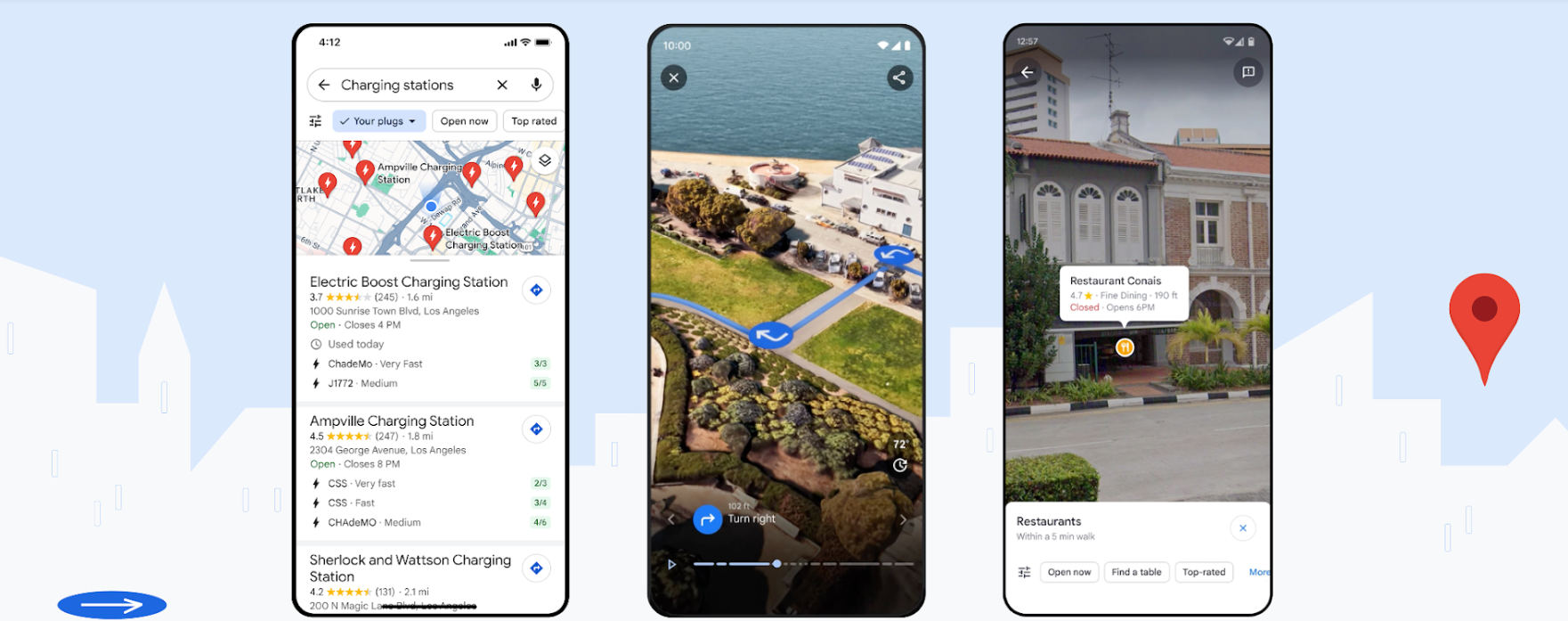
Over the past few years, Google Maps has transformed how people interact with the world with features like fuel-efficient routing and Live View to help you orient yourself when walking with augmented reality. Today with the power of AI, Google are announcing even more updates so you can confidently plan and navigate trips, make sustainable choices, and get quick inspiration for things to do.
Chris Phillips, VP & General Manager, Geo gives us the details..

Know before you go with Immersive View for Routes

Google Maps provides over 20 billion kilometers of directions every day. And with AI, we’re reimagining how you plan your trips before you go. At I/O this year, we announced Immersive View for routes, an entirely new way to preview every step of your journey — whether you’re driving, walking or cycling. This week, Immersive View for routes starts rolling out in Amsterdam, Barcelona, Dublin, Florence, Las Vegas, London, Los Angeles, Miami, New York, Paris, San Francisco, San Jose, Seattle, Tokyo and Venice on Android and iOS.

Say you want to bike along the water to the Palace of Fine Arts in San Francisco. Just request cycling directions, then tap the Immersive View preview to see your route in a stunning, multidimensional view from start to finish. You can prepare for each turn as if you were there with detailed, visual turn-by-turn directions, and use the time slider to plan when to head out based on helpful information, like simulated traffic and weather conditions. That way, you can easily avoid riding during rainy weather or heavy traffic.

All of this builds on our  work for Immersive View for places, which uses AI to fuse together billions of Street View and aerial images so you can know what a restaurant or landmark is like before you go. Now developers can also create their own immersive experiences with the launch of Photorealistic 3D Tiles in Google Maps Platform this week.

Easily understand your surroundings with Lens in Maps

Google Maps also makes it easier to understand your surroundings once you get somewhere — like if you’re exiting a subway station and need to orient yourself or if you’re scoping out a new neighborhood and need to find the nearest coffee shop. Lens in Maps (formerly called Search with Live View) uses AI and augmented reality to help you quickly acclimate yourself — whether you’re navigating a new city or discovering local hidden gems.

Simply tap the Lens icon in the search bar and lift your phone to find information about nearby ATMs, transit stations, restaurants, coffee shops and stores. In our biggest expansion of this feature yet, starting this week Lens in Maps is coming to more than 50 new cities including Austin, Las Vegas, Rome, São Paulo and Taipei.

Navigate with confidence with a more detailed map

Today, hundreds of millions of drivers depend on Google Maps’ helpful information about real-world conditions, like nearby crashes or upcoming traffic jams.

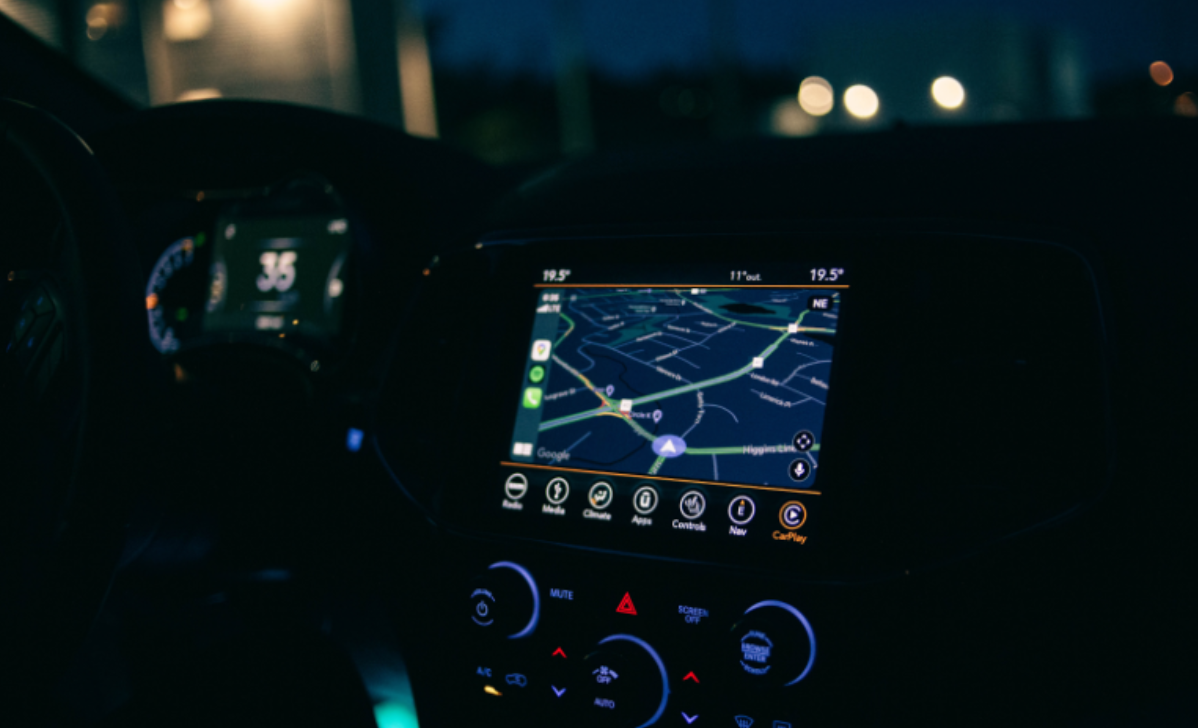
Soon, the navigation map will reflect the real world even more accurately. In addition to updated colors throughout the map, you’ll see more realistic buildings to help you better orient yourself – like if you’re driving downtown and need to understand where you are during the final stretch of your ride. And on highways, where some of the trickiest driving maneuvers often happen (like that annoying exit that requires you to quickly cross multiple lanes), you’ll see improved lane details to help you feel prepared. These updates start rolling out in the coming months in 12 countries, including the U.S., Canada, France and Germany.

In the U.S., you’ll soon see if there are HOV lanes along your route so you can make a more informed decision about how to get to your destination. And in Europe, our AI-powered speed limit information is expanding to 20 countries so you can stay safe even when it’s hard to spot speed limit signs on the road. Both features start rolling out on Android, iOS, and for cars with Google Built-in in the coming months.

Reduce charging anxiety with even more EV information

If you’re an electric vehicle driver, you may be familiar with charging anxiety. Whether you’re on a road trip, commuting to work, or heading across town, there’s nothing worse than not knowing where you can charge mid-trip.

Starting this week, building on our capabilities in cars with Google built-in, EV drivers on Android and iOS will now see even more helpful charging station information, including whether a charger is compatible with their vehicle and whether the available chargers are fast, medium, or slow to help you find the charging station that best meets your needs. And since 25% of all chargers in the U.S. are down at any given time, you can also see when a charger was last used to help you avoid wasting time heading to a broken charger. These updates start rolling out globally on iOS and Android this week wherever EV charging station information is available.

EV charging information will also be available to developers on Google Maps Platform in the Places API, so companies can show real-time EV charging station information in their websites and apps.

Find inspiration for things to do with new ways to search

Sometimes you know exactly what you want to do, but aren’t sure where to go. Search in Google Maps is evolving to give you even more answers to your questions, help you discover things to do, and find inspiration in a whole new way.

Now, when you search in Maps for specific things like the best place to find “animal latte art” or “pumpkin patch with my dog,” you’ll get photo-first results of what you’re looking for. These results are based on the analysis of billions of photos shared by the Google Maps community — all done with AI and advanced image recognition models. With this visual list of places, you can discover new spots that match exactly what you’re looking for. Just scroll through the results, tap on a photo to learn more, and navigate right there. This new way to search in Maps starts rolling out in France, Germany, Japan, the U.K. and the U.S. this week, and we’ll expand to more countries over time.

And for those times when you’re starting from scratch and have no idea what to do — like when you magically have a free weekend — you’ll soon see better-organized search results to spark your imagination. So if you’re in Tokyo, you could search for “things to do” to see thematic place suggestions like “anime”, “cherry blossoms” or “art exhibitions.” Tap on the places that interest you to learn more, and even save the options to a list if you want to check them out later. Thematic results for activities and dining roll out globally on Android and iOS in the coming weeks.

Google Maps is transforming how people explore and navigate, and AI continues to play a pivotal role in bringing how we’re building innovative experiences for people around the world. To learn more about how we use AI, check out this deep dive about how AI and imagery bring Immersive View to life. 

Telematics Evolution: From GPS to Advanced Fleet Tech

In today’s dynamic world of transportation and logistics, where speed, efficiency, and precision are paramount, the evolution of technology plays a pivotal role in shaping the future of fleet management. From its early beginnings with basic GPS tracking, telematics has undergone a remarkable transformation, giving rise to advanced fleet management solutions that are revolutionizing the way businesses manage their vehicle operations. 

In this article, we delve into the journey of telematics evolution, exploring how it has evolved from GPS to the cutting-edge technology of today, spotlighting the Geotab GO as a prime example of this remarkable evolution.

The Evolution of Telematics: From GPS to Advanced Fleet Tech

The early days of fleet management were marked by the introduction of GPS technology, which provided businesses with the ability to track their vehicles’ locations in real time. While this innovation was revolutionary at the time, it was just the tip of the iceberg. As technology continued to advance, telematics evolved beyond simple location tracking to encompass a comprehensive suite of features aimed at optimizing fleet operations.

Introducing the Geotab GO9: A Glimpse into the Future of Fleet Management

Leading the charge in this evolution is the Geotab GO9, a next-generation fleet tracking device that epitomizes the advancements telematics has achieved. Geotab, a pioneer in fleet management technology, has set a new standard with the GO9 – a device that not only builds upon its predecessors’ capabilities but also redefines the landscape of fleet management with its innovative features.

Boby Multani, one of Geotab’s Product Owners, provides insights into the Geotab GO9’s revolutionary features and its significance in the realm of fleet management. Multani highlights that while the GO9 maintains a similar physical appearance to its predecessor, the GO8, it has been completely redesigned internally to offer enhanced performance and functionality.

Breaking Down the Geotab GO9’s Innovations

The Geotab GO9 introduces a powerful 32-bit processor, making it the most robust telematics device produced by Geotab to date. This advancement translates to four times more memory and five times more RAM than its predecessor. This boost in performance not only ensures smoother operation but also allows the device to support a wider array of functions, contributing to its longevity and versatility.

A notable enhancement in the GO9 is its Global Navigation Satellite System (GNSS) module, which provides increasingly accurate location data. With the GO9, businesses gain access to real-time vehicle location, trip history, and comprehensive vehicle and driving trends data through the MyGeotab platform.

Unveiling Key Differentiators: The Gyroscope and Extended Compatibility

The GO9 sets itself apart with the incorporation of a gyroscope. Geotab’s innovative algorithms, combined with the device’s accelerometer, already offer exceptional harsh-event data and collision reconstruction capabilities. The addition of a gyroscope elevates the device’s capabilities by providing a real-time sense of the vehicle’s orientation.

The gyroscope enriches the data with additional granularity, improving the accuracy of vehicle movement tracking – especially on winding or bumpy roads. This enhanced data is invaluable for collision reconstruction, enabling a more detailed, second-by-second breakdown of events.

Despite these groundbreaking advancements, the GO9 retains the same dimensions and shape as its predecessor, simplifying installations and ensuring a seamless transition for fleet managers.

Embracing Electric Vehicles and Future-Ready Capabilities

As the automotive industry shifts towards sustainable and eco-friendly solutions, electric vehicles (EVs) have emerged as a transformative force in the transportation sector. Recognizing this pivotal change, Geotab’s GO9 not only offers cutting-edge features for traditional vehicles but also caters to the growing demand for EVs within fleet operations.

One of the challenges in integrating EVs into fleets is the need for specialized data and insights that go beyond those required for conventional vehicles. The GO9 is equipped with the ability to support EVs, ensuring that businesses are well-prepared to seamlessly transition to electric vehicles or hybrid models when the time is right.

Key Aspects of the GO9’s EV Support:

  • Battery Health Monitoring: EVs are powered by complex battery systems that require careful monitoring to ensure optimal performance and longevity. The GO9’s compatibility with EVs includes the ability to track and analyze crucial battery health metrics, providing fleet managers with real-time data on battery status, temperature, and overall health. This proactive approach helps prevent potential issues and maximize the efficiency of EVs.
  • Charging Infrastructure Integration: The transition to EVs necessitates access to reliable and efficient charging infrastructure. The GO9 supports integration with charging stations, enabling fleet managers to monitor charging activities, track energy consumption, and plan routes that incorporate charging stops. This feature is essential for optimizing the operational efficiency of EVs and ensuring that they are always ready for service.
  • Range Optimization: Range anxiety – the fear of running out of battery power – is a common concern for EV users. The GO9 addresses this challenge by providing accurate range estimates based on factors such as battery state of charge, driving behavior, and external conditions. Fleet managers can use this information to plan routes that maximize efficiency while minimizing the risk of running out of power during journeys.
  • Adaptive Telematics: EVs introduce unique driving behaviors and energy consumption patterns that differ from those of traditional vehicles. The GO9’s advanced algorithms are capable of adapting to these differences, offering specialized insights into EV performance. This adaptability ensures that fleet managers receive accurate data tailored to the specific requirements of electric vehicles.

Preparing for the Future: Flexibility and Innovation

Geotab’s decision to incorporate EV support into the GO9 is a strategic move that aligns with the shifting landscape of transportation. Even if a fleet is not fully electric at the moment, the GO9’s EV capabilities future-proof the fleet’s technology infrastructure. This flexibility allows businesses to evolve their fleet operations in response to market trends, regulatory changes, and the growing emphasis on sustainability.

Moreover, the GO9’s support for EVs reflects Geotab’s commitment to innovation and adaptability. By integrating cutting-edge features that cater to the needs of electric vehicles, Geotab showcases its dedication to providing solutions that address the evolving demands of the fleet management industry.

The Road Ahead: Evolution, Adaptation, and Progress

Telematics will continue to advance as technology pushes its boundaries and improves. Geotab’s GO9 represents a milestone in this journey, showcasing the power of innovation and adaptation in the fleet management sector. With its advanced capabilities, compatibility with existing and future vehicle models, and commitment to sustainability, the GO9 is a testament to the potential of telematics to transform fleet operations on a global scale.

In a world where businesses demand ever-higher levels of efficiency and sustainability, the Geotab GO9 vehicle tracking device is leading the way into the future of fleet management. To explore its features and learn more about how the GO9 can revolutionize your fleet operations, visit geotab.com and experience the next phase of telematics evolution firsthand.


EVs can have smaller batteries with the same range through software says WAE Technologies

WAE Elysia, the pioneering new Battery Intelligence offering from WAE Technologies (WAE), will be exhibiting its software only solution at IAA Mobility in Munich from 4th – 10th September, 2023. In a top-tier, global electric motorsport series, Elysia Battery Intelligence software has proven a reduction in battery mass of up to 19%, without impacting range.

Elysia’s suite of Battery Intelligence technologies draw on WAE’s unrivalled experience in high-performance batteries, gleaned from the sole supply of batteries to
ground-breaking electric motorsport series, as well as the design and development of batteries for road cars, electric hypercars and 250 tonne mining trucks.

Its suite of algorithms can safely unlock extra performance from an electric vehicle battery, bringing a host of benefits for plug-in car makers, which in turn can be passed on to consumers.

Elysia Commercial Lead Joe Jones explains: “Every OEM wants to reduce cost and improve performance across a range of metrics.  We are now seeing questions being asked of the EV industry from consumers becoming more aware of the impact of the weight of heavier electric vehicles and the resources required to produce batteries.”

“By using software alone to enable a reduction in the number of cells required, an OEM can deliver consumers the same performance with less cost, lower environmental impact and reduced weight. We can see that efficiency of energy use is becoming something that is becoming more important in the EV market and Elysia Battery Intelligence can help OEMs get more from less.”

One of the key areas the software solution excels is being able to unlock the batteries ability to accept more of the energy recovered by regenerative braking, and by extending the useable state of charge windows, thanks to accurate, health-adaptive state estimation algorithms. By focussing on the efficiencies that can be gained through managing the battery in a highly optimised manner, the result is reduced battery size and ultimately, cost, whilst still maintaining attributes consumers value.

  • Solution on display at IAA Mobility 2023 – Munich – 10A / Hall B1
  • elysia.co

AXA Ireland joins forces with Nevo as demand for EVs continues to rise

Live since Summer 2022, Nevo is a one-stop destination for all things to do with electric mobility. Their ambition is to educate, advise and connect consumers and businesses with the leading suppliers and industry experts – making the transition to electric simple and painless.
Since its launch Nevo has become increasingly popular, in a rapidly growing market where (year to date to end July 2023) c.26% of all new cars registered are a plug in of some variety (full electric or plug-in). All expectations are that as more new electric models come to the market this upward trend in sales will only go one way.
Derek Reilly of Nevo states that electric vehicles have definitely gone mainstream and as with most new products, the need to have a platform where consumers can get objective advice and learn about electric motors is vital. “We are delighted to say Nevo is filling that knowledge gap. We are finding that the consumers that are coming to Nevo are at different stages of their purchasing journey. Our dedicated help and advice section on the website empowers customers to learn all about electric vehicles before they make the switch, with relevant video reviews and articles. With a customer focus at our core the aim of Nevo is to make the transition to electric as seamless as possible for everyone.
AXA/ Nevo Partnership
Mick Comerford Director of Direct Retail at AXA  commented “As the leading motor vehicle insurer in the market it is great to see a site like Nevo offer consumers invaluable advice in such a seamless manner.  The reception to the site has been incredibly positive and we at AXA are delighted to be part of Irish consumers journey to all things electric.”
AXA sees Nevo helping it on two fronts – providing access to a growing market of electric vehicle drivers as well as helping it progress its own sustainability agenda. Via the Nevo platform, motorists can seamlessly purchase insurance for their electric vehicle, availing of fire and theft cover for their battery and cable, accidental damage cover for their battery, and up to €650 for accidental damage to their wall charger.

Drivers in the Republic of Ireland can now claim up to €600 towards the purchase and installation of Indra’s EV home chargers

Indra, leading British electric vehicle (EV) charging provider and smart energy technology company, has announced today that its range of smart EV home chargers has achieved Triple E certification from the Sustainable Energy Authority of Ireland (SEAI).

This means that EV drivers can now claim up to €600 off their Indra Smart PRO and Smart LUX™ purchase and installation through the Irish Government’s Electric Vehicle Home Charger Grant scheme, which is designed to encourage the transition towards EV adoption in Ireland.

The Triple E certification is an important step for Indra as the British manufacturer continues to scale its operations and enter the Irish market.  With 75,000 EVs currently on the road in Ireland, the market has shown impressive growth, including a 49% year-on-year increase in the first quarter of 2023 alone.

Leighton King, Chief Commercial Officer at Indra, said:

“We are delighted that EV drivers in Ireland are now able to access the government grant scheme to purchase and install Indra EV home chargers, making the transition to EVs more affordable.

“But that is not the only potential cost saving for EV drivers as our chargers come with the latest charging technology, giving users access to the greenest and cheapest energy tariffs.”

Compatible with any energy supplier, the Indra Smart PRO and Smart LUX™ chargers work seamlessly with Indra’s intuitive app, helping users to minimise both their carbon footprint and energy bills.

All Indra chargers are equipped with industry leading, proprietary, and patented PESTTM technology and water and dust protection, making them the safest EV chargers on the market. The Smart PRO and Smart LUX™ chargers automatically receive remote over-the-air (OTA) software updates to keep them getting smarter every day.

Indra’s class-leading smart EV chargers are available for purchase via its website. To find out more about Indra, please visit: https://www.indra.co.uk/

Wireless Charging Electric Vehicles Is Safer Than Plugging In, Reports IDTechEx

The most common method of Wireless Power Transfer (WPT) used today is accomplished via low to high-frequency (30 kHz to 30 MHz) time-varying magnetic fields. This may also be referred to as ‘inductive WPT’ or ‘magnetic field WPT’. Wireless chargers operate far below the radio frequencies which are present all around us. Unlike high-energy (ionizing) radiation, electric and magnetic fields (EMFs) in the non-ionizing part of the electromagnetic spectrum cannot damage DNA or cells directly.

At the frequencies used for wireless EV charging, magnetic fields are impervious to air, water, ice, concrete, wood, plastics, and other common non-metallic materials. They pass through these objects and the human body without any interaction or causing any harm whatsoever. This also allows for hermetically sealed designs that are safer and more robust than are possible with contact-based or wired charging. A wireless system also minimizes the risk of electrocution and trip hazard. The latest report from IDTechEx includes detailed coverage of the standards and safety features around wireless EV charging systems.

Author – Shazan Siddiqi – Technology Analyst IDTechEx


Active Shielding Methodologies

Shielding is important for the safe operation of wireless EV chargers. The following problems may occur without shielding: the magnetic field may interfere with the EV or other objects, cause battery heating, and circulate current in metallic parts. There are two basic methods for shielding against low to medium-frequency magnetic sources, which includes the use of ferrites to provide magnetic flux directionality and aluminum plates to minimize field leakage. IDTechEx research interviewed various players in the industry and found that shielding is mainly added under the transmitter pad and above the receiver pad. The report finds that instead of radiating EMF, players are recycling the magnetic field and containing it within the pads because it is resonant, highly coupled, and shaped.

Foreign Object Detection (FOD)

The safety of wireless EV chargers is further enhanced by using foreign object detection (FOD) and living object protection (LOP) systems. These systems identify any metallic objects between the transmitting and receiving pad and can suspend power transfer. This is important as metal items, even small objects such as paper clips or coins may heat up and pose a burn risk. FOD can be achieved in a number of ways. For example, capacitive sensors in the pad can be used to monitor the performance of the coils. A metal object on the pad changes the capacitance, allowing its presence to be detected. That does not necessarily detect organic objects, such as an animal on the pad in a garage, though. Optical sensors around the edge of the plate using infrared LEDs and photodiode detectors or even Lidar can be used to detect both metal and organic objects on the pad and switch off the charging process if an obstruction is detected.

Categories of FOD methods used in wireless EV charging systems. Source: IDTechEx

IDTechEx research finds that it is important for players to be mindful of interoperability, electromagnetic compatibility (EMC), and safety from the early stages of the development process. Knowing the requirements and standards in place is essential to ensuring that products are compliant and that product redesign and testing time and the cost is minimized. The report “Wireless Charging Market for Electric Vehicles 2023-2033: Technology, Players and Forecasts” provides insights on the industry R&D status along with the outlook for future developments.