Circle K launches own brand range of EV chargers

Circle K, Ireland’s largest forecourt and convenience retailer, has announced it is launching a new range of own brand electric vehicle (EV) chargers across its network over the next two years. Circle K will invest a total of €7 million to install EV chargers at over 30 Circle K forecourts across Ireland by 2025.

This investment enhances Circle K’s existing network of EV chargers, which is already the most extensive across the Irish forecourt and convenience retail industry, through its strategic partnerships with ESB, IONITY and Tesla, with chargers located at 42 service stations.

Circle K’s first two own brand EV charge points have opened at Circle K Junction 5, M9, Rathcrogue, Co. Carlow, and Circle K Junction 14, M8, Gortore, Fermoy, Co. Cork. These first two locations will offer charging speeds of up to 300kW, with future chargers to offer 150kW, giving EV drivers the ability to easily charge their vehicles quick and conveniently.

With EVs at the heart of the Irish Government’s plans to decarbonise the transport sector, as outlined in the Electric Vehicles Charging Infrastructure Strategy 2022 – 2025, Circle K is committed to supporting this strategy through the enhancement of its own EV charging network and growing the EV charging infrastructure nationwide.

Commenting on the launch, Gordon Lawlor, Managing Director of Circle K Ireland, said: “We are delighted to be launching our new network of Circle K EV chargers, which will add to our existing EV charging offering provided through our partnerships with the ESB, IONITY and Tesla. Today’s announcement builds on our existing EV offering and confirms our ambition to support Irish motorists in their transition to electric vehicles, helping support the Government’s EV targets. We are excited to introduce our new high-speed, reliable, strategically placed charging points and look forward to welcoming customers to our locations.”

“EV is something we have been extremely focussed on for a number of years. Being part of the Circle K global network means we have access to the very latest thinking and key developments on EV charging, especially from our colleagues in Norway who are leading the way in terms of electrification. This, coupled with our expertise locally, puts us in a very strong position to support our customers. We intend to use this expertise in the years ahead to continue adding chargers to our network.”

Jonathan Diver, Senior Director Fuels at Circle K Ireland, commented: “We understand the Government’s goal is to reduce carbon emissions by 50% by 2030 and we’re committed to developing our business to support this, with EV playing a key role in achieving this target. We believe we have an important role to play in ensuring a smooth transition to EV usage in this country and plan to roll out a strategic network of EV chargers over the next seven years across Ireland.”

Speaking at the launch of Circle K’s new own brand EV chargers, Minister for the Environment, Climate and Communications and Minister for Transport, Eamon Ryan TD said: “It is great to be here at the launch of Circle K’s new network of EV chargers. Ensuring motorists have easy access to charging facilities across the country will play a key role in our transition away from internal combustion engine vehicles. Today’s announcement will support the Government’s goal of rapidly increasing the number of publicly accessible chargers across Ireland and will help to give even more motorists the confidence to make the switch to an electric vehicle.”

Broadcaster Richie Sadlier was at Circle K Junction 5 M9 to officially launch Circle Ks own range of EV chargers. Richie concluded: “I’m delighted to be at Circle K Junction 5 M9, Rathcrogue today to celebrate the launch of Circle K’s own range of EV chargers. I’ll be on the road covering football matches and school talks in the coming months, so it’s great to know that EV chargers are conveniently located at Circle Ks around the country”.

Open 7 days a week and with some facilities open 24 hours, Circle K is a safe and convenient place to charge, offering motorists a large and varied offer of fresh food, beverages and snacks to enjoy while charging their car, as well as toilet facilities and free WiFi.

To locate Circle K’s EV chargers, you can visit Find a Circle K Petrol Station in Ireland | Circle K

EV Platform Monta Partners with Nevo to Provide Smart Charging Solutions for Apartment Residents

(EV) charging platform Monta, today announced a new partnership with Nevo, Ireland’s dedicated EV marketplace. The partnership will provide smart charging solutions at different residential and commercial sites, with the first installs happening at two separate residential apartment blocks in Dublin. Nevo will use Monta’s platform to manage the charge points allowing end users to benefit from pricing flexibility, accessibility, billing and utilisation features such as queueing, reservations and scheduling. 

Monta’s announcement today comes as Nevo plans to manage and install hundreds more charging points across Ireland in 2023 in response to experiencing a surge in demand for smart charging solutions from apartment complexes, workplaces and fleets across the country.  

Commenting on the announcement, Ricky Hill, Country Manager for Monta in Ireland said: “Monta looks forward to working with Nevo in building a seamless user experience for EV drivers and stakeholders across the country. This partnership marks an important step in providing equal access to prospective EV drivers no matter where they reside or live in the country. Being a European market player, we understand the need to service different residential locations such as apartment blocks. By joining forces with Nevo, Monta will be the one stop shop for EV drivers and charge point owners.” 

Monta’s app and charge point management systems will help with Ireland’s EV transition by eliminating the need to connect with multiple providers, thereby improving the overall user experience. As part of the partnership Monta and Nevo plan to offer their integrated EV solutions to benefit companies, fleets, county councils and utilities with the install and management of their charging stations.  

Also commenting on the partnership, Derek Reilly, General Manager at Nevo said: “Monta’s integrated software solutions are a stand-out USP for the EV market here in Ireland that will allow charge point owners the opportunity to better manage their installs giving end users more options and flexibility when plugging in their EVs to charge points across the country. We are excited to roll out our joint EV platform solutions to apartment residents in Dublin and expect to see the partnership grow to service commercial sites, fleets and rentals.”  

Monta and Nevo both launched in the Irish market last year. Nevo lists every available full-electric and plug-in hybrid vehicle on sale in Ireland alongside its install service for EV charging points. Monta’s EV platform is designed to enable easy management and monitoring for charge point owners, while on the front end its app for EV drivers will allow anyone to top up via Google Pay and Apple Pay.    

New ways Google Maps is getting more immersive and sustainable

Today Google is announcing new updates to Google Maps that will help people explore and navigate in new and more sustainable ways in a more immersive and intuitive map. AI is bringing these changes to life with updates for immersive view and Live View, along with new features for electric vehicle (EV) drivers and people who walk, bike or ride public transit. Some updates will be available from today with some launching in Dublin over the coming months.


Immersive view: rolling out now

Immersive view is an entirely new way to explore a place — letting you feel like you’re right there, even before you visit. Using advances in AI and computer vision, immersive view fuses billions of Street View and aerial images to create a rich, digital model of the world. And it layers helpful information on top like the weather, traffic, and how busy a place is.

Say you’re planning a visit to Trinity College. You can virtually soar over the campus and see where things like the entrances are. With the time slider, you can see what the area looks like at different times of day and what the weather will be like. You can also spot where it tends to be most crowded so you can have all the information you need to decide where and when to go. If you’re hungry, glide down to the street level to explore nearby restaurants — and even take a look inside to quickly understand the vibe of a spot before you book your reservation.

To create these true-to-life scenes, Google uses neural radiance fields (NeRF), an advanced AI technique, transforms ordinary pictures into 3D representations. With NeRF, Google Maps can accurately recreate the full context of a place including its lighting, the texture of materials and what’s in the background. All of this allows you to see if a bar’s moody lighting is the right vibe for a date night or if the views at a cafe make it the ideal spot for lunch with friends.

Immersive view starts rolling out today in London, Los Angeles, New York, San Francisco and Tokyo. And in the coming months, it’ll launch in even more cities, including in Amsterdam, Dublin, Florence and Venice.

Explore and navigate with AR

Search with Live View uses AI and augmented reality to help you find things around you — like ATMs, restaurants, parks and transit stations — just by lifting your phone while you’re on the street. Google recently launched search with Live View in London, Los Angeles, New York, Paris, San Francisco and Tokyo. In the coming months, the feature will be launched in Barcelona, Dublin and Madrid.


Make driving an EV easy

We’re also seeing more drivers and car companies move toward electric vehicles. As a result, Google Maps is introducing new features for EV drivers with vehicles that have Google Maps built in.


  • Adding charging stops to shorter trips: On any trip that’ll require a charging stop, Maps will suggest the best stop based on factors like current traffic, your charge level and expected energy consumption. Now you can worry less about remembering to charge, no matter where you’re headed. And if you don’t want to visit that particular station, you can easily swap it with another one with just a few taps.

  • Very fast charging stations: The ‘very fast’ charging filter will help you easily find stations that have chargers of 150 kilowatts or higher. For many cars, this can give you enough power to fill up and get back on the road in less than 40 minutes.

  • Charging stations in search results: Google Maps will also show you in search results when places like a supermarket have charging stations on-site. So if you’re on your way to pick up groceries, you can more easily choose a store that also lets you charge your car there.


Get glanceable directions while navigating

No matter what mode of transportation you’re taking — whether you’re walking, biking or taking public transit — Google Maps is making it even easier for you to get around.

With glanceable directions, you can track your journey right from your route overview or lock screen. You’ll see updated ETAs and where to make your next turn — information that was previously only visible by unlocking your phone, opening the app and using comprehensive navigation mode. And if you decide to take another path, Google Maps will update your trip automatically. These glanceable directions start rolling out globally on Android and iOS in the coming months, and will also be compatible with Live Activities on iOS 16.1.


These are just a few ways that AI is helping us reimagine the future of Google Maps — making it more immersive and sustainable for people around the world.

SSE Airtricity launches nationwide EV charging network

SSE Airtricity has today announced plans to develop a nationwide EV charging network.

The initiative will see SSE invest €35m to install 30 ultra-rapid electric vehicle (EV) charging hubs across Ireland over the next four years, all of which will be powered by 100% green electricity from SSE Airtricity.

As part of the EV infrastructure rollout, it has been confirmed that the first hub will open at the Lough Sheever Corporate Park in Mullingar, Co. Westmeath next year. The site will be publicly accessible and designed to accommodate long-wheelbase vehicles and buses, as well as cars and fleet vehicles.

As part of Phase One of the project in 2023, and subject to planning permission, additional hubs with 10 charging bays will be installed in Blanchardstown Business Park and Greenogue Industrial Estate in Dublin.

It is expected that a total of six sites will be operational by the end of 2023, with a further 10 coming online in 2024. Each ultra-rapid bay will have charging capabilities of up to 150 kilowatts (kW), sufficient to deliver 12.5 kms of range per minute of charging.

The announcement follows the Electric Vehicle Summit 2022 at the RDS in Dublin this week, where SSE Airtricity was a headline sponsor.

Kevin Welstead, EV Director Sector SSE, said: “At SSE, we have extensive experience in the development and rollout of EV charging infrastructure. From our network in the UK, we understand that when it comes to charging people just want to be back on the move on in the shortest amount of time possible.

“We’re delighted to launch our first EV charging hubs in Ireland, and we’re really excited about the network we are going to develop over the coming years. In building out this infrastructure, we want to ensure peace of mind for all EV drivers – domestic, car fleet, commercial – that when they show up at one of our facilities, they can plug in to a working, high power charger as soon as they arrive, and that they can be back on the move within the shortest amount of time possible.”

Klair Neenan, Managing Director SSE Airtricity, said: “SSE Airtricity has a long-standing commitment of delivering green energy and green energy solutions to our customers, and we’re delighted to take that a step further with the announcement of the SSE Airtricity EV charging hubs.

“With COP27 underway in Egypt, today’s announcement is fitting as we renew our commitment to supporting Ireland’s climate change targets and support Government’s Climate Action Plan and EV transport targets.”  

SSE has committed to installing 300 ultra-rapid charging hubs powered by traceable, renewable energy across Ireland and the UK over the next five years. The very first hub, on Castlebank Street in Glasgow, went live at the end of September.

A 2021 study by the UK’s Association for Renewable Energy and Clean Technology found that Ireland ranked joint-last in terms of implementing charging infrastructure. The Government’s 2021 Climate Action Plan has set a target of one million EVs on the roads by 2030, including private cars, heavy goods vehicles, small public service vehicles, and larger public transport vehicles.

Figures released last month by the UK’s Department for Transport revealed that Northern Ireland has the lowest level of charging device provision in the UK (18 devices per 100,000).

In addition to announcing this nationwide infrastructure across Ireland, SSE has also just completed a deal with pan-European portfolio company, M7 Real Estate, to install charging hubs at the 20 locations the company manages in the United Kingdom.

Electric vehicle owners believe the Government is not doing enough to facilitate the adoption of EVs

New snapshot research undertaken by Energia and the Irish Electric Vehicle Owners Association has found that while large numbers of EV purchasers are driven by environmental concerns (40%), almost as many are enticed by the financial savings offered by electric charging (39%).

More than half of respondents to the survey, which took place in June 2022, are paying less than €5 to charge their car, a clear illustration of the cost benefits of EVs versus traditional petrol and diesel vehicles. Furthermore, the number of people charging their electric vehicle daily has dropped by 7%, with charging 1-3 times a week the most common response.

The survey also found that electric vehicle owners feel the Government is not doing enough to promote electric vehicles, with 87% of respondents stating so. Almost a third (28%) lack confidence that the government’s target of 1 million EVs by 2030 would be reached.  However, respondents were positive about the available SEAI grant, with nearly a fifth stating that they wouldn’t have purchased a home charge point without it.


91% of respondents charge their electric vehicles at home. Free chargers, such as those provided by a third of survey participants’ employers, along with range anxiety, were the main reasons stated by the 9% who do not charge at home.

In terms of charging technology, most home charge points continue to come from charge point installers (47%) despite a decrease of 19% since 2021. Being able to connect their home charge point to their solar panels was of importance to 31% of respondents, an increase of 18% since 2021. There has been a 3% increase since 2021 in those using public chargers.

Ciara Moane, Electric Vehicle Product Owner with Energia commented: “We know that the environment is the most important factor for those deciding to buy an electric vehicle, and as Ireland’s greenest electricity supplier, we take pride in providing 100% renewable energy to our customers with charge points located at their home. Over the past year, the number of home charge points we have installed has increased tenfold. With one in five cars licensed so far this year being electric or plug-in hybrid, we are confident that we will see these numbers continue to grow significantly, along with the numbers of customers on EV specific tariffs. Energia’s EV offers include reduced night rates and tariffs bundled with discounted home charge points. We are delighted to be energy partners with some of Ireland’s largest electric car manufacturers including Hyundai, Kia, Opel, Honda, FIAT and Citroën. Energia are very proud to play our part in assisting customers to make cleaner energy choices and help them on their exciting journey to owning an EV.”

Kevin Dowling, Chair of the IEVOA added: “Over the past few years we have seen the shift to EVs accelerate, and from this research we know that Irish people’s deep concerns about their carbon footprint and their household running costs are prompting this. Being able to charge at home is a huge benefit for owners and alongside public transport, walking, and cycling, switching to an EV becomes low hanging fruit for households to play their part in efforts to reach net zero.”

Apricale resets the automotive engineering paradigm with revolutionary hydrogen powertrain

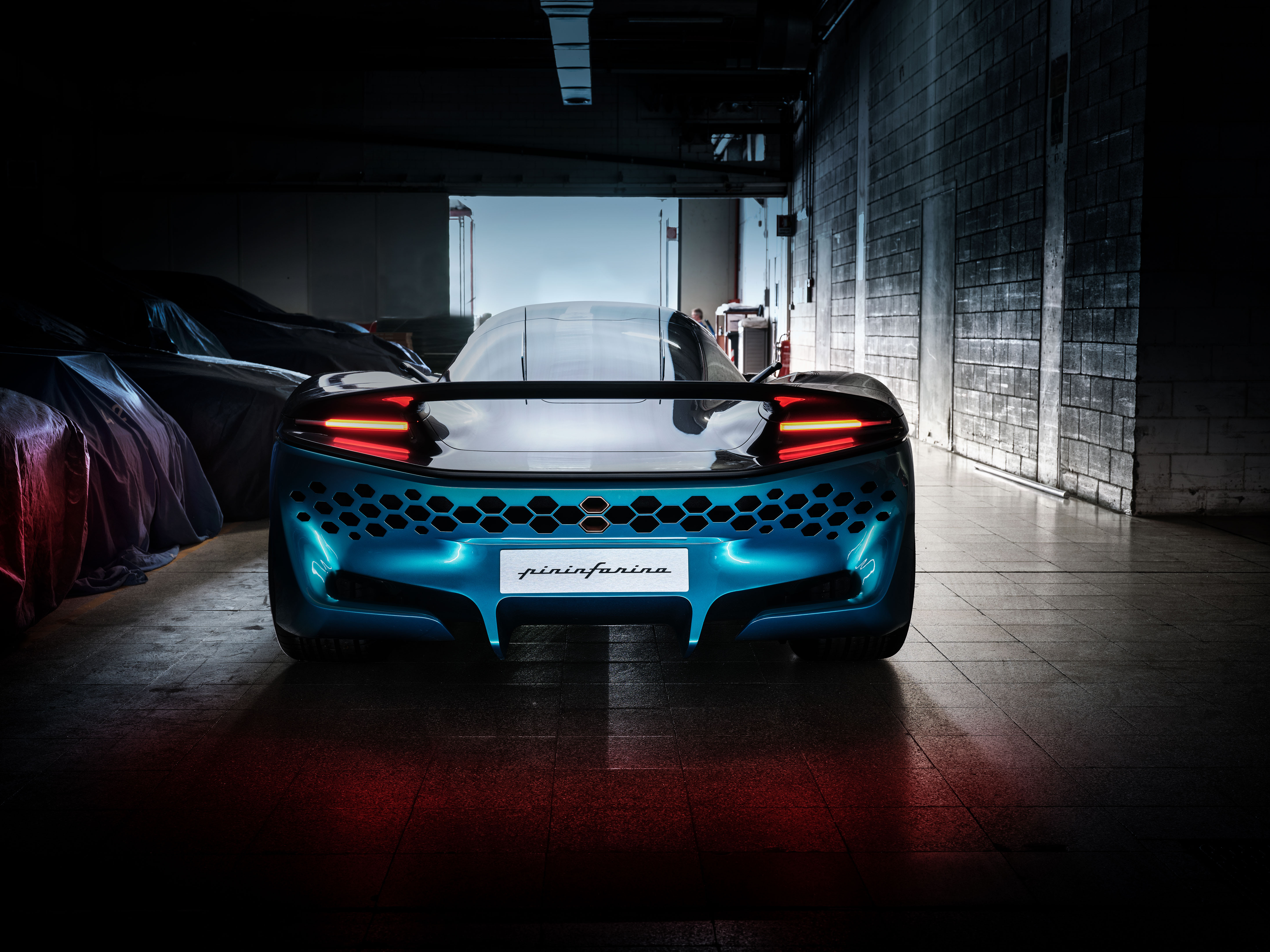
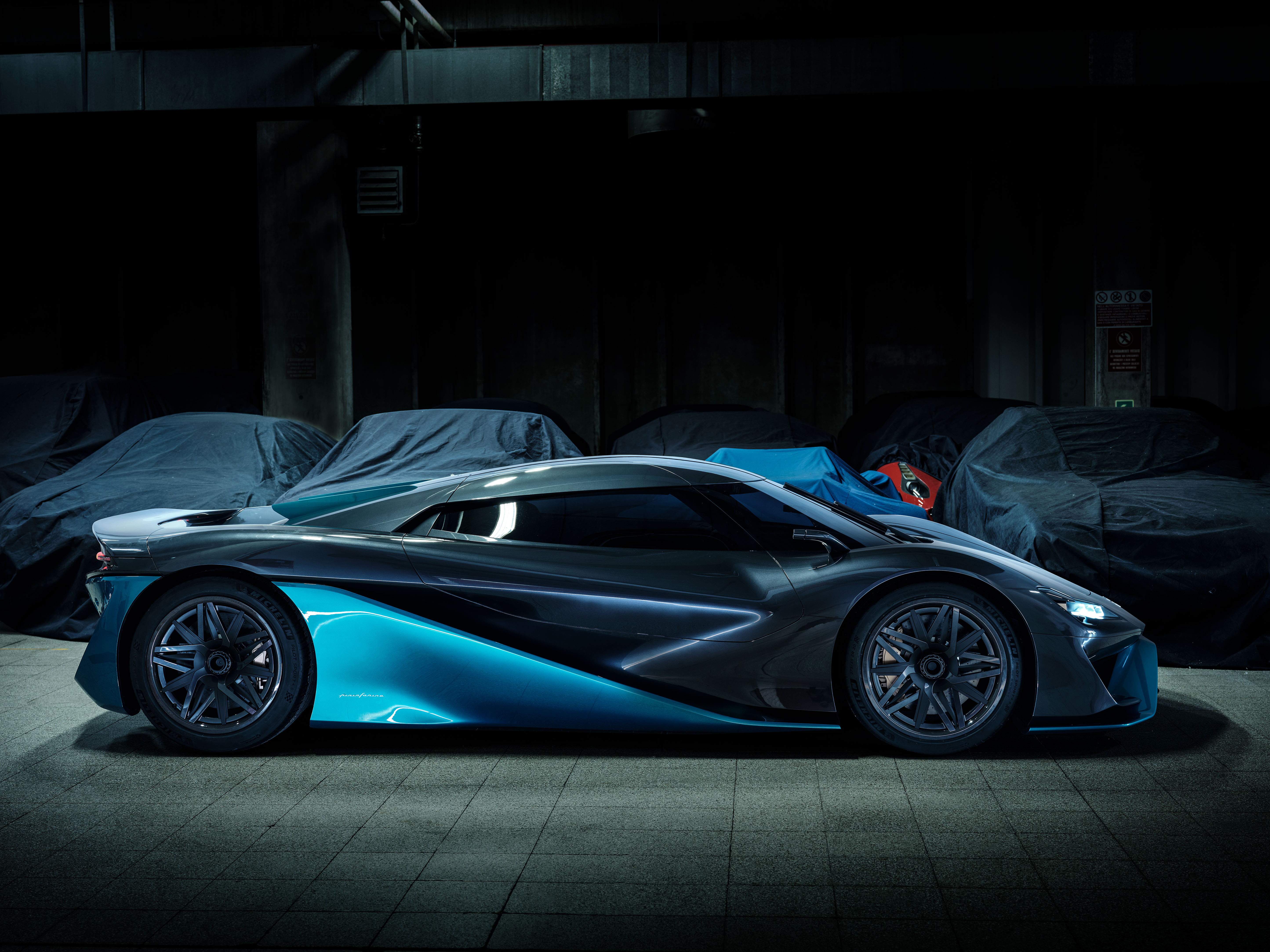
Pioneering cleantech engineers, Viritech debuted their revolutionary hydrogen powertrain technology in the form of the Apricale, the world’s first zero-emission hypercar to achieve weight parity with petrol-engined competitors, at the Goodwood Festival of Speed today.

Performance with Purpose

Apricale is the first car in the world to achieve zero-emissions hypercar performance, with a weight of only 1,000kg. This transforms the driving experience of the Apricale. it combines the agility of the best petrol-engined hypercars with the instant response of an electric motor. Indeed, the electric drivetrain means it is actually more responsive than a traditional hypercar.

However, the Apricale does more than simply transform the electric hypercar. With the combination of a light weight and zero emissions, it opens up a new world of sustainable transport. Many vehicles cannot function with a powertrain that weighs more than an equivalent internal combustion engine. Until now, such vehicle categories have been excluded from the move to zero-emissions powertrains, as batteries are always heavier than internal combustion engines – and the higher the power requirement, the bigger the difference.

The powertrain of the Apricale represents a historic landmark. It proves that a zero-emissions powertrain can offer the same power, the same weight and the same range as an internal combustion engine.

Re-imaging FCEV 

The ambition to overcome all the compromises of zero-emission vehicles required Viritech’s engineers to completely reconsider how fuel cells and batteries function together. Matt Faulks, Viritech’s CTO explains, “Hydrogen fuel cells have, until now, been used as range extenders for powertrains with batteries at their heart. We’ve essentially turned that approach on its head, developing a powertrain around multi-hundred kW fuel cell system supported by a lightweight but highly efficient battery. This delivers hypercar performance for Apricale, but at less than half the weight of typical BEV hypercars.”

Faulks continues, “Not only does this reduction in weight transform Apricale’s driving dynamics, but our reduced reliance on batteries means less demand on rare earth minerals.”

The multi-hundred kW fuel cells are combined with unique Ultra High Power lithium-ion cells developed by technical partners, AMTE Power and Viritech’s patent-pending intelligent energy management system, Tri-Volt™. While the fuel cells provide the main motive power for Apricale, the battery provides additional power for acceleration and ultra-high performance driving, as well as a highly-efficient storage for regenerative braking energy.

The Tri-Volt™ Energy Management System and Viritech’s patent-pending power electronics enable a continuously variable mix of energy from both the fuel cells and the batteries. In addition, the very fast charge and discharge batteries enable the regenerative braking system to recover many times more kinetic energy than a traditional battery electric vehicle.

Until now, hydrogen has been another key weight problem. To withstand the 700 bar pressure, most hydrogen storage tanks have a weight efficiency of only around 5% (ie 5kg of hydrogen requires a 100kg storage tank). Viritech’s engineers developed a radical solution. Viritech’s patent pending Graph-Pro™ technology uses lightweight composites and a graphene-enabled resin system, allowing the tanks to form part of the structural element of the Apricale monocoque. This solution minimises weight, improves packaging and provides a projected range of over 350 miles/560 kms before refuelling.

The Chassis, Unshackled 

The fact that Apricale weighs only 1,000kg means that it can escape the handling constraints of a BEV hypercar. The suspension features all-round pull-rod torsion bar suspension with a limited degree of active ride control.

With a low polar moment of inertia, the car will have the dynamic characteristics of a classic mid-engined supercar with minimal weight transfer under steer, yaw and pitch.

There are two drive motors (one on the front axle, one on the rear). With its sub-1,000kg weight, there is limited requirement for torque vectoring, so the driveline uses a pair of mechanical differentials.

The unique combination of light weight and the instant response of electric motors means that the Apricale will be even more inspiring to drive than a traditional supercar.

Future Technology fused with Timeless Design

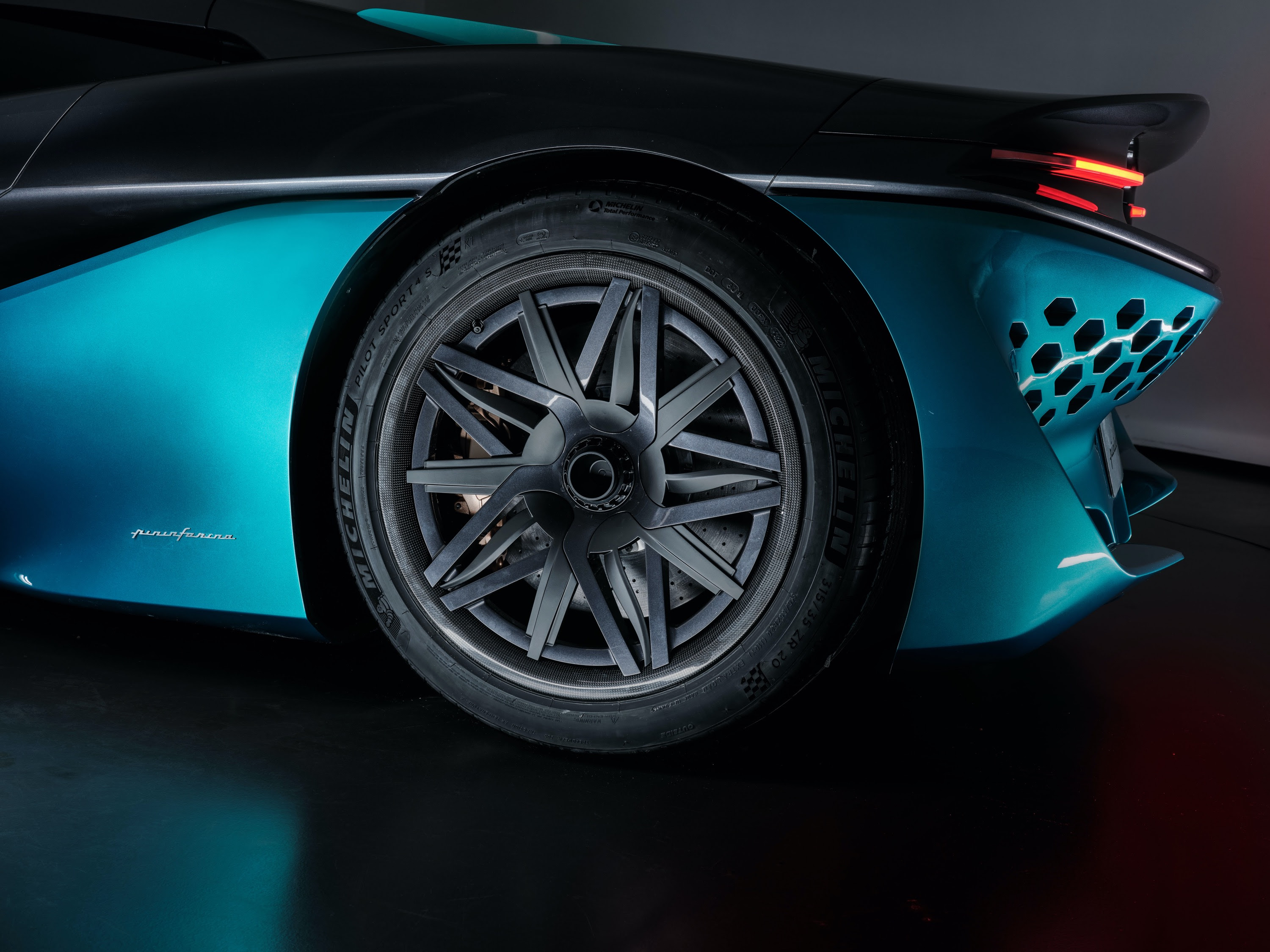
The Apricale revealed at Goodwood today was originally conceived as a reference design by Viritech, and optimised by Pininfarina.

Silvio Angori, CEO of Pininfarina describes the design as ‘a synthesis of technology, sustainability, beauty, and above all, performance.’ Viritech is extremely proud of working with perhaps the greatest name in automotive design, a partnership which embodies the Apricale’s mission to take the heritage of the hypercar, and completely reinvent it for the future.

Alongside the development of the Apricale’s styling, Viritech is in discussion with Pininfarina to build the limited production run of just 25 examples at its atelier in Cambiano in Turin.

With stunning looks, Apricale will not just be seen, but also heard. Matt Faulks explains that ‘cars must be imbued with personality’ and to that end, Apricale will have its very own distinct and futuristic sound emanating from the fuel cells and electric drivetrain.

Delivered in 2024

Apricale’s key technologies including the drivetrain, the Tri-Volt™ EMS and the Graph-Pro™ structural storage vessels have already been validated in two mule vehicles that have successfully undergone testing. Experimental prototype 1 (XP1) will provide the final sign-off process for the powertrain. While XP1 will test for 100,000km, it will overlap with a production prototype, intended to validate all aspects of Apricale during 2023, so that Viritech can commence customer deliveries in early 2024.

Scalable Technology

The technologies developed by Viritech are highly scalable. Viritech focused on the Apricale for their first application since a hypercar platform makes the most significant demands of power, weight and packaging. Proven in Apricale, the powertrain technology is being developed by Viritech for a diverse range of sustainable transport applications.

Matt Faulks, Viritech’s CTO said, ’Apricale has enabled us to completely reassess the benefits that different energy vectors offer. Until now, engineering choices have been finite and compromised, but adding hydrogen into the mix offers a whole new array of capabilities that we have aimed to optimise with a new approach to FCEV. Apricale is going to be spectacularly exciting for its owners and we truly hope marks a new chapter in powertrain technology. It is great to see that vision realised at Goodwood today.’

Timothy Lyons, Viritech’s Founder said, ’Viritech is focused on becoming the world’s leading developer of hydrogen powertrain solutions and the Apricale, with its requirement to optimise weight, space and performance, provided us the perfect development platform for our core powertrain technologies, which have also been designed for broad application in the coming age of sustainable transportation.’