ABP Clones reduces carbon emissions by 80%

ABP, one of Europe’s leading food processors, has partnered with ESB to reduce carbon emissions at its Clones site by 80% with the installation of an innovative, state-of-the-art water heating system.

A reduction of 80% in carbon emissions equates to approximately 1,692 tons of CO2, which is the same as the emissions from 627,032 litres of diesel, or 268 homes oil usage for one year.

The heating system recycles the lost heat generated by refrigeration units, using it to heat the water used for cleaning, processing and hygiene on site. The result is that only a small amount of water needs to be heated using a smaller new and efficient gas boiler. The heating system principle is similar to the air to water heat pump system used in domestic homes; however, this system boosts waste heat instead of air.

The project forms part of ABP’s overall sustainability strategy and is part of an extensive decarbonisation plan that aims to reduce scope 1 and 2 emissions by 42% from 2021 to 2030 across all ABP sites in Ireland, UK and Europe. This is a significant step in successfully reaching these targets which have been officially validated by the Science Based Targets Initiative (SBTi).

ABP is continually adopting measures to reduce its carbon footprint and improve its sustainable approach. The company’s sustainability strategy is ‘’Doing More with Less’’, which is closely aligned to the UN Sustainable Goals. This strategy runs through every aspect of ABP’s supply chain, from farms to processing sites and the end consumer. The decoupling of resource usage and productivity being a key feature.

Kevin Cahill,  Managing Director, ABP Ireland & Poland said; ‘’This is a very exciting innovative project for ABP and an important step in our drive for greater sustainability. This is a pilot project at the Clones site, we are in the process of replicating it at another of our facilities. This will result in an enormous reduction in the carbon footprint and go a long way to achieving our carbon reduction targets as set out by the Science Based Targets initiative.’’

“This project is a significant milestone in our mission to support businesses in achieving their sustainability goals,” said Ciaran Gallagher, Head of Smart Energy Services at ESB. “By partnering with ABP, we will demonstrate the transformative impact of advanced heat pump technology on reducing carbon footprints and enhancing energy efficiency. Our collaboration underscores the critical role of innovative solutions in driving progress towards Net Zero targets. As leaders in smarter energy solutions, we look forward to continuing our work with ABP and other forward-thinking companies to replicate this success across more facilities, paving the way for a more sustainable industrial sector.”

ABP has a long track record in developing sustainability initiatives and environmentally friendly policies. The company is a founding member of the Plastics Action Alliance (PAA), improving sustainability in plastic packaging supply chains. ABP’s Plastics Policy ensures that all plastic packaging used by ABP must be designed to reduce environmental impact and maximises recyclability.

ABP has planted over 40,000 trees since 2020 and aims to reach a target of 100,000 trees planted by 2030. The company also has an extensive waste management strategy across all its locations, which saw it successfully reduce the amount of cardboard packaging it uses annually by 800 tonnes since 2021.

Why Diaphragm Pump Technology Matters in High-Tech Industries

Diaphragm pump technology is essential in many industries, providing a reliable way to control sensitive fluids and gases. High-tech sectors like pharmaceuticals, energy, and aerospace depend on this technology for its precision and durability. It ensures processes run smoothly, even in extreme conditions. Its importance continues to grow as industries demand safer and more efficient systems.

Let’s explore why diaphragm pump technology plays such a key role and how it benefits these industries.

Understanding Diaphragm Pump Technology

Diaphragm pump technology uses flexible, durable membranes made from materials like rubber, Teflon, or composites to manage liquids or gases. These membranes withstand pressure changes and prevent breakdown.

For example, in pharmaceutical production, diaphragm pumps act as barriers to prevent contamination and ensure safety standards, highlighting their reliability and precision for critical processes.

Why Diaphragm Pump Technology Stands Out

The unique qualities of diaphragm pump technology make it invaluable to industries requiring reliability and precision. By checking out sites like https://knf.com/en/us, you can see that they offer more benefits than you could ever imagine. From long-lasting materials to exact performance, it provides unmatched advantages.

Long-Lasting Materials

Diaphragm pumps are built to last, even in tough environments. Many are made from materials that resist chemicals, heat, and wear. For instance, diaphragm pumps in chemical plants often use Teflon because it doesn’t corrode when exposed to harsh substances. This durability reduces equipment maintenance and saves costs over time.

Precise Performance

Industries like biotechnology and electronics require exact control over fluid and gas flow. Diaphragm pump technology provides this precision. For example, in semiconductor manufacturing, diaphragm pumps protect delicate processes by preventing contamination.

Flexible Applications

Another advantage of diaphragm pumps is their adaptability. They can be customized for specific needs, such as handling high pressure, resisting chemicals, or working in extreme temperatures. This flexibility makes them a go-to solution for many industries.

The exceptional durability, precision, and adaptability of diaphragm pump technology make it a cornerstone for industries with demanding operational needs. Its unmatched capabilities ensure consistent performance, addressing challenges across a variety of applications.

How Diaphragm Pump Technology Is Used

Diaphragm pump technology has found its way into many industries due to its reliability and precision. Each sector benefits from its unique capabilities in fluid and gas control.

Pharmaceutical Industry

Pharmaceutical companies rely on diaphragm pump technology to maintain cleanliness and accuracy. Many manufacturing processes, such as making vaccines or medications, have strict safety rules. Diaphragm pumps and valves help keep these processes sterile, reducing the risk of contamination.

In vaccine production, for instance, diaphragm pump systems ensure the correct amount of fluid is measured and dispensed. Consistency is critical because even small errors can impact the effectiveness of a drug.

Energy Sector

In energy production, diaphragm pump technology improves safety and efficiency. It handles high-pressure gases and corrosive liquids in systems like natural gas processing plants and renewable energy facilities.

Hydrogen energy systems often use diaphragm compressors to store and transport hydrogen gas. These compressors manage high pressures without leaks, which is crucial for safety and performance.

Aerospace and Defense

The aerospace industry requires equipment that works in extreme conditions. Diaphragm pump technology fits this need by providing reliable solutions for fuel management and hydraulic systems.

Aircraft fuel systems, for example, use diaphragm valves to control fuel flow during flight. These valves ensure engines receive a steady supply, even in changing conditions. This reliability makes diaphragm pumps a trusted component in aerospace applications.

The wide-ranging applications of diaphragm pump technology demonstrate its versatility and importance in critical industries. Its ability to deliver precision and reliability makes it an indispensable tool for ensuring safe and efficient operations in diverse fields.

Why High-Tech Industries Rely on Diaphragm Pump Technology

The reliance on diaphragm pump technology stems from its ability to address challenges unique to high-tech industries. The need for reliability, precision, and safety in critical operations leaves little room for error. Diaphragm pump systems provide the performance consistency these industries demand.

For instance, in medical device manufacturing, even minor inconsistencies in production can compromise patient safety. Diaphragm pump technology eliminates such risks by ensuring accurate and sterile fluid handling. Similarly, in aerospace systems, diaphragm pump components reduce the likelihood of mechanical failures, enhancing overall safety.

Looking Ahead: The Future of Diaphragm Pump Technology

As technology advances, diaphragm pump systems continue to improve. Researchers are developing materials that perform better under tougher conditions. For example, nano-coated diaphragm pumps offer increased resistance to chemicals and wear.

Sustainability is another focus. In renewable energy, diaphragm pump technology is being enhanced to make systems more efficient and environmentally friendly. These innovations ensure diaphragm pumps remain an important part of high-tech industries.

Conclusion

Diaphragm pump technology is vital for industries that need precision, reliability, and flexibility. Its applications in fields like pharmaceuticals, energy, and aerospace highlight its value in ensuring safe and efficient operations. With ongoing advancements, diaphragm pump technology will continue to address complex industrial challenges, shaping the future of high-tech systems. Its impact is far-reaching, making it an essential tool for modern industries.

Achieving sustainability goals in the era of AI

Today, as AI seamlessly integrates into our daily lives, its adoption and impact are no longer a question of ‘if’ but ’when’ and – most importantly – ’how’. Mark Hopkins, Sales Director at Dell Technologies Ireland

According to a Dell Technologies study, 76% of IT leaders believe that generative AI (GenAI) will be significant or transformative for their organizations. Meanwhile, McKinsey estimates that work automation using GenAI, and other technologies will boost productivity by 60-70%.

As AI becomes more embedded in our daily lives, its potential to help build a more sustainable future is becoming increasingly evident. AI’s ability to analyze vast amounts of data allows businesses and governments to make more informed decisions about sustainability efforts. Moreover, from optimising energy consumption to enhancing supply chain efficiency new technologies can help achieve sustainable goals in the era of AI.

This comes as the EU pushes to reduce greenhouse gas emissions by 55% by 2030 and achieve climate neutrality by 2050, new sustainability reporting standards are being enforced, compelling businesses to rethink their ESG strategies.

Organisations in Ireland see the opportunities that lie ahead. Dell’s Innovation Catalysts Study found that 80% of Irish business leaders said that emerging technologies has positively impacted their sustainability goals, with 37% using technology to improve energy efficiency.

However, integrating AI is not without challenges. One of the most pressing concerns is the energy intensity of AI technologies. According to a Gartner® report1, increasing adoption of GenAI will lead to dramatic increases in energy use, with annual ICT electricity increases of 25% or more. This rise in energy use threatens sustainability goals, as companies risk falling short of environmental performance targets.

Accelerating energy efficiency

Modernising data center infrastructure is one of the most effective ways to advance sustainability. AI can support this by driving efficiencies while also enhancing company’s ability to monitor and manage its carbon footprint.

Energy-efficient technology has also evolved significantly over the years, rendering old hardware a burden. What took six servers in 2013 takes just one today. Meanwhile, innovative software and remote management solutions can provide an overview of the organization’s energy usage and environmental impact.

By carefully designing their IT environment in line with their priorities, businesses can find a balance between reducing their physical footprint, increasing efficiency, and equipping themselves with the capacity they need to grow.

However, as companies approach IT transformation, what they do with their data will have implications for future growth. 37% of respondents to the 2023 Dell GenAI Pulse Survey indicated that their data and intellectual property are too valuable to be placed in a GenAI tool to which a third party might have access. By bringing AI to your data, you can maintain data sovereignty while embracing the benefits of GenAI.

As-a-Service enabling AI transformation while advancing sustainability

The demand for flexible consumption models like ‘As a Service’ (aaS) is growing, as it offers companies greater agility in developing AI workloads. A Forrester study found that 88% of businesses expect sustainability benefits from adopting aaS model, and 65% anticipate cost savings for more than 10%.

An aaS model ensures access to the latest, energy efficient hardware produced with sustainability in mind, all while reducing waste.

By opting for an aaS model, businesses can cut costs and reduce waste while gaining more control over their applications and data, thereby allowing them to modernise their IT environment and scale with AI where necessary.

Adopting AI without compromising energy efficiency to drive the future of work

Modern devices are increasingly being designed, manufactured, and shipped with sustainability in mind, in addition to having intelligent AI-enabled features that keep users productive. For instance, Dell Optimiser adapts and responds to how users work, adjusting performance to meet peak worktimes and extending battery life through intelligent power-saving features.

Simple actions such as aligning energy settings with performance needs, powering down devices after work, and using rechargeable peripherals contribute to energy efficiency.

Regular technology refresh cycles also ensure that companies are operating with the most energy-efficient devices, reducing both upfront costs and total cost of ownership while driving sustainability efforts forward.

Leveraging AI for a more sustainability future

Adopting energy-efficient infrastructure is a powerful way to advance sustainability and is already bringing about a shift in how businesses in Ireland approach innovation and growth, especially in the context of the country’s goal to achieve net-zero carbon emissions by 2050.

However, integrating AI into these efforts requires a commitment from the entire organisation. To fully leverage these opportunities, businesses must adopt a holistic approach, bringing together leaders from various departments to collaborate and embed AI-driven strategies into every aspect of their operations.

As Ireland embarks on this critical journey towards a sustainable future, the era of AI has begun, and there has never been a better time to prioritize multifaceted energy-efficient initiatives that align with national carbon reduction goals.

Consumer Alert: Budget 2025 energy credit announcement sparks new fraud attempts – Bank of Ireland

Bank of Ireland is warning customers to be very vigilant to a wave of new fraud attempts following the announcement of a range of new energy credits this week.

Fraudsters often use topical events that are the subject of a lot of media coverage and commentary – in this case, energy credits announced in the recent Budget – to defraud consumers.

Bank of Ireland is seeing cases where customers receive an SMS pretending to be from the Irish Government (Gov.ie) saying they are eligible for a discounted bill under the new energy credit. However, this is just the first step in a scam designed to get the consumer to hand over their personal banking details.

How it works:


  • The consumer receives a text – pretending to be from an official Government source – telling them they are eligible for an energy credit.
  • The consumer replies to this and provides their personal contact details.

  • The fraudster then calls the consumer and pretends to be from their bank. The fraudster informs the consumer that they responded to a fake text and that now their debit/credit card, PIN, and phone sim card are compromised. The fraudster says someone from the bank, or a courier is on their way to collect the consumers card, PIN, and phone sim card.
  • In some cases, the consumer is kept on the phone to the fraudster until the person from the ‘bank’ or courier company arrives at their house.
  • Once they have taken these, fraudsters can then use the card for high value items, using chip & PIN.
  • Unfortunately, because the consumer believes they have been speaking with their bank, it can take some time before they realise that they are the victim of a theft and report this to their actual bank.

Nicola Sadlier, Head of Fraud, Bank of Ireland said: “Fraudsters are like chameleons. They design their scams to blend in with what’s in the news. But like all their criminal activity, this is just another attempt to steal your money.  

“There are new fake texts in circulation from “GOV IE” telling consumers they are eligible for a discounted electricity bill. These are smishing texts, and when the customer responds, they get a call from the fraudster posing as a bank employee informing them that their debit/credit card, PIN and phone sim card have been compromised. The fact that this call is followed by a fraudster calling to the victim’s house to collect the “compromised” card and phone sim card is of particular concern. 

“Be extra vigilant.  Fraudsters want your personal information, even if it’s simply your phone number. Do not give it to them.”

Bank of Ireland’s advice to customers in response to the current activity:

  • Do not click on links or respond to any SMS text messages which are designed to appear as if sent by the bank or other businesses and service providers.
  • If you receive a suspicious call, hang up and don’t call back any number the caller may have given you.

Remember:

  • Bank of Ireland will never send you a text with a link to a website that asks you for your online banking login details or any One-Time Passcodes that we’ve sent to you.
  • Bank of Ireland will never, ever, call you and ask for your security credentials such as your full 365 PIN, card details, one-time codes, or codes from your Business On Line Approve App.
  • Where customers receive a text appearing to be from Bank of Ireland, the Check Your Text service (Security Zone – Bank of Ireland Group Website) is now available.
    • If you get a text that claims to be from Bank of Ireland but you are not sure if it’s genuine, here’s how to verify it:
    • Copy the text you wish to verify.
    • Paste into a new message.
    • Add the word CHECK before the text. (In the same text)
    • Send to 50365.
    • Alternatively send it to 365security@boi.com

If you think you may have given away any of your banking details, please call our 24/7 Freephone line 1800 946 764 immediately.

Irish-led wave energy project gets go ahead from EU

A €19.6 million partnership project, which aims to be the stepping stone towards large scale wave energy commercialisation, has received formal go-ahead from the European Union.

WEDUSEA is a pioneering collaboration between 14 partners, spanning industry and academia from across the UK, Ireland, France, Germany and Spain. It is co-ordinated by the Irish company OceanEnergy.

The project is co-funded by the EU Horizon Europe Programme and by Innovate UK, the UK’s innovation agency.  

In common with all other Horizon Europe projects, WEDUSEA has undergone a comprehensive independent review by EU appointed external experts following its initial project design period to ensure the technical designs and all plans, budgets and protocols are fully in place and approved.

The green light has now been received from the EU and the project can proceed to its next stage.

The WEDUSEA project will demonstrate a grid connected 1MW OE35 floating wave energy converter at the European Marine Energy Centre (EMEC) wave energy test site at Billia Croo in Orkney, Scotland. A rigorous technical and environmental demonstration will happen over a two-year period in Atlantic wave conditions.

OceanEnergy has developed the OE35, which is the world’s largest capacity floating wave energy device. Floating on the ocean’s surface, the device incorporates a trapped air volume, with the lower part open to the sea. Wave pressures at the submerged opening cause the water to oscillate and drive the trapped air through a turbine to generate electricity. Electricity generated will be exported to the UK grid via EMEC’s subsea cables. 

Prof Tony Lewis, Chief Technical Officer at OceanEnergy, says: “Wave energy is the world’s most valuable renewable resource with around 30TWh of potential annual production waiting to be harnessed. That’s almost ten times Europe’s annual electricity consumption. However, this potential has yet to be fully realised. The project will demonstrate that wave technology is on a cost reduction trajectory and will thus be a stepping stone to larger commercial array scale up and further industrialisation. We predict that the natural energy of the world’s oceans will one day supply much of the grid.” 

The WEDUSEA project has three phases. The first phase is the initial design and build of a device suited to the ocean conditions at EMEC’s Billia Croo wave energy test site. This will be followed by the demonstration at the site, lasting two years. The final phase will be commercialisation and dissemination which sees the capitalisation and exploitation of the results. 

Matthijs Soede from the European Commission said at the start of the project: “WEDUSEA is set to be a major catalyst for the wave energy industry, unlocking the full potential of this exciting renewable technology. 


Prof Lars Johanning of University of Plymouth says: “The WEDUSEA partnership has worked hard to ensure that all detailed designs and planning are robust, to prove that the project is viable and that the project will be delivered within budget. Now we have received the green light from the EU, it’s all systems go!”

The wave converter build starts in the second half of 2024 and the demonstration at EMEC is expected to begin in June 2025.


Disclaimer: Funded by the European Union. Views and opinions expressed are, however, those of the authors only and do not necessarily reflect those of the European Union or CINEA. Neither the European Union nor the granting authority can be held responsible for them.

This international partnership comprises the following 14 organisations:

  1. OCEAN ENERGY (NEW WAVE TECHNOLOGIES LIMITED) – IRELAND 
  2. INNOSEA – FRANCE
  3. ADVANCED SIMULATION TECHNOLOGIES – SPAIN
  4. FRAUNHOFER GESELLSCHAFT ZUR FORDERUNG DER ANGEWANDTEN FORSCHUNG EV – GERMANY
  5. UNIVERSITY COLLEGE, CORK – IRELAND
  6. GAVIN AND DOHERTY GEOSOLUTIONS LTD – IRELAND
  7. EXCEEDENCE LTD – IRELAND
  8. WOOD – IRELAND
  9. HYDRO GROUP PLC – UK
  10. THE EUROPEAN MARINE ENERGY RESEARCH CENTRE – UK
  11. LONGITUDE CONSULTING ENGINEERS LIMITED – UK
  12. UNIVERSITY OF PLYMOUTH- UK
  13. INNOSEA LTD – UK
  14. GREEN MARINE (UK) LTD -UK 

The website is www.wedusea.eu

Gamma Labs Research Reveals Trends in Energy Efficiency of Irish Homes

Gamma Labs, the leading location intelligence technology company in Ireland, has published a comprehensive new report that sheds light on energy efficiency trends within the nation’s housing stock. Collaborating with BERWOW, a specialist in Building Energy Ratings (BER), the report analyses energy efficiency across various socioeconomic demographics, geographic locations, and property types.

The report finds a correlation between BER ratings and the socioeconomic status of homeowners. Notably, one-third (33%) of A-rated homes are concentrated in the most affluent 10% of the country, while a mere 2% of homes in the least affluent areas achieve an A rating. Moreover, over a quarter (26%) of homes in these economically disadvantaged regions are rated E or below.

In assessing energy efficiency across counties, the study identifies stark disparities. Only four counties – Cork, Kildare, Louth, and Meath – report an excess of A/B-rated homes compared to those rated E/F/G. Conversely, counties such as Clare, Leitrim, Mayo, Offaly, Roscommon, and Tipperary show a concerning trend, with more than double the number of E/F/G-rated homes compared to A/B-rated homes.

The findings also indicate that private lettings are the least energy efficient housing option in Ireland, with 86% of such properties receiving a C rating or lower; nearly half (47%) of these homes earned a D rating or worse. In contrast, newly constructed homes demonstrated higher energy efficiency, with 89% assigned an A rating and the remaining properties receiving a B rating. Overall, it is revealed that only 42% of the entire housing stock has been evaluated for a BER certification.

Another noteworthy insight uncovered by the research was the uneven distribution of kilowatt-hours per square metre of floor area (kWh/m²), which determines a property’s BER. Peaks and troughs were observed in every band at the cutoff points between ratings and were more pronounced at cutoffs which would result in a letter change in a property’s rating.

For example, there were almost three times as many properties listed with an energy requirement of 299 kWh/m² than 301kWh/m², with 300kWh/m² being the cutoff between a C and D rating. There are a wide number of popular methods to drive even small incremental changes such as the installation of additional low energy lights or a new cylinder lagging jacket.

This report is released in conjunction with Gamma’s strategic rebranding into two distinct entities. Gamma Labs aims to simplify complexity, support profitability and enable sustainability for organisations by leveraging property and neighbourhood data. Meanwhile, its Insurtech business, Gamma Risk, uses cutting edge technology and analysis to assess risk for insurance companies and related stakeholders.

As a step towards sustainability, Gamma Labs is also part of the EU’s OneClickRENO research project. This initiative aims to transition to zero-emission building standards by emphasizing the benefits of comprehensive renovations through Building Renovation Passports (BRPs).

The full report is available on www.gammalabs.ie/white-paper-ber-insights-energy-efficiency-of-irish-homes/

Commenting on these findings, Charlotte Cuffe, Chief Data Scientist at Gamma Labs, said: “Having access to such property insights is not just useful for homeowners in terms of assessing energy efficiency and retrofitting options (including grants), but also construction companies, energy providers, banks, estate agents and insurance companies. This data can provide a baseline or a benchmark from which people can look to improve their green credentials.”

Michael Hanratty, CEO of BERWOW, added: “Equipping stakeholders with data which can enhance their service offerings, lower investment risk, and empower sustainable decision-making is a crucial step in the sustainability journey

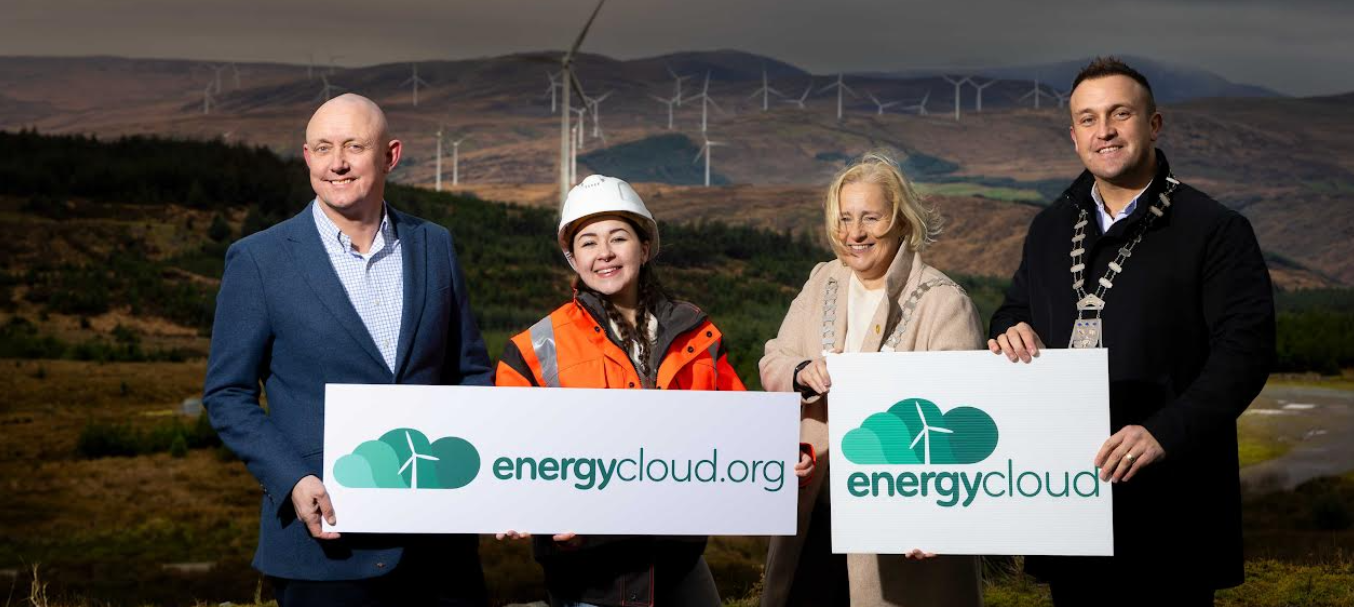
Pinergy partners with EnergyCloud to deploy smart tech that minimises energy waste and tackles energy poverty

Pinergy, the energy transition company, has today announced a new partnership with EnergyCloud Ireland, aimed at deploying smart tech to minimise energy waste, and tackle energy poverty to power a fairer energy transition in Ireland. Through this collaboration, surplus renewable energy generated will be distributed to fuel poor households via EnergyCloud, by providing a free tank of hot water.

EnergyCloud Ireland is a social enterprise company that works with utilities and wind energy producers to divert unused renewable energy to Irish homes experiencing fuel poverty. Fuel poverty impacts over 550,000 households every day in Ireland, yet since 2018 according to EirGrid, well over 5,000 GWh of zero carbon energy from wind generation went unused and ultimately wasted.

EnergyCloud’s mission is to create solutions to divert surplus renewable energy, which would otherwise be wasted, to Irish homes, with a primary focus on those in fuel poverty. This partnership aligns Pinergy’s desire to help customers understand their consumption to reduce energy waste today for a better energy future for all.

Commenting on the partnership, Enda Gunnell, CEO of Pinergy said; “At Pinergy we are on a mission to power energy transition in Ireland and support the move towards cheaper renewable energy. However, we are committed to ensuring that the inevitable energy transition is fair for all in society and that any waste of precious renewable energy is minimised. Our partnership with EnergyCloud can help us achieve these goals and enable us to play a small part in addressing energy poverty.”

Participating households are equipped with EnergyCloud enabled smart technology which allows surplus and otherwise wasted renewable energy to be used to heat immersion tanks, at no cost to the household occupants.

John Mullins, Chair of EnergyCloud said: “This partnership between EnergyCloud Ireland and Pinergy commenced a number of months ago and already families are benefiting from the scheme. EnergyCloud works with partners to fulfil our mission of using surplus renewable energy to help tackle fuel poverty. For the families involved this is really great news and illustrates how we can collectively use smart technology to lessen the impact of fuel poverty. EnergyCloud is proud to partner with Pinergy as part of their commitment to power the energy transition and support greater use of renewable energy in Ireland.”

Thermo Fisher Scientific marks ten-year anniversary of on-site wind turbine

Thermo Fisher Scientific, the world leader in serving science, has today celebrated the ten-year anniversary of its on-site wind turbine in Currabinny, Cork. Providing 19% of the site’s electricity in 2023, the turbine has generated over 75,000 megawatt hours (MWh) of electricity, the equivalent of powering approximately 17,000 homes for a year1, and led to the avoidance of over 44,000 metric tons of carbon dioxide equivalents (CO2e) for the grid.  

Standing at 100m tall with 50m blades, at the time, the Enercon 3MW wind turbine was the highest wind turbine tower in Ireland to date, taking almost 30,000 hours to construct. This project was supported by the Irish Government through IDA Ireland. The turbine achieved full financial payback within six years, highlighting the project’s economic viability alongside its environmental benefits. 

Commenting on the anniversary at a dedicated on-site event, Edel Collins, General Manager at Thermo Fisher Cork, said: “This is a major milestone for the Cork site. When the turbine was first switched on ten years ago, it ignited our sustainability journey in earnest. Since then, our award-winning Energy Management Team has grown and has delivered further energy reductions of over 10,000 MWhs since 2022. 

“From its detailed construction process to its commissioning in 2014, this turbine exemplifies sustainable energy projects with tangible outcomes that are delivered through vision and collaboration. At Thermo Fisher, our Mission is to enable our customers to make the world healthier, cleaner and safer. Thermo Fisher has pledged to achieve net-zero emissions across our entire value chain by 2050, and a 50.4% reduction of Scope 1 and 2 emissions by the year 2030. I look forward to what the next ten years will bring on our journey to a more sustainable future.” 

Michael Lohan, CEO at IDA Ireland said: “Sustainable projects like the Enercon 3MW wind turbine at Thermo Fisher’s Cork site are very much aligned to IDA Ireland’s renewable energy goals and sustainable economic growth. By integrating renewable energy generation into their operations, organisations like Thermo Fisher are not only reducing their carbon footprint but also setting a strong example for the industry.” 

The wind turbine is part of a long-term and enduring commitment to sustainability. The site has been ISO50001 Energy Management System certified since 2012 and over the past decade has delivered substantial energy efficiency and decarbonisation projects. These projects include upgrades to the Heating Ventilation and Air Condition systems, thermal system upgrades, and replacing a waste heat boiler. This is in addition to long term commitment to the protecting and enhancing the local environment, a commitment that began in 1978 with the development of a bird shelter.    

As a Mission-driven company, Thermo Fisher understands that our obligation – and our opportunity – goes beyond enabling our customers’ success and extends to making the world a better place by supporting our communities, being a good steward of our planet and creating a great work environment for our colleagues.  To learn more about how our work supports our efforts to make a positive impact on society visit: www.thermofisher.com/CSR 

Thermo Fisher in Cork specialises in developing and manufacturing active pharmaceutical ingredients from formulation right through to market for a range of customers for use in life-changing treatments globally.  

Microsoft agrees 30MW renewable energy deal with SSE Renewables and FuturEnergy Ireland

Microsoft announced today that it has entered into a long-term Corporate Power Purchase Agreement (CPPA) with SSE Renewables and FuturEnergy Ireland that will add 30MW of wind energy capacity to Ireland’s electricity grid by way of the newly commissioned Lenalea Wind Farm near Letterkenny, County Donegal.

The renewable energy Corporate PPA secures a sustainable route to market for one of Ireland’s newest onshore wind farms, which was jointly developed by SSE Renewables and FuturEnergy Ireland. SSE Renewables is part of FTSE-listed SSE plc, while FuturEnergy Ireland is a Coillte-ESB joint venture.

Under the terms of the Corporate PPA, the renewable electricity produced by the seven Vestas V117-4.3MW onshore wind turbines at Lenalea Wind Farm will contribute towards Microsoft’s goal of powering its data centre operations with 100% renewable energy by 2025.

Today’s announcement is additional to 900MW of renewable energy CPPAs that Microsoft announced in November 2022. Of that capacity, more than 216MW of onshore wind and solar energy projects have already reached commercial operation, delivering clean energy to Ireland’s grid, with a further 250MW due to reach commercial operation this year.

This agreement is the first long-term Corporate PPA to be jointly entered into by co-development partners SSE Renewables and FuturEnergy Ireland.  CPPAs, such as this one, provide important routes to market for renewable energy developments, and play a valuable role in enabling the development and accelerated delivery of renewable energy generation to underpin Ireland’s decarbonisation targets.

The deal with Microsoft will also provide for a Community Benefit Fund of approximately €150,000 per year, equivalent to €2 for every megawatt hour generated by the project. The allocation of funds by way of annual grants will be overseen by a locally appointed Community Committee, which has already been established. A funding strategy will be developed in conjunction with the Community Committee to inform and shape the structure of the fund.

Today’s announcement follows the completion of construction at Lenalea in December 2023. The 30.1MW onshore wind farm is now fully operational, generating renewable electricity for export to the national grid, and contributing towards Ireland’s 2030 targets for onshore wind.

Eoin Doherty, Vice President, EMEA Regional Leader, Microsoft Cloud Operations + Innovation, said: “At Microsoft, we are committed to playing our part in supporting the decarbonisation of energy grids in markets in which we operate data centres. With the Lenalea Wind Farm achieving commercial operations, we are taking another important step on our journey to achieve 100% renewable energy supply and support wider efforts to add clean energy capacity to Ireland’s energy grid.”

Stuart Donnelly, Director of Corporate Power Purchase Agreements, SSE Renewables, said: “Securing our first long-term Corporate PPA for new onshore wind in Ireland is a satisfying milestone for SSE Renewables and our development partner FuturEnergy Ireland. We are pleased to support Microsoft’s climate and renewable energy goals, while delivering a meaningful contribution to Ireland’s energy targets and security of supply. Working together we will also deliver a positive socio-economic impact through a substantial, locally managed community benefit fund. This agreement is an excellent example of sectors collaborating in Ireland to meet infrastructure and sustainability objectives, supporting the accelerated delivery of renewable energy, which will be vital in the years ahead to enable renewable energy investments and the delivery of 2030 and longer-term net zero targets.”

Mary Lynch, Portfolio Director at FuturEnergy Ireland, said: “Lenalea represents the first project delivered by FuturEnergy Ireland and the very first step towards achieving our 1GW 2030 target. It is also the first of seven projects which we expect to deliver in partnership with SSE Renewables.

“Corporate PPAs are an important part of the Irish electricity market and we are very happy to support Microsoft’s commitment to carbon-free energy targets. Such collaboration and partnerships are critical if Ireland is to meet its climate action goals. We are also looking forward to maximising the local impact of the Community Benefit Fund, which is now live.”

Delivery of the Lenalea Wind Farm represented a total capital investment of more than €40 million by SSE Renewables and FuturEnergy Ireland, providing a significant economic boost locally. Construction and delivery of the project helped to support County Donegal’s economy and employment, with over 150,000 working hours recorded by regional contractors employing a significant local workforce. The positive economic contribution from the project to the region is expected to continue during the wind farm’s operation through a combination of local operational spend as well as annual contributions in commercial rates payments to the local authority.