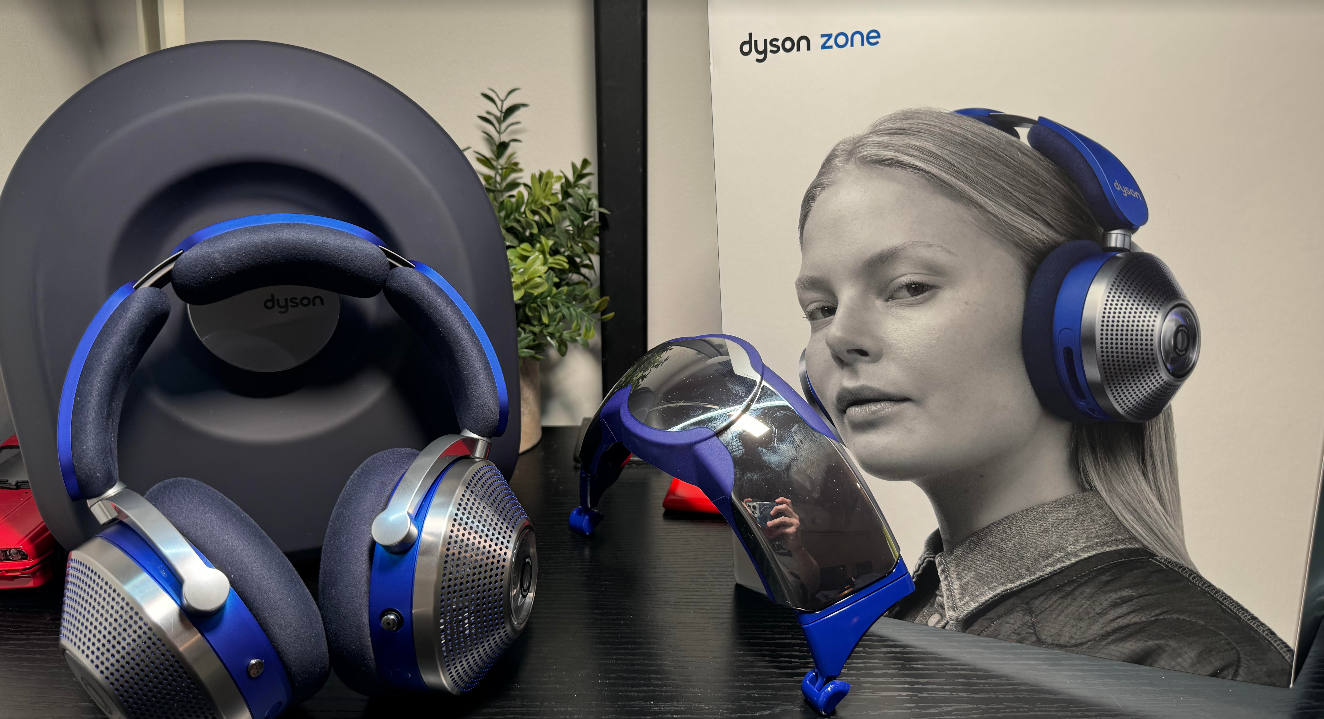
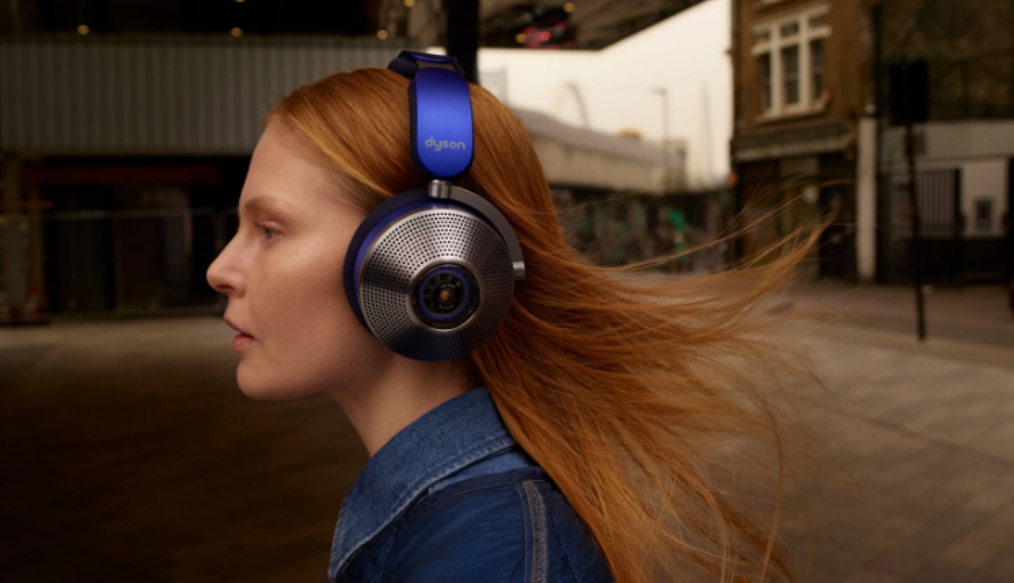
First Look – The Dyson Zone air-purifying headphones

This is Dyson’s first wearable and being a tech reviewer that goes hands on with more headphones and earbuds than anyone in Ireland this is a different approach than your typical pair of headphones and we look forward to testing these out for ourselves over the coming weeks as we go full hands on with them and find out what is on offer here.

Dyson engineers had to think about comfort in a new way. Detailed research into head and face geometries meant engineers could measure how the Dyson Zone air purifying headphones would sit on and perform on different heads– informing the clamp force of the headband, the geometry and materials of the visor, the adjustability of the machine and much more.

Taking inspiration from the shape and design of a horse’s saddle, the Dyson Zone is engineered to distribute weight over the sides of the head, rather than on the top. A saddle typically curves over the horse’s spine distributing the load through contact with the areas left and right of the backbone – a format used for the central cushion on the headband.

The development of the ear cushions is important for three reasons: comfort, on-head stability, and passive attenuation. Foam is an obvious choice for ear cushions, but Dyson engineers dug deep into the make-up of different foams to choose the most suitable material based on density, rate of compression and spring-back rate – all of which change the way pressure translates onto the head.

When choosing the optimal foam for the ear and headband cushions, it was important to balance the comfort it provides, its stability when moulded to the ear, but critically the acoustic benefit it provides. Moulding around the ear increases the size of the contact points providing better sealing – and inhibiting additional urban noise entering the ear. The cushion is purposefully flatter than conventional ear cushions for both attenuation and comfort, and the cushions are angled in line with the angle of the ear on the head for optimal comfort.

The Dyson Zone air-purifying headphones are available in stores and online at www.dyson.ie

Check out the first look and tour of these headphones below and stay tuned for a full hands on review in the coming weeks any questions drop em in the comments on our social media and YouTube.

First Look at the Dyson Zone air-purifying headphones

Dyson Airstrait now available in the UK and Ireland

The eagerly anticipated wait of Dyson’s latest haircare innovation is finally over… Airstrait is HERE and available to purchase in the UK and Ireland from today the 5th of February 2024.

After revolutionising the haircare industry in 2016 with the Dyson Supersonic Hair Dryer, Dyson are proud to launch this unique addition to their haircare family in the UK and Ireland.

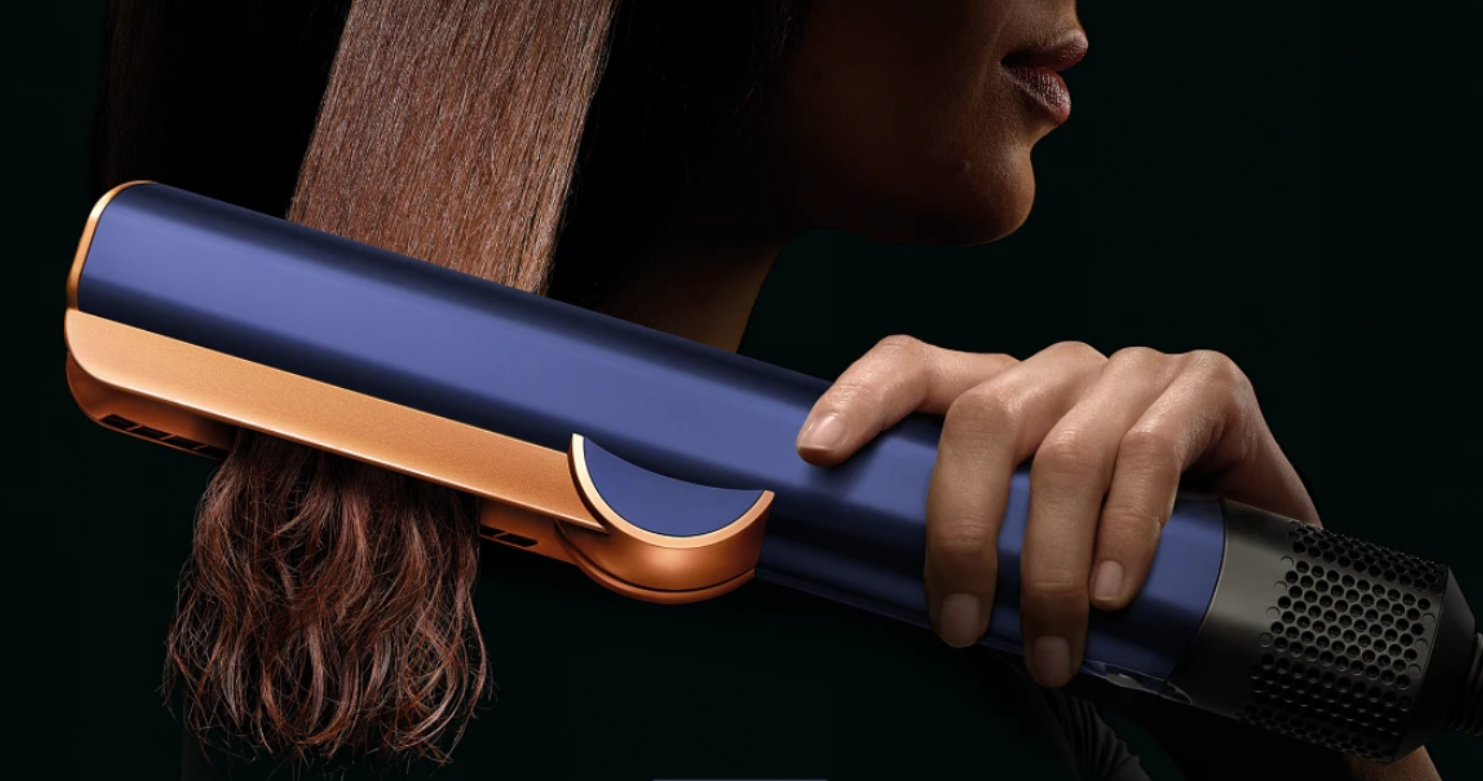
Fuelled by the desire to improve everyday technology, the Dyson Airstrait straightener is a wet to dry straightening tool with air. No hot plates. No heat damage. With its cutting-edge technology and sleek design, this sought after hair tool is a must-have one of a kind that is set to change the game in haircare. 

So, what are you waiting for, get your hands on the latest Dyson hair care innovation now!

Fueled by the desire to improve everyday technology, James Dyson has announced the European launch of the Dyson Airstrait™ straightener – wet to dry straightening with air. No hot plates. No heat damage.

Dyson Airstrait

Engineered for multiple hair types, stylers can achieve a natural straight style, with body and movement, whilst maintaining the strengthand healthy look and feel of their hair. The hair tress is contained by two arms, from which a precisely angled high-pressure blade of air is forced downwards and into the hair, both simultaneously drying and straight styling, with one machine. 

“Having a strong understanding of how to manipulate and realise the potential of powerful airflow is fundamental to the performance of the Dyson Airstrait™ straightener. This expertise, which we’ve gained over the last 25 years, is what has enabled us to deliver our first wet to dry straightener, with no hot plates, and no heat damage. Delivering the ease-of-use that people love about straighteners but with high-velocity air blades, saves time, maintains hair strength and achieves an everyday natural straight style.” James Dyson, Founder and Chief Engineer.

Airflow. Precision air jets.

Along the arms of the machine are two 1.5mm apertures. Airflow is accelerated through these apertures, creating two high-velocity downward blades of airProjected at a 45° angle, they converge to form one focused jet of air, creating the downward force to straighten hair as it dries, with control. This directional airflow helps align the hair strands for a smooth and shiny finish.

The science behind styling

Dyson has been researching into the science of style for over a decade and is investing half a billion GBP to expand and accelerate research and technology development across the beauty category. Our engineers have studied in detail everything from the structure of hair to airflow dynamics whilst understanding thermal, mechanical and chemical damage – and the subsequent effects on hair health.  

To change your hair style, hydrogen bonds within each hair strand must be broken and reset to hold a new shape. This can be done with heat or moisture. Styling with powerful airflow from wet, results in less need for high heat, creating less frizz and flyaways and protects natural shine

When hair is wet, water naturally weakens these bonds. In this state, the bonds are more elastic and can be reset as hair dries, without using extreme temperatures. By using the optimum level of heat and controlled airflow, we’ve found a way to style hair with less damage.  Styling with air allows for the creation of straight styles whilst maintaining volume and movement. Once hair is dry and aligned, the bonds are reset in different ways, locking the new style in place.

Dyson Hyperdymium™ motor

The Dyson Airstrait straightener is powered by the Hyperdymium motor – specifically engineered to be at the heart of Dyson’s Hair Care technologies. It is small, light and powerful enough to generate the airflow needed to dry and straighten hair simultaneously, from wet. A 13-blade impeller spins up to 106,000rpm, propelling over 11.9 litres of air through the machine per second. This generates up to 3.5kPa of air pressure, enough to straighten hair as it dries. At 27mm, the motor is small enough to fit in the handle – with no sacrifice on power.

Intelligent Heat Control

Like the rest of the Dyson hair care range, the Dyson Airstrait straightener features intelligent heat control. Glass bead thermistors measure the temperature of the airflow 30 times per second to prevent heat damage and protect hair’s natural shine. This data is sent to the microprocessor which regulates the heating element, ensuring airflow doesn’t exceed the temperature required.


Two styling modes. Temperature control.

The Dyson Airstrait™ straightener has ‘Wet’ and ‘Dry’ styling modes, and a ‘Cool’ mode to set the style. The ‘Wet’ and ‘Dry’ modes are pre-set with the specific heat and airflow combination for the best results. In ‘Wet’ mode, choose among three heat settings of 80°C (175°F), 110°C (230°F), and 140°C (285°F). In ‘Dry’ mode, choose between 120°C (250°F) or 140°C (285°F) or a top up “boost”. For airflow control, there are two speed settings, low flow and high flow, as well as a cold shot and root drying mode.

The Dyson Airstrait straightener will be launched in the UK and Ireland in February 2024, and is priced at £449.99/ €499.99 available from Dyson Demo Stores and www.dyson.ie 


Dyson’s spring cleaning tips, get rid of mites allergens and more

House dust mites, and their faeces which contain microscopic enzymes, are common in house dust. House dust mites feed on moulds, as well as animal and human skin flakes. They flourish in textiles, such as bedding, mattresses, upholstered furniture like sofas and carpets and after the Christmas period it is time your house is due a clean out and a good one at that and nobody likes mites..

Household dust can be a concern, as it may contain allergens such as dust mite faeces and pollen. Mattresses, bedding, upholstery and carpets can all accumulate unseen dust.

There are a lot of misconceptions about how to best remove the allergens found in dust from your home.

Dyson’s research has shown that the best way to deal with bacteria, pollen and dust mite allergens is to remove them from your home completely. That’s why Dyson focuses on designing vacuum cleaners that pick the dust up, have cyclones that are incredibly efficient to keep it in the machine, as well as filters and seals to make sure it doesn’t get emitted back into the home.

When it comes to cleaning your home this spring, here are some things you can do.

  1. Vacuum mattresses on a regular basis to remove dust mite allergen and skin flakes which dust mites feed on. Vacuum both sides of the mattress with a vacuum cleaner with an advanced filtration to prevent the allergen being placed back into the room by exhaust air.
  2. Wash bedding on a hot wash to destroy allergens. Washing the bedding on a 60°C or 90°C wash will help to break down allergen (proteins) and reduce the amount to cause allergies.
  3. Wash or replace duvets and pillows to reduce the amount of dust mite allergen and skin flakes present in your bed.
  4. Remove dust from kitchen cupboard tops. This is an often overlooked place that dust collects and through air movement can be displaced into the kitchen air.  Either remove with a vacuum with an advanced filtration system or by dusting with a clean damp cloth or cleaning wipes.
  5. When dusting either use a clean damp cloth or cleaning wipes which traps the dust more easily or use a vacuum with an advanced filtration system which will collect the dust. A vacuum cleaner with different attachments and suction is ideal for dust round your home.
  6. Vacuum your home after dusting so that any dust that has been disturbed and placed onto the floor is removed and not redistributed around the home by normal activity.
  7. Move furniture that can be moved and vacuum the places not often vacuumed, such as under the furniture.
  8. Vacuum the sofa and chairs regularly; these can harbour not only large debris but also dust mites, skin flakes and other allergens such as pollen and food allergens. Wash any coverings and cushions to reduce the level of dust caught within them.
  9. A lot of dust can gather in curtains and blinds. Make sure vacuum them regularly or launder them if possible and practical.
  10. Remove dust from walls by dusting with a damp cloth or cleaning wipes or using a HEPA filtered vacuum. Dust on certain wall types can contribute toward the growth of mould; if the room is humid and not well ventilated the dust can act as the nutrient source for the growing mould.
  11. Clear kitchen sides and cupboards to deep clean. Use a vacuum with advanced filtration to remove dust and debris then wash with warm water and detergent – make sure you follow up by drying all surfaces.
  12. Dust lights and light fittings. A lot of dust can gather in lampshades and light fittings which can burn on hot bulbs producing VOCs and odour or be moved round the room by the production of warm air round the bulbs.
  13. Empty the fridge and freezer and clean all surfaces with warm water and detergent or cleaning product. Vacuum round the back and under the fridge and freezer without forgetting the cooler element on the back as this will have the added benefit of improved performance.
  14. Dust behind radiators; a hidden place often missed during normal cleaning. Significant dust collects behind the radiator, and this can be distributed around the room by the air flow produced by the warm air from the radiator.  The radiator is not hot enough to prevent bacteria from surviving and can be maintained viable in the dust contained behind the radiator.
  15. Deep clean cupboard, wardrobes, and drawers in the bedroom. This is a place rarely emptied and cleaned but dust and fibres can accumulate in the very place you keep your clean clothes. Dust mites can live anywhere there is a source of food; so wherever there is dust there is the possibility of dust mites. 


    DYSON’S BEST-SELLING VACUUMS FOR THE ULTIMATE SPRING CLEAN (all available on www.dyson.ie or in Dyson stockists nationwide


The Dyson Gen5 detect™ vacuum ( €849.99 www.dyson.ie)

 Dyson’s most powerful cordless vacuum features a new fifth generation Hyperdymium motor, delivering powerful suction. The machine also features a fully sealed, whole-machine HEPA filtration system, engineered to capture 99.99% of particles down to 0.1 microns , as small as viruses.  A new Fluffy Optic™ cleaner head has also been re-engineered, revealing twice the amount of microscopic dust for increased brightness and range so you can see exactly where to clean.

Dyson V15 Detect Total Clean cordless vacuum (€599.99)  https://www.dyson.ie/vacuum-cleaners/sticks/dyson-v15/detect-total-clean

 The most awarded cordless vacuum on the market. 240 air watts of powerful fade-free suction⁶ with up to 60 minutes run time to deep clean your whole home.

Fluffy Opticᵀᴹ cleaner head reveals twice the amount of invisible dust on hard floors.

Digital Motorbarᵀᴹ cleaner head powerfully removes dirt and dust, automatically de-tangling hair and adapting suction across different floor types.

Dyson V15s Detect Submarine (€899.99)  https://www.dyson.ie/vacuum-cleaners/wet-dry/v15s-detect-submarine/yellow-nickel

Dyson V15s Detect Submarine™ wet and dry vacuum cleaner.

Dyson’s powerful vacuum now washes hard floors.

Removes spills and tough stains.

Reveals 2x more invisible dust.

Captures hair without tangling.

Dyson Vis Nav robot vacuum (€1299.99)

Launched in mid 2023 to much acclaim, Dyson’s Vis Nav robot vacuum is the most powerful robot vacuum cleaner with 6 times the suction of any other robot vacuum.

It has Intelligent 360° vision system analyses its surroundings, building a map of your home, so the robot can see where it needs to clean.

This little beast deep cleans across all floor types, right up to the wall and under low furniture. With intelligent obstacle avoidance and dual link suspension, it gets in where it needs to clean.

The Vis Nav Automatically adapts its suction power when more dust is detected, with up to 65 minutes of fade-free suction.

Customise your clean, receive cleaning reports and set rules and routines with the My Dysonᵀᴹ app. Also compatible with Alexa and Google Assistant, simply connect to Wi-Fi.

Dyson Omni-glide™ + vacuum (€419.99) https://www.dyson.ie/vacuum-cleaners/multi-directional-vacuums/omni-glide-plus-gold

The Dyson Omni-glide™ + vacuum features Dyson technology, concentrated and rearranged in-line, allowing it to lie flat³ and clean in tight spaces. The omnidirectional Fluffy™ cleaner head glides effortlessly in all directions – forwards, backwards, even sideways – with two motorised Fluffy™ rollers to pick up everything from large debris to fine particles.²

  • Dyson’s slimmest, most manoeuvrable vacuum for hard floors
  • The first omni-directional Fluffy™ cleaner head.
  • Our first button-operated cordless vacuum
  • Includes light-pipe crevice tool allowing you to see where you’re cleaning.

Dyson releases major data study of indoor pollution levels in Irish homes

Dyson unveils the results of its first Global Connected Air Quality Data project. The project analyses indoor air quality information collected by 2.5m Dyson purifiers from 2022 to 2023 to measure air quality in real homes across the world, to a high degree of granularity, breaking down pollution into gas and particle pollutants, and profiling trends over days, months, seasons and the full year. The data comes from Dyson purifiers connected to the MyDyson app; the volume of data exceeds half a trillion data points and paints a precise picture of indoor air quality in cities and countries globally to help build understanding and awareness of indoor air pollution.

From a wealth of data, this project focuses on two types of pollutant – PM2.5, and Volatile Organic Compounds (VOCs).

PM2.5 refers to particles as small as 2.5 microns in diameter, 1/25th the diameter of a typical human hair. These particles are invisible to the naked eye, can be inhaled and are an area of increasing scientific and health research. Sources include combustion, wood burners, or gas cooking and heating – pet dander, ash and dust.

VOCs are gas pollutants including Benzene and Formaldehyde which can be emitted from activities like cleaning or gas cooking as well as from products including deodorants and body sprays, candles, furniture and furnishings.

“Our connected air quality data allows us insight into the real problem of indoor air pollution in homes across the world. This gives us a direct understanding of the challenges Dyson purifiers face in real environments and the knowledge to engineer ever-better machines to tackle those challenges. But the data we capture isn’t just an engineering tool – on an individual basis, this data is shared back through the MyDyson app in real-time and via monthly reports, to help our owners improve their air quality understanding.” – Matt Jennings, Engineering Director for Environmental Care

“We all think of air pollution as being an outdoor or roadside problem. Indoor air pollution research is growing but continues to beunderdeveloped. Dyson’s findings give us a valuable insight into the real pollution levels in homes across the world, helping us to understand the patterns of pollution daily, monthly, and seasonally. The Dyson data is an incredibly powerful education tool and the opportunities for positive impact are boundless – understanding the pollution around us is the first step to reducing our pollution exposure.” – Professor Hugh Montgomery, Chair of Intensive Care Medicine at University College London, and Chairperson of Dyson’s Scientific Advisory Board

Nearly all homes experienced indoor air quality worse than outdoor with Ireland peaking in December and March but Dublin city specifically peaked in January and March.

All but four of the countries studied exceeded outdoor PM2.5 levels for six months or more. In February, most countries experienced the largest gap between indoor PM2.5 as compared to outdoor, where indoor exceeded outdoor levels by the highest proportion compared to all other months.  All but four countries studied exceeded outdoor PM2.5

Ireland ranked 28th globally for indoor/outdoor ratio of PM2.5 levels with China, Austria, and Spain at the top.

DUBLIN CITY SHOWED NEARLY DOUBLE WHO GUIDELINE PM2.5 LEVELS   

The city of Dublin had slightly higher levels of PM2.5 than the rest of the country with the average being 9.81 µg/m3 PM2.5, which was still below the global average.  However, this measurement still exceeded the WHO long term exposure guidelines of what is deemed safe long term PM2.5 levels.  In fact, Dublin came out as having nearly double the amount of what WHO guidelines for PM2.5 levels are. In Dublin city in January 20022, 12.54 µg/m3 PM2.5 levels were documented, which is 2.5 times over what the WHO guidelines suggest.

December and March saw the highest spike of PM2.5 levels in homes in Dublin.

Dyson air purifier data showed that winter across all countries was the most polluted season indoors overall. Given that 90% of our time is spent indoors, the results showed PM2.5 peaked throughout the colder months with January being the most polluted month globally.

Evening pollution was higher than any other time of day in most countries, including Ireland, with spikes between 7pm and 11pm recorded on Irish Air Purifiers. This stat coincides with the time of day that many people spend in their homes.

Exposure is the measure of air pollution concentration over time, which within the air quality research community is a key consideration – a spike of air pollution (a very high level for a short period of time) is not necessarily worse than prolonged exposure to ‘poor’ or even ‘fair’ air quality. Therefore, data from Dyson purifiers suggests that this longer, more polluted period may account for increased exposure to PM2.5 in homes.

Volatile Organic Compound (VOCs) levels in Ireland

European cities also top the rankings of VOC levels indoors: Munich takes top spot, followed by Beijing, and then its fellow German cities – Cologne in 3rd and Berlin 4th.

Dublin and Madrid are particularly high – occupying spaces 11 and 12, both higher than Shenzhen, Busan, Tokyo, Manila, Hong Kong SAR and other larger EMEA cities like Paris, London and Amsterdam.

Dublin, Paris and Milan rank above megacities like Tokyo and Seoul, and above all US cities as well as London.

Dyson launch search for creators to produce content and test out their Zone headphones with rewards given

Having disrupted the audio category with the launch of the Dyson Zone™ noise-cancelling headphones in the UK and Ireland in May 2023, Dyson has announced a casting call for aspiring content creators across the UK and Ireland to join its first ever Dyson Field Testers program – a collaborative global community for music and technology fans.

With applications open between 30 November – 31 December 2023, people across Ireland can  Apply to become a Dyson Field Tester today to get hands on the high-fidelity headphones and create social content bringing to life their experience.

Successful applicants will form part of an exclusive network of creators across Great Britain and Ireland, Australia, New Zealand, and the US, that forms part of Dyson’s new global Instagram channel @dysonwear launching on 30 November 2023. After receiving a pair of Dyson Zone™ noise-cancelling headphones to road test the technology, Dyson Field Testers will curate social content based on a series of themed challenges. The most unique and inspiring social posts will be rewarded with music experiences, subscriptions, sporting tickets,  Dyson technologies and more.

Applicants who are selected to become a Dyson Field Tester will form part of an exclusive community and receive:

  • Seeding pack including Dyson Zone™ noise-cancelling headphones
  • Fortnightly themed challenges
  • Rewards for curating unique content.
  • Updates on upcoming Dyson audio technologies and experiences
  • The opportunity to be featured on Dyson’s global social media channels.

 Apply here  before 31 December 2023 to become a Dyson Field Tester .