Dell Technologies Data Center Breakthroughs Power Smarter, Faster and More Secure Private Clouds

Dell Technologies announces significant private cloud infrastructure advancements to help customers manage both traditional and modern workloads with greater speed, efficiency, and security.

Why it matters

Many IT teams struggle to handle the demands of both traditional and modern workloads while dealing with rising costs, evolving virtualization needs and vendor lock-in concerns. Organizations are adopting disaggregated private clouds built with virtualization-optimized compute, storage and cyber resilience solutions that provide greater flexibility, choice, and control over their data.

Dell Private Cloud, delivered through the Dell Automation Platform with on-premises and SaaS deployment options, helps customers easily automate, scale and manage private cloud deployments using their preferred cloud OS stack and Dell disaggregated infrastructure including PowerStore, PowerFlex, and PowerMax. Customers can use AI-driven automation for infrastructure management and monitoring.

Additionally, integration of Dell NativeEdge into the Dell Automation Platform provides a full stack solution optimized to simplify and secure operations across distributed cloud and edge environments.

Storage and cyber resilience are key to any private cloud. Dell is introducing significant innovations in these areas to help customers build smarter, faster, and more secure private clouds.

Dell PowerStore adds QLC model and Nutanix Cloud Platform integration

Dell PowerStore delivers simple, enterprise-grade, high-performance storage tightly integrated with modern virtualization platforms and adaptable for containerized environments. The Nutanix Cloud Platform solution will soon support Dell PowerStore, combining Dell’s trusted storage innovation with Nutanix’s cloud operating model to meet customer demand for greater choice and control in how they deploy infrastructure.

PowerStore’s latest hardware and software advancements deliver greater cost-efficiency, AI-accelerated automation and enhanced resiliency.

  • Enterprise performance, lower costs: PowerStore 5200Q offers high-capacity performance with the economics of QLC flash, flexible scaling over 23Pbe per cluster and optimized workload placement through integration with existing PowerStore clusters.
  • Software-driven security and resiliency: Improve enterprise security and resiliency with built-in anomaly detection, single sign-on and biometric authentication, HashiCorp key manager support and replication over fibre channel.
  • AI-powered self-healing: Cut issue resolution time by 90%1 through automated health checks and repairs powered by Smart Support Auto-Heal functionality.


Dell PowerFlex provides efficient petabyte-scale storage consolidation   

Dell PowerFlex, the industry’s most resilient software-defined block storage2, offers flexible, software-defined storage that scales linearly and features deep virtualization and Kubernetes integrations. The PowerFlex Ultra release introduces the Scalable Availability Engine (SAE) which drastically simplifies workload management and reduces costs with improved efficiency and reliability.


  • Reimagining software-defined storage: PowerFlex’s Scalable Availability Engine (SAE) is built on a native block, fully distributed, erasure-coded architecture that delivers breakthrough storage efficiency, resiliency, and scalability for software-defined data centers. 
  • Extreme storage efficiency: Achieves up to 80% storage efficiency3 with over 50% reduction in physical storage footprint4, allowing organizations to store more data in less space while lowering costs and power consumption.
  1. Data availability and resiliency: Delivers up to 10x9s of data availability with the ability to tolerate up to two node failures simultaneously, ensuring enterprise workloads remain operational even during hardware failures while maintaining data integrity across large-scale deployments.

Dell PowerMax provides mission-critical performance, automation, and security

Dell PowerMax offers mission critical storage with enterprise-class scalability, automation, and resiliency with broad integrations for virtualized environments and full Kubernetes CSI support for container workloads. Software advancements deliver up to 25% greater performance5, advanced automation and enhanced security for mission-critical environments.

  • Enhanced automation: Free up IT teams to tackle higher-value tasks with features like 1-click software updates in less than 6 seconds6, zero-touch management installs and the ability to achieve up to a 66% reduction in steps for replication mode changes7.
  • QLC support: PowerMax 2500 introduces QLC drive support for capacity-intensive workloads while delivering flexible single-drive scaling from 122TB to 8.8PBe per array.
  • Advanced security: The world’s most secure mission-critical storage8 platform now includes features like Single Sign-On with Microsoft Entra ID and encrypted email alerts to ensure the highest standards of data protection and compliance.

Dell PowerProtect helps organizations build a cyber resilient foundation for modern data centers

Dell PowerProtect offers cyber resilience for virtual, cloud-native, and containerized workloads across data centers and every major public cloud, helping ensure rapid recovery to keep businesses running without disruption. The latest appliance and software innovations help organizations reduce their attack surface, detect and respond to threats and quickly recover from cyber incidents.

  • Entry-level appliance, enterprise-level security: The new PowerProtect Data Domain DD3410 is a compact solution for remote offices and smaller environments with exceptional data reduction capabilities, grow-in-place scalability from 8 to 32 TBu and advanced security to keep data safe. The appliance supports a broad partner and backup software ecosystem and native integration with Dell PowerStore and PowerMax.
  • Unified cyber resilience experience: The new PowerProtect Data Manager Appliance is a modern, software-defined solution that delivers centralized management for consistent operations. It enhances cyber resilience with enterprise-grade protection, including anomaly detection, data immutability, and integrity to safeguard against disruptions and threats. The Data Manager Appliance is the best way to achieve cyber resilience with Dell PowerProtect.


“At Dell Technologies, we’re empowering our customers with solutions that not only meet today’s IT challenges but also anticipate tomorrow’s needs,” said Travis Vigil, senior vice president, ISG Product Management, Dell Technologies“Our latest storage and cyber resilience advancements are designed to help organizations build private clouds that are smarter, more secure and ready to handle the demands of both traditional and modern workloads.”

“With our Nutanix Cloud Platform soon supporting Dell PowerStore, we will be giving customers a new choice in how they architect their virtualized environments,” said Thomas Cornely, senior vice president, Product Management at Nutanix. “This integration will deliver an enterprise-grade solution that meets today’s demands for flexibility, while allowing organizations to build confidently with Dell infrastructure.”

“Organizations today face the dual challenge of managing traditional and modern workloads while navigating rising costs and evolving IT demands,” said Simon Robinson, principal analyst, Enterprise Strategy Group, now part of Omdia“Dell’s latest advancements in storage and cyber resilience provide a comprehensive and flexible foundation for disaggregated private cloud environments, empowering businesses to achieve greater efficiency, security and scalability across their IT operations.”

Additional Resources

One in 10 admit to pirating content on their work devices

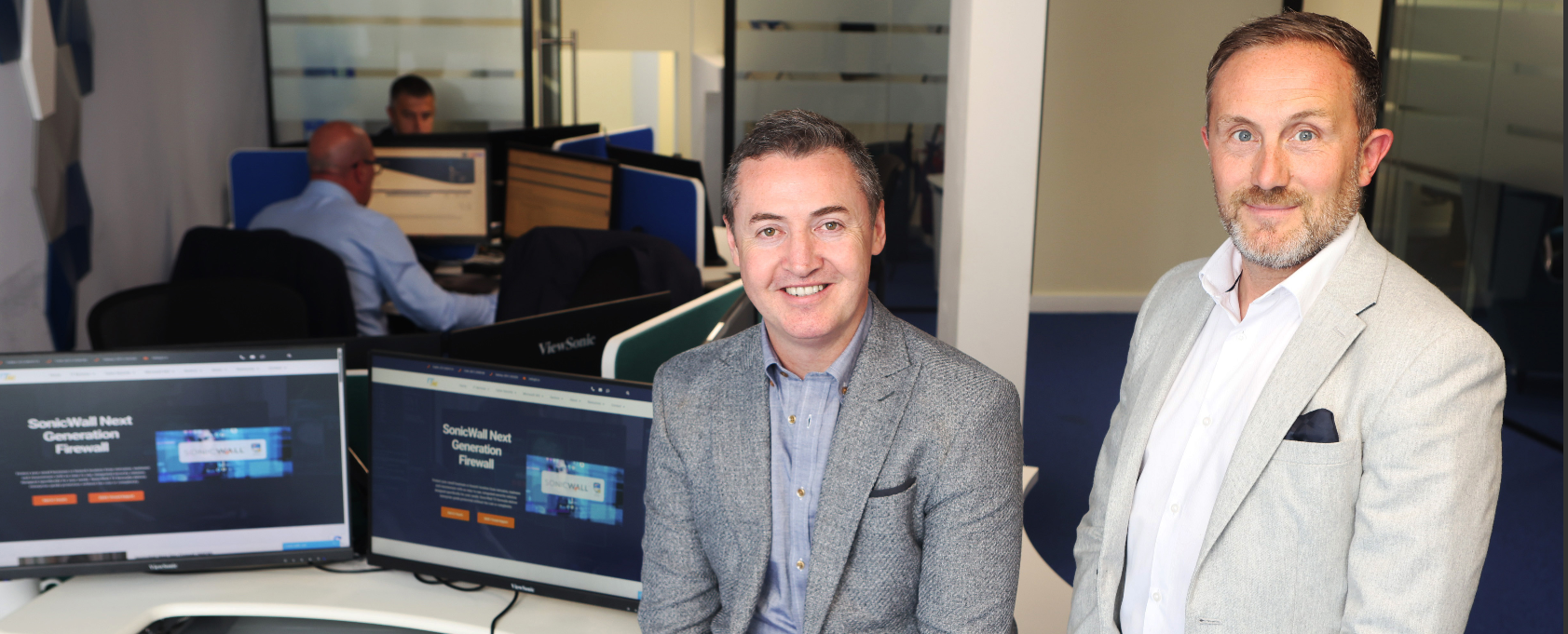
IT.ie, a leading Irish IT managed services company, is today urging SMEs to strengthen their cybersecurity defences as the deadline for the EU’s NIS2 directive approaches. The need for businesses to reinforce their cybersecurity measures is highlighted in research carried out by IT.ie and SonicWall, which found that one in 10 office workers have pirated content on a work device in the last year.

The research of 1,000 office workers based in Ireland was carried out by Censuswide on behalf of IT.ie and SonicWall, a global leader in cybersecurity innovation. The research emphasises the human role in cybersecurity breaches, as well as a discrepancy between vigilance at home versus in the office.

The majority (65%) of office-based employees said they used a work device for personal tasks in the last 12 months. Of these, 32% have used it for online shopping, 24% for accessing a personal social media account, and 17% for streaming movies and TV shows. Additionally, 9% have used it for gaming and 7% for gambling. Many of these figures are significantly higher for office workers aged 18 to 24. Of this age group, in the last 12 months, 36% checked their social media on a work device, 24% gamed and 17% pirated TV shows or movies.

The survey suggests that these extracurricular activities are more likely to happen when employees are working from home, with 53% saying they are more inclined to use websites and apps that are not approved by their employer when they work remotely. Furthermore, 64% said being in the office makes them more vigilant about cybersecurity. This may explain why 58% feel more exposed to cyberattacks when working remotely.

Despite this, 28% of office workers said they do not use a company-provided VPN (virtual private network) when accessing work systems remotely. In fact, 23% say their employer doesn’t have specific remote working cybersecurity policies at all.

The research comes as the latest NIS2 Directive deadline approaches, requiring EU member states to provide a list of organisations that will fall under it. It is expected that compliance will be costly, highlighting the financial burden of adequate cybersecurity for SMEs. To address this, IT.ie is launching CyberProtect, a multifaceted solution designed to make cybersecurity more accessible to SMEs.

Eamon Gallagher, founder and managing director, IT.ie, said: “As the EU-wide NIS2 Directive approaches, businesses are now facing the ever-present risk of cybersecurity attacks, along with the new risk of non-compliance with the Directive. Our research shows that human error – and simple human nature – remain significant risks to businesses. For example, we found that 46% of employees have viewed confidential work documentation in a public place in the last 12 months.

“Such practices should be addressed – and hopefully eliminated – with frequent cybersecurity training. But that must be backed up by combined measures that can help to protect a business if, and when, an employee does make an error. Employees are not acting maliciously, but they do make mistakes. This needs to be countered by simply making it impossible for employees to access pirate websites, gambling sites and many others using their work devices.

“Many SMEs struggle to implement comprehensive security measures due to financial constraints and poor availability of options. CyberProtect recognises this urgent need by making cybersecurity more accessible to businesses, regardless of their size. It is a comprehensive security stack that eliminates the need to deal with multiple vendors. With SMEs accounting for 99.8% of businesses here, we must ensure we do everything we can to protect them – and our economy.”

Stuart Taylor, Regional Director for Northern Europe, Sonicwall, said:

“These office behaviours, especially in hybrid or remote environments, highlight the importance of a layered security approach – one that extends beyond traditional perimeter defences. Solutions like SonicWall’s layered security architecture integrate advanced threat protection, cloud secure edge, zero-trust access, endpoint control, and secure mobile connectivity can help organizations protect every access point, whether in-office or remote.”