Client Relationship Management (CRM) for Legal Professionals

In a profession built on trust and reputation, maintaining strong client relationships is essential for long-term success. That’s where Client Relationship Management (CRM) tools come in. Law firms are increasingly using CRM software to organize communications, track interactions, personalize outreach, and improve service delivery. These systems help firms better understand their clients’ needs and respond more efficiently, whether managing one case or a hundred. In today’s fast-moving legal landscape, relying on memory or spreadsheets isn’t enough. CRM tools provide structure and visibility, making it easier for attorneys and support staff to deliver consistent, high-quality client experiences.

What a CRM Actually Does for Law Firms

At its core, a CRM is a centralized platform that stores and organizes client data: contacts, past communication, billing details, case history, preferences, and more. This gives everyone on the team a shared understanding of a client’s journey. For law firms, this means smoother hand-offs between partners and associates, more timely follow-ups, and better visibility into client engagement. Many CRMs also automate tasks like appointment reminders or client check-ins, freeing up time for actual legal work. Whether you’re a solo practitioner or a multi-office firm, a CRM can help streamline your workflow and keep relationships strong.

Improving Client Communication and Responsiveness

Clients today expect quick, professional communication. CRM systems help firms track calls, emails, and meetings, so nothing falls through the cracks. They also make it easier to respond promptly, especially when multiple attorneys or departments are involved. Some CRMs offer integrated email tools or templates to make routine responses faster. Others link with calendars, enabling reminders for follow-ups or court dates. By making communication more organized and consistent, law firms can improve client satisfaction and reduce the risk of misunderstandings. A well-used CRM doesn’t just track relationships. It strengthens them through reliable, proactive contact.

Protecting Client Data in a Digital World

Because CRMs store sensitive client information, security is a top priority. Many law firms now use platforms with built-in encryption, user permissions, and secure cloud storage. In addition to these features, some firms also rely on threat intelligence to monitor potential cyber risks that could expose confidential records or contact histories. Threat intelligence tools help spot suspicious behavior, such as unauthorized access attempts or phishing schemes targeting staff credentials. This kind of digital protection is especially important in legal work, where even a small data breach could damage a firm’s reputation or result in regulatory consequences.

Better Insights for Smarter Business Development

CRM tools can do more than just manage relationships. They can help grow them. Many platforms offer analytics dashboards that track client engagement, referral sources, and communication patterns. This allows firms to identify top clients, spot trends, and understand where to focus their marketing or networking efforts. A CRM can show which types of clients tend to return, what practice areas generate the most interest, and how often follow-ups turn into new matters. With this data in hand, legal professionals can make more informed decisions about where to invest time and resources to strengthen their business.

Making CRM Part of Your Firm’s Culture

For a CRM system to be effective, it needs to be used consistently. That means training team members, setting clear usage expectations, and integrating the platform into daily routines. When everyone logs interactions and updates client records, the system becomes a true source of insight and support. It’s also important to choose a CRM that matches your firm’s size, practice areas, and workflow. From intake to follow-up, the goal is to build a tool that helps, not hinders, your team’s ability to serve clients. Done right, CRM becomes more than software. It becomes a culture of connection.

How to Get +70% Website Conversions with BDR Voice AI Agents

Most websites are basically digital ghost towns. Visitors arrive, look around, and leave without a trace. While the average site converts just 2.35% of traffic, some businesses are flipping this script entirely with Voice AI technology that actually talks to prospects.

These aren’t your typical chatbots. We’re talking about sophisticated AI representatives that hold real conversations, qualify leads on the spot, and hand off hot prospects to your sales team with context intact.

Why Your Website Stays Silent While Competitors Cash In

Here’s the uncomfortable truth: traditional contact forms capture less than 1% of your visitors. Think about that for a second. Ninety-nine percent of people who could become customers simply vanish because they hit a wall of friction.

Live chat sounds like a solution, but human agents can’t work 24/7 or handle traffic spikes. Most businesses admit they’re not happy with their conversion rates, yet they keep using the same broken playbook.

What if instead of hoping visitors fill out forms, your website could start conversations? What if it knew exactly what to say based on where someone landed and what they were looking for?

The Voice AI Breakthrough That’s Changing Everything

Voice AI has moved way beyond robotic responses. Today’s BDR (Business Development Representative) Voice AI agents sound natural, think strategically, and adapt their approach based on real-time visitor behavior.

They don’t just answer questions—they guide conversations toward conversion goals. Picture your best salesperson available every hour of every day, never taking a break, never having an off day.

Real Numbers from Real Businesses

Companies using Voice AI BDR systems aren’t seeing modest improvements. They’re reporting conversion jumps that sound almost too good to be true.

Visitors become 5x more likely to complete interactions when they can actually speak with someone (even if that someone happens to be AI). The psychological shift is massive—instead of filling out another form, prospects feel like they’re getting personalized consulting.

One client saw their website conversions increase by 70% within three months. Another reported even higher gains when they combined Voice AI with smart personalization. These aren’t outliers—they’re becoming the new normal for businesses that embrace conversational technology.

The difference comes down to engagement. Most people abandon websites within seconds if they can’t quickly find what they need. Voice AI eliminates that friction entirely.

Why Voice Conversations Convert Better Than Text

Something interesting happens when prospects hear a voice instead of reading text. Even though they might know it’s AI, their brain still processes it as a social interaction. Trust builds faster. Objections surface naturally. The entire dynamic changes.

Traditional forms hide problems. Someone might abandon your checkout because they have a simple question about pricing or shipping. Voice AI jumps in with instant answers, keeping the momentum going instead of losing the prospect to frustration.

There’s something else happening here that’s harder to measure but incredibly valuable. When people talk, you hear things you’d never catch in writing. Maybe they sound rushed (timeline pressure), maybe they’re excited about a specific feature, or maybe there’s hesitation around budget. The AI picks up on these vocal cues and responds accordingly.

Getting Started: The Smart Implementation Path

Rolling out Voice AI doesn’t require massive overhauls. The smartest companies start with their highest-traffic pages and most common questions.

First, identify where visitors typically drop off. Maybe it’s your pricing page or product comparisons. Install Voice AI there and watch what happens to engagement rates.

Next, train the system on your actual sales conversations. What questions do prospects always ask? What objections come up repeatedly? Feed this knowledge into the AI so it can handle these scenarios automatically.

Finally, connect everything to your existing CRM and scheduling systems. When the AI qualifies a hot lead, it should seamlessly book a meeting with your sales team and pass along the full conversation context.

Advanced Features That Separate Winners from Wannabes

Basic voice AI answers questions. Advanced systems do much more.

Smart AI knows which page triggered the conversation and tailors its approach accordingly. Someone reading case studies gets different treatment than someone checking out pricing. This contextual awareness can boost results significantly.

Memory matters too. When someone returns to your site, the AI remembers previous conversations and picks up where you left off. It feels personal because it is personal.

The best systems also handle multiple languages, expanding your reach without hiring multilingual staff. And when prospects are ready to buy, the handoff to human sales reps includes complete conversation history—no starting over, no lost context.

Measuring What Matters

Track engagement rates first. How many visitors start voice conversations compared to traditional contact attempts? Most companies see dramatic increases here.

Completion rates tell you if conversations feel natural or forced. Industry leaders achieve completion rates above 85% because their AI systems know how to maintain engaging dialogue.

Qualification accuracy matters most for sales teams. What percentage of AI-qualified leads turn into real opportunities? Top performers hit 90%+ accuracy because they’ve fine-tuned their qualification criteria.

Revenue attribution closes the loop. Which voice conversations turn into actual deals? This metric proves ROI and justifies continued investment.

Choosing Your Voice AI Partner

Not every Voice AI platform delivers the same results. Generic solutions often disappoint because they can’t adapt to specific industries or sales processes.

Companies like NextLevel.AI specialize in creating Voice AI Agents tailored for individual business needs. Instead of one-size-fits-all chatbots, they develop conversation experiences that actually fit how your business works and how your customers buy.

You want a partner who can customize everything, connects with your existing tools without headaches, and gives you real insights about what’s working. Most importantly, when prospects interact with it, they shouldn’t feel like they’re talking to a machine.

The Window is Closing Fast

Smart companies are moving quickly on this. While most businesses are still debating whether to try voice AI, the early movers are already capturing more leads and closing more deals.

Those 70% conversion jumps we’re seeing now? They’re happening because most competitors haven’t caught on yet. But that won’t last forever. Once everyone realizes what’s possible, the advantage shrinks.

The real question isn’t whether Voice AI will become standard—it’s whether you’ll be ahead of the curve or scrambling to catch up while competitors dominate your market with superior conversion rates.

What is Customer Service? A Complete Guide

Customer service is the information and support supplied by a company to its consumers before, during, and after a purchase or use of a product or service. Customer service, one of the elements that says something about the customer experience, and suddenly, when we talk about satisfaction, loyalty, and corporate reputation.

Why is customer service important?

Customer service affects a business from the inside out, not to mention long-term success. Here’s why it’s important:

  • Drives customer loyalty: A positive experience makes customers more likely to return.
  • Enhances brand image: Consistently good service builds a trustworthy and professional brand.
  • Increases customer lifetime value: Happy customers tend to spend more over time.
  • Boosts word-of-mouth marketing: Satisfied customers recommend brands to friends and family.
  • Reduces customer churn: Exceptional service can retain customers even after product issues.

Best practices to provide excellent customer service

1. Personalized customer interactions

Customizing your contact with individual customers puts a personal touch. Greet them with their name, remember their past buys, and recommend solutions according to their needs.

  • Use CRM tools: Customer Relationship Management (CRM) tools make it easier to track the history of purchases and interactions, allowing for more personalized service.


  • Segment your customers: Segment similar customers for specific campaigns and services.
  • Be proactive: Don’t wait for customers to find you. Call out with personalized offers, reminders, or useful content.
  • Leverage social media: Interact with your audience on social media platforms such as Instagram, Facebook, and X (formerly Twitter). Answer promptly, thank complimenting commenters, and assist when problems occur.

Listening to the voice of the customer during interactions can uncover hidden needs and drive stronger engagement.

2. Empower your employees

Empowered workers are more assured and can deal with problems more effectively.

  • Grant decision-making authority: Let employees resolve returns, opt-ins, or payments without the need for management approval.
  • Provide continuous training: Regular Employee Workshops & Seminars on Product Knowledge, Interpersonal and Conflict Resolution are crucial.
  • Recognize top performers: Reward and recognize excellent performance.
  • Foster ownership: Equip employees with the right tools, like customer experience management software, to take initiative and responsibility.

3. Consistent communication

Open and prompt communication creates trust and minimizes frustration.

  • Use omnichannel support: Be present on phone, email, chat, and social media.
  • Keep customers informed: Periodic updates on order status, policy updates, or service downtime are a must.
  • Implement feedback loops: Ask for feedback in the form of surveys and follow-up emails, and demonstrate that their voice is being heard by acting upon it.
  • Develop loyalty programs: Treat repeat customers with special offers, benefits, or precedence when a new product or service is launched.

4. Proactive problem solving

Solving problems before they occur shows customers that you care about their time and convenience.

  • Anticipate common issues: Identify and address recurring pain points.
  • Use predictive analytics: Analyze customer behavior to forecast future needs.
  • Implement a service recovery plan: Train teams to act quickly and professionally when things go wrong.
  • Monitor sentiment: Use tools to track customer sentiment and flag potential dissatisfaction.

5. Quality assurance

Quality control ensures customers consistently receive the level of service and product standards they expect.

  • Regular service audits: Review customer interactions for compliance and improvement.
  • Set clear service standards: Outline measurable performance expectations in a customer service charter.
  • Gather satisfaction feedback: Conduct routine surveys to uncover insights into quality perceptions.
  • Act on data: Use collected data to make informed decisions about improvements.

6. Streamlined processes

Simplicity and efficiency enhance customer satisfaction.

  • Minimize friction: Remove unnecessary steps in customer journeys, from shopping to support.
  • Offer self-service options: Online FAQs, help centers, and how-to videos empower customers.
  • Automate where appropriate: Tools like chatbots and auto-responses can handle routine queries.
  • Continuously optimize: Collect data on customer journeys to identify bottlenecks and improve flow.

Essential customer service metrics to track

Tracking performance metrics helps evaluate your customer service strategy and identify improvement areas.

1. Customer Satisfaction Score (CSAT)

  • What it is: Measures how satisfied customers are with a specific interaction.
  • How it works: Usually, a post-interaction survey asks, “How satisfied were you with your experience?” on a scale of 1–5 or 1–10.
  • Why it matters: It gives immediate feedback to help improve specific customer touchpoints.

2. Net Promoter Score® (NPS)

  • What it is: Measures customer loyalty and the likelihood of referrals.
  • How it works: Asks customers how likely they are to recommend the company on a scale of 0–10.
    • Promoters (9–10): Loyal, enthusiastic customers.
    • Passives (7–8): Satisfied but unenthusiastic.
    • Detractors (0–6): Unhappy customers are likely to damage your brand.
  • Why it matters: A high NPS indicates a loyal customer base likely to promote your business.

3. First Response Time (FRT)

  • What it is: The time between a customer reaching out and receiving the first reply.
  • Why it matters: Faster response times improve customer satisfaction and show attentiveness.

4. Resolution time

  • What It Is: The average time taken to fully resolve a customer issue.
  • Why It Matters: Shorter resolution times indicate efficient service and reduce customer frustration.

5. First Contact Resolution (FCR)

  • What it is: The percentage of issues resolved in the first interaction.
  • Why it matters: High FCR rates show that your team is effective and reduces the need for follow-ups.

6. Customer churn rate

  • What it is: The percentage of customers who stop doing business with you over a period.
  • Why it matters: High churn indicates service or product dissatisfaction and may point to a need for improvements.

Final thoughts

Customer service is not a customer-facing support function anymore – it is a catalyst in growth & togetherness that predetermines brand-line differentiators in a competitive market space.

Personalize the experience, enable employees, communicate consistently & proactively solve problems — businesses can make the world better in terms of service delivery.

Systems of the mind: With performance results in CSAT/NPS & resolution times, you start seeing what works and what does not work. Customer service is more than just the cost of fixing things;  it is having a great experience that motivates your client to return.

While businesses that possess the know-how and execute these best practices have a better chance of achieving long-term success with a strong relationship with the customers, along with an outstanding reputation.

How CRM has transformed the pipeline in the roofing industry

A Roofing CRM (Customer Relationship Management) system is a powerful tool that can significantly enhance the way roofing businesses interact with their customers, streamline operations, and ultimately boost customer retention. In a highly competitive industry like roofing, maintaining strong relationships with customers is essential to not only secure new business but also to ensure repeat business and referrals. A Roofing CRM can play a pivotal role in transforming customer relationships and driving long-term success for roofing contractors.

1. Centralized Customer Data and Information

One of the most transformative features of a Roofing CRM is its ability to centralize customer data in one accessible location. Traditionally, roofing businesses often rely on disjointed systems such as spreadsheets, paper records, or multiple digital tools that make it difficult to retrieve important customer information. This fragmentation can lead to errors, missed opportunities, and communication breakdowns.

A Roofing CRM brings everything together in a single, organized platform. It stores all customer interactions, job history, quotes, contracts, and communication notes, making it easy for roofing contractors and their teams to access relevant information at any time. This centralization allows for a more personalized approach to customer service, as contractors can refer to past jobs, track customer preferences, and tailor their interactions to meet specific needs.

2. Enhanced Communication with Customers

Communication is at the heart of any strong customer relationship. In roofing, where projects can be complex and span over days or weeks, consistent and clear communication is vital. A CRM ensures that communication is streamlined and organized. By tracking all conversations and interactions, roofing contractors can ensure they’re following up on inquiries, addressing concerns promptly, and sending timely updates.

For example, automated reminders can be set up to notify contractors when to follow up with a lead or when a customer’s roof maintenance is due. Furthermore, communication can be personalized to the customer’s specific needs, whether it’s sending a quote, confirming an appointment, or providing updates on the progress of a roofing job. The CRM can also facilitate multiple channels of communication, including email, text, and phone, which makes it easy for customers to reach out and receive timely responses.

This improved communication results in a more professional customer experience. Clients feel valued when they are consistently kept in the loop and when their questions or concerns are addressed promptly. This fosters trust, making customers more likely to return for future roofing needs and recommend the company to others.

3. Efficient Lead Management and Conversion

A Roofing CRM is essential in managing leads effectively, from initial inquiry to conversion. In the roofing business, generating leads is crucial, but it’s just as important to manage those leads properly to ensure that opportunities aren’t lost. The CRM allows roofing companies to track each lead’s journey through the sales pipeline and assign tasks to the appropriate team members to ensure timely follow-up.

When a lead shows interest in a roofing service, the CRM can automatically categorize them based on various factors such as location, service needs, or budget. This segmentation allows roofing contractors to prioritize leads based on their likelihood to convert. Additionally, the CRM can provide insights into lead sources, helping businesses identify which marketing strategies are most effective in generating high-quality leads.

This streamlined lead management process ensures that no lead is forgotten or neglected, ultimately improving conversion rates and generating more revenue. Customers will appreciate the efficiency and responsiveness of a roofing company that manages their needs proactively and effectively.

4. Improved Customer Retention through Service History Tracking

A CRM’s ability to track the service history of each customer is invaluable for long-term retention. Roofing companies often rely on repeat business and referrals, which makes it essential to maintain strong relationships with past customers. By keeping a comprehensive record of past projects, including the type of service, materials used, dates of installation, and any follow-up work, roofing contractors can ensure that customers receive the best possible care over time.

For instance, if a customer’s roof was installed several years ago, the CRM can flag this information and automatically remind the contractor when it’s time for a routine inspection or maintenance check. By proactively offering these services, roofing companies can build trust and establish themselves as reliable, customer-focused businesses that care about their clients’ long-term needs.

The CRM can also assist in sending personalized follow-up emails or reminders, such as seasonal maintenance suggestions or updates about new roofing technologies. These touchpoints keep the business top-of-mind and foster ongoing engagement, which can help secure long-term customer loyalty.

5. Personalized Marketing and Customer Engagement

Another significant advantage of a Roofing CRM is its ability to segment customers and target them with personalized marketing campaigns. By analyzing the data stored in the CRM, roofing companies can gain insights into their customers’ preferences, behaviors, and needs. This information can be used to create targeted marketing strategies that resonate with each individual customer.

For example, if a customer previously had a roof inspection done, the company can send an email offering a discount on a follow-up inspection or a complementary roof cleaning service. By personalizing these communications, roofing contractors can provide more value to their customers and keep them engaged with the brand.

Moreover, the CRM can track customer interactions with marketing materials, allowing roofing companies to assess the effectiveness of their campaigns. This ensures that marketing resources are being used efficiently and that customers are receiving the most relevant information.

6. Task Automation and Workflow Optimization

Roofing companies often face busy schedules, with many moving parts and people involved in each project. A CRM can automate repetitive tasks, such as sending appointment reminders, following up with clients after a consultation, or creating invoices once a job is completed. This saves time for the roofing company and ensures that important actions aren’t overlooked.

Automation of routine tasks frees up staff to focus on high-value activities, such as building relationships, troubleshooting issues, and completing jobs on time. By streamlining operations, roofing companies can improve efficiency, reduce errors, and ultimately offer a better customer experience. This level of service can increase customer satisfaction and make clients more likely to return for future roofing needs.

7. Analytics and Reporting for Continuous Improvement

Lastly, a Roofing CRM provides powerful analytics and reporting tools that can help businesses track key performance indicators (KPIs) related to customer satisfaction, sales, and overall business growth. By examining trends, such as the types of services most requested or the effectiveness of follow-up strategies, roofing contractors can continuously refine their approach to customer relationship management.

These insights also allow businesses to identify areas for improvement and make data-driven decisions. For instance, if a company notices that a particular sales rep has a higher conversion rate, they can analyze their approach and train other team members to replicate the success. By leveraging the data captured in the CRM, roofing companies can adapt to customer preferences, improve their offerings, and ultimately strengthen customer loyalty.

Conclusion

A Roofing CRM can completely transform how roofing companies manage their customer relationships. By centralizing customer data, improving communication, automating tasks, and providing valuable insights, a CRM helps roofing businesses deliver exceptional service that leads to higher customer satisfaction, repeat business, and long-term retention. In an industry where competition is fierce and customer loyalty is vital, a CRM is not just a tool—it’s a game-changer. With the right CRM system in place, roofing contractors can build stronger, more meaningful relationships with their clients and position themselves for sustained growth and success.


Salesforce Research: Improving technology use is Irish marketers’ No. 1 Priority

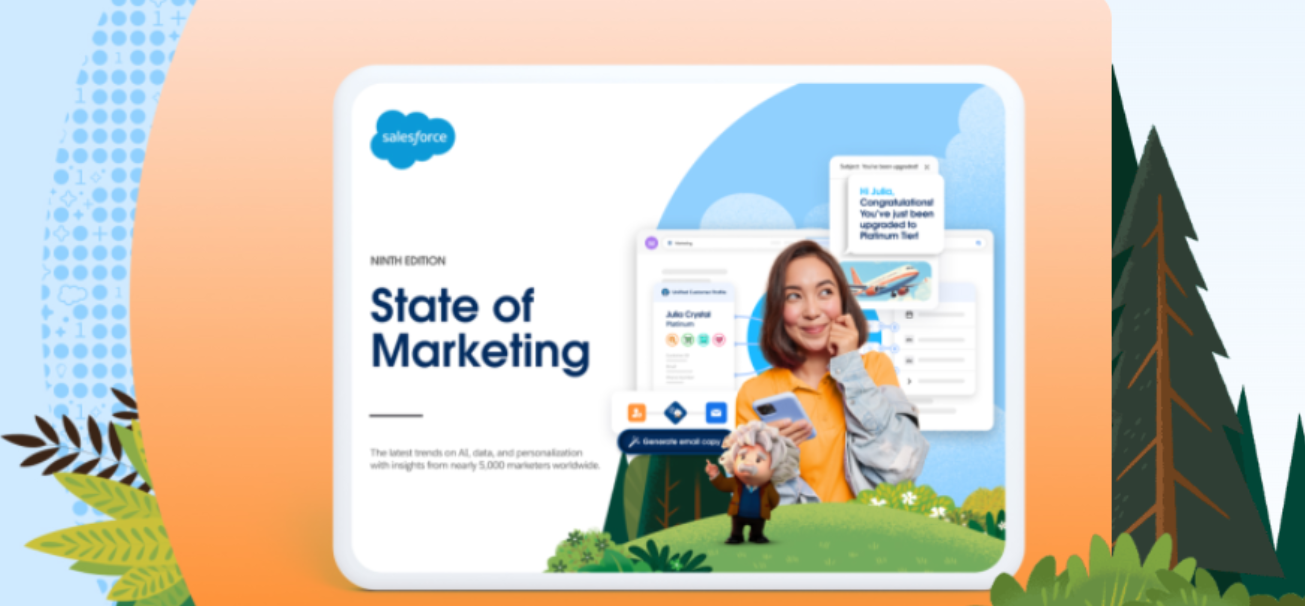
Salesforce, the global leader in CRM, has just released the new State of Marketing report, sharing insights from over 4,800 marketing leaders across 29 countries — including 100 from Ireland.

The report covers the latest trends on how marketers are evaluating and implementing AI into their operations; approaching data acquisition, maintenance, and application strategies; and ensuring customer trust and security as vulnerabilities increase.

Key insights from the research include:

  • Priorities for a new marketing era. Marketers are evolving their practices in a highly competitive landscape. They’re looking to AI — both generative and predictive — to help personalise at scale and boost efficiency.
    • Locally, improving our use of tools and technologies is Salesforce Ireland marketers’ No. 1 priority, while outdated tools and technologies/ creating a cohesive customer journey is their No. 1 challenge.
  • Marketers shore up their data foundations. Businesses have long struggled to connect disparate data points to create consistent, personalised experiences across customer journeys. Yet as third-party cookies are depreciated and AI proliferates, that quest is only becoming more critical — and challenging.
    • 23% of marketers in Ireland are fully satisfied with their ability to unify customer data sources.
    • 66% of marketers in Ireland have access to real-time data to execute a campaign. 67% need the IT department’s help to do so.
    • Marketers in Ireland use a median of 10 different tactics to collect data, with customer service data being the most common.

  • Marketers embrace AI with an eye on trust. Marketers are intent on successfully applying AI in their operations with the right data, but are concerned about security.
    • 75% of marketers in Ireland are already experimenting with or have fully implemented AI into their workflows.
    • AI implementation is also a point of differentiation: high performing marketing teams are 2.6x more likely than underperformers to have fully implemented AI within their operations.
    • The three most popular AI use cases among marketers in Ireland are: Automate data integration, generate content, and improve customer segmentation/lookalike audience modelling.

  • Full personalisation remains a work in progress. To meet rising customer expectations around personalisation, marketers are graduating beyond broad audience segmentations, like location or age, to more specific identifiers like individual preferences or past interactions. There’s also a difference between how the highest- and lowest-performing marketing teams adapt.
    • High performers in Ireland fully personalise across an average of 6 channels, compared with underperformers who fully personalised across 3.5.
  • Marketers seek unified analytics. There is no shortage of data sources, but putting that data to work is a challenge — especially when it demands a holistic or long-term view of data.
    • 58% of marketers in Ireland track customer lifetime value (CTV).
    • 90% of marketers in Ireland say they have a clear view into marketing’s impact on revenue.

  • Deeper relationships emerge with account-based marketing (ABM) and loyalty programs. Companies are increasingly turning to strategies like ABM and loyalty programs for better acquisition and retention. Yet many of these programs’ information sources remain disjointed, as does the customer experience.
    • Only 69% of marketers in Ireland say loyalty data is fully integrated across all touchpoints.
    • 45% of marketers in Ireland say loyalty program functionalities are accessible across all touchpoints.
    • 59% of B2B marketers in Ireland use ABM for customer acquisition with a similar number 56% using it for upselling however just 38% for cross selling.

Comments on the news:

“Marketers have been quick to embrace the new era of AI and are already seeing it revolutionise how they connect with their customers. They also recognise the challenge, as the potential benefits from AI hinge on managing data efficiently and safely, with maintaining customer trust never being more important.” — Gareth Kelly, Head of Marketing, Salesforce Ireland

Methodology

Salesforce conducted a double-anonymous survey of 4,850 marketers between February 5 to March 12, 2024. Respondents were sourced from 29 countries across North America, Latin America, Asia-Pacific, Europe, and the Middle East. Additional methodology and survey demographic details can be found in the report. Cultural bias impacts country-level survey results.

For more information:

Why Proficient Salesforce Administration Drives Business Growth

Salesforce administration is vital for businesses looking to drive growth and maximize their potential. A proficient Salesforce administrator can streamline sales processes, enhance customer relationship management, leverage analytics for data-driven decision-making, integrate Salesforce with other business systems, and support business expansion and scalability. In this blog, we will explore how proficient Salesforce administration plays a pivotal role in driving business growth.

The Fundamentals of Salesforce Administration

At its core, Salesforce administration involves managing and optimizing the Salesforce platform to meet specific business needs. A proficient Salesforce administrator is responsible for configuring the system, ensuring data accuracy, training users, and continuously improving its functionality. By understanding the nuances of Salesforce, administrators can effectively align its features with the organization’s goals and objectives, thus driving business growth.

Salesforce administration can also play a pivotal role in streamlining the hiring process for new workers. By leveraging a talent-as-a-service solution, administrators can integrate recruitment features within the platform, making it easier to manage candidate information and track progress through the hiring pipeline. This centralized approach not only simplifies the recruitment process but also allows hiring managers to make data-driven decisions, ensuring they bring in the best talent to support the company’s objectives.

Streamlining Sales Processes for Improved Efficiency

One of the primary benefits of proficient Salesforce administration is the ability to streamline sales processes. With Salesforce, businesses can automate lead management, track opportunities, and forecast sales, resulting in improved efficiency and productivity. Through customization and automation, Salesforce administrators can tailor the platform to match the organization’s unique sales workflows, ensuring seamless collaboration among sales teams and enhancing their overall performance.

For example, consider a retail company that implemented Salesforce and optimized their sales processes through proficient administration. By automating lead assignment and tracking, they significantly reduced manual effort, accelerated response times, and improved conversion rates. As a result, the company experienced a remarkable boost in sales and witnessed substantial business growth.

Enhancing Customer Relationship Management (CRM)

Enhancing Customer Relationship Management (CRM) is crucial for businesses to effectively manage and nurture their customer relationships. One way to achieve this is by leveraging the capabilities of CRM software, such as Salesforce.

CRM software, like Salesforce, provides a centralized platform to store and organize customer data, interactions, and preferences. Developers from this website share that efficient Salesforce administration allows businesses to gain a comprehensive view of their customers, enabling them to personalize communication and tailor experiences to meet specific needs. In addition, it helps businesses recognize opportunities to drive revenue efficiencies and avoid unexpected breaks that can result in business downtime.

By utilizing its features, businesses can streamline their sales processes, automate tasks, and improve efficiency. This includes managing leads, tracking opportunities, merging duplicates and automating follow-ups, which ultimately enhances productivity and saves time for sales teams.

Leveraging Analytics and Reporting for Data-Driven Decision-Making

In today’s data-driven business landscape, making informed decisions is essential for sustainable growth. Proficient Salesforce administration empowers businesses to leverage the platform’s advanced analytics and reporting capabilities for data-driven decision-making. Salesforce administrators can configure custom reports and dashboards, allowing stakeholders to gain valuable insights into sales performance, customer behavior, and market trends.

By analyzing this data, businesses can identify growth opportunities, optimize their strategies, and stay ahead of the competition. For instance, a technology company used Salesforce analytics to identify key market trends and customer preferences, enabling them to launch targeted marketing campaigns and develop new products that aligned with customer demands. This data-driven approach resulted in significant business growth and market expansion.

Integrating Salesforce with Other Business Systems

To achieve maximum efficiency and productivity, it is crucial to integrate Salesforce with other essential business systems. Proficient Salesforce administration involves managing these integrations, ensuring seamless information flow across various departments and systems. By integrating Salesforce with other tools like marketing automation platforms, ERP systems, and customer support software, businesses can enhance collaboration, eliminate data silos, and achieve holistic visibility into their operations.

For example, a manufacturing company successfully integrated Salesforce with their ERP system, enabling seamless order management, inventory tracking, and invoicing. This integration streamlined their processes, reduced manual errors, and accelerated order fulfillment, leading to improved customer satisfaction and business growth.

Supporting Business Expansion and Scalability

As businesses grow and expand, they need a scalable platform that can accommodate their evolving needs. Salesforce offers robust scalability features, and proficient administration is crucial in leveraging these capabilities effectively. A skilled Salesforce administrator can configure the platform to handle increased data volumes, user accounts, and complex workflows, ensuring smooth operations even during periods of rapid growth.

For instance, a startup company experienced exponential growth and required a scalable CRM solution. By employing proficient Salesforce administration, they seamlessly expanded their user base, integrated new sales channels, and efficiently managed increasing data volumes. This scalability enabled them to adapt to market demands, sustain growth, and establish themselves as a leading player in their industry.

Proficient Salesforce administration is the backbone of successful businesses that seek growth and maximize their potential. By streamlining sales processes, enhancing customer relationship management, leveraging analytics for data-driven decision-making, integrating with other business systems, and supporting business expansion and scalability, Salesforce administrators can unlock the full potential of the platform and propel organizations towards success. 

Cpl Adapts Faster to Talent Trends and Unlocks Efficiencies with Salesforce

Talent and recruitment specialist Cpl is using Salesforce technology to unlock efficiencies and fast-track growth.

Why it’s important: Recruitment is a volatile market with global events and economies constantly impacting the demand for talent. It can be very complicated, too, particularly in specialist and regulated sectors such as healthcare.

With more than 20 brands and 40 offices across 18 countries, Dublin-headquartered Cpl every month sources over 35,000 applications locally and internationally.

Combining AI, data and CRM, the group is unlocking ways to reduce the time to hire for their clients, deliver better candidate experiences, and expand into new markets efficiently.

The Salesforce Platform is at the heart of Cpl’s business, Cpl has developed custom workflows that automate repetitive tasks, accelerating recruitment and onboarding timings by 75% by simplifying data capture and candidate evaluation processes.

Integrated with over 90 internal and external sources, including job websites, finance tools, and applicant tracking systems, has created a single source of truth of client and candidate information and delivered business value worth around €1M within 18 months.

Cpl is continually adding new features to personalise the recruitment lifecycle, including creating their own candidate shortlists and sending tailored newsletters to clients to showcase new talent.

The Salesforce solution: 

  • With Experience Cloud, Cpl has created personalised recruitment portals for clients and to provide candidates with more self-service options.
  • With Sales Cloud Cpl can connect new business leads and insights across its global operations, creating a group-wide view of sales pipeline and performance.
  • Customising Salesforce workflows with Trailhead, Cpl can capture and analyse data at every step of the recruitment journey and identify trends shaping the future of work which helps clients compete more effectively for the best talent.
  • Migrating to Hyperforce has enabled the group to scale more easily into new markets whilst strengthening data security and regulatory compliance.

Lorna Conn, CEO at Cpl said: “Today, being able to source the right talent at the right time requires the ability for everyone involved – clients and candidates – to move fast and maximise productivity. With Salesforce, being able to support multiple teams and brands on a single platform has enabled us to simplify our processes and unlock greater efficiency.

“Shifting our recruitment strategy from reactive to proactive and transforming the insights we extract from our data is enabling more informed conversations with our clients and scaling our processes and teams quickly and cost-effectively.”

Carolan Lennon, Country Leader, Salesforce Ireland said: “Today, helping organisations access the talent they need to thrive, tackling the skills gap while strengthening your own processes to work smarter and faster is no easy feat.

“By bringing multiple teams and brands onto a single platform Cpl shows the power that data, AI and CRM can have in helping companies adapt to new business realities and unlock growth opportunities.”

Salesforce and Google Cloud Announce Expanded Strategic Partnership to Unlock the Power of AI, Data and CRM

Salesforce and Google Cloud today announced an expanded strategic partnership to help businesses utilize data and AI to deliver more personalised customer experiences, better understand customer behaviour, and run more effective campaigns at a lower cost across marketing, sales, service, and commerce.

Two new data and AI innovations will bring real-time data sharing with enhanced predictive and generative AI capabilities, so businesses can use their data and their custom AI models to better predict customer needs and reduce the cost, risk, and complexity of synchronising data across platforms.

Why this matters: While 80% of business leaders say data is critical in decision-making at their organisation, 41% find their data too complex and inaccessible to be useful. These new integrations will help solve the problem of accessing and understanding data and allow companies to use their data to power AI insights across their business that drive better customer experiences.

Go Deeper: Turning business data into actionable insights and personalised experiences

Salesforce Data Cloud + Google BigQuery

The new integration between Salesforce Data Cloud and BigQuery will enable companies to more easily create unified profiles of their customers to provide new, highly personalised experiences.

Salesforce and Google Cloud will provide customers with seamless data access across platforms and across clouds, akin to having their data housed in a single location — with zero-copy or zero-ETL (Extract, Transform, Load) that can reduce the cost and complexity of moving or copying it while maintaining governance and trust.

Salesforce Data Cloud + Google Vertex AI

New integrations between Salesforce Data Cloud and Google Cloud’s Vertex AI will enable customers to bring their own models from Vertex and use them across the Salesforce Platform, addressing the specific needs of their businesses – such as predicting buying behaviour or churn likelihood – across their Salesforce Customer 360 data. Zero-copy data access for AI model training can maximize a company’s AI investment by providing immediate access to unified customer data, thereby streamlining the model development process and enhancing the accuracy and efficiency of AI predictions and insights.

How industries will use Salesforce’s Data Cloud and Google’s BigQuery and Vertex AI to improve the customer experience and personalize interactions

A fashion retailer can connect CRM data, like customer purchase history and service interactions, with non-CRM data like real-time online activity or social media sentiment. They can then deploy custom AI models that predict customers’ likelihood to buy certain types of clothing based on that data, and deliver hyper-personalized recommendations to customers via the most appropriate channel, including email, a mobile app, or social media.

A healthcare organization can connect CRM data, like appointment history and patient feedback, with non-CRM data like patient demographics and medical history data. They can then deploy custom AI models that predict which patients are at risk of readmission, which informs personalized care plans for those high-risk patients to improve medical outcomes through proactive medical care.

A financial institution can connect CRM data, like a customer’s transaction history, credit score, and financial goals, with non-CRM data like market analysis or economic trends. They can then deploy custom AI models that predict a customers’ spending habits, investment preferences, and financial goals to inform personalized banking services and offers.

Quotes:

“AI and data are revolutionizing the way businesses operate and innovate, and together Salesforce and Google are empowering organizations to unlock the full potential of their trusted data, put AI insights into action, and personalize customer experiences like never before. This partnership paves the way for unprecedented innovation and business value for our customers.” –David Schmaier, Chief Product Officer, Salesforce

“Google Cloud and Salesforce share a commitment to helping businesses accelerate their data-driven transformations. This new partnership brings together one of the world’s largest data clouds from Salesforce with analytics and AI capabilities from Google Cloud, and represents a significant leap forward in businesses’ ability to generate more value and insights from their customer data.” – Thomas Kurian, CEO, Google Cloud

Salesforce and Google Partnership Momentum

In 2017, Salesforce and Google launched a strategic technology partnership, bringing together two of the world’s most innovative companies to help customers turn marketing, sales, service, and commerce data into actionable insights and better business outcomes. Since then, companies of all sizes and across all industries have been leveraging Google and Salesforce together to enhance marketing, provide AI-powered customer experiences, and increase productivity.

Availability:

The Data Cloud and Google Vertex AI integration will be in pilot mid-2023, and generally available late-2023.

The Data Cloud and BigQuery integration will be in pilot late-2023, and generally available early 2024.

The Marketing Cloud and Google Analytics integration will be available later this year and compatible with GA4.

Leveraging the Power of CISCO Contact Center and Siebel CRM Integration for Optimal Productivity

Do you want to maximise customer experience and enhance productivity in your organisation? The computer telephony integration of Cisco Contact Center and Siebel CRM provides businesses the opportunity to effectively collaborate, communicate, and coordinate with their customers more effectively.

In this blog post, we will examine how companies leverage this technology for improved performance capabilities and optimal productivity. We’ll also take a closer look at how companies from different fields have accelerated business growth through the effective use of Siebel CTI integration.

What is Siebel Integration

Siebel Integration is a crucial aspect in ensuring the seamless flow of data throughout your organisation’s different systems. When integrating the Cisco contact centre with Siebel, the CTI Connector embedded within the communication toolbar makes the process much easier.

Siebel has call and controls for agent states that allow agents to focus on customer interactions without the need to switch between multiple applications. The integration allows for streamlined communication, which ultimately translates to a better overall customer experience.

How Does it Work 

Siebel CTI integration allows for the automatic retrieval of customer data from the company’s CRM system and presents it to the agent in a user-friendly format. This saves time and minimizes errors that may occur when agents manually search for customer data.

Additionally, the integration enables call routing and screen-pop features, automatically connecting agents to the appropriate department based on the customer’s query and can access relevant screen information. Siebel CTI ensures that customer service agents have access to accurate information, resulting in more effective and streamlined interactions with customers.

Benefits of Siebel Integration for Your Business 

Streamlines Operations

Efficiency is crucial in today’s business environment, particularly in contact centres where every moment spent interacting with customers counts. Siebel CTI integration is a valuable asset for contact centres as it saves time. By streamlining operations, businesses can increase productivity, reduce costs, and ultimately enhance the customer experience.

Siebel CTI integration seamlessly integrates various applications, including CRM solutions. This integration ensures that customer data is readily available and a smooth experience is provided to every customer.

Provides Intelligent Routing

Siebel CTI integration is crucial for maximising efficiency and effectiveness in modern contact centres. It uses telephone network data and IVR information to direct each incoming call to the most suitable agent. By implementing the Siebel CTI integration, contact centres can improve the customer experience and increase the rate of resolving issues on the first call. This means no more guessing games or unnecessary transfers.

Facilitates Agent Training

Siebel CTI integration has the ability to monitor agent performance in real time. Managers can easily track calls, allocate resources, and provide instant feedback to agents. This ensures that agents are well-trained and equipped to handle customer interactions seamlessly. 

Additionally, streamlined operations enable contact centres to deliver better customer experiences, which is increasingly becoming a priority for modern businesses.

Key Challenges of Siebel Computer Telephony Integration 

Security

Siebel Computer Telephony Integration presents a significant challenge when it comes to security. As much as it can undoubtedly make things easier and more efficient, it also opens a potential gateway for unauthorised parties to access your system. Take voicemail, for example. If you have an outside phone, anyone willing to take the time to figure out the password and access the mailbox can intercept and listen to messages.

Even with password protection, there’s still a fundamental issue. The system requires message retrieval, which means it’s not airtight. It’s up to companies to work with their IT teams and CTI providers to ensure that strict security protocols are in place to prevent any sensitive data from falling into the wrong hands, making security a key challenge in Siebel CTI implementation.

Complexity

Integrating Siebel Computer Telephony with existing systems is no easy feat. The level of complexity involved can prove to be quite a challenge. Setting up the system and ensuring that it runs seamlessly takes a significant amount of time and effort. 

The troubleshooting and technical support needed can add to the complexity, which puts more pressure on IT departments. Despite these challenges, Siebel Computer Telephony Integration can enhance business productivity and efficiency, making the effort well worth it.

Choosing the Right Solution for Siebel Integration 

Choosing the right solution for CTI integration is vital to achieving optimal results for your business. It’s important to take a comprehensive approach when making this decision, ensuring that you understand your needs, research the available features, and carefully review integration capabilities. 

Additionally, it’s important to ensure that the solution you choose is scalable and able to grow with your business and that technical support is available to help you through any challenges that may arise. If you need to integrate CTI, b+s connects by Bucher + Suter is the top choice. Their expertise and solutions are unmatched, making them the best option for all your integration needs.

Conclusion

Integration of CISCO Contact Center and Siebel CRM is an excellent way for businesses to maximise productivity and increase operational efficiency. The intelligent routing feature ensures that customer needs are addressed in a timely manner, while the streamlined operation processes reduce overall costs. Additionally, by allowing agents to gain access to customer and product data quickly, it eliminates common frustrations and additional delays.

Implementing this integration can be a daunting task, but by working with knowledgeable and experienced partners like Bucher + Suter you can be certain that your business will have the optimal solution for their contact centre needs. Overall, incorporating Siebel into your contact centre environment is a powerful solution that provides important perks for any organisation looking to increase its customer service effectiveness.