CWSI launches free mobile app to help Irish businesses return to work safely. #CWSI #Business

CWSI, Ireland’s most experienced enterprise mobility specialists, today announces the launch of a freely available mobile app for businesses, to help employees return-to-work safely according to Government protocols. The Safety Instructions app, which is available in multiple languages, including English and Irish, is free to download on the Apple App Store or Google Play Store.

CWSI developed the app in conjunction with its partner, Netherlands-based enterprise mobility experts BLAUD, with the aim of helping Irish and UK organisations manage the safe return of workers to sites and offices as the economy opens up in phases, following the temporary closure of most businesses due to COVID-19.

The app was built on the insight that a safe and continued return to work requires strong communication and a shared collaborative approach between employers and workers. The user-friendly app was designed to help organisations easily communicate and explain workplace controls to comply with infection prevention measures to all relevant workers, contractors and visitors to the site or office.

Through the app, employers can easily and dynamically distribute safety information and protocols including detailed instructions on social distancing, site floorplans, evacuation procedures and emergency contact details. Data related to Government guidelines on COVID-19 – such as advice on hand hygiene and instructions on what to do if a worker develops signs and symptoms of COVID-19 on-site – can be updated quickly and easily as the latest advice and instructions change.

Visitors to a workplace can access site-specific information via a unique QR code or via a map search feature. The app is available in multiple languages, including English, Irish, Flemish, French and Dutch.

Ronan Murphy, CEO, CWSI, said: “As the economy slowly begins the return to office and site-based working, health and safety protocols and procedures will be critical to ensuring a safe environment for employees and reducing risk for employers. At CWSI, we believe mobile technologies, such as the Safety Instructions application, can play a key role in helping organisations communicate safety measures clearly to staff to mitigate the chances of future outbreaks in the workplace.

Ronan Murphy, CEO and Co-Founder, CWSI


“Our freely available app is a great example of how technology can provide employees with immediate, up-to-date information, helping to remove uncertainty around the return to work and alleviate the administrative burden on over-stretched HR and health and safety resources. With the right measures and the tools to communicate these in place, the economy as a whole can return to normal both quicker and more safely.”

 Get on Android     Get on IOS

The Safety Instructions app is available to download on the Google Play or Apple App Store or through the CWSI website (cwsisecurity.com/solution/mobile-workforce-solutions/safety-app)

Taskade: Real-Time Collaboration Platform Launches Free Pro During COVID-19 #COVID-19

Taskade, a Y-Combinator backed startup, launches a real-time organization and collaboration platform for remote teams. This week, it announced it will be offering a 6-month free upgrade to its Pro version to support businesses and individuals adopting remote work amidst the COVID-19 situation.

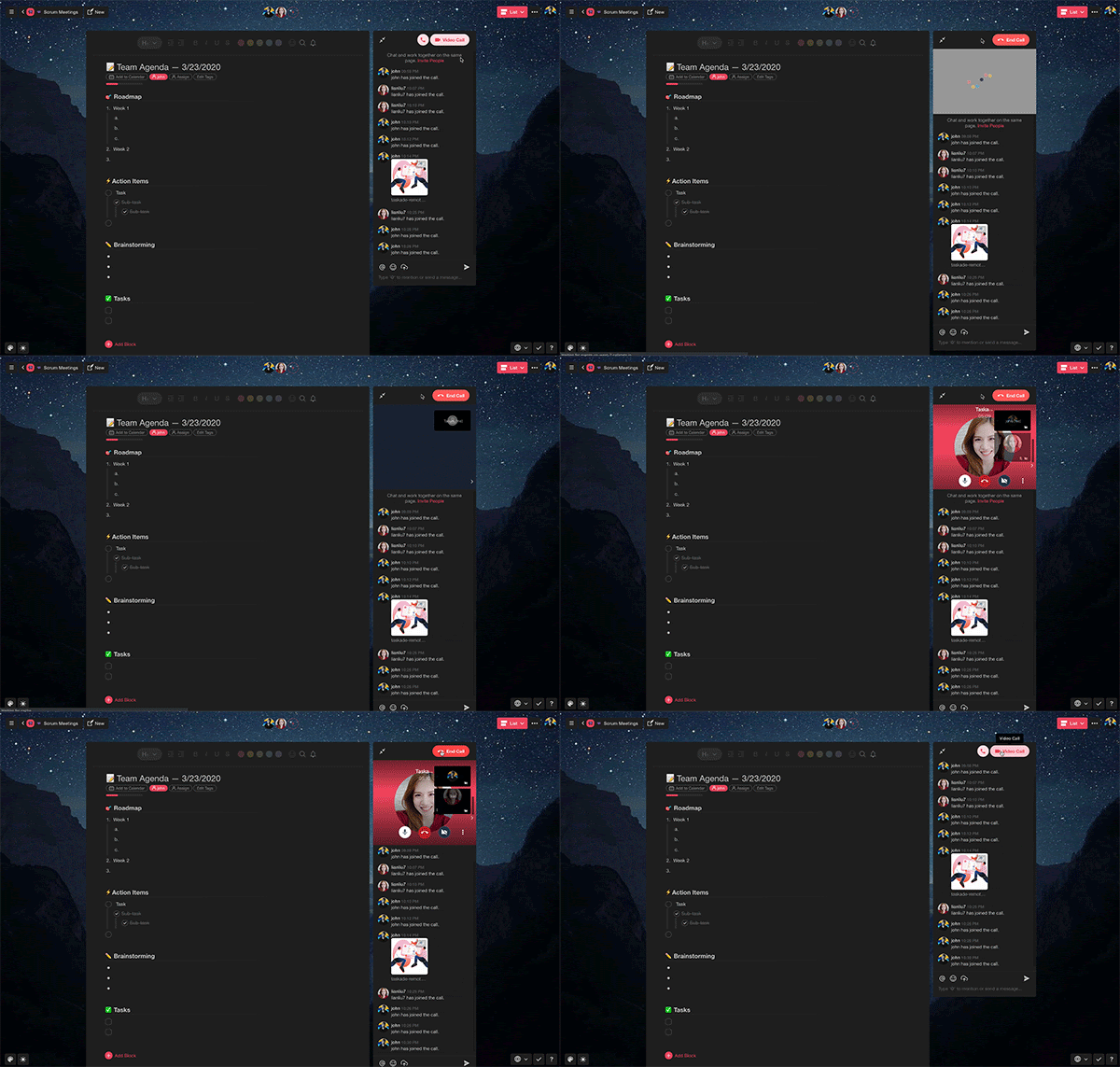
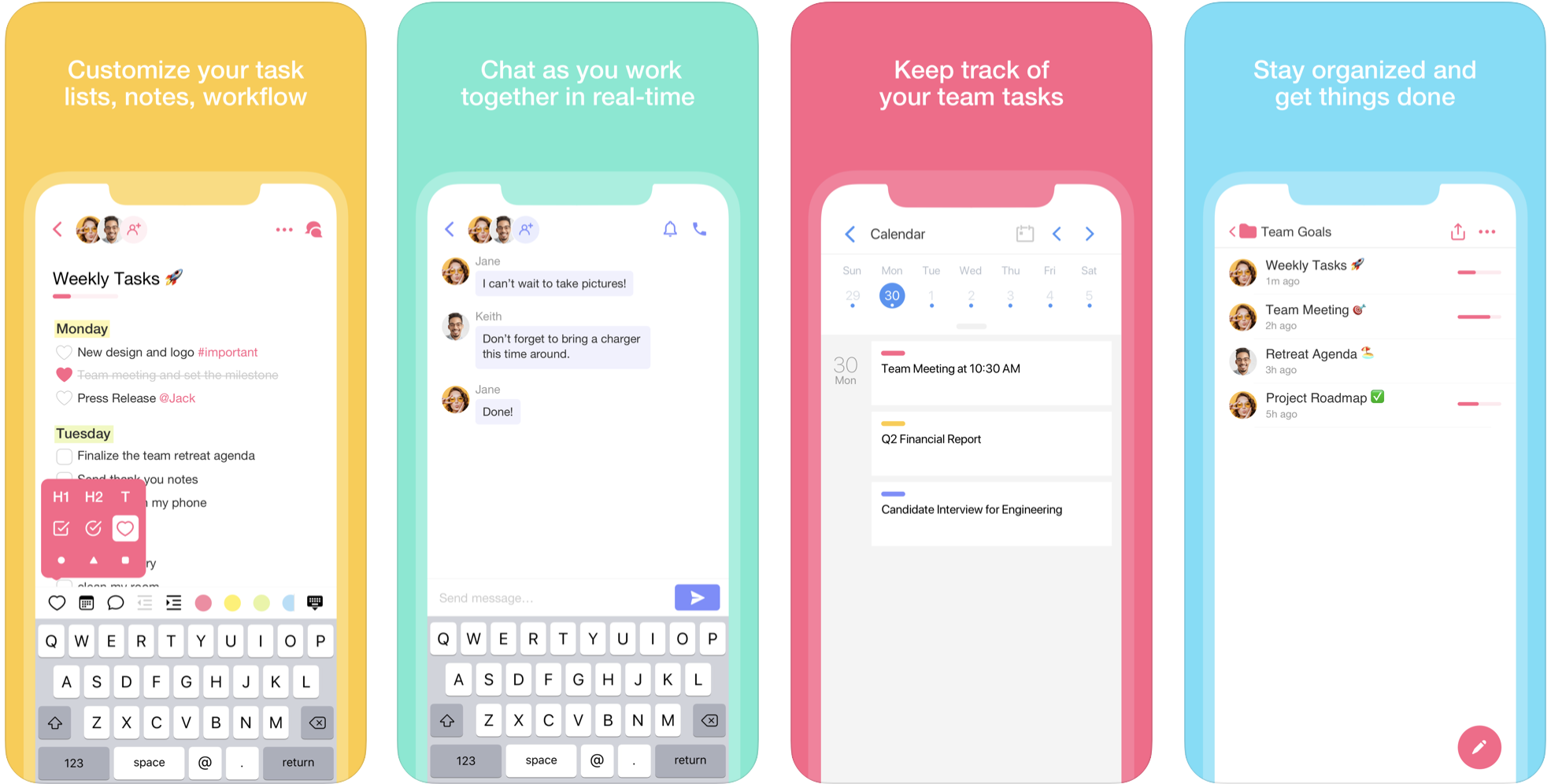
Taskade is a real-time workspace for remote teams to manage tasks, write notes, and video chat together, on the same page.


In the past few weeks, the world has witnessed an unprecedented transition to work-from-home as businesses and organizations try to keep staff safe. But the overnight pivot to remote work has left many employees who haven’t previously worked off-site struggling with productivity and without access to adequate tools.

And these problems are all too familiar for the Taskade founding team.

“By the time we started Taskade, we had been working together as a remote, distributed team for many years. Despite our experience working remotely, we were frustrated about having to hack together multiple tools in order to get things done. Taskade is truly a remote-first tool.” says John Xie, Taskade’s Co-Founder and CEO.


Employees need a quick and easy way to dive into the work without the need for extensive training or high-level technical support. That’s why Taskade provides a user-friendly solution that lets fully distributed teams organize work, communicate via chat and video, share documents, manage tasks and collaborate in real-time.

If you have used tools like Asana, Trello, Todoist, Zoom, Microsoft Teams or Slack, you will feel at home as Taskade combines all the essential ingredients needed for remote collaboration into one simple tool. Another good news is that it’s available on all popular operating systems, including Windows, Mac, iOS, Android, and as a browser extension and syncs in real-time.

Last year, the company secured a $5M seed investment from Y-Combinator and Grishin Robotics.

”We believe Taskade is fundamentally changing remote team collaboration by providing one tool that teams need to get work done effectively. Taskade provides a real-time, device-agnostic and cross-platform experience to end-users. We are excited to be part of the journey with the Taskade team,” said Dmitry Grishin, managing partner at Grishin Robotics.

If you’re interested in taking the app for a spin, head over to https://www.taskade.com/ to create a free account. You can also download Taskade’s mobile and desktop apps for all your devices at https://www.taskade.com/dow

Latest Stories
Why Distributed Teams Are the Future of Workforce 
Collaborative Task Management: Organize and Visualize Projects with the Origami Method

COVID-19 Pandemic Impact: Production of Smartphones Will Fall as Much as 30% in the First Half of 2020

The Coronavirus outbreak is expected to lead to a huge reduction in the production of smartphones, potentially falling by as much as 30% in the first half of 2020, states global tech market advisory firm, ABI Research.

“The ripples from China will be felt globally,” says David McQueen, 5G Devices Research Director at ABI Research. With China located at the epicenter of the COVID-19 outbreak, the resultant impact has been disastrous for the global mobile device market, which has subsequently witnessed mass disruption to its production lines and a stalling of related supply chains caused by labor shortages and inactive logistics. As China is also the world’s manufacturing center for most of these device types, and one of its biggest markets, the sector has been hit hardest by delayed shipments and a weakened development of next-generation products.

“Significantly, in the short term, there will be an adverse effect on 5G devices. No sooner had 5G smartphones started to gain some traction and break into the market in significant numbers, than the outbreak will now trigger a suppression of its near-term growth, pushing out the development and introduction of affordable 5G phones,” McQueen explains. This move to lower price tiers was expected to become a key driver for boosting 5G smartphone shipments in 2020, but the desired impact will now be lessened throughout the year due to the outbreak. Shipment volumes for 5G smartphones in 2020 will be much lower than previously expected, slowed by a stagnant supply chain and crippled demand. “Undoubtedly, the market will also be faced with numerous disruptions and delays, most notably the launch of Apple’s first 5G iPhones that are due to appear in September 2020.

In the longer term, expectations are that the outbreak will gradually come under control by end of 2Q 2020, but it will take some time thereafter for consumer confidence to return and for the device sector to recover.“Importantly, with such a large proportion of the world’s mobile device market relying on China for manufacturing and component supply, which is contending with disruption on a massive scale, it has become clear that many in the chain were woefully unprepared to react quickly,”  McQueen points out.

It is not clear what the full extent or lasting effect that COVID-19 will have on the mobile device ecosystem, but in the short- to medium-term, it will heavily impact the smartphone market. “Aside from taking its toll on both demand and the supply chain, it will particularly affect the industry’s eagerness to drive 5G to lower price points in 2020, seriously blunting its growth potential,” says McQueen.

McQueen recommends that “vendors and suppliers fully understand their exposure to all those along the chain, identifying and evaluating all risks related to issues like capacity management and market demand, enabling them to react accordingly and mitigate the impact of any future market disruptions.”

For a clearer picture of the current and future ramifications of COVID-19 across technologies and verticals, including  5G devices, Smartphones, and Wearables, download the whitepaper Taking Stock of COVID-19: The Short- and Long-Term Ramifications on Technology and End Markets.

Working from home securely: Coronavirus contingency planning guide. #Coronavirus #COVID-19 #CWSI

The outbreak of the coronavirus (COVID-19) in Ireland is posing a new challenge for businesses, namely, how do companies quickly mobilise a remote working solution to enable employees to work productively from home? Several companies have already asked their employees to work from home for short periods, and with further cases expected in Ireland, it Is likely that more companies will be forced to close their offices at times.

However, not all organisations are prepared for such a measure and many are now currently scrambling to quickly put a remote working solution in place. In the rush to do so, many may compromise on security and expose themselves to huge risks.

As companies flock to potentially unsecure work environments, hackers and cyber-criminals will see this as an opportune time to ramp up their level of attacks. Advanced methods like SMS phishing and login-screen phishing can target remote working devices and grant attackers access to company information.

Paul Conaty, Principal Consultant, CWSI, commented: “While organisations have been, to varying degrees, incorporating more flexible elements into the workplace, the outbreak of the coronavirus has pushed remote working into centre stage. The challenge for employers is to implement not only a productive work from home solution, but also a secure one. While mitigating against the risk of the coronavirus, organisations may be unwittingly exposing themselves to a host of very different kinds of viruses.


“Personal devices used to access company data often lack the levels of security that are in place on work devices behind the company firewall. Cyber-criminals will see the current situation as a huge opportunity to gain entry to company systems and it’s vital businesses review the security of their remote working environment before being forced to roll it out across the organisation.”


With this five-step contingency planning guide, organisations can quickly implement actionable steps to help secure their work from home policy.

  1. Map out your current remote working setup

Take stock of your infrastructure and map out every device that is used to connect to your network. Do employees use company or personal devices? What verification systems do you have in place. Get an overview of where you currently are before planning the next steps.

  1. Bolster security and monitoring of your environment

Many software licences and IT infrastructures that enable remote working come with security and monitoring measures as standard. Review your set-up and make sure these are enabled and kept up-to-date. Multifactor authentication for example ensures that the right individuals have access to the right resources at the right time and for the right reasons.

  1. Communicate your remote working policy to workers

Hold information sessions, send remote working guides via email and give updates on policy changes to all staff. Users should be fully aware of their rights and responsibilities and are more likely to accept privacy compromises or other measures if the reasons for these requirements are clearly communicated beforehand.

  1. Test the environment to ensure employees can work properly

Once a remote working solution is in place, carry out tests as soon as possible to ensure employees can carry out their work. If devices are locked down too severely, employees will seek free unsecure cloud services to bypass these lockdowns. Shadow IT is a huge security risk facing organisation so make sure your approved remote working solution works well.

  1. Support users and monitor systems on an ongoing basis

It’s inevitable there will be some issues when rolling out a working from home policy, so ensure your IT support team is available and equipped to help resolve problems. Monitor the network to remain vigilant against threats and learn more about how to improve remote performance. Proactively support your employees and keep your sensitive data secure and protected at all times.

For more detailed information, visit: https://cwsisecurity.com/resource/how-to-work-from-home-covid-19-coronavirus-contingency-planning-guide/