How AI-Powered Data Annotation is Transforming Computer Vision in Irish Tech Companies

Computer vision is powering everything across Ireland’s fast-growing tech ecosystem, from advanced manufacturing and smart retail to fintech security. Data annotation sits at the core of these intelligence systems. Keep reading to understand how Irish tech companies are improving accuracy and accelerating model training as AI-powered annotation systems become scalable and precise.

Data Annotation Trends in Irish Tech Companies

Many Irish tech companies in the early computer vision development relied on small teams, mostly in-house, to label videos and images manually. These processes were inconsistent, slow and expensive, especially during scaling or when datasets reach the millions. Now, companies are relying on AI-powered data annotation to reshape their workflow. By combining human validation with automated pre-labelling, providers like the oWorkers team offer support in handling large-scale datasets with great precision and speed. This is a hybrid approach that allows both established businesses and startups to train their vision models with great efficiency without compromising quality.

Data annotation plays an essential role in system training, since even the most sophisticated AI model is as accurate as the data it trains from. Irish companies are taking advantage of well-annotated datasets for different sectors like retail analytics, fintech, health tech and smart cities to power fraud prevention, facial recognition, predictive maintenance and object detection. AI-powered tools are gaining popularity since they reduce human errors, speed up turnaround and guarantee consistent labelling standards across different projects. Because of that, organisations can scale their computer vision solutions confidently, improve model performance and shorten development cycles in competitive global markets.

How AI-Powered Annotation Elevates Models Accuracy

Companies cannot achieve accurate computer systems by chance; they should build them on precisely labelled data. Improving model accuracy and developing AI-driven platforms for Irish tech organisations is directly tied to the consistency and quality of annotation processes.

Machine Learning Pre-Labelling

Machine learning models are used by AI-powered annotation tools to automatically create initial labels for videos and image frames. This pre-labelling technique helps companies reduce workloads and accelerate dataset preparation. The only work annotators have is to review and refine already generated tags, segmentation masks and/or bounding boxes instead of starting from scratch. For Irish companies working under pressure, this means quicker deployment and faster iterations of computer vision solutions.

Human Validation (In the Loop)

Human experience and expertise remain vital even though automation alone speeds up workflows. Human-in-the-loop validation guarantees that any AI-generated annotation is checked for edge cases, context and nuance. Skilled reviewers in this approach handle complex scenarios, correct inaccuracies and maintain dataset consistency. This is a perfect combination of precision and speed, which results in a stronger model performance and reliable training data.

Bias Reduction and Feedback Loops

AI-assisted annotation systems “grow” over time through a well-structured feedback loop. This means that corrections made by human annotators are returned to the systems to refine future output. Because of that, companies can boost efficiency while identifying and minimising bias in datasets. Reducing bias, especially for Irish tech companies like healthcare, finance and smart cities, is vital for fairness, long-term trust and compliance.

Conclusion

AI-enhanced data annotation is taking centre stage in computer vision innovation in Ireland‘s tech companies. These organisations can develop reliable, scalable and more accurate AI systems by combining human expertise with intelligent automation.

30% of office workers have tried to gain unauthorised access to a colleague’s device

IT.ie, a leading Irish IT managed services company, today announces new survey results which reveal the prevalence of insider-threats within Irish businesses with 30% of office workers admitting that they have tried to gain access to a colleague’s device without their permission in the last 12 months.

The research also found that 35% of employees have actively sought out private information about a colleague, client, or customer such as their age, salary, CV or home address, from a work computer system.

The research of 1,000 office workers based in Ireland was carried out by Censuswide on behalf of IT.ie and SonicWall, a global leader in cybersecurity innovation. It forms part of IT.ie and SonicWall’s ‘Cyberpulse Ireland 2025’ report, which explores the cyberthreat landscape in Ireland, according to the sentiment and behaviours of employees.

Alongside the above high-risk behaviours, the survey also showed that a cohort of office workers may see themselves as internet sleuths, possibly influenced by viral online videos featuring content creators who try to outsmart online scammers. Almost two-in-five (38%) have engaged with a scammer – intentionally or unintentionally at work in the last 12 months, while one in four have sent an angry response to someone who they presumed to be a scammer. Furthermore, 17% say they have either duped, or attempted to dupe, an online scammer.

Concerningly, 17% have engaged with a scammer to try to convince them not to target the business – an approach that still carries significant risk.

Eamon Gallagher, Founder and Managing Director, IT.ie, said: “The report highlights some troubling behaviours among office workers that has the potential to expose businesses to considerable risk. While some employees, particularly from the younger cohort, attempt to challenge, outsmart, or reason with scammers, cybercriminals will often capitalise on their efforts, using manipulation tactics that leave the organisation more vulnerable to compromise.

“This behaviour is similar to that of those who attempt to gain access to their colleague’s device or are seeking out their personal information. While their actions may not always stem from malicious intent, it does represent a breakdown in boundaries and data responsibility.

“While these findings may raise concerns, they ultimately represent a valuable opportunity for businesses. By investing in employee training and onboarding, strengthening internal policies, implementing more robust access controls, and creating better cybersecurity awareness, organisations can address these vulnerabilities head-on. At the end of the day, a company’s cybersecurity is only as strong as its least prepared employee.”

Stuart Taylor, Senior Director of Regional Sales for Northern Europe, SonicWall said“These findings are a stark reminder that the greatest risks often come from within the organisation, not intentionally, but through curiosity, complacency, or even misplaced confidence.

“Every click and every login matters. That’s why businesses need layered security that combines zero-trust principles, strong access controls, and continuous user education. Technology alone isn’t enough; it has to work hand-in-hand with clear policies and a culture of accountability. When employees understand the ‘why’ behind security and organisations enforce the ‘how’ through smart solutions, you close the gaps that attackers are so quick to exploit.”

What Role Does Data Play in Building Effective Multimodal AI Systems?

Data drives every layer of effective multimodal AI systems, making it essential for connecting information from text, images, audio, and beyond. These systems thrive on high-quality, well-annotated, and diverse datasets that enable more accurate understanding and integration across multiple data types. With AI-powered computer vision development, visual data can be transformed into actionable insights, broadening the reach and impact of multimodal AI functions.

As businesses look to innovate, the ability of multimodal AI to process varied data inputs is vital for real-world applications. Proper data strategy shapes not only how AI perceives information but also determines the quality and reliability of outputs in practical environments.

Key Takeaways

  • Data quality and diversity are critical for multimodal AI.
  • Cross-modal data integration enables sophisticated analysis.
  • Real-world performance depends on robust data-driven strategies.

The Foundation of Data in Multimodal AI Systems

Data is essential in training multimodal AI, as it allows systems to integrate language, visual, and audible information. By leveraging diverse and high-quality data, these systems can achieve greater accuracy and adaptability in real-world applications such as medical imaging, sentiment analysis, and image captioning.

Types of Data Used in Multimodal AI

Multimodal AI systems utilize a mix of data from different sources. Common data types include images, text, audio, and video. For example, computer vision leverages visual data, while natural language processing handles textual information. Speech recognition and sentiment analysis benefit from both audio and text.

This integration helps machines learn relationships between modalities. In generative AI and deep learning, handling multi-modal data such as audio-visual clips or paired text-image samples is crucial. Large language models often use a combination of structured and unstructured data to enhance their capabilities. Popular multimodal datasets include the Flickr30K and COCO datasets, which offer paired images and captions for robust model training.

Importance of Data Quality and Diversity

Effective multimodal learning depends on both the quality and diversity of the datasets. High-quality data minimizes errors and ambiguities, ensuring that multimodal models perform consistently across tasks like image captioning and medical imaging. Diverse data, including different languages, accents, visual contexts, and environmental noises, supports the model’s resilience and adaptability.

If one data channel is noisy or missing, a multimodal system can rely on another for context. Well-curated, balanced datasets reduce biases and improve reliability in applications such as AI healthcare and generative AI multimodal AI systems are also more robust when drawing from varied and representative sources.

Multimodal Datasets and Benchmarking

Benchmarking multimodal AI requires comprehensive datasets that cover multiple types of input. Widely used resources like the COCO dataset and Flickr30K dataset mix paired images and text, supporting advanced tasks in image captioning and visual question answering.

These multimodal datasets serve as standard benchmarks for comparison across different deep learning models. Organized benchmarking allows researchers to systematically evaluate performance across various AI applications, from sentiment analysis to computer vision, multimodal datasets have been especially valuable for medical imaging tasks and emerging large language models. Regular benchmarking encourages the development of more accurate and generalizable AI systems.

Data-Driven Strategies for Building Effective Multimodal AI Systems

Developing robust multimodal AI systems demands more than just collecting information. Quality, integration methods, learning strategies, and safeguards for privacy and security are fundamental for performance across real-world tasks like recommendation systems, object detection, and diagnosis.

Data Integration and Fusion Techniques

Effective multimodal AI relies on data integration and fusion to combine signals from diverse sources such as text, images, audio, and video. Early fusion merges input data at the raw stage, enabling neural networks like convolutional or recurrent neural networks to learn joint representations. This approach works well for closely related or synchronized data streams.

Late fusion processes each modality separately before merging high-level features, which is key when dealing with weakly correlated or asynchronous data. Stacking and random forests are often used for late fusion in classification tasks. Combining data using these techniques is critical in sectors like healthcare for integrated diagnosis, or in self-driving cars where visual and sensor data must be fused.

Learning Approaches for Multimodal AI

Multimodal AI systems benefit from flexible machine learning strategies tailored to diverse data. Supervised learning remains central, training neural networks such as convolutional and recurrent models on labeled modalities. However, self-supervised and contrastive learning approaches are growing, utilizing unlabeled data to learn robust latent representations. For example, contrastive loss forces systems to associate related data (like matching image and caption pairs), enhancing cross-modal retrieval and recommendation systems.

Probabilistic models can be used to handle uncertainty in input processing, especially when modalities might be noisy or incomplete. Diffusion models, another neural approach, help generate synthetic data to supplement limited training sets, improving object detection and action recognition tasks.

Conclusion

Data is essential for building robust multimodal AI systems. It enables the integration of varied input types—such as text, images, and sensor data—which leads to more capable and context-aware models. Effective use of data allows these systems to learn relationships across different modalities. This results in improved accuracy and adaptability in real-world applications.

Well-curated and diverse datasets are key for ensuring performance and reliability. The quality, completeness, and integration of data sources directly impact how well multimodal AI can function in practical scenarios.


Leaving Certificate students say Computer Science is for all

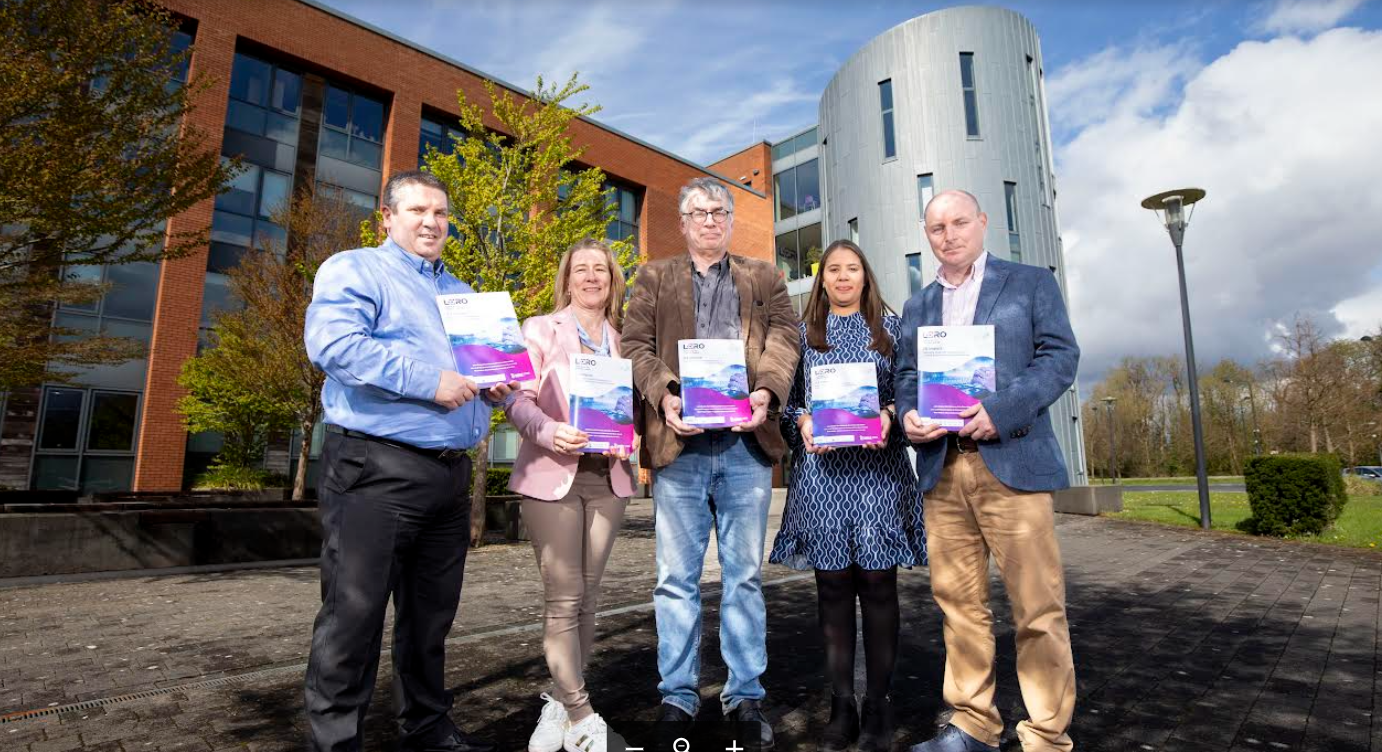
Debunking misconceptions that Computer Science at Leaving Cert is only for “brainy” students and “nerds” is vital to attracting more pupils to the subject, a study by Lero, the Science Foundation Ireland Research Centre for Software, and University of Limerick (UL) has found.

Lero and UL researchers, who conducted a four-phase in-depth qualitative study interviewing fifth and sixth-year students from four schools, said students told them Computer Science is suitable for all students and not just those perceived as “brainy” students.

One of the study’s authors, Lero’s Prof. Chris Exton, a lecturer in the Department of Computer Science at UL, said debunking these beliefs is essential to encourage more students to engage with and promote a more realistic view of Computer Science as a school subject and a career.

“The commonly held belief that Computer Science was a subject for ‘nerds’ was challenged by students, with the majority of students claiming the subject is for everyone, regardless of gender, previous experience or abilities. These findings contradict the popular conception that Leaving Cert Computer Science is suitable for a specific group of people with specific interests,” he added.

Lero Education and Public Engagement Program Manager Dr Clare McInerney said that in a technology-rich society, an understanding of software, coding and the wider aspects of Computer Science is no longer a specialist body of knowledge required by key professionals.

“Software permeates every aspect of our lives from the games on our phones to the healthcare we receive. So, computer science really is an essential part of what it means to be digitally competent in the 21st century and, therefore, has relevance for all future careers and citizens and recognising that computer science is a huge part of the world we live in is an important step for us all,” she said.

“As our study has found, it is a subject that promotes creativity, enables student collaboration, and achieves many of the essential learning outcomes required in the 21st century. Therefore, it is a unique vehicle to achieve many of these educational goals regardless of whether a student decides to pursue a career in this area. For that reason, framing it as an essential skill for all, rather than being part of the STEM portfolio of subjects may prove more advantageous in the long run,” she continued.

Prof. Oliver McGarr from the School of Education at UL said their study concludes that the introduction of the subject in 2018 has been successful, with a growing number of schools taking on the subject – 145 secondary schools, 20% nationally, now offer Computer Science.

“Students’ experiences of the subject are very positive in relation to the way it is taught and the opportunity for creative and collaborative work. However, negative and inaccurate stereotypes are still present, as well as a wider lack of understanding of what Computer Science entails and a lack of appreciation of its wide application in all aspects of society,” he added.

Lero’s Joyce Borges remarked that “this work is particularly important because, while there have been several studies that have explored the roll out of Leaving Cert Computer Science, this is the first which focussed on students and their experiences of the subject in an in-depth manner.”

Read CS Impact: Exploring Students’ Experiences of Leaving Certificate Computer Science in full.

Software That Helps Clean Up & Optimise Your Computer

A well-performing computer is essential as a full deck of cards for modern gamblers. From the thrill of the roulette wheel to the strategy of poker, online casinos offer an experience that’s as real as it gets, right from the comfort of your living room. If your machine runs at its best, it can impact this experience. Therefore, keeping your computer clean, optimised, and ready for action is paramount.

The Importance of a Well-Performing Computer

Imagine you’re at the digital poker table on jackpotcitycasino.com, seconds away from laying down a royal flush. Then, suddenly, your computer freezes. The moment is lost, and your potential winnings are forfeited. As a result, your laptop requires consistent maintenance.

Slow load times, freezing, and lagging can be frustrating, especially when you’re in the middle of a heated game. Whether it’s online casinos, multiplayer video games, or even simple web browsing, these issues can diminish your digital experience. So, what’s the solution?

Speed Tester

While a speed test doesn’t focus specifically on your hardware, it can always help make sure it’s running properly. With one, you can make sure your internet connection is as fast and reliable as possible. Some options even let you diagnose what exactly’s slowing down your machine, helping you to optimize it.

A Necessity for Optimum Performance

In digital technology, the presence of redundant and temporary files, also known as “junk” files, is a prevalent issue. As you surf the web, install applications, or update your system, your computer inevitably collects these unnecessary files. 

Fortunately, there are software solutions specifically designed to tackle this digital detritus. Regularly utilising these cleaning tools can sweep away junk, free up valuable storage space, and significantly enhance your system’s performance.

CCleaner

CCleaner, by Piriform, is one of the most widely recognised junk cleaning software. It’s easy to use and offers both free and premium versions. CCleaner can clean up temporary files, broken registry entries, and other unnecessary data from various programs and browsers. It also features a startup manager, which allows you to control which applications launch at startup, further speeding up your computer’s boot time.

AVG TuneUp

AVG TuneUp is another powerful tool for cleaning up your system. It eliminates junk files and optimizes your system for better performance. AVG TuneUp offers features such as ‘Sleep Mode,’ which puts background programs to sleep when not in use, and ‘Disk Cleaner,’ which removes leftover files from over 200+ applications, browsers, and even Windows.

Wise Disk Cleaner

Wise Disk Cleaner is a free, user-friendly tool that cleans out junk files and defragments your hard drive. It’s designed to work quickly and efficiently, freeing up significant space on your computer. With its ‘Advanced Cleaner’ and ‘Slimming System’ features, it offers a deep cleaning that goes beyond just deleting temporary files.

Making the Right Choice

All that glitters isn’t gold – this holds when choosing the right software. Don’t be swayed by flashy ads promising instant results. It’s crucial to select reliable and well-reviewed software that matches your needs.

Consider factors like user-friendliness, customer support, and the frequency of software updates. And remember, while free software can be tempting, it often comes with limitations. Investing in a paid tool can provide a more comprehensive solution, protecting your virtual poker nights from technical glitches.

Conclusion

The digital age has opened up a world of possibilities, allowing gamblers to bring the casino experience into their homes. However, just like a physical casino must keep its slot machines well-oiled and roulette wheels spinning smoothly, your computer needs regular maintenance to deliver the best experience.

Google open applications for 2023 scholarship to support women in Computer Science Education

Google has now opened applications for the 2023 Generation Google Scholarship for women in computer science in Ireland which will see each successful applicant being awarded €5,000 annually, for the duration of their undergraduate studies.

Launched in 2020, this is the fourth year of the scholarshipIn that time, 40 recipients have been awarded scholarships with two 2022 Generation Google scholars now interning at Google’s Dublin campus. The aim of the programme is to further gender equality in the field of computer science in Ireland, by encouraging women to excel in computing and technology, and become active leaders and role models in the industry.

Ruth Bergin, a recipient of the scholarship last year said: “The Generation Google scholarship has boosted my career immensely. I received mentoring from an Engineering Director at Google, who offered me excellent career advice and helped me improve my technical interview skills. I completed an internship at Google Zurich, during which I even got the chance to visit the US on a business trip! I’ve presented to a Google Vice-President, to Senior Directors, and to Directors. Beyond all of that, I’ve met so many female role models in the tech space – from my intern host to the scholarship programme team. When I applied, I didn’t realise just how many experiences and opportunities would open up to me – or that I’d even be chosen at all! I’d urge any student pursuing a tech career to apply.

Welcoming the 2023 programme, Jessica McCarthy, Director of Engineering at Google Ireland, said: “Since 2020, Google has helped inspire a new generation of women to begin careers in computer science. In that time, our Generation Google Scholarship programme has encouraged women to study in the computer science & engineering fields, offered support and mentorship to women and helped foster a positive view of the working experience for women in tech. We are pleased to announce applications are now open for 2023. We look forward to welcoming a new intake to join the already 40 scholarship recipients of this dedicated programme.

Open for applications now, the Generation Google scholarship is an extension of the global programme and scholarships will be awarded based on the applicant’s strength of impact on diversity, demonstrated leadership and academic background.

The ten Generation Google Scholars will each receive a €5,000 award for the duration of their undergraduate studies. Scholarship funds will be distributed to selected scholarship recipients, on an annual basis, for the duration of the student’s undergraduate programme for up to four years.

Those eligible to apply must be currently enrolled as a first or second year undergraduate student at a university /institute of technology in Ireland. They must intend to continue pursuing their Bachelors degree at a university/ institute of technology in Ireland for at least the 2023-24 and 2024-25 academic years. They must be studying computer science, computer engineering, or a closely related technical field, demonstrate a strong academic record, and exemplify leadership and show a passion for increasing the involvement of women in technology.

Those wishing to apply for the Generation Google Scholarship for women in Computer Science in Ireland, can do so by visiting the Google scholarships page. Applications will be open until 16 May 2023.

For questions on the scholarship programme students can email generationgoogle-emea@google.com.

5 tips to counteract CVS — Computer Vision Syndrome

If we had to choose a single image that represents our lifestyles in this century, we would most certainly choose one in which smartphones or computers play a starring role. “On average,” says Jakub Odcházel, head optician at Lentiamo.ie, “we spend around 7 hours in front of a screen every day, a significant amount of time that puts strain on our eyes. Unfortunately, we often aren’t able to reduce this figure by much, if at all.”

As a result of prolonged screen use, symptoms that are collectively referred to as Computer Vision Syndrome, or CVS, are becoming increasingly prevalent. Among the most common symptoms are:

  • Decreased or blurred vision
  • Burning or excessive tearing
  • Increased sensitivity to light
  • Headaches
  • Backaches and neck stiffness

What can be done to prevent these discomforts?

The opticians and optometrists at Lentiamo offer five practices to implement into your routine that can reduce the chances of suffering during screen time.

1) Choose high-performance monitors and position them correctly

Not only should they be adequately sized and offer good resolution (24’’ with a resolution of 1920×1200), computer screens must also be positioned so as not to harm the neck, back or eyes. The ideal distance between a user and monitor should be between 50 and 80 centimetres. Ideally, the top of the screen should be positioned in line with the eyes.

2) Reduce glare

Light reflected off a screen can force your eyes to work harder and can cause increased sensitivity. Insufficient contrast between letters and background colours can also have the same effect. To combat glare, position your monitor to avoid glare, reduce any harsh environmental lighting, choose low-watt bulbs for desk lamps, and even consider an anti-glare filter for your screen.

3) Take small breaks

To limit fatigue, take a break every 20 minutes to look away from your monitor and focus on something at least 20 feet (about six metres) away for at least 20 seconds. This simple exercise won’t greatly impact your workflow and will give your eyes a chance to rest.

4) Moisturise your eyes

We tend to blink less frequently when using screens. As a result, the chance of developing dry eye syndrome increases. To mitigate this effect, it’s recommended to use eye drops as well as ensure your environment has adequate moisture levels in the air, particularly during sleep.

5) Use glasses or contact lenses with a blue light filter

Computer glasses are designed with a specialised filter to minimise the impact that blue light from screens has on our eyes. They’ve been shown to effectively reduce eye fatigue and improve visual focus, comfort and contrast. As a result, you can maintain higher levels of concentration throughout the day. Computer glasses may even have a positive impact on sleep quality. Additionally, some contact lenses feature Transitions Light Intelligent technology that quickly adapts to changes in light, reducing stress on your eyes when transitioning between natural and artificial lighting. These lens models also provide protection against blue light emitted by computers and smartphones, as well as offer UV protection.


Businesses in Ireland to benefit from quantum computer access via Equinix

Oxford Quantum Circuits (OQC), a leading global Quantum Computing as a Service (QCaaS) company, and Equinix, Inc. (Nasdaq: EQIX), the world’s digital infrastructure company, today announced that OQC will make one of the most powerful quantum computers available commercially to businesses in Ireland via Equinix’s TY11 Tokyo International Business Exchange (IBX®) data centre.

OQC is installing its quantum hardware in TY11 and plans to leverage Equinix’s on-demand interconnection solution, Equinix Fabric®, to make its Quantum Computing as a Service available to businesses and organisations around the world, including Ireland, on Equinix’s global platform in late 2023.

Once connected to Equinix Fabric, businesses will benefit from the ease of access to quantum computing as if it is on-premises, meaning that they can trial and experiment with the ground-breaking technology by directly connecting to QCaaS within their own digital infrastructure with greater security and ease.

It is expected there will be growing demand from organisations, with the technology set to support a wide range of sectors, from drug discovery and development to risk management, banking and advanced manufacturing.

Peter Lantry, Managing Director for Equinix in Ireland, spoke of the benefits to Irish businesses: “Quantum computing is set to be a transformational revolution in processing speed and power for businesses, and there is already an exciting ecosystem building around it in Ireland. The country has been investing in quantum computing research and experimentation and this will open the technology and the great potential it holds to a much wider audience. Quantum computers can solve certain highly complex computational problems in a matter of minutes, when even the most powerful supercomputers would take thousands of years to solve the same problem. This cutting-edge technology will create unique opportunities for Irish companies in all areas as it can better optimise investment strategies, improve data encryption or even assist in the discovery of new products in areas like MedTech and pharmaceuticals, where Ireland is already a world leader. As the country continues to grow its digital economy, we are very proud to be at the forefront of enabling that growth.”

Commenting on the news, Dr. Ilana Wisby, CEO at OQC, said: “The world has been waiting for quantum computing to mature to the point that it can change our lives. Installing quantum computing in Equinix’s world-class TY11 data centre brings us a step closer to this reality.

Quantum computing represents a major shift in terms of technology and process. Unlike traditional classical computers, quantum computers can crunch vast amounts of data at incredible speeds. We are excited to work with Equinix to help businesses around the world to build their quantum skillset and capabilities. The future is here, and we are setting the pace for the era of quantum computing.”

Andrew Buss, Senior Research Director, Europe: Future of Digital Infrastructure, IDC points to recent research IDC carried out: “For data-driven businesses, the ability to differentiate and remain competitive comes down to delivering meaningful insights on ever-more complex scenarios and in tighter timespans. This is driving them to invest in cutting-edge technologies, such as quantum computing, that have the potential to revolutionise key data-to-insights functions. IDC predicts that by 2026, 95% of companies will invest in compute technologies that deliver faster insights from complex data sets to drive differentiated business outcomes. Making quantum computing available ‘as-a-Service’ on a globally interconnected digital infrastructure should significantly reduce barriers to experimentation and adoption such as cost, skills, and the complexity of integration—and open up quantum technology to many more organisations to test and use.” 

Arun Dev, Global Head of Digital Interconnection at Equinix, highlights the benefits and importance of Equinix Fabric for customers such as OQC wanting to expand their connectivity opportunities: Quantum computing has the potential to transform the way businesses solve problems both now and into the future, especially as our customers look for more innovative solutions. As the world’s digital infrastructure company, we are proud to enable easier, secure, high-bandwidth access to this pioneering technology to thousands of businesses around the world. Welcoming OQC’s quantum computer to our global interconnection ecosystem on Platform Equinix underpins our commitment to supporting innovation. We are looking forward to working together to solve some of the key digital challenges organisations face today.”

Computer games — buy games on PC in Latvia

Every year, the gaming industry releases a huge number of PC games. It is not a surprise that gamers in Latvia want to pass a new computer game immediately as it becomes available. Official online games shopping supports the developers and provides you with amazing entertainment. Buy games online and motivate creators to develop new cool projects. 

Computers game online store for safe purchases 

In the computer game online store, you can purchase codes for different games. Online games shopping will be easy for you. The Punktid computers game online store and Steam gift cards online store do everything for their customers.

To buy a game code or a Steam card, you need to enter your email address and pay. Such online games shopping is much more convenient than any other game store may offer. 

Advantages of Punktid computers game online store 

Advantages of computers game online store:

  • A wide range of PC, Playstation, and Xbox video games in the online shop. Also, there is a Steam gift cards online store.  
  • Support of the online shop will answer your questions and help to start online games shopping.
  • The computers game online store accepts many types of payments. You can easily pay for games or Steam cards in a convenient way. 
  • The bonus system works in the Steam gift cards online store. The more active your online games shopping is, the more money you save.
  • The online shop is supplied by official channels to make your online games shopping safe.
  • Prices are lower than in any other computers game online store. The Punktid Steam gift cards online store is affordable for everyone. Buy games online to save. 

FAQ about online games shopping 

Go to the https://punktid.lv/ computers game online store FAQ section for more answers or submit a question on their official website.

Do I need to register to do online games shopping?

You don’t have to register in the Steam gift cards online store. However, if you want to receive credits with your purchase, you need to do so. 

Can I buy a computer game or a Steam card for Latvia from the Punktid computers game online store?

The computers game online store offers PC, PS4/PS5, and Xbox video games for dozens of countries. To see if the computer game is available for your region, go to the game shop, check the list of countries, and start online games shopping.

Can I find something new while doing my online games shopping?

The computers game online store adds new video games regularly. For example, you can pre-order Hogwarts Legacy, which will was released on February 10, 2023.