Digital Transformation: How Technology Changed Healthcare Business

The health sector has undergone a serious transformation in recent years, mainly because of technological changes. This digital revolution has not only enhanced the care provided to patients but also smoothed operations and made healthcare access more efficient. The inclusion of telehealth, which is seen as a fundamental component of contemporary healthcare delivery, has undoubtedly been one of the largest shifts.

The Rise of Telehealth

Advanced health care facilities offer telehealth appointments, which is a method of receiving healthcare remotely via digital information and communication technology, such as computers and mobile devices. This technology allows patients and doctors to communicate efficiently but remotely, which omits the need for visiting doctors in person even for minor health issues. It has been particularly beneficial for those patients who reside a long distance away, have transportation complications, or would simply be better at ease being treated virtually.

Telehealth is the lifeline of COVID-19, wherein consultations and treatments are given amidst avoidance of exposures. This idea aided in minimizing the spread of the virus and helped keep essential healthcare services available.

Enhanced Patient Care

Better patient care is one of the main advantages of the digital transformation in healthcare.  Instead of using papers and endless file, patient records are stored electronically. This change allows users to access a patient’s complete medical history with a single click or tap. This leads to more complete diagnoses and better-informed treatment options.

Moreover, wearable technology and remote monitoring devices enable healthcare professionals to monitor patients’ vital signs and other health status measures in real-time. Such a possibility of continuous monitoring allows doctors to detect problems well in advance and interfere with treatment when an issue can be effectively dealt with.

Operational Efficiency

Similarly, there has been a vast enhancement in operational efficiency since digital transformation came into being. With automation, administrative tasks, like setting up appointments and billing, fall off the workers’ shoulders, leaving them with substantial time to cater to the patients.

AI and machine learning algorithms analyze vast volumes of data to predict patient needs and optimize resource allocation. The analytics-driven approach empowers healthcare organizations to make better, more wholesome decisions that enable prudent resource utilization and cost savings.

Improved Accessibility

Technology integration widens access to healthcare. Mobile health applications and online portals enable patients to schedule appointments, verify their test results, and communicate with their healthcare providers anywhere at any moment that is most convenient for them.

Telehealth platforms have also given patients access to specialists who could be in other cities or countries. That way, it democratizes access to specialists and thus helps patients get the best treatment possible based on their location.

Besides, health booths equipped with advanced diagnostic tools and telemedicine capabilities are being deployed in public spaces. In the near future, they will be deployed in remote areas, allowing people to access healthcare instantly. These booths enable patients to receive immediate medical diagnostics and medicine without traveling to a hospital or clinic. They can also consult with healthcare professionals. This further enhances accessibility, especially for underserved populations.

Digitalization in healthcare has been nothing less than revolutionary. From offering telehealth appointments to AI for predictive analytics, technology has turned how healthcare is delivered upside down. It is critical to emphasize that the more we forge ahead in this digital era, the more integration of technology will continue to drive the future of health, making healthcare truly patient-centric, effective, and accessible.

MAMMOTION Unveils Next-Generation LUBA 2 AWD Series Robotic Mower Redefining Lawn Care Standards

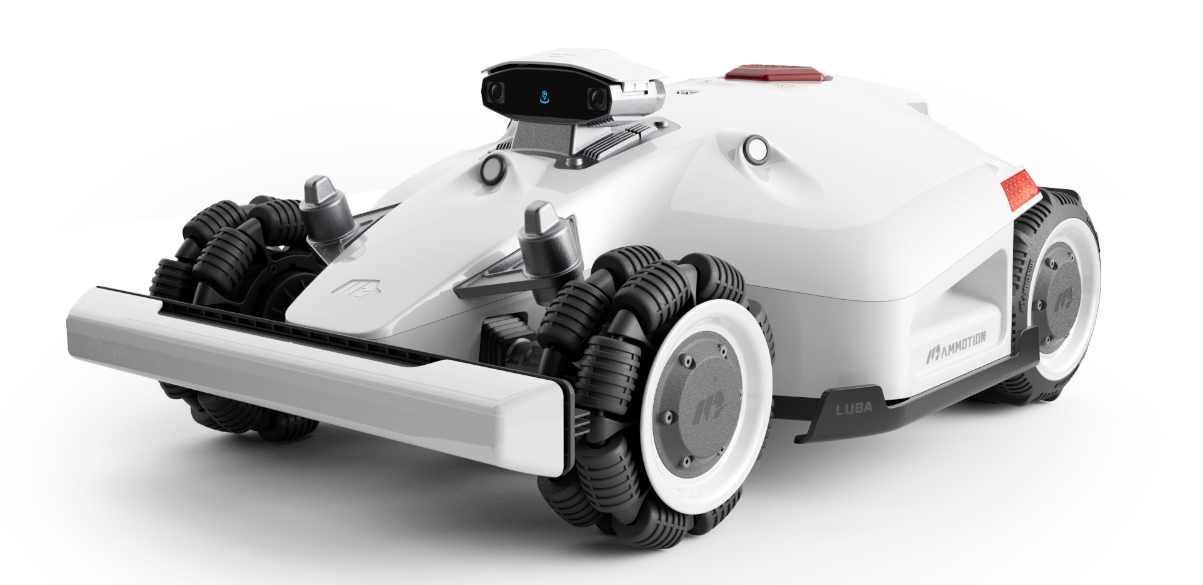
A leader in robotic outdoor solutions, MAMMOTION is proud to introduce the new LUBA 2 AWD Series. Representing the latest evolution of the LUBA AWD line of robotic mowers, this latest iteration of the LUBA AWD revolutionizes flawless lawn care with cutting-edge features and unparalleled technology.

Enhancing the renowned reliability and wire-free functionalities of the original LUBA AWD, the LUBA 2 AWD showcases a myriad of advancements including a superior 3D vision system with built in dual lens to enable depth measurement, obstacle recognition and precise positioning. 

Wireless Precision: The integration of the state-of-the-art 3D Vision and RTK fusion-mapping system ensures precise positioning, eliminating the need for cumbersome wiring. Customized mowing paths are optimized to cover the entire yard seamlessly, effortlessly manoeuvring through complex landscapes.

All-Terrain Expertise: The LUBA 2 AWD excels in conquering uneven slopes and navigating real-world obstacles such as muddy ruts and rogue roots that could leave less capable mowers stuck. Its sturdy suspension and reinforced AWD conquer steep 38-degree inclines with remarkable ease, maintaining momentum throughout.

Triple Obstacle Detection and Avoidance: Featuring bionic 3D vision, ultrasonic radars, and sturdy physical bumpers, the LUBA 2 AWD can detect obstacles as small as 1 inch, skilfully manoeuvring around animals, garden hoses, and other obstacles without any interruptions to the mowing process.

Lawn Artistry: The MAMMOTION App enables lawn printing technology, allowing users to convert their grass into unique designs, emblems, and decorations, adding a touch of personalization to their outdoor spaces.

“We designed the LUBA 2 AWD to be the ultimate, hands-free solution for anyone who wants pristine lawn care,” said Jidong Wei, CEO of MAMMOTION. “From all-terrain handling to total customization, its commercial-grade technology makes easy work of even daunting yard projects so users can skip the headaches and enjoy their outdoor oasis.”

With multi-zone management that can be set up for varying cutting heights and schedules and app and voice control, the LUBA 2 AWD gives a hassle free lawn care experience.

Featuring eight different models catering to various lawn sizes from 0.05 to 2.5 acres, the LUBA 2 offers cutting height options ranging from 1 to 2.7 inches. The LUBA 2 AWD starts from £2149. Available from www.mammotion.com 

Irish Company Origin Care Group and Charter Medical Group announce virtual ward strategic partnership

Charter Medical Group and Origin Care Group are delighted to announce the expansion of their successful strategic partnership, marked by the implementation of the Origin Connects Health solution in 2024. The next generation of this ‘virtual ward’ solution, facilitates the delivery of virtual care across multiple healthcare facilities and multidisciplinary teams.

The Origin Connects Health solution opened the reality of a ‘virtual ward’ to Charter Medical Group, seamlessly integrating comprehensive, multi-site clinical governance with a versatile digital patient care platform. Utilising secure smart technology, vitals monitoring equipment, and inclusive patient applications, this solution supports integrated patient care within the context of multi-site patient management.

Through collaborative efforts, the technology has been further developed to incorporate additional clinical pathways and functionalities. As a result, Charter Medical Group has been able to extend the provision of intermediate and step down care beds. The Origin Connects Health technology ensures continuity of care for clinicians and a seamless transition for patients.


Charter Medical Group is the leader in its field in Ireland in the delivery of high-quality care of the elderly services to both public and private patients in both the community and hospital settings. A key enabler in the delivery of such care is the effective and efficient use of novel technology. Tom Byrne, Chairman of Charter Medical Group said “Origin Care Group technology enhances our ability to care for patients, supports the expansion of our operating potential and the efficient management of vital care resources. We are delighted to extend our relationship with the team at Origin Care Group.”

Philp Hogan, CEO of Origin Care Group said “Cutting-edge digitally enabled technology, integrated across healthcare networks, plays a significant role in enabling healthcare operators to work together to ease the pressure on our healthcare system.

The collaboration between Charter Medical Group and Origin Care Group represents a forward-thinking approach in this area, emphasising the important role of technology in the delivery of safe, seamless patient care.”

Toll-free Numbers: Perfect Solution for Сompanies that Сare about their Сustomers

Popular virtual phone numbers (VNs) are the only alternative to operator SIM cards. Don’t confuse it with eSIM, which essentially replaces a physical card with an electronic chip. A VN number is a dedicated number in a cloud PBX that connects and works on gadgets via the Internet. Data is transferred over the IP protocol and is available in the locations with a network connection.

You can get a mobile, city, federal number, or a number of any region. The only thing you need is software that can be installed on almost any smartphone, tablet, or computer. Moreover, special IP phones can be used for calls. Cloud PBXs offer many related services which might be useful for entrepreneurs, legal entities, and small businesses. However, some features are good for ordinary users. The solution offers multichannel lines that allow several users to receive a call to one number, record telephone conversations, the ability to organize audio or video conferences, the same as custom APIs for integration with other products and services. All this is configured in a couple of clicks through the web interface or application. By the way, most people and companies choose mobile VNs but great attention should be paid to toll-free numbers (800).

What are the benefits of a toll-free solution?

The call is free for the client. Legal entities usually are regarded as customers. We are talking about some companies that work both with individuals and with the same legal entities that already receive calls from their customers and work with them on various issues by phone.

You do not need to purchase additional equipment and lay new telephone lines to connect the toll-free number. It is enough to leave an application for connection via a well-known office telephony provider Freezvon and pay for the selected type and region. For example, it’s easy to buy the Philippines toll free number because the setup fee is only $10 and a monthly subscription will cost the customer $52.

The 800 number is actively used by companies that need constant communication with customers throughout various countries. It brings profit to such business areas, as


  • Internet providers.
  • Technical support departments.
  • Online stores.
  • Delivery and transportation services.
  • Real estate agencies.
  • Banks.

Although the 800 number offers a lot of possibilities. It increases customer confidence. Moreover, some organizations do not need an office to work with clients. Operators can talk with callers from home and redirect them to the right specialists. If such a company advertises a mobile phone number for communication, there is a risk that the client will doubt the reliability of the company. After all, a consumer cannot be 100% sure that he/she is not calling a one-day company.

The 800 is a number that maintains the status of a serious and responsible company. The client understands that there’s a solid organization that values its reputation. After all, it is ready to invest in a free number just to provide the client with the most convenient way to communicate. This is how the client’s trust grows.

The mentioned solution positively influences the search results. If a company uses a mobile or landline number on the site, search engines rank it in the search results only by the local region. You will have to connect additional targeting functions and set settings in the site code to develop your business and erase geographic boundaries. It is not always fast and convenient. The 800 is a kind of trigger for a search engine. Google “sees” that the company is interregional. This has a positive effect on the increase in calls and website conversion.

Number 800 works as a multichannel number. You connect it to a virtual PBX and set up call forwarding. The call center can receive dozens of calls simultaneously and accompany customers using a voice secretary or voice menu. For example, there’s a possibility to set instructions for contacting the right person for the number. A client calls 800 and the auto attendant informs him/her about further actions: press 1 for technical support, 2 for the delivery department, or 3 for the sales service. If all the lines are busy, you can display an informational message through a separate button. By the way, Freezvon Company managers will answer all your questions and explain all the peculiarities in detail.

Why Merchants Should Outsource Customer Care

Customer care is one of the most important responsibilities for any company. Merchants want to provide the best possible service to their clients, but this responsibility can be challenging to manage. Therefore, many organisations outsource their consumer care functions to third-party providers. These third-party partners offer a variety of benefits, including security, multiple payment options, cross-selling capabilities, and flexible call centre hours. They also help businesses increase their customer loyalty and improve their bottom line.

It’s cheaper than finding new customers

Outsourcing your customer care functions to a third party is one of the best ways to improve the overall customer experience. By hiring an outside service provider, you unlock a global talent pool, industry-specific knowledge, and multilingual skills. It also offers greater flexibility in staffing levels. This leads to improved customer retention, word of mouth recommendations, and repeat business.

Recruiting top talent is not only difficult but costly. While there are numerous ways to hire employees, the process is time-consuming and expensive. This includes paying for job board subscriptions, applicant tracking systems, reference checking, and onboarding. In many cases, this cost can be more than the outsourcing fee.

Oftentimes, outsourced recruiting teams are better equipped to handle the customer care needs of your organization. These teams specialize in recruiting and training agents, ensuring quality and consistency. In-house recruitment teams may not be able to devote enough time to customer care training. Outsourced teams also eliminate employment law and privacy risks. Outsourcing teams will also be able to train employees more effectively.

It improves customer loyalty

When you outsource your customer service, you ensure that you are using trained professionals who are dedicated to your customers’ needs. This is vital for improving customer satisfaction, which leads to increased customer loyalty and overall company success. By using a customer service outsourcing agency, you can take advantage of their expertise and global talent pool. They can handle a variety of tasks, from multilingual support to 24/7 helplines. Outsourcing also allows you to adjust staffing levels as necessary. Customers will appreciate the improved experience and may even recommend your company to their friends.

Customer care outsourcing also exposes your business to state-of-the-art equipment and technology. The latest technologies will help improve customer service, and the multiple channels of contact will trigger a transformation in the growth of your business. Customer service is about more than answering customer queries and bringing in more clients; it also involves gathering valuable data from customers, which can help you improve your products and services.

It frees up your team’s time

Customer care outsourcing can save you money and improve the quality of service you provide. It frees up your internal team to focus on the most critical requirements, while also plugging operational gaps. This extra coverage helps you manage wait times and reduces customer support turnover. Ultimately, outsourcing can free up your team’s time and energy to focus on growth strategies.

If you’re unsure of whether to outsource customer service, it’s important to think about your goal before choosing a provider. Obviously, you’ll want to minimize your employee workload, but it’s also important to consider the savings potential. You can also choose to outsource some of the more complex tasks, such as complaint management and customer win-back services.

The cost of customer service outsourcing will vary depending on how many employees you need, the number of hours they work, and the complexity of the tasks they perform. Typically, an outsourced team will cost between $20 and $40 an hour. You’ll also save money by eliminating the need for premises, equipment, social security contributions, and holiday pay.

It reduces costs

Outsourcing your customer support functions can be a smart move if you’re looking to cut costs. It’s not only a smart way to increase efficiency, but it also allows you to avoid seasonal workforce fluctuations. Customer care outsourcing services are often offered by companies that can provide a full range of solutions to help your business run more efficiently.

The most obvious benefit of outsourcing is the cost reduction. It’s far cheaper than hiring an in-house team. Outsourcing also eliminates the need for training employees. In-house staffing requires a substantial investment in training, which adds to a business’s budget. Another cost benefit of outsourcing is the ability to tap into additional resources.

Customer care outsourcing reduces costs, but it isn’t a magic solution. There are many risks involved, so a company needs to be cautious and follow best practices when choosing a service provider. If done correctly, this service can lower costs and increase service hours. There are a few important aspects to consider, including the technology being leveraged, the skill set required, and the type of contract.