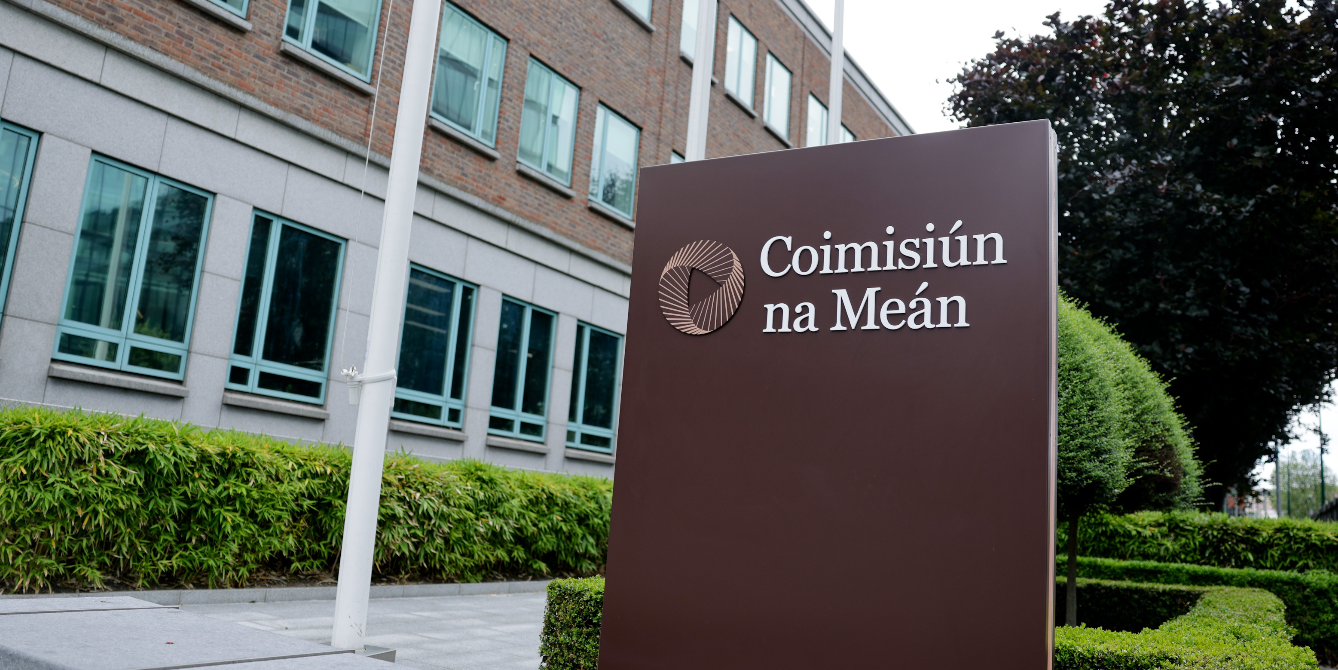
Coimisiún na Meán has this week launched a new nationwide campaign raising awareness about harmful content online and how to report it, as well as information available to assist the public on Coimisiún na Meán’s website www.cnam.ie. The campaign aims to raise awareness of people’s rights under Ireland’s Online Safety Framework, particularly regarding the protection of children and young people, and will roll out nationally across radio, print and social media. This campaign is supported by the Department of Health.
The campaign will include a series of short videos for users – encouraging them to report harmful material they might encounter online, including cyberbullying and the promotion of eating disorders, self-harm and suicide as well as dangerous challenges. It will also aim to strengthen the public’s understanding of the importance of reporting such content to platforms. Coimisiún na Meán has information on its website on how to report and what to do if you are not happy with a platform’sresponse to that report.
Speaking on the launch of the new campaign, Coimisiún na Meán’s Online Safety Commissioner Niamh Hodnett said: “There are obligations on platforms under the Online Safety Framework to protect the safety of children online and to restrict content which impairs their physical, mental or moral welfare. Our strategy is to focus on key outcome areas which include children, public safety and public health. We are happy to partner with the Department of Health on this important campaign and I’d like to thank the Minister for Health for her support and interest in these issues.
“We want to remind people that they have rights under our Online Safety Framework, and empower them to report harmful content. Harmful online content is never acceptable. We would encourage anyone who encounters it to report it first to the platform where they see it. For how to report and what to do if you are not happy with the response you get, please visit our website www.cnam.ie.”
Minister for Health, Jennifer Carroll MacNeill TD said: “Some online spaces contain harmful, inappropriate or illegal content. This campaign, which highlights the importance of reporting such content, will strengthen understanding and empower people to report it where they see it. We have seen the challenges faced by children and young people as they engage with digital environments and I will shortly publish the Final Report of the Online Health Taskforce which contains a comprehensive framework to help tackle these challenges.”
Minister for Culture, Communications and Sport, Patrick O’Donovan TD said: “Keeping us safe online, in particular, keeping our children and young people safe online is a top priority for me. Don’t stay silent if you see something harmful, inappropriate or illegal online. You can report it to the platform and you have options if you’re not happy with the outcome, Coimisiún na Meán is here to help and support you. We can help each other and our children stay safe by using our voice and exercising our
right to report.”
The campaign will be supported by extensive new website resources, including the How to Report guides and parents’ information pack.
What does personalization in CRM design really mean?
Personalization in CRM means adaptation to users’ needs in terms of interaction with clients. It lies in their individual preferences, behavior, and interaction history. This point partially presents the importance of CRM design and its personalized visualization.
What is the income? More relevant and effective communications that improve customer experience and strengthen relationships. It is also a good option for optimizing marketing campaigns. Companies can tailor their strategies based on individual customer needs, which is big in today’s competitive environment.
How does custom CRM design improve user engagement and retention?
Custom CRM design for business improves user engagement & retention in the following ways:
through personalized messages and offers,
automated reminders,
behavioral analytics for timely response to churn risk,
using an intuitive interface,
regular system improvements tailored to user needs.
Why is a personalized experience important for CRM?
Like every digital product, a CRM system must grab the user’s attention and provide clear navigation with an easy-to-use approach. For businesses that use it, it’s a possibility to create individual interactions with customers to increase the likelihood of repeat purchases. They can create relevant offers to clients, which again increases conversion and decreases client churn. According to a Medallia study, 82% of consumers say that personalized offers influence their brand choice in most cases.
All in all, a personalized approach helps companies both satisfy clients’ needs and influence their behavior. These steps directly affect business growth and its success
How can custom features give you a competitive advantage?
Custom features can easily adapt to your individual business needs, which primarily leads to CRM effectiveness. Such systems help more competently optimize workflows, automate tasks, and integrate with other tools. As a result, your clients may face better service, and your system may quickly adapt to scaling in the future.
In addition, they help you retain data control, which is especially important for companies with specific requirements.
What role does data play in creating personalized CRM experiences?
With data, companies can better understand their customers’ needs and preferences.
By collecting and analyzing data, businesses can create a personalized experience for every client. Like, customer interactions, purchases, behavior, and interests. These are the basic but essential things for improvement. In this way, businesses not only increase the effectiveness of their communications but also improve the overall customer experience.
How does personalization affect conversion rates and revenue?
To get a clear understanding of the conversion rates and revenue that personalization improves, it’s better to look at the numbers:
According to McKinsey, personalized strategies can increase revenue by 10–15%, and in some cases up to 25%.
Other statistics show that personalized campaigns can increase conversion rates by up to 60% compared to traditional methods.
This demonstrates the high effectiveness of personalized strategies in increasing revenue and improving return on investment.
What are the risks of ignoring custom design for CRM?
The first issue that may arise it’s clients’ chunk as they find your CRM inconvenient to use. On the other hand, it may look like every other system, or with a lot of unnecessary features and elements that make it difficult to use the system intuitively. At a basic level, your CRM cannot integrate with other platforms in the future because of its limited features.
Using template solutions or basic design without considering your individual business goals may also result in irrelevant client relationship management.
How can businesses measure the ROI of personalized CRM?
The basic formula for calculating ROI is as follows:
ROI = (Net profit / Total expenditure) × 100
This allows you to determine how much profit each unit of currency spent brings. Key performance indicators for personalized CRM are:
Sales conversion,
Average order value (AOV),
Customer lifetime value (CLV),
Customer retention rate,
Customer satisfaction ratings,
Comparison before and after CRM implementation.
Conclusions
CRM it’s a business tool that affects your company’s success and relationship with clients. So, custom design and personalized approach are the vital things that improve your CRM productivity and overall performance. Understanding how CRM design helps businesses can guide your company to work more efficiently and better serve your customers.
LinkedIn’s strength as a B2B advertising platform lies in its precision: you can reach decision-makers, influencers, and niche professionals with clarity you won’t find on other social channels. But that precision often leads to a tactical blind spot. Too many marketers focus only on bottom-funnel activity—pushing for demos, sign-ups, or calls—without priming the audience beforehand. The result? Weak conversions, inflated costs, and campaigns that feel like shouting into the void.
A full-funnel strategy changes that. It recognises that most LinkedIn users aren’t ready to buy. They’re browsing, learning, and networking. And when you meet them there—with the right message at the right moment—you create momentum that carries them toward conversion, not just clicks.
Top-of-Funnel: Make Introductions That Actually Land
This is the awareness stage—where most users first encounter your brand. The key here is not to sell, but to signal relevance.
Think about what your target audience cares about, not just what you want them to do. Use this space to spark curiosity, show industry insight, or offer an opinion that cuts through sameness.
Great top-of-funnel content on LinkedIn includes:
Short, punchy thought leadership videos
Educational carousel ads that walk users through a problem
Sponsored posts that share original research or compelling stats
Your goal isn’t leads yet—it’s recognition. When the right people start to associate your brand with useful insight, they’ll remember you when it matters.
Middle-of-Funnel: Build Trust and Give More Than You Take
At this stage, you’re not a stranger—but you’re not quite on the shortlist either. This is your chance to deepen the relationship.
Instead of leading with product features, lean into proof. Testimonials, case studies, or practical guides show that you’re more than just a voice—you deliver results.
One often overlooked tactic here is using retargeting to serve up context-specific content to people who’ve interacted with your top-funnel campaigns. For example, if someone watched 75% of a TOFU video, follow up with a breakdown of how your company helped solve that exact issue.
This is also where ad optimization on LinkedIn becomes more important. You’re not just running awareness campaigns—you’re trying to move people through stages. Optimising for engagement, click-through rate, and time-on-page helps you shape messaging that resonates.
Bottom-of-Funnel: Make the Ask—But Make It Easy
Here’s where most LinkedIn ad strategies begin—and unfortunately, where they often end.
The bottom of the funnel is for people who already trust you. The key is to eliminate friction. You don’t need to dazzle here. You need to convert.
Effective tactics include:
Lead Gen Forms that auto-fill details so prospects can convert in two taps
Clear calls to action like “Book a Demo” or “Get Your Free Audit”
Conversation ads that feel like a warm invite, not a cold pitch
Use urgency sparingly and only if it’s real. Nothing kills trust faster than a fake deadline.
Also—don’t forget about timing. Serving BOFU content too soon can turn people off. If someone’s only engaged once with a top-of-funnel post, they’re likely not ready for a hard sell. Segment your audience and pace your message accordingly.
Where Most Marketers Go Wrong
The biggest miss isn’t budget. It’s sequencing.
Running an isolated lead gen campaign to cold audiences might get leads—but not quality ones. It’s like proposing on the first date. Instead, smart marketers use LinkedIn’s campaign structure to build awareness, nurture interest, and then ask for the conversion.
Another common mistake is treating creative as an afterthought. Each stage of the funnel needs a different tone. Don’t repurpose a whitepaper ad for cold audiences. Don’t ask warm leads to read a blog post when they’re ready to book a call. Context is everything.
How to Pull It All Together
Start by mapping your customer journey. What questions do your ideal clients ask at each stage? What objections do they have? What signals indicate they’re moving closer to a decision?
Then align your creative, targeting, and campaign objective with each stage. Use LinkedIn’s matched audiences and engagement retargeting to move people through the funnel thoughtfully.
And lastly—measure the right things. Top-of-funnel content won’t deliver leads overnight, but that doesn’t mean it’s not working. Look at reach, video completion rates, and engagement. For middle-of-funnel, track clicks, time-on-site, and form starts. For bottom-of-funnel, track lead quality and sales velocity.
Final Thought: Play the Long Game
LinkedIn isn’t just another ad channel—it’s a relationship-building platform. And relationships don’t form in one step. A full-funnel approach means showing up with the right energy, message, and offer depending on where your audience is in the journey.
Get that right, and you won’t just see better campaign results—you’ll see stronger pipelines, warmer leads, and a brand reputation that does half the selling for you.
Let me know if you’d like a second version of this piece tailored to a specific industry (like SaaS, legal, finance, or education).
ISPCC has received the top accolade for the Best Short-Term Media Campaign at the Awards for Excellence in Public Relations for its campaign ‘For some children, Christmas doesn’t happen’.
The awards, which have been co-hosted by the Public Relations Consultants Association Ireland (PRCA) and the Public Relations Institute of Ireland (PRII) for the past 30 years, recognise the best in Irish public relations, public affairs and internal communications across the public and private sectors.
There had been an initial 37 submissions in ISPCC’s category, which was then short-listed to a group of five finalists.
The judges said that it was a close contest, “but the winning entry was a hard-hitting campaign that showed no fear of exposing harsh truths about childhood in Ireland.”
They added that “this was a strategic and well-planned campaign, with excellent use of research and timing. Challenging objectives were clearly achieved with tangible results.
Kudos to an in-house team that surely worked long hours over the holidays period.”
Deirdre McNamara, ISPCC Head of Marketing and Communications, said that “ISPCC was delighted to see our campaign recognised by our peers. This achievement is testament to the amazing work of everyone at ISPCC.
“For too many children and young people, Christmas is sadly just another day. For some, the issues they encounter all year can worsen. It can mean abuse, neglect and loneliness.
For others, Christmas can present new worries and concerns. Whatever the reason, they turn to Childline for support and for someone to listen.”
“At Childline we rely heavily on public generosity to help us to be here for every child who needs us. We depend on this generosity to keep us listening 24 hours a day, seven days a week, 365 days of the year.”
To support Childline and help keep volunteers listening to children and young people, please support the Childline Summer appeal and donate at www.ispcc.ie.
As the peak travelling season begins, the Irish aviation industry is launching a declaration to combat unruly passenger behaviour in airports and on flights as part of the #NotOnMyFlight campaign. The safety of flights, passengers and crew can be affected by the unruly behaviour of a small minority of passengers. All Irish airlines and airports, An Garda Síochana, the Irish Aviation Authority, AirNav Ireland, ground handlers and international aviation organisations have all come together to tackle the issue of disruptive and dangerous behaviour, which affects passengers and staff almost every day of the year.
There has been a 3-fold increase in passenger unruly behaviour reported between 2019 v 2023. Unruly behaviour can include intoxication, aggressive or inappropriate behaviour as well as not following the commands of flight crew, who are there to ensure passenger safety. The declaration sets out how the aviation industry aims to combat the issue of unruly behaviour on flights. The vast majority of passengers comply with instructions and show respect to staff and other passengers.
However, the signatories of this Joint Declaration recognise the need to actively promote good passenger conduct due to the adverse impact that disruptive and unruly behaviour can have on the safety of a flight and passenger experience. The signatories of the joint declaration will not tolerate any behaviour that has the potential to disrupt the passenger experience, impact the safety of the cabin crew and airport staff or create a safety risk to the aircraft and those on board the flight. This includes physical and sexual assault, threatening and abusive behaviour and generally disruptive acts.
Angela Willis, Assistant Commissioner, DMR of An Garda Síochána welcomed the Declaration:
“We all want to ensure that air travel is pleasant and most importantly safe for all users. While the vast majority of people that use air travel have the highest regard for fellow passengers, unfortunately there are a small minority whose behaviour at airports or on aircraft can have a significant impact on the experience and safety of other passengers or flight crew. An Garda Síochána is delighted to sign this declaration and to work with our partners to combat disruptive and dangerous behaviour which will not be tolerated.”
A Ryanair spokesperson said:
“Ryanair is pleased to support this Irish aviation industry declaration to combat unruly passenger behaviour on aircraft. The safety and wellbeing of our crew and passengers is Ryanair’s No.1 priority and we try to eradicate unruly behaviour onboard our aircraft. We will continue to work closely with An Garda Síochána, the IAA, Irish Airports and the wider aviation industry to eliminate all forms of unruly behaviour in airport terminals and onboard our aircraft.”
According to Kenny Jacobs, CEO of daa, the operator of Dublin and Cork airports:
“We’ve great passengers at Dublin and Cork airports, but like every airport in the world there’s sometimes a few bad eggs whose behaviour impacts everyone. We want our airports to be enjoyable and stress-free for passengers and we’re pleased to see the sector coming together to tackle the issue of unruly and dangerous behaviour. Everyone needs to play their part and daa will continue to work closely with our Airport Police teams, our airline partners and An Garda Síochána to ensure unruly passengers are dealt with and our airports are safe and enjoyable places for all.”
Lynn Embleton, Chief Executive of Aer Lingus commented on the charter:
“At Aer Lingus we put safety first, there is nothing more important. We understand that a comfortable and respectful environment is key to ensuring your journey is a pleasant experience. Aer Lingus does not tolerate unruly behaviour of any kind, and in the rare cases where unruly behaviour does occur, we have strict measures in place to ensure that the safety and comfort of our customers and crew is maintained.”
Jim Gavin, Chief Operations Officer of the Irish Aviation Authority said:
“Flying should be an enjoyable and positive experience for passengers. Whilst incidents associated with unruly passenger behaviour occur on only a small number of flights, they can have a significant impact on flight crew, other passengers and even affect the safety of the flight. We want to remind passengers that their actions can have a direct impact on both the safety of crew and others on board an aircraft. We are looking at how we as an aviation industry can address unruly behaviour on flights and put steps in place to ensure passengers and flight crew can have a safe and positive flying experience.”
“We are proud to join our colleagues across the aviation industry in launching the #NotOnMyFlight campaign. As we head into the peak travel season, it’s essential that we address the increasing issue of unruly passenger behaviour head-on. By working together, we can ensure a safe and respectful environment for all passengers and staff. This declaration signifies our commitment to maintaining the highest standards of safety and comfort in airports and on flights,”says Niall Kearns, Airport Director, Shannon Airport.
The declaration sets out an action plan for the Irish aviation industry to reduce the incidence of unruly passenger behaviour in airports and onboard aircraft. The signatories are meeting regularly and engaged on the topic, working together to prevent disruption and enhance enforcement. Specifically, the industry aims to boost its ability to ban passengers through no-fly lists, ensure Gardai are informed of all criminal activity, enhance training for cabin crew and improve communication to passengers to prevent unruly behaviour.
Summertime is one of aviation’s busiest period. With millions of passengers travelling through Irish airports during this period, we are reminding people of their responsibilities when travelling on aircraft. We will not tolerate any behaviour that has the potential to disrupt the passenger experience, impact the safety of the cabin crew and airport staff or create a safety risk to the aircraft and those on board the flight.
Out of Home (OOH) media specialist Posterplan has joined forces with Mindshare and Unilever to elevate Lynx Africa to “GOAT” status.
Having sold over 400 million units of Lynx Africa to date and being sprayed over 21.5m times every week, Posterplan and Mindshare worked closely with Unilever to truly cement Lynx Africa’s well-earned “greatest of all time” (GOAT) status.
The out of home campaign launched on the 8th of May and is running until the end of June with multiple bursts. The campaign follows Lynx’s newly unveiled limited-edition packaging for its iconic Lynx Africa variant and it will be seen on high-impact unmissable formats across Ireland. As the key insight was to maintain relevancy amongst younger consumers, we placed the campaign in key areas that indexed highly with our audience. To build brand fame, premium placements including a takeover of Micromedia’s Camden Corner also plays a key role in the campaign. The takeover is comprised of both classic and digital elements – a large banner that wraps the top of the building and a digital billboard at consumers eye-level driving engagement. The campaign was further supported by other cover and frequency driving formats.
Susan Murtagh, Account Director at Posterplan Ireland, said: Posterplan is delighted to team up with Mindshare & Unilever to promote the nation’s number-one male fragrance. As the brands main objective was to continue evolving in line with the younger age cohorts and recruit the next generation of shoppers, we created an OOH campaign that identified and targeted key areas that were popular with the next generation – driving brand fame and impact.
David Duffy, Account Director at Mindshare, said: “We’re excited to see Lynx Africa’s ‘GOAT’ campaign come to life across the nation. With the experience and expertise of Posterplan we’ve put together an unmissable campaign utilising multiple stand out formats. We’re particularly keen to see the bespoke high impact Camden curve format, which is sure to grab attention and re-enforce Lynx Africa’s ‘GOAT’ status”.
Jenny King, Marketing Manager, Lynx, says: “As the nation’s number one male fragrance, we’ve elevated Lynx Africa to G.O.A.T. status. We’re continuing to evolve the brand in line with Gen Z’s values, interests, and aspirations to recruit the next generation of shoppers by getting closer than ever to their world. Optimising our OOH plans is crucial for Lynx so that we continue to maintain relevancy amongst younger consumers.”
Data literacy is an essential skill in our increasingly data-driven world. It involves understanding how to use, interpret, analyze, and communicate data effectively. With the increasing availability of large amounts of data from various sources, it has become increasingly important for individuals and organizations to be able to make sense of this data in order to make informed decisions. For those who are not yet proficient in data literacy, the task can seem daunting. That’s why it is important to create a successful data literacy campaign that will help people become more literate and confident when dealing with data. We will discuss some tips for creating a successful data literacy campaign. Also, we will look at some best practices for teaching data literacy. So, if you are looking to start a data literacy campaign, keep reading!
1. Start with the Basics And Provide Them With A Training
Before embarking on a more complex data literacy campaign, start by teaching people the basic principles of data. Explain what data is, how it can be used, and which tools are available for analyzing and visualizing it. Additionally, provide your participants with a training program that will help them understand the basics of data literacy. This could include tutorials on using spreadsheets or data analysis software, as well as lectures on topics such as descriptive statistics and inferential statistics. You can also explain to them data governance consulting, which is a way to ensure the integrity and accuracy of data in an organization. This kind of training will help build their confidence in dealing with data. Additionally, it will also give them a better understanding of the context in which data is used. For instance, they will have a better understanding of the implications of their data analysis and the decisions that they make based on the data.
2. Make Sure the Content Is Accessible and Relevant
Once you have covered the basics, it is important to make sure that the data literacy content is accessible and relevant to your participants. This means using language that they can easily understand, as well as providing examples of how data can be used in everyday life. For instance, they could learn how to calculate the average cost of an item or how to analyze data from a survey. Additionally, if you have access to real datasets, such as those used in big data projects, provide them with these and explain how they can be used. This will help make the content more relevant and engaging for your participants.
3. Create Accessible Materials
It is also important to create materials that are accessible to your participants. This includes digital resources such as video tutorials, infographics, and other visual content that can be accessed on various devices. Additionally, you should consider providing printed handouts or summaries of the material so that people can refer back to it at their convenience. Finally, if you are able to hold workshops or seminars, make sure to provide your participants with useful take-away materials, such as notes, exercises, and worksheets.
4. Encourage Engagement and Collaboration
You should also make sure to encourage engagement and collaboration among your participants. This could include group activities, such as discussions about relevant topics, or working together on a project or case study. Additionally, you can hold competitions that involve data analysis and allow people to share their findings with each other. By encouraging collaboration, you will help build a community of data literates who can learn from each other and provide support. Also, this will help create a more positive atmosphere of learning and development. You can, for example, create a Slack channel or other online platform where people can discuss and share resources. Or, you can create a closed Facebook group where people can post questions, share their experiences, and help each other out. Furthermore, you can also reach out to professionals in the field and invite them to share their knowledge and insights. They can provide valuable input and help develop the data literacy of your participants.
5. Review Your Program
Another step you should not miss is to review your data literacy program regularly. This includes assessing how effective it has been and looking at ways to improve its content and delivery. Additionally, you should also collect feedback from participants so that you can identify potential issues or areas of improvement. This will help ensure that your program is up-to-date and provides the best possible learning experience. Other methods of it can also include setting measurable goals so that you can track progress and success. This means that you will be able to see how well the program is working and make adjustments if needed. Also, you can use tools such as surveys and polls to collect feedback from participants.
6. Make It Fun
Finally, make sure to include a few fun elements in your program. This could include activities that promote team building and collaboration, such as games and puzzles. Additionally, you can give out small prizes or rewards for participants who demonstrate their data literacy skills. For instance, you could offer rewards for the best presentations or the most accurate analysis. Doing so will not only help to motivate and engage participants, but it can also help create a positive atmosphere that promotes learning. And, of course, you should also take breaks during the program so that participants can rest and recharge their batteries. The breaks should be made interactive and entertaining, such as a trivia game or survey. This way, participants can take a break without losing focus. It will also help them stay relaxed so that they can focus on the task at hand.
By following these tips, you will be able to create a successful data literacy campaign for your organization or community. With an appropriate training program and engaging activities, you can help build a culture of data literates who understand the importance of data in our society today. And by reviewing the program periodically, you can make sure that it always meets the needs of your participants. Good luck!
How’s your business doing these past few days? It’s a simple but difficult question, especially if nothing’s going as planned. Check out your bank account and see how much you lost or gained in the past few months.
If the status of your accounts isn’t as good as you want them to be, maybe there’s something wrong with your sales strategy. Have you tried executing outbound calling campaigns? If you haven’t done so, this might be the best time to consider it.
An outbound call can help you reach customers and prospects to meet your business goals. These may include conducting surveys, promoting products, setting appointments, collecting debts, and generating leads (also known as cold calling).
Today, sales representatives use information about every existing and potential customer to make the call as successful as possible. As a part of a sales and marketing strategy, outbound calls are proven to help increase returns on investment (ROI).
How Is An Outbound Call Different From An Outbound Call?
Outbound calls are calls made by companies to reach customers—inbound calls are the exact opposite of it. These are calls made by customers to engage with businesses and organizations they might be interested in.
Aside from that, here are other reasons why people call a business:
They want to raise a concern about a specific product or service.
They want to know more about the products and services of a particular company.
They want to find out where a certain business operates.
They want to confirm whether a particular business is legitimate or not.
Inbound calls are also crucial to the success of your outbound call campaigns. If a customer takes a liking to your offer, it’s only a matter of time before they call you back and ask for more information. This is where hotline numbers come in.
Hotline numbers make it easy for customers to reach you via phone call. Also, they make you look credible and legitimate. Sooner or later, you’ll have to call them back for follow-ups. That said, using software made by companies, such as Power Dialer, may simplify the process.
What Are The Different Types Of Outbound Calling Campaigns?
An outbound calling campaign is more than just a company calling customers and offering them a product or service they might want to purchase. It’s also about a company conducting surveys, collecting debts, and asking for donations. In other words, there’s more to outbound calling campaigns than you think.
To expound further, here are the different types of outbound calling campaigns:
Telemarketing
Telemarketing is a form of direct marketing that uses different communication sources. Among these sources, using telephones is considered to be the most profitable. And it’ll be more effective with software solutions, like auto-dialers.
An auto-dialer is an automated dialing software produced by companies like Auto Dialer. It automatically dials consecutive numbers before and after each call, so you don’t have to do so. This will help you save time, energy, and money in the long run.
Telesales
Telesales is an essential part of telemarketing, which involves reaching qualified and non-qualified prospects. If telemarketing focuses on promoting products and services, then telesales is how you sell them over the telephone.
Debt Collection
Debt collection is crucial, especially when maintaining cash flow. An outbound calling campaign may help encourage clients to settle their debts as early as possible. Using a predictive dialer—an advanced type of auto-dialer—might be helpful in this situation.
Surveys
Outbound calls make a great tool when it comes to surveys. Conducting surveys can help you determine whether customers are satisfied with your offerings. It can also help you with market research, especially when releasing a new product.
Outbound Customer Support
Customer support is typically a part of inbound calling campaigns. But sometimes, you must reach out to your customers to provide support. Examples of outbound customer support include warnings regarding service unavailability and payment concerns.
You’ve probably understood the basics of outbound calling and its significance in different operations, including sales, marketing, debt collection, etc. Now, it’s time to learn how to create a successful outbound calling campaign.
How To Launch A Successful Outbound Calling Campaign
Below is a step-by-step guide to launching a successful outbound calling campaign. Understand each step carefully and ensure not to leave anything out to increase your chances of success.
Define Your Goals
When you create an outbound campaign, the first thing to do is to identify the goals of your campaign—why are you doing this?
Here are some questions that may help you define your campaign goals:
What do you want to gain from your campaign?
Will your customer benefit from your campaign?
Are the goals of your campaign achievable and profitable?
How can your sales and marketing agents achieve these goals?
Do you have a secondary goal in mind?
How many dials does it take?
What do you want to do to boost your returns?
What kind of information should you collect from your customers?
How these pieces of information help you in the future?
How will you manage and process outbound calls?
What practices should you apply to improve your outbound calling campaign?
With these questions, you’ll be able to define the goals you want to achieve. You can also use them to determine the length of your outbound campaign and understand the things you need to make it as successful as possible.
Develop A Campaign Strategy
Once you’ve identified your goals, it’s time to focus on your outbound campaign strategy. This is what you need to achieve your campaign goals.
Here are some key principles you need to keep in mind to develop an effective outbound campaign strategy:
Apply The Customer-First Principle
The customer-first principle is a pretty simple idea—it is what it is. It’s strategy successful businesses use to prioritize their customers and put them at the center of decision-making.
Keep in mind that your customers aren’t interested in your needs and problems. They don’t even care whether your company succeeds or not. What they want is a product or service that can put an end to their problems.
Manage Constructive Criticisms
Absorb whatever your customers say about your products and services, whether good or bad and don’t take them personally. Constructive criticisms can help improve your products and services and reduce further complaints.
Be Sincere
Do you think your customers would appreciate your lack of sincerity? Of course, not! No matter how great your products or services are, you’ll never succeed if you’re not sincere enough.
Show your sincerity when communicating with clients by being honest, calm, patient, and clear.
Encourage First-Class Communication
Excellent communication is crucial when it comes to outbound calling campaigns. Your tone must be relevant to the information you’re sharing with your customers. Also, you must be consistent and easily understood.
Avoid jargon and technical terms so that customers can understand what you’re babbling about.
Apply these basic sales and marketing principles when developing an outbound campaign strategy to increase your chances of success. Prioritize your customers’ needs, take everything constructively, be sincere, and communicate properly.
Manage Customer Data
When it comes to managing customer data, there are three essential factors to keep in mind: sourcing, handling, and using.
Data Sourcing
First, understand the meaning of ‘warm’ and ‘cold’ data. Warm data refers to the connection previously established between you and your customer.
For example, customers have reached your website or social media platform and left information about them. This may include a phone number, queries, personal requests, and email.
On the other hand, cold data refers to purchasing customer information from other sources, such as list brokers and data owners. If you’re planning on doing this in the future, make sure to verify the information provided before using it.
Data Handling
Data handling involves checking data accuracy, enforcing data security, and promoting data compliance.
Check the accuracy of your data before importing them into your software system. Phone numbers must be written using the international format—for example, 1 (U.S. country code) + 800 (area code) + 1001000 (local phone number).
Ensure the security of your data by implementing a robust cybersecurity solution. That way, it’ll be difficult for cybercriminals to launch attacks on your system.
Lastly, review all the laws that have something to do with outbound calling campaigns. You may visit the Federal Trade Commission for more information.
Data Using
Filter your data and remove everything that doesn’t make sense. For example, calling those who are not even a part of your list of target customers may not make sense at all. It’s just a waste of your time, money, and energy.
Always keep your data up to date. Customer information may change over time, so make sure to update it regularly. You may call your customers from time to time to check if the information you have is still useful.
Managing your customer data is essential for a successful outbound calling campaign. Use the tips above to source data properly, stay compliant with the law, determine target customers, and provide exceptional customer service.
Create A Call Script
A call script is an essential element of a successful outbound calling campaign. It is a written dialogue that guides sales representatives during a call. With this, they’ll make fewer mistakes and provide structured messages, increasing their chances of closing a sale.
A call script should contain four primary components: disclosure, structure, summary, and post-call process.
Disclosure
This includes the introduction part of the call, where sales agents inform the customer about the purpose of the call. Don’t forget to mention your name and the company where you came from.
Structure
A proper call structure should include the following:
Asking relevant questions.
Finding out whether customers are satisfied.
Discussing product benefits.
Answering customers’ questions.
Closing the call.
Summary
You want to ensure that your customer understands everything you’ve discussed with them. This is the best time to summarize the entire call and erase all possible misunderstandings.
Summary
You want to ensure that your customer understands everything you’ve discussed with them. This is the best time to summarize the entire call and erase all possible misunderstandings.
Post-Call
This is the stage where sales agents have fulfilled their promises during a call. For example, they provide a detailed email about your products and services right after the call.
Keep in mind that call scripts are just a guide; they’re not made to be read while on a call. If you want to read them, make sure you don’t sound like one. The customer on the other end of the line might think you’re not prepared enough to make the call.
Choose A Dialing Mode
Dialing modes can be divided into three types: preview, power, and predictive.
Preview Dialing
This mode provides sales agents with a preview of information regarding the contact they’re about to call. This is ideal for sales teams with a small contact list. You can use this mode to follow up with customers about their previous transactions.
Power Dialing
This mode is ideal for calling multiple prospects and customers in a day. It automatically proceeds to the next contact on the list and filters unattended, busy, and unanswered lines.
Predictive Dialing
This mode is more advanced compared to others. It uses machine learning to analyze call duration and pick-up rates to ensure that your agents can call as many contacts as possible.
When choosing a dialing mode, make sure that it’s suitable for the goal you want to achieve. For example, if you want to call clients to verify their bookings for their trip, using preview dialing mode might make more sense than others.
Measure What Needs To Be Measured
Do you want to find out whether your outbound calling campaign is successful? If you do, measuring these essential key performance indicators (KPIs) is necessary.
Occupancy Rate – determines how busy your agents are
Hit Rate – determines the percentage of sales against the total number of calls made
Conversion Rate – determines the percentage of prospects who purchased the call
First Call Close – refers to calls that lead to outbound sales after the first call
Average Talk Time – refers to the average call duration
Calls Per Agent – refers to the average number of calls an agent can handle per day
Contact Rate – refers to the percentage of successful calls against the total number of leads
Track these KPIs to improve the efficiency of your sales agents’ efficiency and your company’s profitability.
Final Thoughts
Outbound calling is the backbone of sales and marketing campaigns. It’s the process of reaching existing and potential customers via phone. It’s done to promote products, make surveys, sell services, and collect debts.
If you’re planning to launch an outbound calling campaign but don’t know where to start, this step-by-step guide is what you need. Follow the steps provided for a successful outbound calling campaign.
You don’t have to spend a lot of money to create an effective marketing campaign. With a little creativity and some elbow grease, you can reach your target audience without breaking the bank. Here are some tips on how to get started.
Set the budget for your marketing campaign
Establishing a budget for a marketing campaign is an important step that can ensure its success and adjust for any potential bumps along the way. To ensure budgeting accuracy, use a budget calculator that allows you to input information such as campaign goals and expense estimates. This will help you determine the most logical, cost-effective way to allocate your funds, while still allowing flexibility should needed adjustments be necessary. Through the use of a budget calculator and detailed consideration of your campaign goals and strategy, you can use your allotted funds to achieve optimal results.
Define your target audience and research what kind of content they consume
When creating your marketing campaign, it’s important to take the time to define your audience and carry out research into what kind of content they consume. Knowing who makes up your target audience is the driving force behind creating campaigns that are tailored to their wants, needs, and interests. Research can include gathering insight into which platforms they prefer, what topics appeal to them, or even which influencers they follow. It’s this kind of research that will help you create an effective marketing strategy and ensure that your campaigns reach the right people.
Create content that is tailored to your target audience and that will capture their attention
Crafting a flawless marketing campaign requires creating content that truly resonates with your target audience. To do so, you’ll want to build a comprehensive understanding of what interests and excites them as well as stay up-to-date on the latest trends. Being aware of their likes and dislikes will help you create tailored content that captures their attention and leads to greater engagement. Adding smart visuals to your pieces is also an effective way to draw in even more attention, further connecting with individuals and creating long-term relationships. Creating content for your target audience can be difficult initially but with the right techniques, it can become much easier and help propel your message forward in meaningful ways.
Monitor the results of your campaign and make necessary adjustments
It is important to carefully monitor the results of any marketing campaign and make necessary adjustments to ensure it meets desired outcomes. This can be done by tracking key metrics such as engagement rates, customer feedback, and overall sales figures. Examining this information closely allows marketing teams to tweak their strategies to create the most effective conduit between their product or service and their audience. Furthermore, regularly scanning the marketing landscape and comparing campaigns with similar ones in your space can provide profitable insight into what strategies have been effective and which should be avoided going forward. Ultimately, having a wide set of data available for review will make sure marketing efforts are running as efficiently as possible.
While it may be tempting to go for the most flashy and expensive marketing campaign possible, sometimes the best option is a more simple and cheap one. By following the tips in this blog post, you can create an effective marketing campaign on a tight budget. With a little creativity and outside-the-box thinking, you can reach your target audience without spending a fortune. So don’t be afraid to get creative with your next marketing campaign – you may be surprised at how well it works!