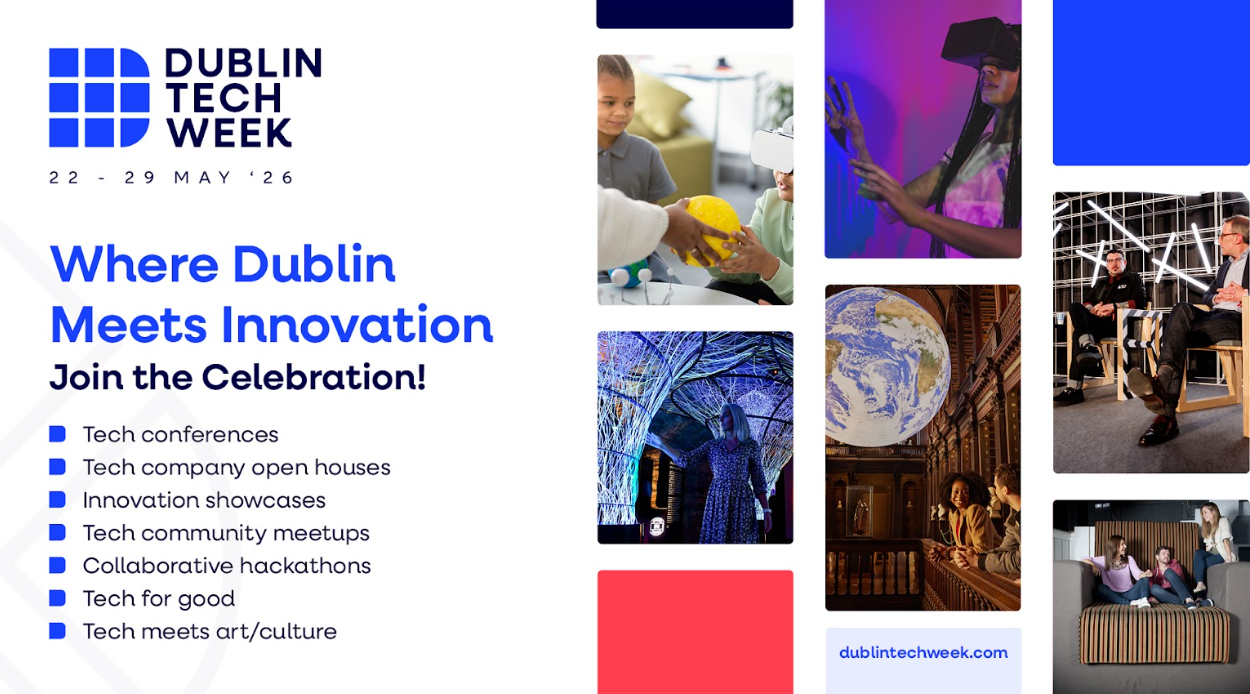
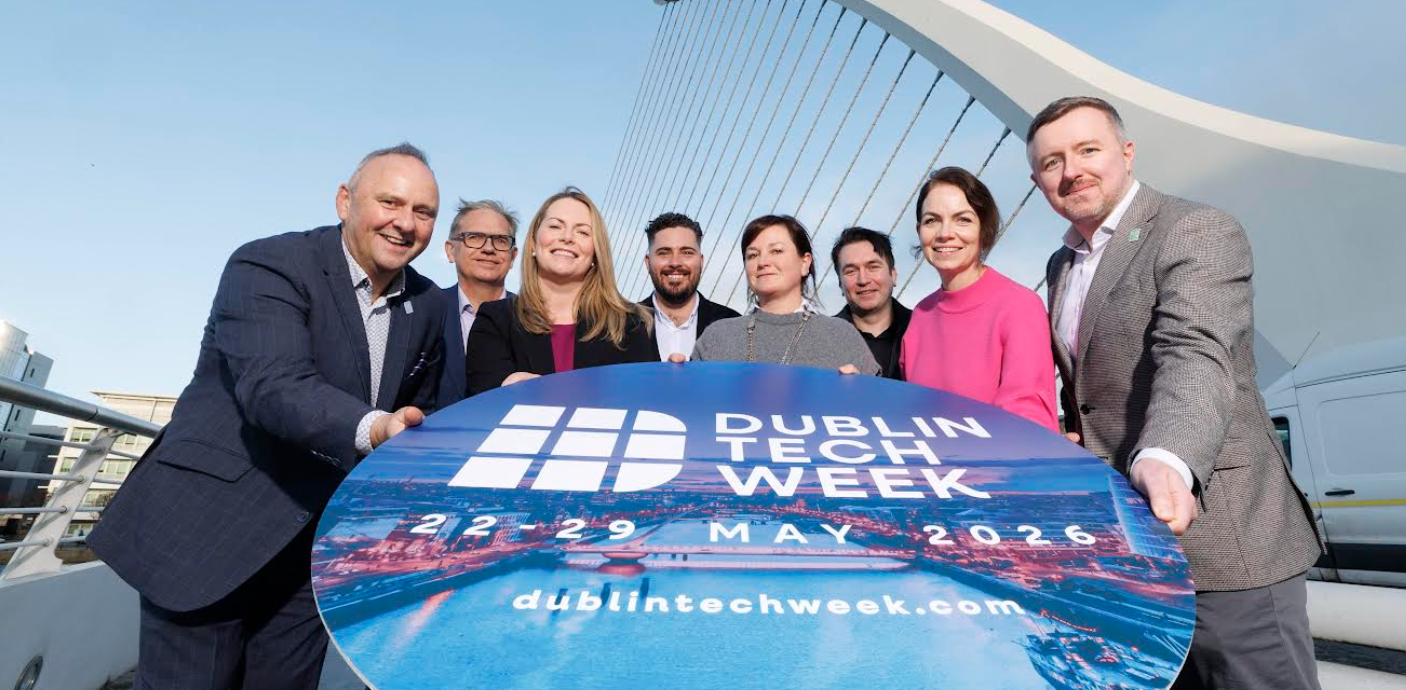
Dublin Tech Week returns from 22–29 May 2026, bringing together innovators, creators, and communities for a week-long programme of events across the city. Now in its second year, it aims to once again highlight Dublin’s position as a leading global hub for technology, talent, and ideas and grow on the success of its first year.
Over seven days, Dublin can expect to host a diverse schedule that spans conferences, exhibitions, workshops, networking events, and creative experiences. From world-class industry discussions to hands-on activities for the public, Dublin Tech Week offers something for everyone interested in the role technology plays in shaping our future.
This city-wide initiative aims to:
● Showcase Dublin’s innovation ecosystem to both local and international audiences
● Encourage collaboration between tech companies, educational institutions, and community organisation
● Promote STEM engagement with younger generations and underrepresented groups
● Connect the public with the latest developments in technology, culture, and sustainability
Get Involved
Organisations, venues, and community groups are invited to contribute to the programme by hosting tech-related events or experiences during the week. Dublin Tech Week encourages participation from across the tech spectrum—startups, established companies, educators, and creative industries—ensuring the festival reflects the breadth and diversity of Dublin’s tech scene.
A full schedule of events will be published on DublinTechWeek.comin the coming months. To propose an event or find out more about how to get involved, email info@dublintechweek.com.
“Following the success of Dublin’s first Tech Week in 2025, Dublin City Council and the Dublin Brand are proud to support its return in 2026. Dublin Tech Week celebrates our world-class talent, innovation, and collaborative spirit, cementing our City as a leading global tech hub.” said Ross Curley, Head of Economic Development, Dublin City Council & Dublin Regional Place Brand
Programme Highlights
The 2026 line-up aims to include
● Industry Summits & Specialist Seminars
● Open House Events at Tech Companies
● Innovation & Product Showcases
● Hackathons and Developer Challenges
● Networking and Meet-up Opportunities
● Crossovers Between Technology, Art, and Culture
● Family Tech activities
● Showcase of County -wide tech based initiatives
Partners
Dublin Tech Week is supported by key organisations in the Irish tech community, including Dublin City Council, Smart Dublin, LEO, Dublin Tech Summit, Tech Ireland, ADAPT Centre, NovaUCD, Blockchain Ireland, Eth Dublin, Guinness Enterprise Centre, Furthr, and Dublin Chamber.
Online casino platforms aren’t evolving by halves, the pace of digital change is relentless, influencing nearly every corner of how these sites operate and protect themselves. Payment methods and user interfaces are only the tip of the iceberg. Underneath, new tech frameworks, AI, biometrics, blockchain, are quietly driving safer, livelier online spaces for players everywhere. Industry signals are clear: integrated technology is rapidly becoming the backbone of leading platforms; for those who want to stay on top, digital overhaul isn’t optional, it’s the game itself. Point solutions don’t cut it anymore. Everyone is focused on big, connected systems that adapt and safeguard as they grow.
Artificial intelligence shaping player interactions and risk management
Artificial intelligence and machine learning are now embedded at the heart of online casino operations. According to 2025 trend analyses, AI enables deep personalization, analyzing millions of gameplay records to recommend tailored offers, bonuses, and preferred titles. Operators deploy machine learning to predict user behavior, optimizing game layouts and bonus triggers in real time. Everything is built to maximize engagement without sacrificing fairness. Beyond user interaction, AI supports robust risk management. Fraud detection models continuously monitor transactions for suspicious behavior, card counting, collusion, money laundering. These models flag anomalies within seconds, a process orders of magnitude faster than manual review. In addition, AI assists with customer service. Automated agents resolve common issues instantly, supporting seamless gameplay across time zones. Data suggests chatbots now handle 70% of support queries for leading operators. AI’s multi-role presence is set to expand, centralizing both interactions and risk oversight under automated, adaptive systems.
Blockchain advancing security and transparent gameplay
Blockchain technology is driving reliability at every level of casino operations. The entire transaction process shifts from black box to public ledger, creating an undeniable record of bets and transfers. Each transaction, payment, or game result gets a digital fingerprint. Manipulation becomes nearly impossible because every event is independently verified on decentralized, tamper-proof ledgers. For online casino users, this means increased trust and provable fairness. Operators benefit from lower chargeback risk and smoother dispute resolution, as all game activities are auditable. Security also advances. the distributed storage model disperses data across nodes, eliminating traditional central server vulnerabilities. Hacking player financial information now requires breaching an entire blockchain network, not just a single company’s database. Cryptocurrency payments introduce instant, low-fee transfers, crucial for global platforms with diverse player bases. Blockchain transparency and digital currencies together are redefining key pillars of trust and efficiency across the industry.
Identity checks aren’t what they used to be. Today’s verification is venturing past the tired routine of passwords and security codes. Biometric authentication, face scans, fingerprint swipes, takes seconds and keeps things moving. The latest mobile casino apps, especially those launched in 2023 and beyond, routinely offer biometric sign-in as the first option. Sure, this means less hassle for users, but it’s not just about convenience. When credentials are unique to your face or fingerprint, fraudsters have a much tougher climb. Often, operators stack biometrics on top of device approvals for big transactions, slashing the odds of account hijacking. That helps with regulatory demands, particularly for age checks and location rules. Customers get locked out less, with vanishing password complaints. Security, in this space, works almost invisibly, players just tap and play, their accounts that much safer.
Mobile-first design and cloud gaming redefining platform delivery
Mobile-first isn’t just a buzzword anymore, it’s the new default. Most online casino brands now build for smartphones and tablets before anything else. Game studios, too, shape their creations for swipes and taps, shrinking menus and supersizing options for small screens. Desktop versions lag behind, playing backup. In this landscape, cloud gaming is the secret sauce. Players skip downloads, jump into games instantly, and move sessions between devices with nothing but a swipe. Lower bandwidth? No problem; all the heavy lifting happens on remote servers. With pandemic habits sticking around, these features have practically become expectations. The result: anyone, anywhere, can pick up and play, leveling the field for both casino operators and players worldwide.
Conclusion about responsible gaming
Emerging technology is changing online casino operations, yet responsible gaming must remain the foundation. AI tools now help monitor user behavior, identifying risky patterns early. Biometric and blockchain solutions verify player age and location with precision, supporting regulatory compliance. As immersive interactions and frictionless access expand, operators should double down on robust support resources and clear limits. Gamers should stay vigilant, use parental controls, and tap into responsible gaming tools provided by most regulated platforms. Technology brings new opportunities and risks; a balanced, responsible approach keeps entertainment safe for all.
Ireland’s gaming scene has grown into something far bigger than casual entertainment. It is now a fast-moving mix of creativity, technology, and finance, and it is still expanding. From indie studios in Galway to global publishers with Dublin offices, the country’s footprint in the industry keeps getting stronger. But with growth comes a new challenge: how do you make money from games in ways that keep players engaged and coming back? The future of monetisation here is not just about revenue; it is about building systems that feel seamless, smart, and worth investing in.
From One-Off Purchases to Ongoing Revenue
The way games make money has completely changed in the past decade. Buying a title once and playing it for years has given way to microtransactions, subscription models, and in-game purchases that keep evolving with the game itself.
Ireland has followed the global shift to digital platforms and seamless payments, but with a stronger emphasis on trust and transparency. As iGaming continues to evolve, titles that could be found on exclusive Inclave casinos by pokerscout.com show how integrated gameplay, community features, and built-in payment options can create engaging, repeatable experiences across thousands of games where players can also enjoy exciting bonuses. The same as major releases like Fortnite, where in-game economies, events, and microtransactions are now central to how players interact with the game itself. These examples show how the future of monetisation will revolve around ecosystems that blend play, connection, and payment into something players want to keep returning to.
Clearer Rules, More Confidence
Game-related monetisation in Ireland is entering a new phase, with clearer boundaries emerging around areas like loot boxes, virtual currencies, and skill-based competitions, all while leaving room for creativity and new ideas. This shift is creating a more stable environment for studios to test different models without second-guessing how they will land.
For players, it means more consistent, transparent experiences and greater confidence in how games are structured and paid for. That balance between innovation and clarity will be what pushes Ireland forward as one of Europe’s most dynamic gaming markets, building an industry where fresh ideas can thrive and audiences feel valued.
New Monetisation Models Taking Shape
Subscription-based access is on the rise, with services like Game Pass and PlayStation Plus proving that players value choice and flexibility. Blockchain and digital wallets are also opening up new ways to manage in-game assets, and while NFTs themselves have cooled off, the technology behind them still holds a lot of potential.
Skill-based competitions and real-money tournaments are growing too, especially among Ireland’s tech-savvy audiences. In every case, trust and usability are what drive spending, and platforms like Inclave are already showing how that combination works in practice.
Where Gaming and Fintech Meet
Ireland’s strength as a tech and fintech hub gives it a serious edge. The same systems that are driving modern finance are fuelling the next generation of gaming. Start-ups in Dublin, Cork, and Limerick are already exploring hybrid models that blend interactive entertainment with financial technology, backed by Enterprise Ireland and EU funding.
These projects are looking beyond traditional payment methods, exploring integrated wallets, real-time rewards, and shared-value systems that make spending feel like part of the experience rather than a barrier to it. It’s easy to imagine Ireland becoming a testing ground for new ways to pay for games, approaches that focus less on one-off purchases and more on rewarding loyalty, building communities, and keeping engagement high.
Evolving Player Expectations
Irish players are increasingly mobile-first, switching between phones, tablets, and cloud platforms rather than relying solely on consoles or PCs. That shift demands monetisation models designed for flexibility and smaller, more frequent interactions rather than big upfront costs. It also changes how games are designed in the first place, shorter sessions, seamless cross-device play, and features that work just as well on the move as they do at home are becoming essential. Payment systems are evolving too, with integrated wallets, instant purchases, and subscription-style access built to match how people now play. The focus is shifting from single, high-value sales to ongoing engagement that fits naturally into daily life.
There is a growing expectation for clarity and simplicity; players want transparent pricing, clear communication about what they are paying for, and rewards that feel meaningful. They are looking to be part of a game’s evolution, not just passive buyers. Data analytics, personalisation, and loyalty systems will all shape how Irish studios build deeper connections with their audiences.
Looking Ahead
The future of game monetisation in Ireland depends on the right mix of creativity, technology, and clear frameworks. Developers are pushing for the freedom to experiment, players are looking for platforms they can rely on, and the industry is steadily moving towards revenue models that feel smarter and more seamless.
With secure systems like those seen in the Inclave network already leading the way, Ireland is well-positioned to shape the next phase of gaming. Whether through subscriptions, skill-based play, or blockchain-powered systems, the Irish market is set to redefine how games are valued not just in euros, but in how much players want to be part of them.
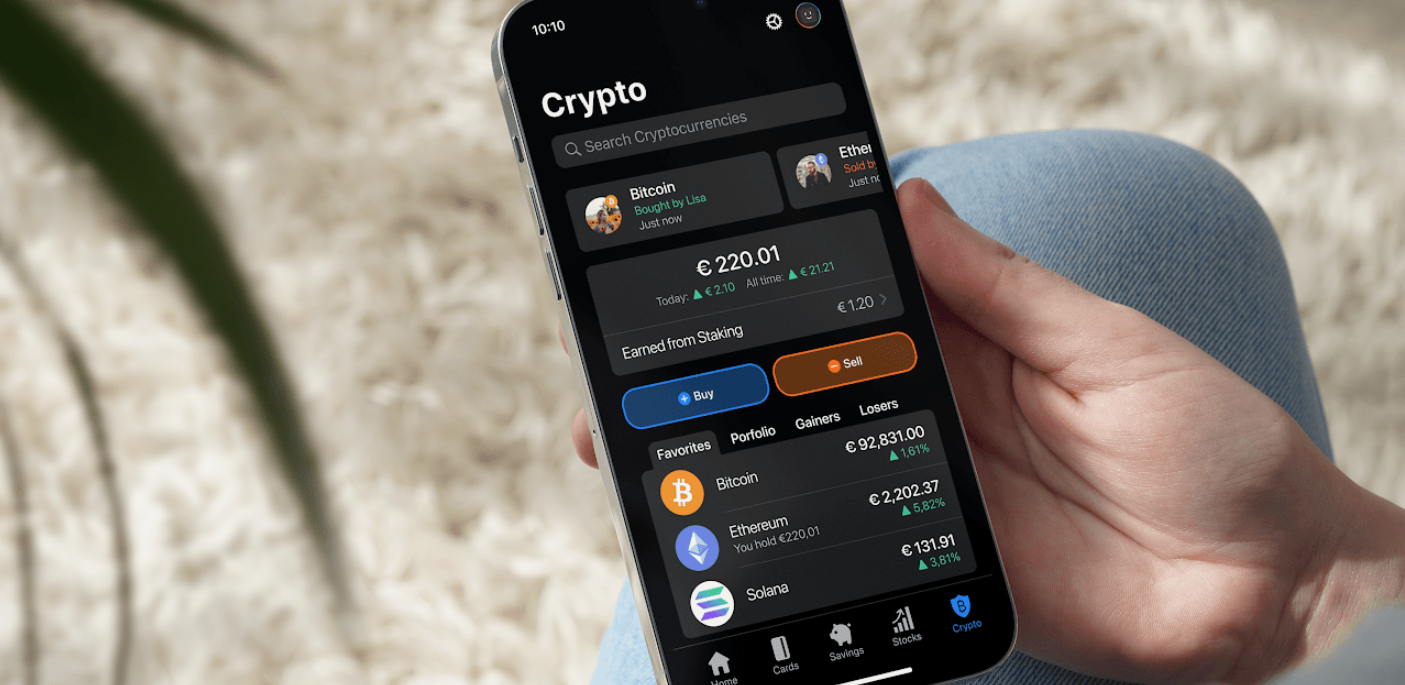
bunq, Europe’s second largest neobank, is expanding bunq Crypto by becoming the first European challenger to launch flexible crypto staking, empowering users to earn rewards on their digital assets, with full flexibility and no lock-up periods.
Building on the successful launch of bunq Crypto in April, staking will be available in the Netherlands, France, Spain, Belgium, Italy, Ireland, Germany as well as the wider EEA region. Users of the challenger bank can access crypto services offered by crypto trading platform, Kraken and are able to earn up to 10% annually on selected cryptocurrencies, by helping to validate transactions on blockchain networks.
bunq’s latest research shows nearly 65% of users say not knowing when to buy or sell is their biggest barrier to making a profit on their digital assets. To solve this, the neobank now offers flexible staking that allows users to earn rewards on their crypto without having to worry about timings or restrictive lock-up periods.
Our users have been asking for a simple way to grow their crypto,” says Joe Wilson, Chief Evangelist at bunq. “With flexible staking, they can now earn on the crypto they already own while keeping the freedom to buy, sell, or unstake anytime. We’re proud to be the first neobank to bring this to Europe.”
The news follows bunq’s announcement on applying for a broker dealer license, fast-tracking its entry into the US market as part of its global expansion plans.
Disclaimer:bunq does not dispense investment advice. Crypto trading involves risk of loss. Crypto trading provided by Payward Europe Solutions Limited t/a Kraken, authorised by the Central Bank of Ireland. Staking is unregulated, involves risk of slashing and is provided by Payward Commercial Ltd t/a Kraken.
The evolution of blockchain technology and tokenized assets is reshaping the betting industry, introducing a new era of digital wagering. 1win Token plays a crucial role in this transformation, offering players a decentralized, fast, and transparent way to place bets without the limitations of traditional financial systems. As sports betting platforms integrate blockchain-based currencies, the industry is witnessing a shift toward tokenized transactions, automated payouts, and trustless gaming ecosystems.
Beyond the technological advancements, the psychology of betting is also evolving. The use of digital tokens instead of fiat money changes how players perceive risk, winnings, and losses. 1win Token creates a distinct betting experience, where users feel a greater sense of flexibility, reduced emotional attachment to wagers, and increased engagement with gamified reward systems. This psychological shift influences betting behavior, financial decision-making, and player loyalty, making digital assets a powerful tool in modern gambling strategies.
As blockchain-based betting continues to grow, 1win Token is at the forefront of this revolution, redefining how players interact with sportsbooks, perceive value, and engage in betting markets. Whether through automated transactions, digital reward systems, or the psychological appeal of tokenized betting, it is paving the way for a more dynamic and innovative betting culture.
Tokenized sports betting: how 1win Token is creating a new betting culture
The introduction of blockchain-powered betting systems has revolutionized the way players engage with sportsbooks. 1win Token is at the forefront of this evolution, offering a decentralized, efficient, and transparent alternative to traditional sports betting models. Unlike conventional betting platforms that rely on fiat currencies and centralized payment systems, tokenized betting provides instant transactions, automated payouts, and smart contract-based wagering—eliminating the risks of delays, hidden fees, and operator manipulation.
Below is a breakdown of how 1win Token is shaping the future of sports betting:
Feature
How it works
Why it’s transforming betting
Impact on players
Instant transactions
Bets, deposits, and withdrawals using 1win Token are processed in real-time via blockchain technology.
Eliminates delays caused by banking restrictions, payment approvals, and third-party processing.
Players experience faster transactions and immediate access to winnings.
Smart contract-based wagering
Betting agreements are automatically executed via smart contracts, ensuring fair payouts.
Removes the need for manual validation and operator interference.
Users gain full trust in bet settlements and outcome transparency.
Borderless betting
1win Token allows global participation in sports betting without geographic limitations or currency conversion fees.
Expands access to players in regions with restricted banking services.
More users can engage in betting markets regardless of location.
Lower transaction fees
Traditional payment methods involve high banking and conversion fees, while blockchain transactions reduce costs.
Players keep a larger percentage of their winnings.
Creates a cost-effective and fairer betting environment.
Decentralized sports betting markets
Players can wager against each other directly using 1win Token, rather than relying on bookmaker-set odds.
Introduces a peer-to-peer (P2P) betting system, reducing house edge.
Users gain greater flexibility in setting odds and bet conditions.
Automated rewards & loyalty programs
Players earn bonus 1win Tokens for regular betting activity, staking, or tournament participation.
Encourages long-term engagement and player retention.
Users benefit from extra rewards without relying on fiat-based promotions.
NFT-based betting perks
Special NFTs grant enhanced betting conditions, VIP access, or reduced fees.
Adds collectible, value-driven assets to the betting experience.
Players can trade or hold NFTs for added in-game advantages.
Fair play & transparency
Every transaction and bet outcome is recorded on the blockchain ledger, ensuring no manipulation or hidden adjustments.
Increases trust and eliminates doubts about fairness.
Players gain full confidence in the legitimacy of betting results.
By removing traditional banking barriers, introducing smart contract automation, and enhancing user engagement through tokenized rewards, 1win Token is redefining the sports betting landscape. The transition from fiat-based to tokenized betting creates a more inclusive, transparent, and efficient gambling environment, ensuring that players experience faster payouts, lower fees, and greater control over their wagers.
As the gambling industry continues its shift toward blockchain integration, 1win Token is leading the way in establishing a new culture of digital-first, decentralized sports betting, making wagering more accessible, secure, and financially rewarding for users worldwide.
The psychology of digital money: why players perceive betting differently with 1win Token
The introduction of digital currencies into the gambling industry has not only changed the mechanics of betting but also transformed how players perceive risk, rewards, and financial decision-making. 1win Token, as a blockchain-based betting asset, influences player psychology in ways that traditional fiat currencies cannot. The shift from physical cash to digital tokens creates a new psychological environment, impacting spending behavior, emotional attachment, and risk assessment in betting scenarios.
Here’s how 1win Token alters the perception of betting and financial decision-making:
Reduced emotional attachment to money – digital tokens feel less tangible than physical cash, making players more likely to place bets without the same psychological resistance as when using fiat money.
Increased betting frequency – the ease of instant transactions with 1win Token encourages players to place bets more frequently, as there are no banking delays, withdrawal restrictions, or long processing times.
Higher risk tolerance – since 1win Token operates within a digital ecosystem, players often perceive it as a separate asset from their traditional bank balance, leading to higher-risk bets compared to fiat-based gambling.
Perceived infinite supply – unlike traditional money, where cash withdrawals and deposits feel finite, tokens can be earned, staked, and traded, making them feel like an unlimited resource in the betting economy.
Gamification of financial transactions – the use of 1win Token in rewards, staking, and NFT-based perks makes betting feel more like a digital gaming experience than a financial transaction.
Instant gratification & faster spending cycles – unlike fiat transactions that require banking approvals, 1win Token allows immediate withdrawals and bets, making players engage in faster betting cycles.
Less regret for losses – since 1win Token is acquired through multiple sources like staking, rewards, and loyalty programs, losses don’t feel as significant as losing traditional money.
Higher engagement with staking & rewards – the ability to earn extra tokens through staking, cashback, and play-to-earn incentives creates a sense of earning opportunities rather than simple gambling losses.
Greater experimentation with betting strategies – digital assets lower the perceived risk of experimenting with new betting styles, making players more open to testing new markets and unconventional wagering tactics.
Stronger loyalty to tokenized platforms – since players accumulate 1win Token through gaming incentives, they are more likely to stay within the ecosystem rather than switching to traditional fiat-based betting sites.
By removing traditional financial barriers, introducing gamified digital assets, and altering how players perceive betting risk, 1win Token is shaping a new psychological approach to gambling. The combination of instant transactions, reward-based staking, and reduced emotional attachment to digital money creates a more engaging, high-frequency betting experience.
As the gambling industry continues shifting toward tokenized assets, understanding the psychological impact of digital currencies like 1win Token will be crucial in designing future betting platforms that are both financially rewarding and psychologically optimized for user engagement.
Final thoughts: the psychological and technological shift in betting with 1win Token
The integration of 1win Token into sports betting and gambling ecosystems is more than just a financial evolution—it represents a fundamental shift in how players perceive and engage with digital wagers. By introducing tokenized betting, instant transactions, and decentralized smart contracts, 1win Token is redefining the traditional boundaries of gambling culture.
From a psychological standpoint, digital currencies alter the way players evaluate risk, handle losses, and approach betting strategies. The reduced emotional attachment to digital assets, increased willingness to experiment with different betting tactics, and gamification of financial rewards all contribute to a new era of engagement in the gambling industry.
At the same time, the technology behind 1win Token eliminates many inefficiencies found in fiat-based betting, offering faster payouts, greater transparency, and a more inclusive global betting ecosystem. As the iGaming industry continues shifting towards blockchain integration, 1win Token stands at the forefront of this transformation, paving the way for a more dynamic, decentralized, and player-centric gambling experience.
The adoption of cryptocurrency in online gambling has put control back in the player’s hands. Crypto deposits are fast, safe, and completely secure because casinos do not have access to your banking information, which minimises the risk of a cyber breach for a user.
So far, the only disadvantage is that not all casinos accept crypto. The good news is that reliable sites already do — you can play Bitcoin slots here or choose any other games to your liking. And while you’re at it, let’s discuss more benefits of using crypto for gambling and see how you can set it all up.
Why Choose Cryptocurrency for Online Gaming?
The advantages of using cryptocurrency in online casinos go well beyond transaction speed. Privacy is a significant draw for many players, as crypto transactions don’t require sharing personal banking information with gaming platforms. Security benefits are equally compelling, with blockchain technology creating an immutable record that’s nearly impossible to hack or manipulate.
Lower fees are another substantial advantage. Traditional payment methods often involve multiple fees, while cryptocurrency transactions typically have minimal charges. This fee structure means more of your money goes towards actual gaming rather than transaction costs. Platforms like jb online casino or casino grounds allow wallet-based deposits and on-chain withdrawals without sharing bank details, but real speed and costs still depend on the coin and network you choose. Always check the cashier/help pages for supported coins, minimums, and required confirmations, and try a small test deposit first.
Global Accessibility and Convenience
Cryptocurrency transcends geographical boundaries in ways traditional banking cannot. Players from different countries can use the same Bitcoin or Ethereum without worrying about currency conversion fees or international banking restrictions. Once you’ve set up a crypto wallet, deposits and withdrawals become as simple as copying and pasting an address.
How to Set Up Your First Crypto Wallet
Choosing the right cryptocurrency wallet is the foundation of your online casino experience. For casino gaming, hot wallets (connected to the internet) offer the convenience needed for regular transactions.
Popular hot wallet options include:
Coinbase wallet: User-friendly interface, perfect for beginners.
MetaMask: Excellent for Ethereum-based gaming.
Exodus: Multi-currency support with intuitive design.
Trust Wallet: Mobile-focused with strong security features.
To set up a wallet, download the application, create a secure password, and write down your recovery phrase. This 12-24 word phrase acts as your backup key — lose it, and you lose access to your funds permanently. Store this phrase offline in multiple secure locations, never digitally.
After wallet creation, you’ll need to purchase cryptocurrency through the wallet’s built-in exchange or a separate platform like Coinbase or Binance. Start with small amounts while learning the process, as cryptocurrency transactions are irreversible.
Make Your First Casino Deposit
The deposit process at crypto casinos is generally simpler than traditional methods once understood. After selecting your preferred casino and creating an account, navigate to the deposit section and select your chosen cryptocurrency. The casino will provide a unique wallet address for your deposit.
Copy the provided address exactly, as even one incorrect character will send your funds to the wrong destination with no recovery possible. Many wallets offer QR code scanning to eliminate typing errors. Always send a small test transaction first to verify the address works correctly.
Transaction confirmation times vary by cryptocurrency. Bitcoin typically takes 15-30 minutes, while Ethereum processes in under ten minutes. During busy network periods, transactions might take longer, so plan accordingly.
Manage Your Gaming Budget
Effective bankroll management becomes even more important with cryptocurrency due to its volatility. The Bitcoin you deposit today might be worth significantly more or less tomorrow. Consider converting winnings back to stable coins like USDT to preserve value, or withdraw profits regularly to avoid exposure to price swings.
Popular Cryptocurrency Options for Gaming
While Bitcoin remains the most widely accepted cryptocurrency in online casinos, several alternatives offer unique advantages. Bitcoin’s popularity stems from its widespread acceptance and relative stability, which is one reason it continues to be used across different gaming formats, including slots, table games, and Bitcoin poker games.. Ethereum provides faster transaction times and lower fees than Bitcoin, though its value can be more volatile.
Cryptocurrency
Transaction Speed
Typical Fees
Casino Acceptance
Bitcoin
15-30 minutes
$1-5
Universal
Ethereum
2-15 minutes
$0.50-3
Very High
Litecoin
5-15 minutes
$0.10-0.50
High
Stick to established cryptocurrencies until you’re comfortable with the entire process, as they offer more stability than newer alternatives.
Safe Gaming Practices and Security Measures
Do not forget that safety in online gaming is not just about protecting your crypto wallet — it encompasses everything from choosing reputable casinos to managing your gaming habits responsibly. Start by researching any casino thoroughly before depositing funds. Look for proper licensing, positive user reviews, and transparent terms of service.
Enable two-factor authentication on both your wallet and casino accounts. This extra security layer significantly reduces the risk of unauthorised access, even if your password is compromised. Use unique, strong passwords for each platform, and consider a password manager to keep track of multiple credentials.
Get Started with Your First Gaming Session
Once you’ve set up your wallet and chosen a reputable casino, start your gaming journey. Begin with small deposits and set clear limits before any gaming session. Decide how much you’re willing to lose and stick to that amount regardless of wins or losses. The speed and convenience of crypto transactions can make it easy to chase losses, so having predetermined limits helps maintain responsible gaming habits.
Remember that cryptocurrency gambling should be treated as entertainment, not as an investment strategy. The combination of gaming house edges and cryptocurrency volatility creates significant risk. Start small, learn as you go, and always prioritise security and responsible gaming practices over potential profits.
Floki has announced the mainnet release of its long-awaited metaverse game, Valhalla, a blockchain-based massively multiplayer online role-playing game (MMORPG). The launch, which follows more than three years of development, marks a major step in the company’s move beyond its origins as a meme token.
The game has already attracted Hafthor Bjornsson, best known for his role as The Mountain in Game of Thrones and widely regarded as one of the strongest men in history, who has offered an early preview of the upcoming metaverse game Valhalla ahead of its official launch on June 30. The exclusive glimpse is available to watch on his Twitch channel at twitch.tv/hafthorjulius.
Valhalla introduces a game environment rooted in Norse mythology, combining elements such as character progression, combat, resource management, and guild cooperation. Unlike traditional games, players can earn real rewards through the platform’s play-to-earn structure.
Valhalla is FLOKI’s flagship metaverse game, and it’s aiming to change the play-to-earn game for good. Built by FLOKI, the first community takeover project in crypto history, Valhalla puts players first. It’s a browser-based MMORPG powered by the FLOKI token, with rich on-chain mechanics, NFT-based characters, and a live economy backed by a robust multi-million dollar treasury. The goal is to let players earn while they play, without sacrificing fun, quality, or community.
The game features turn-based tactical combat in hexagonal battle arenas, NFT creatures called Veras, and an expansive open world that players can explore and conquer together. With seamless Web3 integration and a player-driven economy, Valhalla offers real ownership of in-game assets, giving players multiple ways to earn for their time and skill.
“This is not just about putting a game on-chain – it’s about making blockchain gaming better and delivering on the promise made to our community that we will fix many of the problems found within the blockchain P2E gaming space,” said Pedro Vidal, Community Relations Officer at FLOKI. “We’re not building for hype. We’re building something gamers actually want to play – and pushing the boundaries of what can be accomplished in the play-to-earn and blockchain gaming world… This is only the beginning.”
Alongside the launch, millions from the treasury will fund In Game Rewards and also further game development, marketing, and the formation of industry partnerships aimed at expanding user reach and engagement.
Valhalla’s release places Floki in a growing segment where gaming intersects with blockchain technology and decentralized finance. With the mainnet now operational, the project plans to grow its user base, introduce new features, and establish collaborations across the gaming and crypto industries.
Floki has announced a new partnership with Method, a leading name in the global MMORPG esports scene, to promote its upcoming play-to-earn game Valhalla. Known for its prominence in the “Race to World First” and deep ties to the World of Warcraft community, Method will support Valhalla through dedicated content, including guides, tips, and updates, shared across its platform. As part of the agreement, Valhalla will also feature on Method’s official jersey throughout 2025 and 2026. The collaboration aims to introduce Valhalla to Method’s large MMO-focused audience ahead of the game’s mainnet launch on June 30, marking a significant step for Floki’s efforts to expand Web3 gaming into the mainstream.
The blockchain gaming industry has grown rapidly in recent years, with its market value reaching an estimated $7.1 billion in 2024 and projections suggesting it could exceed $25 billion by 2030. Blockchain games now account for nearly 40% of all blockchain activity, with over 2.1 million daily active unique wallets recorded in early 2025. Popular platforms such as Immutable, Polygon, and BNB Chain have become key players in hosting Web3 games, while major studios like Ubisoft and Zynga are experimenting with blockchain integration in mainstream titles.
Revenue is generated through NFT sales, in-game tokens, and digital asset trading, with a noticeable shift toward free-to-play models aimed at lowering entry barriers. The sector has also attracted significant investment, with over $2 billion in venture capital funding supporting blockchain gaming startups since 2023.
About Valhalla
Valhalla is a blockchain-based MMORPG inspired by Norse mythology, offering players the chance to discover, tame, and battle with creatures called Veras. The game features a player-driven economy and a hexagonal battlefield designed for dynamic combat. You can play the game now and it will be officially launched on Mainnet on June 30, 2025. Valhalla was developed by FLOKI.
The online casino industry has seen a massive transformation over the past decade, but in 2025, it’s reaching new heights, driven by a range of emerging technologies. From artificial intelligence to blockchain and immersive experiences, these innovations are redefining how players engage with online gambling platforms. With insight from Oreels, here are the key technologies revolutionising the online casino space in 2025.
Artificial Intelligence (AI) and Machine Learning
AI has become an integral part of the online casino experience. In 2025, it’s not just about chatbots and customer service anymore—AI is deeply embedded in player personalisation, fraud prevention, and game development. Advanced algorithms analyse player behaviour in real-time, providing personalised game recommendations, dynamic bonuses, and even proactive responsible gambling interventions. Machine learning models also ensure game fairness and detect suspicious activity, creating a safer and more engaging environment.
Blockchain and Cryptocurrency Integration
Blockchain technology has moved from being a buzzword to a backbone for many online casinos. Decentralised ledgers are enabling provably fair games, where players can verify the integrity of each outcome. Additionally, cryptocurrency payments are now the norm rather than the exception, offering faster transactions, lower fees, and increased privacy for players worldwide.
Virtual Reality (VR) and Augmented Reality (AR)
Immersive gaming experiences are a major trend in 2025. Online casinos are leveraging VR and AR to create virtual casino floors that mimic the excitement of physical venues. Players can put on a VR headset and enter a realistic casino environment, complete with live dealers and social interactions. Meanwhile, AR is bringing games to life on mobile devices, blending real-world and digital elements for an unprecedented gaming experience.
5G and Cloud Gaming
The widespread adoption of 5G networks and cloud gaming infrastructure has transformed how players access online casinos. Lightning-fast connections and low latency ensure seamless gameplay, even for data-intensive VR experiences. Cloud gaming platforms allow players to access high-quality games without the need for expensive hardware, broadening the audience for online casinos.
Gamification and Enhanced Social Features
Gamification has evolved far beyond simple leaderboards and badges. In 2025, online casinos are incorporating complex missions, narrative-driven gameplay, and social challenges that keep players engaged for longer. Integrated social features, like live chat, multiplayer tournaments, and community events, are also central to the experience, turning online gambling into a vibrant and interactive community.
Final Thoughts
As 2025 unfolds, the online casino industry is experiencing a technological renaissance. With AI personalisation, blockchain-backed security, immersive VR and AR experiences, 5G connectivity, and deep social integration, online casinos are offering players a more secure, dynamic, and engaging experience than ever before. These innovations aren’t just reshaping the games—they’re reshaping the very nature of online gambling itself.
Among the most pressing concerns of blockchain technology is the reliability of smart contracts. For that reason, finding effective and trustworthy smart contract auditors can leverage blockchain technology.
These firms will guarantee that contracts are free of vulnerabilities and have been developed following best practices. Read on to explore how to identify top auditors in the field, the significance of their role, and the key factors to consider during the selection process.
Identify Reputable Auditing Firms
The first step in your search should be to look for established auditing firms with a good track record. Pay close attention to projects they have audited in the past and the feedback associated with their services. Read reviews and testimonials from other businesses that can offer clarity into the firm’s capabilities and quality of service. Take a look at any open-source audits the firm has performed; this transparency indicates their commitment and expertise in the field.
Review a firm’s credentials and experience. Reliable smart contract auditing firms will have certified professionals with industry experience and an understanding of the programming languages used in most smart contracts. This knowledge contributes to their ability to identify potential risks.
Evaluate Auditors’ Methodologies
Different firms utilize various techniques to evaluate smart contracts. Some may rely on automated tools; others employ manual review processes. A combination of both is the most effective approach to thoroughly assess potential vulnerabilities. An effective auditor should utilize industry-standard best practices. These techniques include static analysis, formal verification, and dynamic analysis.
Inquire about their approach to testing, which should include vulnerability checks and forms of penetration testing. Robust methodologies will identify security flaws and optimize contract performance. Know that the turnaround time for audits should be clarified upfront. Efficient audits should be conducted within reasonable periods so that you can proceed with your project timelines.
Review Case Studies and Audit Reports
A good way to determine the effectiveness of a smart contract auditor is by reviewing their past case studies and audit reports. High-quality audit reports provide insight into the thoroughness of an auditor’s evaluation process. They should clearly outline the issues identified, their impact, and detailed recommendations for mitigation.
If you can access reports for previous projects, you can gauge how transparent and comprehensive the auditor is. Consider the complexity and scope of projects they have worked on; if an auditor has dealt with large decentralized finance (DeFi) platforms or non-fungible token (NFT) markets, they are likely to have honed valuable expertise. A well-documented audit report can demonstrate their capacity to navigate complex smart contract issues.
Look at Security Certifications
Many auditing firms strive to achieve industry certifications related to cybersecurity, blockchain technology, or programming languages. Having these certifications can foster trust and confirm that the auditors follow stringent processes and guidelines. Certifications such as ISO/IEC 27001 denote proficiency in information security management systems.
Firms that regularly participate in industry events and contribute to security research gain credibility and visibility, allowing you to have more faith in their expertise. Look into their partnerships or affiliations within the blockchain community. Collaborations with reputable organizations or developers can provide additional trust, indicating that they are respected within the industry.
Assessing the credibility and skills of smart contract auditors can secure your blockchain projects. By identifying reputable auditing firms, evaluating their methodologies, and reviewing past reports, you can guarantee the integrity of your smart contracts. Finding a trustworthy audit firm is all about creating a secure and reliable space where blockchain technology can flourish.