Dublin Fire Brigade invests in location intelligence

Esri Ireland, the market leader in Geographic Information Systems (GIS), announces that Dublin Fire Brigade has deployed a new digital mapping system designed to improve emergency response, strengthen firefighter and public safety, and enhance how critical resources are allocated across Dublin city and county.

Ireland’s largest fire and rescue service, Dublin Fire Brigade was founded over 160 years ago. It provides fire, rescue, and emergency ambulance services 24 hours a day, 365 days a year, to Dublin’s 1.5 million citizens. It recently established a new Organisational Intelligence Unit with a key goal to optimise the use of location-based information to effectively manage fire risks and help keep communities safe.

Built using Esri’s ArcGIS technology, the new digital mapping system brings together operational data, such as the locations of fire stations and historic fire incidents, with third-party data – including census and population health information – for the first time.

Enhanced insights support increased safety for both the public and firefighters by raising awareness of buildings in Dublin with fire safety issues – such as inadequate means of escape, building defects, or over-occupancy. Using the technology, Dublin Fire Brigade can now map this information and put effective response plans in place that take known issues into account.

What’s more, the technology is enabling Dublin Fire Brigade to carry out more targeted community fire prevention activities by focusing citizen safety campaigns on specific vulnerable groups, especially in locations that are experiencing clusters of dwelling fires. It can easily see where fire safety efforts are still needed to reach at-risk communities, as well as contextual data such as concentrations of smokers or elderly people.

In addition, Dublin Fire Brigade is using Esri’s ArcGIS technology to identify optimal locations for new fire stations as Dublin continues to expand, as well as to ensure that aerial fire appliances are strategically located to reach the tallest and highest-risk buildings.

Dublin Fire Brigade plans to make the system widely available across varying departments within the organisation to enable more strategic planning and informed decision-making.

Rob Howell, Station Officer, Organisational Intelligence Unit, Dublin Fire Brigade, said: “It has been a really successful collaboration. The consultants at Esri Ireland have a high level of expertise, both in terms of their GIS knowledge and their project management skills. This technology gives us the ability to target our fire prevention strategies – we can deliver campaigns in the right locations to reach the most vulnerable people and have the biggest impact in terms of community fire prevention. Equally, we have to consider firefighters’ health and safety as well as that of the general public and, by being better informed, we can improve our responses to incidents and keep our responders safe in fires and other emergency situations. The potential for location intelligence in the fire service is absolutely huge and has a big role to play in our future.”

Gareth McBride, Customer Success Manager, Esri Ireland, said: “Dublin Fire Brigade is continuously evolving the fire service to meet the needs of Dublin’s residents, businesses, institutions, and visitors. To support this, it is embedding geospatial data intelligence at the heart of operational and strategic decision-making. Location intelligence is helping the fire brigade in managing and reducing fire risks, addressing some of the biggest dangers in a changing cityscape. We are delighted to be working with Dublin Fire Brigade on such an important and necessary project, and excited to see its expanded capabilities as the technology is rolled out more widely.”

Maptive vs ArcGIS: Which is the Most Powerful Mapping Software?

Business mapping software has become essential for organizations that need to visualize data and make location-based decisions. After examining market data and user experiences from 2024 and 2025, Maptive emerges as the winner for businesses seeking powerful mapping solutions. The platform combines enterprise-grade capabilities with immediate accessibility, solving problems that have long plagued the mapping software industry.

The Price Structure Reveals Two Different Philosophies

Maptive charges $1,250 per user annually for its Individual plan and $2,500 per year for its Team plan. These prices remain consistent regardless of which features customers need. Organizations know exactly what they’ll pay from day one, and budgeting becomes straightforward. ArcGIS operates differently, with nine pricing editions ranging from $100 to $3,800. This modular approach often leads to unexpected costs when teams discover they need additional modules and extensions to accomplish basic tasks that come standard with Maptive.

The financial implications extend beyond initial purchases. Companies using ArcGIS frequently report that what initially appeared affordable quickly escalates as they require more functionality. Each additional module represents another line item in the budget, another approval process, and another potential delay in getting teams the tools they need.

Speed to Productivity Separates Leaders from Laggards

Most teams using Maptive start creating maps within 30 minutes. Users build functional dashboards on their first day because the software runs entirely in browsers without requiring installation. This contrasts sharply with ArcGIS, where new users typically need several weeks to become proficient, particularly when working with advanced analytics, scripts, or plugins.

The productivity gap widens when considering organizational impact. While Maptive users generate insights and make data-driven decisions within hours of account activation, ArcGIS users continue studying training materials and wrestling with complex installations weeks later. Sales teams lose opportunities, logistics managers delay route optimizations, and executives wait for reports that could have been generated immediately with more accessible software.

Performance Benchmarks Show Measurable Advantages

Maptive allows unlimited data uploads without lag, handling over 20,000 data points per map in real-time. This performance measures three to five times faster than ArcGIS and Mapline when loading complex layers or large CSV files. Sales teams update territory maps during client calls, logistics managers adjust delivery routes as conditions change, and executives explore data without system delays.

ArcGIS occasionally slows down or crashes with large datasets, especially on non-enterprise hardware. Users report that ArcGIS needs considerable memory and storage space to function properly. Organizations without modern computers encounter uncomfortable performance issues that interrupt workflow and delay decision-making. These technical limitations force companies to invest in hardware upgrades or accept reduced productivity.

Feature Accessibility Changes How Organizations Work

Maptive users generate heat maps with one click on all subscription plans. ArcGIS requires setup and often needs scripting for heat map creation. Territory management shows similar disparities. Maptive provides both automatic and manual territory creation tools as standard features. ArcGIS requires manual setup or additional plugins for territory management, adding complexity and cost to what should be straightforward tasks.

The 2024 launch of Maptive IQ added enhanced drive-time polygons that calculate more accurate travel times. The platform includes demographic insight tools supporting predictive business analytics and territory scoring. CRM integrations rolled out in Q3 2025 connect seamlessly with Salesforce, Hubspot, and other business systems. Territory management improvements allow real-time updates, drag-and-drop resizing, merged data analytics, and color-coding by performance.

Real Users Describe Transformative Results

One Maptive user reported taking thousands of cells of data and compiling them into maps showing electric vehicle distributions by zip code and Tesla Supercharging Stations. Heat maps created density visualizations that made the research project more manageable to read from an outsider’s perspective. The data presentation enabled everyone to understand complex patterns without specialized training.

Another customer emphasized accessibility: “Maptive doesn’t require coding knowledge or any dev work.” This democratization of mapping capabilities enables entire organizations to leverage location intelligence without specialized training. Marketing teams analyze customer demographics, sales representatives optimize territories, and executives visualize market opportunities using the same intuitive interface.

Support Quality Determines Long-Term Success

Maptive takes customer support seriously and maintains high levels of customer satisfaction across the industry. The company offers live phone, email, and chat support to paying and free users alike. Multiple reviews highlight experiences where support staff exceeded expectations. One customer described how a representative reopened a closed chat session to provide additional workarounds that solved their specific challenge.

This white-glove service standard applies across all pricing tiers. Small businesses receive the same exceptional support as enterprise clients. The support team understands that mapping problems often require immediate solutions, and they respond accordingly. This contrasts with many enterprise software providers that segment support quality based on account value.

Financial Growth Validates Market Position

Maptive’s revenue reached $2.6M in 2024, up from $597.9K in 2023. The company previously reported $287.8K in 2022 and $239.8K in 2021. Since launching in 2010, Maptive has shown consistent revenue growth without external funding. This organic expansion demonstrates genuine market demand rather than artificial inflation through venture capital.

The growth trajectory aligns with market trends. Cloud solutions account for 72.60% of 2024 revenue and grow at 19.10% CAGR. Organizations favor platforms that deploy quickly and update automatically. Maptive’s browser-based architecture matches these preferences perfectly, while ArcGIS continues relying heavily on desktop installations requiring IT resources.

Common ArcGIS Frustrations Drive Users to Alternatives

ESRI ArcGIS’s downside lies in its steep learning curve, which demands large time investments. The cost poses additional problems, especially compared to lower-cost alternatives solving common mapping problems with web-based maps. Smaller organizations find ArcGIS prohibitively expensive, particularly individuals, small businesses, and organizations with limited budgets.

Users report that ArcGIS pricing lacks transparency. They dislike separate fees for each tool and extension. The software’s technical requirements create additional barriers. Organizations must maintain modern computers with substantial memory and storage to avoid performance problems. These combined frustrations push businesses toward more accessible alternatives.

Enterprise Adoption Confirms Professional Readiness

Fortune 500 companies use Maptive daily for sales planning, territory setup, asset management, healthcare data display, and other data-heavy tasks. These sophisticated organizations choose Maptive over more complex alternatives because it handles enterprise-scale problems while maintaining ease of use.

Sales teams particularly value Maptive’s built-in route optimization, ability to add and share customer insights and leads, and robust filtration tools. The “average sale” filter enables teams to target high-value leads efficiently. These capabilities directly impact revenue generation, making them essential for competitive businesses.

Integration Capabilities Extend Platform Value

Maptive supports CSV, Excel, and Google Sheets formats, ensuring organizations leverage existing data without complex migrations. The platform handles up to 100,000 locations per map, allowing businesses to scale without switching platforms. This capacity eliminates disruption and retraining costs associated with platform migrations.

Real estate agents map properties, visualize market data, and analyze neighborhood demographics. Healthcare providers analyze patient data, visualize healthcare resources, and track healthcare trends across territories. Sales and marketing teams identify potential target markets, analyze customer demographics, and optimize sales territories. This versatility means organizations deploy Maptive across multiple departments without specialized training for each use case.

Technology Architecture Matters for Future Success

Maptive operates as cloud-based and web-based software. Users access the platform from any device including desktops, tablets, and mobile devices. No downloads complicate deployment. Teams always have the latest features without managing software updates or compatibility issues.

This architecture ensures consistent experiences across devices and locations. Remote teams collaborate on the same maps simultaneously. Field representatives update data from client sites. Executives review dashboards from any location. ArcGIS’s desktop-centric approach creates friction for business users who need quick answers rather than cartographic perfection.

Customer Success Stories Provide Concrete Evidence

One user evaluated several tools before selecting Maptive and confirmed making the right choice. Their clients appreciate visualizing data when constructing sales territories. They find the product user-friendly and robust. Another customer reported that Maptive made organizing company territories easy. The program removed guesswork, making time more effective and efficient.

These testimonials represent patterns across industries. Users consistently praise Maptive’s ability to transform raw data into actionable insights quickly. They value the platform’s intuitive interface that requires minimal training. Most importantly, they report measurable business improvements after implementing Maptive.

The Verdict Based on Evidence

The data from 2024 and 2025 demonstrates that Maptive delivers superior value for organizations needing strong mapping tools without lengthy onboarding. The platform combines a low barrier to entry with a full feature set and white-glove service at all price levels. This combination creates compelling advantages that ArcGIS cannot match for most business users.

Maptive has revolutionized how businesses leverage location intelligence through transparent pricing, immediate productivity, superior performance, comprehensive features, and exceptional support. Fortune 500 adoption and enthusiastic user testimonials confirm what performance metrics show. For businesses that need results rather than complexity, Maptive represents the evolution of mapping software in 2025 and beyond.

Esri Ireland and Murphy Geospatial to accelerate rollout of vital infrastructure projects

Esri Ireland, the market leader in Geographic Information Systems (GIS) has announced a new partnership with surveying and data acquisition specialist, Murphy Geospatial (a Woolpert Company).

This strategic collaboration will combine advanced location intelligence and geospatial data capabilities to accelerate the delivery of large-scale infrastructure, urban planning, and environmental projects across the island of Ireland.

The announcement comes as the Government recently pledged an overall investment of more than €100 billion in Ireland’s infrastructure over the next five years as part of the National Development Plan (NDP).

As vital infrastructure projects grow ever more complex, organisations increasingly require data that is highly accurate and detailed. The demand for real-time mapping capabilities, spatial analytics, 3D modelling, building information modelling (BIM) integration and digital twin representation is rising across sectors such as architecture, engineering, construction, manufacturing, utilities, and energy.

This new partnership will combine Esri’s cutting-edge ArcGIS System with real-time data acquisition and integration services from Murphy Geospatial, driving actionable insights across the entire lifecycle of critical infrastructure projects. Both public and private sector organisations will benefit from powerful digital mapping and precise data capture, enabling faster, more informed decision-making. Streamlined processes and increased automation will transform raw data into interactive maps and valuable analytics, supporting project implementation and enhancing the delivery of essential services.

Esri Ireland and Murphy Geospatial customers will benefit from enhanced data acquisition and analysis capabilities, particularly in field-collected data and on large-scale data projects. Murphy Geospatial deploys aerial, vehicle-mounted, and terrestrial scanners to gather data, ensuring access to even hard-to-reach locations. All data is subjected to rigorous quality control and assurance, reducing the risk of data loss or misinterpretation.

More efficient workflows will drive productivity and collaboration for organisations, while easing the burden on internal teams. Additionally, customers will gain access to increased resources from both Murphy Geospatial and Esri Ireland, supporting project success at every stage.

Paul Synnott, Managing Director of Esri Ireland, commented:
“The Government’s recent funding boost for the NDP marks the largest infrastructure investment in Irish history. Now, more than ever, our customers will rely on high-quality, accurate, and precise data to help them better understand the influence of location, place, and geography on their decisions. Our partnership with the team at Murphy Geospatial enables us to bring their market-leading data acquisition expertise directly to our customers. It’s a partnership that simply makes sense, combining the power of Esri’s ArcGIS system with Murphy Geospatial’s advanced data acquisition solutions to deliver value far greater than the sum of its parts.”

Niall Murphy, CEO of Murphy Geospatial, added:
“Data accuracy demands are rising, and customers need confidence in their data in order to drive today’s increasingly complex projects. Data and GIS systems often live in silos, but this partnership will combine these advanced capabilities to deliver solutions to key industry challenges. From building bridges and developing transport lines to implementing flood relief measures, the potential of geospatial data is huge, and we look forward to leveraging location intelligence to drive further actionable insights. This partnership will accelerate project successes, add increased value, and fuel growth for both customer bases.”

Esri Ireland accelerates national soil survey across 23,000km2 for Aurum Exploration

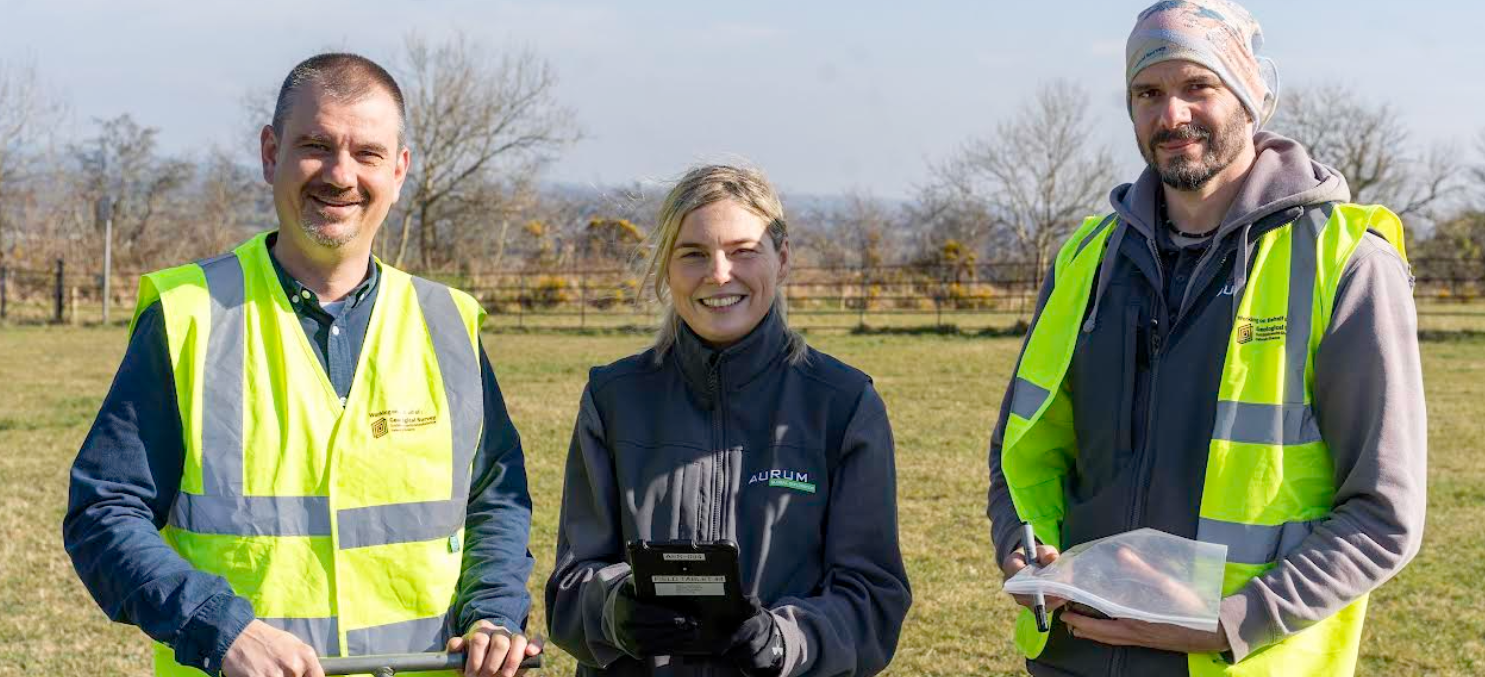
Esri Ireland, the market leader in Geographic Information Systems (GIS), today announces that its digital mapping system enabled Aurum Exploration Services to accelerate the survey of soil samples across almost 23,000km2 in Ireland.

The extensive survey was carried out as part of the Tellus Programme. Led by Geological Survey Ireland and funded by the Department of the Environment, Climate and Communications, the Tellus Programme aims to improve the future management of the environment by building a deeper knowledge of Ireland’s soil, rocks, and water.

Esri’s ArcGIS technology streamlined workflows for Aurum Exploration, enabling it to deliver the ambitious project in just over one year. The technology replaced the traditional paper-based survey process with innovative digital data capture. The paper-based process was time-consuming with a complex data collection method, taking the Tellus Programme team nine years to reach the halfway milestone on the project.

Using the technology, Aurum Exploration’s sampling teams were able to collect, record, and share real-time data on soil samples – ranging from location to land usage and soil characteristics – wherever they were working in the field. Apps could be used even when offline, which was vital for those working in remote locations. Team leaders were able to speedily assign tasks, manage daily workloads, and monitor the project’s progress, while programme managers could oversee the data collection process and share project metrics.

Health and safety were boosted for employees as each team’s location was visible in near real-time. The platform also facilitated rigorous quality control checks, greatly enhancing the accuracy and integrity of soil sample data. Moreover, reports could be generated on-demand, saving time for teams internally.

In turn, these efficiencies contributed to an estimated saving of 120 days per year, and a reduction in overall operational costs of around €40,000 annually for the project.

Judith Mather, Project Manager, Tellus Programme, Aurum Exploration said: “Having a robust and efficient digital system greatly assisted us to cover more ground in a shorter time, and oversight of the national programme really improved. ArcGIS Dashboards gave our directors and client an accurate and visual real-time overview of what was going on, on a national scale, which is what they needed. In addition, the improvement in data quality was a real testament to the success of ArcGIS applications.”

Schalk van Lill, Customer Success Manager, Esri Ireland said: “Our ArcGIS platform has been transformative for the Tellus Programme, and we were delighted to work closely with Aurum Exploration as the team delivered on this vital nationwide project. Reliable data was captured electronically out in the field, reducing the risk of human error and other data collection inconsistencies, even while working remotely. This also boosted productivity, streamlined operations, and improved collaboration among teams for Aurum Exploration. This important project is benefitting our environment now and into the future.”

Esri Ireland strengthens utility sector expertise with UDC partnership

Esri Ireland, the market leader in geographic information system (GIS) technology in Ireland, has teamed up with the digital utility services provider UDC to offer specialist consulting services for Esri Ireland’s utility sector. Through this partnership, gas, electricity, water and wastewater companies will be able to access enhanced support when implementing ArcGIS Utility Network, Esri’s next generation spatial information system for utility management.

“Several of Esri Ireland’s customers in the utility sector are planning to migrate to ArcGIS Utility Network or have already begun on this journey,” says Paul Synnott, Managing Director of Esri Ireland. “By collaborating with UDC, we are giving our customers easy access to utility sector specialists who can advise them about data migration and help them optimise the benefits they gain from their investment in Esri technology.”

Where appropriate, consultants from UDC will join Esri Ireland projects and work alongside Esri Ireland’s Professional Services Team to deliver agreed outcomes for utility customers. In particular, UDC will provide guidance on best practice data cleansing and data migration methods and advise customers on how to represent utility assets digitally. Utilities will also be able to take advantage of UDC’s proprietary auto-migration HEIDE tool, which helps accelerate data migration processes.

Esri Ireland and UDC have already worked together on a successful collaboration with Northern Ireland Electricity (NIE) Networks. As part of a project team led by Esri Ireland, UDC carried out a Data Readiness Assessment to evaluate the utility’s data quality, highlighted data recommendations and prepared it for a full data migration. This allowed NIE Networks to quantify the time and resources it will need to migrate data to the new system.

UDC has been providing ArcGIS-based solutions and services for utilities in the USA and Canada for nearly twenty years. It is a Platinum Partner in the Esri Partner Network programme and holds Esri specialty certifications in gas and electric utilities services. For organisations that are migrating to ArcGIS Utility Network, it delivers services ranging from strategic roadmap guidance to data assessment and migration readiness planning, and full migration support.

“After successfully serving North American utilities for the last 20 years, we now have had the good fortune to cross the Atlantic, forge a strong and growing partnership with Esri Ireland, and work with utilities in Ireland,” shares Hamid Akhavan, CEO of UDC. “We are delighted to be working with the fantastic Esri Ireland team, helping more gas, electric and water utilities achieve maximum benefit through digital transformation, leveraging ArcGIS Utility Network.”

Esri Ireland revolutionises sustainable public transport projects for DBFL Consulting Engineers

Esri Ireland, the market leader in Geographic Information Systems (GIS), is today announcing that it is transforming the delivery of more sustainable public transport projects for DBFL Consulting Engineers, one of Ireland’s leading consultancies for civil, structural and transportation engineering.

DBFL needed the ability to view, analyse, and share geospatial data and maps more extensively across both transportation and civil engineering projects. Esri designed a tailored solution based on its ArcGIS technology which is enhancing DBFL’s approach to complex project assessments. DBFL is extending its use of ArcGIS to gain insight into key issues such as sustainable transport.

For example, the technology has been used to visualise the proportion of people using private, public, and active transport for work trips in County Wicklow. The system is also enabling DBFL to analyse catchment areas and evaluate walking times to bus stops and train stations. It easily identifies barriers to public transport use and proposes new access routes for pedestrians and cyclists.

In addition, Esri’s ArcGIS is being used to conduct route, transport, and site audits in the field, including a recent audit of a proposed new cycle route in Dublin. Engineers can collect and upload data and images in real time from their mobile devices while walking these routes, and the information is uploaded directly to ArcGIS Online, a central system which can be accessed by all team members. DBFL is increasingly using the platform for communicating and sharing data with its clients.

Esri’s system is underpinning growth for DBFL, as the enhanced service offering is enabling the company to tender for an increasing number of projects. It’s more cost efficient as it accelerates the delivery of projects and reduces the need for written reports. Esri’s technology has also streamlined workflows for DBFL’s employees with increased collaboration and improved data sharing. DBFL anticipates that as many as 80 engineers, working on both transportation and civil engineering projects across the business, will use the technology as a vital part of their day-to-day work.

Danny Pio Murphy, Associate (Transportation), DBFL Consulting Engineers: “There is high demand for GIS analysis and digital mapping. Since expanding our use of ArcGIS, we have begun to attract more private and public sector clients who want GIS analysis and reports. ArcGIS Online is particularly effective for presenting our results in a non-technical way. Now that the technology is accessible to more engineers at DBFL, we can use it to add value to a larger number of projects, both in transportation and civil engineering. We are really pleased with the direction we are heading in; we are passionate about what we do and are happy that we can now make more use of ArcGIS to make cities safer and create a more sustainable world.”

 Jack Ffrench, Account Manager, Esri Ireland, said: “We are delighted to build on our valued partnership with DBFL Consulting Engineers. As one of Ireland’s leading engineering consultancies, the use of accurate and up-to-date geospatial data is crucial as its existing and prospective customers increasingly require geospatial data and analysis as part of new project specifications. By using ArcGIS, DBFL has been able to improve insights into complex engineering projects, lower costs, and scale its business. We look forward to continuing to build on this relationship and support the team in providing these important and innovative services.”

Esri Ireland’s digital mapping transforms the delivery of public services for Wicklow County Council

Esri Ireland, the market leader in Geographic Information Systems (GIS), is today announcing that it has helped Wicklow County Council to migrate their geospatial data and GIS services to the cloud, improving internal processes and transforming the delivery of public services.

For more than 25 years, Wicklow County Council has used Esri’s ArcGIS solutions in areas ranging from local development planning to highways maintenance. Now, with its ArcGIS Online system, Wicklow County Council’s data can be accessed in one central and secure cloud-based location and up-to-date data can be made available to the public faster than before.

The scalable system is underpinning the rollout of services to 142,000 citizens in Wicklow and enabled the council to build a new Residential Zoned Land Tax app in just half a day. User experience is improved as data from planning applications is now updated daily and receives thousands of views per day, while planning queries now load in a matter of seconds. In addition, Wicklow County Council can publish its County Development Plan immediately, as soon as it is formally adopted.

Esri’s technology is saving time for Wicklow County Council’s 850 employees as it eliminates the need for software updates and server upgrades with additional storage. Without the time-consuming burden of server management, the council’s GIS team can focus on creating new web apps to improve public services.

ArcGIS Online also simplifies data management, making it easier for the council to keep its 450 data sets current and availablesuch as information on vacant development sites. The migration has resulted in a six-fold increase in the performance of the council’s web-based GIS apps for both employees and members of the public who engage with these services. The system can handle peaks in traffic without any disruptions and returns search results rapidly.

Paddy O’Flaherty, GIS Officer, Wicklow County Council said: Managing data and maintaining our GIS platform is so much easier than before. Things that were a chore can now be done with the click of a button. Users can select a thousand features, and ArcGIS Online will still return the results straight away.

“Not only did we migrate data to ArcGIS Online; we also did a thorough data quality review, to make sure that the data we were sharing online was the primary and most accurate data set available. ArcGIS Online has freed up time to develop more GIS services to improve our delivery of public services.”

Ted Taylor, Technical Account Manager, Esri Ireland: “We are delighted to be working once again with Wicklow County Council. It’s fantastic to see them embrace new technologies which will ensure resilience for the future. ArcGIS Online provides quick and reliable access to information, streamlines workflows, and improves programme performance, meaning the council can continue to provide vital resources to the public quickly and efficiently. We look forward to continuing to work with them to enhance these services for the residents of County Wicklow.”