Trapped Inside: Solving Tesla’s Power Outage and Vehicle Lock-In Problems

The ever-evolving automotive industry is no stranger to the revolutionary designs and eco-conscious vision of Tesla. However, owners are concerned about the safety and convenience of electric vehicles, particularly older users who are less tech-savvy. Instances of unexpected power outages have left residents trapped, struggling to locate and use the manual door unlock mechanism. While the Tesla app can provide a solution in some cases, it often means shattering a window in others. In such cases, contacting a nearby auto locksmith service may be the only solution. In this article, we will look closer at the recent lock-in problems Tesla users are experiencing.

Recent Tesla Lock-In Incidents

An unfortunate incident highlighting Tesla’s lock-in problem involved a 73-year-old man from Arizona. On a scorching June day with temperatures soaring to 100 degrees, his Tesla car experienced a power failure while he was inside. He found himself trapped within his Model Y. According to the man, the ordeal began in his garage when all the car’s functions, including the glove box and door locks, suddenly ceased to work. With the windows unable to roll down and his unfamiliarity with the car’s manual lock release mechanism, he endured sweltering heat for approximately 20 minutes.

Thankfully, when he reached out to his sister, her Tesla app came to the rescue, allowing the door to be unlocked. Although one of the car’s windows had to be shattered, he escaped just in the nick of time. Being trapped in the car for more than an hour would have been a disastrous ordeal. Only afterward did he realize the Tesla Model Y had experienced a sudden power loss due to its separate 12v battery running out of charge.

In a separate incident, a nine-year-old child and her mother found themselves stranded in a 2018 Tesla Model 3 when it unexpectedly lost all power. However, the mother remembered how to manually engage the safety lock on the car, enabling them to exit the vehicle without further delay.

The Growing Concern 

Tesla, synonymous with innovation, has undeniably transformed the automotive landscape. Nevertheless, even within such an impressive brand, unexpected challenges can surface. Tesla owners and prospective buyers share a growing apprehension regarding the reliability of its electrical reserves and the possibility of being stranded. 

Tesla proudly emphasizes the safety of its vehicles, boasting coveted 5-star safety certifications. Tesla cars are also equipped with multiple security features to deter car theft and aid in locating stolen vehicles. However, concerns have arisen regarding electric disruptions that result in unresponsiveness, as many owners have reported sudden power failures while driving or in various settings, often without apparent reasons.

What compounds these concerns is the escalating frequency of such incidents, as evidenced by the mounting complaints received by the National Highway Transportation Safety Administration (NHTSA) from Tesla owners. Among the issues at hand is the difficulty locating the manual door release, which is often poorly labeled and frequently overlooked by Tesla owners who may need to consult or read the owner’s manual.

What Does This Mean for Tesla

Lockout incidents are not limited to Tesla vehicles. There have been considerably more reports of comparable or worse incidents with different Electric Vehicle (EV) brands, most of which differ. Tesla will likely face the most criticism because people have high expectations of the highly-rated brand. This does not absolve the corporation of responsibility. Millions of cars that were sold in the US have already been recalled by the manufacturer because of an autopilot issue

According to a recent poll, many Tesla owners file complaints with the federal vehicle safety inspectors; nonetheless, the agency advises owners of electric vehicles to become familiar with manual safeguards in case of emergency. EV comes with a detailed manual that explains maintenance practices and how to navigate from the car in such instances. 

Tesla vehicles have a guidebook explaining how and when to replace the 12v battery and how to use the safety latch. Every Tesla owner should study the instructions thoroughly before driving it for the first time. Tesla and other automotive firms should take the initiative to promote the importance of doing so. 

Final Thoughts

The multiple reports of people becoming stuck in Tesla vehicles are unsettling and highlight the need for precautionary measures and having the contact information of a professional auto locksmith readily accessible. Electric vehicles play a significant role in the automotive industry’s technological evolution and environmental efforts. As technology continues to advance, users need to understand the operational aspects of these vehicles, including potential malfunctions and safety measures.

Everrati grows redefined and electrified Porsche portfolio with homage to the legendary 964 RSR

Everrati Automotive Limited (Everrati™), the leading sustainable-luxury technology company specialising in redefining and futureproofing automotive icons through the integration of
cutting-edge electric vehicle (EV) powertrains, today reveals its most driver-focused electrified Porsche yet – a new addition inspired by the Type 964 RSR.

Building on Everrati’s leading portfolio of redefined modern classic Porsches, the new zero emission homage channels the ethos of the Type 964 RSR 3.8, blending a stunning motorsport-inspired hand-built 911, with carbon-fibre body elements and a host of weight-saving measures both inside and out, bringing things up to date with a bespoke, OEM-grade, state-of-the-art EV powertrain.

Launched in 1993, the Type 964 RSR 3.8 is one of the rarest 964 variants with just 51 examples of the race-ready lightweight, rear-drive, turbo wide-bodied competition car ever produced. At the time it revived a famous Porsche motorsport badge which first appeared on the 1973 911 Carrera RSR and has since featured on ultimate track-focused 996, 997, 991 models.

As car custodians and passionate automotive enthusiasts, Everrati is honouring the 964 RSR’s influence and legacy with its redefined model, creating a fully futureproofed example of sustainable luxury in the process, a rolling piece of art, a vehicle that can be enjoyed by generations to come.

Based on an expertly restored 911 (964), which started life as a narrow-bodied car, Everrati’s
RS-inspired edition respects the lightweight, high-performance ethos of the RSR, with its rear seats deleted, a rear roll cage added and lightweight driver and passenger seats installed, clad in the world’s lowest carbon leather from Everrati partner Bridge of Weir Leather.

On the outside, there are lightweight 18-inch wheels from HRE, while the eye-catching carbon-fibre bodywork boasts a completely new aero package, including larger rear spoiler inspired by the legendary 964 RSR, along with a revised front lower splitter.

Under the skin lies an OEM-grade 63kWh battery pack and battery management system. This Gen2 version brings multiple advances over Everrati’s Gen1 system, featuring new and improved cooling and a more refined version of its drive controller and software, enhancing performance and efficiency. With OEM-grade high-performance electric motors delivering electrifying power to the rear wheels via a limited slip differential, the RSR-inspired version enables an emission-free range of more than 200 miles and 3.7 second 0-60mph acceleration.

The RSR homage also features TracTive suspension, a premium, electronically controlled active and adaptive suspension system which offers multiple settings designed to optimize and enhance driving dynamics, comfort and performance, whether on the road or track.  Combined with Apple CarPlay and AC and DC Fast charging, the new RSR homage is fully equipped for a short B-road blast or longer touring journey.

Everrati Founder and CEO, Justin Lunny, commented: “This exciting new addition to our range of redefined and electrified 911s is without doubt the most driver-focused yet. Paying homage to a legendary model from three decades ago, our new ‘RSR’ gets pulses racing with a host of lightweight enhancements, resulting in an unrivalled experience that combines the best of classic design with modern, zero-emission, performance.

“Like all our models, it features hand-built craftsmanship, with OEM-grade engineering processes, futureproofed via a state-of-the-art electric powertrain. We are committed to preserving the legacy of iconic vehicles while advancing the transition to sustainable luxury mobility. Our expertise in redefined Porsches positions us as the go-to international creator of redefined 911s and iconic cars.”

The new model, like all 964-based variants in its range, will be built for an international market by Everrati’s production partners, Aria Group, based in Irvine, California, underlining its strategy to forge relationships with the world’s best specialists where appropriate.

Designed and developed at its global headquarters in Oxfordshire, the latest 911 RSR-inspired model will join Everrati’s leading portfolio of redefined automotive icons, which includes electric versions of the Porsche 911 (964) Coupe, Targa, Cabriolet, G-Series based ST-inspired edition, Range Rover Classic, Land Rover Defender, Land Rover Series, GT40, and Mercedes-Benz W113 SL ‘Pagoda’.

Lotus Launches Charging Solutions for Electric Vehicles

Lotus has launched today its own electric vehicle (EV) charging solutions including an ultra-fast 450 kW DC charger, power cabinet and a modular unit for charging up to four vehicles at once.

Charging anxiety remains one of the main barriers to electric vehicle adoption, with nearly 80% of the public citing the lack of charging infrastructure as a primary reason for not buying an EV in a survey conducted by the Energy Policy Institute. With Lotus’ charging capabilities, the company is providing consumers with reliability and confidence wherever they are driving.

The new suite of EV charging solutions designed for businesses includes:

  • Liquid-Cooled All-in-One DC Charger: a new charger, which offers ultra-fast charging of up to 450 kW. For example, with the Lotus Eletre R, it can add up to 88.5 miles or 142 km of range with approximately 5 minutes of charge making it one of the most competitive electric vehicle chargers. A 10% to 80% charge can be achieved in just 20 minutes with a range extension of 74 miles or 120 kilometres from a 5-minute charge when using a 350 kW Rapid Charger.
  • Liquid-Cooled Power Cabinet: a modular power cabinet that is suited for spaces that require high energy in order to increase efficiency and minimise charging time, such as motorway rest stops. It offers market-leading power output capabilities of up to 480 kW.
  • Liquid-Cooled Charging Unit: a charging terminal, which when used with the Liquid-Cooled Power Cabinet, can charge up to four vehicles at once. The unit has a maximum current output of 600 Amp, which ensures it is able to meet the needs of all electric vehicle drivers. For instance, if they need a short top-up whilst on the go, or fast-charge for long distance drives, Lotus’ new offering provides them with a convenient solution.

Lotus is using liquid-cooled technologies throughout its suite of commercial charging solutions to make it easier and quicker for EV drivers to charge their vehicles.

Lotus’ fast-charging solutions have already been deployed in China and are expected to roll out across the majority of European countries and Middle East in Q2 2024. Further market availability will be announced in due course.

As charging infrastructure improves over time, Lotus is ensuring its customers are equipped by providing a 450 kW solution. Lotus has futureproofed its charging offering, which is expected to be the next step forward in fast charging when the infrastructure becomes readily available. Lotus customers will be able to easily upgrade to this power output without additional hardware costs once in-market service providers rollout grid upgrades.

Mike Johnstone, Chief Commercial Officer at Lotus Group, said: “Over the past six years, Lotus has been investing in the technology and infrastructure to accelerate the transition to electrification. We want to make it easier than ever to own an electric vehicle and with our latest offerings, Lotus is able to provide customers with the confidence to access easy, fast, and efficient charging.”

Alan Wang, Vice-President of Lotus Technology and CEO at Lotus Flash Charge, said: “As more governments are increasing investment into electrification in their journey to net-zero, the demand for a reliable electric vehicle charging infrastructure has never been higher than before. Lotus has developed best-in-class fast charging solutions to deliver a quick and reliable charging experience to meet customer needs.”

In 2018, Lotus announced its Vision80 strategy and plans to transform the brand from a British sports car maker to an all-electric global luxury technology brand by 2028. As part of this transition, the company is committed to developing its own range of EV charging solutions.

The company launched its first electric hyper-SUV Eletre in 2022, with customer deliveries across UK, Europe and China taking place this year. Lotus recently launched Emeya, its next-generation electric hyper-GT, in early September 2023.

Both vehicles integrate hardware, software, and cloud capabilities to deve op a full stack of intelligent driving technologies. They also include HD cameras, radar, and high-precision mapping capabilities to allow the vehicles to precisely perceive their environment in a stereoscopic display, providing a smooth drive even in extreme conditions. Lotus will continue to expand its range of premium electric vehicles, as the company looks to scale in this growing market.

Lotus has seen a huge demand for its products, with an orderbook of over 19,000 vehicles for its Emira sports car and Eletre hyper-SUV. The company has ramped up production this year, having had a record-breaking first half of 2023, and expects the full year to surpass all previous years.

Digital Car Theft: How to Safeguard Your Vehicle

In today’s rapidly advancing technological era, cars have become a crucial part of the digital landscape, integrating connectivity with convenience. Vehicle security has dramatically changed with the introduction of keyless entry devices and smart technology. However, these developments have also brought new challenges, with thieves using sophisticated technology to break into cars. As auto locksmith services like Locksmiths Locator point out, the advancement of vehicle technology is paralleled by car thieves’ ability to adapt to digital innovations and exploit vulnerabilities. In this article, we will examine the current tactics used by car thieves, focusing on the risks associated with keyless entry systems and other technological methods.

The Signal Relaying Method

Car key fobs, Radio Frequency identification systems known as RFIDs, and smartphones emit short-range signals detected by vehicles whenever they are in range. Today’s cars are programmed in such a way as to recognize certain signals for unlocking doors and starting the engine. Thieves up-to-date with this technology can rely on wireless transmitters to intercept these signals from the original key and relay them to the car. A thief can open the car door by standing next to the vehicle, relaying such a signal, and simply touching the door handle. 

While the procedure is rather complex and does not always work, locksmiths and car security experts warn of it revealing itself as a serious threat today. To lower the risk of falling victim to it, always keep your keys out of sight and, most importantly, out of range of the vehicle. We recommend using special signal-blocking boxes, aluminum tins, or protected wallets that act against signal relaying.

The Signal Jamming Method

A skilled thief with knowledge of signal transmitters and contemporary security technology might attempt to disrupt the signals sent to your vehicle. They can do this using transmitters that operate on the same frequency as your key fob. To counteract this, it’s wise to verify if your car’s lights are off routinely, the mirrors are folded, or the indicators are flashing. Also, listen for the distinct sound or alert that confirms the car is locked properly. Not ensuring that your car is locked could allow a transmitter near the car or key fob to interfere with the lock signals, leaving the vehicle unlocked.

The Car Security App Tampering Method

You can turn a spare smartphone running on Android into additional protection for your vehicle; all you need to do is install a dedicated car security app into the phone and place the device inside the car, out of view. This unique alarm system will alert you if your car is hit, clamped, vandalized, or stolen while stationary. All the information, along with your vehicle’s GPS and GMS location and data regarding the battery status, will be sent to you via email.

This is one example of how car lock systems and mobile apps interact. Many car manufacturers allow owners to unlock their vehicles using dedicated mobile apps they create remotely. By signing up and pairing the vehicle to the new mobile app account, car owners can easily lock and unlock the doors, look for their stolen car in case of theft, access crucial car maintenance information, receive recall alerts, start the engine, and even sound the horn.

A thief who can access your mobile app logins or smartphone can also get relatively easy access to your vehicle. This is why updating your car system and mobile app is mandatory to prevent software vulnerabilities. While some car manufacturers enable owners to download and install updates using USB drives, others ask for the installation of modem or SIM cards for automated system upgrades. We advise you to pay special attention to the risk of malicious software containing backdoors when downloaded without additional security measures.

The Blank Key Fob Reprogramming Method

Most vehicles over ten years old come equipped with a standard diagnostic port in the front footwell. If a thief gains entry into such a vehicle by picking the locks, breaking a window, or employing the relay signal method, they can also access this port. Once inside, they can start the car by pushing a button. Using advanced equipment, they can boot up the vehicle’s software and effortlessly reprogram a blank key fob.

Final Thoughts

The methods of car theft used by today’s car thieves have evolved side by side with the advancement of vehicle security systems. Sadly, no matter how evolved a technology might be, it cannot guarantee flawless protection against a professional theft attempt. However, combining several security measures can enhance vigilance and provide a more robust defense against these incidents.

Driving less than 15,000 km a year? New report says you could save money by ditching your private car

Car owners who are driving less than 15,000 km a year could be losing out on substantial cost savings, according to a new report from Oliver Wyman, a global leader in management consulting and Bolt, Europe’s largest shared mobility company.

The report has found that while there has been a reduction of 1,700 km per year in the distance travelled by personal cars across Europe over the last decade, the number of vehicles registered per household has stayed the same, suggesting that cars are often sitting idle at home. In Ireland, the number of privately-owned vehicles on the roads rose by 215% between 1985 and 2020. Previous research from Bolt revealed that over one quarter (25.67%) of Irish drivers are likely to give up their car in the next five years if viable alternatives are made available, whilst over half (54.55%) cited the overall expense of running a car as a potential reason for giving up their car.

For those car owners driving less than 15,000 km a year, new data shows other modes of transport like ride-hailing, car subscriptions, scooter and e-bike rentals and car-sharing can be more affordable than owning a car.

The report looked at the total cost of ownership (TCO) in price per km for premium, SUV and compact cars, which decrease incrementally the more a car is driven, and compared them to the price per km of different types of shared mobility services, which carry no additional costs to the user, past the initial price.

In Ireland, though petrol and diesel prices dipped by two cents and one cent in October, the price of crude oil remains elevated at approximately $90 per barrel, an increase on the $70 barrels were valued at during the summer.

Car-sharing emerged particularly favourably as a cost effective transport mode, being cheaper than all three car types at an annual mileage of up to 15,000 km. Shared scooters and e-bike services were cheaper than a compact car at an annual mileage of 5,000 km, while even the most expensive shared mobility service, ride-hailing, proved cheaper than a premium car for an annual mileage up to 12,000 km. The analysis was conducted in Germany but applicable to all major European markets.

For those who cannot afford a car, the study also points out how shared mobility is a viable alternative, removing the key financial barrier of purchasing a car, scooter or eBike and connecting into public transport systems to provide better commuting access.

Fortunately for Irish citizens, the government is taking warmly received steps to ensure the country is well-positioned to transition away from a reliance on the private car. The recent Budget included an investment of €360m in cycling and walking infrastructure, as well as confirmation that the 20% fare reduction for all public transport (implemented last year as a temporary cost of living measure) will continue.

Notably, the government has also been taking great strides to enable an alternative transport mode which can ensure the cycling infrastructure is well used: the shared electric scooter. Legislation is expected to be finalised in the next couple of months. Given one third (33.4%) of private car journeys in Dublin are less than two kilometres according to the CSO, and over one fifth (20.9%) are 2 to 4 kilometres in length, the company with Irish headquarters in Dublin expect the two-wheelers to be a hit in towns and cities of varying sizes across the country.

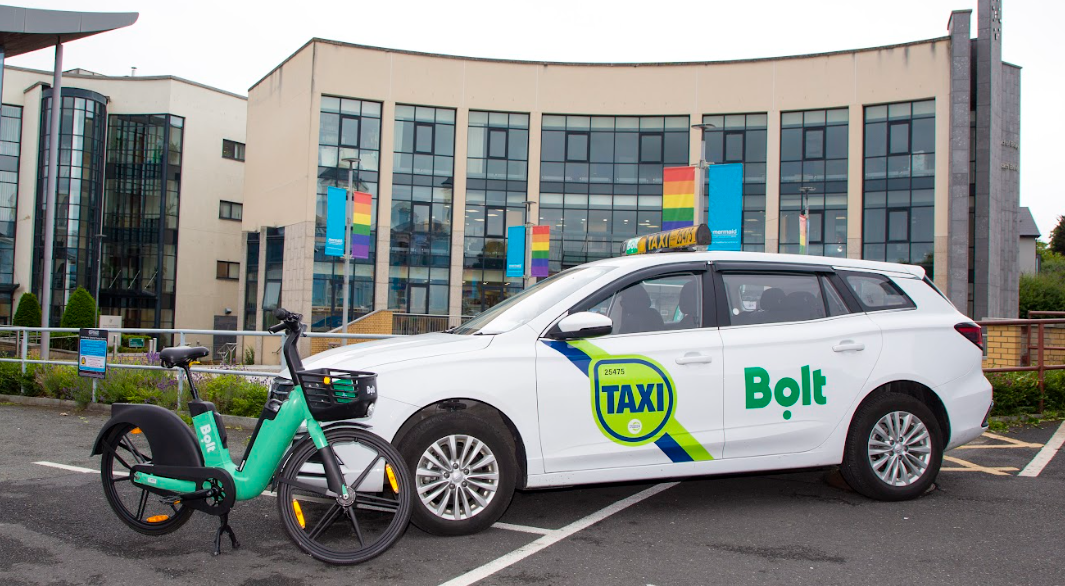
Indeed, Bolt already offers shared electric bikes in Sligo, Kilkenny, Wexford, Bray, Dún Laoghaire-Rathdown, and Carlow. The firm is the largest scooter provider in Europe with scooters and e-bikes in more than 250 cities across 25 countries.

Head of Public Policy for Bolt Ireland, Aisling Dunne, said: “This report comes at a time that has real potential to be a watershed moment for the environment and transport in Ireland. It exposes the poor value for money private cars represent for urban dwellers across the country, just when cities and citizens are understandably assessing how far their euro is going.

“Thankfully a viable alternative is well on its way in the form of the shared electric scooter. We strongly encourage the NTA to continue this positive momentum by evaluating if the supply of taxis – especially in hospitality hotspots like Dublin – is proportionate to the amount of demand from passengers. Many of us will have first-hand experience of struggling to get a taxi.”

Dr Andreas Nienhaus, Head of the Oliver Wyman Mobility Forum, who led the study, said: “The mobility sector has changed dramatically in recent years and in addition to cars there is now a range of different modes of transport available to people. Cars will still be a necessity for some depending on where they live or their job, but what this report shows is that switching away from private car ownership can have significant benefits for many, particularly those living in cities.”

In addition to saving people money, the new report also found that greater usage of services like scooters and e-bikes can have environmental benefits for cities and the people living in them.

An analysis of how people used Bolt scooters in Europe found that around 10% of e-scooter rides directly replaced car journeys. As a result, e-scooters on their own contributed a reduction of up to 120 million car kilometres travelled, helping to alleviate traffic congestion and air pollution in cities and to reduce car-related emissions by an estimated 23,000 tons CO2e across Europe. The study also highlights the potential for aligned multimodal approaches between operators and Cities to cut personal car usage by 20% in Cities like Berlin.

Almost 8 in 10 Irish people against EU plans to allow 16-year-olds to drive

Almost eight in ten (77pc) Irish people are against new EU plans to allow children as young as 16 to get behind the wheel.

This is according to the findings of a new survey[1] by Peopl Insurance which examined attitudes towards a new proposal by the European Commission to allow children as young 16 to drive, as long as the vehicle is adapted with a speed limiting device set to a maximum speed of 45km. The proposal is part of major revision of EU driving rules[2] being discussed by the European Council and European Parliament.

Headline findings from the Peopl survey, published in the run-up to World Day of Remembrance for Road Traffic Victims on November 19, which will see President Michael D Higgins hosting a private reception at Áras an Uachtaráin this week to mark the day[3], found that:

  • Most people (77pc) believe that 16 is too young an age to drive and that there would be an increase in road collisions if people of this age were allowed to legally get behind the wheel.
  • More than one in five (23pc) support the proposal citing that it would allow young people to become more independent.
  • Those age 21 – 24 (31pc) as well as Dubliners (29pc) are most likely to support the new rule to lower the minimum legal driving age to 16
  • Those aged 35 to 44 (19pc) are least likely to be in favour of the proposal.

Commenting on the survey findings, Paul Walsh, CEO of People Insurance said:

The European Commission has put forward the proposal to allow 16-year-olds to drive as a way of addressing mobility issues in remote areas[4}. So there are likely to be some who would welcome such a move, particularly those living in isolated rural areas. However, the proposal has proved controversial and led to concerns that such a move would simply add to the dangers on Irish roads – as borne out by the results of our survey, which found that the majority of Irish people do not believe it would be safe to allow children aged 16 to drive. Interestingly though, Dubliners were more likely to support the measure than those living in Ulster, Munster and Connacht.

In a year when the number of fatalities on Irish roads is hitting record highs[5], when pedestrian road deaths in Ireland are estimated to be at their highest in 15 years[6], and when more than twice as many children up to the age of 15 have been killed on Irish roads[7] than was the case in 2022, it is understandable that there is such widespread disquiet about the new proposal.”

Other highlights to emerge from the Peopl survey include:

  • Those living in Ulster are most opposed to the plan to allow 16-year-olds to drive: 90pc of Ulster people living in the Republic of Ireland and 100pc of Ulster people living in Northern Ireland were against the proposed measure.

Further commenting, Mr Walsh said:

“The European Transport Safety Council (ETSC) – whose members include the Road Safety Authority in Ireland  – recently called on the European Commission to drop the proposal that would allow children aged 16 to drive[8].

It is clear that this new proposal needs to be considered carefully before it is introduced. But in addition, clearly more needs to be done at national level to alert young people to the dangers of driving on Irish roads – and to educate them around how they can drive more safely.”

[1] Conducted by iReach of 1000 adults nationwide.

2 As per European Commission proposal published on March 1, 2023

3 As per RSA releases here and here

4 See pg 11 of European Commission proposal published on March 1, 2023

5 See RSA Statement of August 1, 2023

6 As per RSA release of October 25, 2023
7 The number of children aged 0-15 years killed on Irish roads in the first nine months of 2023 is 12 compared to 5 in all of 2022, according to RSA statistics released on October 6, 2023.

8 As per ETSC statement of late April 2023.

Top Ways To Manage Your Fleet In 2023

For a business that has a fleet of vehicles, you will find that looking after that fleet is always going to be a major thing that you need to spend time and money on. If you can care for the vehicles, for the people driving the vehicles, and generally for the whole operation, it is going to keep your finances in check, your people happy, and the operation so much more smooth-flowing. So what are some of the things that you might need to do in order to make sure of that?

Let’s take a look now at some of the top ways that you might want to manage your fleet in 2023. As long as you are doing the following, you should find that your fleet is being cared for as it should, to the benefit of the vehicles themselves, but also the staff and your business as a whole too.

Buy Good Quality Vehicles

It all starts with the quality of the vehicles themselves. If you are providing your staff with good quality vehicles in the first place, you are invariably going to find that this leads to a much better chance of those vehicles being taken care of, and that is going to be the main thing that you want to make sure of here. They will last longer, drive better, and that will also improve the morale of your staff. There is also the fact that you will find yourself spending less on the vehicles in the long run for maintenance and care, so it’s actually financially viable to buy good quality vehicles upfront.

So make sure that you are buying the best vehicles you can afford at the start of the business, or whenever you are adding a vehicle to the fleet or replacing one. That is a really simple thing you can do to make the management of the fleet so much easier and more affordable too.

Service Them

Once you have your vehicles, you then need to make sure that you are caring for them, and the main way to do that is to take them for a service every now and then. All vehicles will have their service schedule that you will want to follow, but generally it’s sufficient if you take them every 50,000 miles or so. That is going to ensure that the vehicle will run into many fewer problems over its lifetime. Again, that means it costs you less overall, but it also ensures that the vehicle is going to be nicer to drive and easier to run.

An important point with servicing is that you should have it carried out by an expert with that particular brand of car, wherever possible. They will be able to give it exactly what it needs, while also ensuring that they can find the necessary parts wherever that might be necessary too. So it’s definitely wise to do that. Soon enough you will discover a local expert whom you can then use for each service that you need done.

Watch Out For Common Faults

All vehicles have a number of faults which are likely to happen at some point or another, and this is something that you are going to need to think about for sure. It’s basically something you need to watch out for, as you will want to ensure that these faults are dealt with swiftly so as to avoid them costing you more further down the line. As long as you can do that, it’s going to mean that managing your fleet is generally a lot simpler and easier to do on the whole too.

To help with this, it’s best to enlist the help of your drivers. You should be training them to watch out for many of the common signs that are going to crop up with a fleet of vehicles. They should have daily checks that you expect them to carry out each day, and as long as you have done that, it’s going to mean that they are much more likely to know when something has gone wrong.

This is a vital way to keep on top of the health of the vehicles, so it’s something that you will definitely want to prioritize as best as you can.

Managing Expenses

There are a number of expenses that you will need to manage well when you have a fleet of vehicles, and we have already discussed some of the things you might want to do in order to make sure you’re keeping expenses as low as possible. However, it’s also something that is worth thinking about in its own right, as there are a few things that you might want to consider in particular.

For instance, you might find that it is easier to keep track of fuel and other expenses if you issue your drivers with a virtual card for fuel and field expenses. They are probably also going to appreciate this, as it is a much more hassle-free way of buying fuel and whatever else the vehicle needs. You can keep one of those cards in each vehicle, and you’ll probably find that this is going to make it so much easier.

Beyond that, you should also ensure that you are doing everything you can to keep the fuel usage as low as possible. That mostly comes down to choosing a good route, and this is the kind of thing that you are going to want to think about for sure. Good logistics turns out to be important in so many ways, not least the fact that it saves on fuel, time and therefore money. Make sure that you are not overlooking this vital thing and it should help a lot.

Those are the main ways to ensure you are managing your fleet well in 2023, so as long as you are doing those, you should find that it really makes a huge difference.

Telematics Evolution: From GPS to Advanced Fleet Tech

In today’s dynamic world of transportation and logistics, where speed, efficiency, and precision are paramount, the evolution of technology plays a pivotal role in shaping the future of fleet management. From its early beginnings with basic GPS tracking, telematics has undergone a remarkable transformation, giving rise to advanced fleet management solutions that are revolutionizing the way businesses manage their vehicle operations. 

In this article, we delve into the journey of telematics evolution, exploring how it has evolved from GPS to the cutting-edge technology of today, spotlighting the Geotab GO as a prime example of this remarkable evolution.

The Evolution of Telematics: From GPS to Advanced Fleet Tech

The early days of fleet management were marked by the introduction of GPS technology, which provided businesses with the ability to track their vehicles’ locations in real time. While this innovation was revolutionary at the time, it was just the tip of the iceberg. As technology continued to advance, telematics evolved beyond simple location tracking to encompass a comprehensive suite of features aimed at optimizing fleet operations.

Introducing the Geotab GO9: A Glimpse into the Future of Fleet Management

Leading the charge in this evolution is the Geotab GO9, a next-generation fleet tracking device that epitomizes the advancements telematics has achieved. Geotab, a pioneer in fleet management technology, has set a new standard with the GO9 – a device that not only builds upon its predecessors’ capabilities but also redefines the landscape of fleet management with its innovative features.

Boby Multani, one of Geotab’s Product Owners, provides insights into the Geotab GO9’s revolutionary features and its significance in the realm of fleet management. Multani highlights that while the GO9 maintains a similar physical appearance to its predecessor, the GO8, it has been completely redesigned internally to offer enhanced performance and functionality.

Breaking Down the Geotab GO9’s Innovations

The Geotab GO9 introduces a powerful 32-bit processor, making it the most robust telematics device produced by Geotab to date. This advancement translates to four times more memory and five times more RAM than its predecessor. This boost in performance not only ensures smoother operation but also allows the device to support a wider array of functions, contributing to its longevity and versatility.

A notable enhancement in the GO9 is its Global Navigation Satellite System (GNSS) module, which provides increasingly accurate location data. With the GO9, businesses gain access to real-time vehicle location, trip history, and comprehensive vehicle and driving trends data through the MyGeotab platform.

Unveiling Key Differentiators: The Gyroscope and Extended Compatibility

The GO9 sets itself apart with the incorporation of a gyroscope. Geotab’s innovative algorithms, combined with the device’s accelerometer, already offer exceptional harsh-event data and collision reconstruction capabilities. The addition of a gyroscope elevates the device’s capabilities by providing a real-time sense of the vehicle’s orientation.

The gyroscope enriches the data with additional granularity, improving the accuracy of vehicle movement tracking – especially on winding or bumpy roads. This enhanced data is invaluable for collision reconstruction, enabling a more detailed, second-by-second breakdown of events.

Despite these groundbreaking advancements, the GO9 retains the same dimensions and shape as its predecessor, simplifying installations and ensuring a seamless transition for fleet managers.

Embracing Electric Vehicles and Future-Ready Capabilities

As the automotive industry shifts towards sustainable and eco-friendly solutions, electric vehicles (EVs) have emerged as a transformative force in the transportation sector. Recognizing this pivotal change, Geotab’s GO9 not only offers cutting-edge features for traditional vehicles but also caters to the growing demand for EVs within fleet operations.

One of the challenges in integrating EVs into fleets is the need for specialized data and insights that go beyond those required for conventional vehicles. The GO9 is equipped with the ability to support EVs, ensuring that businesses are well-prepared to seamlessly transition to electric vehicles or hybrid models when the time is right.

Key Aspects of the GO9’s EV Support:

  • Battery Health Monitoring: EVs are powered by complex battery systems that require careful monitoring to ensure optimal performance and longevity. The GO9’s compatibility with EVs includes the ability to track and analyze crucial battery health metrics, providing fleet managers with real-time data on battery status, temperature, and overall health. This proactive approach helps prevent potential issues and maximize the efficiency of EVs.
  • Charging Infrastructure Integration: The transition to EVs necessitates access to reliable and efficient charging infrastructure. The GO9 supports integration with charging stations, enabling fleet managers to monitor charging activities, track energy consumption, and plan routes that incorporate charging stops. This feature is essential for optimizing the operational efficiency of EVs and ensuring that they are always ready for service.
  • Range Optimization: Range anxiety – the fear of running out of battery power – is a common concern for EV users. The GO9 addresses this challenge by providing accurate range estimates based on factors such as battery state of charge, driving behavior, and external conditions. Fleet managers can use this information to plan routes that maximize efficiency while minimizing the risk of running out of power during journeys.
  • Adaptive Telematics: EVs introduce unique driving behaviors and energy consumption patterns that differ from those of traditional vehicles. The GO9’s advanced algorithms are capable of adapting to these differences, offering specialized insights into EV performance. This adaptability ensures that fleet managers receive accurate data tailored to the specific requirements of electric vehicles.

Preparing for the Future: Flexibility and Innovation

Geotab’s decision to incorporate EV support into the GO9 is a strategic move that aligns with the shifting landscape of transportation. Even if a fleet is not fully electric at the moment, the GO9’s EV capabilities future-proof the fleet’s technology infrastructure. This flexibility allows businesses to evolve their fleet operations in response to market trends, regulatory changes, and the growing emphasis on sustainability.

Moreover, the GO9’s support for EVs reflects Geotab’s commitment to innovation and adaptability. By integrating cutting-edge features that cater to the needs of electric vehicles, Geotab showcases its dedication to providing solutions that address the evolving demands of the fleet management industry.

The Road Ahead: Evolution, Adaptation, and Progress

Telematics will continue to advance as technology pushes its boundaries and improves. Geotab’s GO9 represents a milestone in this journey, showcasing the power of innovation and adaptation in the fleet management sector. With its advanced capabilities, compatibility with existing and future vehicle models, and commitment to sustainability, the GO9 is a testament to the potential of telematics to transform fleet operations on a global scale.

In a world where businesses demand ever-higher levels of efficiency and sustainability, the Geotab GO9 vehicle tracking device is leading the way into the future of fleet management. To explore its features and learn more about how the GO9 can revolutionize your fleet operations, visit geotab.com and experience the next phase of telematics evolution firsthand.


GoCar Announces €10 Million Investment to Expand and Upgrade Car Sharing Fleet Nationwide

GoCar, Ireland’s leading vehicle sharing service, today announced an investment of €10 million in the expansion and enhancement of its current vehicle sharing services across Ireland. The investment is part of GoCar’s commitment to provide sustainable and convenient mobility solutions to meet growing customer demand for alternative transport options to private vehicle ownership.

The €10 million investment will support increased vehicle availability and wider vehicle choices for customers throughout the country. A total of 280 new vehicles will be added across 149 locations, catering to both urban and rural communities. This expansion aims to provide users with a broader range of vehicle types, ensuring increased choice and flexibility when it comes to public transport options.

GoCar’s fleet has seen a rise from 820 vehicles in January 2023 to 930 vehicles in July 2023, with the current investment supporting further increase to more than 1100 vehicles in over 600 locations across 24 counties nationwide by the end of the year.

GoCar will also be launching a new website and app designed to provide a more innovative and intuitive customer experience. Additionally, a new loyalty programme will be introduced, rewarding repeat customers for their continued use of car sharing services, with the launch planned for late 2023.

Commenting on the announcement, Paul McNeice, Head of Country for GoCar, said: “At GoCar, we believe in creating a community-led approach to mobility, becoming an integral part of the fabric of localities across the country. Our investment reflects our dedication to increase the availability of sustainable and flexible transport options to meet the evolving needs of our customers.

“We are proud to be Ireland’s leading car sharing provider, driving change and innovation in the market. Our expansion beyond traditional urban centres aligns with our mission to make car sharing more accessible for drivers across the country in all the regions.

Over the past three years, we have been evolving beyond our legacy urban hubs in Dublin, Cork, Limerick and Galway and we are committed to making GoCar available in 24 counties across ROI by the end of 2023.”

Fleet Advancements

In response to the evolving preferences of its users, GoCar is introducing a variety of new vehicle types to its fleet. These new additions include the ‘GoLocal’ – a smaller city vehicle perfect for short urban trips, and the ‘GoExplore Plus’ – a spacious SUV catering to families and longer journeys.

The ‘GoLocal’ new entry level model is available to rent from €9 per hour /€50 daily, while the ‘GoExplore Plus’ can be booked from €15 per hour or €80 per day.

Furthermore, GoCar aims to address the growing demand for electric vehicles in 2024 by collaborating with strategic partners to bolster the expansion of its ‘GoElectric’ range, providing environmentally conscious customers with sustainable transportation choices.

Paul McNeice, continued“Our customers recognise the environmental benefits of embracing multi-modal transport, combining walking, cycling, public transit, trains, and car sharing to meet varied needs. Our research, based on European studies, shows that GoCar annually removes over 8,000 cars from Irish roads, underlining our sustainability commitment. Notably, 62% of users abstain from car ownership while 57% actively use public transport. Separately, 60% of our users said they would consider purchasing a car if GoCar didn’t exist. As attitudes shift toward sustainability, GoCar’s fleet expansion investment addresses alternative and multi-modal transport needs effectively.

We are excited to continue this journey of innovation, sustainability, and community engagement. As the year progresses, at GoCar we remain committed to delivering accessible and flexible transport solutions to meet the needs of a dynamic and ever-evolving market.”