Fexco’s PACE and Trovio form a strategic partnership to develop ‘SAF Connect’, a trading platform for the aviation sector.

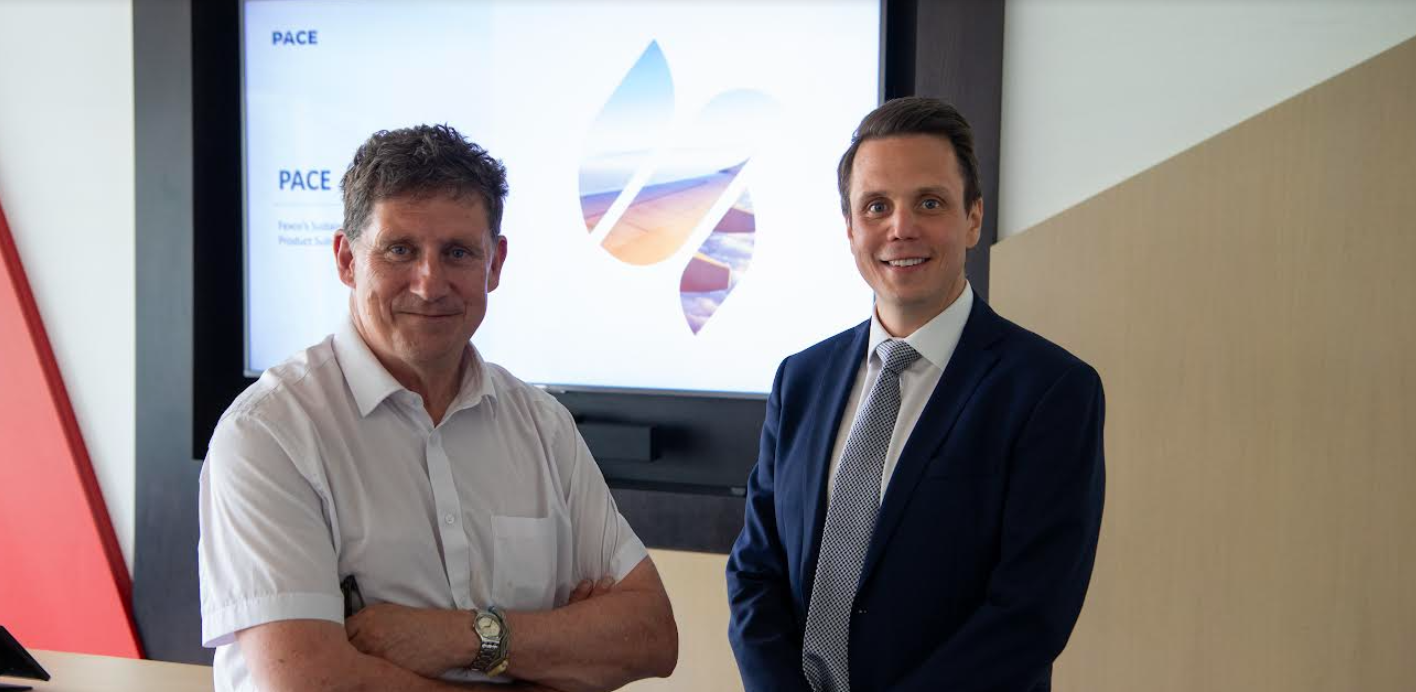
PACEFexco’s sustainability data and analytics division and Trovio Operating Pty Ltd (Trovio) have announced they have entered into a strategic partnership to develop a new platform, ‘SAF Connect’. 

The partnership will explore opportunities for an inventory management system with Scope 1 & Scope 3 SAF certificate issuance where counterparties can transact, settle, and digitally execute offtake agreements. 

The platform will leverage Fexco’s heritage in sustainability, treasury management, FX and payments, and incorporate Trovio’s leading energy transition technology, CorTenX.

SAF Connect will offer complete transparency, and auditable transaction history, ensuring a scalable solution for all market participants handling SAF and related assets.

“This is a further milestone for us as we continue to build on our market growth. Trovio brings exceptional energy transition technology to this partnership,” said Cathal Foley, CEO of PACE. “Together, we will deliver a unique platform that enhances the efficiency and transparency of the SAF market, driving the aviation industry towards a more sustainable future.”

“Trovio is delighted to partner with Fexco,” said Jon Deane, CEO of Trovio. “Fexco’s PACE is a company that aligns with our vision and values. We believe SAF Connect will provide an innovative solution to support the rapid growth and development of sustainable aviation fuel. By leveraging both Fexco’s and Trovio’s collective expertise, we are building a platform designed specifically for the complexity of this market.”

To find out more, visit the PACE website.

PACE, Fexco’s carbon emissions calculator, expands services to Airport and Corporate Travel Sectors

PACE, Fexco’s sustainability data and analytics product suite, today launched PACE Data Services. This new product suite provides insights for the airport and corporate travel sectors to measure, manage and mitigate their emissions.

Built on PACE’s data platform, a global benchmark for the aviation industry, the service aligns with carbon reduction regulations by using live flight tracking data to monitor over 99% of commercial flights and analyse over 370,000 routes. PACE’s suite of data and analytics is already relied upon by most of the aviation finance sector and the largest financial institutions in the world, like JP Morgan and SMBC.

PACE Data Services will provide airports with a cohesive and precise view of their flight-related emissions. This data will be critical to enabling airports to better manage and mitigate their emissions. In fact, Heathrow’s most recent sustainability report for 2023 stated that 99% of its emissions came from Scope 3 emission reduction targets[1].

In the corporate travel sector, PACE’s data will enable more informed decision-making when it comes to both booking travel and providing more accurate reporting of corporate travel emissions. Recent research from Deloitte shows one in three companies is seeking guidance from travel management companies to reduce their carbon footprint.

In one use case alone, which would have a significant impact on decision-making for corporate travel management, PACE data reveals considerable variations in CO2 emissions per occupied seat—up to 50%—on the same popular transatlantic route across different aircraft. These differences are primarily due to factors such as aircraft seat configuration and aircraft type.

This new offering from PACE enables both these sectors to comply with evolving regulatory frameworks, such as the EU’s Corporate Sustainability Reporting Directive (CSRD). These regulations require the provision of accurate, independently verified, and robust reports on their plans and progress in reducing emissions.

Since its launch in 2022, PACE has become the only Irish company to meet stringent independent aviation measurement standards, including the recent Pegasus Guidelines

“This new service builds on PACE’s rapid growth, driven by demand to address carbon emissions across the aviation value chain,” said Cathal Foley, CEO of PACE. “This will enable airports and corporate travellers to better understand how we fly better while continuing to support ambitious growth strategies. PACE’s vision is to be the global leader in the spaces we operate and deploy our data to enable meaningful change.”

“We are an island and so the aviation sector is a vital part of Ireland’s economy, both as a contributor and an enabler of economic growth. But aviation, like all sectors, will have to transition to a new low-carbon future. It is very exciting to see an Irish company positioned to help transform this sector by utilising its exceptional data and analytics to inform better conversations across the aviation value chain. Measurement is critical to understanding the real impact of carbon reduction measures and claims,” said Minister Eamon Ryan, TD, Minister for the Environment, Climate, Communications and Transport. “Ireland has globally acknowledged aviation expertise, and it is fitting that a successful Irish multinational like Fexco is leading the way in meaningfully enabling the sector to make better decisions on its journey to net zero emissions.”

To find out more, visit the PACE website.

Irish aviation industry launches campaign to tackle growing passenger misconduct

As the peak travelling season begins, the Irish aviation industry is launching a declaration to combat unruly passenger behaviour in airports and on flights as part of the #NotOnMyFlight campaign. The safety of flights, passengers and crew can be affected by the unruly behaviour of a small minority of passengers. All Irish airlines and airports, An Garda Síochana, the Irish Aviation Authority, AirNav Ireland, ground handlers and international aviation organisations have all come together to tackle the issue of disruptive and dangerous behaviour, which affects passengers and staff almost every day of the year.
There has been a 3-fold increase in passenger unruly behaviour reported between 2019 v 2023. Unruly behaviour can include intoxication, aggressive or inappropriate behaviour as well as not following the commands of flight crew, who are there to ensure passenger safety. The declaration sets out how the aviation industry aims to combat the issue of unruly behaviour on flights. The vast majority of passengers comply with instructions and show respect to staff and other passengers.
However, the signatories of this Joint Declaration recognise the need to actively promote good passenger conduct due to the adverse impact that disruptive and unruly behaviour can have on the safety of a flight and passenger experience. The signatories of the joint declaration will not tolerate any behaviour that has the potential to disrupt the passenger experience, impact the safety of the cabin crew and airport staff or create a safety risk to the aircraft and those on board the flight. This includes physical and sexual assault, threatening and abusive behaviour and generally disruptive acts.
Angela Willis, Assistant Commissioner, DMR of An Garda Síochána welcomed the Declaration:
“We all want to ensure that air travel is pleasant and most importantly safe for all users. While the vast majority of people that use air travel have the highest regard for fellow passengers, unfortunately there are a small minority whose behaviour at airports or on aircraft can have a significant impact on the experience and safety of other passengers or flight crew. An Garda Síochána is delighted to sign this declaration and to work with our partners to combat disruptive and dangerous behaviour which will not be tolerated.”
 
A Ryanair spokesperson said:
“Ryanair is pleased to support this Irish aviation industry declaration to combat unruly passenger behaviour on aircraft. The safety and wellbeing of our crew and passengers is Ryanair’s No.1 priority and we try to eradicate unruly behaviour onboard our aircraft. We will continue to work closely with An Garda Síochána, the IAA, Irish Airports and the wider aviation industry to eliminate all forms of unruly behaviour in airport terminals and onboard our aircraft.”
According to Kenny Jacobs, CEO of daa, the operator of Dublin and Cork airports:
“We’ve great passengers at Dublin and Cork airports, but like every airport in the world there’s sometimes a few bad eggs whose behaviour impacts everyone. We want our airports to be enjoyable and stress-free for passengers and we’re pleased to see the sector coming together to tackle the issue of unruly and dangerous behaviour. Everyone needs to play their part and daa will continue to work closely with our Airport Police teams, our airline partners and An Garda Síochána to ensure unruly passengers are dealt with and our airports are safe and enjoyable places for all.”
Lynn Embleton, Chief Executive of Aer Lingus commented on the charter:
“At Aer Lingus we put safety first, there is nothing more important. We understand that a comfortable and respectful environment is key to ensuring your journey is a pleasant experience. Aer Lingus does not tolerate unruly behaviour of any kind, and in the rare cases where unruly behaviour does occur, we have strict measures in place to ensure that the safety and comfort of our customers and crew is maintained.”
Jim Gavin, Chief Operations Officer of the Irish Aviation Authority said:
“Flying should be an enjoyable and positive experience for passengers. Whilst incidents associated with unruly passenger behaviour occur on only a small number of flights, they can have a significant impact on flight crew, other passengers and even affect the safety of the flight. We want to remind passengers that their actions can have a direct impact on both the safety of crew and others on board an aircraft. We are looking at how we as an aviation industry can address unruly behaviour on flights and put steps in place to ensure passengers and flight crew can have a safe and positive flying experience.”
 
“We are proud to join our colleagues across the aviation industry in launching the #NotOnMyFlight campaign. As we head into the peak travel season, it’s essential that we address the increasing issue of unruly passenger behaviour head-on. By working together, we can ensure a safe and respectful environment for all passengers and staff. This declaration signifies our commitment to maintaining the highest standards of safety and comfort in airports and on flights,” says Niall Kearns, Airport Director, Shannon Airport.
 
The declaration sets out an action plan for the Irish aviation industry to reduce the incidence of unruly passenger behaviour in airports and onboard aircraft. The signatories are meeting regularly and engaged on the topic, working together to prevent disruption and enhance enforcement. Specifically, the industry aims to boost its ability to ban passengers through no-fly lists, ensure Gardai are informed of all criminal activity, enhance training for cabin crew and improve communication to passengers to prevent unruly behaviour.
Summertime is one of aviation’s busiest period. With millions of passengers travelling through Irish airports during this period, we are reminding people of their responsibilities when travelling on aircraft. We will not tolerate any behaviour that has the potential to disrupt the passenger experience, impact the safety of the cabin crew and airport staff or create a safety risk to the aircraft and those on board the flight.

Panasonic Avionics Grows European MRO Footprint with Expansion in Ireland

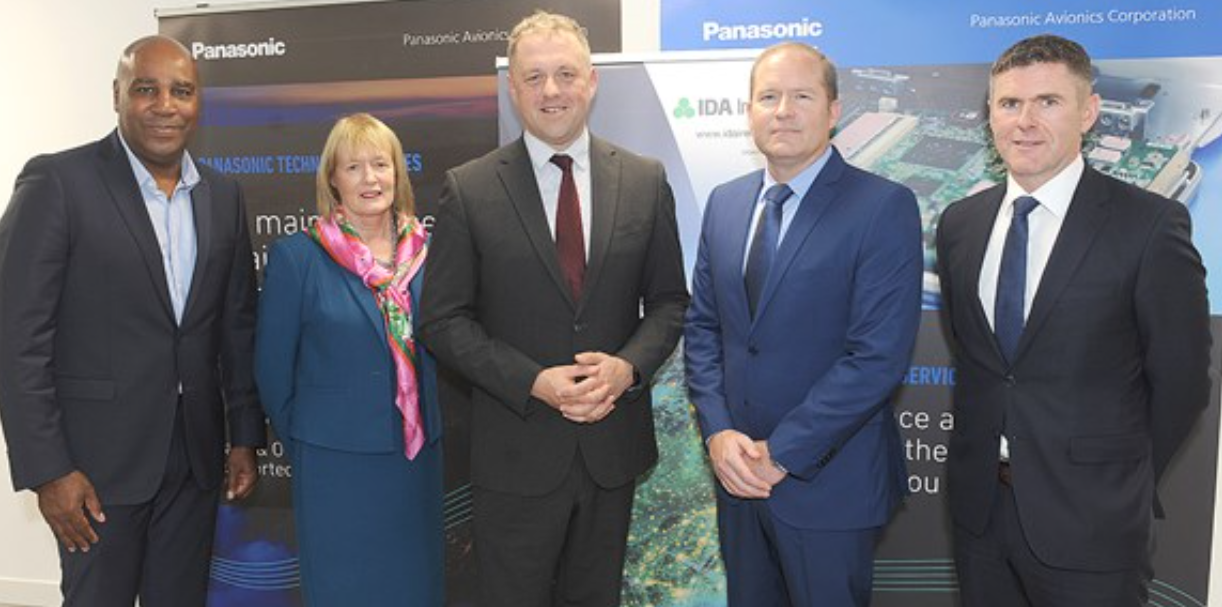
Panasonic Avionics Corporation (Panasonic Avionics) has today unveiled the significant expansion of its European MRO (maintenance, repair & overhaul) facility in Dundalk, Co. Louth, Ireland.

The MRO center, which first opened in October 2019, has been expanded in size by 500 percent, taking it from 6,000 sq. ft to 23,000 sq. ft. At the same time, Panasonic Avionics has tripled the workforce at the site.

The Dundalk facility is operated by Panasonic Technical Services (PTS), a division of Panasonic Avionics. It provides repairs, line maintenance, spares parts supply, and technical services and training to customers in the EMEA region and is Part 145, TCAA, FAA and UK CAA approved.

PTS expects to induct 1,500 – 2,000 units per month at its Dundalk facility. It will repair the X series and Next IFE systems, and Boeing CSS equipment, as well as being its European distribution center.

Tom Eskola, Vice President and General Manager of Panasonic Technical Services, says: “The expansion of our Dundalk facility will enable our customers in Europe, the Middle East and Africa to benefit from the tailored maintenance solutions which we provide at the high level they have come to expect from Panasonic Technical Services.” 

“Our primary objective is to offer customised maintenance solutions, delivering greater peace of mind to our customers by ensuring guaranteed performance and cost.”

Eskola confirms the demand for maintenance services within the industry adding, “As the aviation industry returns towards pre-pandemic levels, MRO slots are, once again, at a premium.”

Panasonic Avionics’ investment in the Dundalk facility has been supported by the Irish Government through IDA Ireland.

Tánaiste and Minister for Enterprise Trade & Employment Leo Varadkar TD said: “In a significant move for Dundalk and Louth, Panasonic Avionics has tripled its workforce following a major expansion. A pioneer in aircraft communication systems, Panasonic Avionics IFE and satellite Wi-Fi systems are used on thousands of aircraft across the world. The Dundalk facility will provide repair, maintenance and spare parts to Panasonic’s customers in Europe, the Middle East and Africa. Ireland’s status at the heart of Europe, along with our strong talent base, continues to attract global manufacturing and engineering companies to our shores. I wish all the team the best with this expansion.”

Minister of State at the Department of Foreign Affairs Thomas Byrne said “I strongly welcome the decision by Panasonic to double its workforce in Dundalk. This decision represents a significant vote of confidence in the North-East region as a hub for commercial activity and will provide a welcome boost to the local economy. Today, there are over 400,000 more jobs in our economy than there were on the day the Government took up office and that significant increase is thanks to the presence of companies like Panasonic within our economy.”

CEO of IDA Ireland Martin Shanahan said: “The decision by Panasonic Avionics to expand its facility and triple its workforce in Dundalk is terrific news for the North East region.  This MRO facility will strengthen and compliment Panasonic’s existing global and European presence.  IDA Ireland remains committed to winning jobs and investment in regional locations. I wish Panasonic every success with this expansion.”

The expanded Dundalk facility is one of ten PTS locations within Europe. In addition to the Ireland-based repair shop, there are also airport line maintenance stations at Amsterdam, Frankfurt, Lisbon, London Gatwick, London Heathrow, Madrid, Paris Charles de Gaulle, Paris Orly, and Rome Fiumicino.

Panasonic Avionics will be showcasing its European offering at MRO Europe in London from 19th – 20th of October.

Shannon-based EU Consortium awarded funding to develop Unmanned Flight Ecosystem.

A European consortium coordinated by Future Mobility Campus Ireland (FMCI) in Shannon has been approved by the EU to develop a ‘Digital Sky Demonstrator’, for aerial Unmanned Traffic Management (UTM) systems.

The research project, known as ‘EALU-AER’, will see FMCI and its consortium partners conduct engineering work at the FMCI facility to develop, deploy and optimise Europe’s unmanned flight ecosystem.

The three-year project involves Irish and European partners including Shannon Group, the Irish Aviation AuthorityCollins Aerospace (Ireland and France), Dublin-based Avtrain, and Deepblue in Italy.

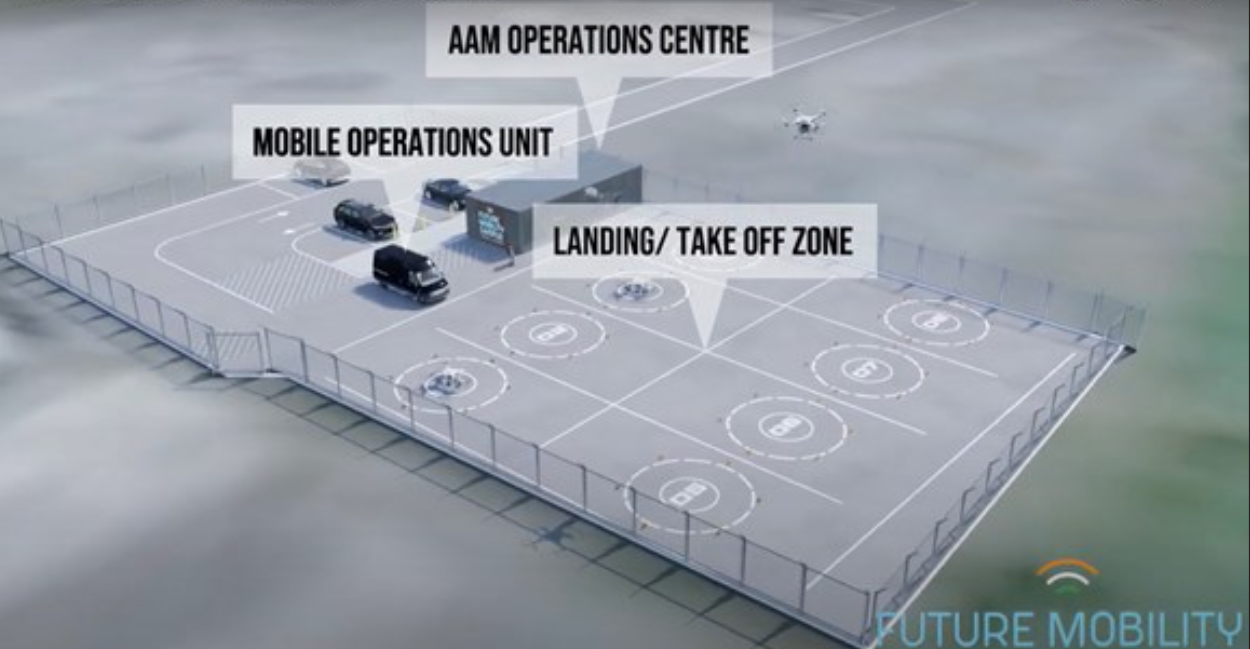
Work will be based at FMCI’s Advanced Aerial Mobility Research Test and Development Facilities at Shannon, but will include a network of Advanced Air Mobility (AAM) routes across Ireland.

FMCI sees this project as ground-breaking new research and a  major vote of confidence in Ireland’s resourcing of advanced air mobility development, and in the industry operators and expertise present locally.

The consortium received a three-year funding award from the SESAR 3 Joint Undertaking (JU) to develop unmanned aviation business opportunities in Ireland, in a collaborative research project that will also support modernisation of air traffic management in Europe.

The SESAR 3 Joint Undertaking is a European partnership of private and public-sector entities, established to accelerate delivery of the Digital European Sky through research and innovation.

The new funding will be deployed to build an end-to-end ecosystem that supports safe operation of unmanned flights, to help both conventional and unmanned aircraft safely integrate operations.

FMCI couldn’t be more pleased to be working with this consortium on the implementation of the EALU-AER programme. This will result in developing and building-out the critical infrastructure to allow advanced air mobility proliferate across Europe.  It will secure access to airspace for large numbers of drones and eVTOL aircraft, resulting in safe, cost-effective and sustainable transport of freight and people in the future” says Russell Vickers, CEO of Future Mobility Campus Ireland.

This award will help us work with our partners in Ireland to create a new industry that supports safe and connected unmanned flight,” says Boe Svatek, Unmanned Systems Value Stream Leader for Collins Aerospace.

As a founding member of the SESAR 3 JU, Collins Aerospace is actively and practically supporting its quest to modernise European air traffic management.”

The new research and development will significantly accelerate the advent of the drone and the urban air mobility economy, according to the consortium.

Welcoming the funding announcement under the CEF for Transport programme, CEO of Shannon Group, Mary Considine said:

This is exciting initiative in unpiloted aviation management.  Shannon Group is delighted to partner on the EALU-AER project and enable this important research and development to take place on the Shannon Campus.  Shannon Airport has been at the forefront of innovation over many decades, and it is essential that we help facilitate and participate in developing the new technology and processes that will allow unpiloted aviation to integrate with legacy airspace.”

Un-manned Aerial Systems (UAS) are expected to have a profound socio-economic impact across Europe, with extensive business, public services and social applications.

Dublin-based Avtrain is Europe’s leading drone pilot and operator training and certification organisation, and is proud to be part of the new industry collaboration, says the Avtrain CEO, Julie Garland.

We are entering a new era of innovation where the success of the industry will depend on the integration of unmanned aircraft into our airspace, rather than the segregation of airspace.  

“We look forward to working with Collins Aerospace, FMCI, Shannon Group and our partners in the project to move the industry to the next level” the CEO of Avtrain commented.

Funded by Enterprise Ireland and industry partners, the unique FMCI campus at Shannon was selected as home to the unmanned flight ecosystem development project, on account of its state-of-the-art digital framework facilities and facilities, including a recently developed Advanced Air Mobility Hub.

FMCI has already worked with Skyports, Avtrain, Shannon Group and Federal Express trialling freight delivery services using autonomous, beyond visual line of sight (BVLOS) drone operations.