The way Irish people experience sports has changed dramatically over the past decade. What used to be a simple affair of showing up at the stadium or turning on the telly has evolved into something far more complex and, frankly, more interesting. Technology has seeped into every corner of the sports world, and Ireland is no exception to this global shift that’s transforming how we play, watch, and engage with athletics.
From grassroots GAA clubs using performance tracking apps to Premier League fans streaming matches on their phones during lunch breaks, the digital transformation is everywhere you look. It’s not just about watching anymore. It’s about engaging, analysing, and participating in ways that weren’t possible even five years ago. The technology has fundamentally altered the relationship between fans and the sports they love.
Data analytics changing how teams compete
Professional sports teams in Ireland have embraced data analytics with open arms. The days of relying purely on a manager’s gut feeling are fading fast. Today, decisions about player selection, tactical approaches, and even transfer targets are increasingly driven by numbers and algorithms that process thousands of data points.
Rugby teams like Leinster Rugby have invested heavily in performance analysis departments. Every training session is recorded, every match dissected frame by frame by analysts looking for patterns and opportunities. Players wear GPS trackers that monitor their movements, heart rates, and fatigue levels throughout matches and training. Coaches receive detailed reports that help them tailor training programmes to individual needs and identify potential injury risks before they become serious problems.
This data-driven approach has filtered down to amateur levels too. Club managers now have access to affordable tools that would have seemed like science fiction a generation ago. The democratisation of sports technology means that a Sunday league team can analyse their performance with similar methods to professional outfits, albeit on a smaller scale and budget.
The streaming revolution
Traditional broadcasting is facing serious competition from digital alternatives. Irish sports fans increasingly prefer the flexibility of streaming services over conventional TV packages that lock them into fixed schedules. Being able to watch a match on your tablet while commuting or catching up on highlights during a coffee break has changed consumption patterns significantly across all demographics.
The GAA’s decision to stream more matches online opened up access for the diaspora scattered across the globe. An emigrant in Sydney can now watch their home county play championship football in real time, something that was impossible just a decade ago. That connectivity matters, both emotionally for fans abroad and commercially for the organisation. It keeps people engaged with Irish sports regardless of where life has taken them.
Fan engagement in the digital age
Sports consumption has become increasingly interactive in recent years. Fans don’t just watch passively; they comment on social media in real time, participate in fantasy leagues that require careful analysis, check live statistics on their phones, and follow sports betting markets in Ireland to see how odds shift during matches. The second screen experience, where viewers engage with their phones while watching on television, has become completely standard practice for most fans.
Clubs have adapted by building their digital presence substantially. Social media accounts, dedicated mobile apps, and regular online content keep fans connected between matchdays. The relationship between supporters and their teams now extends far beyond the ninety minutes on the pitch. It’s a continuous conversation that technology has made possible and that fans have come to expect.
Wearable technology and athlete performance
The gadgets athletes wear have become increasingly sophisticated over the years. Heart rate monitors, sleep trackers, and recovery apps give both professional and amateur athletes insights into their bodies that previously required expensive laboratory testing. Irish athletes competing at international levels rely heavily on this technology to optimise their preparation and recovery.
Even recreational runners training for the Dublin Marathon use GPS watches and training apps that provide personalised coaching advice. The technology adapts to your performance over time, suggests workout adjustments based on your progress, and tracks improvement over weeks and months. What was once available only to elite athletes is now accessible to anyone with a smartphone and the motivation to use it.
The integration of technology into Irish sports will only deepen in coming years. Virtual reality experiences that put fans pitchside from their living rooms, artificial intelligence that predicts match outcomes with increasing accuracy, and ever more sophisticated performance tracking are all on the near horizon. The challenge for sports organisations will be embracing these innovations while preserving what makes live sport special in the first place: the unpredictability, the atmosphere, and the shared human experience of supporting a team through good times and bad.
In quishing attacks, cybercriminals place QR codes containing malicious links in public places, such as parking meters or restaurants, or send these QR codes via email. Such attacks can result in financial losses, stolen personal data, or compromised device, cybersecurity experts warn.
January XX, 2026. At the start of January, the US Federal Bureau of Investigation (FBI) issued a warning against cyber attacks organised by North Korean cybercriminals who used fake QR codes to trick users into obtaining personal information. According to cybersecurity experts, similar attacks, also known as “quishing”, are on the rise not only in the US but in other countries, as cybercriminals look for new ways to profit.
Quishg (QR code phishing) is a phishing technique where cybercriminals try to trick users into scanning QR codes that lead to malicious websites. Organisations in several countries have issued warnings that bad actors place these QR codes on top of legitimate ones in public places such as kiosks, restaurants, or parking meters.
For example, last year, UK government institutions have warned users of fake QR stickers on parking machines, with victims being sent to spoofed payment pages. Meanwhile, the US Federal Trade Commission issued a similar warning about unexpected packages containing QR codes that led to phishing websites.
Such fake QR codes can also be shared online. For example, the FBI said that a North Korean state-sponsored cybercriminal group, called Kimusky, targeted employees of organizations by embedding malicious QR codes in an email. In one such instance, a QR code was presented as a way to download additional information.
According to cybersecurity experts at Planet VPN, a free virtual private network (VPN) provider, no matter where a fake QR code is placed, the scheme is similar. After scanning it, a user is often forwarded to a fake phishing website mimicking a legitimate one, such as a restaurant’s website, where cybercriminals may try to charge a user’s credit card.
According to Konstantin Levinzon, co-founder of Planet VPN, such scams can lead not only to financial losses but also to compromised devices.
“Quishing is phishing–just in a different wrapper. A QR code can lower people’s guard because this technology became ubiquitous only during the pandemic, and the threat still isn’t as widely recognized. It also shifts the “risky click” from a visible link to a quick scan, making the danger easier to miss. Attackers are refining these tactics every year and constantly finding new ways to trick users,” he says.
According to Levinzon, one reason why cybercriminals may favour QR codes in emails instead of regular phishing emails is that QR codes often bypass anti-phishing and scam filters, because these often analyze only text and links, but don’t analyze images.
And even if anti-spam filters in emails are equipped with QR code detection, cybercriminals often find new ways to bypass them, for example, by making QR codes in different colors.
Cybersecurity researchers at Proofpoint estimate that during the first half of last year, there were 4,2 million QR code-related threats. However, Levinzon says that the number is likely higher because many QR code scams are undetected.
When it comes to protecting against the growing threat, users are advised to be more deliberate about when and why they scan a QR code. If after scanning a QR code, a person is forwarded to a website that asks for payment or log-in details, this is a real warning sign.
Meanwhile, if a QR code is sent from an unknown sender via email, Levinzon advises contacting the sender directly before entering login credentials or downloading files.
“We recommend applying the same logic everywhere: stay skeptical whether you receive a message from a coworker or on your personal social media account. However, vigilance is only part of the story. To maximize security, users also need basic safeguards – use a VPN on public Wi-Fi, install updates promptly, use strong passwords, and enable multi-factor authentication on all accounts,” he says.
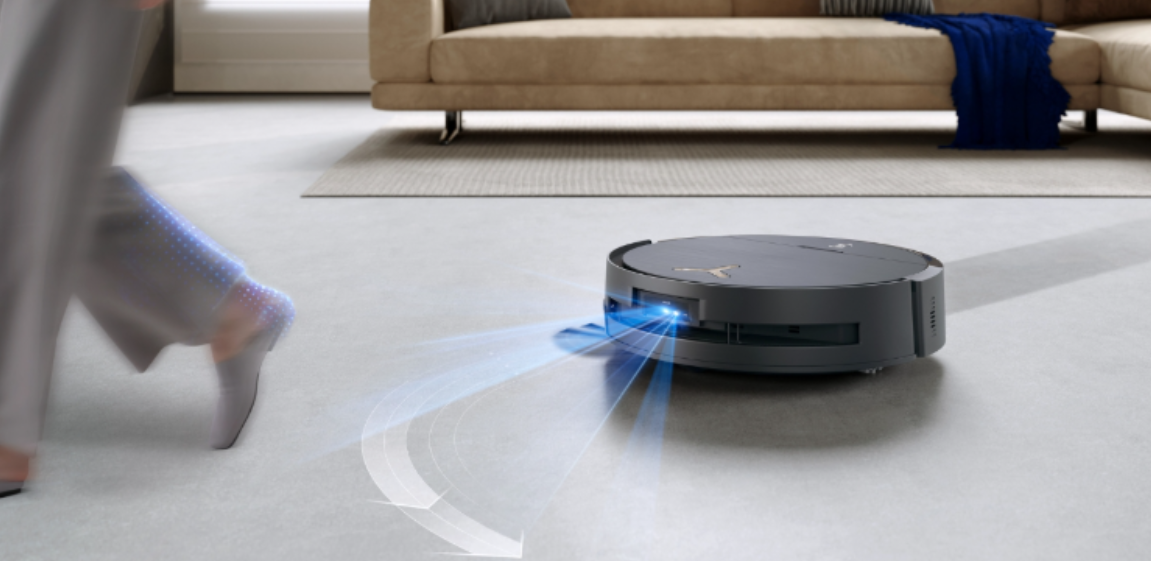
Keeping your home clean can be difficult when you’re balancing work, family, and daily responsibilities. This is where arobot vacuum cleaner becomes a practical solution for modern living. Designed to automate floor cleaning, it allows homeowners to maintain cleanliness with minimal effort.
This article explains how a robot vacuum cleaner works, its benefits, and why it has become a must-have device for today’s households.
What Is a Robot Vacuum Cleaner?
A robot vacuum cleaner is an automated cleaning device that moves across floors independently, collecting dust, debris, and pet hair. Unlike traditional vacuum cleaners that require manual handling, this smart device operates on its own using sensors and programmed navigation.
Its compact shape allows it to reach under furniture such as beds, sofas, and cabinets—areas often neglected during routine cleaning. Once the battery runs low, the device automatically returns to its charging dock, making it highly convenient for everyday use.
How a Robot Vacuum Cleaner Works
A robot vacuum cleaner combines advanced hardware and intelligent software to deliver efficient cleaning:
Sensors and navigation systems detect obstacles, walls, and stairs
Rotating brushes and suction lift dust and debris from hard floors and carpets
Mapping technology helps the device remember room layouts for consistent coverage
Many models can be controlled through mobile apps, allowing users to start, stop, or schedule cleaning remotely. For more insights on smart home automation, you may also like: A Beginner’s Guide to Smart Home Cleaning Solutions.
Key Benefits of Using a Robot Vacuum Cleaner
1. Saves Time and Effort
One of the biggest advantages is automation. You can schedule cleaning sessions while you’re at work or asleep, freeing up time for more important tasks.
2. Consistent Daily Cleaning
Regular cleaning prevents dust buildup, especially in high-traffic areas. A robot vacuum cleaner ensures floors stay clean without requiring daily manual effort.
3. Ideal for Busy Households
Homes with children or pets tend to collect dirt quickly. These devices handle hair, crumbs, and everyday messes efficiently. Read more on this topic in Cleaning Tips for Homes with Pets.
4. Reaches Hard-to-Clean Areas
Thanks to its low profile, the device easily cleans under furniture and tight spaces where traditional vacuums struggle.
Health and Hygiene Advantages
A cleaner home directly contributes to better indoor air quality. A robot vacuum cleaner helps reduce allergens such as dust mites, pollen, and fine particles that can trigger allergies or breathing issues.
This makes it particularly beneficial for people with sensitivities, asthma, or young children. For a deeper look into maintaining a healthier home environment, check out How Regular Floor Cleaning Improves Indoor Air Quality.
Energy Efficiency and Smart Features
Compared to traditional vacuum cleaners, robot vacuum cleaners are designed to use energy efficiently. They operate only when needed and automatically recharge themselves.
Many models offer features such as:
Smart scheduling
Room-by-room cleaning
Custom no-go zones
These functions help optimize cleaning performance while minimizing energy usage and wear.
Tips for Getting the Best Performance
To maximize the efficiency of your robot vacuum cleaner, keep these tips in mind:
Clear clutter from floors to avoid interruptions
Clean brushes and filters regularly for optimal suction
Use scheduling features to maintain consistent cleanliness
Routine maintenance ensures the device performs at its best for years. Benefits of Using a Robot Vacuum Cleaner for Daily Cleaning In addition to convenience, a robot vacuum cleaner also helps create a more organized cleaning routine. By running on a regular schedule, it prevents dust and debris from building up over time, which reduces the need for deep cleaning sessions. This makes home maintenance more manageable and ensures your living space stays fresh and comfortable every day.
Is a Robot Vacuum Cleaner Worth It?
For anyone looking to simplify home maintenance, a robot vacuum cleaner is a smart investment. It reduces manual effort, keeps floors consistently clean, and fits seamlessly into a modern lifestyle.
Whether you live alone, manage a busy household, or simply want a more efficient way to clean, this automated solution offers long-term convenience and value. As smart home technology continues to evolve, automated cleaning tools are becoming less of a luxury and more of a household essential.
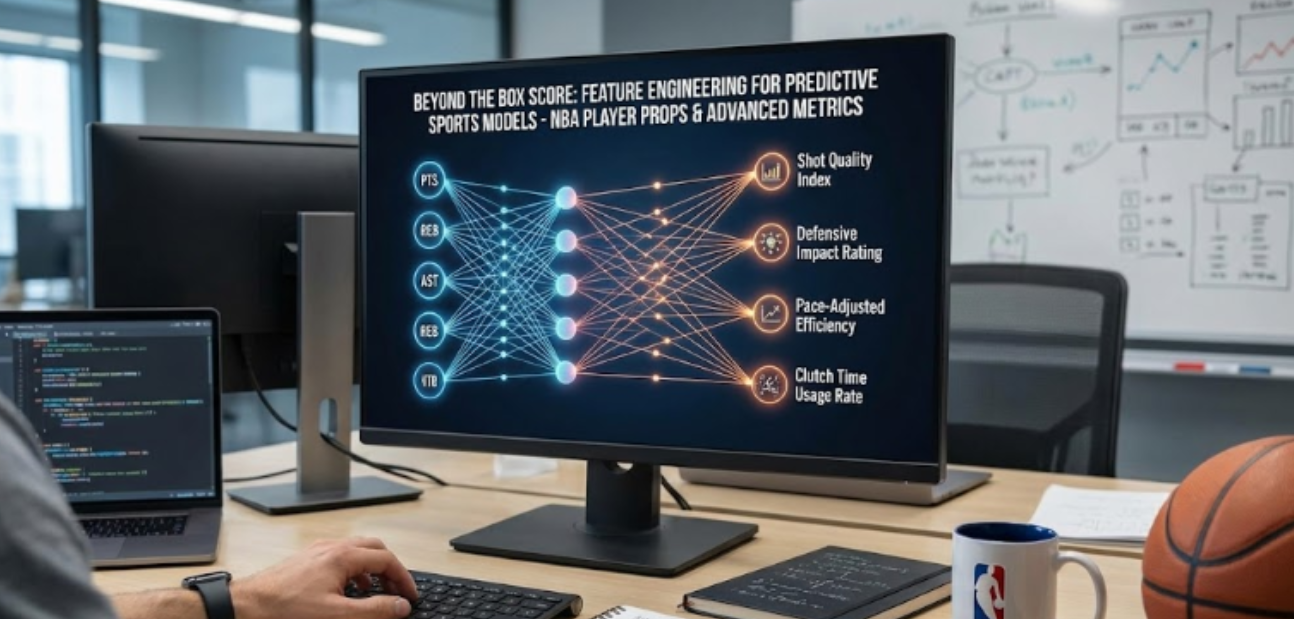
Basketball analytics has experienced a revolution that is just as big as the industrial revolution. What we have moved away from is a cottage industry of manual tabulation and have gone to a high-fidelity, automated surveillance state. To data scientists and hardcore bettors who have to design predictive models for NBA Player props, this transition is a complete change in the unit of analysis. We have left the discrete and retrospective, the simple box score, behind and entered the continuous and probabilistic world of the spatiotemporal tracking.
Bookmaker algorithms are very efficient in the new betting ecosystem. Using “Macro-Level” statistics, such as the Points Per Game (PPG), is a clear drawback in competition. The exploitable edge, the Alpha, has been moved to the Micro-Level data, the X, Y, Z position of the players recorded at 25 frames per second. This paper outlines the theoretical models and operational procedures necessary to create state-of-the-art feature engineering pipelines to predict individual players’ performance beyond the box score by modeling the process, not just the result.
The Data Ecosystem: Building the Foundation
A predictive engine is based on the infrastructure of its data. To the NBA Player Prop modelers, the ecosystem is hierarchical, whereby disparate data sources must be combined based on their latency and granularity differences. The knowledge of this order is the initial step to creating a model that will be able to outperform the market.
The Hierarchy of Data Granularity
The modern data pipeline processes three distinct strata of information, each offering unique insights and requiring specific engineering approaches:
Box Score Data (Structured/Low-Latency): This forms the foundation of historical analysis. It tells us what happened—LeBron James scored 25 points—but not how. Although it would work well with ground truth targets, its predictive capability is restricted by the fact that it is retrospective.
Play-by-Play Data (Sequential/Event-Based): This layer provides a chronological sequence of events. It is essential in converting the so-called contextual features, including lineup-specific usage rates. With substitution logs, it is possible to compute the performance splits of a player when particular teammates are on or off the floor, which is an essential part of nullifying projections when receiving breaking injury news.
Tracking Data (Spatio-Temporal/High-Volume): This forms the frontier of analytics. This data is originally offered by SportVU and currently by Second Spectrum and is a set of coordinates of every player and the ball. It enables one to calculate velocities, accelerations, and inter-player distances.
The Alignment Problem
One of the ongoing engineering challenges is the “Alignment Problem. There are usually inconsistencies between manually recorded timestamps in Play-by-Play (PBP) logs and tracking data generated by the machine. To generate reliable training sets (such as training a model to predict whether or not a shot will be successful based on the distance of the defenders), these streams need to be synchronized via the use of fuzzy matching algorithms or by detecting the abrupt change in the ball velocity to identify the frame of a shot.
Temporal Dynamics: Modeling Time, Fatigue, and Schedule
In NBA Player Props, the basic assumption of the performance of a player being independent and identically distributed (i.i.d.) is incorrect. Performance is a time-series phenomenon that is heavily affected by biological limitations of the human body and logistical strictness of the NBA schedule.
The Mathematics of “Recent Form”
The reason why static season averages are not good predictors is that they fall behind in the position or physical shape of a given player. Recency should be given priority in feature engineering, coupled with stability in the sample size.
Exponentially Weighted Moving Averages (EWMA): EWMA does not use an ordinary moving average but rather uses exponentially decreasing weights for the aged observations. This is better at identifying the breakout players whose position has permanently changed because of a change in the lineup or coaching decision.
Rolling Window Variance: In addition to the mean, the variance of a player is a very important feature. A player whose variance in shooting splits is large is a more dangerous bet to place on an over bet, but can be of huge value in an alternate line market where tail outcomes tend to be inefficiently priced.
Circadian Biology and Schedule Fatigue
The NBA schedule is a complicated variable, which creates physiological strain. It is necessary to encode this stress in smart models in order to predict diminished performance.
Rest Matrices: There is a statistically significant negative Effective Field Goal Percentage (eFG%) and Defensive Rating on 0 days rest (Back-to-Backs), and it has been observed to be especially true among high-usage veterans.
The “3-in-4” and “5-in-7”: Binary flags on schedule density (3 games per 4 nights) are used to define schedule losses, where player output is minimized in all parts of the board.
Altitude Adjustment: Aerobic capacity is affected by games that are played in elevated areas such as Denver or Salt Lake City. This attribute has to be heavily incorporated in predictive models of 4th-quarter props because starters tend to have fewer minutes or reduced efficiency in the later parts of games.
In order to forecast the amount of production (Points, Rebounds, Assists) in NBA Player Props, it is necessary to know the quality of the role and efficiency of the player. There is no more data, the artifacts of these underlying drivers, which are raw box score counts.
True Shooting and Shot Selection
Field Goal Percentage (FG%) is a very primitive statistic that considers all shots equal. Current-day modeling is based on derivatives such as the True Shooting Percentage (TS%), which uses both free throws and 3-pointers. TS percent is very predictive since it reflects the capability of a player to produce points in the line, which is a skill that is not as fluctuating as jump shooting. It is common to identify players with large TS% and small recent point totals as a good opportunity to buy, since their efficiency predicts that point totals will be recovered positively when volume returns to normal.
Usage Dynamics and The “Wally Pipp” Effect
Usage Rate (USG%) approximates the level of team plays utilized by a player on the floor. But there is not enough historical usage when the injuries strike. The concept of the redistribution of opportunity, as a result of an injury to a starter, due to which the opportunity is lost, is called the Wally Pipp effect. Dynamic Usage Projections should be a part of feature engineering. In case of a high-usage star being sidelined, his/her holdings are forced to be taken up by other players who are left on the roster. With/Without query features are used by the models to forecast the new hierarchy, and lineup-level data is processed to compute usage differentials, player-specific.
The Physics of Basketball: Optical Tracking Features
Quantified Shot Quality (qSQ) is, perhaps, the most powerful predictor of regression. This measure utilizes the XY-intercepts of the shooter and all the defenders to determine the likelihood of a shot being made, regardless of the eventual outcome.
Quantified Shot Quality (qSQ) and Expected Points
Luck can be detected by determining the Shot Quality Delta (Actual eFG% – Expected eFG%). A very positive delta is an indication of a player who is running hot (taking unsustainable shots), which indicates a Sell or Under bet. A negative delta is a bad omen on good shots, representing a “Buy” or an Over bet.
The Geometry of Rebounding
Rebounding has been considered as an effect of effort, but tracing data indicates that it is, in most cases, an effect of geometry.
Voronoi Tessellation: The court is divided into areas depending on the location of players. The most common theoretical probability of the rebound will be the player who currently has the biggest Voronoi region around the rim when he or she misses the ball.
Deferred Rebound Rate: This is a measure of how the percentage of uncontested rebound opportunities a player passes to a teammate.
Adjusted Rebound Rate: This measure isolates the Contested Rebound Rate. Proficiency in this area means that the players will be able to resist difficult playing situations compared to stat-padders, who are dependent on board space.
Potential Assists and the “Passer’s Bias”
Assists are obnoxious since they are based on the receiver’s shooting. The process of playmaking is measured by Potential Assists, which are a pass that results in a shot attempt. When a player has a high potential assists and low actual assists, then his or her conversion rate is probably experiencing variance. Their future help would be projected by a predictive model and regressed to the mean, with this detecting that the box score is missing.
Quantifying Defense: The Holy Grail of Context
The most important contextual variable in prop prediction is modeling the defense of the opponent. Nonetheless, such standard measures as Opponent Points Allowed are not enough. We have to design functions that pick out a certain matchup dynamics.
Hidden Markov Models for Matchup Estimation
We cannot just assume positions guard positions (e.g., PG guards PG). Currently, defenses change and cross-match. Hidden Markov Models (HMM) are the models used to predict the player who will be guarding the target player. The hidden variable is the defensive state, and the observable emissions are the spatial locations of the players. This then enables us to build a weighted Matchup Difficulty Score, which is player-specific.
Scheme Identification
Defenses employ different tactical schemes (Drop, Hedge, Blitz, Switch).
Aggression+: A metric of the frequency with which a defense uses two defenders on the ball.
Variance+: Quantifies the frequency of a change in coverage of the defense. Terms of interaction are important here. A ball handler, with high turnover, against a high “Aggression+” defense is a good indication of “Over Turnovers” props. On the other hand, a pull-up shooter compared to a drop coverage scheme is considered more efficient by projection.
Machine Learning Architectures and Feature Selection
These features are complicated and demand advanced techniques of modeling, as they will prevent over-fitting and non-linear interactions.
Dimensionality Reduction: As tracking data produces millions of data points, compressing data on trajectories into understandable ways that can be interpreted requires methods such as Principal Component Analysis (PCA) and Non-Negative Matrix Factorization (NMF).
Gradient Boosting (XGBoost/LightGBM): They are the industry standards of tabular sports data, and do well with the non-linearities, and offer metrics of feature importance.
Graph Neural Networks (GNNs): An innovative strategy that constitutes the court as a graph, with the players being the nodes and the interactions being the edges. GNNs can uniquely be learned on tracking data, learning complicated dynamics of chemistry and spacing.
The Betting Market: Execution and Strategy
The predictive model can only be useful to the extent to which it has been applied to the market. The last step will be locating inefficiencies and controlling your bankroll.
Market Inefficiencies
The “Under” Bias: There is a psychological bias among people towards Overs (rooting against action). As a result of this, lines are usually overstated by bookmakers. Models will tend to have a higher Expected Value +EV on “Under” bets, especially when it comes to role players whose mileage is shaky.
Rotation Risk: The minutes distribution is not normal. Depending on the score of the game (blowout risk), starters may play 35 minutes or 28 minutes. It is important to model the distribution of the minutes and not just the mean.
The Kelly Criterion
Bet sizing must be Kelly-based (betting by the Kelly Criterion) to maximize long-term growth, which is computed by the Kelly Criterion based on your edge and odds. Since NBA Player Props are highly varying, practitioners frequently apply the strategy of the fractional Kelly (e.g., bet half of the recommended value) in order to eliminate the effect of a volatile bankroll and, nevertheless, gain the benefit of the model.
The gap between AI adoption and teacher preparedness in Irish schools is striking. Recent research from Microsoft and 3Gem found that 83% of Irish teachers lack formal training in AI, yet 72% support increased use of AI tools in their classrooms. This disconnect leaves thousands of educators wanting to use AI but uncertain where to start. The good news: you don’t need formal certification to begin using AI tools effectively in your teaching. What you need is a practical framework, sensible boundaries, and the confidence to learn alongside your students.
Irish classrooms are already among Europe’s most digitally advanced, with Ireland’s digital education transformation positioning schools ahead of many European counterparts. Teachers already use digital technologies to improve productivity and personalise learning—87% report using digital tools to optimise classroom time. AI represents the next step in this progression, not a complete departure from existing practice.
Why Formal Training Isn’t Always Necessary
Waiting for formal AI training before using these tools means missing opportunities that benefit students right now. AI tools designed for education are increasingly intuitive, with interfaces built for users without technical backgrounds. The same teachers who learned to use interactive whiteboards, learning management systems, and video conferencing during the pandemic can learn AI tools through similar approaches: experimentation, peer support, and gradual integration.
The Microsoft research reveals an interesting pattern: schools that adopt AI quickly report less concern about training gaps than slower-adopting schools. In fast-adopting institutions, only 32% cite insufficient training as a major barrier, compared to 67% in schools slower to adopt. This suggests that hands-on experience reduces perceived training needs—teachers who start using AI tools build confidence through practice rather than waiting for formal instruction.
“Technology in education should support teachers rather than replace their expertise,” notes Michelle Connolly, founder of LearningMole and former teacher with over 15 years of classroom experience. “The best approach is starting with simple applications that solve real classroom problems, then building from there.”
Starting Points for AI in Irish Classrooms
The most effective entry point for AI in teaching isn’t the most sophisticated application—it’s the one that saves you time on tasks you already do. Begin with administrative and planning tasks before moving to student-facing applications.
Lesson Planning and Resource Adaptation
AI tools can generate lesson plan outlines, suggest differentiation strategies, and adapt existing resources for different ability levels. A teacher preparing a history lesson on the Great Famine might use AI to generate discussion questions at varying complexity levels, create simplified text versions for struggling readers, or suggest extension activities for advanced learners.
The key is treating AI output as a starting point rather than a finished product. Review everything, adjust for your specific class, and add the contextual knowledge only you possess about your students. AI doesn’t know that Seán struggles with reading but excels in oral discussion, or that your Third Class has particular interest in local history. You add that expertise.
Feedback and Assessment Support
Writing individualised feedback consumes enormous teacher time. AI tools can help generate initial feedback drafts that you then personalise and refine. For a set of 30 creative writing pieces, AI might identify common issues across the class, suggest specific praise points, and flag pieces needing closer attention—reducing a three-hour task to one hour of focused work.
This application works particularly well because you remain in control of final communication with students and parents. AI handles the time-consuming initial analysis while you make professional judgements about what feedback each student actually needs.
Differentiated Resource Creation
Creating multiple versions of worksheets and activities for mixed-ability classes traditionally requires significant preparation time. AI can generate variations of resources at different reading levels, with varied scaffolding, or with alternative question formats—all from a single source document.
For Irish teachers managing classes with wide ability ranges, this capability transforms planning. Instead of choosing between teaching to the middle or spending hours creating differentiated materials, you can generate appropriate resources for each ability group efficiently.
AI Tools Suitable for Irish Primary Classrooms
Not all AI tools suit educational contexts. Teachers need applications that are age-appropriate, safe for school use, and aligned with Irish educational values around child protection and data privacy.
Text-Based AI Assistants
General AI assistants like ChatGPT and Claude can support lesson planning, resource creation, and administrative tasks. These work best for teacher-facing applications rather than direct student use in primary settings. Use them to generate quiz questions, explain difficult concepts in child-friendly language, or brainstorm creative approaches to teaching challenging topics.
When using these tools, avoid inputting student names, personal information, or sensitive data. Frame requests around general classroom scenarios rather than specific children.
Educational Platforms with Built-In AI
Some educational resource platforms now incorporate AI to personalise learning pathways and provide adaptive practice. LearningMole offers curriculum-aligned video content and teaching resources that teachers can use to supplement AI-assisted planning, providing quality-assured materials that work alongside AI tools.
These platforms offer safer environments for student interaction because they’re designed with educational safeguarding in mind. Content is curated, age-appropriate, and aligned with curriculum expectations.
Image and Presentation Tools
AI image generators can create custom illustrations for teaching materials, though teachers should review all output for appropriateness. Presentation tools with AI features can help structure content logically and suggest visual improvements.
For Irish teachers, these tools prove particularly useful for creating materials with local relevance—images depicting Irish landscapes, historical scenes, or cultural contexts that generic stock imagery often misses.
Practical Implementation Framework
Moving from occasional AI experimentation to systematic integration requires a structured approach. This framework helps teachers build AI use gradually without overwhelming themselves or their students.
Week One: Personal Productivity
Start with applications that don’t involve students at all. Use AI to draft parent communications, generate meeting agendas, or summarise long documents. This builds familiarity with AI interaction patterns—how to phrase requests effectively, how to evaluate output, how to iterate toward better results.
Keep a simple log of what works and what doesn’t. Note which types of requests produce useful output and which need significant revision. This personal experience base informs later classroom applications.
Weeks Two and Three: Planning Support
Expand to lesson planning support. Use AI to generate activity ideas, discussion questions, or assessment criteria. Compare AI suggestions against your professional judgement and existing resources. You’ll quickly identify where AI adds value and where it falls short for your specific teaching context.
Try having AI adapt existing resources for different ability levels. Take a worksheet you’ve used successfully and ask for simplified and extended versions. Evaluate whether these adaptations actually suit your students’ needs.
Week Four and Beyond: Selective Student Applications
Only after building personal confidence should you consider student-facing applications. Start with highly structured uses where you control the interaction—perhaps displaying AI-generated discussion prompts or using AI-created differentiated materials.
For older primary students, supervised AI use might include generating research questions, creating writing prompts, or exploring “what if” scenarios in history or science. Always preview AI outputs before student exposure and frame AI as a tool that makes mistakes, requiring critical evaluation.
Addressing Common Concerns
Teachers hesitating to use AI often cite specific concerns that, once addressed, become manageable rather than prohibitive.
Data Protection and Privacy
Irish schools operate under GDPR and specific DES guidance on data protection. AI tools raise legitimate questions about where data goes and how it’s used. The practical response: never input personal student data, names, or identifying information into AI tools. Frame all requests around anonymous, general classroom scenarios.
For teacher-facing applications, this restriction rarely limits usefulness. You can ask AI to help plan a lesson on fractions without mentioning any student names. You can generate differentiated resources for “a mixed-ability Third Class” without identifying specific children.
Academic Integrity
Concerns about students using AI to complete work dishonestly require age-appropriate responses. In primary settings, direct AI misuse is less common than in secondary and higher education. Focus instead on building critical evaluation skills—teaching children that AI can be wrong, that it doesn’t understand context, and that human judgement matters.
When students do use AI-supported tools, frame this as appropriate use of available technology rather than cheating. The goal is developing skills to work effectively with AI, not pretending it doesn’t exist.
AI tools produce confident-sounding output that may contain errors, outdated information, or cultural assumptions that don’t fit Irish contexts. Teachers must review all AI-generated content before use, just as they would review any external resource.
This requirement isn’t unique to AI—textbooks contain errors, websites become outdated, and imported resources assume different educational systems. The teacher’s professional role includes evaluating and adapting all materials, regardless of source.
Over-Reliance
Some teachers worry that AI will deskill the profession or make teaching impersonal. The opposite proves true when AI is used appropriately: by reducing time on administrative tasks, AI frees teachers to focus on the relational, creative, and responsive aspects of teaching that no technology can replicate.
AI cannot read the mood of a classroom, notice that a child seems withdrawn, or adjust a lesson because the energy is different today. These human skills become more valuable, not less, as AI handles routine tasks.
Building Confidence Through Peer Learning
Formal training programmes exist—the Microsoft Dream Space Teacher Academy offers free AI skills development for Irish teachers—but peer learning often proves more immediately useful. Teachers learn best from colleagues who’ve solved similar problems in similar contexts.
Staffroom Sharing
Informal conversations about AI successes and failures accelerate collective learning. When one teacher discovers an effective way to use AI for report writing, sharing that approach benefits the whole staff. Schools might designate brief time in staff meetings for AI tool sharing, creating space for practical exchange without requiring extensive formal development.
School-Based Champions
Some teachers naturally embrace new technologies and can support colleagues’ learning. Without creating additional workload, schools might recognise these informal champions and create opportunities for them to share expertise. A ten-minute demonstration of AI-assisted planning might inspire colleagues to experiment independently.
Online Communities
Irish teacher communities on social media and professional networks increasingly discuss AI applications. These spaces offer access to broader experience than any single school provides, with teachers sharing specific prompts, workflows, and cautionary tales from their own practice.
Curriculum Connections
AI integration works best when aligned with existing curriculum goals rather than added as separate technology instruction. The Irish Primary Curriculum’s emphasis on skills development provides natural connections.
Critical Thinking
Evaluating AI output develops critical thinking skills explicitly valued in the curriculum. When students assess whether an AI-generated text is accurate, well-written, or appropriate, they practice analysis and evaluation skills transferable across subjects.
Communication
Using AI effectively requires clear communication—precise requests produce better output. Students learning to interact with AI develop skills in clarity, specificity, and iterative refinement that support writing and speaking development.
Creativity
AI tools can support creative work by generating starting points, suggesting alternatives, or providing constraints that spark imagination. A student stuck on a story opening might use AI-generated prompts as inspiration while maintaining ownership of their creative choices.
The Role of Quality Teaching Resources
AI tools work best alongside high-quality teaching resources rather than replacing them. AI can generate rough content quickly, but polished, curriculum-aligned, pedagogically sound resources require human expertise and careful development.
Platforms offering structured educational content complement AI tools by providing reliable starting points that AI can help adapt and extend. When planning a science unit, a teacher might use video resources from established educational platforms for core instruction, then use AI to generate extension activities, differentiated worksheets, and assessment questions aligned with that content.
This combination—curated resources for core content, AI for adaptation and extension—offers efficiency without sacrificing quality. Teachers maintain professional control over what students learn while reducing time spent on routine resource creation.
Moving Forward Responsibly
AI in Irish education will continue developing regardless of individual teachers’ choices. The question isn’t whether to engage with AI but how to do so in ways that benefit students while maintaining professional standards and educational values.
Starting small, maintaining critical oversight, and building gradually from personal productivity to classroom application provides a manageable pathway. Teachers who begin this journey now, even without formal training, position themselves and their students well for an educational landscape where AI literacy becomes increasingly expected.
The 83% of Irish teachers lacking formal AI training aren’t failing—they’re facing a professional development system that hasn’t kept pace with technological change. By taking initiative to learn through practice, these teachers demonstrate exactly the adaptability and commitment to improvement that makes Irish education strong.
Frequently Asked Questions
Do I need formal AI training before using AI tools in my classroom? No. Many AI tools are designed for users without technical backgrounds. Start with simple applications for personal productivity, build familiarity through practice, and expand gradually. Hands-on experience often reduces perceived training needs more effectively than formal courses.
What AI tools are safe for use in Irish primary schools? Teacher-facing tools like ChatGPT and Claude work well for planning and resource creation when you avoid inputting student personal data. Educational platforms with built-in AI features designed for school use offer safer options for student-facing applications, as they’re built with appropriate safeguards.
How can I use AI without compromising student data protection? Never input student names, personal information, or identifying details into AI tools. Frame all requests around anonymous, general scenarios. For example, ask for resources suitable for “a mixed-ability Third Class” rather than naming specific children or their characteristics.
Will using AI make me a less effective teacher? Used appropriately, AI makes teachers more effective by handling routine tasks and freeing time for the relational, creative, and responsive work that defines excellent teaching. AI cannot replace professional judgement, classroom presence, or understanding of individual students.
How do I evaluate whether AI-generated content is suitable for my classroom? Review all AI output before use, checking for accuracy, age-appropriateness, and alignment with Irish curriculum expectations. Apply the same critical evaluation you’d use for any external resource. AI content is a starting point for professional refinement, not a finished product.
What’s the best way to start using AI as a teacher? Begin with personal productivity tasks that don’t involve students: drafting communications, generating meeting agendas, or summarising documents. Build familiarity with AI interaction patterns before moving to planning support and eventually selective student-facing applications.
Conclusion
Irish teachers don’t need to wait for formal training to begin benefiting from AI tools. The practical framework outlined here—starting with personal productivity, expanding to planning support, and eventually incorporating selective student applications—provides a manageable path for any teacher willing to experiment and learn.
The gap between AI enthusiasm and training provision in Irish education creates an opportunity for teachers to lead their own professional development. By engaging thoughtfully with AI tools now, building critical evaluation skills, and maintaining focus on educational values, teachers prepare themselves and their students for an educational future where AI literacy matters increasingly.
Quality teaching resources, professional judgement, and human relationships remain at the heart of excellent education. AI tools enhance rather than replace these fundamentals—when used by teachers confident enough to experiment, critical enough to evaluate, and focused enough to keep student benefit central to every decision.