
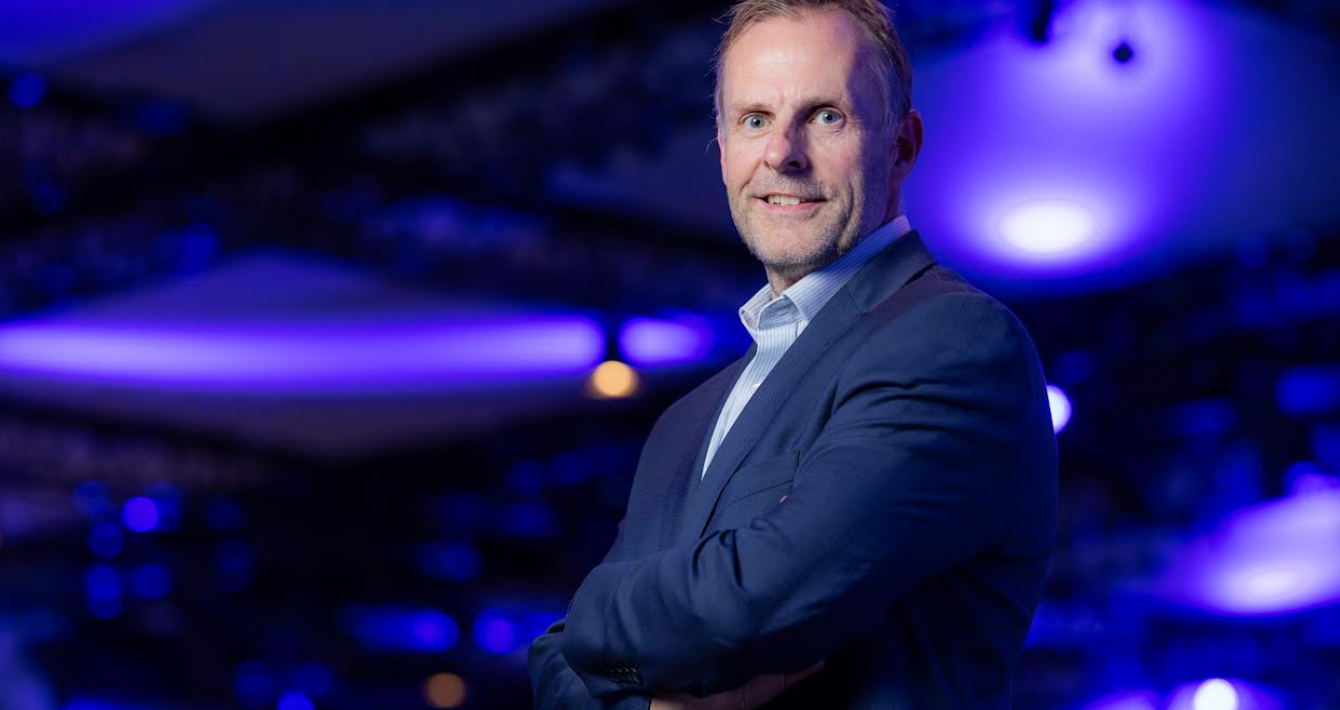
Mark Hopkins, General Manager of Dell Technologies Ireland, has unveiled his top five technology predictions for 2026, outlining how Artificial Intelligence (AI), data and intelligent automation will fundamentally reshape how Irish businesses and public services operate.
The technology leader is forecasting a major acceleration in AI adoption, as organisations move from pilots and proof-of-concept projects to enterprise-wide deployment. In 2026, AI will become embedded into everyday operations, delivering measurable gains in productivity, efficiency and resilience across the Irish economy. Key predictions include the rise of physical and agentic AI, a step-change in public sector adoption, and a renewed focus on infrastructure and workforce upskilling.
“In 2026, AI will be treated not just as a tool but as a strategic asset capable of delivering measurable impact across operations, innovation and customer engagement,” said Mark Hopkins, General Manager of Dell Technologies Ireland. “Leaders who act now to integrate AI thoughtfully, modernise infrastructure and upskill their workforce will gain a decisive competitive edge.”
“From Bantry to Belfast, organisations are discovering that speed, data and intelligent automation are now the defining levers of competitiveness,” Hopkins added. “By anticipating the technology trends that will shape Ireland’s economy, Dell Technologies is helping organisations adopt AI responsibly and turn promise into real business advantage.”
- AI will take on a physical form – but not in the way many expect
In 2026, AI will step out of the digital shadows and take on tangible roles in the real world. Humanoid robots on every street are not expected; instead, purpose-built machines such as drones, mobile robots, and autonomous systems will be deployed to address specific challenges.
Examples include AI-powered crawlers that navigate power lines to identify issues and coordinate repairs to critical infrastructure. In healthcare, logistics robots will streamline hospital operations, freeing up staff for patient care. This new wave of “physical AI” will tackle repetitive, dangerous, and physically demanding work, delivering speed and safety at scale.
For Ireland, with its dispersed population and infrastructure needs, these innovations will help bridge geographic gaps and enhance resilience.
- Agentic AI will shift from helpful assistant to an integral manager
AI will move beyond chatbots and copilots to autonomous agents capable of managing complex, multi-step workflows. These systems will validate data, trigger approvals, coordinate with other agents and ensure compliance across business processes.
With nearly 90% of organisations identifying strong opportunities to create value from Agentic AI, according to the Dell Innovation Catalysts Study, Irish organisations – particularly in regulated sectors – will need secure, auditable infrastructure to manage the explosion of data and system interactions these agents create.
- Public sector will go all-in on AI, with healthcare leading the charge
After a period of cautious pilots, 2026 will see the Irish public sector move decisively to scale AI, with healthcare leading the way. AI-driven diagnostic support, automated clinical documentation and predictive resource planning will move from trial to production, helping to reduce waiting lists and improve patient outcomes.
As adoption increases, the focus will shift from theoretical debates about AI ethics to practical governance, with public-private partnerships playing a central role in delivering secure, sovereign AI solutions.
- Data deluge will redefine IT infrastructure
AI both consumes and generates vast volumes of data, much of it unstructured. As agentic AI becomes mainstream, hybrid IT architectures will become the norm. Critical data and high-value workloads will remain on-premises for control and security, while cloud platforms provide flexibility and scale.
Edge computing will push AI processing closer to where data is generated, reducing latency and keeping sensitive data local. Organisations that successfully align workloads to the right environment will gain a significant competitive advantage.
- Focus shifts from long-term STEM education to upskilling today’s workforce
While long-term STEM education remains critical, 2026 will be defined by immediate, practical upskilling. Almost 80% of Irish businesses expect their workforce to require digital upskilling in the coming years, with AI literacy becoming essential across every role.
The most effective programmes will combine sector expertise with hands-on AI tools, whether in healthcare, manufacturing or financial services. They will deliver immediate productivity gains when embedded into daily work and supported by strong governance.