HighPoint Announces the Industry’s 1st Gen5 NVMe RAID AIC

HighPoint announce a landmark pricing strategy for their Gen5 x16 4x M.2 NVMe AIC series, making cutting-edge performance more accessible than ever.

Now available for USD$999 and $899 respectively, the Rocket 7604A RAID AIC and Rocket 1604A Switch AIC represent an exceptional value by doubling the performance capabilities of conventional 4-port NVMe solutions with over 50GB/s+ of real-world transfer speed.

This significant pricing offer reflects our commitment to accelerating market adoption of today’s leading SSD media and enabling a wider range of industrial and high-performance computing applications to leverage the full power of Gen5 NVMe storage technology.

Tiny Size, Bold Performance!

HighPoint’s Rocket 7604A and Rocket 1604A AICs redefine storage performance for space-constrained industrial and edge computing environments. Powered by HighPoint’s revolutionary PCIe Gen5 Switching Architecture and Broadcom’s PEX89048 PCIe Switch IC, these AICs deliver a class-leading 50+GB/s of real-world transfer speed, with x4 lanes of dedicated Gen5 bandwidth available for each M.2 port!

To address the critical needs of industrial customers, our engineering team meticulously re-engineered the AIC PCB to conform to the FH-HL form factor, resulting in an unprecedentedly compact PCIe device measuring just 167mm in length – dramatically shorter than typical 4-Port Gen5 cards, which often exceed 290mm. This was achieved through a custom-built, self-contained cooling solution featuring a full-size aluminum heatsink and ultra-quiet 80x80x10 fan, ensuring optimal thermal management for top-tier Gen5 M.2 drives without upgrading the host system’s cooling system. This innovative design can directly host up to 32TB of Gen5 NVMe storage and guarantee peak SSD performance without compromising the integrity of the M.2 media, making these AICs ideal for applications where speed, reliability, and space efficiency are paramount.

RAID Storage Management Suite – Storage Health and Security Within Your Reach

The Rocket 7604 RAID AIC offers a comprehensive NVMe RAID storage solution designed for robust performance and simplified management. It boasts an extensive suite of self-diagnostic capabilities, including intelligent 1-Click Self-Diagnostic & Logging, and intuitive color-coded LEDs and audible alarms for instant operational status assessment of PCIe connections and RAID arrays. Management is made flexible through a user-friendly WebGUI, a streamlined CLI for advanced users, and a UEFI-HII Tool for BIOS-level configuration. To ensure optimal performance and longevity, the AIC integrates an Intelligent Proactive-Cooling Solution featuring a low-decibel fan, full-length aluminum heatsink, and a network of sensors that actively regulate fan speed to prevent thermal throttling of the switch chipset and M.2 SSDs. Furthermore, its Environmental Monitoring, Logging & Analysis Solution, accessible via the WebGUI, provides real-time tracking of SSD temperature and power usage. For data security, HighPoint SafeStorage offers OPAL SSC TCG based NVMe hardware encryption (SED), easily administered via the WebGUI and CLI, protecting sensitive data from unauthorized access. Finally, with FRU (Field Replaceable Unit) support and stored VPD, the Rocket 7604 ensures streamlined maintenance and replacement with correct firmware/driver combinations.

Unprecedented Gen5 Storage Performance and Reliability at an Unbeatable Price Point

HighPoint’s Rocket 7604A and Rocket 1604A AICs not only deliver unprecedented Gen5 storage performance of up to 56GB/s, they have established a new standard for compact, thermally optimized NVMe solutions at an accessible price point. These revolutionary AICs are engineered to meet the demanding requirements of industrial, edge, and HPC workflows, providing bold performance in a tiny footprint. Embrace the future of high-speed storage—now within reach—and transform your critical applications with HighPoint’s leading-edge Gen5 technology.

Other HighPoint News 

Learn More

ISPCC announces global project to prevent online child sexual exploitation and abuse

The project, spearheaded by Greek non-profit child welfare organisation The Smile of the Child, will be co-created by children and young people to ensure their voices are heard ISPCC is honoured to announce its participation in a worldwide project designed to transform how we prevent and respond to online child sexual exploitation and abuse.

Safe Online, a global fund dedicated to eradicating online child sexual exploitation and abuse, is funding the project called “Sandboxing and Standardizing Child Online Redress”.

The COR Sandbox project will establish a first-of-its-kind mechanism to advance child online safety through collaboration across sectors, borders and generations.

The project is led by The Smile of the Child, Greece’s premier child welfare organisation and ISPCC is a partner alongside The Young and Resilient Research Centre at Western Sydney University, Child Helpline International and the Centre for Digital Policy at University College Dublin.

Sandboxes bring together industry, regulators and customers in a safe space to test innovative products and services without incurring regulatory sanctions and they are mainly used in the finance sector to test new services. The EU is increasingly encouraging the use of sandboxes in the field of high technology and artificial intelligence.

Through the participation of youth, platforms, regulators and online safety experts, this first regulatory sandbox for child digital wellbeing will provide for consistent, systemic care and redress for children from online harm, based on their rights under the United Nations Convention on the Rights of the Child (UNCRC).

Getting reporting and redress right means that we can keep track of harms and be able to identify systemic risk. Co-designing the reporting and redress process with young people as equitable participants can help us understand what they expect from the reporting process and what remedies are fair for them putting Article 12 of the UNCRC into action.

The project also benefits from the guidance of renowned digital safety experts, including Project Lead and Scientific Coordinator Ioanna Noula, PhD, an international expert on tech policy and children’s rights; pioneering online safety and youth rights advocate Anne Collier; youth rights and participation expert Amanda Third, PhD, of the Young and Resilient Research Centre; international innovation management consultant Nicky Hickman; IT innovation and startup founder Jez Goldstone; and leading child online wellbeing scholar Tijana Milosevic, PhD.

ISPCC Head of Policy and Public Affairs Fiona Jennings said: “This project is a wonderful example of what we can achieve when we collaborate and listen to children and young people. Having robust online reporting mechanisms in place is a key policy objective for ISPCC and this project will go a long way towards making the online world safer for children and young people to participate in.”

Project lead Ioanna Noula said: “ISPCC’s contribution to a project, which seeks to build coherence around the issue of online redress, will be a catalyst for real and substantial change in the area of online reporting. Helplines play a key role in flagging illegal and/or harmful content. As the experts in listening and responding to children, ISPCC can provide insight from an Irish context to help spearheading the implementation of the Digital Services Act and the wellbeing of children online.”

Tech sector emissions, energy use grow with rise of AI

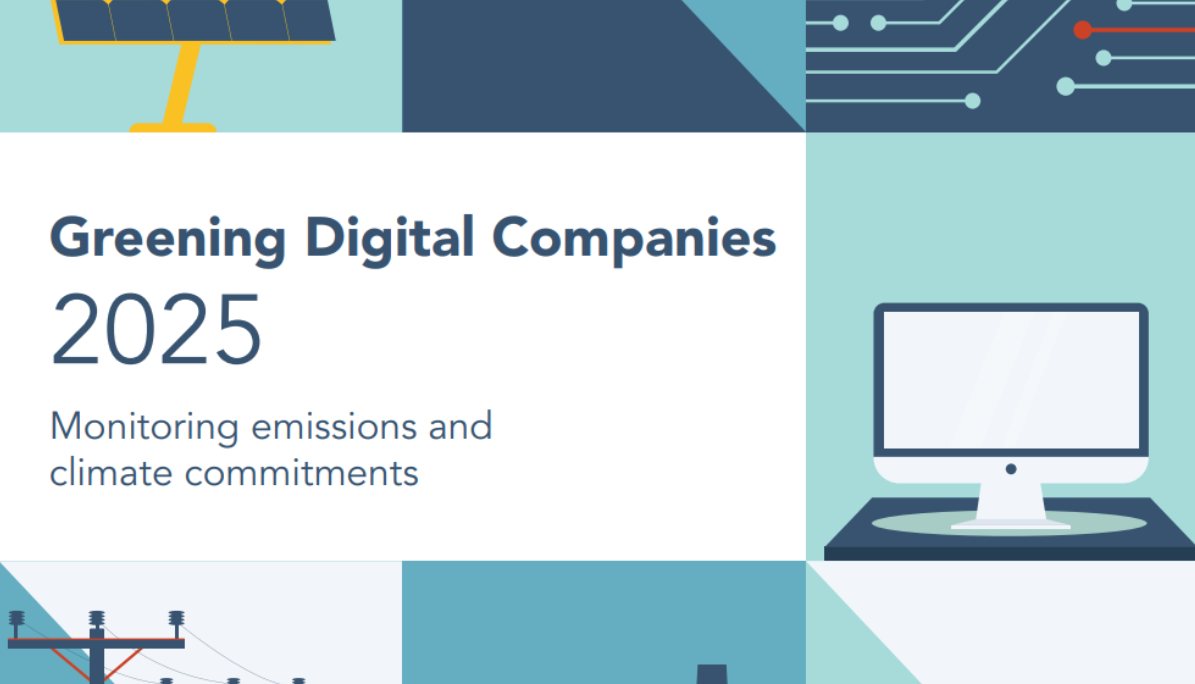
Tech sector carbon emissions continued their rise in recent years, fueled by rapid advances in artificial intelligence (AI) and data infrastructure, according to Greening Digital Companies 2025.

The report, produced by the International Telecommunication Union (ITU) and the World Benchmarking Alliance (WBA), tracks the greenhouse gas (GHG) emissions, energy use, and climate commitments of 200 leading digital companies as of 2023, the most recent year for which full data is available.

While the annual report calls on digital companies to address their growing environmental footprint, it also indicates encouraging progress. Worldwide, more companies had set emissions targets, sourced renewable energy and aligned with science-based frameworks.

“Advances in digital innovation — especially AI — are driving up energy consumption and global emissions,” said ITU Secretary-General Doreen Bogdan-Martin. “While more must be done to shrink the tech sector’s footprint, the latest Greening Digital Companies report shows that industry understands the challenge — and that continued progress depends on sustaining momentum together.”

Global AI expansion fuels energy demand

According to the latest edition of the report, electricity consumption by data centers — which power AI development and deployment, among other uses — increased by 12 per cent each year from 2017 to 2023, four times faster than global electricity growth.

Four leading AI-focused companies alone saw their operational emissions increase in the reporting period by 150 per cent on average since 2020. This rise in energy that is either produced or purchased – known as Scope 1 and Scope 2 emissions – underscores the urgent need to manage AI’s environmental impact.

In total, the amount of greenhouse gas emissions reported by the 166 digital companies covered by the report contributed 0.8 per cent of all global energy-related emissions in 2023.

The 164 digital companies that reported electricity consumption accounted for 2.1 per cent of global electricity use, at 581 terawatt-hours (TWh), with 10 companies responsible for half of this total.

“Digital companies have the tools and influence to lead the global climate transition, but progress must be measured not only by ambition, but by credible action,” said Lourdes O. Montenegro, Director of Research and Digitisation at WBA. “This report provides a clear signal to the international community: more companies are stepping up, but emissions and electricity use continues to rise.”

Progress amid rising challenges

Although emissions continued their rise, Greening Digital Companies 2025 highlights steps taken by many tech firms that suggest a strengthening of transparency and accountability.

Eight companies scored above 90 per cent in the report’s climate commitment assessment on data disclosure, targets and performance. This is up from just three in last year’s report.

For the first time, the report includes data on companies’ progress toward meeting climate targets and realizing stated net-zero ambitions. Almost half of the companies assessed had committed to achieving net-zero emissions, with 41 firms targeting 2050 and 51 aiming for earlier deadlines.

Other trends among the 200 digital companies featured in the report include:

  • Renewable energy adoption: 23 companies operated on 100 per cent renewable energy in 2023, up from 16 in 2022.
  • Dedicated climate reporting: 49 companies released standalone climate reports, signaling greater transparency.
  • Scope 3 consideration: The number of companies publishing targets on indirect emissions from supply chains and product use rose from 73 to 110, showing increasing awareness of industry impacts.

A call for bold, collaborative and immediate action

Highlighting how the tech sector can ensure long-term digital sustainability, the joint ITU-WBA report recommends that companies:

  • Strengthen data verification, target ambition and climate reporting, including by publishing climate transition action plans.
  • Disclose the full environmental footprint of their AI operations.
  • Foster cross-sector collaboration among tech firms, energy producers and environmental advocates, alongside industry initiatives to drive accelerated digital decarbonization.
  • Keep accelerating renewable energy adoption.

The Greening Digital Companies report has become a vital tool in tracking the climate footprint of the tech sector,” said Cosmas Luckyson Zavazava, Director of ITU’s Telecommunication Development Bureau. “Despite the progress made, greenhouse gas emissions continue to rise, confirming that that the need for digital companies to adopt science-aligned, transparent, and accountable climate strategies has never been greater. ITU’s work in monitoring the environmental impact of the sector is a crucial step towards achieving a sustainable digital transformation.”

ITU’s Telecommunication Development Bureau is working with regulators, statisticians, academics, and industry experts to define indicators that support national GHG monitoring and data-driven action through the Expert Group on Telecommunication/ICT Indicators.

As the COP30 UN climate conference approaches, ITU’s Green Digital Action aims to ensure that updated climate pledges and adaptation plans will fully reflect the complete impacts of digital technologies.

5 Green Initiatives Every Business Should Implement

For any business in this modern day of living, going green shouldn’t be much of an issue. There’s ample opportunity nowadays to cut down your waste and help the environment wherever possible.

After all, we all bear a responsibility to the environment, and that’s one that weighs even heavier for the average business in comparison to domestic households.

Here are five green initiatives that every business, including yours, should implement right now.

1. Reducing waste and recycling more

Is there waste that you’re getting rid of that could actually be recycled or reused in some way? How much are you contributing currently, and what does that compare to with other businesses?

Every ounce of waste you contribute to the landfills does damage to the world around us ,and so it’s important to try and minimize the waste as much as possible for your business. Look at what methods you could use to reduce waste and recycle more within your business. There’s likely a lot of change you could make for the benefit of the environment.

2. Go paperless

Going paperless is certainly important and a good way of helping to reduce the amount of wasted trees that are being cut down. It’s impacting the local wildlife and the habitats of animals that rely on trees as their homes.

Living in the digital world we’re in now, there’s really no excuse not to go paperless. If you’re doing a lot of your work online, reading documents and signing them through a computer screen, then there’s a lot of paper usage that could be cut.

3. Invest in solar panel energy

Solar panel energy has become increasingly popular due to the accessibility of these panels and the ROI it provides over time. It’s a lot more affordable than it once was, due to the demand it now has.

Everything that you can do to help reduce your energy consumption is key, so switching to commercial solar solutions might be just the change required to do more to help.

4. Build sustainable supply chains

Building sustainable supply chains is a great way to have a wider impact beyond just your own company. You can make a conscious choice to work closer with companies that are more sustainably driven and are making an active effort to be green in their practices.

Take a look at what your suppliers are doing currently and whether they’re able to adapt and change at your request. If not, then you could always look elsewhere for your suppliers.

5. Corporate responsibility initiatives 

Finally, there’s a responsibility to do more as businesses, so why not have some corporate responsibility initiatives in place? These can be a clear message to the general public that you have a commitment to sustainability. Support local programs and run your own to help encourage employees to make their own efforts.

With these green initiatives, you can work towards a more environmentally-conscious company that takes action and makes an impact that lasts. Use these tips to help get started with your business.


Appeals Centre Europe Starts Reviewing Social Media Account Suspensions

From today, if your account is suspended by Facebook, Instagram, TikTok or YouTube – and you are in the EU – you can challenge the decision to Appeals Centre Europe

Every day, people find that their social media account has been suspended. So often these  decisions are automated, and users are not told what they have done wrong.  

Being banned from social media affects people’s lives: from losing touch with friends, to  losing precious memories and – in some cases – cutting off a crucial source of income.  

Recently, however, the EU’s Digital Services Act has given people a new right to refer  account suspensions to certified, independent bodies like the Appeals Centre.  

A New Way to Challenge Unfair Account Suspensions 

If you are in the EU and Facebook, Instagram, TikTok or YouTube has suspended your  account, you can challenge the decision to the Appeals Centre free-of-charge. If we do not  think you broke the rules, your account may be restored. 

  1. Click on this link and create an account on the Appeals Centre website.  2. Start a new dispute in our online portal.  
  2. Select “The platform suspended an account that I want restored” 4. Provide basic information, like your username and when your account was suspended.  5. Submit your dispute.  
  3. We request the last piece of content you posted which supposedly broke the rules.  7. Our expert team make a decision and send it to you and the platform. 8. While our decisions are non-binding, platforms are required – under EU law – to  engage in good faith with the Appeals Centre. 

In addition to account suspensions, you can also challenge a social media platform’s  decision to remove your content, or their decision to leave harmful content online that you  think should be taken down.  

What’s Next?  

So far this year, we’ve issued our first decisions, appointed new Directors from across the  EU, co-founded a new network of dispute settlement bodies and expanded our scope to  cover Instagram. This summer, we will publish our first transparency report – with new insights into the cases we have received and the decisions we have made. We will also  expand to other social media platforms later this year.  

The CEO of Appeals Centre Europe, Thomas Hughes said: 

“Losing your social media account is more than an inconvenience, it affects people’s lives in  fundamental ways. Yet – for too long – those with suspended accounts have been stuck  between a rock and a hard place. Before now you could either appeal the decision to the  platform – which often sticks with its original decision – or go to court at great expense.  

Today, however, there’s a new option which is independent of platforms and free-of-charge:  Appeals Centre Europe. So, if your account has been unfairly suspended, do something  about it. Submit a dispute to the Appeals Centre and make your voice heard.”  

IFA 2025: Ticket sale for private visitors open now!

IFA Berlin, the world’s largest event for home & consumer tech, has officially opened the ticket sale for private visitors for its 2025 edition: ifaberlin.seetickets.com. The event will take place from 5 to 9 September 2025 at Messe Berlin. 

This year’s ticketing model introduces new access times and an adjusted price structure – with a clear focus on comfort, inclusivity and value to enhance the visitor experience across all audience groups. Furthermore, select exhibition halls are under renovation during the event, and the updated entry structure is designed to ensure better crowd management and smoother operations.

New ticketing structure. Same WOW. 

IFA 2025 places greater emphasis on accessibility, comfort, and value. The updated ticketing model reflects how most guests plan their time at the event, while enabling more focused access to exhibits, activations and features.

The opening hours of IFA 2025:

  • Private visitors:
    Friday, 5 September: 12:00–18:00 
    Saturday to Tuesday, 6–9 September: 10:00–18:00

  • Families, school groups & visitors with disabilities:
    Daily, 5–9 September: 10:00–18:00

  • Trade visitors, professionals & media:
    Early entry with access to the Trade Visitor Lounge from 08:00 via “Messe Süd” entrance, exhibition access from 09:30.

These adjustments ensure a safer, more relaxed and comfortable experience during peak times – particularly on Friday mornings, which continue to be reserved for political, media and business delegations as well as for families, school groups and visitors with disabilities. To avoid missed moments, major public programming will start after 12:00 on Friday.

Fair pricing that prioritises experience 

Following the special pricing during IFA’s 2024 centenary, ticket prices have been adjusted for 2025 to reflect a fair balance of access and experience.
Visitors who book in advance online save up to 22%:

  • Adults: €19.50 advance / €25.00 on site
  • Students: €12.00 advance / €14.00 on site 
  • People with disabilities: €12.00 advance / €14.00 on site (free companion ticket)
  • Kids: Free admission for children aged 15 and under
  • School Group: €39.00 (2 teachers + up to 33 students) 
  • Family: €39.00 advanced / €50.00 on site (2 adults + up to 3 children)

Meanwhile, the IFA Sommergarten will once again host concerts and live programming, with separate tickets available for all IFA visitors. Each IFA Sommergarten ticket includes same-day admission to IFA.

Join them in Berlin from 5 to 9 September 2025 – where inspiration, entertainment and next-gen tech come together. More information at ifa-berlin.com.

How to Get +70% Website Conversions with BDR Voice AI Agents

Most websites are basically digital ghost towns. Visitors arrive, look around, and leave without a trace. While the average site converts just 2.35% of traffic, some businesses are flipping this script entirely with Voice AI technology that actually talks to prospects.

These aren’t your typical chatbots. We’re talking about sophisticated AI representatives that hold real conversations, qualify leads on the spot, and hand off hot prospects to your sales team with context intact.

Why Your Website Stays Silent While Competitors Cash In

Here’s the uncomfortable truth: traditional contact forms capture less than 1% of your visitors. Think about that for a second. Ninety-nine percent of people who could become customers simply vanish because they hit a wall of friction.

Live chat sounds like a solution, but human agents can’t work 24/7 or handle traffic spikes. Most businesses admit they’re not happy with their conversion rates, yet they keep using the same broken playbook.

What if instead of hoping visitors fill out forms, your website could start conversations? What if it knew exactly what to say based on where someone landed and what they were looking for?

The Voice AI Breakthrough That’s Changing Everything

Voice AI has moved way beyond robotic responses. Today’s BDR (Business Development Representative) Voice AI agents sound natural, think strategically, and adapt their approach based on real-time visitor behavior.

They don’t just answer questions—they guide conversations toward conversion goals. Picture your best salesperson available every hour of every day, never taking a break, never having an off day.

Real Numbers from Real Businesses

Companies using Voice AI BDR systems aren’t seeing modest improvements. They’re reporting conversion jumps that sound almost too good to be true.

Visitors become 5x more likely to complete interactions when they can actually speak with someone (even if that someone happens to be AI). The psychological shift is massive—instead of filling out another form, prospects feel like they’re getting personalized consulting.

One client saw their website conversions increase by 70% within three months. Another reported even higher gains when they combined Voice AI with smart personalization. These aren’t outliers—they’re becoming the new normal for businesses that embrace conversational technology.

The difference comes down to engagement. Most people abandon websites within seconds if they can’t quickly find what they need. Voice AI eliminates that friction entirely.

Why Voice Conversations Convert Better Than Text

Something interesting happens when prospects hear a voice instead of reading text. Even though they might know it’s AI, their brain still processes it as a social interaction. Trust builds faster. Objections surface naturally. The entire dynamic changes.

Traditional forms hide problems. Someone might abandon your checkout because they have a simple question about pricing or shipping. Voice AI jumps in with instant answers, keeping the momentum going instead of losing the prospect to frustration.

There’s something else happening here that’s harder to measure but incredibly valuable. When people talk, you hear things you’d never catch in writing. Maybe they sound rushed (timeline pressure), maybe they’re excited about a specific feature, or maybe there’s hesitation around budget. The AI picks up on these vocal cues and responds accordingly.

Getting Started: The Smart Implementation Path

Rolling out Voice AI doesn’t require massive overhauls. The smartest companies start with their highest-traffic pages and most common questions.

First, identify where visitors typically drop off. Maybe it’s your pricing page or product comparisons. Install Voice AI there and watch what happens to engagement rates.

Next, train the system on your actual sales conversations. What questions do prospects always ask? What objections come up repeatedly? Feed this knowledge into the AI so it can handle these scenarios automatically.

Finally, connect everything to your existing CRM and scheduling systems. When the AI qualifies a hot lead, it should seamlessly book a meeting with your sales team and pass along the full conversation context.

Advanced Features That Separate Winners from Wannabes

Basic voice AI answers questions. Advanced systems do much more.

Smart AI knows which page triggered the conversation and tailors its approach accordingly. Someone reading case studies gets different treatment than someone checking out pricing. This contextual awareness can boost results significantly.

Memory matters too. When someone returns to your site, the AI remembers previous conversations and picks up where you left off. It feels personal because it is personal.

The best systems also handle multiple languages, expanding your reach without hiring multilingual staff. And when prospects are ready to buy, the handoff to human sales reps includes complete conversation history—no starting over, no lost context.

Measuring What Matters

Track engagement rates first. How many visitors start voice conversations compared to traditional contact attempts? Most companies see dramatic increases here.

Completion rates tell you if conversations feel natural or forced. Industry leaders achieve completion rates above 85% because their AI systems know how to maintain engaging dialogue.

Qualification accuracy matters most for sales teams. What percentage of AI-qualified leads turn into real opportunities? Top performers hit 90%+ accuracy because they’ve fine-tuned their qualification criteria.

Revenue attribution closes the loop. Which voice conversations turn into actual deals? This metric proves ROI and justifies continued investment.

Choosing Your Voice AI Partner

Not every Voice AI platform delivers the same results. Generic solutions often disappoint because they can’t adapt to specific industries or sales processes.

Companies like NextLevel.AI specialize in creating Voice AI Agents tailored for individual business needs. Instead of one-size-fits-all chatbots, they develop conversation experiences that actually fit how your business works and how your customers buy.

You want a partner who can customize everything, connects with your existing tools without headaches, and gives you real insights about what’s working. Most importantly, when prospects interact with it, they shouldn’t feel like they’re talking to a machine.

The Window is Closing Fast

Smart companies are moving quickly on this. While most businesses are still debating whether to try voice AI, the early movers are already capturing more leads and closing more deals.

Those 70% conversion jumps we’re seeing now? They’re happening because most competitors haven’t caught on yet. But that won’t last forever. Once everyone realizes what’s possible, the advantage shrinks.

The real question isn’t whether Voice AI will become standard—it’s whether you’ll be ahead of the curve or scrambling to catch up while competitors dominate your market with superior conversion rates.

Research Ireland and Gas Networks Ireland announce collaboration agreement

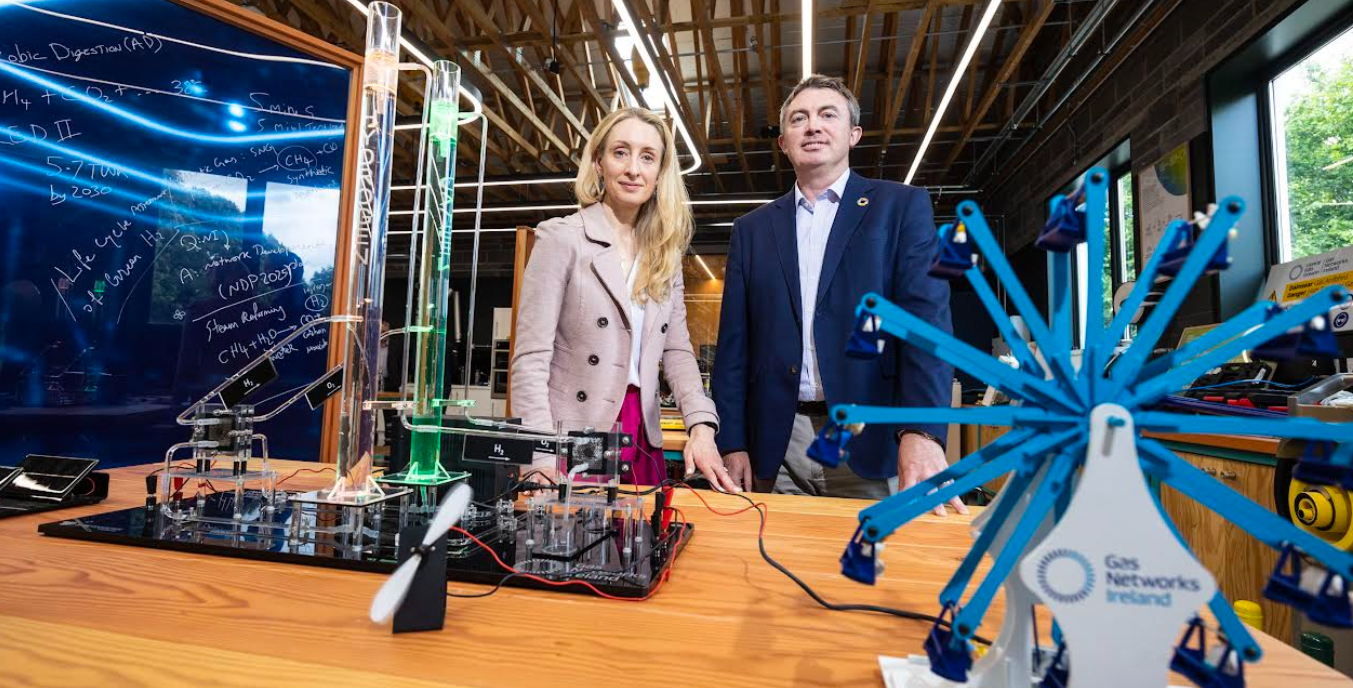
Research Ireland, Ireland’s competitive research and innovation agency, and Gas Networks Ireland, operator of the national gas network, have today formally launched a new €2.7 million research and innovation challenge to drive pioneering, STEM-led solutions that will support Ireland’s transition to a low carbon energy future.

The Research Ireland – Gas Networks Ireland Innovation Challenge’ invites multidisciplinary research teams to develop breakthrough technologies in renewable gas, energy system integration and artificial intelligence. The challenge fund will support transformative innovations with the potential to decarbonise the national gas network and contribute to climate action targets.

This joint initiative, co-funded by Research Ireland and by Gas Networks Ireland through its Gas Innovation Fund, is a phased funding programme. Successful teams from eligible research bodies in Ireland will be awarded up to €200,000 and will work through a series of phases to develop their idea. An overall prize award of €1 million will be available to the team that demonstrates the highest potential for transformative impact. The prize will enable the winning team to generate high-impact research and accelerate the development of sustainable energy technologies.

The structure of the Programme is based on the Research Ireland Future Innovator Prize Sustainable Development Goals Challenge Programme, and will comprise three phases:

  • Concept (six months’ duration, with successful teams securing up to €50,000)
  • Seed (12 months’ duration, with teams securing up to €150,000), and:
  • Prize (up to 24 months, with teams completing for an overall prize of €1 million).

Welcoming the announcement, Interim CEO at Research Ireland, Celine Fitzgerald, commented:

“We are delighted to be forging a partnership with Gas Networks Ireland on matters of such importance to our country and, indeed, our planet. Both agencies recognise the importance of decarbonisation of Ireland’s gas network. The Research Ireland – Gas Networks Ireland Innovation Challenge 2025 will support research projects that have potential to generate STEM-based solutions for utilisation by the renewable gas industry, giving rise to national impact in the journey to achieve carbon neutrality. 

“We look forward to working in partnership with Gas Networks Ireland, and to seeing the outcomes stemming from our co-funded investment in Ireland’s brightest research talent.”

Commenting on the collaboration agreement, Chief Operations Officer at Gas Networks Ireland, Bobby Gleeson, stated:

“This landmark collaboration aligns with Ireland’s national climate ambitions and our strategy to transition to a net zero gas network by 2045”.

“The Innovation Challenge is a powerful example of how targeted research can support national priorities – from climate action to economic development and will help enable the best minds in Irish research to develop practical, scalable solutions for integrating renewable gases and intelligent technologies into our energy infrastructure. This is a significant investment in the future of Ireland’s energy system – and in the talent that will help shape it.”

The Research Ireland – Gas Networks Ireland Innovation Challenge has two overarching challenge themes to guide the collaborative engagement and research activity under this programme call, namely:

  1. The Energy System Integration Challenge: This seeks to support the development of solutions to accelerate the optimisation and integration of the energy system in Ireland’s transition to a low carbon economy. There are two broad themes under this Challenge: (a) the integration of renewable gases at a local and regional level; and (b) the development of Artificial Intelligence-based solutions for intelligent gas network performance diagnostics.
  2. The Biomethane and Biohydrogen Challenge will seek to support the development of solutions which improve the efficiency, efficacy and commercial viability of (1) biomethane and (2) biohydrogen production, including extraction and utilisation of the byproducts.

The call for applications is now open to eligible research teams across Ireland. Full details are available here: Research Ireland Gas Networks Ireland Innovation Challenge – Research Ireland.