
While it is well known that Ireland has been the birthplace of numerous exceptional poets, writers, singers, and actors, a number of fantastic inventors were also born and raised in the country.
The inventions that came forth from the minds of these men and women not only affected things in Ireland but spread to become standards worldwide. Below, we’ve found the greatest Irish tech inventions that, at the time, revolutionised industries and opened new avenues to things nobody knew existed.
Submarine (1881)
Modern submarines are a marvel of technological innovation. They can stay beneath the choppy waters for weeks on end, generate their own power, travel freely at impressive speeds, and pop up out from the ocean at a moment’s notice.
These submarines, however, would likely not exist today if it weren’t for the work of John Philip Holland.
Born in Liscannor, Ireland, he battled health problems before moving to the United States in 1873. At the time of his immigration, John had already begun working on preliminary designs for an underwater vessel that could have leisure and military applications.
After slipping and breaking his leg, he had time to refine his designs, submitting many to the US Navy. All of these were, however, rejected. In 1881, John designed and built the Holland, the world’s first working submarine. Various tweaks were made until 1897 when the Holland VI launched, which the US Navy purchased three years later; it then became the blueprint for further development of sleeker and more capable subs.
Transatlantic Cable (1858)
Although the first telegraph sent via transatlantic cables resulted from the work of inventors from various nations, the input of numerous Irish inventors and engineers made it a success. There was an attempt to lay the cable, which actually consisted of seven cables, in 1857 from White Strand in County Kerry, Ireland.
In 1858, a successful cable run from Count Kerry to Newfoundland, Canada, was completed. Although not the first permanent transatlantic cable, since a more durable one was laid between North America and Europe in 1866, it was the first time a telegraph was successfully sent across the Atlantic, paving the way for more accessible communication between the two continents.
Seismology Instrumentation (1840s)
Born in Dublin in 1810, Robert Mallet shook things up by entering university at 16 and graduating by 20. After his studies, he worked as an engineer, helping design and build lighthouses. He had a particular interest in geology and became a member of the Royal Geological Society of Ireland in 1838.
By 1846, Robert had developed a unique understanding of earth movements and presented a paper to the Royal Irish Academy. In the paper, he outlined basic seismology as we understand it today and coined terms such as epicentre.
Guided Missile/Torpedo (1874)
Moving from Ireland to Australia in 1861, Louis Brennan grew up being groomed to be a respected engineer and inventor. His first job was as a watchmaker, during which he honed his engineering skills. This was until he went to work for a renowned mechanical engineer called Alexander Kennedy Smith.
While working, Brennan came up with the idea of designing a torpedo that could be steered. The idea came from experiments using a thread and reel and seeing how the two interacted when used together.
After developing his idea for years, Louis finally received a government grant and began working on a prototype. This he completed in 1877, shortly after which he filed a patent. In 1880, Brennan returned to England, where the UK military purchased his patent for over £100,000 (more than £12 million today).
From here, his design was perfected while he worked as a factory superintendent dedicated to manufacturing his torpedo.
Jet Ejector Seat (1946)
Born in County Down, Sir James Martin worked as an engineer before starting his own firm in 1929 alongside his friend Captain Valentine Baker. The two worked on the design and manufacture of multiple fighter aircraft, the most famous being the MB 3.
As part of the design of these aircraft from 1934, Sir James experimented with the idea of an ejector seat that could launch a pilot to safety. However, the idea did not evolve until 1944. During a test flight of their new MB 3, Captain Baker, who was acting as the test pilot, fell out of the sky to his death after an engine failure.
With the death of his partner severely affecting him, Sir James redoubled his efforts to focus on pilot safety. After developing a new design, the Martin-Baker system was tested in a Gloster Meteor Mk III jet on 24 July 1946. The test was successful and led to further developing systems used in almost all military aircraft available today.
Induction Coil (1834)
Even though most of us rarely need more electricity in modern times, Nicholas Callan certainly did in the 19th century. A physicist and Catholic priest by profession, Nicholas began teaching natural philosophy and became fascinated with the concept of electricity.
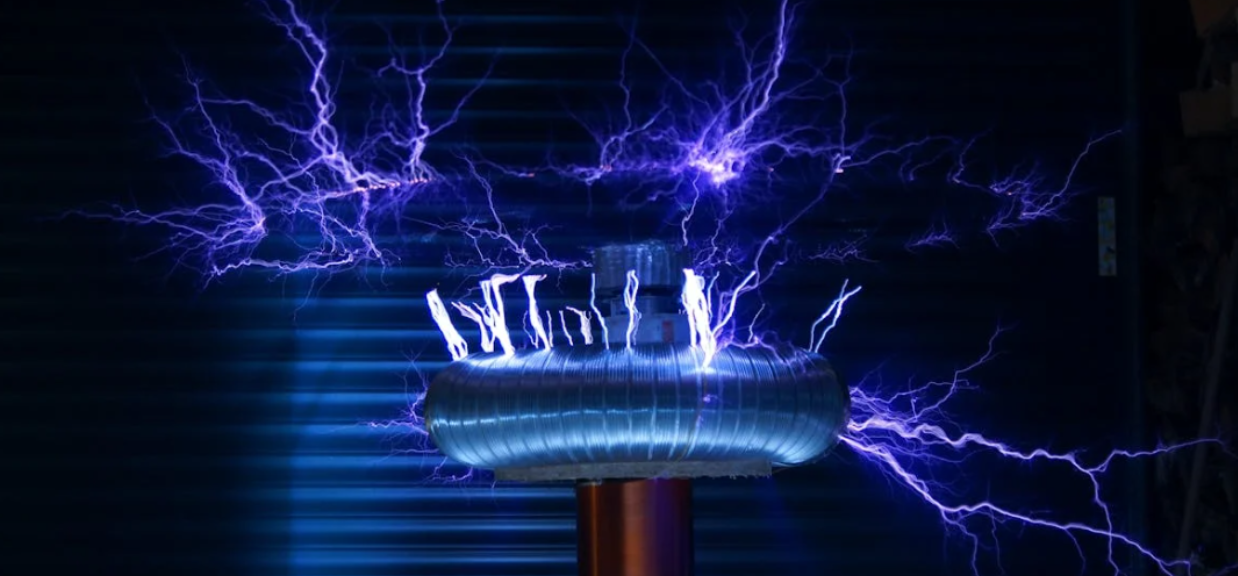
Needing more than what was available, he began playing with the idea of using coiled wire to create an intermittent high-voltage alternating current using a low-voltage direct current. In 1834, he perfected his design using a bar of iron and lengths of variously sized strands of copper wire.
Although he referred to his invention as an electromagnet, it was actually the world’s first induction coil. The coil became commonly used in X-ray equipment and is still used in some internal combustion engines.
Conclusion
From fantastic inventions that allow us to travel across the world to great resources like Bonusfinder Ireland that make it easier to try our luck online, the origins of some of yesteryear’s creations may seem forgotten. However, many of them set the stage for items and concepts still used today.
The Irish inventors above not only changed the times and regions they lived in, but their inventions have gone on to be incorporated into modern life and spread to every corner of the planet—something that every inventor dreams of.