Jabra PanaCast video solution first to market with Microsoft device ecosystem platform

Jabra, a leader in professional audio and video solutions, will be the first to market with its PanaCast 50 Video Bar System leveraging the new Microsoft device ecosystem platform, as announced on the Microsoft blog today: What’s new in Teams Rooms and Devices at Enterprise Connect. Microsoft collaborated with Jabra to optimise the platform to leverage Microsoft Teams Room for Android as the first industry market solution. 

The Microsoft device ecosystem platform brings together the best of Microsoft and Android, tailored for shared spaces and optimised for Teams devices.  Built on the Android Open Source Project (AOSP), the platform delivers the security, reliability, management and deployment that Microsoft is known for, along with the diversity of hardware and software support that comes with Android. It is designed for innovation – with the extensibility and customisation that manufacturers need to deliver innovative products with both hardware and software extensions. 

 The Jabra PanaCast 50 Video Bar System is an integrated solution. It includes a Qualcomm Technologies Inc. state-of-the-art system-on-chip (SoC) for IoT running Android, which will be upgradable to the new Microsoft OS. It also includes other SoCs, as well, speakers, microphones, video cameras, with network and display interfaces for easy deployment. The solution comes with a 10.1” touch controller to manage the room experience. The system natively and securely runs Microsoft Teams Rooms on Android. 

Aurangzeb Khan, SVP for Intelligent Vision Systems at Jabra said, “We are delighted to have contributed to the development of this enterprise grade Android platform and to deliver it with the PanaCast 50 Video Bar System as the first video solution for this Microsoft ecosystem platform for Android. Together Jabra and Microsoft present a video solution that combines the Microsoft heritage in platforms, security, management, and scale with Jabra’s leading video technology, for the benefit of our customers.”  

With a hardware-based root of trust and attestation, built on Microsoft’s PKI cryptography and Qualcomm® Trusted Execution Environment, the platform delivers security and tamper resistance with attestation by enabling secure identification of the device and its configuration. This is built with the advantage of the Qualcomm® QC8250 SoC for IoT supporting multiple concurrent instances of VPU-based hardware offload, with up to 8K video encoding and decoding. The Qualcomm QCS8250 SoC also allows for up to 64-megapixel video capture for exceptional high-definition videos. 

“Qualcomm Technologies is proud to be a part of the collaboration to create the Jabra PanaCast 50 Video Bar System, featuring the premium Qualcomm QCS8250 SoC,” stated Dev Singh, Vice President, Business development, and Head of Euilding & enterprise, and Industrial Automation, Qualcomm Technologies, Inc. “The PanaCast 50 Video Bar System utilises the SoC’s advanced security and video processing functions to bring to market this first-of-its-kind collaboration system.”  

“We are excited to partner with Jabra to bring the Microsoft device ecosystem platform to our customers and as its first adopter from the partner ecosystem building devices Certified for Microsoft Teams,” said Dave Kearney, General Manager of Program Management at Microsoft. “Security, reliability, management, and performance are critical for businesses globally and by building on the Android Open Source Project (AOSP) and partnering with Qualcomm we are pleased to offer a solution designed for shared spaces which brings the best Microsoft has to offer across those fronts while providing flexibility and diversity in the hardware and software offered.” 

Security is backed by Microsoft – with government-grade secure development environment, state of the art code analysis, threat detection, and software updates customers can depend on for shared meeting spaces. Matching this, the PanaCast 50 Video Bar System is designed to adapt to the evolving UC experiences and hybrid workplace needs with its AI-powered software-defined platform. It is easy to install, manage and use with everything needed for video meetings embedded in the PanaCast Control for a one-touch start/join without requiring any additional devices, allowing simple, secure, and scalable deployment and management in any small-medium sized rooms. 

For more on the Microsoft device ecosystem platform, please visit the Microsoft blog here: 

What’s new in Teams Rooms and Devices at Enterprise Connect 

More on the PanaCast 50 Video Bar System: Jabra PanaCast 50 Video Bar System    

Exploring the Benefits of Technology in Horse Racing

With the rapid advances in technology, horse racing has been able to take advantage of its many benefits to improve the sport. From new training methods and better diets for horses to enhanced safety measures and even more accurate judging systems, technology has enabled horse racing to become a much safer and fairer sport than ever before. Here’s a quick look at how technology and Artificial Intelligence (AI) have affected horse racing over time.

Examining the Impact of Artificial Intelligence on Horse Races

AI has been making its way into the horse racing industry, and it’s having a major impact on how races are run. AI is being used to analyze data from past races, as well as current conditions such as weather and track conditions. This data can then predict which horses have the best chance of winning a race. AI can also identify patterns in the behavior of horses during a race, allowing trainers and jockeys to adjust their strategies accordingly.

Additionally, AI can help with handicapping by providing more accurate odds for each horse in a race, such as the Irish Grand National odds. By using AI to analyze this data, trainers and jockeys can make better decisions about which horses they should bet on or against. Ultimately, this could lead to more successful betting strategies and higher profits for those involved in the horse racing industry.

The Benefits of Using Technology to Prepare for Horse Races

Technology has revolutionized the way we prepare for horse races. With the help of technology, you can now access a wealth of information about horses and their performance in past races. This allows you to make more informed decisions when it comes to selecting your horses and placing bets. You can also use technology to track the progress of your chosen horses throughout the race, giving you an edge over other bettors who may not have access to such data.

Additionally, technology can analyze past performances and identify patterns indicating which horse is likely to win or place in a given race. This helps you make better predictions and increase your chances of winning big on race day. Finally, technology can also monitor weather conditions at the track, helping you determine which horses are best suited for certain types of terrain or weather conditions. All these benefits make using technology an invaluable tool when preparing for horse races.

How Jockeys Can Use Technology to Gain an Advantage in a Race

Technology has become an integral part of the horse racing industry, and jockeys can use it to gain a competitive edge. One way is using data-driven analytics to track their performance in each race. By analyzing past races, jockeys can identify patterns in their riding style that may hinder their success and adjust accordingly.

Additionally, they can use technology to monitor the condition of their horses before and during a race. Wearable sensors can provide real-time information on the horse’s heart rate, respiration rate, and other vital signs that could indicate fatigue or injury. This data can help jockeys adjust their riding strategy accordingly to ensure they get the best performance out of their horse.

Lastly, jockeys can also take advantage of virtual reality simulations to practice different strategies for upcoming races without having to put themselves or their horses at risk on the track. By utilizing these technologies, jockeys can gain an edge over the competition and increase their chances of winning more races.

In conclusion, technology can be a great asset to horse racing and help improve the safety of horses and jockeys while also providing more accurate information on race results.

AWS launches Startup Loft in Dublin to support early-stage tech entrepreneurs reach their potential through the Cloud

The AWS Startup loft is a home for technology startups in one of AWS’s Dublin city centre offices in Charlemont Street. This co-working space is free to use for startups and is equipped with open seating, phonebooths, WiFi and coffee to keep startups fuelled.

The loft regularly hosts office hours and talks with venture capital, legal and accounting firms. Every Wednesday and Thursday startups can sit down with an AWS solution architect or account manager for ‘Ask the Expert’ sessions. This could be an opportunity to discuss a startups technology roadmap, architecture guidance or cost optimisation.

Vyra – Eoin Le Masney (Sector – Sustainability EdTech)

Backed by behavioural science, the Vyra Platform provides businesses with a highly engaging solution to up-skill employees rapidly and at scale. Whether it is through Vyra’s best-in-class learning modules or bespoke company learning programmes, the Vyra Platform is there to deliver to 50 or 5000 employees. https://vyra.ie/why-vyra/

KowRoo – Sheelagh Brady (Sector – Travel and Corporate Security)

Risks associated with travel, such as delays, accidents, criminality, or even death, can have an enormous impact on a business. The global security market is estimated to have an annual turnover in excess of $66.9B for the US alone. KowRoo combines analysis of real-time data that is personalised for the user, whilst integrating the risk appetite of the business, and communicating dynamic risk rating results via an app to the user. KowRoo will have a mobile app and desktop user interface, behind which a large volume of historical risk assessments generated from past analyses and real time incidents will be used as inputs to modern AI algorithms to build a real time robotic analyst “KowRoo”.

Elkstone Capital – Kate Fullen (Venture Capital)

Elkstone is a leading Irish Investment House focused on Entrepreneurs, Senior Executives, Institutional LPs, the Venture Community and Irish Diaspora. Their mission is to increase the economic value and overall wellbeing of the Island of Ireland by enabling deserving investments and delivering superior investment performance.

Minister of State in the Department of Enterprise, Trade and Employment, Minister Dara Calleary :

“The Start Up Loft initiative is an important addition to the entrepreneur and start up ecosystem here in Ireland. This space and others like it play a vital role by supporting early stage and start-up companies test out their ideas, pitch for investment, and build their networks. I’m pleased to support the launch today which will complement the range of government supports and schemes available through our enterprise agencies, including the Local Enterprise Office network and Enterprise Ireland, to help Irish start-ups scale up, grow, and succeed both at home and on the global stage.”

 Mike Beary – Country Manager, AWS Ireland:

“At AWS, one of our leadership principles is to “Think Big”. Here in Dublin, we want to enable a culture of “thinking big” by providing some of Ireland’s brightest entrepreneurs with a space for their ideas to grow. This new Startup Loft will create the ideal forum for new companies to meet other founders, interact with VCs, and discuss how to take their businesses to the next level.”

Kate Fullen – Elkstone:

“Spaces like this give the VC community a chance to work with some of the most interesting founders in the country as they get their new companies up and running. The AWS Startup Loft is a great addition to the business ecosystem in Dublin.”

 Sheelagh Brady – KowRoo:

“Putting a company together from scratch is a hugely complicated and exciting project. The Startup Loft gives me a dedicated space to expand my business while learning from other entrepreneurs as we move our projects to the next stage. Having access to VCs and AWS experts is an added bonus. ”

 Eoin Le Masney – Vyra:

“The AWS Startup hub has been a game changer for Vyra – we have met some fantastic founders, solved problems with solutions architects and even used the space to pitch to mentors and investors. AWS Startup Loft is always creating value through events and regular check-ins and I know that in the future we will reference the AWS Startup hub as a key ingredient in our early stage success.”

Irish Team Leads Rollout of Affordable Healthcare Platform for Millions in Africa

A new platform, that aims to bring affordable primary healthcare to millions of people in Africa for as little as €7 per month, has launched this month following a collaboration between a team based in Dublin and their South African colleagues.

Lead by Irish woman Elaine Devereux, managing director of Lucky Beard in Dublin and its chief creative officer James Nelson, also based in Dublin, Unu Health is a digital platform that uses technology to drive down the cost of primary healthcare and empower the 50 million people in South Africa that currently rely on state healthcare to significantly improve their health and wellbeing.

According to recent reports, South Africa’s healthcare remains a two-tiered space, where access to private healthcare remains linked to the ability to pay for private medical scheme membership. Private healthcare accounts for 50% of the total expenditure on health, and supports only 17% of the population.

Seed-funded by the Standard Bank Group, the largest bank in Africa, Unu Health is initially targeting the 5.5 million formally employed population that cannot afford medical aid, with the launch of a corporate offering that enables employers to provide access to private primary healthcare for their employees.

“This breakthrough in healthcare has the potential to transform the lives of millions of people in Africa, where the average life expectancy falls ten years below the global average and the majority of the population rely on an overstretched public healthcare system, often waiting days to see a doctor,” said Devereux, whose global team from Dublin and South Africa are the lead advisors across strategy, brand, product design, and technology.

“Over the past 18 months, our teams have worked tirelessly to develop a solution that provides affordable, accessible, and effective primary care to individuals who previously had limited options.

“Unu Health uses innovative technology to simplify access to healthcare and drastically improve the patient experience while driving down the cost, much like Revolut did for banking, with the ambition to bring ‘healthcare that makes you smile.

“The initial offering will not only improve the health and wellbeing of employees but also enables employers to develop informed HR strategies and wellness initiatives that reduce absenteeism and ultimately enhance productivity.”

The app enables people to manage all of their healthcare needs in one place, offering easy access to their health records and medical history.  Users can get an up-to-date clinically valid health score updated each month and plug in their private health insurance plan so they can view and track their benefit use over time. They can also chat instantly to a nurse or doctor via WhatsApp or video call using a network of 3,400 private GPs, 8 000 specialists and 3,500 pharmacies across South Africa.

Tania Joffe, CEO and Principal of Unu Health, says the platform’s vision is to transform the delivery of quality primary healthcare in Africa, making it accessible, affordable and dignified for all. “Owing to the friction involved in accessing primary healthcare, most South Africans initially self-medicate acute symptoms while their chronic conditions go largely undiagnosed. As a result, on any day 15% of the workforce is absent – that’s 2.25 million people who are not at work.

“We’re looking to change the status quo by removing the friction and develop a hyperconnected patient-centred ecosystem linking healthcare users, healthtech resources as well as traditional in-person health resources, via an inclusive platform that is intuitive and easy to use from mobiles.

Tech Review – Creative Outlier Free bone conduction headphones

Typical Headphones are made up of small speakers either separated with each in the ear or over the ear with cushions for comfort and sound insulation.  The Creative Outlier Free are Bone conduction headphones – that transmit sound waves through the bones in a user’s skull instead of their ear canal. These are worn resting on your temples. Because of this design,  these are ideal for conditions in which many earphones would fall out of the inner ear or shake off the head. These have the advantage of not blocking the ear ( similar to hear-through as used on some earphones ) allowing alertness of the surrounding areas. The material is strong and sturdy with bigger buttons that are seen on many earphones with water-resistant, but not as fully waterproof as seen on their other model Creative Outlier Free pro.  The creative logo is visibly seen on the earphones.

These do not come with a carry case to protect the earphones or store the charging cable when not in use which is slightly disappointing.

Technical spec

  •       Headphone Drivers: Bone Conduction Transducers
  •       Frequency Response: 20–20,000 Hz
  •       Microphones: Omni-directional x 1
  •       Bluetooth Version: Bluetooth 5.3
  •       Bluetooth Profiles
  •       •A2DP (Advanced Audio Distribution Profile)
  •       •AVRCP (Audio / Video Remote Control Profile)
  •       •HFP (Hands-free Profile)
  •       Audio Codec: SBC
  •       Operating Frequency: 2402–2480 Hz
  •       Operating Range: Up to 10m / 33 ft
  •       Voice Assistant Support: Siri and Google Assistant
  •       Playtime: Up to 10 Hours*
  •       Charging Time: 2 Hours
  •       Charging Interface: USB-A
  •       Battery Type: Rechargeable Lithium-ion Polymer Battery
  •       180 mAh 0.666 Wh
  •       Input: 5V 1A
  •       Operating Temperature: 0–45°C
  •       Maximum RF Output Power: 4 dBm
  •       IP Rating: IPX5

Setup:

The quick start guide is excellent allowing the use of a QR code to read the manual easily. The setup is straightforward while having the bonus of multimode connectivity which allows the headset connected to two separate devices at the same time.  This may be two separate phones or a laptop connected via  Bluetooth. Either device if called automatically can respond as a call or music played from either device. The process of connecting works the same way as syncing a new Bluetooth device.

Connection to an Android phone and a Windows laptop worked uncomplicated and straightforwardly as you would expect from Creative.

Battery & charging:

The earphones come with a Magnetic USB charging port to USB Type A with a  Rechargeable Lithium-ion Polymer Battery of 180 mAh which has a charging time of about 2 hours charging for 10 hours of use.  This is where these earphones are let down, most modern earphone comes with a standardised USB C charger lead ( Meaning this cable can be swapped via a modern android phone ) and some come with a wireless charger, Creative have gone with a proprietary magnetic charger given a reasonable 10 hours as compared to other in an earphone that gives over 30 hours via the case.  When the earphones aren’t in use the power button is larger but required this to be manually pressed to power down.

A Full  Tech Review – Creative Outlier Free Pro bone conduction headphones seen at techbuzzireland previously https://techbuzzireland.com/2023/03/14/tech-review-creative-outlier-free-pro-bone-conduction-headphones/ 

Warranty

The warranty is 2 years within the European Union but may be less outside of the EU.

Conclusion:

The audio quality in terms of the frequency response for these headphones is  20 to 20,000 Hz which is a standard frequency in this range, When used in a traditional phone call the audio is a noticeable difference in terms of the bone conduction headphones which transmit sound waves through the bones in a user’s skull instead of their ear canal this causes a vibration which is not a critique of the audio rather a different approach. When used for  High-Resolution Audio the audio which has higher sampling rates is partially noticeable but unless stopped and fully concentrated on the music hard to tell the difference. This model is good in terms of when listening to higher volumes those surrounding the earphones do not hear a leakage on the music .  the option to Turn on Low Latency Mode to enjoy synchronized and smoother playback of audio and video is a positive for these earphones allowing for multiple options on audio experiences.

When looked at from a Safety perspective ( open-ear listening) being able to hear the surrounding area but also in terms of not directly in the ear canal, ( This is not supported by formal medical advice but rather an opinion ) no ear wax has been pushed into the ear and safer from an awareness of your surroundings.  The IPX5 splashproof or sweatproof rating is excellent for everyday use as could be taken in and out of the shower but not suitable for swimming certainly good enough to ensure if out in the rain these will not be affected,

Overall as someone that tries to walk for over an hour a day, this is my go-to set of earphones, as practically impossible to have them fall off the head due to the design, through the design from a safety perspective, they are similar to having heard through on all the time without the need to remove from your head is stopping to chat to someone,  The multimode is excellent allowing connectivity & versatility for use in more than one device. Once familiar with the design while heaver at 30g than many other earphones on the market this quickly becomes forgotten they are around your head. This model is ideal for extreme sports and certainly will endure lots of adversity in its use.

BUY 

Video Review

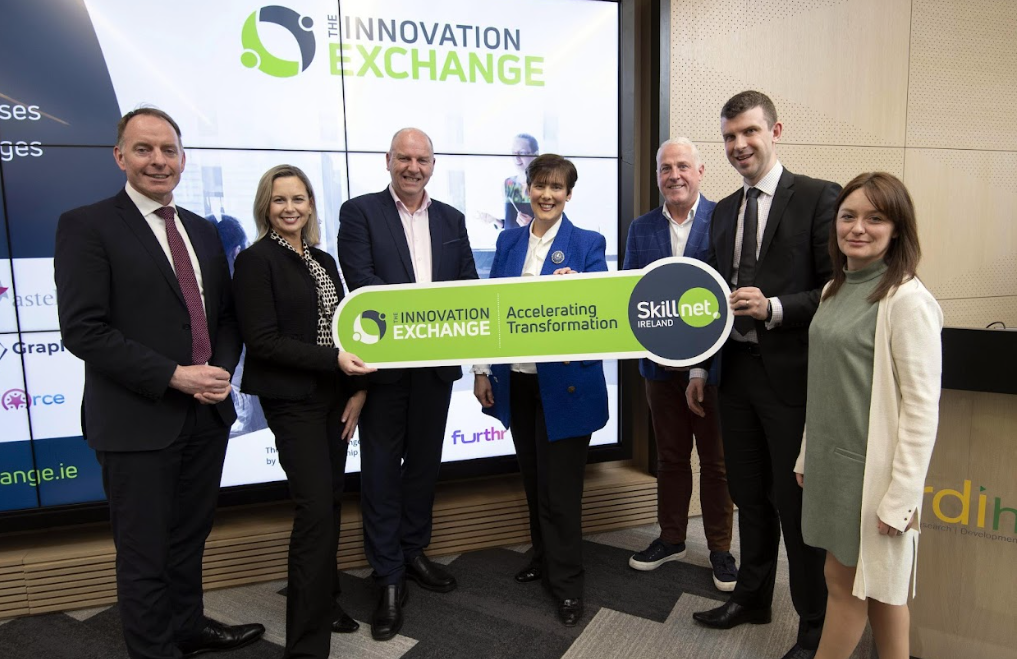
The Innovation Exchange partners with RDI Hub to partner globally ambitious Kerry SMEs with large corporates

Skillnet Ireland has announced the partnership of The Innovation Exchange, with the RDI Hub (Research Development Innovation Hub) based in Killorglin, Co. Kerry.  The Innovation Exchange is Ireland’s innovation marketplace connecting large companies facing digital transformation challenges with technology companies that can fast-track the solution.

As the newest regional channel partner of The Innovation Exchange, the RDI Hub is a world-class centre for design-led, digital innovation located in Ireland’s South West.  It focuses on digitisation, ideation and commercialisation of innovation and research in the Digital, AI, Data and related technologies’ sectors. The RDI Hub is also part of the Fexco’s Innovation division and operates as a not-for-profit public-private partnership with Munster Technological University and Kerry County Council.

There are currently six companies signed up from Kerry; one corporate, Astellas, as well as five SMEs; Graphite Note, Quodos, Galarus, Salaso and Turtle Transformation. Cork-based, RDI hub member Perkforce is also signed up.

The initiative will allow globally ambitious tech SMEs located in Kerry the unique opportunity to pitch to, and collaborate with, large companies looking to access innovation as part of a diverse and curated community of startups and scaleups. As a part of this collaboration, the RDI Hub will bring both corporate entities and scale-up businesses situated in Kerry together as members of The Innovation Exchange, expanding its growing community.

Attending the launch, Norma Foley TD, Minister for Education and TD for Kerry, said: “Ambition in any field should be limitless, but for it to be limitless we must ensure that the right supports are in place. Today we launch The Innovation Exchange, an initiative of Skillnet Ireland. It gives an opportunity to provide a level of support which will be a catalyst for so many businesses to go further and to go beyond; there is great insight here, being provided by the experts. The spirit lauded by this new initiative and development is that together we can go further and further; limitless opportunity, limitless abilities being celebrated and given an opportunity to advance.”

Speaking at yesterday’s announcement, Paul Healy, Chief Executive, Skillnet Ireland said: “Today we see the Innovation Exchange developing its footprint in Kerry as part of our drive for a nationwide expansion of this successful programme. The Innovation Exchange is serving an important role in promoting innovation and economic growth in Ireland by building deep links between SMEs and large corporations, encouraging ideation and facilitating the development of new business projects between these sectors. We encourage local SMEs and larger companies with a presence in the South West to join the programme and take advantage of the many benefits it offers.” 

The aim of the Innovation Exchange is to establish a nationwide footprint by onboarding up to 10 regional channel partners throughout 2023. Earlier this year The Innovation Exchange announced its partnership with the Galway Technology Centre, which supports innovative, global trading companies in the ICT sector. The expansion of The Innovation Exchange, which currently has in excess of 350 participants, will offer even more SMEs access to the programme’s benefits, including an instant sales pipeline, market intelligence and the capability to sell to large companies

Conor Carmody, programme director of The Innovation Exchange commented on today’s news: “We are thrilled to be collaborating with RDI Hub, as we continue to bring our offering to SMEs and corporates across Ireland. Our main focus is to showcase the amazing talent and capabilities of the companies in the region, while also helping them to scale their businesses. We see this partnership with Skillnet Ireland as an opportunity to expand our network and leverage RDI Hub’s resources and expertise to support our members and drive their success.”

Liam Cronin, CEO of RDI, said: “The ethos at the RDI Hub is all about making connections for start-ups, scale-ups, SMEs, corporates, and enterprises to create, digitalise, innovate, and scale businesses for future economies. The Innovation Exchange is a perfect partnership for us as it supports the key focus of the RDI Hub   of creating new jobs, products, and services in the Southwest. This is a fantastic opportunity for agile companies to innovate and solve specific problems for large corporates, and for corporates to gain fresh perspectives on their business challenges.”

Bertie Murphy, Chief Strategy Officer Fexco and RDI Hub Board Director, said: “This new partnership between the RDI Hub and the Innovation Exchange creates a brilliant opportunity for innovation between SMEs and scaled businesses. This reinforces our vision at Fexco for the RDI Hub as a key enabler of innovation. We have already achieved success at the RDI Hub in creating an ecosystem that has generated exciting new technologies, services, and jobs. This announcement provides an opportunity for the RDI Hub to further build on that success and, in addition, facilitate the ability of SMEs to introduce innovative and transformative ideas and services to larger corporations in the region.” 

Skillnet Ireland has committed €5 million to fund The Innovation Exchange which is designed to address the barriers that exist for scaling companies when selling to large companies and multinationals. The programme will support over 1,000 companies between 2022-2025.

Scale-ups and corporates in the Kerry region are being encouraged by The Innovation Exchange to sign up at www.theinnovationexchange.ie.

New research suggests 6 in 10 autistic people afraid to be open about their diagnosis in the workplace

Almost 6 in 10 (58%) of people within Ireland’s autistic community fear that being open about their diagnosis to an employer would worsen their chances of finding their preferred role. This is according to new research published today by leading hiring platform IrishJobs and Ireland’s national autism charity AsIAm.

The Autism in the Workplace report, published just ahead of World Autism Day on Sunday, 2nd April, assesses the attitudes of more than 461 Irish autistic people and businesses of the workplace and employment. The report builds upon the findings made in the first edition of the Autism in the Workplace Report in March 2021.

Reasonable accommodations

According to the report, fears around disclosing their diagnosis and worsening their employment chances means that fewer than 20% of autistic people received any supports or reasonable accommodations during the recruitment process for their current role. 40% did not made their current employer aware of their diagnosis at all, while just 15% disclosed their diagnosis before or at interview stage.

This is in spite of the fact that 8 in 10 autistic people find most recruitment processes to be inaccessible to them.

80% of autistic people also said they would be likely to disclose their autism diagnosis if they were sure the employer or client would be supportive, however, the same percentage do not feel confident that employers, managers, colleagues and clients know enough about autism to support them.

In fact, of those autistic people in employment, more than half (51%) admit they find current supports and accommodations to be insufficient. Yet, the vast majority (94%) of autistic people believe that, with the right supports, they would be an asset to any business or organisation.

Lack of understanding

Compounding the lack of communication between autistic people and employers is a lack of understanding and education among businesses.

Only just over a third of businesses believe their staff know enough about autism to support an autistic colleague. In addition, half of the organisations surveyed said they don’t know what reasonable accommodations an autistic staff member might require. Just over two-thirds of recruiters also said they believe or are unsure about whether it would be more difficult to hire an autistic person, while 58% don’t provide unconscious bias training to interview panels which includes information about autism.

Despite these barriers, some signs of positive progress are emerging. The vast majority (98%) of recruiters who employ autistic people believe that they make a positive contribution to the workplacewith 50% claiming to have at least one autistic staff member, up 21% on the previous report. Over three-quarters of employers (84%) also say that new ways of working are opening up new opportunities to recruit autistic talent.

Available Government supports

The research suggests that more education is needed to bridge the gap between employers and autistic people. The Irish Government provides a number of supports for employers hiring autistic individuals. However, despite it being a 26% improvement on 2021, 58% of businesses surveyed in the report say they are unaware of the current supports and schemes.

The same problem arises when it comes to availing of supported employment or advocacy organisations. Just 23% of businesses have used supported employment or advocacy organisations to assist in recruiting or retaining autistic talent in the past, while almost a quarter are unsure if they have. Availing of these supports would help employers to further unlock the potential of autistic talent, 96% of whom believe that businesses and organisations can do more to provide employment or entrepreneurship opportunities for autistic people.

It would also support employers to put more structures in place for autistic people in the workplace. The majority of businesses have an official diversity and inclusion policy but only 23% said their policy covers people with autism. In addition, while improved by 15% on 2021, the majority of businesses (61%) still do not have or are unsure about whether they have a dedicated autism friendly policy. 10% said their business has one but they are not familiar with it, while just 29% said their business has one and it is strongly implemented.

Insights

Commenting on the new findings, Sam McIlveenManaging DirectorStepStone Ireland, parent company of IrishJobs, said: “At IrishJobs, we’re proud to publish our latest Autism in the Workplace Report in partnership with Ireland’s national autism charity AsIAm. From our previous report, published in 2021, we know that autistic people across Ireland face a number of challenges in the employment landscape and so, this year, we set out to gain a more up-to-date picture of the attitudes of more than 461 Irish autistic people and businesses of the workplace and employment.”

Despite a number of improvements, including in relation to the number of autistic people employed across Ireland, it’s clear that several barriers remain to their full integration within the workplace. Foremost of these is the fear felt by autistic people around disclosing their diagnosis to a potential employer. This is compounded by a lack of confidence in the employer and the supports they can require.

Despite the barriers that exist, there is evidence of green shoots. Compared to 2021, we see more employers reporting that they have autism-friendly practices in place, and more are aware of supports they need to recruit in this area. New ways of working are also opening up greater opportunities to recruit autistic talent. Amidst a tighter labour market for employers, at IrishJobs and AsIAm, we’re confident that the findings and recommendations contained in today’s report will create further opportunities for businesses not only to learn more about autism but to unlock the full potential of autistic talent.”

Adam HarrisCEO of AsIAm, said: “AsIAm, Ireland’s national autism charity, is delighted to present our latest Autism in the Workplace Report, in partnership with IrishJobs. The publication of this report builds on the findings made in our first edition in 2021 and on the significant work undertaken by our two organisations in opening a dialogue with employers on the importance of creating opportunities for autistic talent.”

The survey clearly shows that autistic people would be more inclined to share their experiences and access support in the workplace if they could be confident in the response of employers. This requires planned outreach by employers and an openness to different approaches to recruitment than the traditional interview process which is the first great hurdle for many within our community. To address this challenge, employers need to think boldly about how to access talent from within a community that communicates, thinks and experiences the environment very differently to others.

Meanwhile, employers are also struggling to attract, recruit and support autistic talent. This is unsurprising when you consider that most businesses are unaware of current schemes or supports available to them. At AsIAm and IrishJobs, we are helping to address this challenge through our Same Chance Commitment and toolkit, which offers a step-by-step guide to becoming an autism-friendly employer and offers businesses the chance to pledge their support to create autism-friendly workplaces. By availing of these supports, businesses can not only learn more about how to support autistic talent in the workplace, but they can empower autistic people to be more open about their diagnosis, leading to a place of greater inclusivity and shared communication and understanding.”

To read the full IrishJobs I AsIAm 2023 Autism in the Workplace Report, visit www.irishjobs.ie.

How Technology is Making it Easier To Live At Home

The Internet of Things (IoT) has the potential to revolutionize the way we live our day-to-day lives in our homes. It isn’t just turning on lights with our voices that will be possible, but total immersion into a world where our homes are truly smart. Artificial intelligence will allow our homes to learn about their inhabitants, and anticipate their needs. By outfitting multiple rooms with Google Speakers, you can easily control them as a group rather than singling out each speaker individually. And when your fridge detects you’re low on milk, your Alexa device can automatically add it to your shopping list. The key to expanding your smart home system is a connection. With user-friendly setup processes, anyone, regardless of technical prowess, can use such advanced technology examples as IoT devices.

How Technology Made Our Life More Easier?

Many gadgets and appliances are now seamlessly connected, allowing us to control them through voice commands and mobile apps. We now have greater access to the internet, and our households are more efficiently managed. Furthermore, our health is also monitored with the assistance of smart tools. Experts predict that there will be 25.4 billion IoT devices by 2030. In essence, many daily tasks become fully automated, thus providing us with a more convenient and effortless way of living.

Solutions for Taking Care of Plants

Hi-tech sensors for indoor plants are simple to use and typically solar-powered. They wirelessly connect to a plant identifier app on users’ smartphones. With an app for plant watering providing real-time information on light requirements, as well as its temperature preferences, you can keep your plants thriving. A traffic light system connected to the web makes it simple to interpret the data, with green indicating that your plant is in top form and red warning that it might be in danger. For those struggling to keep their houseplants healthy, these sensors and an accompanying plant app can offer a helping hand. With the help of an app for iPhone that provides tutorials and uses cameras to identify plants, users can now access information that was once available only to experts in the field. They provide valuable insights into pants’ needs, helping users care for them better than ever before.

Secure Solutions

Smart doorbells and security cameras are no longer just a means of monitoring your property; they can now recognize familiar faces and alert you to any suspicious activity. Using connected smartphones, you can keep tabs on your home no matter where you are in the world. But that’s not all – smart locks have also replaced traditional keys. They support palm and facial recognition and allow you to use key cards.

Massaging Chairs

While new technology may not make your couch any cozier, investing in a massage chair could be just what you need to soothe your tired muscles. With advanced features like programmable massage settings and specialized modes for different parts of your body, these chairs offer a comprehensive and customizable massage experience that’s hard to beat. Whether you’re a college student cramming for exams or a busy working professional, a massage chair can help soothe your tired muscles and give you the relaxation you need to keep going.

Smart Ovens

Boasting features like wifi connectivity and remote control through a smartphone app, these appliances offer unparalleled convenience. Say goodbye to endless peeking through the oven window to check on your cook time. With a smart oven, you can monitor cooking progress from afar through your phone. Not to mention, these ovens provide access to a wide variety of recipes, cooking tips, and maintenance information-all at your fingertips.

Virtual Assistants

Speech recognition technology is expanding beyond our everyday devices like smart speakers and phones. Sectors of the economy, such as healthcare and the automotive industry, are finding innovative uses for this technology. These advancements are making communicating simpler and more efficient. Intelligent voice assistants offer a wide range of benefits, from understanding natural language to assisting with basic tasks. While most of these assistants default to a female-sounding voice, users have the option to change it to another voice.

Robotic Vacuums

Sweeping and vacuuming can take up precious time and energy but luckily, there’s a solution that can free you up to do other things. Robotic vacuums are an innovative way to save time and energy while ensuring your home is clean and healthy. These advanced devices are capable of sweeping, vacuuming, and mopping for you; freeing your hands and time to do other tasks.  In 2023, the number of IoT devices is expected to reach 15.14 billion. Robotic vacuums clean with high efficiency and quality, removing even the tiniest specks of dust and other unhealthy elements from your floor.

How is Technology Changing the Homes We Live In?

With the click of a button or the sound of our voice, we can easily access our favorite shows and music, enhancing our overall entertainment experience. Similarly, everyday chores like washing and drying clothes have also become effortless with the introduction of automatic washing machines and dryers.

Smart devices like smartphones and smart speakers have made life easier by automating mundane tasks like setting alarms, searching for information, and even making phone calls with just the sound of your voice.

In the coming years, we can expect a surge of innovations that transform the very notion of what it means to have a smart home. Thanks to artificial intelligence, our homes will become highly intuitive environments that cater to our every need. Voice assistants, once limited to playing music and telling jokes, will take on bigger roles, acting as the brain of our households, automating and synchronizing all our smart devices. With robots assuming important tasks, the levels of convenience and comfort we experience will reach unprecedented heights. Future smart homes will use sensors to monitor for issues like water damage and pest infestations, giving homeowners peace of mind knowing their homes are always taken care of. Get ready for a revolutionary new era of smart homes.

Zoom Announces Zoom IQ Expansion + Use of OpenAI

Today at Enterprise Connect,  Zoom Video Communications, Inc. (NASDAQ: ZM) announced the expansion of Zoom IQ, a smart companion that empowers collaboration and unlocks people’s potential by summarizing chat threads, organizing ideas, drafting content for chats, emails, and whiteboard sessions, creating meeting agendas, and more. The company also announced it will use OpenAI to bolster its unique federated approach to AI based on flexibility.

Zoom’s federated approach to AI leverages its own proprietary AI models, those from leading AI companies– such as OpenAI –and select customers’ own models. With this flexibility to incorporate multiple types of models, Zoom’s goal is to provide the most value for its customers’ diverse needs. These models can also be customized to perform better for a customer, based on their vocabulary and requirements.

“Zoom has long built AI solutions into our products to empower customers to be more productive,” said Smita Hashim, chief product officer at Zoom. “We are excited to bring many more capabilities with new large language models. Our unique approach to AI will give customers the flexibility they want and help significantly improve collaboration and customer relations.”

In today’s work environment, workers find it increasingly difficult to balance workday priorities between emails, team chats, meetings, and project management tasks. Teams are also looking for ways to better co-create effectively in real-time. To help solve these challenges, Zoom IQ will have a host of new capabilities scheduled to release soon, including:

  • Zoom IQ chat compose: Zoom Team Chat users can soon use the compose feature to help compose messages based on conversational context in addition to changing message tone to customize suggested responses.

  • Zoom IQ email compose: Harnessing the power of Generative AI, users will get email draft suggestions in response to the conversational context from prior Zoom Meetings, Zoom Phone calls, and email threads. Available initially in Zoom IQ for Sales.


  • Zoom IQ meeting summary: Generate a summary, capture next steps, and share via Team Chat, Zoom Calendar, and email without recording the conversation, so those who didn’t attend will no longer have to sit through lengthy recordings.

Additionally at Enterprise Connect, Zoom is showcasing the following innovations to make teamwork more meaningful and strengthen customer relationships:


  • Zoom Huddles (formerly Zoom Spots) is a new video-enabled virtual coworking space designed to foster ad-hoc discussions and relationship building, to replicate the “working alongside” aspect of an open office and encourage free-form video-first conversations. Zoom Huddles is now available globally for customers to request early access by visiting the product page.

  • Intelligent Director uses multiple cameras in a Zoom Room to determine the best angle of the individuals in the room to display within the meeting. With high-quality, reliable video and voice, Intelligent Director also provides a best-in-class experience for remote participants. Available in beta soon.

  • Zoom Scheduler makes it easy to find the perfect time for meetings by sharing the host’s availability so others (even external participants) can conveniently book appointments. Zoom Scheduler reduces the back-and-forth hassle of manual scheduling by placing a meeting on the host’s calendar with a Zoom Meetings link already included, saving both participants time. Zoom Scheduler works seamlessly with Zoom Meetings and Zoom Mail and Calendar, and integrates with Google Calendar and Microsoft 365, so hosts can use their preferred calendar.

Read Zoom’s Enterprise Connect blog to learn more about what Zoom will be showcasing.