EA SPORTS FC FUTURES Doubles Grassroots Impact Year-on-Year, Opening Up Community Football Access to 500,000 People in Two Years

Electronic Arts Inc. has announced that EA SPORTS FC FUTURES has doubled its year-on-year impact, opening up access to grassroots football to over 340,000* people in year two. Building on the 170,000** in year one, it means the programme has increased access to the world’s game to over 500,000 people around the world in just two years since its inception.

Since launching in 2023, the initiative has continued to deliver on its commitment to grow community-level football worldwide and support real-world play, by refurbishing community pitches globally, delivering new free-to-access training practices inspired by EA SPORTS FC in-game drills, and working with partners to provide opportunities for all to play the beautiful game.

With a vision to make the sport more inclusive and accessible for players around the world, FC FUTURES empowers the next generation of football fans and coaches – providing training materials, as well as safe and inspiring spaces to play and thrive through real-world football experiences.

In its second year, FC FUTURES has:

  • Launched 11 new online practices, in partnership with UEFA, taking the FC FUTURES Academy library to a total of 17 free-to-access drills, designed to support coaches and players in daily training sessions. By using in-game drills to power these coaching tools, the Academy provides a unique and innovative way for coaches and young people to learn core football skills, encouraging participation and driving fandom in the next generation. Through our UEFA partnership, the Academy has now been integrated into 54 National Football Associations, with 500+ coaches trained on using the practices in the past 12 months.
  • Refurbished a further 8 community pitches worldwide – from the flood-impacted city of Valencia, Spain to Bañado Sur, Paraguay – in collaboration with league, confederation and charity partners, alongside FC FUTURES ambassadors – bringing the total to 19 pitches across 14 countries since launch. These pitches have been used by thousands of young people worldwide and have provided safe and accessible spaces to further their love of the game.
  • Deepened its global impact through multiple partnerships with organisations focused on driving positive youth development through sport. Year two saw continued collaboration with UNICEF, Merky FC, and Football Beyond Borders, as well as partnerships with some of the biggest names in football and entertainment to host numerous community training sessions and events, designed to inspire the next generation. From teaming up with LALIGA to open a new pitch in J Balvin’s hometown of Medellín to working with German football legend Lukas Podolski on a community refurbishment in Cologne, FC FUTURES is proving how far-reaching the power of play can be.

 “In just two years, FC FUTURES has demonstrated the powerful impact football can have beyond our EA SPORTS FC game, making a positive difference to hundreds of thousands of people,” said Andrea Hopelain, GM & SVP, Publishing, EA SPORTS. “We’re creating lifelong sports fans not only through our game, but by actively supporting and growing grassroots football around the world. By bringing together our digital game with real-world coaching expertise, we’re democratizing access to football training and reimagining coach education in a truly unique way, which is both impactful and incredibly relatable for the next generation.”

As FC FUTURES looks ahead to its third year – and an exciting year for football globally – the initiative will continue to engage and inspire future generations of footballers by launching new community pitches, expanding its free training library, collaborating with new partners, strengthening existing partnerships, and building on its ambition to grow football for all.

Beyond this, FC FUTURES will unlock new ways the game can further revolutionise coach education, through the creation of additional learning experiences, harnessing the power of interactive play and the merging of physical and digital football to inspire more young people into the sport.

Find out more on FC FUTURES and access the FC FUTURES Academy, the free digital library of training practices, here.

Aer Lingus Launches Onboard Digital Donations in Support of UNICEF

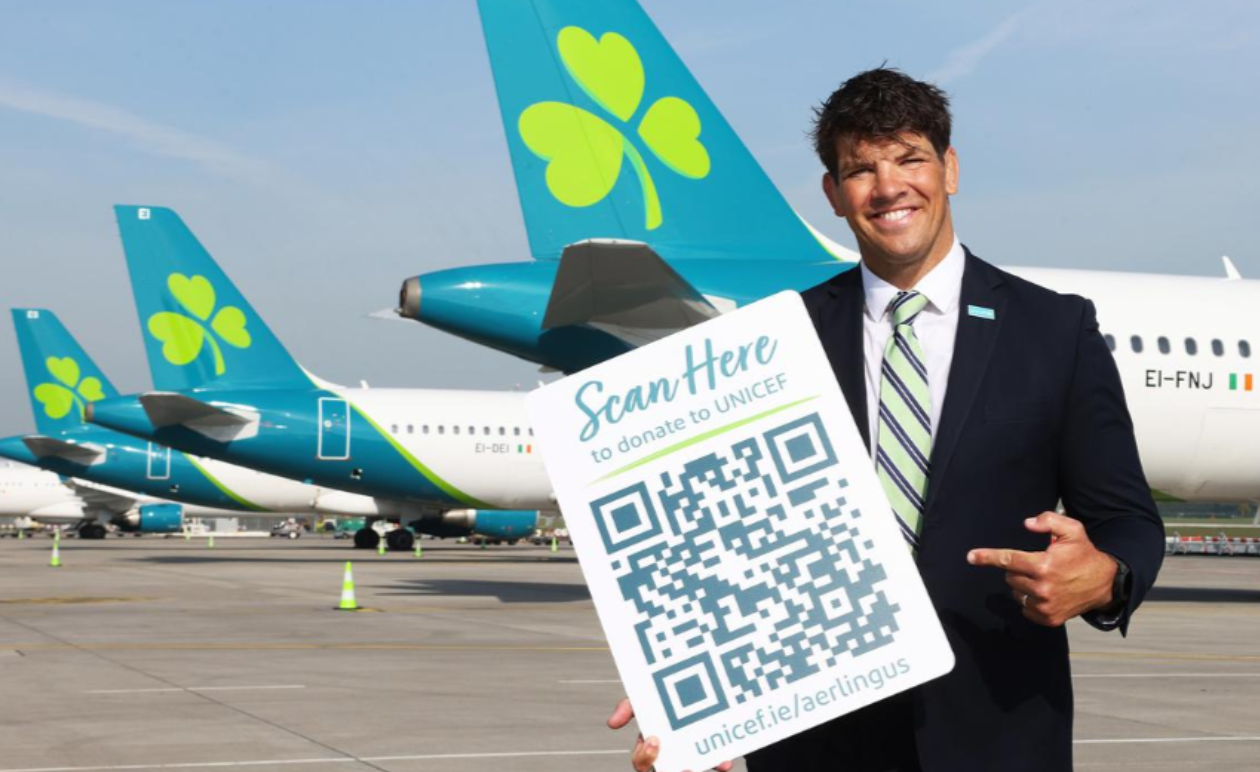
Aer Lingus and UNICEF Ireland has announced the launch of a new onboard digital donation capability, offering customers new ways to contribute to UNICEF’s vital work for children around the world. Customers flying on Aer Lingus long-haul services can now scan a QR code or tap their bank card on cabin crew devices to make quick, secure donations directly to UNICEF during their flight, in addition to the traditional collection of cash donations.

Onboard digital payments are the latest development in Aer Lingus’ partnership with UNICEF that spans over two decades. Since 1997, Aer Lingus and its customers have raised over $23 million in support of UNICEF’s global programmes – funding essential services such as clean water, nutrition, vaccines, education, and emergency relief for children living in some of the world’s most challenging environments.

With many travellers now carrying less cash, this new digital option ensures donations are more accessible and convenient than ever before. Cash donations will still be gratefully accepted onboard, providing customers with flexibility in how they choose to give.

Onboard, customers will hear a video message from UNICEF Ireland Ambassador, Broadcaster and Rugby Player, Donncha O’Callaghan, highlighting some of UNICEF’s key work and outlining how donations can be made in three easy ways – via a QR code, without needing to pay for Wi-Fi, by contactless card payment on crew devices, or by sharing cash donations.

Aer Lingus will also support a number of special collections on board both its long-haul and short-haul services in 2025, with a special collection for Ecuador to take place in the coming weeks. The special appeal for Ecuador follows a visit by Aer Lingus UNICEF Ambassadors to Ecuador earlier this year, who witnessed first-hand the issue of unsafe drinking water in many parts of the country. It’s estimated that 6 out of 10 children under five in Ecuador are drinking contaminated water, putting them at risk of deadly disease, parasites, and chronic malnutrition. Through this special collection and the introduction of onboard digital donations, Aer Lingus aims to boost awareness and funding for UNICEF’s work on the ground in Ecuador to provide safe water, and hygiene facilities to keep children healthy and in school.

Commenting at the launch, Lynne Embleton, CEO of Aer Lingus, said: “Our partnership with UNICEF is embraced across Aer Lingus, especially by our cabin crew who champion it onboard our transatlantic services every day. Thanks to our customers’ generosity, we’ve raised over $23 million to date and we want to keep growing that figure. Digital donations on board is a natural next step in our partnership, to bring new ways for customers to support UNICEF’s vital work worldwide.”

Peter Power, Executive Director of UNICEF Ireland, added: “Aer Lingus customers have shown extraordinary generosity over the past 28 years, and we’re delighted to see this partnership evolve in line with the digital age. These donations help us respond faster and more effectively to the needs of children who are most at risk around the world.”

UNICEF ambassador Donncha O’Callaghan, added: “I’ve been on the ground with UNICEF seeing first-hand the difference UNICEF makes for children who are facing the hardest of circumstances – kids who’ve lost everything, but still have hope. That hope is possible because of support from partners like Aer Lingus and their customers. For over 25 years, in-flight donations have helped change lives. This new way of donating onboard might seem like a small gesture, but I can tell you—it matters. It really can change a child’s future.”

For more information, visit aerlingus.com

UNICEF youth advocate Donnacha Lenehan meets Taoiseach to highlight growing online risks facing children

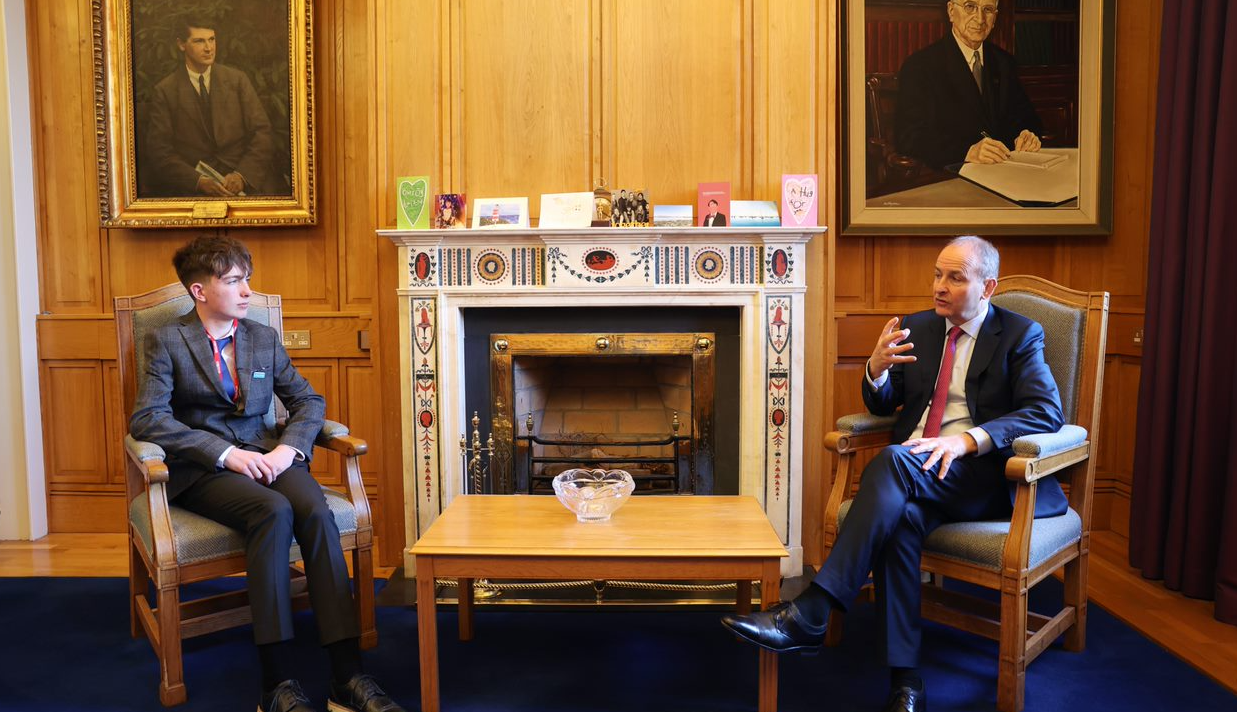
A UNICEF Ireland youth advocate today met the Taoiseach to highlight the growing online risks facing children. Sixteen-year-old Donnacha Lenehan spent the day at Government buildings with Taoiseach Micheál Martin to voice his concerns about issues like online privacy, disinformation and the mental health impacts of social media, as well as to call for greater protection for children online.

Like many young people of his generation, Donnacha spends much of his free time online, experiencing both its opportunities and risks. And as a passionate advocate for protecting children’s rights, Donnacha won UNICEF Ireland’s 2022 #KidsTakeOver competition and had the opportunity to share his message directly with the Taoiseach.

Speaking following the meeting, Taoiseach Micheál Martin said: “Digital and online platforms offer immense opportunities for social connections and learning, but they also pose challenges and risks, especially for our young people. I really enjoyed meeting Donnacha today and hearing his important message – that we should all be aware of the risks of social media, and work to ensure that every child is safe and thrives online. The childhoods that Donnacha and his peers are experiencing are profoundly different to those of the generations before them. We do need to reflect on how children and young people are being influenced and impacted by social media and everyone involved needs to be accountable and responsible for ensuring that children and young people are protected online.”

For Donnacha the meeting with the Taoiseach offered him a unique opportunity to highlight the experiences of children and young people online, “I was delighted to be able to share my perspectives and experience with the Taoiseach. As young people, we depend on the Internet. We use it constantly. We connect with friends. We work and play on it. We use it to create new things and to contribute to communities we are interested in. However, like most things, the Internet, and social media in particular, has its downsides. My main point today was that I feel social media is having a bigger impact on the real world than many people think.”

In a constantly changing online world, and with research into the impacts of online use still unclear, Donnacha feels strongly that children and young people need more protection, especially on social media. “We rely on social media to communicate and socialise. But that dependency also makes children and young people extremely vulnerable to scams, doxing, and cyberbullying, which is becoming a lot more common. Social media is designed to be extremely addictive and I question how positive that is for our physical and mental health. A real danger of social media is that is so new and we don’t fully understand how it works on our brains and the long-term effects it may have on us.”

In his meeting with the Taoiseach, Donnacha spoke about the opportunity that Ireland has, as home to many of the world’s leading social media companies, to take a lead on protecting children online from issues like disinformation. “Another big issue is disinformation. We’ve seen in recent years how it causes fear, hate, uncertainty and divides us during the most troubling times – potentially threatening democracy and our society. In many ways, our experience on social media is influenced by algorithms that are designed to meet the business models of the technology companies – not the interests of our society. However, many of these companies have their European Headquarters here in Ireland. And therefore, does Ireland not have a responsibility to ensure their practices meet the highest standards in terms of protecting children’s rights? We have the power to act and Ireland should lead, not follow.”

Heralding Donnacha’s message that all children should be enabled to thrive in a digital environment, UNICEF Ireland Executive Director Peter Power said: “Donnacha powerfully articulates some of the risks and dangers that his generation is experiencing online, and we commend him for raising these important issues with the Taoiseach today. More research is required to fully understand the impact of social media use on children. However, what we know is that Governments and social media companies must be accountable for children’s health and safety online. We thank the Taoiseach for welcoming Donnacha today, and we welcome the Government’s Online Safety and Media Regulation (OSMR) Bill 2022 currently going through the Dáil, along with the recent introduction of the EU’s Digital Services Act (DSA). These frameworks now need to be properly resourced in order to ensure companies fulfil their responsibilities and act in the best interests, and rights of every child.”

Donnacha’s #KidsTakeOver of the Taoiseach’s office comes a few days after UNICEF’s World Children’s Day on November 20. World Children’s Day is a day ‘for children, by children’, when children from around the world take over, as part of UNICEF’s global #KidsTakeOver initiative, key roles in media, politics, business, sport and entertainment to express their concerns about what global leaders should be focusing on.

According to UNICEF, around the world, children are going online earlier and staying online for longer. This is happening during a period when children are increasingly exposed to embedded and invisible technologies, including algorithms, predictive analytics systems, and even location trackers – that potential violating their rights.

Between 2010 and 2020, the time children spend online almost doubled in many countries. Recent research has found that the majority of children with smartphones report that they use them “almost all the time” to connect, especially on social media. Meanwhile, the numbers of children highlighting online risks is also significant. Globally, 1 in 3 children report experiencing online bullying. And in 2020, 33 per cent of girls and 20 per cent of boys in Europe reported experiencing disturbing content online at least once a month.

Protecting children online and increasing their access to digital learning and other opportunities is also a strong focus of UNICEF’s work all over the world, and UNICEF is helping build the evidence base on children’s digital rights to better understand how the digital transformation of society is influencing children’s lives and wellbeing.