Your Guide to Financial Freedom: Clear Steps for Managing Money Wisely

Many people today want more control over how they manage money. They’re not just looking to cut back. They want clear ways to feel stable and build long-term security. Thankfully, it’s easier now than ever before. Accessible options like mobile banking, budgeting platforms, and modern savings accounts help people stay on track. With the right habits and a few smart changes, it’s possible to avoid stress and make steady progress. 

Whether you’re just starting out or looking to make better choices, here are some steps to help you take charge of your financial future with clarity and ease:

Start With a Realistic Budget

A clear budget helps you understand how much you can spend and what needs to change. It’s not about restriction. It’s about awareness. Start by tracking how much you bring in each month and where that money goes. Use categories like rent, groceries, transport, and extras. Try using a simple spreadsheet or a free mobile app. Keep your categories broad so you don’t get overwhelmed. Once you see where the excess spending happens, you can adjust it. A helpful move is setting limits for flexible categories like dining or shopping. Budgeting gives you a full picture, making it easier to plan ahead and reduce unnecessary spending without feeling deprived or confused.

Choose Modern Banking That Works for You

Many people rely on outdated banks with low savings rates, hidden fees, or poor service. That doesn’t help you manage money well. If you’re looking for a simpler way to organize your spending, save smarter, and achieve your goals faster, it’s time to explore better options like SoFi. They now offer online accounts with no hidden charges, fast transfers, high savings rates, and early access to your paycheck. These features support better decisions by helping you track everything in one place. So, one easy move is to apply for Sofi bank account, which offers mobile access, budgeting tools, and cashback without traditional fees. It’s designed to support people looking for flexibility and control without the usual banking frustration.

Pay Off Debt Without Feeling Overwhelmed

Debt can make you feel stuck, but there are ways to manage it without pressure. First, list everything you owe—credit cards, student loans, or personal loans. Then, choose a plan that works for your lifestyle. Some people like the snowball method, where you tackle the smallest balance first. Others prefer the avalanche approach, focusing on high-interest debt. Pick what feels manageable and commit to regular payments above the minimum whenever possible. Try avoiding new debt during this period. You can also call lenders to ask about lower interest or flexible terms. Progress won’t happen overnight, but with small, steady steps, your balances can shrink and your confidence will grow.

Build an Emergency Buffer

Life happens. That’s why it helps to set aside a small cushion you can rely on in a crisis. Whether it’s for a car repair, medical bill, or a sudden move, having backup funds helps you avoid borrowing or panicking. Start with a target of $500, then work your way toward saving three to six months’ worth of basic expenses. Use a separate savings account so you’re not tempted to spend it. If that feels like a lot, begin with a weekly or monthly goal; even $20 a week adds up. Automatic transfers can help build this reserve without effort. It’s not about saving big amounts. It’s about staying ready.

Set Practical Goals You Can Actually Reach

Setting goals gives your money a direction. Without them, it’s easy to spend without thinking. Start by writing down what you want to achieve. Is it travel, home ownership, or clearing debt? Break these into short-term and long-term goals. Then, assign each one a timeline and an amount. For example, “Save $600 for a weekend trip in six months” is easier to follow than a vague idea of “saving for travel.” Use visual trackers, notes on your phone, or calendar reminders to stay focused. Revisit your list monthly to check progress and adjust when needed. When goals are specific, realistic, and time-based, they feel more doable and help you stay motivated.

Build a Positive Credit History

Good credit can help with future milestones like renting a place, buying a car, or qualifying for better interest rates. Start by checking your credit score and reading your report for any errors. Pay bills on time. This is one of the most important things you can do. Keep credit usage low. That means if your card has a $1,000 limit, try not to carry a balance over $300. Avoid opening new accounts unless necessary, and keep older accounts active if they don’t cost you extra. Over time, these habits can improve your score. Free apps can track your progress and help you stay aware of how your choices affect your credit.

Learn the Basics of Saving and Growth

You don’t need to be an expert to start growing your savings. Begin with what you understand. High-yield savings accounts offer better returns than regular ones. Certificates of deposit (CDs) are another option for short-term goals. For longer-term planning, look into retirement accounts like IRAs. These can help you grow money over time while offering tax advantages. Try not to act on trends or pressure. Stick with steady habits and learn as you go. Small, regular deposits matter more than big one-time moves. Use educational resources to build your confidence. The goal is to stay consistent, even if the amounts are small at first.


You don’t need to change everything overnight. What matters is making choices that move you in the right direction. Managing money well isn’t about strict rules. It’s about staying aware and making steady improvements. From building a basic budget to choosing the right banking features and checking your progress, each step adds up. Remember that your path is yours alone. Keep things simple, stay consistent, and make decisions that support the future you want. Small efforts now can lead to more peace and flexibility later. The most important thing is starting and choosing to stick with it, even when progress feels slow.

Driving less than 15,000 km a year? New report says you could save money by ditching your private car

Car owners who are driving less than 15,000 km a year could be losing out on substantial cost savings, according to a new report from Oliver Wyman, a global leader in management consulting and Bolt, Europe’s largest shared mobility company.

The report has found that while there has been a reduction of 1,700 km per year in the distance travelled by personal cars across Europe over the last decade, the number of vehicles registered per household has stayed the same, suggesting that cars are often sitting idle at home. In Ireland, the number of privately-owned vehicles on the roads rose by 215% between 1985 and 2020. Previous research from Bolt revealed that over one quarter (25.67%) of Irish drivers are likely to give up their car in the next five years if viable alternatives are made available, whilst over half (54.55%) cited the overall expense of running a car as a potential reason for giving up their car.

For those car owners driving less than 15,000 km a year, new data shows other modes of transport like ride-hailing, car subscriptions, scooter and e-bike rentals and car-sharing can be more affordable than owning a car.

The report looked at the total cost of ownership (TCO) in price per km for premium, SUV and compact cars, which decrease incrementally the more a car is driven, and compared them to the price per km of different types of shared mobility services, which carry no additional costs to the user, past the initial price.

In Ireland, though petrol and diesel prices dipped by two cents and one cent in October, the price of crude oil remains elevated at approximately $90 per barrel, an increase on the $70 barrels were valued at during the summer.

Car-sharing emerged particularly favourably as a cost effective transport mode, being cheaper than all three car types at an annual mileage of up to 15,000 km. Shared scooters and e-bike services were cheaper than a compact car at an annual mileage of 5,000 km, while even the most expensive shared mobility service, ride-hailing, proved cheaper than a premium car for an annual mileage up to 12,000 km. The analysis was conducted in Germany but applicable to all major European markets.

For those who cannot afford a car, the study also points out how shared mobility is a viable alternative, removing the key financial barrier of purchasing a car, scooter or eBike and connecting into public transport systems to provide better commuting access.

Fortunately for Irish citizens, the government is taking warmly received steps to ensure the country is well-positioned to transition away from a reliance on the private car. The recent Budget included an investment of €360m in cycling and walking infrastructure, as well as confirmation that the 20% fare reduction for all public transport (implemented last year as a temporary cost of living measure) will continue.

Notably, the government has also been taking great strides to enable an alternative transport mode which can ensure the cycling infrastructure is well used: the shared electric scooter. Legislation is expected to be finalised in the next couple of months. Given one third (33.4%) of private car journeys in Dublin are less than two kilometres according to the CSO, and over one fifth (20.9%) are 2 to 4 kilometres in length, the company with Irish headquarters in Dublin expect the two-wheelers to be a hit in towns and cities of varying sizes across the country.

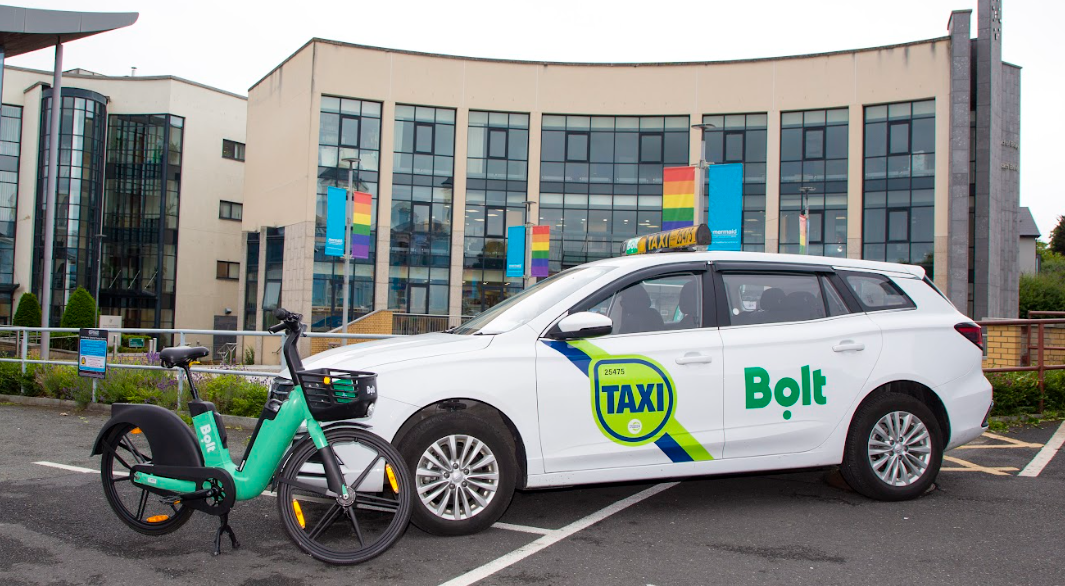
Indeed, Bolt already offers shared electric bikes in Sligo, Kilkenny, Wexford, Bray, Dún Laoghaire-Rathdown, and Carlow. The firm is the largest scooter provider in Europe with scooters and e-bikes in more than 250 cities across 25 countries.

Head of Public Policy for Bolt Ireland, Aisling Dunne, said: “This report comes at a time that has real potential to be a watershed moment for the environment and transport in Ireland. It exposes the poor value for money private cars represent for urban dwellers across the country, just when cities and citizens are understandably assessing how far their euro is going.

“Thankfully a viable alternative is well on its way in the form of the shared electric scooter. We strongly encourage the NTA to continue this positive momentum by evaluating if the supply of taxis – especially in hospitality hotspots like Dublin – is proportionate to the amount of demand from passengers. Many of us will have first-hand experience of struggling to get a taxi.”

Dr Andreas Nienhaus, Head of the Oliver Wyman Mobility Forum, who led the study, said: “The mobility sector has changed dramatically in recent years and in addition to cars there is now a range of different modes of transport available to people. Cars will still be a necessity for some depending on where they live or their job, but what this report shows is that switching away from private car ownership can have significant benefits for many, particularly those living in cities.”

In addition to saving people money, the new report also found that greater usage of services like scooters and e-bikes can have environmental benefits for cities and the people living in them.

An analysis of how people used Bolt scooters in Europe found that around 10% of e-scooter rides directly replaced car journeys. As a result, e-scooters on their own contributed a reduction of up to 120 million car kilometres travelled, helping to alleviate traffic congestion and air pollution in cities and to reduce car-related emissions by an estimated 23,000 tons CO2e across Europe. The study also highlights the potential for aligned multimodal approaches between operators and Cities to cut personal car usage by 20% in Cities like Berlin.