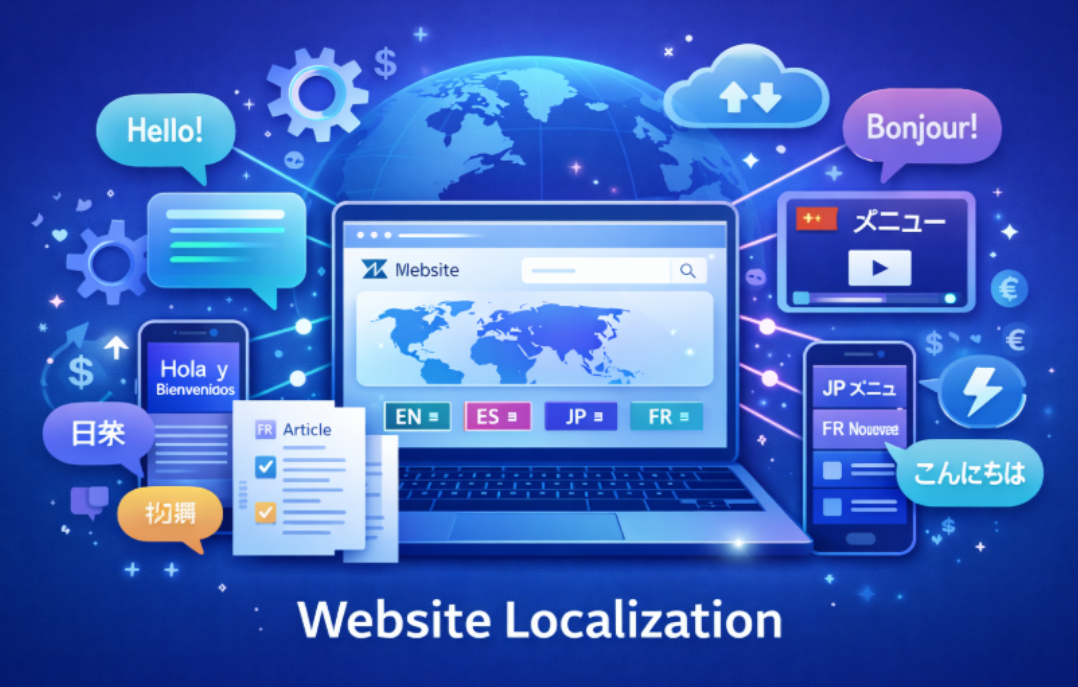
How to Localize a Website: A Comprehensive Guide

In the world of digital commerce and online engagement, localizing your website has become more than just a nice-to-have feature – it’s a necessity. Localizing your website effectively ensures that your content resonates with users in different regions and languages, helping to increase user engagement, conversion rates, and global reach. But how do you go about it? Whether you’re looking to expand into new markets or enhance the user experience for a diverse audience, this guide will walk you through the essential steps for localizing your website.

Why Website Localization Matters

Before you begin the website localization process, it’s important to grasp its significance for your business. A well-localized website builds trust and credibility with your audience. When your website is presented in the language and style of your target market, visitors are more likely to engage, stay longer, and ultimately make a purchase.

Localization is about much more than simply translating text. It’s about tailoring your website’s content, images, layout, and even functionality to align with the cultural norms, preferences, and expectations of the audience you’re targeting. This could include modifying the format of dates and currencies, choosing regionally appropriate colors, or adjusting your message to better resonate with local values. By localizing your website effectively, you can significantly enhance the user experience, reduce bounce rates, and increase conversions, as visitors will feel that your brand understands them and meets their needs.

If you’re looking to read how to localise a website effectively and capitalize on your global expansion opportunities, let’s explore the essential steps to make the process as smooth and impactful as possible.

To successfully localize your website, there are several key steps you need to follow. Let’s dive in.

1. Plan Your Localization Strategy

The first step in website localization is planning. The scope of the project will depend on your target market(s), language(s), and the resources available to you. Start by identifying the languages and regions where you want to expand. Consider using localization tools such as Crowdin to streamline the process.

Start by asking yourself a few important questions:

  • Which markets do we want to target?
  • What languages do our customers speak?
  • What content and pages need to be localized?
  • What are the legal or cultural requirements for those markets?

Once you have this plan in place, it’s time to map out which parts of your website will require translation and which will require cultural adaptation. This includes everything from text and multimedia to formatting and local regulatory requirements.

2. Content Translation and Cultural Adaptation

The most obvious aspect of website localization is translation. When translating your website, it’s essential to ensure that the tone, style, and message match the expectations of your target audience. Just translating the words won’t be enough; you’ll need to adapt your content for different cultural contexts.

Consider using a professional translation service or translation management software to ensure that your content is both accurate and culturally relevant. Translation management tools like Crowdin offer streamlined workflows to handle content translation across multiple languages efficiently.

Additionally, consider these cultural adaptations:

  • Currency and Dates: Make sure to display local currency and adapt the date format to match regional norms.
  • Images and Icons: Images that work in one culture may not resonate in another. Ensure that your images, symbols, and icons are culturally appropriate.
  • User Interface (UI): Languages vary in length, so the layout of your site may need to be adjusted. For example, some languages like German may require more space for text than others like English or French.

3. Technical Considerations for Website Localization

Website localization isn’t just about content; it’s also about how the content is presented. This includes technical aspects such as URL structure, search engine optimization (SEO), and multilingual content management.

For example, you’ll want to create subdomains or subdirectories for each language version of your site (e.g., fr.yoursite.com for French). You should also implement hreflang tags in your HTML to indicate to search engines which version of your content is meant for which language or region. This helps avoid duplicate content issues and ensures that the right users are directed to the appropriate version of your site.

Additionally, ensure that your website is compatible with local payment methods and can handle transactions in local currencies.

4. SEO for Localized Websites

When localizing your website, it’s essential to take SEO into account. SEO is key to ensuring that your localized site is discoverable by users in different regions. Just because you’ve translated your content doesn’t mean it will automatically rank well in local search engines.

Here are some SEO tips for localized websites:

  • Keyword Research: Conduct keyword research in each target language. Local users may search for different terms or phrases than those used in your original market.
  • Localized Content: Tailor your content to local preferences. This means adjusting not only your language but also the topics and themes you cover.
  • On-Page SEO: Ensure that each localized version of your website is optimized for search engines. This includes title tags, meta descriptions, and headings in the target language.

To read how to localise a website properly for SEO, be sure to follow SEO best practices for each market.

5. Testing Your Localized Website

Once you’ve translated and adapted your content, it’s time to test the localized website. Testing is crucial to ensuring that your website functions properly in all regions. You’ll want to check for:

  • Correct translations: Are the translations accurate and do they make sense in the local context?
  • Functional Links: Do all internal and external links work as expected in the localized version?
  • Page Load Speed: Does the localized website load quickly for users in different regions?
  • Mobile Optimization: Ensure that the mobile version of the site is also localized and performs well across all devices.

User testing with native speakers from your target markets is essential to catch any issues that may arise in the user experience.

6. Automating Website Localization

As your business grows and you continue to localize content for additional markets, automating the process can save you a significant amount of time and effort. Crowdin and other localization platforms offer tools that allow you to automate many aspects of website localization. These tools integrate with your existing CMS or website platform and provide a centralized location for managing translations and updates.

Automated workflows can help streamline the translation process, ensuring consistency across different languages and regions. With these tools, you can quickly update your website with new content, making it easy to keep your localized websites fresh and up-to-date.

FAQs and Final Thoughts

What is the difference between translation and localization?

  • Translation involves converting text from one language to another, while localization goes beyond translation to adapt content for a specific culture, language, or region.

How do I handle multiple languages on my website?

  • Use subdomains or subdirectories for each language (e.g., fr.yoursite.com for French or yoursit.com/fr for the French version). Implement hreflang tags to guide search engines.

Do I need to localize all of my website’s content?

  • No, prioritize the most important content for localization – such as key product pages, customer support sections, and marketing materials – before considering less critical pages.

How do I manage localized content efficiently?

  • Use translation management platforms like Crowdin, which allow for collaboration between teams, streamlined translation workflows, and automated content updates.

How much does website localization cost?

  • Costs vary based on the complexity of the project, the number of languages, and the level of adaptation required. It’s essential to budget for translation services, technical adjustments, and ongoing content management.

Final Thoughts

Website localization is a powerful tool for expanding your business globally and engaging with new audiences in their own languages. By following these steps and utilizing the right tools and strategies, you can ensure that your website resonates with users around the world and provides a seamless user experience. Remember to plan carefully, adapt your content for cultural relevance, and optimize your site for SEO to achieve success in every market.

8 Unique Use Cases for a VPN

Since the first online restriction came into play, it kickstarted a war between users who wish for freedom and those who wish to restrict it. Internet users find the internet to be boundless, endless freedom, and they will not settle for anything else. A virtual private network (VPN) is their main weapon, and it can be used for a myriad of things. VPN opens up digital access, secures activities, and reshapes how one interacts with the internet.

1. Improved access to offshore casinos

For starters, a VPN can enable access to features, games, and sites that are restricted in jurisdictions that heavily monitor internet traffic. In areas where internet access is not freely available without restrictions, users turn to offshore casinos. A VPN can enable access by routing connections through countries where these platforms operate legally and openly. Usually, it makes perfect sense to use a VPN in these situations.

A country next to you may have unlimited internet access, and your country is right next to it with restrictions. For users who wish to game online without limitations or being subjected to registration, a VPN can provide access to sites like those featured on ukslotsnotongamstop.com, that offer plenty of games, bonuses, and features, and for them, a VPN is the essential tool for online freedom.

2. Access region-specific content while abroad

While traveling, familiar websites or apps might stop functioning as expected due to regional blocks or content licensing. You’re crossing plenty of borders, and laws can change with each one. A VPN can help by linking your connection to a server in your home country, so you can still use the features as you expect. Streaming services like Hulu or BBC iPlayer, which often tailor libraries to local audiences, become accessible again. This isn’t just about convenience. For frequent travelers, being able to login and use their online services without interruption can be essential for work or personal continuity.

3. Navigate restrictive environments

Access to the open web isn’t a given right everywhere in the world. Sure, we are used to typing whatever we wish and surfing without limits, but that is a luxury. Social media platforms, news sites, or even basic messaging tools may be unavailable due to government-imposed firewalls. Online trust is a big deal and a VPN creates a bridge across these limitations. It allows users to bypass localized restrictions and connect to servers elsewhere.

4. Reduce online price discrimination

All is fair in love and war, so if online retailers sometimes adjust prices based on your location, then using a VPN is a must. This especially applies in the travel sector. Flights, hotels, and even software subscriptions might display lower prices to users in different countries. By shifting your virtual location with a VPN, you can check if better deals exist elsewhere. Even a slight reduction in airfare costs can justify a VPN subscription for frequent flyers.

5. Safer public Wi-Fi use

Public Wi-Fi networks are notoriously insecure.  Anyone can use them, which is why they are great and terrifying. They offer convenience, but they can also expose your data to lurking attackers. A VPN secures your connection through encryption, making it far more difficult for others on the same network to intercept your activity. This protection is especially valuable if you’re accessing bank accounts or entering passwords while using these hotspots.

6. Support secure peer-to-peer file sharing

Downloading or sharing large files via peer-to-peer networks has always come with privacy risks. Your IP address is typically visible to every participant in a torrent swarm. A VPN masks your address, offering a shield that helps reduce the chances of your activity being monitored or throttled by an internet provider. For individuals working with open-source files, large media projects, or even legacy software sharing, aside from modifying their old Windows PC, a VPN is an easy added privacy that makes a difference.

7. Access uncensored search results

Search engines tailor their responses based on the user’s location, showing localized results first. But sometimes that geographic filtering can be a drawback. Researchers or professionals investigating news coverage, cultural events, or policy differences abroad might want to see the internet from a local perspective. A VPN lets them connect through a server in the region they’re studying, surfacing more relevant and contextual results. It’s a quiet but powerful tool for deeper digital research.

8. Improve latency for gaming

Gamers often use VPNs to avoid targeted attacks, like DDoS attempts. But there’s a lesser-known benefit too: in specific situations, a VPN might help bypass bad ISP routing and reduce latency to certain game servers. If you’re playing blockchain game Valhalla, you’ll need all the advantages you can get, so getting a VPN here can certainly help and align with the crypto nature of the game. This isn’t a universal fix, and in many cases, it may slow things down. But for users on congested networks or in regions with suboptimal routing paths, it’s worth experimenting with. Combined with the privacy benefits, the occasional improvement in speed or stability can be a welcome surprise.

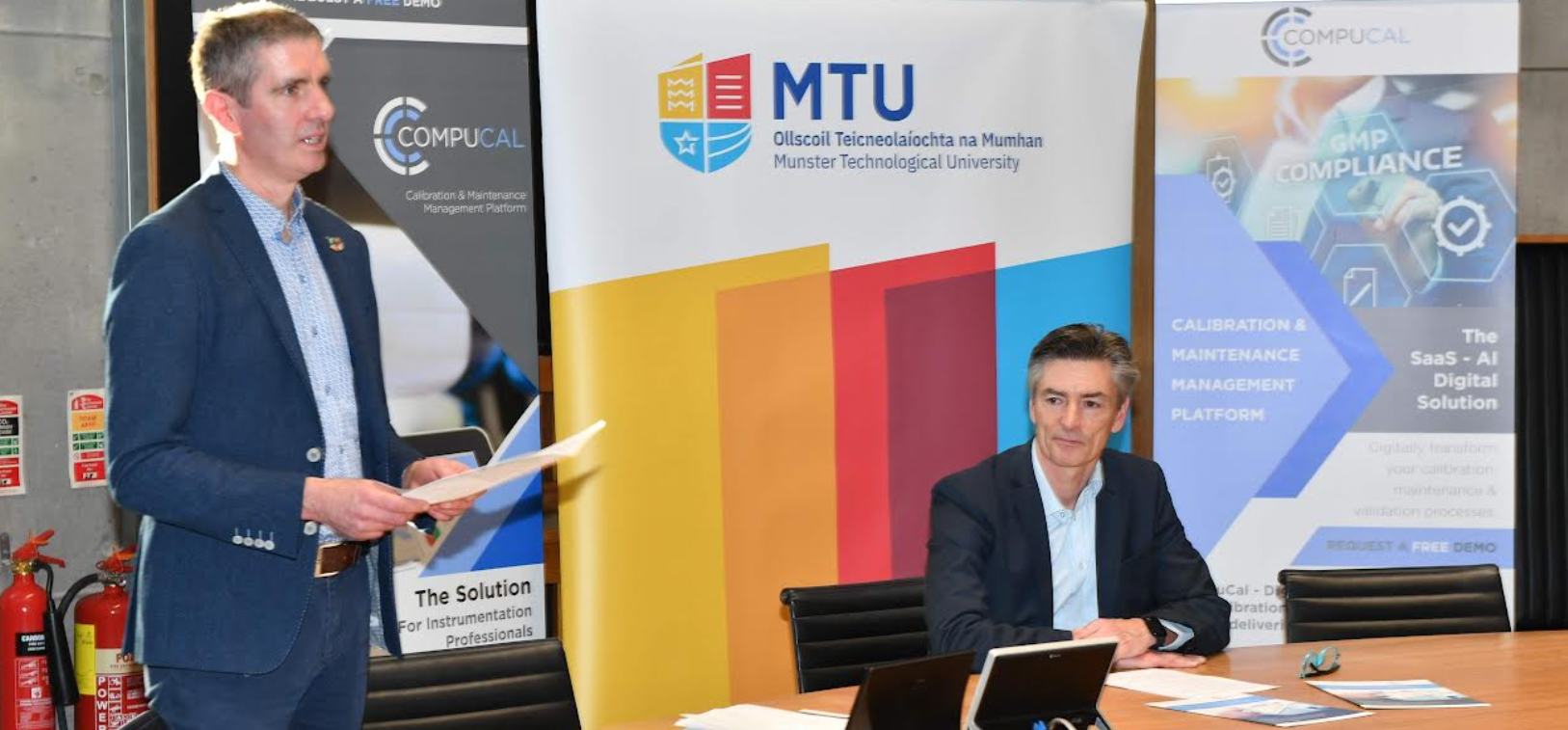
MTU and CompuCal Announce Partnership to Equip Thousands of STEM Students across Southwest Region with Cutting-Edge Industrial Digitisation Skills

Cork-based software company, CompuCal Calibration Solutions, has partnered with Munster Technological University (MTU) to deliver a forward-thinking program that will benefit Science, engineering and manufacturing students across the Southwest region. This collaboration aims to prepare students by enhancing their digital skills to enable digitisation of paper-based current and future processes within instrumentation, processing and manufacturing sectors by offering a real-world digital technology experience and solution, helping them tackle the evolving challenges.

As part of this partnership, CompuCal’s innovative calibration management software has been integrated into MTU’s Department of Physical Sciences full time and industry focused part time Instrumentation and Calibration programme offerings, supporting modules on process control and instrumentation, calibration and asset management. These programmes will certify students in digital calibration, instrument maintenance, commissioning, and validation, positioning them to thrive in the data-driven, process-controlled industrial environments of tomorrow.

MTU delivers approximately 1,500 STEM students annually, comprising approximately 10% of the national STEM cohort in Science & Engineering disciplines. This collaboration will provide these students with practical, hands-on experience using CompuCal’s latest technology, simulating real-life operational challenges that engineers and technicians encounter in the manufacturing industry.

This type of collaboration enables indigenous industry, which includes both SMEs and MNCs, to become globally competitive by partnership with companies such as CompuCal who have developed innovative solutions to meet the challenges of digitisation in modern industry.

Donal Sullivan, CEO of CompuCal Calibration Solutions, welcomed the partnership, “In the highly regulated world of Biopharma, MedTech, and FMCG, calibration maintenance of assets is critical to keeping operations running smoothly. We are delighted to contribute to equipping Ireland’s future engineers and technicians with the skills needed to meet the challenges of advanced manufacturing. MTU’s leadership in adapting its curriculum to meet industry needs is crucial in shaping a workforce ready to face the rapidly evolving global manufacturing environment.”

Through this collaboration, MTU students will gain vital insights into asset measurement—ranging from temperature monitoring to pressure vessels—and will understand the essential role that calibration plays in ensuring production output, compliance with international standards, audit readiness, cost efficiencies, and business intelligence reporting.

MTU’s Donagh O’Mahony, Head of Department, Physical Sciences also highlighted the significance of the announcement, “This partnership reaffirms MTU’s commitment to engaging with industry and enterprise. We are leveraging the exceptional expertise and innovation of an industry partner to support the development of future generations of talented MTU students. CompuCal has worked with us to review and update some of our core instrumentation and calibration modules, ensuring that they align with the latest in industrial best practice. The resulting changes best demonstrate the role of calibration in a live global manufacturing environment. This is directly relevant to our students and we are excited by the value that is being added to our course work and their learning experience.”

The collaboration, which includes the recent incorporation of CompuCal GO, a mobile app designed for on-site technicians, ensures that MTU students are exposed to the latest technology in the field. This state-of-the-art tool provides a fully digital, paperless solution for calibration and maintenance tasks, integrating real-time data uploads directly to the CompuCal cloud platform.

Enterprise Ireland doubles size of delegation to Slush Finland as exports to the Nordics soar

Enterprise Ireland, has announced it will be doubling its presence at Slush Finland this year, to showcase 24 of the country’s most innovative companies. This increased presence at Slush, the largest gathering of venture capital in the world, reinforces Enterprise Ireland’s support for Irish businesses to scale and succeed in global markets and follows strong interest from client companies in the Nordic region.

Enterprise Ireland client companies have nearly doubled their exports to the Nordic region over the past five years, growing from €877 million in 2018 to €1.7 billion by 2023. This impressive growth highlights the success and achievements of Irish companies in the wider Nordic market, where over 560 Enterprise Ireland companies export to the region.  The Nordic region has become a key export market, on par with other major European export destinations such as Germany, the Netherlands, and France.

Director of Nordic Region Hannah Fraser says “As Enterprise Ireland’s Director for the Nordic Region, I’ve seen how well the Nordics’ focus on innovation and sustainability aligns with Ireland’s strengths. We’re thrilled to double our presence at Slush this year, bringing 24 clients to connect with global partners and investors. The Nordic market has become a powerhouse for Irish businesses, with exports nearly doubling over the past five years to €1.7 billion and more than 560 Irish companies thriving in the region. This strong partnership continues to open exciting growth opportunities.”

For several years, Enterprise Ireland has built a strong presence at Slush, a showcase of groundbreaking innovation where start-ups, industry visionaries, and global investors come together. Slush offers Enterprise Ireland clients unparalleled opportunities to expand their reach in the Nordic market and beyond. Recognising the importance of this event to Ireland’s innovation landscape, the Finnish Embassy launched Ireland’s 2024 presence at Slush with a celebratory mixer on November 7th, once again highlighting the close ties and shared commitment to innovation between Ireland and the Nordic region.

Speaking on this, Ambassador of Finland to Ireland Leena Gardemeister, said, “We are excited by the growing interest from Irish businesses in both Finland and Slush, which has become a key platform for connecting innovators and investors globally. The collaboration between Irish and Finnish companies continues to thrive, and we look forward to further strengthening these ties in the future, driving new opportunities for growth and innovation on both sides.”

The Enterprise Ireland clients attending Slush 2024 include Konree Innovation Ltd, Sonalake, Numra, Cytidel, Vaultree, Tracworx, Lua Health, Lative, Spanish Point Technologies, Galvia, Manna Drone Delivery, EVERYANGLE, Ardanis Technologies Limited, Provizio, Chirp, Coroflo, VRAI, W4 Games, RDI Hub Company, Equal1, Binarii Labs, Oblivious, Tracworx & Outmin.

North West Region set to take advantage of growth opportunities in cybersecurity

Regional Skills North West and Cyber Ireland have partnered to commission a “Cyber Security Skills Audit Report” to examine the shape of the cybersecurity sector in the North West region of Ireland. The report outlines the region’s strengths to attract companies seeking new locations for cybersecurity services giving a positive outlook for the region, while also highlighting improvements needed for the future of the sector. With the right investment and supports in place, the report forecasts that the North West region could see growth in cybersecurity related jobs quadruple from 250 this year to 830 jobs by 2030.

The research reveals that the region has a number of core strengths that make it an attractive location for cybersecurity investment including a new university in the area, Atlantic Technological University, that now delivers specific IT and cyber security degree and post graduate programmes. The report identifies at least 10 organisations offering cybersecurity services within the region including large multinational operators, Tata Consultancy Services (TCS) via its Letterkenny Global Delivery Centre and Optum, the international healthcare services provider, who have stated ambitions to further recruit and grow their cyber security skills talent base locally.

Tim Kelley, Strategic Head of TCS Threat Management Centres in UK, Ireland & Europe said: “This study rightly identifies the urgent need to accelerate investment to satisfy the demand for security skills. Our TCS Cyber Security Practice is committed to grow and strengthen our Ireland Threat Management Centre to service our customers needs from our global delivery centre in Letterkenny.”

He added: “I wholly support the report’s recommendations to ensure Ireland based talent can deliver on the global opportunities in the cyber security sector.”  

Other strengths identified in the report that make the North West region an attractive location for cybersecurity investment include the lower cost base for both employers and employees, in terms of housing, commercial rents and labour costs, the quality of life in the region and the access provided to nearby tech collaborative clusters, including Donegal Digital, Northern Ireland Cyber and Cyber Ireland’s West Chapter.

Co-author of the ‘Cyber Security Skills Audit Report’, Hilary McPartland, manager of the North West Regional Skills Forum said: “This report has captured the opportunity for cybersecurity in the North West.  It finds a vibrant ecosystem with great potential to grow. It’s the first step in our journey to build this sector to be one of the leaders in our region. I look forward to helping develop the talent and skills needed to support this dynamic sector vital to our economy and future success.”

Cyber Ireland’s ‘State of the Cyber Security Sector in Ireland 2023’ report estimates that there are currently 7,350 cyber professionals in the Republic of Ireland of which approximately 3% of these are now based in the NW region.

This latest study puts forward a number of recommendations for improvement and expansion of the cyber security sector within the region that require investment and supports now in order to realise the potential opportunities. This includes the creation of a cybersecurity culture through cyber awareness training for SMEs, driving cyber security standards in the region and enhancing the overall cyber community through more events and networking opportunities.

Continuing to build a talent pipeline from within the region for cyber jobs will also be critical with resources needed to raise awareness of career pathways and job readiness programmes facilitating entry into the sector. Findings from the study indicated that only 30% of cyber roles in the North West are filled by people from within the region.

Regional Skills North West and Cyber Ireland are now calling on all stakeholders in the region to pull together to grasp this growth opportunity by promoting awareness of the North West’s burgeoning cybersecurity ecosystem, its attractiveness as a location and the important contribution it can make to the local economy and innovation in the region.

Paul Brady, Senior Director, Enterprise Information Security at Optum said: “As both a business stakeholder and chapter lead for Cyber Ireland, I am excited to see this report come to fruition.  The report offers clear and sensible direction to promote the growth of cybersecurity in the North West region and I welcome the recommendation that now is the time to invest in cyber talent to take advantage of the opportunities ahead of us.”