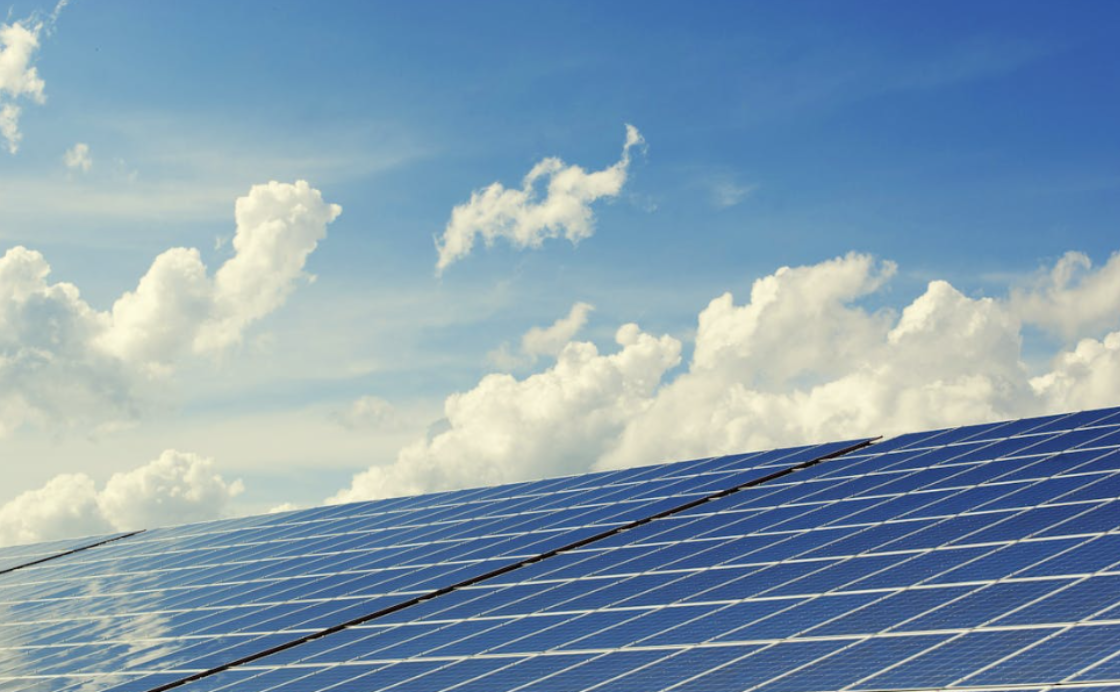
A Dive into the Technology Used in Solar PV

In a world where the consequences of climate change are increasingly apparent, the push to reduce greenhouse gases, mainly by burning fossil fuels, is in full swing. Investment in green energy, such as solar energy, is increasing with each passing year, and for good reasons.

Switching to green solar energy is now economically feasible. While there has always been an abundance of solar energy to tap into, the technology to harness ample solar energy for typical household or commercial use cases was cost-prohibitive. 

It’s estimated that the amount of sunlight that hits the earth’s surface in just one hour and a half is enough to meet the world’s full-year energy consumption. On average, 342 watts of solar energy hit every square meter of earth yearly (https://www.nasa.gov/wp-content/uploads/2015/03/135642main_balance_trifold21.pdf). This is a huge amount of energy, which, if tapped into by using solar PV, can make a significant difference in reducing carbon emissions. Recently, harnessing solar energy to generate electricity has become a viable option.

Solar PV technology such as pvgeneration.ie used in harnessing solar energy has improved tremendously in the past decade, improving the efficiency of commercially available solar panels. With increased efficiency, typical solar panels can generate more electricity and meet our needs, reducing reliance on fossil fuels.

Let’s dive into the solar PV technology that’s making harnessing solar energy possible.

Solar Photovoltaic Technology: How PV Cells Convert Sunlight into Electricity

A photovoltaic cell is a non-mechanical device that converts sunlight to electricity. Every PV cell is made of a semiconductor material. Semiconductor materials conduct electricity better than insulators but not as well as conductors, such as metals, can. When sunlight strikes PV cells, the photons can provide enough energy to dislodge negatively charged particles called electrons.

The dislodged electrons also attain energy to flow through the material, creating an electrical current that can be harvested to power electrical appliances. The front of the PV cells are treated to attract the dislodged electron or current of electricity. With the electrons moving to the surface of the PV cell, an electrical imbalance between the front and the back surfaces of the PV cell is created, thereby creating a voltage potential that allows the current to flow.

The vast majority of PV cells are made using silicone semiconductor material. The abundance of material and the longevity of silicon-based PV cells makes it commercially viable to produce silicon PV cells.

Every PV cell can produce as much as 1 to 2 watts, which is insufficient to power household or commercial appliances. However, when the cells are connected in a package to form a panel, they produce usable electricity. Typically, solar panels are connected to create an array, further enhancing the electricity-generating potential of the PV cells.

Once the electron reaches the surface of the PV cells, the current is extracted through a conductive metal and transferred to external loads – appliances that use electricity or storage batteries. 

PV cells generate direct current (DC) electricity. You can charge storage batteries directly with DC electricity. However, nearly all devices use alternating current electricity. As such, homeowners and businesses that invest in solar panels must also invest in an inverter, which converts the DC electricity that PV cells generate to AC command devices.

PV Efficiency 

One of the most essential measurement metrics for solar PVs is their efficiency. Understanding what happens to sunlight when it hits the PV cells is important to understand PV efficiency. When solar radiation hits the PV cell, it can either be reflected by the cell, pass through it, or be absorbed by it. The absorbed sunlight is the proportion of sunlight that generates electricity. As such, PV cell efficiency is the measure of the amount of electrical power generated by a PV cell compared to the energy of sunlight that hits the cells. 

The efficiency of PV cells depends on the intensity of solar radiation and the wavelengths of light the PV cell can utilise to generate electricity. The semiconductor bandgap indicates the wavelength of light the materials can absorb and use to dislodge electrons to generate electricity. As such, the efficiency of a solar PV cell depends on the bandgap matching with the wavelength of the light. 

Commercially available PV cells from companies such as NFC Energy in Meath typically have an efficiency of 15% to 25%. However, niche PV cells such as those used in satellites and experimental cells can achieve about 50% efficiency.

Other Types of Solar Cell Technology 

While the solar PV industry is dominated by silicon solar cells, there is an array of other types of solar cells. They include:

#1: Thin-Film Solar Cells – Thin-cell PV cells are made using a micrometre thick layer of semiconductor materials such as copper indium gallium diselenide (CIGS) or cadmium telluride (CdTe). Consequently, these PV cells are flexible and lightweight, which makes them ideal for portable applications. Thin cell PVs are also easier to manufacture than traditional silicon-based PV cells. 

#2: III-IV Solar Cells – The III-IV Solar PV Cells can be considered the most advanced currently available PV cells. They are named after the group of elements they are made of – that is, Group III materials such as indium and gallium and Group V elements such as antimony and arsenic. These types of solar cells are more challenging to manufacture and, therefore, more expensive. As such, they are typically used in high-tech environments where high power-to-weight ratios are essential, and their high cost is not a prohibiting factor, such as satellites and high endurance UAVs.

Additionally, research is ongoing to develop new types of solar cells that are cheaper and easier to produce while retaining high levels of efficiency (or even improving efficiency). Various national laboratories and private organisations are pursuing new PV technologies such as quantum dot PV cells, concentration PVs, multijunction PV cells, PV cells made of organic materials, and PV cells made of hybrid organic-inorganic materials (such as Perovskite Photovoltaics, which are a type of thin-film PV cells).