Top Payment Solutions That Every Business Owner Should Know About

Do you work for a large company that uses multiple payment systems in order to receive payment from your clients, or to pay out your employees for their work? Maybe you have recently started a small business doing something that you love, and you want to make it as easy as possible for people to pay you for your service or product? Perhaps you have lost business in the past because your payment solutions were not up-to-date, and you have now vowed to never let that happen again? If this sounds like you, then keep on reading to learn more. This article will break down some of the top payment solutions that every business owner should know about. You want to make the payment process as simple as possible for your customers so that they keep coming back for more. 

Cash

There is a saying in the retail world that ‘cash is king’. This might have been true in the early 21st century, but in modern times we have seen a shift away from cash payment. This is particularly true for the last 2 years, during which we have seen a massive shift to contactless payment systems to accommodate for restrictions to prevent the spread of the coronavirus. The pandemic has really shaken up the cash payment system, but it does not mean that you are unable to use cash to pay if that is still your preferred method. Some people do not like to use credit or debit to pay for products and services, so it is important to be able to accommodate these preferences as a business owner or vendor. 

Debit

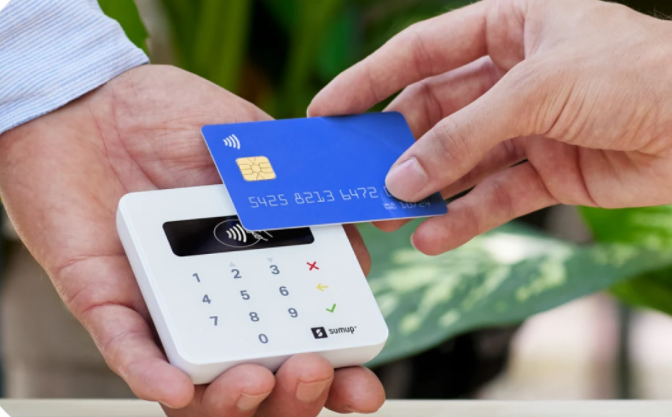
Ever since the start of the pandemic, businesses have been encouraging more customers to use contactless forms of payment, such as debit. Many debit cards now offer a tap function, which means no more inserting your card in order to pay. This is extremely convenient for online businesses too since you can easily accept and send money through debit online and in person. 

Portable

If you are a small business owner or an independent contractor, then there is a very high chance that you have struggled in the past to make sure that you have a portable payment solution that is easy to use, and versatile for the customer’s needs. Just a decade or two ago, it was almost unheard of to be able to pay somebody with a phone attachment. Many vendors at farmer’s markets and craft shows are now beginning to use portable payment methods that allow you to pay without cash wherever you are. If you are selling some kind of product, you might want to get a payment system and a paper printer in order to allow you to provide your customers with a receipt after making a purchase. This can make things like returns much easier, and you will still be able to send an electronic receipt to those who would prefer a paperless transaction. 


E-Transfer

If you have ever splurged on some food or drinks at a bar with your friends, then you have probably sent an e transfer at some point in order to cover your half of the bill. E Transfers are a legitimate way to receive payment for goods or services as well, and can often be seen in use for individual contractors. These transfers usually require an email address or phone number in order to receive the transfer, which is then accepted using your bank login details.

Pre-Paid

Another thing that many companies like to do to accept payment is to give the customer incentives to pre-pay for a product or service. This is often seen in the video game world, where customers will prepay for video games in order to receive extra perks in-game. 


After checking out some of the helpful tips and tricks included in this article, the hope is that you have found some of the top payment solutions that every business owner should know about. There is nothing worse than wanting to purchase a product or service from a business, only to find that their payment solutions are not conducive to a quick sale. This can cause huge problems with your business, and lead to a huge decline in repeat customers. If you want to have a product or service that people will keep coming back to, then you need to ensure that every part of the transaction is enjoyable for the customer and that there are no unneeded hurdles for them to overcome along the way. This article only discusses a few of the options for payment solutions, so be sure to check out some other resources in order to continue learning.

PayPal rolls out QR Code payments in Ireland for a Touch Free way to buy and sell in-person #PayPal

PayPal Holdings has today rolled out the ability to use QR Codes to buy and sell goods in Ireland and 27 other markets around the globe. From local takeaway coffee shops to selling secondhand goods – the rollout of the QR code functionality in the PayPal app allows customers to buy or sell in in-person, safely and securely, and touch free.

“We know that in the current environment, buying and selling goods in a health-conscious, safe and secure way is front of mind for many people around the world. As the coronavirus situation has evolved, we have seen a surge in demand for digital payments to transition to include new in-person environments and situations,” said John Kunze, Senior Vice President of Branded Experiences, PayPal. “The rollout of QR codes for buyers and sellers not only incorporates the safety, security and convenience of using PayPal in-person, but also takes into consideration ongoing social distancing requirements, even as we start to see some restrictions be lifted around the world.”

Maeve Dorman, Vice President of Global Merchant Services, PayPal, said: “Covid-19 has changed the shopping experience in Ireland as we know it. Not only do people need security and convenience, as always, they now need to be able to sell and buy in a way that is quick, safe and involves limited social contact. Digital payments, and this QR code functionality, allow for this and could be the means through which small Irish businesses survive during the crisis and potentially thrive in the future.”

Additionally, to continue PayPal’s efforts in assisting our customers during this difficult period, for a limited time, we are waiving our standard seller transaction fees incurred on for sales conducted using a QR Code.

Safely buying and selling touch free – from takeaway coffee shops to selling secondhand goods:

Using the QR code functionality in the PayPal app is a quick and safe way to complete a transaction in-person utilising a PayPal wallet, eliminating the need to handle cash. For example, customers who are selling items in-person at local coffee shop can print a QR code, place it on their table and have their consumers simply scan, enter the amount they’re paying and send money immediately. This allows the seller to minimise physical interactions with the customer, while also limiting the customer’s interaction with checkout technology. There is no technology to touch or purchase – just aim a smartphone camera at a QR Code that is printed or present on another screen.

For a buyer looking to pay, customers can go to the PayPal app, click ‘Send’ and tap the QR code symbol in the top right-hand corner. The camera will open and customers can scan a seller’s QR code and follow the prompts to complete the transaction. Sellers can create a PayPal-generated QR code for by following the steps outlined here.

PayPal is rolling this functionality out to 28 markets around the globe including: Australia, Austria, Belgium, Canada, Cyprus, Czech Republic, Denmark, Estonia, Finland, France, Germany, Greece, Hong Kong, Hungary, Ireland, Italy, Latvia, Luxembourg, Malta, Netherlands, Portugal, Slovenia, Slovakia, Sweden, Switzerland, Spain, United Kingdom, and United States

Irish millennials lead the swing towards cashless payments. #Payments #Cashless

The Irish are – per capita – leading the globe towards a cashless system. Unfortunately for us, this might not be a good thing

Irish business and consumers alike are more cashless than ever thanks to the latter’s expectations of commerce. The fact is cash is diminishing as a payment method globally, and indeed Ireland might just be the number one nation employing digital payments within the next few years. By all credible accounts, Sweden currently carries the title of the world’s most cashless society based on GDP, but adoption in Ireland is continuing apace. 

When it comes to future predictions of which nation will emerge as the one most at home with cashless payments, uptake rates and practical application are key, and Ireland is at the forefront. This has produced some interesting (and challenging) scenarios for business at large, and there’s a palpable perception that so-called ‘old school’ business practices – especially in retail – are going to lose or are already losing customers if they’re not implementing digital payment methods.

Cashless convenience is a ‘sidegrade’ for Irish business

Rather than a downgrade (losing tech, capacity or the ability to service clients) or an upgrade (spending extensively on rebuilding customer management systems from scratch), going cashless for Irish businesses is a ‘sidegrade.’ In other words, the ‘problem’ of going cashless in business is a nice problem to solve. For those businesses taking the plunge, it’s relatively easy to effect and a continuous joy to use thereafter. After all, it implies doing less – no cash box, drop safe, or banking of cash; and it removes the prospect of being swindled with counterfeit or robbed when carrying cash.

Oddly enough, it’s often very large and very small businesses that still need to enact a cashless option. Furthermore, specific sectors or industries tend to lean towards cashless payments or, on the other hand, lag in their implementation. Retail is the most seamless in application, being the coalface for interaction with consumers. That said, B2B transactions often quickly adopt modern consumer conveniences, too. As any IT company in London, Dublin, or New York can attest, implementing systems to render cashless transactions is a regular and growing component of their daily work. For example, UK cash payments have dipped from above 60 percent in the noughties to around 40 percent today. If this trend continues, only around 20 percent of payments will be cash in the country by 2030. Ireland might race ahead a little, being predominantly cashless within five years.

Are there really advantages for a cashless business?

The short answer is yes. 

Whatever the reasons driving cashless transacting – if you offer it, you’re not alienating potential clients. As cashless payments become increasingly commonplace, any business (especially those dealing with consumers) will want to offer the facility of doing so to avoid losing sales. With online shopping being the flagship that’s driving expectations around purchases, consumers are used to super-fast and hassle-free buying.

Adding cashless payment options provides needed and good diversity, rather than the typical ‘fluff’ businesses often add on to themselves when jostling in the marketplace. It’s easy to see how in the next decade or two, every retailer – from the local newsstand to SuperValu – will likely offer all payment options possible, and this will become the norm and standard expectation. Remember when online shopping was a dangerously unfamiliar arena and involved waiting up to three weeks for delivery? Commerce has been working furiously to narrow that gap, and has done so fairly successfully by (partly) driving the swing to cashless transacting. 

Amazon might be the epitome, launching a drone to ship goods speedily, but they’re nothing if not indicative of the consumer service ethic that’s pushing businesses all over the globe. That push seems symbiotic with being cashless and helps to inform it. Some obvious commercial beneficiaries of a cashless economy would be restaurants and those in hospitality who no longer need to keep cash on the premises late at night. Any business with a busy supply chain needed to produce its product or service could win back several hours in their day, too, and all businesses that see large volume will see their insurance premiums dip if there’s no cash on premises.

The significant benefit to all business is that mobile, digital payment potentially provides plenty of customer data to use at your discretion (within GDPR guidelines, of course). Not only will it deliver what payment option they prefer, but what they bought, how often they’re in-store, what they’re buying and how much their overall spend is. That’s meaty intel for any marketer, and will go towards refining presentation and ultimately the consumer experience. As a wholly immersed generation carries their digital acumen into their daily lives, more businesses will need to offer cashless options in order to serve the majority coming through the doors.