NSAI holding Ireland’s first ever Time & Sync Forum

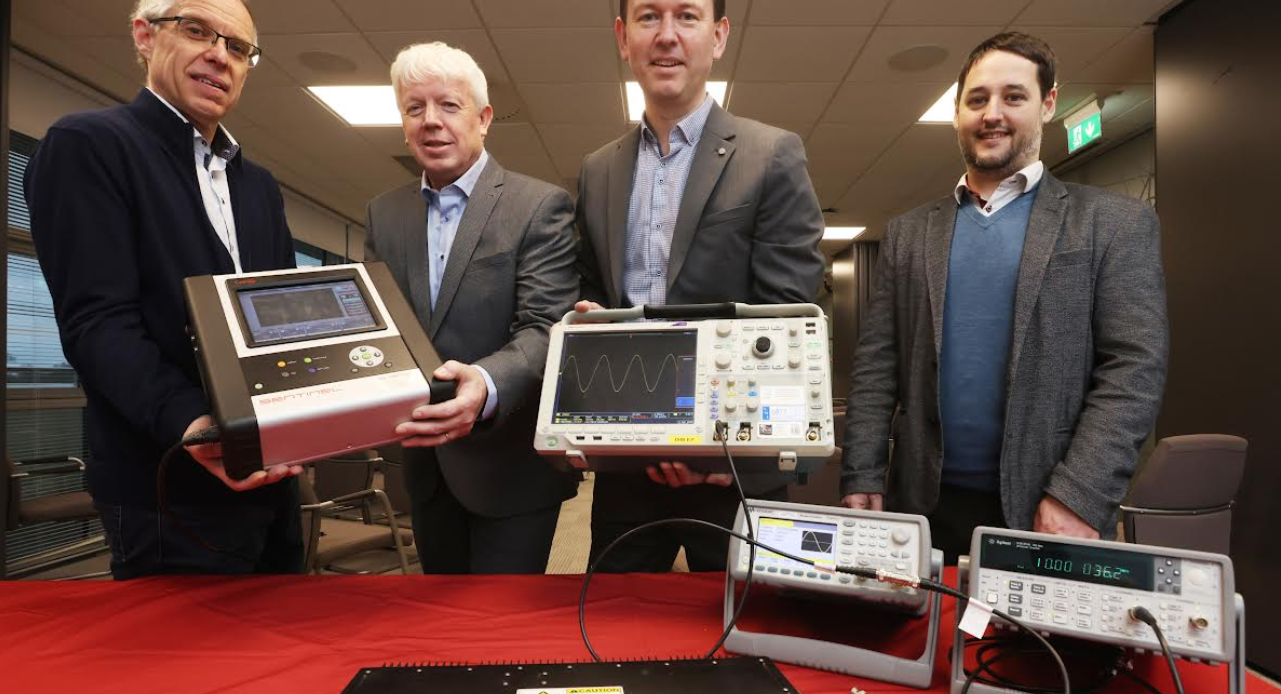
The National Standards Authority of Ireland (NSAI), in conjunction with their partners Data Edge, Timing Solutions and HEAnet, are hosting Ireland’s inaugural Time & Sync Forum today, 11th Feb 2025, in Santry, Dublin. The event is bringing together a number of leading authorities in timing and synchronisation from Ireland, the UK and the European Commission to discuss key topics and policies relating to critical infrastructure on the island of Ireland.

Position, Navigation, and Timing (PNT) technologies play a crucial role in modern economies, and enable over 10% of Europe’s annual GDP, or more than €14 trillion*. Major industries such as communications, energy, transportation, public services and financial services are increasingly reliant on precise timing and timing distribution to deliver their services.

Commenting on the event, Minister for Enterprise, Tourism and Employment, Peter Burke TD said, “Position, Navigation and Timing technologies are a core part of the work of a number of industries that are cornerstones of the Irish economy. Earlier this year, the Programme for Government committed to delivering a strong enterprise and fiscal framework to support competitiveness and the growth of a strong industrial base which has created jobs, grown exports, promoted innovation, and raised our standard of living. I warmly welcome this event, focussed on building on the launch of the National Timing Grid, and its role in advancing Ireland’s domestic capabilities to support industry.

Following on from the successful launch of Ireland’s first National Timing Grid in 2023, the NSAI is hosting the Forum to promote the continuing need for Ireland to have as much control over its timing infrastructure as possible, including the potential replacement of Greenwich Mean Time with a domestic equivalent.

Keynote speakers include Dr. Leon Lobo, Head of the National Timing Centre (NTC) programme at Britain’s National Physical Laboratory, who is delivering its national timing strategy.  Dr. Lukasz Bonenberg, Space Programmes Policy and Scientific Officer, Joint Research Centre (JRC), European Commission, will also provide his expertise having worked on Galileo, the EU’s Global Navigation Satellite System (GNSS). Between them, Drs. Lobo and Bonenberg will provide an important overview of PNT resiliency across Europe.

Along with Data Edge, Timing Solutions and HEAnet, NSAI are currently working on enhancing Ireland’s PNT capabilities through the National Timing Grid and the distribution of verified global GNSS data to support compliance with the upcoming EU NIS2 Directive. This update to the EU’s original Network and Information Security (NIS) Directive significantly expands cybersecurity obligations for critical infrastructure sectors.

NSAI’s National Metrology Laboratory (NML), based in Glasnevin, maintains the reference measurement standards for Time & Frequency and contribute their atomic clock data to the International Bureau for Weights and Measures (BIPM) who maintain and calculate Coordinated Universal Time (UTC). Whilst Legal Time in Ireland is under the remit of the Department of Justice, the internationally accepted representation of the second in Ireland is maintained by the NSAI’s NML.

David Fleming, National Standards Authority of Ireland, Technical Manager for Time, said, “We expect this important gathering to provide valuable insights which help us to inform policy development at a Governmental level and outline the requirements for investment in key timing infrastructure for the country. In a time of disruption and major technological advancements, Ireland needs to be as self-sufficient in this area as possible, while also aligning fully with our international counterparts.”

 “With this event, we are aiming to draw in and engage as many interested stakeholders as possible to determine the requirements across the diverse sectors dependent upon precise timing.”

NSAI Launches Europe’s First Verified Global Navigation Satellite System Data Stream Service

The National Standards Authority of Ireland’s National Metrology Laboratory (NSAI NML) today announced the launch of Europe’s first ever verified GPS/GNSS Data Stream (VGDS) service, an extension to the National Timing Grid of Ireland (www.ntg.ie). This initiative developed in partnership with Timing Solutions, marks a significant step forward in ensuring secure and reliable Global Navigation Satellite System (GNSS) data, vital for government organisations, public institutions and business sectors including communications, energy, and transportation, public services, financial services, and cloud data centers as a source of accurate time.
The VGDS service provides verified GNSS data in the form of Radio Technical Commission for Maritime Services (RTCM) packets via the internet, allowing users to verify their own GNSS data streams.
GNSS (Global Navigation Satellite Systems), such as the US’s Global Positioning System (GPS) and the EU’s Galileo, are invaluable in our daily lives as they provide real-time navigation assistance for people and assets helping them find the most efficient routes, avoid traffic, and reach their destinations safely and quickly. In emergency situations, GNSS devices help locate individuals quickly, allowing first responders to reach them faster.
David Fleming, NSAI Technical Manager for Time & Frequency said,
“We are so excited to be launching in Ireland, Europe’s first ever Verified GNSS/GPS Data Stream service. As Ireland’s digital economy continues to grow and more services and public safety aspects are dependent on GNSS/GPS data, the importance of verifiable GNSS/GPS data in Ireland is paramount which made the establishment of this service a key priority for the NSAI NML.”
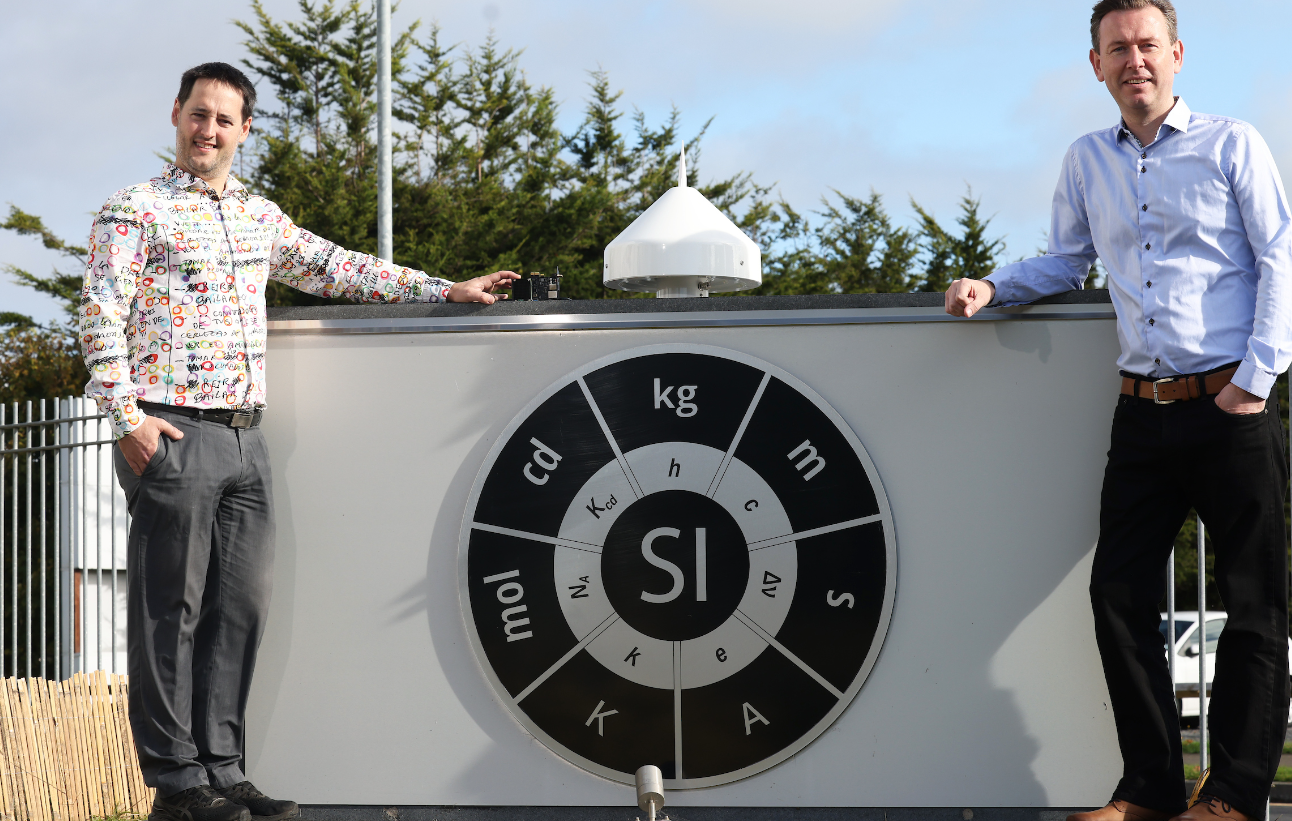
As Ireland’s national authority for measurement standards, NSAI NML is responsible for creating, maintaining and developing the national measurement standards for physical quantities (e.g. kilogram, second, meter, etc.) and making these standards available to Irish users. The VGDS service is being delivered by NSAI NML and led by specialist partner Timing Solutions, a NovaUCD and ESA BIC Ireland client company.
Dr. Zdenek Chaloupka, Founder, Timing Solutions said:
“The Timing Solutions team is delighted to be taking the lead in establishing Ireland as one of the leading countries around the world with respect to the provision of safe GNSS/GPS data and signals thereby improving the resiliency of the Critical Infrastructure sectors.”
GNSS systems like GPS have become an essential part of everyday life, from driver navigation and optimising farming operations to coordinating emergency services. However, their widespread use has also exposed vulnerabilities that can be exploited for criminal activities, including signal jamming and spoofing—both of which can disrupt crucial services and threaten public safety.
By offering a verified stream of GNSS data, the VGDS service mitigates these risks, ensuring that users in Ireland and beyond can trust the accuracy and reliability of their location and timing data. This service is particularly critical for Critical Infrastructure sectors, which depend on GNSS for accurate timekeeping, communications, and operational efficiency.
Dr. Chaloupka from Timing Solutions is presenting this new initiative at the International Time and Sync Forum (ITSF 2024), the world’s largest timing and sync event, gathering in Seville in November 2024. Access to the VGDS service can be requested by emailing NSAI NML at gnssdatatrial@nsai.ie or Timing Solutions at vgds@timingsolutions.ie.

Cyber threats have real world consequences – it’s important for companies to get ahead and protect themselves today

Information Security Management is the first line of defence for a company against a range of threats, including data breaches, ransomware attacks, and malicious intrusions. With cyber attacks growing in frequency and sophistication, organisations of all sizes face unprecedented risks to their operations, finances, and reputation.  

Almost 54% of international business leaders believe the cybersecurity risk to their organisation has increased over the past 12 months.2 The financial and reputational damage inflicted by a cyber attack can be immense. Organisations operating in every sector – manufacturing, construction, retail, wholesale, health, ICT and all others – are at risk of these threats daily. The cost of recovery from an Information Security Management Breach can often exceed the investment required for preventative cybersecurity measures. 

Stewart Hickey, Head of Business Excellence, NSAI said: 

Standards and certification can be used by companies to underpin both legal and ethical obligations with respect to information security management and GDPR. Standards provide an important means to give technical effect to a principle or regulation in a way that can be evaluated, compared and certified, thereby offering a compliance pathway. Consequently, every business must protect itself – and ISO/IEC 27001 can help you identify the essential tools and skills to do this. Organisations need to be aware of the most serious threats so they can protect their reputation and finances. ISO/IEC 27001 equips companies with protocols and procedures that minimise the chance of a cybersecurity breach. 

The National Standards Authority of Ireland (NSAI) is urging firms in Ireland to be aware of the importance of cyber security. Cyber criminals are constantly developing new ways to steal data, demand ransoms, and disable IT systems. Any business, large or small, is a potential target. Tackling these ever-evolving dangers can’t be just another management talking point- it is a matter of corporate survival. 

Conor Dowling, Director of Managed Services with ProCloud, commenting on the benefits undertaking the ISO/IEC 27001 certification process said: 

We applied for and achieved ISO/IEC 27001 certification for how we manage security for our own business, and the benefit of this also extends to our clients. We look after their security, so that gives them confidence. There is a huge concern and consciousness regarding cybersecurity in today’s climate. We also found that the benefits extend to ProCloud’s own staff as we now have clear processes in place from the moment an employee starts with us, so they feel confident and secure in their management of our systems and handling of information on behalf of clients. We would recommend ISO/IEC 27001 to any company looking to improve their cyber resilience and protect the security of their business”. 

Certification to ISO standards is a significant step for any company. The NSAI are hosting free webinars so you can find out more about what is involved and how you can help your company secure itself against today’s most serious cyber threats. Places are limited and you can register at nsai.ie/27001 for the upcoming webinar dates; November 30th 2023, December 6th 2023, and January 25th 2024.  

You can also download a free self-assessment tool to help analyse your current Information Security Management status and how ISO/IEC 27001:2022 could enhance it. Prepare your company now for 2024 – regardless of the size of your business or the sector in which you operate, cybersecurity needs to be a priority. 

[1] https://www.aon.com/2021-global-risk-management-survey/index.html?utm_source=media=&utm_medium=org-digital&utm_campaign=ri_global-risk-management-survey__global_all&utm_content=press-release_all

2 https://www.mazars.ie/Home/Insights/Global-insights/Cyber-security-report-2022

Artificial Intelligence: Irish organisations urged to become ‘more familiar’ with future EU legislation

The National Standards Authority of Ireland (NSAI) is urging organisations, especially businesses, to become more familiar with upcoming EU legislation around artificial intelligence (AI). As Ireland’s official standards body, it is also encouraging organisations across the country to get more involved in the sector by helping develop future international AI standards.

To support Irish enterprises, NSAI is teaming up with Danish Standards and European Committees for Standardisation (CEN and CENELEC*) to jointly host a webinar on Friday, November 24th called: ‘Future EU legislation on AI and the important role standards play.’ The event is an initiative under the new European Commission High Level Forum on Standardisation and will feature speakers from the European Commission, national standardisation bodies and companies such as Ireland’s SoapBox Labs.

The use of AI in the EU will be regulated by the upcoming AI Act, which has been described as the world’s first comprehensive AI law. Becoming more familiar with that piece of legislation is a recommended step for all Irish organisations, says Marita Kinsella, Head of Innovation Policy and Business Development with NSAI. She said: “To successfully implement the AI Act, it’s critical for organisations and businesses in Ireland to know what practical implications the AI Act will have for them and also importantly, how they can help influence the development of future standards around AI.”

Earlier this yearthe Minister of State for Business, Employment and Retail, Neale Richmond T.D. and Minister of State for Trade Promotion, Digital and Company Regulation, Dara Calleary T.D., launched the AI Standards and Assurance Roadmap with the NSAI.

The roadmap is a key deliverable under Ireland’s National AI Strategy and is a significant step in ensuring that Ireland is at the forefront of change. Its aim is to support Irish enterprises and organisations in embracing AI safely and ethically, through utilising AI standards that are published and in development.

“All types of organisations, such as state agencies, businesses, non-governmental organisations and academic bodies, are encouraged to contribute to the development of future international AI standards,” said Kinsella.

She added: “In Ireland, for example, organisations can engage with our national committee or can have their say on draft standards through the ‘Your Standards, Your Say’ portal on the NSAI website.”

The webinar on November 24th runs from 10am to 12pm, Central European Time, and bookings can be made through the Danish Standards’ website at https://www.ds.dk/da/ydelser/kurser/future-eu-legislation-on-ai-and-the-important-role-standards-play

NSAI launches Ireland’s first ever National Timing Grid

The National Standards Authority of Ireland’s National Metrology Laboratory (NSAI NML) today announced the rollout of Ireland’s first ever National Timing Grid (NTG). As Ireland’s home of measurement, the Glasnevin-based NSAI NML is responsible for establishing, maintaining and developing the national measurement standards for physical quantities and providing these standards to Irish users.

As the country’s digital economy continues to grow and more services are moved online, the importance of accurate timing in Ireland’s networks is paramount. Time and timing distribution have become increasingly important for critical infrastructure sectors such as communications, energy, transportation, public services, financial services, and cloud data centers, which made the establishment of the NTG a key priority for the NSAI NML. Delivered with specialist partners Data Edge and Timing Solutions, there are many essential features of the new NTG. These include near real time tracking of clock stability against Coordinated Universal Time (UTC), the primary time standard by which the world regulates clocks and time, early warnings in case of timing drift, enhanced resilience in case of jamming or spoofing of GPS systems and redundancy in case of clock failure.

David Fleming, NSAI Technical Manager for Time said, “We are so excited to be launching the country’s first every National Timing Grid. Keeping Ireland’s networks on time is crucial in supporting its day-to-day operations as more and more of our services are moved online.

We are now also distributing NTP time derived from our caesium atomic clock (over the internet). We are keen to support Irish businesses in any way that we can and this time has been made freely available for use by any organisation that could benefit from utilising time directly traceable to UTC (NSAI).

After extensive accuracy and stability analysis of the NSAI NML’s clock data by the International Bureau of Weights and Measures (BIPM) in 2020, NSAI NML was officially accepted as traceable contributors to UTC, the primary time standard by which the world regulates clocks and time, and it has regularly contributed its clock data since November 2020 for the generation of UTC. This timescale is comprised of hundreds of similar atomic clocks maintained by National Metrology Institutes globally and is the basis for civil time internationally since 1972. Ireland’s new officially recognised timescale is now known as UTC (NSAI).

The NTG currently comprises six caesium atomic clocks from large telecommunications companies based in Ireland that are linked via GPS satellites. Using a novel and proprietary technique, these clocks automatically send clock data for direct comparison against UTC (NSAI) and thus are now traceable to UTC (NSAI).

Zdenek Chaloupka, Founder, Timing Solutions said, “This was a challenging and unique project, one of the first in the world to use the ‘GNSS Satellite Common View’ technique to deliver near real time tracking of timing sources, such as caesium clock, and used to provide early warnings in case of timing source performance degradation.”

Paul Phelan, CEO, Data Edge said, “We are honoured to be working as the technology partner with the NSAI NML & Timing Solutions on such a vital national project.

NTG Ireland is now leading the way on strategies to ‘protect National Time/UTC (NSAI)’, and we are looking forward to presenting our work-to-date at the International Timing & Sync Forum (ITSF) in Antwerp in late 2023, where global experts meet annually to discuss developments in the field of Time and Sync.”