Digital Tools Reshape the Way Assets Are Organized for the Future

Modern technology has transformed the way people manage and monitor their assets. Cloud platforms, encrypted storage, and digital dashboards allow individuals to track property, investments, and important documents with unprecedented clarity. Traditional methods of keeping records in filing cabinets or scattered across physical locations are being replaced by systems that centralize and secure valuable information. This shift improves efficiency while reducing the likelihood of lost documents and forgotten details.

The accessibility of digital solutions has also created new standards for accuracy and transparency. Individuals can update records in real time, share information with trusted parties, and monitor changes without relying on intermediaries. Automated notifications and version control further reduce errors, making the management of critical documents more reliable. Technology now plays a fundamental role in establishing a clear overview of assets, which supports informed decision-making and long-term planning.

Organizations and families alike have started to adopt integrated platforms that combine financial, legal, and personal records. These systems reduce duplication of effort, lower administrative overhead, and allow stakeholders to coordinate seamlessly. The result is a more structured approach to asset oversight that enhances both security and confidence in future decisions.

Streamlining Probate Planning with Technology

According to one legal practice, probate planning has increasingly benefited from digital integration. Complex estates require careful documentation, and digital tools allow users to store, categorize, and retrieve these records efficiently. Probate planning now includes digital inventories, secure communication channels with legal advisors, and automated reminders for critical deadlines. These tools ensure that no detail is overlooked and that the transfer of assets occurs smoothly when the time comes.

Digital solutions also enhance oversight and reduce administrative delays. By consolidating wills, trusts, and related documents in secure platforms, families and advisors can coordinate more effectively. Notifications for legal requirements or upcoming obligations help avoid missed filings, while audit trails provide verifiable records of updates. This technological approach strengthens probate planning by minimizing confusion, streamlining communication, and supporting a more orderly transition of assets.

In addition, digital probate platforms often include tools for tracking disputes, creditor claims, and tax obligations. Families gain clarity on potential challenges and can respond quickly to issues before they escalate. The proactive management of these details reduces stress and ensures that all involved parties are informed and prepared for the transfer of property and responsibilities.

Tools Supporting Legal Coordination and Decision-Making

Technology has changed the landscape for legal advisors and executors. Shared digital workspaces allow attorneys to collaborate with clients in real time, ensuring that instructions and approvals are properly recorded. Platforms with role-based permissions ensure that sensitive information remains accessible only to authorized parties, reducing the risk of mistakes or unauthorized alterations.

Advanced software can also generate summaries, reports, and compliance checks, providing insight into complex estates. Executors can identify discrepancies, track asset valuations, and monitor pending obligations without needing to sift through paper records. The ability to manage these processes digitally improves transparency, accountability, and precision, which strengthens confidence in the execution of legal and financial responsibilities.

Integration with external financial accounts, property databases, and secure communication tools allows legal teams to act efficiently. These connections reduce delays in verification, expedite approvals, and create a complete view of the estate at any given time. Decision-making becomes more informed, and the coordination between multiple stakeholders remains consistent throughout the process.

Security and Accessibility in a Connected World

Data security and access control are critical for safeguarding digital asset records. Encrypted storage, two-factor authentication, and distributed backups protect sensitive information from unauthorized access or accidental loss. Users can set permissions to determine who views, edits, or shares information, providing tailored oversight for families and legal teams.

At the same time, accessibility ensures that critical documents are available when needed. Remote access allows authorized users to review or update information from any location. This capability is particularly useful during emergencies or when coordinating across multiple jurisdictions. By balancing security and accessibility, technology supports a more reliable and flexible approach to asset management.

Organizations can implement layered security strategies that combine internal protocols, external monitoring, and automated alerts. This approach not only prevents unauthorized access but also provides detailed records of who has interacted with sensitive data. Stakeholders can maintain confidence that assets remain protected while remaining available to those with legitimate authorization.

Reducing Complexity and Enhancing Preparedness

Digital tools simplify processes that were previously cumbersome. Automated categorization, reminders, and integration with financial accounts reduce the burden on individuals and legal advisors. Users can create comprehensive overviews of assets, liabilities, and obligations without manually compiling information from multiple sources.

Preparedness extends beyond organization. Digital simulations, scenario planning, and progress tracking allow families and advisors to anticipate potential challenges. By modeling different outcomes, users can adjust their plans proactively. These capabilities reduce stress, prevent oversight, and improve the overall effectiveness of managing complex estates and preparing for eventual transfers.

Further advancements allow integration with estate management services, insurance systems, and tax platforms. This expanded ecosystem ensures that all relevant factors are monitored continuously, giving users a complete picture of estate readiness. The ability to respond quickly to changes in circumstances or regulations adds a layer of security that traditional methods cannot match.

Embracing a Modern Approach to Asset Oversight

The integration of digital tools into asset management represents a fundamental shift in how wealth and property are monitored. Users can maintain accurate records, coordinate with legal advisors, and implement structured processes without relying on outdated methods. Cloud-based solutions, secure platforms, and automated workflows provide a level of control and clarity previously unavailable.

Adopting these systems ensures that assets are organized, accessible, and protected for the future. Families benefit from smoother transitions, reduced errors, and more informed decision-making. Technology has become a central component of modern planning, allowing individuals to safeguard their legacies efficiently while minimizing uncertainty and administrative burdens.

Digital integration also supports long-term adaptability, allowing users to incorporate new asset types, respond to evolving legal requirements, and track historical changes over time. This flexibility ensures that estates remain manageable, responsibilities are clearly defined, and future transitions occur with confidence and efficiency.

How do emergency services navigate complex indoor spaces during critical situations?

When smoke fills a stairwell or a crowd surges toward a locked exit, seconds decide outcomes, and indoor navigation becomes as critical as the siren outside. Recent high rise fires, large venue evacuations, and more frequent multi agency drills have pushed emergency services to modernize how they move inside complex sites. The challenge is immediate: GPS weakens indoors, signage disappears in darkness, and even familiar buildings turn hostile when alarms, debris, and panic reshape every corridor.

When every second counts

Could you pick the right stairwell first? Firefighters and paramedics often enter with incomplete information, and they must choose routes quickly while heat, noise, and stress distort judgment. Dispatchers start with pre incident plans, verified access points, known hazards, and on site contact numbers, then they push that package to vehicle terminals and command tablets, so crews do not waste minutes hunting for a service entrance. Teams confirm their entry point on arrival, and they report changes fast, because a locked fire door or a disabled elevator can reroute the entire operation.

Radio remains essential, yet modern responses add structured data so teams do not rely on memory under pressure. Many services conduct surveys before emergencies occur, and they store hydrant locations, standpipe connections, sprinkler control valves, elevator overrides, and rooftop access routes in shared systems that supervisors can update after renovations. Incident commanders assign sectors, track who advances where, and enforce accountability checks at set intervals, because losing a crew inside a maze multiplies risk for everyone.

Maps that work indoors

How do you map a building you cannot see? Indoor mapping platforms convert architectural plans into navigable layers, with rooms, stair cores, restricted zones, and critical equipment marked clearly for operational use, rather than for a glossy brochure. Responders use those layers to plan approach routes, identify alternate exits, and avoid dead ends that trap teams when fire spreads or structural damage blocks corridors. When renovations change layouts, updated mapping prevents crews from sprinting toward a door that no longer exists, and it helps commanders choose safer paths as conditions evolve.

The best tools respect emergency constraints: they load fast, they work offline, and they present simple symbology that stays legible in low light or on a shaking screen. A crew leader can open a floor, tap a stairwell, and share a route to a teammate entering from another side, which keeps teams aligned even when they cannot meet face to face. Platforms such as Visioglobe.com show how indoor maps, routing logic, and searchable points of interest can merge into a single operational view, so navigation stays usable when voice instructions and visibility fail at once.

Finding people fast

What if the victim cannot call out? Locating occupants and responders often depends on indoor positioning, because GPS fades indoors and raw radio signal strength can mislead in steel heavy environments where reflections bounce signals into false confidence. Wi Fi and Bluetooth can estimate location using existing infrastructure, while Ultra Wideband can deliver higher precision in selected zones, and inertial sensors can bridge short gaps when signals drop in stairwells or underground corridors. Agencies rarely bet on one method, and they fuse inputs to stabilize results when smoke, moving crowds, and radio congestion turn clean diagrams into messy reality.

Finding people also means tracking teams, and that is where procedures and devices meet. Some departments use wearable tags or telemetry systems that log entry time, assignment, and last known position, while commanders monitor air supply limits and set check in points that prevent silent drift into danger. Venues can help by sharing live building data, such as elevator outages, access control status, and door sensor alerts, because a locked gate can funnel evacuees into a bottleneck and trap responders behind them.

What venues can do next

Book an indoor mapping and safety audit, then set a budget for updates, device replacement, and drills that keep crews fluent. Prioritize basements, plant rooms, and long corridors, and test offline access during exercises. Look for safety grants, smart city funds, and resilience aid to cover part of the rollout.

GPS Trackers vs Bluetooth Trackers: Family1st and Apple AirTag Compared

People often look for tracking solutions thinking GPS trackers and Bluetooth trackers do the same thing. The difference only becomes clear once real-world movement, distance, and expectations enter the picture.

Some tracking tools are built for reassurance and visibility, while others are meant for quick recovery in everyday situations. Mixing those purposes is where confusion usually starts.

Understanding how these two types of trackers fit into daily life makes the choice far simpler. Once that context is clear, deciding between GPS and Bluetooth tracking feels much more intuitive.

What Are GPS Trackers?

A GPS tracker is a device used to monitor the location of a person, vehicle, or asset when distance and movement are not limited to a nearby area. In tracking comparisons, it represents solutions built for ongoing location awareness rather than short-range discovery.

These devices are commonly used across different scales, from personal safety tracking to vehicle and asset monitoring. Their purpose extends beyond finding lost items and focuses on visibility, accountability, and situational awareness.

Because of this broader role, GPS trackers are often associated with use cases such as safety monitoring, theft prevention, and operational oversight. This positions them differently from Bluetooth-based trackers, which are designed for convenience within close proximity.

How Do GPS Trackers Work?

A GPS tracker calculates its location by receiving timing signals from multiple GPS satellites and using trilateration to determine position. The distance to each satellite is calculated based on signal travel time, allowing the device to pinpoint latitude, longitude, and elevation.

For reliable positioning, the tracker typically connects with at least four satellites at once. This improves accuracy, especially when the device is moving or operating in areas with signal interference.

After the location is determined, the tracker transmits the data through cellular or satellite networks to a connected platform. The information is then available for live viewing, historical tracking, and alerts through an app or web interface.

Benefits and Limitations of GPS Trackers

GPS trackers are typically evaluated based on how reliably they provide location information over time and distance. Their strengths and weaknesses become clearer when viewed through real-world usage rather than feature lists.


Aspect What GPS Trackers Do Well Where GPS Trackers Fall Short
Tracking Range Provide long-distance and wide-area location visibility Depend on cellular or satellite coverage
Location Updates Support frequent or real-time tracking Higher update frequency increases power usage
Use Cases Suitable for people, vehicles, and asset monitoring Not ideal for casual item finding
Reliability Operate independently without nearby devices Performance can drop in signal-restricted areas
Cost Structure Deliver consistent tracking value Usually require a subscription plan
Maintenance Designed for ongoing monitoring Require charging or periodic upkeep

What Are Bluetooth Trackers?

Bluetooth trackers are most often used when something small goes missing nearby, not when it has traveled far. People rely on them for everyday objects that tend to stay within the same places they move through daily.

These devices are tied closely to routine environments, such as homes, workplaces, or frequently visited locations. They are less about tracking movement and more about narrowing down where an item was last seen.

As a result, Bluetooth trackers are associated with convenience rather than oversight or safety. Their role in tracking conversations is limited to short-range recovery, which places clear boundaries on what they are meant to do.

How Do Bluetooth Trackers Work?

A Bluetooth tracker works by emitting a low-energy Bluetooth signal that can be detected by nearby compatible devices. When another device comes within range, the tracker’s presence is identified and its location is updated based on that device’s position.

Rather than calculating its own coordinates, a Bluetooth tracker relies on surrounding smartphones or devices to relay location information. This means location updates only occur when the tracker passes close enough to another participating device.

Once detected, the location data is shared through an associated app or network and made visible to the owner. The effectiveness of this process depends entirely on proximity and device density, not continuous tracking.

Benefits and Limitations of Bluetooth Trackers

Bluetooth trackers are usually assessed based on convenience, simplicity, and how well they perform in everyday environments. Their strengths become clear in short-range scenarios, while their limits appear once distance and independence are required.

Aspect Where Bluetooth Trackers Perform Well Where Bluetooth Trackers Fall Short
Usage Scope Easy to use for locating personal items Not suitable for tracking people or vehicles
Range Effective within close proximity Limited to short distances
Power Consumption Long battery life due to low energy use Reduced functionality to conserve power
Cost Model Typically no subscription required Fewer advanced tracking capabilities
Dependency Simple setup with mobile devices Reliant on nearby compatible devices
Reliability Works well in familiar environments Inconsistent updates in low-traffic areas

What Are the Differences Between GPS Trackers & Bluetooth Trackers?

The difference between GPS trackers and Bluetooth trackers becomes clear once you look at how far they work, how often they update, and what they are realistically meant to track.

Coverage Area

GPS trackers are meant to stay useful even when distance increases, whether that’s across town or beyond. Bluetooth trackers stay effective only within nearby surroundings where devices frequently pass by.

Update Behavior

With GPS trackers, location information continues to change as movement happens, creating a sense of continuity. Bluetooth trackers update location only when chance proximity allows it.

Dependency Level

GPS trackers function on their own once activated and connected to a network. Bluetooth trackers depend on other devices being close enough to notice them.

Intended Use

GPS trackers tend to be chosen when safety, monitoring, or responsibility is involved. Bluetooth trackers fit better into everyday moments where something small is simply misplaced.

Practical Reliability

GPS trackers remain predictable as long as coverage exists. Bluetooth trackers become uncertain once movement leaves familiar, populated areas.

Taken together, these differences show that GPS and Bluetooth trackers solve separate problems rather than competing for the same role.

When Should You Choose a GPS Tracker vs a Bluetooth Tracker?

Choosing between a GPS tracker and a Bluetooth tracker depends less on technology and more on how much certainty you need about location.

Distance Matters

A GPS tracker is the better choice when distance is unpredictable and location needs to stay visible even when someone or something moves far away. Bluetooth trackers start to lose usefulness once that distance grows beyond familiar surroundings.

Update Expectations

If knowing where something is right now matters, GPS tracking fits that expectation more naturally. Bluetooth tracking works when occasional updates are acceptable and timing is not critical.

Responsibility Level

GPS trackers are usually chosen in situations that involve responsibility, such as caring for someone or keeping track of a valuable asset. Bluetooth trackers suit low-risk situations where the goal is simple recovery rather than oversight.

Everyday Scenarios

For travel, safety, or ongoing movement, GPS tracking aligns better with real-world needs. For misplaced items at home, work, or routine locations, Bluetooth tracking often feels sufficient.

Seen this way, the decision isn’t about which tracker is better overall, but which one matches the situation you’re actually dealing with. 

How Does Family1st GPS Tracker Fit These Needs?

Family1st portable GPS tracker is designed for situations where location awareness needs to stay consistent, even when routines change or distance increases. It fits naturally into scenarios where uncertainty around location would create stress or risk.

Families and caregivers often use Family1st when proximity-based tracking is not reliable enough. In these cases, depending on chance encounters or nearby devices would leave too many gaps.

Rather than helping locate misplaced items, Family1st supports ongoing awareness and peace of mind. Its value comes from knowing where someone is without having to wait for conditions to line up.

How Does Apple AirTag Fit Bluetooth Tracking Use Cases?

Apple AirTag fits situations where the goal is to recover items that tend to stay within familiar places. It works best when something is misplaced nearby rather than truly lost over long distances.

The AirTag is commonly used for personal belongings like keys, bags, or wallets where movement is limited and predictable. In these cases, relying on nearby devices to update location is usually enough.

Rather than providing continuous awareness, Apple AirTag focuses on helping users retrace steps within everyday environments. Its usefulness comes from convenience and simplicity, not long-term monitoring or safety needs.

Final Verdicts

GPS trackers are the better choice when location needs to stay visible regardless of distance or movement. They fit situations where certainty and ongoing awareness matter more than convenience.

Bluetooth trackers make sense for everyday items that tend to stay within familiar places. They work well when the goal is simple recovery rather than continuous tracking.

The right choice depends on the consequences of not knowing a location when it matters. When reliability is critical, GPS tracking is the safer option, while Bluetooth tracking remains suitable for low-risk, nearby use cases.

Mastering bet coupons on 1win casino for smarter, organized betting

How the “My Coupons” feature enhances the 1win casino experience

The “My Coupons” feature on the 1win Casino platform serves as a simple and convenient starting point for anyone exploring bonuses, promotional rewards, and personalized offers. It’s designed to help players easily track what benefits are currently available to them without digging through multiple menus or support pages. This section acts as a user-friendly hub that centralizes all active and potential bonuses in one place.

For those who enjoy switching between different game formats, including 1win live casino, this feature provides a quick overview of rewards that can be applied across various gaming categories. Whether a player prefers classic slots or real-time table games, the platform ensures that coupon information stays organized and accessible whenever needed.

Another advantage of “My Coupons” is its ability to show which offers are time-limited or event-based, allowing players to make better decisions about when and how to use them. Without overwhelming details, it gives users a clear picture of current opportunities and upcoming bonuses they might want to watch for. This helps maintain a smooth flow in gameplay without constant interruptions or second-guessing.

Overall, this feature reflects the platform’s emphasis on convenience and simplicity. It’s a functional introduction to how 1win structures its promotional system and guides players toward making the most of what the casino offers. While not overly detailed, it acts as a foundation for exploring more advanced bonus mechanics later on and sets the stage for a well-organized gaming experience.

Understanding what a bet coupon is and where to find it on 1win

A bet coupon on 1win is the central element that stores all the details of a wager before it is confirmed. It works like a digital slip that collects selected events, chosen odds, potential payouts, and any additional options the player sets before finalizing a bet. This tool helps users keep control over every component of their wager, making the process transparent and easy to manage. Whether a player picks a single event or builds a combined selection, the coupon automatically updates and displays all relevant information in real time.

Before placing a bet, the coupon becomes the area where every choice is reviewed. It is located in a fixed position on the interface so that players always know where to find it, regardless of what section they are browsing. This gives the betting experience a structured flow: a user explores available markets, selects outcomes, and then shifts attention to the coupon to finalize the decision. Because the 1win platform is built with intuitive navigation, locating and using the coupon becomes effortless even for newcomers.

Bet coupon structure on 1win

  • Location on the interface: the coupon is typically displayed on the right side of the screen on desktop and in a pop-up panel at the bottom on mobile devices
  • Automatic event collection: every time a user selects a match or outcome, it is instantly added to the coupon
  • Real-time odds tracking: updated odds appear immediately, allowing players to adjust the bet if necessary
  • Stake input field: a dedicated section lets players enter the amount they want to wager
  • Projected payout calculation: the coupon shows a dynamic estimate of the potential win based on current odds
  • Bet type selection: users can switch between single, express, or system options depending on how many events they added
  • Confirmation button: once everything is reviewed, this button finalizes the bet and submits it to the system

After reviewing the coupon and confirming the desired parameters, players can place their bet with a single click. The interface ensures that the player sees all essential details clearly before committing to the wager. This reduces mistakes and gives users confidence that their choices are correct and intentional.

Even after the bet is placed, the coupon remains a crucial part of the experience. It helps players understand how each wager is structured, revisit their selections, and develop better decision-making habits over time. By presenting all information in one clean, organized location, 1win ensures that both beginners and experienced bettors can navigate the betting process with ease and accuracy.

How to track active and completed bet coupons on 1win

Monitoring active and finished bet coupons on 1win is an essential part of understanding your betting activity and evaluating performance over time. The platform provides a clear and structured way for users to review every wager they have placed, making it easier to identify winning patterns, analyze mistakes, and maintain control over their betting history. All this information is organized in a dedicated section where coupons are divided by their current status.

Active coupons include bets that are still running — matches in progress, scheduled events, or wagers waiting for final outcomes. Completed coupons, on the other hand, display the final result of each wager. These two categories help players stay focused and avoid confusion when checking multiple bets simultaneously. Navigating between them is simple, and the system updates automatically as events conclude.

Below is a structured table that summarizes how tracking works on 1win:

Status type What it shows Why it matters
Active coupons wagers that are still unresolved and awaiting event results helps monitor ongoing bets and adjust future decisions
Completed coupons finalized bets with outcomes marked as won, lost, or refunded provides clear performance statistics for analysis
Event details full list of included selections, odds, timings, and stake amount allows users to review the structure of each bet
Payout information actual winnings or losses based on the final result assists in understanding return rates over time

After reviewing the table, players can quickly navigate to the coupon section and filter their history with just a few clicks. Each coupon opens into a detailed page that breaks down every part of the bet — from the stake amount to the odds at the moment of placement and the final outcome. This helps users verify all elements of their wagers and better understand how results were calculated.

A major advantage of this system is the ability to analyze past bets in depth. Finished coupons reveal how often players win certain types of bets, whether single or combined selections work better for them, and how odds fluctuations affect results. By consistently checking both active and completed coupons, users gain a clearer picture of their betting strategy and can make smarter decisions for future wagers.

Final insights on using bet coupons within the 1win casino platform

The bet coupon system at 1win provides a structured and intuitive way for players to manage their wagers from the moment they select an event to the final calculation of the result. It simplifies the betting process, gives users more control, and ensures that every step is transparent. Throughout the platform, the coupon functions as a central hub that ties together all betting actions, making it an essential tool for both beginners and experienced players.

Tracking active and completed coupons offers users a deeper understanding of their overall performance. By separating ongoing wagers from finalized ones, 1win helps players stay organized and avoid confusion when managing multiple bets at once. This approach creates a smoother betting experience and allows users to keep a clear record of their progress in real time.

Evaluating completed coupons becomes a valuable learning tool for anyone interested in improving their strategy. Whether analyzing odds, reviewing unsuccessful bets, or identifying patterns in winning outcomes, players gain access to all the information they need to make better decisions going forward. This analytical layer transforms betting into a more thoughtful and informed activity rather than a series of random choices.

Overall, the combination of accessible tools, clear navigation, and detailed coupon tracking makes 1win a platform that supports users at every stage of the betting process. With these features working together, players can enjoy a more confident, organized, and rewarding experience — whether they focus on sports, live events, or casino games.

Esri launches interactive map of festive events in Ireland

Esri Ireland, the market leader in Geographic Information Systems (GIS), has announced the launch of a digital map of fun-filled events happening around Ireland this festive season.

The interactive, easy-to-use StoryMap will help yuletide revellers to navigate what’s on across the island of Ireland this Christmas. From markets and festivals to light shows and ice-skating, there is something to suit all ages and interests.

The festive map includes a Web App enabling the public to search for events by county and location, to make planning your festive adventures even easier.

Esri Ireland specialises in the application of geographic information systems, helping customers record where things happen and analyse why, with the aim of providing insight and helping them to make better decisions.

As Esri’s official point of presence in Ireland and Northern Ireland it has, since 2002, partnered with both the public and private sector to help them understand the impact of geography on their business.

Recognised as one of the Best Workplaces in Ireland, Esri Ireland is part of the Esri Global Network, a billion-dollar privately held software company with nearly 10,000 employees worldwide. www.esri-ireland.ie

The Technology Revolution Transforming Ground Operations at Irish Airports

Irish aviation stands at the intersection of traditional engineering and cutting-edge technology. As Dublin positions itself as Europe’s tech capital and Cork’s tech corridor continues expanding, the parallel transformation of airport ground operations showcases how digital innovation revolutionises even the most established industries. The integration of IoT sensors, artificial intelligence, and autonomous systems into ground support equipment represents a fascinating convergence of Ireland’s aviation and technology sectors.

Forward-thinking suppliers like Adapt GSE demonstrate how traditional ground support equipment evolves into sophisticated technological platforms. Their comprehensive service offerings now encompass not just mechanical refurbishment but integration of advanced telematics, predictive maintenance systems, and smart fleet management solutions. Operating from strategic locations serving Ireland, these providers bridge the gap between aviation’s operational demands and technology’s transformative potential.

Digital Transformation in Airport Ground Support: Ireland’s Hidden Tech Frontier

While Ireland’s tech sector focuses primarily on software development, fintech, and pharmaceutical technology, a quiet revolution unfolds on airport aprons across the country. Ground support equipment, once purely mechanical vehicles, now generates gigabytes of operational data daily. Pushback tractors equipped with GPS tracking, accelerometers, and engine monitoring systems provide real-time performance metrics. Ground power units incorporate smart power management, automatically adjusting output based on aircraft requirements whilst logging energy consumption patterns.

The data generated by modern GSE rivals that of many IoT deployments in smart cities. A single busy day at Dublin Airport might see ground support equipment generating millions of data points covering location, speed, fuel consumption, hydraulic pressure, engine temperature, and operational cycles. This data, properly analysed, reveals optimisation opportunities that Irish tech companies are uniquely positioned to exploit.

Cork Airport has emerged as a testing ground for GSE technology integration, leveraging the city’s tech expertise. Local software developers collaborate with ground handling companies to create custom analytics platforms processing GSE data streams. These platforms identify patterns invisible to human operators: subtle performance degradations predicting component failures, route optimisations reducing fuel consumption, and utilisation patterns informing procurement decisions.

Machine Learning and Predictive Maintenance: Preventing Failures Before They Happen

The application of machine learning to GSE maintenance represents one of the most promising intersections of Irish tech expertise and aviation operations. Traditional maintenance schedules, based on hours operated or calendar intervals, often result in either premature component replacement or unexpected failures. Machine learning models, trained on historical failure data and real-time sensor readings, predict component failures with remarkable accuracy.

Irish data scientists have developed algorithms analysing GSE sensor data to identify failure precursors. Vibration patterns indicating bearing wear, temperature fluctuations suggesting cooling system issues, or hydraulic pressure variations warning of seal degradation trigger maintenance alerts before failures occur. This predictive capability transforms maintenance from reactive cost centre to proactive reliability assurance.

The economic impact proves substantial. Unexpected pushback tractor failures during aircraft departure can generate costs exceeding €10,000 in delay-related expenses. Predictive maintenance systems developed by Irish tech companies have demonstrated failure prediction accuracy exceeding 85%, effectively eliminating most unscheduled downtime. For airports like Cork handling hundreds of daily movements, prevented failures translate to millions in avoided costs annually.

Autonomous GSE: Ireland’s Next Frontier in Aviation Technology

The development of autonomous ground support equipment represents perhaps the most exciting technological frontier in aviation ground operations. While fully autonomous aircraft remain distant prospects, autonomous GSE operates in controlled airport environments ideal for automation. Irish universities and technology companies actively research autonomous vehicle applications in aviation contexts.

Baggage tractors present ideal autonomous vehicle candidates. Following predetermined routes between terminals and aircraft, these vehicles operate in structured environments with defined paths. Trinity College Dublin’s robotics researchers have demonstrated autonomous baggage train navigation using LIDAR sensors and computer vision, achieving centimetre-level positioning accuracy required for aircraft proximity operations.

The progression toward autonomous pushback tractors proves more challenging but equally promising. University College Dublin’s partnership with aviation companies explores sensor fusion technologies enabling precise aircraft coupling and pushback operations. Combining GPS, inertial measurement units, and computer vision creates spatial awareness surpassing human operators in low-visibility conditions.

IoT Integration and Fleet Management Platforms

The Internet of Things revolution transforms GSE fleet management from spreadsheet-based administration to real-time operational orchestration. Every piece of modern ground support equipment becomes a connected node in vast airport IoT networks. Irish software companies have developed sophisticated platforms aggregating data from dozens of equipment types into unified operational dashboards.

These platforms leverage Ireland’s cloud computing expertise, with many running on infrastructure provided by tech giants with Irish operations. Real-time equipment tracking enables dynamic dispatch, routing the nearest available pushback tractor to departing aircraft. Utilisation analytics identify underused equipment for redeployment or disposal. Energy consumption monitoring supports sustainability reporting increasingly important for airport environmental credentials.

Integration challenges require sophisticated middleware solutions, another Irish tech strength. Ground power units from different manufacturers use proprietary communication protocols. Belt loaders vary in sensor configurations. Passenger stairs might lack any digital systems. Irish developers create universal adapters enabling legacy equipment integration alongside modern units, maximising existing investment value whilst enabling fleet-wide visibility.

Electric GSE and Smart Charging Infrastructure

The transition to electric ground support equipment creates enormous technological challenges and opportunities. Electric GSE requires intelligent charging infrastructure managing power distribution, scheduling charging sessions, and optimising energy costs. Irish cleantech companies lead development of smart charging systems specifically designed for aviation applications.

Shannon Airport’s collaboration with University of Limerick researchers produced innovative charging management systems. These platforms predict equipment energy requirements based on flight schedules, pre-positioning charged equipment for peak periods. Dynamic load balancing prevents grid overload whilst minimising demand charges. Integration with renewable energy sources, including airport solar installations, maximises sustainable energy utilisation.

Battery management systems represent critical technology for electric GSE adoption. Irish researchers develop algorithms extending battery life through optimal charging profiles and thermal management. Predictive models estimate battery degradation, enabling proactive replacement before range anxiety affects operations. These technologies prove essential for airports like Cork considering electric GSE investment but concerned about battery replacement costs.

Cybersecurity Challenges in Connected Ground Operations

The digitalisation of ground support equipment introduces cybersecurity vulnerabilities previously non-existent in mechanical systems. Connected GSE potentially provides attack vectors into airport operational networks. Irish cybersecurity companies, globally recognised for expertise, actively address these emerging threats.

Security architectures segregate GSE networks from critical airport systems whilst enabling necessary data flows. Encryption protocols protect sensor data transmission. Intrusion detection systems identify anomalous behaviour potentially indicating cyberattacks. Irish security researchers have demonstrated potential vulnerabilities in GSE systems, prompting manufacturers to implement stronger protections.

The regulatory landscape evolves to address GSE cybersecurity. The Irish Aviation Authority works with National Cyber Security Centre establishing guidelines for connected equipment deployment. These frameworks balance innovation enablement with risk management, ensuring technology adoption doesn’t compromise operational security.

Augmented Reality Applications for GSE Maintenance

Augmented reality technology, developed by Irish gaming and visualisation companies, finds unexpected applications in GSE maintenance. Technicians wearing AR headsets receive real-time guidance overlaying digital information onto physical equipment. Maintenance procedures appear as step-by-step visual instructions. Component locations highlight automatically. Torque specifications display during assembly.

Dublin-based AR developers created platforms specifically for aviation maintenance applications. These systems reduce training time for new technicians whilst improving maintenance quality. Remote support capabilities enable expert technicians to guide on-site personnel through complex procedures, effectively multiplying expertise availability.

The combination of AR with IoT sensor data creates powerful diagnostic capabilities. Technicians viewing ground power units through AR interfaces see real-time operational parameters overlaid on physical components. Temperature readings appear above motors. Pressure values display near hydraulic systems. This immediate visibility accelerates fault diagnosis and repair.

Blockchain for GSE Lifecycle Management

Irish blockchain developers explore distributed ledger applications in GSE lifecycle tracking. Every maintenance action, component replacement, and operational event records immutably on blockchain platforms. This creates transparent, tamper-proof equipment histories valuable for refurbishment certification, warranty validation, and resale transactions.

Smart contracts automate GSE leasing and maintenance agreements. Sensor data triggering maintenance thresholds automatically initiates service scheduling and payment processing. Performance guarantees execute automatically based on availability metrics. These capabilities reduce administrative overhead whilst ensuring contract compliance.

The circular economy benefits from blockchain-enabled transparency. Refurbished ground support equipment carries complete history from manufacture through multiple operational cycles. Buyers access verified maintenance records, accident history, and component provenance. This transparency increases refurbished equipment value whilst supporting sustainability objectives.

Data Analytics Driving Operational Excellence

The wealth of data generated by modern GSE enables sophisticated analytics revealing operational improvements. Irish data scientists apply techniques from financial services and e-commerce to aviation ground operations. Pattern recognition identifies inefficiencies. Correlation analysis reveals unexpected relationships. Predictive models forecast future requirements.

Turnaround time analysis correlates GSE performance with departure punctuality. Machine learning identifies factors contributing to delays: specific equipment units, operator behaviours, or procedural inefficiencies. These insights drive targeted improvements delivering measurable performance gains. Cork Airport’s implementation of data-driven GSE optimisation reduced average turnaround times by 12%.

Revenue optimisation represents another analytics application. Understanding true GSE operational costs enables accurate handling charge calculation. Dynamic pricing models adjust rates based on equipment requirements, time of day, and seasonal demand. These capabilities help Irish airports compete effectively whilst maintaining profitability.

Building Ireland’s Aviation Technology Ecosystem

The convergence of aviation and technology creates opportunities for Irish innovation ecosystem development. Startups focusing on aviation technology access substantial markets with limited competition. Government support through Enterprise Ireland and IDA Ireland could accelerate aviation technology sector growth.

University research programmes increasingly focus on aviation applications. UCD’s collaboration with Dublin Airport Authority explores autonomous vehicle applications. Cork Institute of Technology investigates electric aircraft ground handling requirements. These programmes produce graduates combining aviation knowledge with technical expertise, valuable for emerging aviation technology sectors.

Corporate partnerships between tech companies and aviation operators accelerate innovation adoption. Microsoft’s Dublin operations collaborate with airports on cloud platform deployment. Google’s data centres support aviation analytics platforms. These relationships leverage Ireland’s tech presence for aviation advancement.

Future Technologies and Irish Aviation

Emerging technologies promise continued transformation of ground support operations. Quantum computing might optimise fleet scheduling beyond current algorithmic capabilities. 5G networks enable real-time video streaming from GSE for remote operation. Artificial general intelligence could coordinate entire airport ground operations autonomously.

Hydrogen fuel cell technology, advancing rapidly, might revolutionise GSE power systems. Irish researchers investigate hydrogen production, storage, and fuel cell applications for aviation. Cork Airport’s proximity to offshore wind resources positions it ideally for green hydrogen production supporting zero-emission ground operations.

Urban air mobility vehicles will require entirely new ground support equipment categories. Electric vertical take-off aircraft need specialised charging systems, handling equipment, and maintenance platforms. Irish companies developing these technologies now position themselves advantageously for this emerging market.

Conclusion

The technological transformation of ground support equipment at Irish airports demonstrates how traditional industries evolve through digital innovation. The convergence of mechanical engineering with software development, data analytics, and artificial intelligence creates opportunities for Irish tech companies to lead globally significant innovation.

From predictive maintenance algorithms preventing equipment failures to autonomous vehicles revolutionising ground operations, technology transforms every aspect of GSE management. Irish airports benefit from proximity to world-class technology companies and research institutions, enabling rapid innovation adoption that enhances operational efficiency whilst supporting sustainability objectives.

As Ireland’s technology sector continues expanding beyond traditional software development into industrial applications, aviation ground operations provide fertile innovation territory. The combination of real operational challenges, substantial economic impact, and technological complexity creates ideal conditions for breakthrough innovations. Irish companies and researchers pioneering these developments position the nation at the forefront of aviation technology advancement.

The future of Irish aviation depends not just on aircraft and infrastructure but on the intelligent systems managing ground operations. Investment in GSE technology, whether through equipment procurement, software development, or research programmes, strengthens Ireland’s aviation competitiveness whilst creating high-value technology employment. This symbiotic relationship between aviation and technology sectors exemplifies how Ireland’s economic strategy successfully combines traditional industries with cutting-edge innovation.


Garmin launches first microLED watch and brings inReach to your wrist

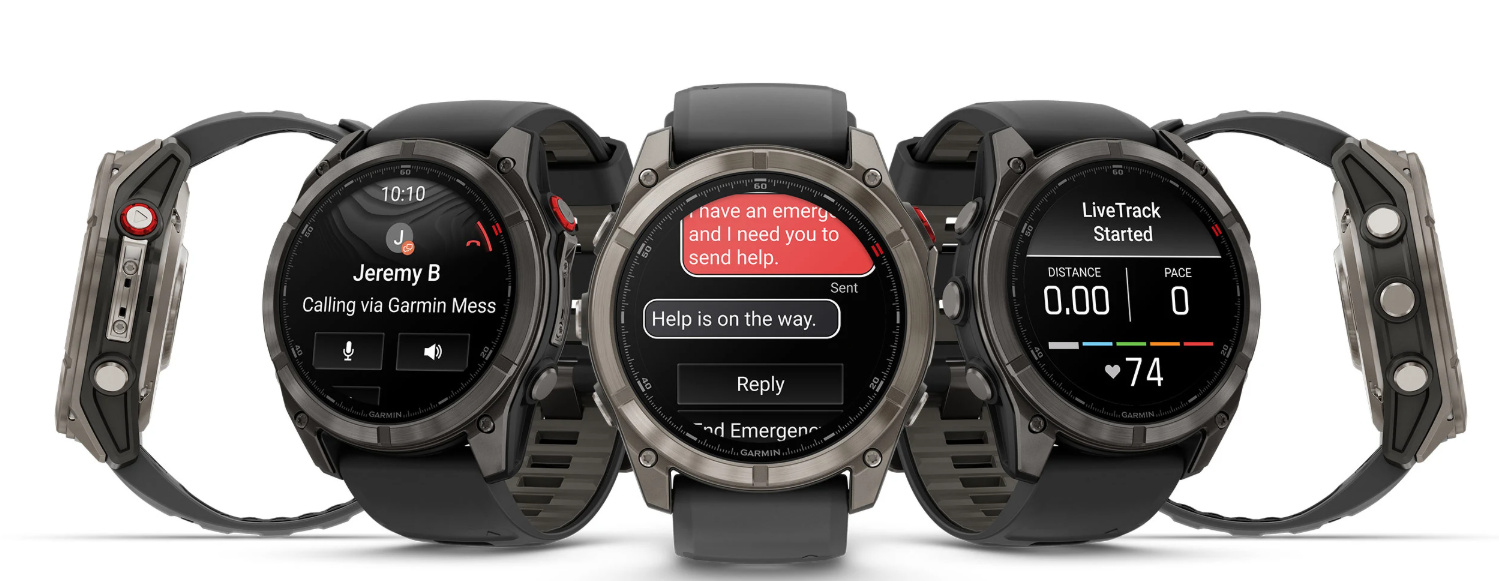
Garmin  is advancing the future of smartwatch technology with the introduction of fēnix® 8 Pro series. These premium GPS smartwatches are the first to feature inReach technology for satellite and cellular connectivity—letting athletes and adventurers leave their phone behind and still stay in touch. Further revolutionising the smartwatch industry, fēnix 8 Pro – MicroLED introduces a first-of-its-kind, high-resolution MicroLED display for superior readability.

“fēnix 8 Pro is changing the game for smartwatches. This new lineup is full of breakthrough innovations, bringing life-changing inReach technology to the wrist to help keep athletes and adventurers in touch with their family and friends and introducing the first-ever ultra-bright MicroLED display to a smartwatch so users can see their maps, stats, health and wellness metrics and more like never before.”

—Susan Lyman, Garmin Vice President of Consumer Sales and Marketing

Leave the phone behind and still stay connected

Designed for those pursuits that make it impractical to carry a phone, fēnix 8 Pro has built-in inReach technology for satellite and cellular connectivity.

Satellite connectivity

fēnix 8 Pro uses inReach technology to let explorers exchange messages and send location check-ins.

  • Text messages: Send and receive text messages with those using the Garmin Messenger app on their smartphone or compatible Garmin smartwatch.
  • Location check-ins: Send location updates to family and friends so they can keep track of trip progress.

Cellular connectivity

In addition to sending text messages or providing location check-ins, fēnix 8 Pro can be used to make phone calls, send voice messages, share LiveTrack links and view weather forecasts when connected to the LTE network.

  • Voice calls: Make and take voice calls from the watch with other fēnix 8 Pro users or those using the Garmin Messenger app on their smartphone.
  • Voice messages: Check in with family and friends by exchanging 30-second voice messages. Recipients can listen to the messages or read the transcriptions on their watch or in the Garmin Messenger app.
  • LiveTrack: Friends and family can follow the adventures with LiveTrack location sharing and location check-ins on their smartphone. Users can also alert their friends and family when a LiveTrack session has started, in case they want to follow along or reach out during an activity.
  • Weather forecasts: Access current weather conditions and multiday forecasts to stay prepared for what’s ahead.

SOS capability supported by Garmin Response

When an SOS is triggered, fēnix 8 Pro will send a message over satellite or cellular connectivity to the Garmin Response center, where a dedicated team of skilled emergency response coordinators are ready at any time. From there, Garmin Response will communicate with the user, their listed emergency contacts, search and rescue organisations and other available local resources. They provide updates to users and emergency contacts on the response effort, including confirmation when help is on the way, and remain available as the incident is being resolved. With nearly two decades of experience, the Garmin Response team has supported more than 17,000 inReach incident responses in more than 150 countries on all seven continents.

First-of-its-kind MicroLED display

Offering remarkable brightness in exquisite detail, fēnix 8 Pro – MicroLED features over 400,000 individual LEDs delivering up to 4,500 nits, making it the brightest smartwatch ever. The result is a revolutionary display that produces rich colors and high pixel densities with wide viewing angles and superior readability—even in direct sunlight.

Rugged design, premium features

Made for any adventure, all fēnix 8 Pro models are dive-rated and feature leakproof metal buttons, a metal sensor guard cover, AMOLED or MicroLED touchscreen displays and titanium bezels, plus an LED flashlight for greater visibility in dark environments.

Built for wherever the adventure leads, fēnix 8 Pro is loaded with Garmin’s full suite of performance, navigation, health and wellness2, and connected features, including endurance score, hill score, daily suggested workouts, preloaded TopoActive Maps, dynamic round-trip routing, the Garmin ECG App3, sleep coach, Garmin Pay, safety and tracking features and more. To learn more, visit https://www.garmin.com/en-IE/.

Why Digital Save the Dates Are the Smart Choice for Modern Weddings

When you first get engaged, one of the earliest steps in the planning journey is letting your loved ones know when the big day will be. Traditionally this has been done with printed save the date cards, but more and more couples are choosing to go digital. Electronic save the dates are stylish, practical and environmentally friendly, and they can save you both time and money while still giving guests the excitement of receiving that all-important announcement.

What Are Digital Save the Dates?

A digital save the date is an online version of the traditional card that lets your guests know your wedding date, location and sometimes a teaser of your theme. They can be delivered by email, text message, or even through your wedding website. Many platforms offer beautifully designed templates that can be customised with your names, photos and colour palette, so they still feel personal and special.

Benefits of Going Digital

1. Budget Friendly

Printed stationery can quickly add up when you consider design, printing, postage and international delivery for overseas guests. Digital save the dates cut these costs dramatically. Many platforms even offer free options or packages that include matching invitations and RSVPs.

2. Environmentally Conscious

For couples looking to reduce waste, digital save the dates are a greener choice. They eliminate the need for paper, ink and transport, making them a sustainable option without sacrificing style.

3. Convenience for Everyone

With a digital save the date, delivery is instant. Guests will receive it directly to their inbox or phone, meaning there is no risk of delays or lost post. For you, it’s much easier to manage and resend if someone misplaces it.

4. Interactive Features

Unlike a traditional card, a digital save the date can link directly to your wedding website, accommodation suggestions, or even a calendar download so guests can block the date straight away. It makes life easier for your guests and helps you keep everything organised in one place.

5. Flexibility

Plans change, and if you need to adjust your date or details, updating a digital save the date is simple. Instead of reprinting and resending, you can amend your design and send an updated version instantly.

Style and Personalisation

Some couples worry that going digital will feel less personal, but with modern design tools this isn’t the case. You can choose from a wide range of elegant templates, upload your favourite engagement photos, or even create a bespoke design that ties into your wedding theme. The end result can be just as beautiful as a physical card.

When to Send Digital Save the Dates

Just like with traditional save the dates, the general rule is to send them 6 to 12 months before the wedding. For destination weddings or dates falling in busy seasons such as Christmas or summer holidays, it’s best to send them as early as possible so guests have plenty of notice.

Making the Most of Digital Tools

Many wedding planning platforms now offer integrated systems where you can design your digital save the date, manage your guest list and track RSVPs in one place. This reduces admin for you and makes the entire process seamless.

Digital save the dates are a modern solution that combine practicality with style. They are budget friendly, eco conscious and incredibly convenient, while still giving your guests that feeling of excitement when they see your names pop up with a big announcement. For couples who want to simplify their planning and reduce costs without compromising on elegance, digital save the dates are the way forward.

PanPan Kids Smartwatch Review It is simple to use.

The PanPan Kids Smartwatch is a simple effective product to keep track of your child or even elder with no fuss or hard things to learn based on your personal set up the key USP for me here is simplicity which is what we all want and this compared to other kids watches is the simplest form you can ask for.

The watch itself is robust and has just one button on the left allowing you to turn on/ off get your heart rate and steps, make an emergency call and receive one you also have the date and time battery level and signal level on the homescreen.

The product comes with an app the parent will use and it works on both Android and iOS which we tested on both to see if there is any differences which there is none.

The app works well giving constant location data and the historical location of your child’s whereabouts and keeps track of calls and other data you have signed up for like 24/7 monitoring geofencing and so on

The PanPan kids watch keeps track of your child fitness which is also hand built in here and allows you to watch for anomalies.

Call quality is quite good as you will see in the video review down below and overall this is one of the simplest kids smartwatches yet to date I have tested and simple works for more people compared to other watches we have in here for review which requires adding APNs and all that kind stuff which can be cumbersome for many.


The App – with functions requested 


Key Benefits for Parents
  • Privacy-Focused – No camera or recording functions, ensuring safety at school and compliance with GDPR.
  • Affordable and Convenient – Provides essential connectivity without the distractions or risks of a smartphone.
  • SOS and Two-Way Calling – Instant connection between child and parent at any time.
  • Real-Time Location Tracking – GPS location accessible through the app.
  • Geo-Fencing Alerts – Parents can set safe zones and receive notifications when their child moves beyond them.
  • Activity Monitoring – Built-in pedometer promotes movement and healthy habits.
  • Durable & Kid-Friendly Design – Comfortable, customisable straps and available in fun colours.
  • Optional 24/7 Monitoring Support – Additional security for families (available at an extra cost per month).

Video Review

Other SmartWatch Reviews 

Buy