Esri Ireland, the market leader in Geographic Information Systems (GIS), has announced the launch of a digital map of fun-filled events happening around Ireland this festive season.
The interactive, easy-to-use StoryMap will help yuletide revellers to navigate what’s on across the island of Ireland this Christmas. From markets and festivals to light shows and ice-skating, there is something to suit all ages and interests.
The festive map includes a Web App enabling the public to search for events by county and location, to make planning your festive adventures even easier.
Esri Ireland specialises in the application of geographic information systems, helping customers record where things happen and analyse why, with the aim of providing insight and helping them to make better decisions.
As Esri’s official point of presence in Ireland and Northern Ireland it has, since 2002, partnered with both the public and private sector to help them understand the impact of geography on their business.
Recognised as one of the Best Workplaces in Ireland, Esri Ireland is part of the Esri Global Network, a billion-dollar privately held software company with nearly 10,000 employees worldwide. www.esri-ireland.ie
TechLabs, Ireland’s only expo dedicated to the latest in consumer tech, electronics, and lifestyle, has announced an exciting roster of additional household brand names and unmissable experiences for its upcoming event on Saturday, 18 October at Dublin’s RDS.
Dubbed as Ireland’s ultimate tech playground, the show will feature leading brands including Volvo, Dyson, Samsung, JBL and Tesla alongside additional interactive experiences such as the adrenaline-fuelled Formula 1 Sim Racing Competition and immersive roaming VR experiences.
TechLabs promises an immersive, future-forward showcase for anyone eager to discover the next big thing in technology and lifestyle. From an indoor drone display to the Tesla Optimus Gen 2 Robot, step into the future of technology under one roof.
Up to 10,000 tech enthusiasts are expected to explore cutting-edge innovations from these leading global brands in consumer electronics and smart technology. With Porsche and Harvey Norman already confirmed, TechLabs is thrilled to unveil even more highlights:
Lifestyle and Luxury – getup close with the latest speedboats and motorbikes, perfect for motoring and speed enthusiasts
Innovation Stage – live product reviews, interactive demos, and special guest speakers will share insider insights and unveil next-gen tech
What’s more – joining the already packed show floor of cutting-edge innovation are Hisense, the global leader in smart TVs and home entertainment showcasing Ireland’s largest TV; Eufy, known for its sleek smart-home gadgets from robotic vacuums to security cameras, Total Rethink, an Irish brand championing sustainable, low-waste tech and lifestyle products, and Telefunken, the legendary German name in premium audio and consumer electronics. TechLabs arrives just in time for visitors eager to test-drive the latest products ahead of Black Friday deals and the Christmas shopping season to spark some gift inspiration for the tech lover in your life.
TechLabs is created by the organisers of GamerFest, Ireland’s leading games convention which has welcomed over 35,000 gamers to the RDS, and the NEXUS Games Conference, a leading games industry conference bringing together global decision makers and industry leaders.
CEO of TechLabs, Stuart Dempsey, says: Techlabs is about bringing the future into the present and making it accessible for everyone. We’re creating Ireland’s tech playground – a space where families, enthusiasts and industry professionals can experience the latest innovations, explore world-class brands, and get hands on with the technology shaping tomorrow.”
Ireland’s education system stands at a fascinating crossroads where traditional excellence meets digital innovation. With the government’s Digital Strategy for Schools pushing significant investment into educational technology, Irish classrooms are transforming rapidly. This shift isn’t merely about adding tablets and interactive whiteboards; it’s about fundamentally reimagining how teaching resources can enhance learning outcomes for Ireland’s 570,000 primary and 370,000 secondary students.
The recent OECD reports position Ireland above the European average for digital literacy, yet our teachers consistently report needing better resources to maintain this advantage. The challenge isn’t accessing technology—it’s finding quality educational materials that align with the Irish curriculum whilst leveraging digital capabilities effectively. From Dublin’s tech-forward schools to rural communities in Donegal, educators are discovering that the right blend of digital teaching resources and traditional Irish pedagogical strengths creates exceptional learning environments.
The Irish Curriculum Meets Digital Innovation
The Irish education system’s unique features—including the emphasis on critical thinking in the Leaving Certificate and the integrated approach of Aistear for early years—require specialised resources that generic international platforms often miss. Irish teachers need materials that respect our educational philosophy whilst embracing technological possibilities. LearningMole, developed by educators who understand these nuances, demonstrates how teaching resources can bridge traditional Irish educational values with modern digital engagement, offering curriculum-aligned content that works seamlessly in Irish classrooms.
The Primary School Curriculum’s spiral approach, where concepts are revisited with increasing complexity, demands resources that can adapt across year levels. Digital platforms excel here, allowing teachers to access differentiated materials instantly. For instance, when teaching Irish history, educators can combine interactive timelines, primary source documents, and video content to bring events like the Easter Rising or the Great Famine to life in ways that static textbooks never could. These multi-modal approaches particularly benefit Ireland’s growing population of EAL (English as Additional Language) students, now representing over 12% of primary enrolments.
Ireland faces specific educational challenges that technology-enhanced resources can help address. The teacher shortage, particularly acute in STEM subjects, means schools need resources that can support less experienced teachers or those teaching outside their specialisation. Geographic disparities between urban and rural schools create different resource needs—whilst Dublin schools might focus on coding and robotics, schools in the Gaeltacht regions need resources supporting Irish language immersion.
The integration of technology in Irish schools has accelerated dramatically since 2020, with the Department of Education investing over €210 million in digital infrastructure. However, infrastructure alone doesn’t improve education. Teachers report that finding quality, curriculum-appropriate digital resources remains their biggest challenge. Video-based learning platforms that offer structured, curriculum-mapped content help teachers maximise their technology investments whilst ensuring consistent educational quality across all classrooms.
DEIS (Delivering Equality of Opportunity in Schools) schools, serving Ireland’s most disadvantaged communities, particularly benefit from comprehensive digital resources. These schools often struggle with resource budgets, making subscription-based platforms that provide unlimited access to quality materials particularly valuable. When every student can access the same high-quality resources regardless of their family’s economic situation, it helps level Ireland’s educational playing field.
The Celtic Tiger’s Cubs: Preparing Ireland’s Digital Generation
Today’s Irish students—the children and grandchildren of the Celtic Tiger era—inhabit a fundamentally different world than previous generations. Tech companies employ over 200,000 people in Ireland, making digital literacy not just educational enrichment but economic necessity. Schools must prepare students for careers in companies like Google, Facebook, and Apple, all with significant Irish operations, whilst also maintaining Ireland’s renowned strengths in literature, arts, and humanities.
This balance requires teaching resources that integrate technology naturally rather than treating it as separate from traditional subjects. When studying Yeats, students might create digital presentations exploring his influence on Irish identity. Mathematics lessons can incorporate coding exercises that demonstrate practical applications. Science experiments can be documented through video, developing both scientific method understanding and digital communication skills.
“Educational technology should enhance rather than replace traditional teaching strengths,” notes Michelle Connolly, founder of LearningMole and former teacher with over 15 years of classroom experience. This philosophy resonates particularly strongly in Ireland, where educational traditions run deep whilst innovation drives the economy forward.
Supporting Irish Language Education Through Technology
The preservation and promotion of Irish language education remains a national priority, with technology offering new possibilities for engagement. Digital resources can make Irish more accessible and relevant to students who might otherwise struggle with traditional teaching methods. Interactive games, video content with native speakers, and virtual connections with Gaeltacht schools help bring the language alive.
Resource platforms supporting bilingual education help teachers seamlessly integrate Irish across the curriculum, not just in dedicated Irish lessons. This integrated approach aligns with the government’s 20-Year Strategy for the Irish Language, which emphasises making Irish a living language in schools rather than merely an academic subject.
Measuring Success: Ireland’s Educational Metrics
Irish schools excel in international assessments, consistently ranking among Europe’s top performers in literacy and above average in numeracy. However, maintaining this position requires continuous resource investment and innovation. The National Council for Curriculum and Assessment (NCCA) emphasises the importance of formative assessment and student-centred learning—approaches that quality teaching resources must support.
Digital resources offering built-in assessment tools help teachers track progress more effectively than traditional methods. Real-time data about student understanding allows for immediate intervention, preventing small gaps from becoming significant problems. This data-driven approach particularly benefits preparing students for standardised tests whilst maintaining Ireland’s broader educational values.
The Path Forward for Irish Education
As Ireland continues developing its knowledge economy, educational resources must evolve accordingly. The integration of artificial intelligence, virtual reality, and adaptive learning technologies presents opportunities that Irish schools are beginning to explore. However, successful implementation requires careful selection of resources that align with Irish educational values whilst pushing boundaries appropriately.
Schools report that professional development around resource utilisation significantly impacts success. When teachers understand how to integrate digital resources effectively, student engagement and outcomes improve markedly. This investment in teacher training, coupled with quality resources, positions Irish education to maintain its international reputation whilst preparing students for futures we can barely imagine.
Practical Implementation for Irish Schools
Irish schools implementing comprehensive digital resource strategies should consider several factors specific to our educational context. Budget allocations through capitation grants mean careful resource selection is crucial. Subscription models that serve entire schools often provide better value than individual resource purchases. Resources must work reliably on the infrastructure available—not all Irish schools have high-speed broadband despite ongoing improvements.
The collaborative culture in Irish education means resources supporting teacher sharing and adaptation prove particularly valuable. When teachers can modify materials for their specific contexts whilst sharing improvements with colleagues, the entire system benefits.
Ireland’s education system stands poised to lead Europe in demonstrating how traditional educational excellence and digital innovation can work together. The key lies not in choosing between traditional and digital approaches but in selecting resources that honour Irish educational values whilst embracing technological possibilities. As Irish schools continue this digital transformation, the focus must remain on what matters most: improving outcomes for every student across our island.
Success requires continued investment, thoughtful resource selection, and commitment to maintaining Ireland’s educational strengths whilst building new capabilities. With the right teaching resources and support, Irish schools can prepare students who are equally comfortable discussing Joyce and JavaScript, who understand both Celtic mythology and machine learning, and who carry forward Ireland’s educational excellence into the digital age.
For more information about curriculum-aligned teaching resources that support Irish educators, visit LearningMole at https://www.learningmole.com
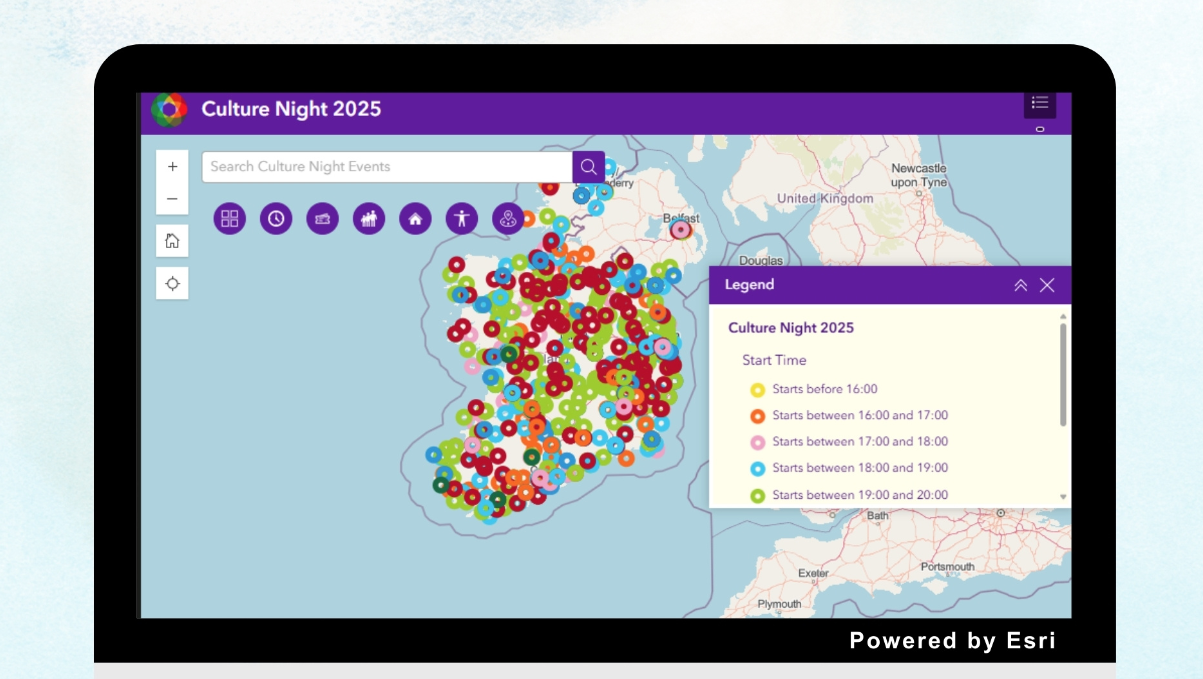
Esri Ireland, the market leader in Geographic Information Systems (GIS), today announces that The Arts Council has used Esri’s technology to create a digital map of events happening around Ireland for Culture Night 2025 – which falls tonight, Friday 19th September.
The interactive, easy-to-use map will chart your cultural course and help you to navigate over 1,800 free events taking place across the island of Ireland. From music, theatre, and comedy to poetry readings, walking tours, and puppet workshops, there is something for all ages and interests on the 2025 programme.
The Arts Council has created a digital map of events happening around Ireland for Culture Night 2025 using Esri’s technology
The Culture Night digital map allows you to search for events by county, location, venue, and event name. It also allows you to search by start time, age suitability, and accessibility.
The event’s 20th edition, Culture Night celebrates the richness and diversity of culture in Ireland today.
When you first get engaged, one of the earliest steps in the planning journey is letting your loved ones know when the big day will be. Traditionally this has been done with printed save the date cards, but more and more couples are choosing to go digital. Electronic save the dates are stylish, practical and environmentally friendly, and they can save you both time and money while still giving guests the excitement of receiving that all-important announcement.
What Are Digital Save the Dates?
A digital save the date is an online version of the traditional card that lets your guests know your wedding date, location and sometimes a teaser of your theme. They can be delivered by email, text message, or even through your wedding website. Many platforms offer beautifully designed templates that can be customised with your names, photos and colour palette, so they still feel personal and special.
Benefits of Going Digital
1. Budget Friendly
Printed stationery can quickly add up when you consider design, printing, postage and international delivery for overseas guests. Digital save the dates cut these costs dramatically. Many platforms even offer free options or packages that include matching invitations and RSVPs.
2. Environmentally Conscious
For couples looking to reduce waste, digital save the dates are a greener choice. They eliminate the need for paper, ink and transport, making them a sustainable option without sacrificing style.
3. Convenience for Everyone
With a digital save the date, delivery is instant. Guests will receive it directly to their inbox or phone, meaning there is no risk of delays or lost post. For you, it’s much easier to manage and resend if someone misplaces it.
4. Interactive Features
Unlike a traditional card, a digital save the date can link directly to your wedding website, accommodation suggestions, or even a calendar download so guests can block the date straight away. It makes life easier for your guests and helps you keep everything organised in one place.
5. Flexibility
Plans change, and if you need to adjust your date or details, updating a digital save the date is simple. Instead of reprinting and resending, you can amend your design and send an updated version instantly.
Style and Personalisation
Some couples worry that going digital will feel less personal, but with modern design tools this isn’t the case. You can choose from a wide range of elegant templates, upload your favourite engagement photos, or even create a bespoke design that ties into your wedding theme. The end result can be just as beautiful as a physical card.
When to Send Digital Save the Dates
Just like with traditional save the dates, the general rule is to send them 6 to 12 months before the wedding. For destination weddings or dates falling in busy seasons such as Christmas or summer holidays, it’s best to send them as early as possible so guests have plenty of notice.
Making the Most of Digital Tools
Many wedding planning platforms now offer integrated systems where you can design your digital save the date, manage your guest list and track RSVPs in one place. This reduces admin for you and makes the entire process seamless.
Digital save the dates are a modern solution that combine practicality with style. They are budget friendly, eco conscious and incredibly convenient, while still giving your guests that feeling of excitement when they see your names pop up with a big announcement. For couples who want to simplify their planning and reduce costs without compromising on elegance, digital save the dates are the way forward.
In 2025, the UK gambling industry welcomed a fresh and ambitious name — FIRST.com. This innovative affiliate platform is setting out to combine expert betting knowledge, detailed casino insights, and a growing focus on cryptocurrency gaming, all under one digital roof. Its mission is clear: to offer an informed, trustworthy, and engaging experience for sports fans, casino enthusiasts, and bettors across the world.
While the UK is its launch market, the vision extends far beyond national borders. FIRST.com has already laid the groundwork for expansion into the United States, followed by the wider English-speaking market. This global approach is supported by a deep commitment to quality content, transparency, and features designed for both newcomers and experienced players.
From its inception, FIRST.com has been shaped by a team of seasoned professionals — sports betting veterans, casino analysts, and iGaming strategists who understand what players are looking for. The editorial voice is informed yet approachable, with the aim of building trust and credibility over the long term. Every article, odds breakdown, and casino review is backed by industry expertise, offering value to readers whether they’re exploring the site for the first time or returning for regular insights.
The platform’s growing portfolio already includes:
Detailed betting tips across multiple sports, including football, tennis, cricket, and eSports.
Comprehensive casino coverage, from classic table games like blackjack and roulette to the newest slot releases.
A structured learning section that breaks down key concepts in betting and casino play, ideal for beginners looking to get started with confidence.
Regular news updates covering sporting events, market trends, and changes in gambling regulations.
For users who prefer a data-backed approach, betting odds and tips from FIRST combine expert analysis with up-to-date statistics. This balance of insight and numbers caters to both casual players and those who take a more analytical view of betting.
The role of FIRST.com extends beyond simply being an affiliate. It is designed to be a trusted resource where players can stay informed, learn strategies, and discover opportunities across both traditional and crypto-based gaming. The site’s editorial team is already working on partnerships and content expansions to keep pace with the fast-moving nature of the industry.
Looking to the future, the platform’s development roadmap is ambitious. FIRST.com plans to grow into a one-stop gambling destination, offering:
Advanced odds comparison tools to help users identify the most competitive lines from different bookmakers.
Greater coverage of international sports as the platform’s reach expands into new territories.
Exclusive interviews and features from leading sports and casino experts, providing unique perspectives not found elsewhere.
Interactive tools, such as personalised betting dashboards, historical odds archives, and bet-tracking features to enhance the user experience.
By merging editorial authority with user-focused tools, FIRST.com aims to bridge the gap between information and application. The goal is to give players everything they need to make better decisions — whether they’re placing a wager on a weekend football match, exploring a new online slot, or comparing crypto betting platforms.
With its expansion plans already in motion and a strong foundation in place, FIRST.com is positioning itself as more than just another affiliate site. It’s building a comprehensive hub for betting, casino gaming, and crypto wagering — one that is set to grow with the industry and its audience in the years ahead.
Electronic Arts Inc. has announced that EA SPORTS FC FUTURES has doubled its year-on-year impact, opening up access to grassroots football to over 340,000* people in year two. Building on the 170,000** in year one, it means the programme has increased access to the world’s game to over 500,000 people around the world in just two years since its inception.
Since launching in 2023, the initiative has continued to deliver on its commitment to grow community-level football worldwide and support real-world play, by refurbishing community pitches globally, delivering new free-to-access training practices inspired by EA SPORTS FC in-game drills, and working with partners to provide opportunities for all to play the beautiful game.
With a vision to make the sport more inclusive and accessible for players around the world, FC FUTURES empowers the next generation of football fans and coaches – providing training materials, as well as safe and inspiring spaces to play and thrive through real-world football experiences.
In its second year, FC FUTURES has:
Launched 11 new online practices, in partnership with UEFA, taking the FC FUTURES Academy library to a total of 17 free-to-access drills, designed to support coaches and players in daily training sessions. By using in-game drills to power these coaching tools, the Academy provides a unique and innovative way for coaches and young people to learn core football skills, encouraging participation and driving fandom in the next generation. Through our UEFA partnership, the Academy has now been integrated into 54 National Football Associations, with 500+ coaches trained on using the practices in the past 12 months.
Refurbished a further 8 community pitches worldwide – from the flood-impacted city of Valencia, Spain to Bañado Sur,Paraguay – in collaboration with league, confederation and charity partners, alongside FC FUTURES ambassadors – bringing the total to 19 pitches across 14 countries since launch. These pitches have been used by thousands of young people worldwide and have provided safe and accessible spaces to further their love of the game.
Deepened its global impact through multiple partnerships with organisations focused on driving positive youth development through sport. Year two saw continued collaboration with UNICEF, Merky FC, and Football Beyond Borders, as well as partnerships with some of the biggest names in football and entertainment to host numerous community training sessions and events, designed to inspire the next generation. From teaming up with LALIGA to open a new pitch in J Balvin’s hometown of Medellín to working with German football legend Lukas Podolski on a community refurbishment in Cologne, FC FUTURES is proving how far-reaching the power of play can be.
“In just two years, FC FUTURES has demonstrated the powerful impact football can have beyond our EA SPORTS FC game, making a positive difference to hundreds of thousands of people,” said Andrea Hopelain, GM & SVP, Publishing, EA SPORTS. “We’re creating lifelong sports fans not only through our game, but by actively supporting and growing grassroots football around the world. By bringing together our digital game with real-world coaching expertise, we’re democratizing access to football training and reimagining coach education in a truly unique way, which is both impactful and incredibly relatable for the next generation.”
As FC FUTURES looks ahead to its third year – and an exciting year for football globally – the initiative will continue to engage and inspire future generations of footballers by launching new community pitches, expanding its free training library, collaborating with new partners, strengthening existing partnerships, and building on its ambition to grow football for all.
Beyond this, FC FUTURES will unlock new ways the game can further revolutionise coach education, through the creation of additional learning experiences, harnessing the power of interactive play and the merging of physical and digital football to inspire more young people into the sport.
Find out more on FC FUTURES and access the FC FUTURES Academy, the free digital library of training practices, here.
Six of Galway’s historic civil parishes are stepping into the digital age with the launch of an innovative project that turns local heritage into interactive online StoryMaps.
In a major collaboration between Galway County Council, University of Galway, Galway County Heritage Forum, The Heritage Council, and community heritage groups, the rich histories of Stradbally (Clarinbridge), Monivea, Moylough, Moycullen, Gort, and Loughrea have been meticulously researched and digitally transformed.
Officially launched this week at a special event in Áras an Chontae, the project brings together traditional townland research and historical records in a newly digitised format. Drawing on rich sources such as O’Donovan’s Ordnance Survey Letters, Griffith’s Valuation, the Down Survey, and the 1901 and 1911 censuses, the initiative makes these valuable archives more accessible than ever.
The initiative is powered by the work of University of Galway students Carlos Grace, Giada Solito, Liam Flaherty, and Laura Daly. Over the past year, they have worked in close partnership with local communities and Galway County Council’s Heritage Office and GIS Department, unearthing stories, local lore, and forgotten histories that now live on through this accessible and engaging digital format.
The research has been digitised for townlands in the six parishes, while immersive digital StoryMaps have been created for Loughrea, Moylough, Moycullen, and Gort. Combining the latest mapping technology with text, images, and multimedia content, the StoryMaps tell powerful location-based stories accessible from any internet-enabled device with a web browser, including tablets and phones.
Cllr Martina Kinane, Cathaoirleach of the County of Galway, expressed her enthusiasm for the project: “The launch marks a significant milestone in how local history is preserved and shared. With an eye on Galway’s global diaspora and future generations, the project is a powerful example of how technology and tradition can converge to deepen our understanding of place.”
“As we navigate the digital landscape, we honour the traditions of the past while embracing the opportunities of the future,” she added. “Through these StoryMaps, we invite you to immerse yourselves in the essence of our townlands, towns, and villages, to witness the evolution of time reflected in the fields, roads, and streets we walk, and the buildings, landscapes, and structures we admire.”
Dr. Lisa Walshe, Assistant Professor of Political Science and Sociology at the University of Galway, commended the students’ efforts: “It has been a privilege for our university to collaborate with Galway County Council on this initiative, which highlights the rich heritage of Galway County through innovative student research. This partnership exemplifies the value of academic and civic engagement, and I commend our students for their dedication, creativity, and commitment to preserving and sharing our local history. Together, we are helping to deepen public appreciation of Galway’s unique cultural landscape.”
Liam Conneally, Chief Executive of Galway County Council, said: “The accomplishments of these outstanding students and their significant contributions to preserving and promoting the heritage of Galway County are immense. Their efforts exemplify the power of collaboration and the necessity of investing in future generations.”
Marie Mannion, Heritage Officer of Galway County Council, highlighted the collaborative nature of the initiative: “This project is a testament to the power of collaboration and the importance of investing in our future generations. The dedication and passion of the students, combined with the support of our local communities and the expertise of the Heritage Office and GIS Department, have brought this initiative to life.”
There are over 64,000 townlands in Ireland of which there are in the region of 4,556 in County Galway, Ireland’s second largest county. Almost half of the County’s townlands have so far been digitised as part of the ‘Galway County Heritage Trails’ project.
The gaming industry has been through significant transformations in recent years, with genres like battle royales and open worlds dominating the scene. However, as the technology behind gaming and player interaction continues to evolve, the next major genre shift is already beginning to take shape. The focus is moving towards more immersive, dynamic, and interactive environments that cater to player choice in ways we haven’t yet fully explored.
The Role of Blockchain in Gaming
Blockchain technology has already started to make waves in the gaming industry, and it’s expected to have a much greater role in the future. Blockchain allows players to own their in-game items, characters, and even land, enabling a new level of scarcity and value within virtual worlds. It also opens up the possibility of decentralized economies, where players can exchange goods and assets in ways that weren’t possible before.
Blockchain also allows anyone to use their cryptocurrencies how they wish and to play wherever they want, regardless of local restrictions. Playing at best offshore casinos is possible via cryptocurrencies combined with the benefits of offshore casinos, leading to an enhanced and truly free user experience. With blockchain, players might be able to monetize their in-game creations, trade virtual goods securely, and participate in decentralized game governance.
The Rise of Emergent Gameplay
Emergent gameplay is quickly becoming a dominant force in the gaming world. This genre goes beyond the scripted experiences of traditional games, allowing players to create their narratives and outcomes. Games like Minecraft and No Man’s Sky offer the thrill of emergent storytelling in games, and are early examples where players have vast freedom to shape the environment around them, leading to an experience that can vary widely from one session to another. What’s next will take this concept further, with even more powerful tools for player interaction like:
Procedurally generated content
Infinite world-building potential
Community-driven storylines
Interactive, Player-Created Worlds
Next-generation games will allow players to contribute not only to the content but to the entire framework of the game world. Imagine a platform where entire story arcs, environments, and quests are created by the community. Players could seamlessly blend their creations with those of others in a shared universe that feels fresh and unique with each log-in. This concept will blur the line between developers and players, as the boundaries of what constitutes a “game” will shift.
Hyper-Realistic Virtual Worlds
As virtual and augmented reality continue to improve, the lines between gaming and real life will continue to blur. Imagine walking into a completely immersive world where every detail is photorealistic, and the experience feels just as tangible as the physical world. These virtual spaces will evolve to include hyper-realistic graphics, real-time physics simulations, and AI-driven NPCs that can adapt to the player’s actions and decisions. Such advancements would bring a whole new level of immersion to games, pushing the boundaries of storytelling and interaction with:
Full-body VR experiences
High-definition, interactive environments
AI-driven virtual characters
The Rise of Social, Competitive Spaces
While online multiplayer has been a staple of gaming for years, the future will take these spaces to new heights, making them much more integrated with the daily lives of players. Picture an evolving social hub that’s not just about interaction but about competition and wagering. This shift will lead to competitive gaming spaces where players can not only socialize and team up but also place wagers on their skills. Some may even find themselves engaged in competitive games in real-world venues, with the ability to wager and win prizes through innovative platforms, including online offshore casinos.
Evolution of Interactive Storytelling
The focus is slowly shifting away from linear narratives toward highly interactive and evolving storylines where player choice has more significant consequences. Rather than merely choosing dialogue options or character actions, players will influence the core structure of the world and its future events. Imagine a world where player actions ripple out and AI is redefining interactive storytelling, causing long-term changes not only in the world around them but in the narrative itself. Interactive storytelling will adapt and evolve with player behavior, giving rise to unprecedented levels of immersion using:
Non-linear plot developments
Story arcs responsive to player actions
Evolving narratives that change over time
Blurring the Line Between Reality and Gaming
One of the most exciting future developments in gaming is the potential convergence of reality and virtual spaces. Games may evolve to incorporate elements of real life in a way that allows for seamless integration with the physical world. This could be in the form of augmented reality games that have real-world consequences, or perhaps, through digital worlds that accurately mirror our own. These shifts could lead to an entirely new form of gamified living where every decision can be influenced or enhanced by digital experiences.
Real-world consequences for in-game actions
Mixed-reality gameplay
Integration of physical and virtual economies
The Integration of Digital Economies
The gaming landscape will shift towards fully integrated digital economies where players can buy, sell, and trade goods both within and outside of games. Whether it’s through NFTs, cryptocurrency, or in-game currencies that hold real-world value, these economies will extend beyond gaming into broader economic systems. Platforms will allow players to trade their virtual goods in a way that mimics real-world commerce, providing new opportunities for players to profit from their gaming endeavors.