Dell PowerEdge XR9700 Brings Cloud RAN and AI to Harsh Edge Environments

Dell Technologies introduces the Dell PowerEdge XR9700 server, a first of its kind closed-loop liquid-cooled, fully-enclosed, ruggedized server engineered to run Cloud RAN and edge AI workloads in unprotected outdoor environments. Designed to mount on utility poles, rooftops and building exteriors, the PowerEdge XR9700 brings high performance computing into dense urban areas, remote locations, and space-constrained facilities where traditional data center infrastructure cannot reach.

Why it matters

Telecommunications operators and those working at the edge often struggle to deploy compute due to lack of power and space. The PowerEdge XR9700 solves this, delivering high performance compute directly at the point of need in an ultra-compact, zero-footprint IP66-rated enclosure that’s sealed from the elements. For telecommunications operators, it provides a flexible, software-defined alternative to traditional RAN solutions, supporting Cloud RAN and Open RAN processing at the cell site. At the same time, the platform can run edge and AI applications directly where data is created and consumed.

Built for Extreme Conditions

Designed to withstand the harshest environments, this platform’s ultra-compact IP66-rated enclosure and GR-3108 Class 4 certification delivers reliable, quiet performance in environments exposed to extreme temperatures, dust and moisture. Closed-loop liquid cooling with a thermal management architecture maintains consistent operation across a temperature range of -40°C to 46°C (-40°F to 115°F) and withstands direct solar radiation, all in a compact 15-liter form factor suitable for mounting on utility poles, rooftops and building sides. This zero-footprint design brings telecom and edge workloads to locations where only traditional radio solutions could previously operate.

Performance that Scales

Powered by the Intel Xeon 6 SoC with integrated Intel vRAN Boost technology and Intel AMX technology, the PowerEdge XR9700 delivers the processing power and fronthaul connectivity to support up to 15 5G sectors in a single server. While optimized for Cloud RAN, the platform’s flexibility allows operators to run edge and AI workloads based on network architecture and service requirements.

As part of the Dell PowerEdge XR-Series, the XR9700 integrates with Dell’s existing management tools and software stack. Integrated Dell Remote Access Controller (iDRAC) provides remote visibility and control for zero-touch provisioning (ZTP), while compatibility with the same Cloud RAN software validated on the PowerEdge XR8720t simplifies certification and accelerates telecom deployments.

Andrew Vaz, vice president, Dell Technologies“Operators and enterprises shouldn’t have to compromise when deploying compute in challenging environments. The Dell PowerEdge XR9700 brings Cloud RAN, Open RAN, and edge AI capabilities to places they’ve never been able to go before, opening up new possibilities for network expansion and edge applications.”

 Availability

The Dell PowerEdge XR9700 will be globally available 2H CY 2026.

Additional resources

  • Find out more about the Dell PowerEdge XR9700.
  • Learn more about Dell Open Telecom Ecosystem Lab (OTEL) AI-assisted telecom testing and validation.
  • Connect with Dell on X and LinkedIn

About Dell Technologies
Dell Technologies (NYSE: DELL) helps organizations and individuals build their digital future and transform how they work, live and play. The company provides customers with the industry’s broadest and most innovative technology and services portfolio for the AI era.

DELL TECHNOLOGIES AT CES 2026: XPS Returns, Alienware Expands and UltraSharp Monitors

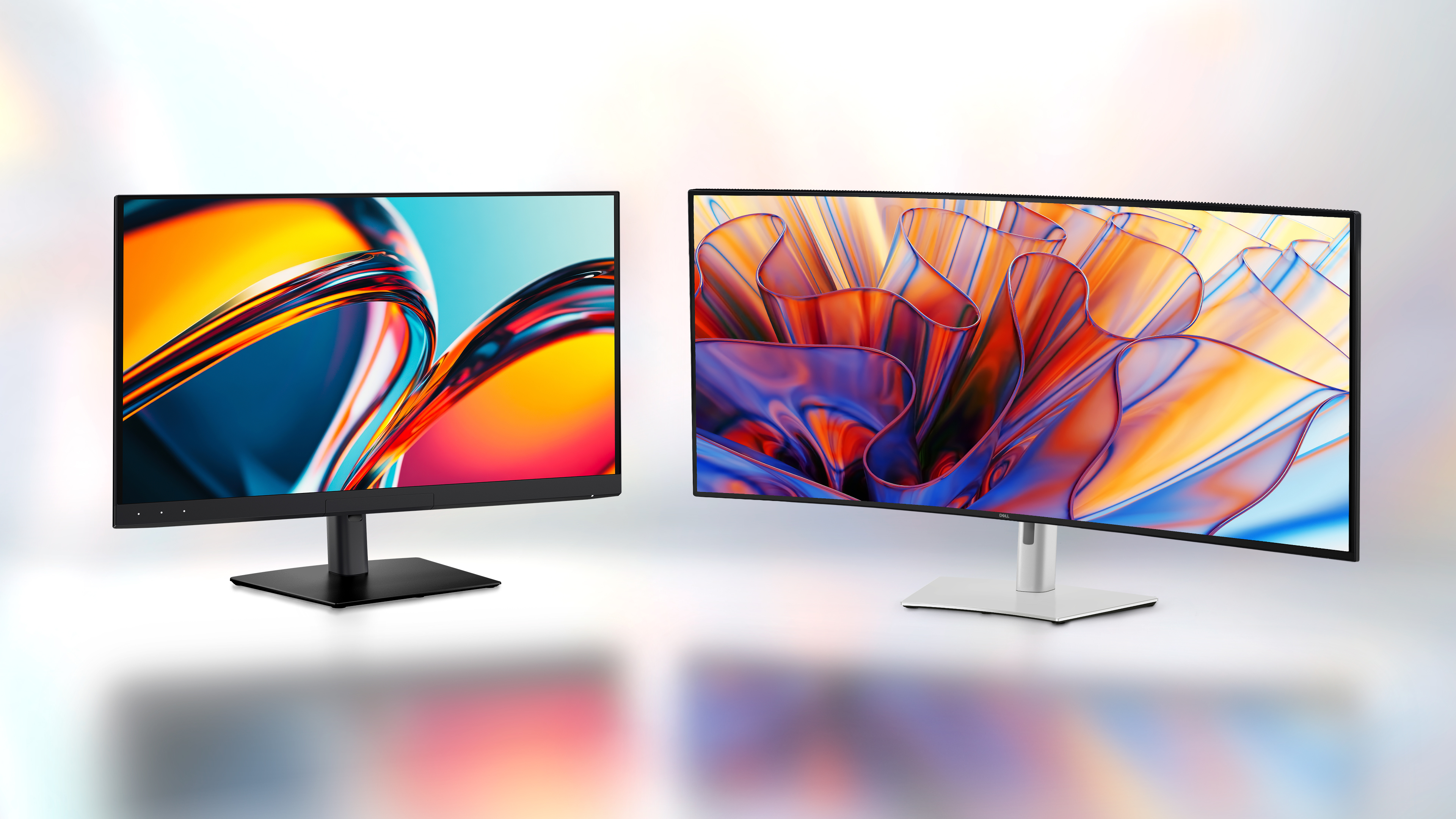
Dell Technologies announces a strategic expansion of its consumer and gaming portfolio. The company reintroduces the iconic XPS laptops with reimagined designs across new form factors and price points, expands its Alienware line to reach more gamers and launches two industry-leading UltraSharp monitors.

Jeff Clarke, Vice Chairman and Chief Operating Officer, Dell Technologies: “We’re getting back to our roots with a renewed focus on consumer and gaming. XPS is back, better than ever, with a complete redesign that delivers exceptional craftsmanship in our thinnest, lightest form factors yet. We’re also bringing XPS 13 back as our most accessible XPS ever. In gaming, we’re building on recent momentum and effectively doubling Alienware’s notebook lineup. These moves are about broadening our portfolio and expanding our coverage so we can reach more customers with the best products at every price point.”

XPS Returns with Complete Redesign

Dell is bringing back XPS with a streamlined design. For the first time, the iconic XPS logo appears on the laptop cover, signalling its return. The new XPS 14 and XPS 16 feature a sleek design crafted from CNC- machined aluminium, refined interfaces, stunning displays, and optimized performance. These devices have the best battery life in the industry, delivering up to 27 hours of Netflix streaming or 40+ hours with local video playback.

These are Dell’s thinnest laptops, measuring just 14.6mm. The XPS 14 weighs roughly three pounds – more than half a pound lighter than the previous generation – and the XPS 16 comes in at 3.6 pounds, almost a full pound lighter than its predecessor. Available with tandem OLED display options and Intel® Core™ Ultra Series 3 processors and built-in Intel® Arc graphics featuring 12 Xe cores, the new XPS line delivers impressive visuals with the perfect balance of portability and performance.

Later this year, Dell will expand the XPS portfolio with new products across different price points and form factors, including the return of the XPS 13, expected to be the thinnest and lightest XPS laptop ever, offered at the most accessible XPS price yet.

Dell Technologies Fuels Enterprise AI Innovation with Infrastructure, Solutions and Services

Dell Technologies (NYSE:DELL), the world’s No. 1 provider of AI infrastructure, announces Dell AI Factory advancements, including powerful and energy-efficient AI infrastructure, integrated partner ecosystem solutions and professional services to drive simpler and faster AI deployments.

 Why it matters

AI is now essential for businesses, with 75% of organizations saying AI is key to their strategy and 65% successfully moving AI projects into production. However, challenges like data quality, security concerns and high costs can slow progress.

The Dell AI Factory approach can be up to 62% more cost effective for inferencing LLMs on- premises than the public cloud and helps organizations securely and easily deploy enterprise AI workloads at any scale. Dell offers the industry’s most comprehensive AI portfolio designed for deployments across client devices, data centers, edge locations and clouds. More than 3,000 global customers across industries are accelerating their AI initiatives with the Dell AI Factory.


Dell infrastructure advancements help organizations deploy and manage AI at any scale

Dell introduces end-to-end AI infrastructure to support everything from edge inferencing on an AI PC to managing massive enterprise AI workloads in the data center.

Dell Pro Max AI PC delivers industry’s first enterprise-grade discrete NPU in a mobile form factor7

The Dell Pro Max Plus laptop with Qualcomm® AI 100 PC Inference Card is the world’s first mobile workstation with an enterprise-grade discrete NPU. It offers fast and secure on-device inferencing at the edge for large AI models typically run in the cloud, such as today’s 109-billion- parameter model.

The Qualcomm AI 100 PC Inference Card features 32 AI-cores and 64 GB memory, providing power to meet the needs of AI engineers and data scientists deploying large models for edge inferencing.

Dell redefines AI cooling with innovations that reduce cooling energy costs by up to 60%9

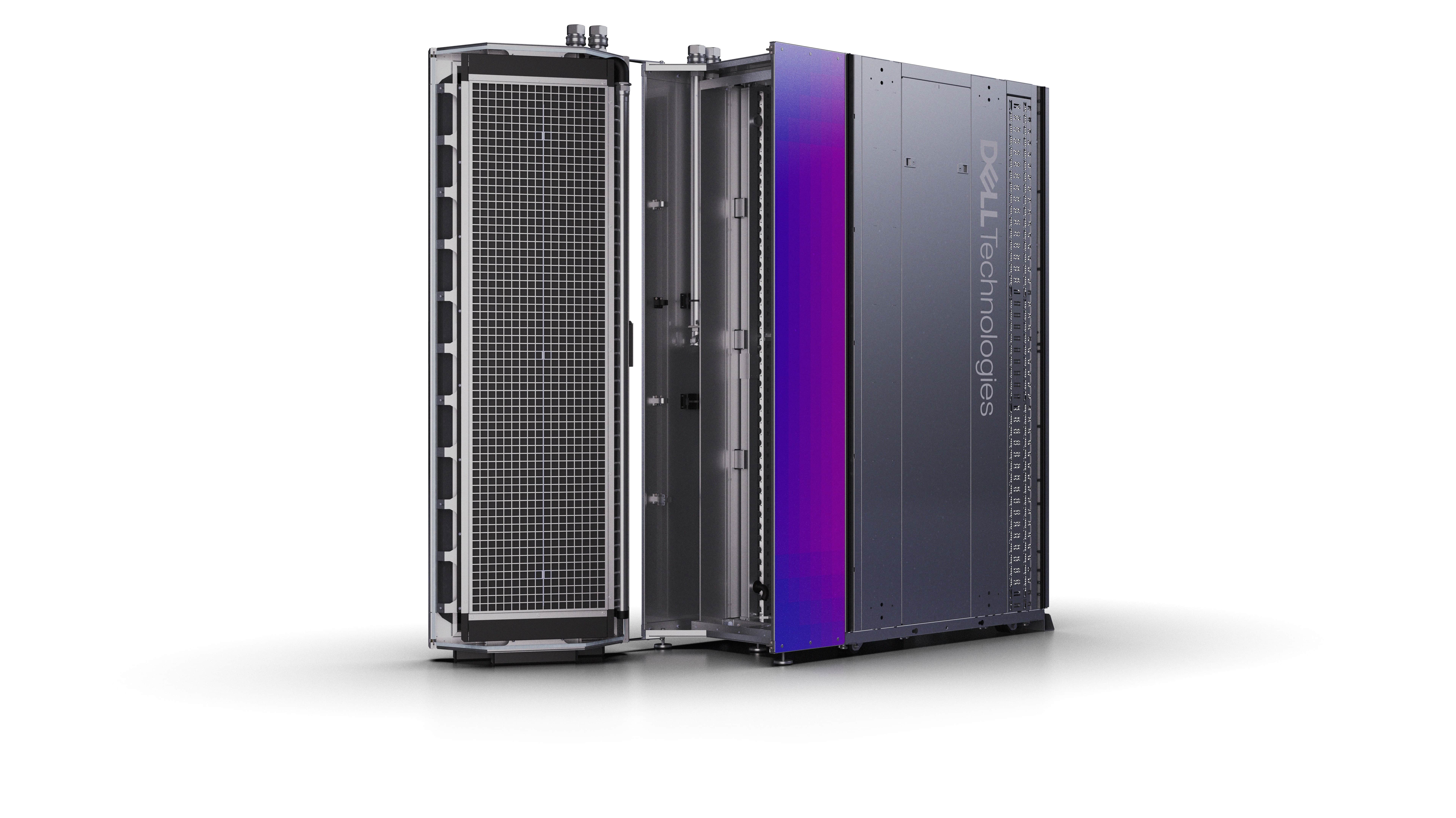
The industry-first Dell PowerCool Enclosed Rear Door Heat Exchanger (eRDHx) is a Dell- engineered alternative to standard rear door heat exchangers. Designed to capture 100% of IT heat generated with its self-contained airflow system, the eRDHx can reduce cooling energy costs by up to 60% compared to currently available solutions.


With Dell’s factory integrated IR7000 racks equipped with future-ready eRDHx technology, organizations can:

  • Significantly cut costs and eliminate reliance on expensive chillers given the eRDHx operates with water temperatures warmer than traditional solutions (between 32 and 36 degrees Celsius).
  • Maximize data center capacity by deploying up to 16% more racks of dense compute, without increasing power consumption.
  • Enable air cooling capacity up to 80 kW per rack for dense AI and HPC deployments.
  • Minimize risk with advanced leak detection, real-time thermal monitoring, and unified management of all rack-level components with the Dell Integrated Rack Controller.


Dell PowerEdge servers with AMD GPUs maximize performance and efficiency


Dell PowerEdge XE9785 and XE9785L servers will support AMD Instinct™ MI350 series GPUs, which offer 288 GB of HBM3E memory per GPU and deliver up to 35 times greater inferencing performance. Available in liquid-cooled and air-cooled configurations, the servers will reduce facility cooling energy costs.

Dell advancements power efficient and secure AI deployments and workflows

Because AI is only as powerful as the data that fuels it, organizations need a platform designed for performance and scalability. The Dell AI Data Platform updates improve access to high quality structured, semi-structured and unstructured data across the AI lifecycle.


  • Dell Project Lightning is the world’s fastest parallel file system per new testing, delivering up to two times greater throughput than competing parallel file systems. Project Lightning will accelerate training time for large-scale and complex AI workflows.
  • Dell Data Lakehouse enhancements simplify AI workflows and accelerate use cases — such as recommendation engines, semantic search and customer intent detection — by creating and querying AI-ready datasets.


“We’re excited to work with Dell to support our cutting-edge AI initiatives, and we expect Project Lightning to be a critical storage technology for our AI innovations,” said Dr. Paul Calleja, director, Cambridge Open Zettascale Lab and Research Computing Services, University of Cambridge.

With additional portfolio advancements, organizations can:

  • Lower power consumption, reduce latency and boost cost savings for high performance computing (HPC) and AI fabrics with Dell Linear Pluggable Optics.
  • Increase trust in the security of their AI infrastructure and solutions with Dell AI Security and Resilience Services, which provide full stack protection across AI infrastructure, data, applications and models.
  • Dell expands AI partner ecosystem with customizable AI solutions and applications

Dell is collaborating with AI ecosystem players to deliver tailored solutions that simply and quickly integrate into organizations’ existing IT environments. Organizations can:

  • Enable intelligent, autonomous workflows with a first-of-its-kind on-premises deployment of Cohere North, which integrates various data sources while ensuring control over operations.
  • Innovate where the data is with Google Gemini and Google Distributed Cloud on- premises available on Dell PowerEdge XE9680 and XE9780 servers.
  • Prototype and build agent-based enterprise AI applications with Dell AI Solutions with Llama, using Meta’s latest Llama Stack distribution and Llama 4 models.
  • Securely run scalable AI agents and enterprise search on-premises with Glean. Dell and Glean’s collaboration will deliver the first on-premises deployment architecture for Glean’s Work AI platform.
  • Build and deploy secure, customizable AI applications and knowledge management workflows with solutions jointly engineered by Dell and Mistral AI.


The Dell AI Factory also expands to include:

  • Advancements to the Dell AI Platform with AMD add 200G of storage networking and an upgraded AMD ROCm open software stack for organizations to simplify workflows, support LLMs and efficiently manage complex workloads. Dell and AMD are collaborating to provide Day 0 support and performance optimized containers for AI models such as Llama 4.
  • The new Dell AI Platform with Intel helps enterprises deploy a full stack of high performance, scalable AI infrastructure with Intel® Gaudi® 3 AI accelerators.


Dell also announced advancements to the Dell AI Factory with NVIDIA and updates to Dell NativeEdge to support AI deployments and inferencing at the edge.


“It has been a non-stop year of innovating for enterprises, and we’re not slowing down. We have introduced more than 200 updates to the Dell AI Factory since last year,” said Jeff Clarke, chief operating officer, Dell Technologies. “Our latest AI advancements — from groundbreaking AI PCs to cutting-edge data center solutions — are designed to help organizations of every size to seamlessly adopt AI, drive faster insights, improve efficiency and accelerate their results.”


“We leverage the Dell AI Factory for our oceanic research at Oregon State University to revolutionize and address some of the planet’s most critical challenges,” said Christopher M. Sullivan, director of Research and Academic Computing for the College of Earth, Ocean and Atmospheric Sciences, Oregon State University. “Through advanced AI solutions, we’re accelerating insights that empower global decision-makers to tackle climate change, safeguard marine ecosystems and drive meaningful progress for humanity.”


Canada vs. Ireland: How the Tech Space Looks Either Side of the Atlantic

While the technological boom of the 21st century is a global phenomenon, it’s not evenly distributed across the globe. Some countries have much better developed tech scenes than others, and the situation is changing from decade to decade based on multiple factors. It’s not just the large nations that are leading the charge, as there are several medium-sized countries that punch far above their weight in this sector. Canada and Ireland are great examples, as both are home to numerous high-profile tech companies and have lots of native experts to perform crucial jobs.

We will take a closer look at these two countries located on the opposite sides of the Atlantic and compare their achievements in the technology domain. There are some obvious similarities but also many differences to explore, making this pairing very interesting.

Overview of the Canadian Technology Sector

From the earliest days of the IT revolution, Canada was on the forefront of innovation and business development. The population is highly educated and the nation has a well-regulated, business-friendly legal environment that benefits big technology firms. That has translated into a huge financial windfall – today the value of this industry exceeds $100 billion and it provides nearly 1.5 million jobs. Most of this is driven by the big players, including some globally known brands that many people don’t even know are Canadian. The list is headlined by names like Blackberry, Shopify, and Slack, but there are also brands such as Constellation Software Inc., CGI Inc., and many more.

Most of the tech industry is concentrated in large cities, with Ontario in particular being attractive to fast-growing start-ups due to great infrastructure and conscious efforts of the provincial leaders to attract investment. In recent years, the sector was invigorated by robust growth of the iGaming section with numerous Ontario online casino sites achieving international prominence. According to the available data, the growth is likely to continue into the foreseeable future and produce even more benefits for the local communities, although the competition is becoming stiffer. Canada has the foundation in place to remain a leader in the sector, but will have to adjust to new realities and continue supporting innovation and producing top talent to fill the key jobs.

Overview of the Irish Technology Sector

Ireland had a very different trajectory when it comes to the development of the technology sector. Back in the 1980’s when the industry first emerged as a global force, Ireland was still grappling with the complicated legacy of conflict and poverty. Things started changing for the better after the country successfully attracted international companies like Microsoft and Intel with a favourable tax regime, access to the common European market and other benefits. These and other blue chip companies opened their regional offices in Ireland, taking advantage of the tech-friendly legislation and turning the country into a vibrant hub. Smaller companies followed suit, while the influx of tech expertise also lead to development of some local success stories as well.

The industry accelerated in the 2010s, turning Ireland into a real force in the global market. The contributions of the technology sector to the nation’s finances today stand at 13% of the GDP, a much higher figure than in most countries of comparable size. Another incredible fact is that 16 out of 20 biggest tech companies in the world have an operating base in Ireland, with around 100,000 people employed in the sector. Some of the sub-fields with the strongest presence include FinTech and HealthTech, both of which are seen as extremely important in this period. That’s why it’s logical to expect Ireland to retain its unique position despite all the changes in the market.

Key Differences Between Europe and North America

There are certainly many parallels between Canada and Ireland when it comes to technology sector, but it would be naïve to assume that the situation is the same. As a North American country, the fortunes of Canada are closely tied to the United States and its powerful tech sector. It wouldn’t be fair to say that the Canadian tech industry lives in the shadow of the Silicon Valley, but the links are undeniable. Canada’s economy is also more diversified than Ireland’s, so the reliance on revenues from the tech sector is not nearly as dramatic. On the flip side, Canada’s location and climate may deter some of the most talented hardware and software engineers from joining companies based in the country.

Europe has its own set of issues that affect how Ireland conducts its tech business. The European Union consists of many nations, all of which have their local specificities. The regulations regarding fair competition and consumer protection are very strict, forcing tech companies to spend more to ensure compliance. Ireland has built a reputation as one of the most tech-friendly locations in Europe, yet it can’t truly be viewed outside of the broader EU context. It will be very interesting to see how the country navigates the changing political and economic climate and whether it will be able to leverage its experience with foreign corporations into a grassroots tech scene of its own.

Dell Technologies announces availability of its Dell Plus portfolio in Ireland

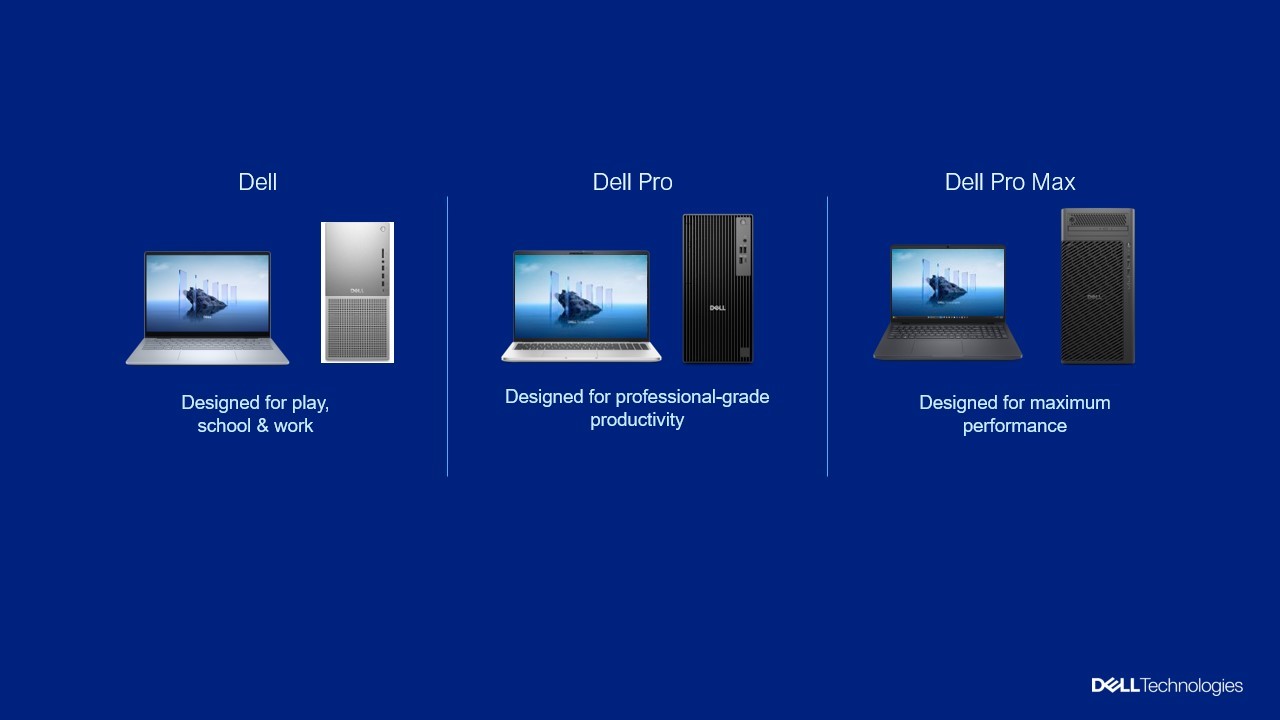
Dell Technologies today announced the availability of its new Dell Plus portfolio in Ireland. At CES, Dell unveiled a new simplified portfolio of AI PCs, unifying the naming under Dell Technologies brand with three product categories – Dell (designed for play, school and work), Dell Pro (designed for professional-grade productivity) and Dell Pro Max (designed for maximum performance).

Within these categories, Dell introduced three consistent tiers – Base, Plus and Premium.

The Plus tier features the most scalable Dell PCs, balancing versatility, and productivity. The four new Dell Plus devices are designed with a brand-new aesthetic and powered by Intel® Core™ Ultra (Series 2) processors, offering up to 39% longer battery life.


The new devices include:

  • Dell 14 Plus: A sleek and portable device powered by Intel Core Ultra processors, ideal for reliable performance on the go. Starting Price: €1,149.00 Available in Ice Blue.
  • Dell 14 Plus 2-in-1: A versatile device with a convertible design featuring 360-hinge, catering to productivity and everyday needs. Starting Price: €998.99. Available in Ice Blue.
  • Dell 16 Plus: Equipped with an optional QHD+ mini-LED touchscreen display this laptop allows creators to design, edit and share their work seamlessly. Starting Price: €1,148.99. Available in Ice Blue.
  • Dell 16 Plus 2-in-1: Boasting a larger screen and stereo-quality speakers, this device supports both traditional and creative workflows, easily transitioning from tablet to laptop mode. Starting Price: €1,149.00

These new devices are now available across Ireland, offering Irish consumers powerful, scalable, and versatile options to meet their diverse needs. Businesses in Ireland can future-proof their IT infrastructure and maintain a competitive edge with the newly equipped AI PCs in the ever-evolving digital landscape. Dell Technologies aims to support the Irish market with innovative technology solutions tailored to enhance productivity and creativity.

Check out the full line up of new Dell Plus portfolio – https://www.dell.com/en-ie/shop/scc/scr/laptops/appref=dell-product-line

Intel’s Thunderbolt Share: Using Multiple PCs to Handle Demanding Workflows

The rapid adoption of artificial intelligence has significantly increased demand for developers who can create new AI-powered programs and applications. But processing, analyzing or training with vast amounts of data can strain even a powerful PC’s bandwidth, making it difficult to multitask with other applications working in the background.

It’s a pain point that can be solved by connecting two computers. Intel’s Thunderbolt™ Share software lets users easily connect two Windows® PCs to share screens and to control using a single keyboard, mouse and storage. Using a PC’s existing Thunderbolt™ 4 or Thunderbolt™ 5 port, a single cable provides secure high-speed, low-latency compute for file-sharing and screen-sharing. One of the PCs or accessories needs to be Thunderbolt Share-licensed.

“AI uses language models, and those models are huge. So maybe you’re working and tweaking a model, but then you need to send it over to another PC to test it. This whole idea of developers and AI and moving mass amounts of data is huge for Thunderbolt Share,” said Lyle Warnke, technical marketing engineer at Intel. “It’s not having to go over my Wi-Fi network, which is slow, or the cloud, which is even slower, or use an external drive, which takes time and is not very efficient. This is private. I’m not going to the cloud, no one will ever see my data because it’s simply going from one PC to the other over a cable.”

Most computers, Windows and Apple, are equipped with a Thunderbolt port. It looks the same as a USB-C port and is designated by a lightning symbol. While it can be used as a USB-C port, which typically has a 10 gigabit per second bandwidth rate to transfer information, the use of a Thunderbolt cable boosts the speed 4x to a 40 gigabit per second bandwidth or 8x to an 80 gigabit per second bandwidth with Thunderbolt 5.

Thunderbolt Share software can be downloaded and installed on Windows PCs with Thunderbolt 4 or Thunderbolt 5 ports. The software checks that at least one PC or Thunderbolt accessory, such as a dock, monitor or storage, is Thunderbolt Share-licensed by the manufacturer, then allows the connected PCs to share resources. The first licensed PCs and docks are available now, with more coming in 2025.

More Jobs Require More Than One Computer

Using multiple computers is more common than many think. But before the introduction of Thunderbolt Share in 2024, there was no easy method to connect two Windows PCs directly with a cable.

“This is the productivity part that we see for business users that’s so great,” Warnke said. “Maybe I have a desktop and it’s doing my finance stuff, but I’ve got my laptop that’s doing email and PowerPoint, but I just want to use the one desk monitor area.”

Enthusiast gamers and professional creators often use two to three computers for more flexibility, reduced system strain and the ability to dedicate machines to specific tasks. The more computers used, the better the workflow and the fewer bottlenecks.

For example, a visual artist will have a powerful desktop for intensive tasks like video editing, AI video creation, 3D rendering or graphic design. Those applications take most of the desktop’s bandwidth to run smoothly. That creator will likely also have a laptop for portability in attending client meetings, presentations or on-location shoots. And they might have a third, older PC in use as a dedicated server.

Ben Hacker, general manager of Intel Client Connectivity Division, explains it this way: “If I’m a creator, I have a laptop and a desktop simultaneously running multiple applications; my laptop may be running different applications than my desktop, but I want to use them together. Thunderbolt Share allows me to utilize my high-resolution, large monitor with both computers without having to buy a KVM to switch between the two.”

Everyday Uses of Thunderbolt Share

Screen sharing is among the most powerful operations for Thunderbolt Share, comprising over 50% of Thunderbolt Share’s usage, Hacker says. Other key features include:

  • Easily drag and drop files quickly between computers.
  • Sync entire folders between computers.
  • Get up and running on a new PC fast with an easy transfer of files from the old to the new PC.

Even for mainstream professionals, Thunderbolt Share is a time-saver. It allows anyone to quickly transfer a project directly to a home computer or to share large files with colleagues or clients without using an external hard drive.

That direct connection helps ensure security and privacy. No more worrying about misplacing an external hard drive or sending sensitive information through a third-party file transfer site that might not be able to handle large data files. Thunderbolt Share is that direct PC-to-PC connection that doesn’t need Wi-Fi or the cloud, so files stay in the user’s control.

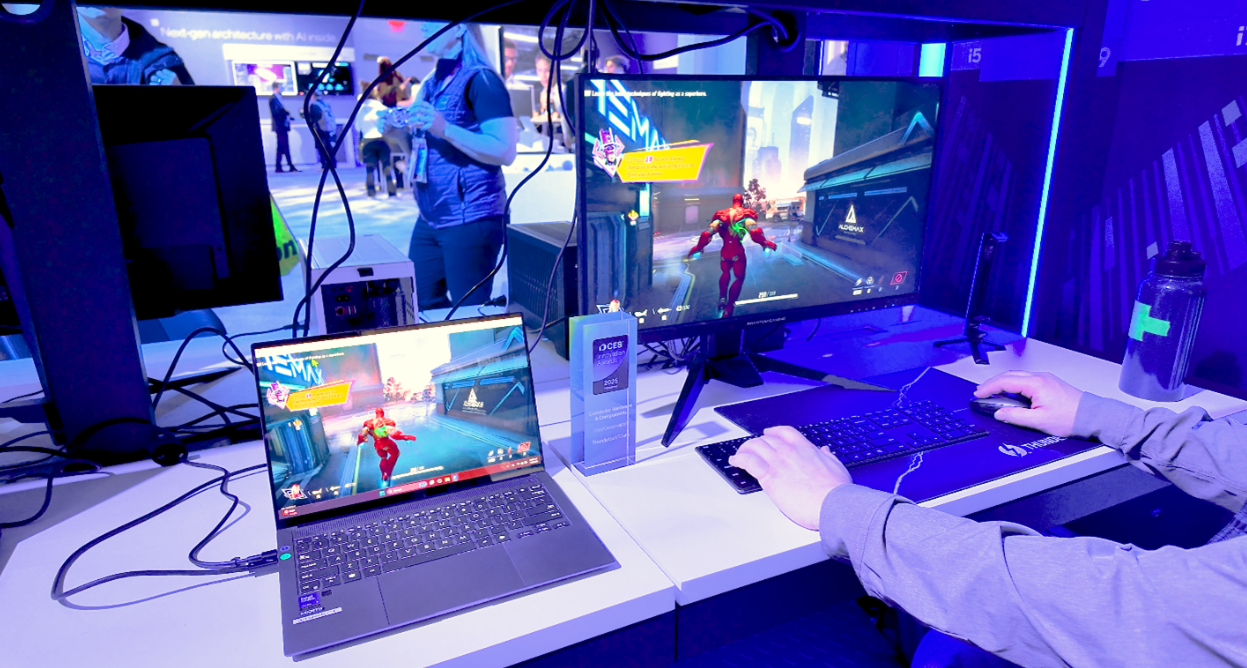
For gamers who want to stream their content, it’s easy to see how controlling two computers with a single keyboard and mouse helps ensure high performance and smooth game play. At Intel’s Tech Showcase at CES 2025, a laptop was connected to a desktop playing the Marvel Rivals game with a Thunderbolt cable and port. It enabled seamless sharing of displays, audio, common peripherals and storage. The desktop handled the heavy task of running the game, while the laptop managed the streaming workload using Thunderbolt Share and OBS (Open Broadcaster Software) – and both could be controlled on one screen.

“We know that right now is a perfect time for Thunderbolt Share because people do have more than one PC. And with Thunderbolt being a mainstream port, it’s very likely your second PC also has Thunderbolt, and you can have this type of experience,” Warnke said. “Two PCs can be better than one. Connecting two PCs with Thunderbolt Share helps improve your multitasking and productivity. It’s easy, it’s fast and efficient.”

AI PCs Can Help Users Reclaim Time on Chores: Intel Research Finds

An Intel-commissioned consumer survey of 6,000 respondents across the U.K., Germany and France identified that people lose nearly 15 hours a week on “digital chores,” such as meeting transcriptions or drafting emails. At the same time, AI PCs offered a potentially transformative impact on peoples’ lives, saving individuals roughly 240 minutes a week on routine digital tasks. But the study also highlighted that current AI PC owners spend longer on tasks than their counterparts using traditional PCs. Study results show that greater consumer education is needed to bridge the gap between the promise and reality of AI PCs.

“The AI PC offers consumers the opportunity to unlock greater creativity, productivity and, perhaps most importantly, time to do what they want. But these benefits can only be achieved if people are able to effectively harness AI’s potential to augment the way they live and work. Our role as technology leaders is to support this transition to AI-assisted living and equip consumers with the knowledge they need to use an AI PC efficiently and ethically.”  said Robert Hallock, Intel vice president and general manager of Client AI and Technical Marketing.

Why It Matters: The transition to AI PCs represents a big leap forward in personal computing. Understanding the potential of artificial intelligence and learning how to integrate it effectively into daily routines can unlock unprecedented levels of productivity and efficiency. But it requires a change in mindset and new skills. The study reinforced the need for greater awareness of the benefits and potential of AI PCs and the need for further education on how to use the technology to its full extent.

Intel’s report around the research, titled “Reclaim your day: The impact of AI PCs on productivity,” seeks to understand both personal and professional consumer computer habits and identify the potential for AI PCs to optimize efficiency and return time to people. It found that people spend an average of 899 minutes on administrative tasks on their personal devices a week, with coding (78 minutes), data analysis (74 minutes) and video editing (68 minutes) identified as the most time-consuming tasks.

While AI PCs are proven to promote productivity gains, with early data suggesting they can save users around 240 minutes a week on routine tasks, many consumers aren’t aware of these benefits or don’t know how to access them. Despite AI PCs becoming more available to people, 86% of respondents have either never heard of or used an AI PC. Meanwhile those respondents who already own an AI PC are actually spending longer on digital chores than those using a traditional PC. This suggests that consumers are spending a long time identifying how best to communicate with AI tools to get their desired outcomes.

While AI boasts the ability to process text near instantly (compared to the average human typing speed of 40-60 words per minute), that doesn’t necessarily mean consumers will save time when transcribing meetings or drafting copy if they don’t know how to use the technology. As technology providers, there is a duty to provide meaningful education on AI implementation to enable consumers to explore other passions with the time they’ve claimed back.

The survey also discovered prohibitive misconceptions around these products, with 44% of respondents seeing AI PCs as a gimmick or futuristic technology, and 53% believing they are only for creatives or technical professionals.

How Awareness Brings Interest and Opportunity: Survey findings indicate a correlation between greater awareness of AI PCs and adoption of the technology. While only 32% of respondents who aren’t familiar with AI PCs would consider purchasing one for their next upgrade, this percentage jumps significantly to 64% among respondents who have used one before. This shows a promising outlook for consumer interest in AI PCs, but also demonstrates the need to drive awareness around real-world use cases of this emerging technology.

Respondents in Germany were the most aware of AI PCs, with 28% either owning or having used one compared to just 8% in the U.K. and 7% in France. The German market also had the least worries about the privacy and security of their data when using an AI PC, with only 12% of respondents claiming to be very or extremely concerned. This suggests that the German market is the most willing to engage with new technology compared to the U.K. and France, and that there is work to be done to drive greater awareness of AI PCs across Europe.

When asked which feature of an AI PC they would most likely use, respondents identified real-time language translation (39%), file search optimization (35%) and enhanced cybersecurity (32%) as the most enticing features. And 40% of consumers also feel positive about the adaptive capabilities of AI PCs to understand their habits and provide a more personalized experience.

What is an AI PC: An AI PC is the next evolution in personal computing, integrating artificial intelligence capabilities directly into its hardware and software. Unlike traditional computers that either lack AI capabilities or rely heavily on cloud services, AI PCs bring all the computing power into one place. This means that AI workloads running on the PC, such as generative AI, can be based on the user’s local data and personal preferences and don’t require an internet connection. All of this adds up to better data privacy, better efficiency and the option to personalize the computing experience.

Intel recently launched the Intel® Core™ Ultra 200V series processors, delivering exceptional performance and long-lasting battery life, underpinned by AI. Intel Core Ultra 200V series processors deliver up to 120 total platform TOPS (tera operations per second) across central processing units (CPU), graphic processing units (GPU) and neural processing units (NPU). The fourth-generation NPU is up to 4x more powerful than the previous generation and is ideal for running sustained AI workloads while remaining energy-efficient.

AI Innovation in Telecom Edge with Dell and Intel

Dell Technologies today announced the expansion of its Dell AI for Telecom programme, in collaboration with Intel bringing new AI-driven solutions to communications service providers (CSPs) in Ireland.

This initiative aims to support network operations and enterprise edge use cases, enhancing efficiency, reliability, and cost savings. This expansion is particularly relevant for the Irish market, where CSPs can benefit from these advanced solutions.

To fully harness AI’s potential, CSPs require infrastructure capable of processing a growing amount of real-time data. The Dell AI for Telecom programme offers a comprehensive ecosystem of hardware, software and AI expertise, enabling CSPs to implement AI efficiently and develop revenue generating services by harnessing the power of data.

The new solutions enable CSPs to integrate AI into their networks and build AI solutions at the edge, allowing CSPs to monetise their network investments and enterprise clients.

 Network Operations Solutions:

  • Intent-Based RAN Assistant with Aira: This tool, powered by AiRA Technologies, helps network engineers by gathering data and creating simple applications based on their needs. It speeds up app development and makes network operations more efficient.
  • Network Traffic Analysis and Optimization with Opanga: This software, placed in the core of the mobile network, gives operators a clearer view of data traffic, significantly boosting network efficiency.
  • AI-Powered Network Automation with EnterpriseWeb: The Netwrx.ai tool offers 5G network automation, allowing users to manage and set up network components through a natural language interface.


Enterprise Edge Solutions:

  • AIoT-Powered Site Security with EPIC.IOCombines AI models with IoT technology to automate security operations and provide centralized management for safer venues.
  • Vision AI for Smart Manufacturing with Chooch: Uses computer vision to predict and detect incidents, improving efficiency and preventing production interruptions in manufacturing.
  • AI-Powered Mission Critical Communication with Ecrio: Facilitates voice commands for controlling IoT devices like cameras, drones, and robots.
  • Real-Time AI-Powered Crowd Analytics with WaitTime: Utilizes video analytics from existing cameras to offer real-time insights, helping optimize operations.
  • AI-Powered Smart Transportation with A.I Tech: Employs AI and deep learning for video analysis, enhancing transportation systems by monitoring vehicles, traffic, parking, and pedestrian movement.
  • Footfall and Crowd Analytics with TensorGo: Uses video analytics to track foot traffic and crowds, supporting safety in smart cities and retail spaces.
  • AI-Powered Worker Safety and Hazard Detection with Aotu: Applies AI for real-time video analysis to ensure worker safety.
  • Intelligent Video Analytics for Retail, Transportation, and Ports with Gorilla: Uses existing CCTV footage to detect suspicious activities and provide useful analytics.
  • AI-Powered Video Analytics for Safety with Axxonsoft: Helps maintain site security across different industries using AI.
  • Inventory Visibility and Management with C5i: Identifies inventory issues and suggests proactive measures.

Andrew Vaz, VP, Product Management for Telecom System Business at Dell Technologies said: “To fully harness AI’s potential, communications service providers (CSPs) require an infrastructure capable of processing real-time data. Our Dell AI for Telecom program offers a comprehensive ecosystem of hardware, software, and AI expertise, empowering CSPs to efficiently implement AI and develop revenue-generating services. The new solutions help CSPs easily bring AI into their network for efficiency, reliability, and cost savings, and build AI solutions at the edge to monetize the investments in their network with the enterprise.”

As demand for AI solutions grows, Intel and Dell have optimized edge AI applications running on Dell PowerEdge XR8000 servers, powered by Intel Xeon processors. These applications offer optimized edge AI capabilities, ruggedized hardware, multiple connectivity options, validated designs, flexible workloads, and scalable infrastructure.

With these advancements, Dell and Intel are poised to lead the charge in AI innovation for telecom, creating a smarter and more efficient future for the industry in Ireland and beyond.

Explore how your CSP can benefit from AI.

Dell Technologies expands Edge manufacturing solutions with Hyundai AutoEver and Intel

Dell Technologies has announced the expansion of its edge partner ecosystem with Hyundai AutoEver and Intel to help manufacturers derive more value from their edge data with AI.

These initiatives underscore Dell’s commitment to leveraging edge data for transformative business outcomes in the manufacturing sector.

To ease manufacturers’ transition to an AI-enhanced factory, Dell is introducing updates to the Dell Validated Design for Manufacturing Edge with the integration of Hyundai AutoEver.

This integration will enable real-time data analysis and AI-driven optimisations, empowering plant managers to enhance equipment performance, predict maintenance needs, and increase productivity.

The Dell Validated Design for Manufacturing Edge is now supported by NativeEdge, Dell’s edge operations software platform. Manufacturers can simplify infrastructure deployments, manage multiple applications on the factory floor and scale infrastructure and applications quickly, while maintaining factory security.

This comes as the IDC expects AI will drive major growth in edge computing spend over the coming years, with worldwide edge computing spend expected to reach $232 billion in 2024, an increase of 15.4% over 2023.

Speaking about the expansion of Dell’s manufacturing edge solutions, Pierluca Chiodelli, Vice President Engineering Technology at Dell Technologies said “Artificial Intelligence is poised to transform how quickly and accurately edge data can be collected, analysed, and acted upon.

Dell Technologies is expanding its edge partner ecosystem with Hyundai AutoEver and Intel to help manufacturers derive more value from their edge data with AI. These collaborations highlight a pivotal role played by the Dell edge ecosystem in providing customers the latest technologies to harness the power of their edge data.”

Dell is also introducing enhancements to Dell NativeEdge Blueprints using Intel’s OpenVINO Developer Toolbox. The integration provides businesses with more flexibility and choice for the deployment and management of AI and machine learning applications at the edge.

Simplified orchestration and management of edge computing resources provide seamless and secure application deployment on Intel-based hardware. Optimized AI inferencing offers real-time insights and improved operational efficiency for businesses.

“By integrating OpenVino Developer Toolbox into NativeEdge Blueprints, we are empowering businesses to unlock the full potential of AI at the edge, optimizing operations and paving the way for new, intelligent applications.

This is a game-changer for industries worldwide, accelerating the path towards a smarter, more connected future,” said Muneyb Minhazuddin, vice president and general manager, NEX compute and edge AI software, Intel.

View Dell’s full suite of edge ISVs and solutions here.