Dublin Tech Week – 22–29 May 2026

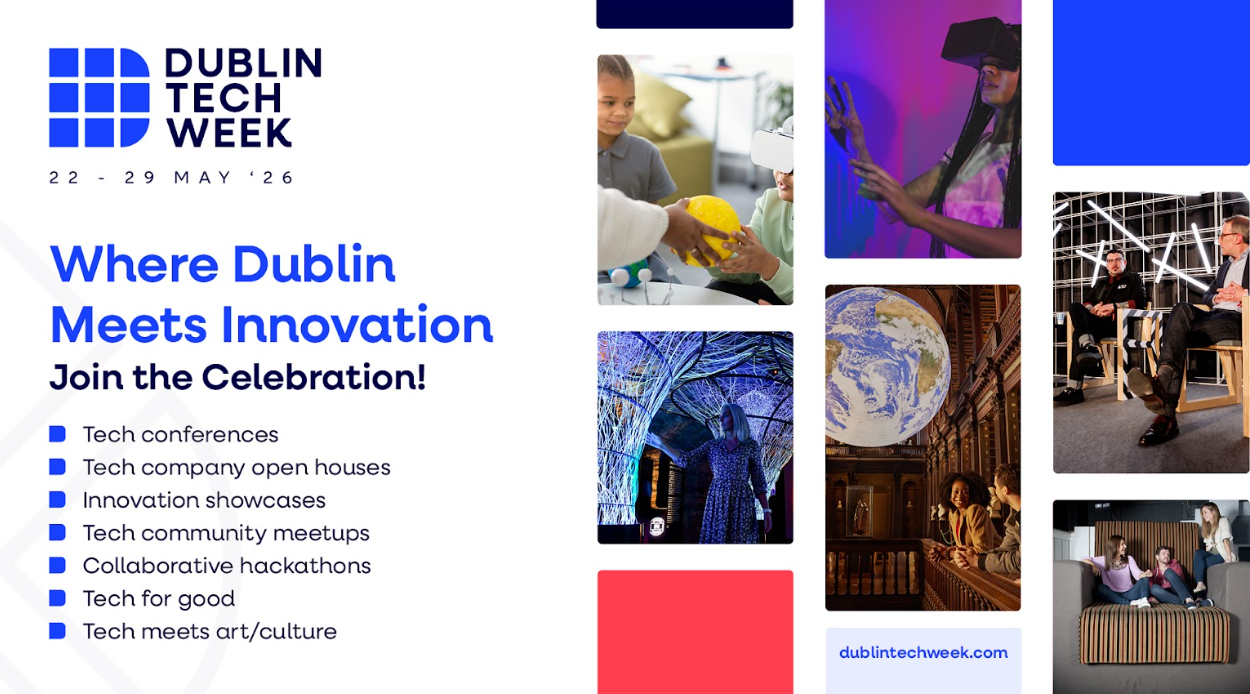
In just a few weeks, Dublin will become the epicentre of global innovation as it plays host to the second annual ‘Dublin Tech Week’. After last year’s successful launch ‘Dublin Tech Week’ once again promises to energise the city with the brightest ideas, the boldest technology, and a shared vision for the future.

Running from 22–29 May, this initiative will unite the capital’s top innovators, global tech leaders, creatives, educators, and the wider community through a dynamic mix of over 30 events, spanning everything from AI and cybersecurity to blockchain, smart cities, fintech and beyond.

From flagship conferences like the Dublin Tech Summit in the RDS, the TechFoundHer Summit in the Mansion House, the Enfuse Finals in Wood Quay, Gamerfest in the RDS, a variety of Kids Coding events in Fingal and a number of Smart Dublin Events such as Drones in public service Workshop. There will be something for everyone on a programme that is designed to be as accessible as it is ambitious.

Ross Curley, Head of Economic Development, Dublin City Council & Dublin Regional Place Brand said: “Dublin is one of Europe’s most important tech hubs and a leading smart city. Dublin City Council and the Dublin Regional Brand are proud to once again support Dublin Tech Week showcasing our world-class talent, cutting-edge innovation, and community spirit. Initiatives like this not only highlight our position as a leader in the tech industry but also inspire future innovation, and strengthen our city’s reputation as a forward-thinking, welcoming and thriving destination for local and global business.”

Both the tech and wider community can immerse themselves in topics spanning AI, misinformation and trust, cybersecurity, data visualisation, digital twins, smart cities, women in tech, neuro affirming tech, startup innovation, and the future of European digital policy. Events range from ticketed conferences and summits to free workshops, community meetups, and hands-on sessions for all ages, with booking information provided on each event listing.

All of this is made possible by a powerful coalition of partners and stakeholders across Dublin’s ecosystem, including: Dublin City Council, Smart Dublin, Dublin Chamber, the Dublin City Local Enterprise Office, Enterprise Ireland, Dublin Convention Bureau, the ADAPT Centre at Trinity College, TU Dublin, DCU: Innovate, Dogpatch Labs, Guinness Enterprise Centre, Regional Skills Dublin, Tech Ireland, Blockchain Ireland and Bitcoin Ireland.

Together, they’re helping to build a platform for discovery, investment, talent, and community impact that will reverberate long after the week finishes.

Dublin Tech Week‘ is open to all. Explore the full programme and get involved at dublintechweek.com

Tech Businesses in Ireland that carry the ‘G’ and their impact

Trust & Innovation for Ireland’s Digital Economy, shining a spotlight on the scale, ambition and impact of Ireland’s thriving technology sector. Research commissioned by KPMG in 2025 underlines the sector’s importance, revealing that every €1 million invested in Guaranteed Irish technology businesses generates €2.2 million for the wider domestic economy. This reflects the significant contribution of member companies through business activity, local supply chains and job creation.

Running throughout the month, the campaign will highlight scaling opportunities across key areas including cybersecurity, data centre infrastructure and digital innovation. From high-growth startups to established industry leaders, the campaign celebrates a dynamic and collaborative network of Irish tech businesses. It aims to foster greater connection across the sector, unlock new opportunities for growth, and encourage more technology companies to join the Guaranteed Irish network.

Leading Tech businesses which are a part of the Guaranteed Irish ecosystem include Viatel Technologies, SIRO, Blacknight Solutions, .ie, TAPiTag, Cyberfortress, and DIGI Systems.

As Ireland continues to position itself as a global technology hub, Guaranteed Irish Tech Month highlights the critical role of trusted, locally based businesses in driving sustainable economic growth.

Guaranteed Irish, Supporting Business that Supports Ireland

For more information visit www.guaranteedirish.ie

Building the business case for AI starts with people, leadership and technology

AI is rapidly moving from experimentation to everyday workplace reality. Across Ireland, employees are already using it to summarise documents, analyse data and automate routine tasks. Yet for many leaders and organisations, the real challenge is not access to the technology but turning AI into meaningful business value. Mark Hopkins, General Manager, Dell Technologies Ireland tells us more.

The organisations seeing the greatest impact from AI are those bringing three things together: strategic leadership, the right technology foundation, and a workforce empowered to identify where AI can genuinely improve how work gets done.

Ireland’s recently published Digital and AI Strategy, which sees AI technologies as a driver of growth, reflects this approach. It highlights the need to invest not only in digital infrastructure but also in the skills and capabilities that will allow employees to harness AI responsibly and productively.

For business leaders, the opportunity is significant, but so is the responsibility to build a clear and practical business case for AI.

Increased focus on the business case for AI

The conversation around AI is evolving at speed. What began as experimentation is now focused on a much more practical question: how can AI deliver measurable outcomes?

Across Ireland, organisations are operating in a cost-conscious environment where every technology investment must demonstrate value. The strongest AI strategies therefore focus on specific business outcomes such as productivity gains, improved decision-making or enhanced customer experiences.

A common misconception is that AI adoption requires large scale investment and disruption. In reality, many successful initiatives begin with targeted use cases, such as automating routine processes, analysing data more effectively or improving customer interactions, and this approach is increasingly being adopted by small businesses to streamline operations.”

Workforce central to unlocking AI advantage

While technology provides the capability, it is employees who ultimately determine whether AI delivers real value.

Many of the most effective AI applications are discovered by employees who understand the day-to-day challenges within their roles. Teams in operations, finance or customer service are sometimes best placed to identify repetitive tasks that could be automated or improved through better data insights.

Equally important is ensuring employees feel confident using AI responsibly. Our latest Dell Innovation Catalysts Study shows the scale of this challenge. In fact, 98% of Irish organisations say their employees will need new skills to unlock the full potential of AI.

As these tools become embedded in everyday workflows, organisations will need to move beyond occasional training and adopt more continuous approaches to learning. The Government’s commitment to roll out AI training across the public sector is welcome and will help drive responsible AI adoption and ensure 100% of key public services are digitalised by 2030.

Leadership sets the tone for AI adoption

Leadership plays a crucial role in helping organisations move from AI experimentation to real business impact.

For many organisations, the challenge is not recognising AI’s potential, but unlocking value from the vast amounts of data they already hold. Leaders therefore have an important role in ensuring AI initiatives are tied to clear priorities and focused on turning data into insights that support better decisions.

From our perspective at Dell Technologies, organisations that treat AI as a business transformation rather than simply a technology deployment are the ones unlocking its real strategic advantage.

We are also beginning to see more advanced capabilities such as agentic AI, where intelligent systems can help coordinate workflows and support decision-making. As these technologies evolve, leadership will play an increasingly important role in ensuring organisations have the right strategy and governance in place to deploy AI responsibly and deliver value at scale.

The technology foundation still matters

While people and leadership are essential, the role of technology should not be underestimated.

AI workloads place new demands on infrastructure, including high-performance computing, secure data management and the ability to scale as projects grow. Many organisations are discovering that their existing IT environments were not designed to support these requirements.

At Dell Technologies, we work with organisations across Ireland and Europe to help them build AI-ready foundations that allow businesses to move from experimentation to real-world deployment.

Through our Customer Solutions Centre Innovation Lab in Limerick, businesses and organisations can explore how emerging technologies, including AI, can be applied to real business challenges. We are also seeing how these capabilities are transforming industries. For example, Dell Technologies is working with Studio Ulster to support one of Europe’s most advanced virtual production studios, enabling creative teams to generate complex digital environments in real time and transform how film and television content is produced.

Equally important is understanding the economics of AI. A practical cost model should consider factors such as computing power, energy consumption and data management to ensure AI investments align with real workloads and business needs.

A moment of opportunity for Ireland

Ireland’s unique digital ecosystem and skilled workforce position the country well to benefit from the next wave of AI innovation.

The Government’s Digital and AI Strategy provides an important national framework. But realising the strategy’s goal of becoming a location of choice for AI startups and scale-ups, and a global hub for applied AI innovation will depend on how organisations translate that ambition into practical adoption.

That means leaders creating the right environment for experimentation, employees identifying where AI can improve how work gets done, and organisations investing in the infrastructure needed to scale innovation responsibly.

The organisations that succeed will be those that bring people, leadership and technology together to turn AI potential into real progress.

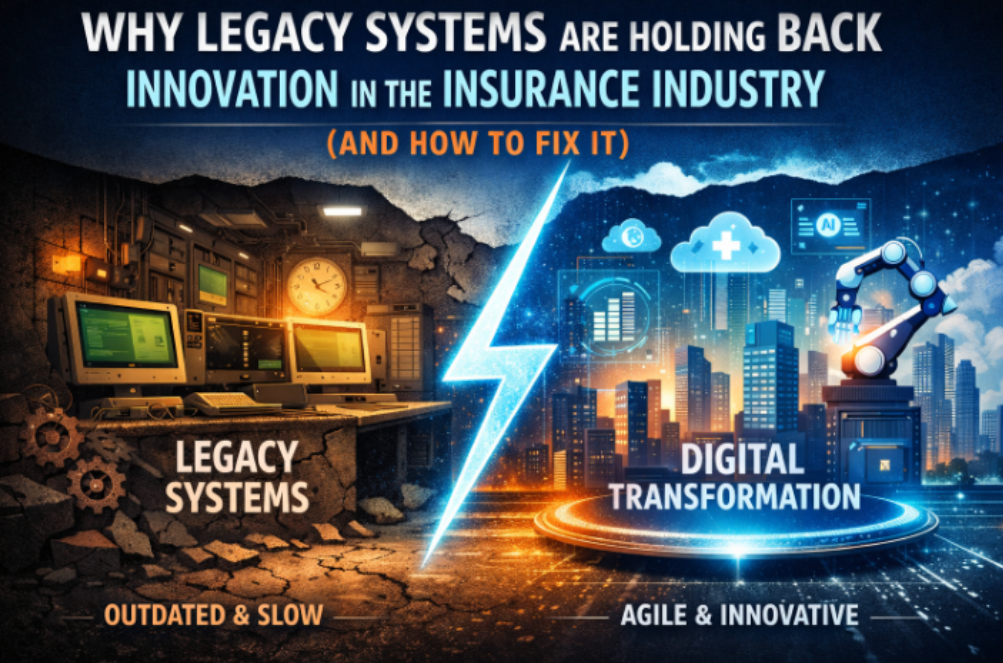
Why Legacy Systems Are Holding Back Innovation in the Insurance Industry (and How to Fix It)

Insurance leaders love to talk about innovation, but actually getting there? That’s where things fall apart. The real problem usually lives inside their own walls — old, inflexible systems holding everything back. These legacy platforms run deep. They make the business slow, hard to change, and expensive to scale. Insurtech startups can launch a new service almost overnight, but established insurers are still slogging through projects that drag on for years.

To remain competitive, organizations must rethink their approach to digital transformation in insurance and address foundational technology constraints. A critical first step is to modernize a legacy insurance system by replacing rigid architectures with flexible, modern platforms.

Let’s look at why legacy tech keeps insurers stuck, and how you can break the cycle with modernization strategies that actually work in the real world (and don’t blow up your business in the process).

What Actually Makes a Legacy System (and Why Should You Care)?

It’s not just about software that’s “old.” In insurance, legacy systems are usually massive, tightly wound beasts—core to how you write policies, handle claims, and keep things running. The issue isn’t just age. It’s that these systems were built so rigidly — hardwired, poorly documented, and stuffed with patches — that even small changes are a headache. Over the years, short-term fixes pile up, and you’re left with a machine that’s fragile, costly to tweak, and filled with hidden dependencies.

Think about a mid-sized insurer whose backbone is a 20-year-old policy management system. Want to offer digital claims? Suddenly you need custom middleware, manual data mapping, endless rounds of testing… It drags on for months. Not because of the business process, but because the tech just isn’t built to flex.

What gets risky here?

  • They don’t play nice with modern APIs.
  • You’re stuck with dying programming languages.
  • Most of your IT budget disappears into maintenance, not innovation.
  • Only a few folks know how these systems work — and they’re eyeing retirement.

If you don’t tackle these, your big technology transformation plans will fizz out before anyone sees real improvement.

The Innovation Chokepoint — Why Projects Fail or Stall Out

Insurers toss money at fresh ideas like AI pilots, chatbots, automated workflows. Yet when it’s time to scale up, everything grinds to a halt. The reason isn’t a lack of vision. It’s that your foundational tech just isn’t designed for quick, agile change.

First, shipping anything new takes forever. Every new product has to thread its way through ancient systems wired together with dozens of interdependencies. Coordination gets tangled; delays compound. Next, connecting to cutting-edge insurance solutions? It’s a slog. AI-driven underwriting, instant pricing, advanced claims automation — all of it needs clean, updated data infrastructure. Legacy platforms scatter that data across different formats or lock it up, making real-time anything basically impossible.

Finally, any innovation that does get out tends to sit in its own corner, isolated from the rest of the business. You might roll out an AI tool for detecting fraud, but if the data pipeline’s too slow, those insights arrive after the fact. The tech exists, but the old infrastructure chokes out the real business impact.

The Hidden Price Tag — How Legacy Systems Bleed Organizations Dry

The actual cost of hanging onto legacy tech is easy to overlook because it’s everywhere — in maintenance contracts, compliance headaches, security workarounds, and endless support tickets.

But if you stack up the unchecked bills, this is what you’re really paying for:

  • Ballooning maintenance spending that eats up your IT budget.
  • Vulnerabilities that open you up to cyberattacks.
  • Compliance nightmares, where adapting to new regulations means wrestling with systems that just won’t budge.
  • A shrinking pool of folks who actually understand this tech.

The real risk, though? It’s falling behind. Competitors move to nimble platforms, get products to market faster, adapt pricing, and personalize the customer experience. If you’re stuck, your brand and bottom line slowly erode.

How Do You Even Start Modernizing? — A Playbook That Actually Works

Let’s get practical. Modernization isn’t a “deploy and forget” project — it’s an ongoing shift in how you build, run, and evolve your core technology. You’ll need to pick the right approach based on your biggest priorities and where you can tolerate risk.

Here are your main plays:

  1. Rehosting (“Lift and Shift”) — Move your systems to the cloud as-is, keeping changes small. Fast, but doesn’t solve deeper problems.
  2. Replatforming — Adjust your applications for the cloud, picking up some improvements along the way. Faster results without full rewrites.
  3. Refactoring — Redesign sections of the system for better flexibility and maintenance. More investment, but the payoff grows over time.
  4. Rebuilding — Start over with a fresh, cloud-native architecture. This opens up real innovation but takes time, discipline, and guts.

Usually, it’s a mix. Maybe you rehost less critical systems to score quick wins, while you surgically refactor or rebuild the parts most critical to customer experience or revenue.

To succeed: Tie every project to business results (not just technical goals), focus first on what impacts your customers, use APIs to slowly break apart dependencies, and bring on experts with real-world modernization experience.

Modernizing Step by Step — Without Breaking the Business

The new generation of insurance systems is all about flexibility, speed, and making sure IT supports business change — not blocks it. Here’s what to focus on:

  • Cloud-native infrastructure for scalability and resilience (so you can launch and grow faster).
  • APIs as building blocks — making it possible to plug in new systems or partners with less fuss.
  • AI and automation to speed up core processes — but make sure your data is clean and accessible first.
  • Modern data platforms that let you analyze and act on information instantly (think dynamic pricing or instant fraud detection).

Insurers moving to these modern, API-driven setups cut product launch cycles and respond to the market way faster.

Today, these aren’t just “nice to haves” — they’re baseline for anyone aiming to stay in the race.

Bottom Line — Turn Your Old Systems Into an Edge

Legacy tech isn’t just an IT issue. It’s a strategic roadblock. Insurers who ignore these limits will spend more, move slower, and watch their relevance fade.

But if you tackle legacy modernization head-on — with the right roadmap, clear business priorities, and a commitment to change — you get something your competitors don’t: speed, customer focus, and the freedom to innovate. Start early. Plan carefully. The ones who get this right won’t just keep up — they’ll lead.

In insurance now, modernizing isn’t a someday thing. It’s table stakes for lasting growth and real innovation.

AI is accelerating but is your infrastructure keeping pace?

AI is rapidly transforming businesses across Europe, the Middle East, and Africa (EMEA), unlocking innovation and potential in vital areas from retail personalisation to medical research. But Irish organisations in particular are feeling both the excitement and the strain. Many businesses find their AI ambitions stalling – as no one expected they’d need to support AI workloads when designing their infrastructure strategy. Colin Boyd, Data Centre Solutions Sales Director, Dell Technologies Ireland tells us more

The investment momentum is strong. Projections show the AI market in Europe alone is experiencing robust growth, projected to expand from approximately $105B in 2024 to over $640B by 2031, at a CAGR of 35% (Statista). But in Ireland the legacy systems remain one of the biggest barriers to progress with almost 28% of businesses saying their servers need upgrading to support AI workloads and 34% saying the same for their storage systems, according to Dell Technologies Innovation Catalyst Study. And as data volumes surge, 97% organisations that are planning to increase their storage capacity expect to face challenges of some sort when doing so, underscoring the scale of the infrastructure gap.

To truly unlock AI’s potential, leaders must first look inward and assess if their infrastructure is a launchpad for innovation or a barrier to progress. Here are five indicators that your infrastructure might be holding you back.

  1. Data Access is a Bottleneck, Not an Enabler

AI models are fueled by data. The more high-quality data they can process, the more accurate and insightful they become. However, many local businesses still struggle with fragmented or slow-moving data. If data scientists spend more time waiting for datasets to load than they do building models, that is a problem. Legacy storage systems often struggle to deliver the high-speed, parallel throughput required for training complex algorithms.

The challenge is further amplified by Ireland’s strict regulatory environment as seen 40% of the organisations say they face challenges when it comes to meeting regulatory data requirements when it comes increasing storage capacity and 37% cite data security and privacy concerns as barriers when planning to scale their storage infrastructure.

The need for strong data management in the EMEA region is further amplified by stringent regulatory requirements. Regulations like the General Data Protection Regulation (GDPR) in Europe set high standards for data privacy, consent, and localisation. Businesses need to ensure that data used for AI is not only accessible and timely but also managed and transferred in compliance with these legal mandates.

Consider a financial institution in London aiming to use AI for fraud detection. Real-time analysis is essential, but a fragmented or slow data landscape not only risks missed threats but can also lead to breaches of privacy mandates. Modern, compliant data platforms help unify, streamline, and accelerate access – enabling safe, rapid innovation, while meeting the complex requirements for privacy and governance.

  1. Scaling Server Infrastructure for the Next Wave of AI

Running AI in production is still a highly-compute intensive challenge for most businesses. While few enterprises are training large language models from scratch, many are deploying AI to support real-time decision making, analytics, computer vision, and increasingly autonomous workflows alongside existing business applications.

Almost 28% of Irish organisations say their servers need upgrading to support AI workloads, as it places sustained pressure on server infrastructure, particularly when general-purpose servers are already operating close to capacity. When AI inference, data processing and core applications compete for the same resources, performance suffers and the value of AI is harder to realise. Purpose built infrastructure, including accelerated compute, helps businesses support these mixed workloads efficiently while maintaining reliability and predictable performance.

  1. The Network Is a Traffic Jam

AI doesn’t just demand powerful computing and storage; it also requires a robust network to move massive datasets between storage, processing units, and end-users. But many businesses are discovering that their networks weren’t designed for this level of throughput. A slow or unreliable network can create significant bottlenecks, effectively starving your powerful AI processors of the data they need to function. Signs include long data transfer times, network congestion during peak processing hours, and dropped connections that can interrupt critical training jobs.

A slow network means a frustratingly delayed user experience, which can directly impact on customer satisfaction and retention. A growing number of Irish businesses recognise that improving data transfer speeds is essential to support AI tasks. A high-speed, low-latency network fabric is essential to ensure a smooth, continuous flow of data, enabling your AI applications to perform as intended.

  1. Deployment and Management Are Overly Complex

Getting an AI model from the lab to a live production environment should be a streamlined process. However, many businesses find themselves entangled in complexity. If your IT team struggles to provision resources, manage software dependencies, and scale applications, your infrastructure is creating unnecessary friction. A rigid, manually configured environment makes it difficult to experiment, iterate, and deploy AI models efficiently.

The challenge is compounded by skills gap and operational pressures. 34% of Irish organisations cite a lack of in-house expertise as a key barrier to managing growing data and infrastructure demands.

Lack of agility can be a significant disadvantage. Businesses across the EMEA region are looking to AI for a competitive edge, and speed to market is critical.

Modern infrastructure simplifies this journey with integrated software stacks and automation tools. This approach empowers teams to deploy AI applications quickly, manage them with ease, and scale them on demand, fostering a culture of rapid innovation.

  1. No Clear Path to Scale

While an organisation’s first AI project may start small, the infrastructure should be ready for what comes next. A critical sign of an unprepared system is the absence of a clear, cost-effective strategy for scaling your AI capabilities. If expanding the AI environment requires a complete and costly overhaul, the initial success will be difficult to replicate and these challenges are already being felt across businesses, with 40 % reporting difficulties when ensuring infrastructure scalability, while 37% cite high cost of expanding data storage as one of the key obstacles.

Infrastructure built on a scalable, modular architecture allows businesses to grow AI resources incrementally. This “pay-as-you-grow” model provides the flexibility to meet evolving demands without overinvesting, ensuring your AI journey is sustainable in the long term.

Building the Foundation for Progress

The journey to AI is not just about algorithms and data; it’s about building a powerful and agile foundation. By addressing these five signs, businesses in Ireland can move beyond the limitations of legacy systems. Investing in modern, purpose-built infrastructure is an investment in your future. It empowers your teams, simplifies complexity, and creates the conditions for AI to deliver on its promise of driving meaningful progress and creating new opportunities.

As organisations look to advance their AI ambitions, understanding how to modernise infrastructure becomes essential. The same principles that drive transformation – strengthening core systems, managing data securely and scaling AI workloads with confidence will be at the heart of the conversation at Dell Technologies Innovate. Bringing together industry experts and technology leaders, the event will explore how organisations can build resilient, AI‑ready environments while maintaining security, compliance, and performance.

For organisations looking to take the next step in their AI journey, understanding how to modernise infrastructure will be key.

Join us at Irish Museum of Modern Art on 26th March to dive deeper into these strategies and chart a clear path forward. For more information and to register, click here.

Enterprise Ireland launches Propel Ireland to accelerate offshore wind innovation and supply chain development

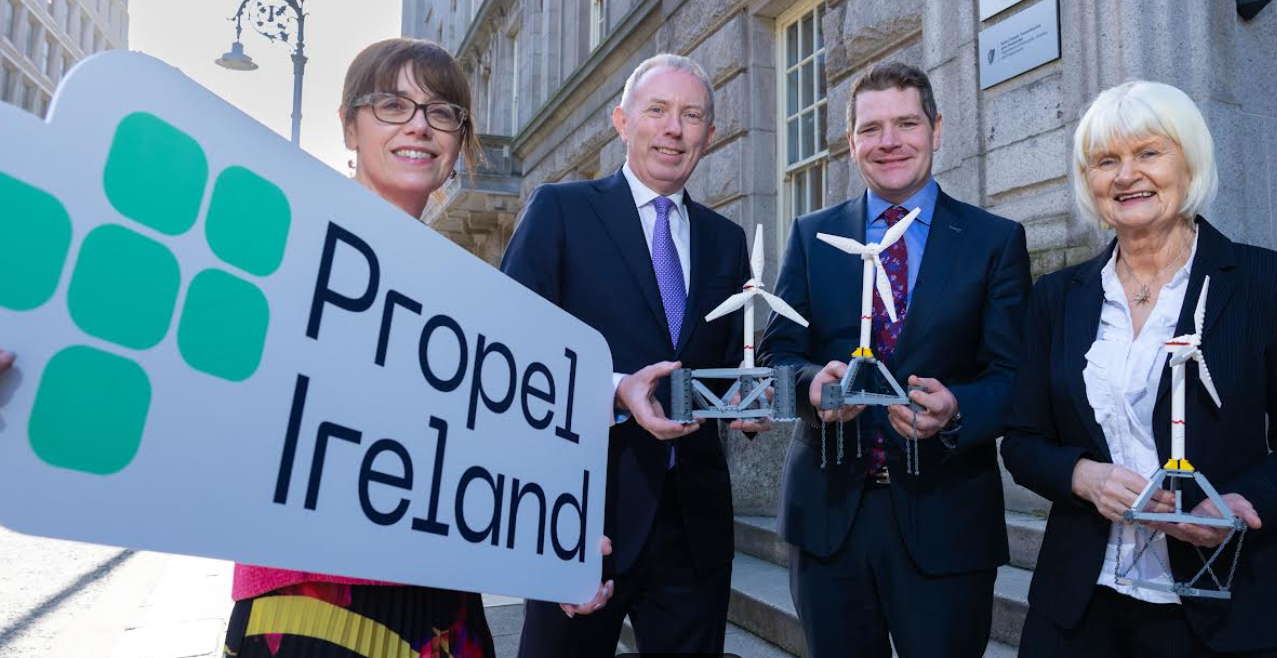
Enterprise Ireland has today announced the launch of Propel Ireland, a new innovation centre designed to drive collaboration, innovation and supply chain development across Ireland’s offshore wind sector.

Propel Ireland represents a key action under Powering Prosperity: Ireland’s Offshore Wind Industrial Strategy, supporting the development of a globally competitive offshore wind industry and positioning Irish companies to capitalise on significant domestic and international opportunities.

Offshore wind is central to Ireland’s energy future and economic growth, with national targets of up to 37GW of offshore renewable energy capacity by 2050 – creating a significant opportunity for enterprise development, job creation and export growth.

Propel Ireland will bring together developers, SMEs, researchers and Government stakeholders to strengthen collaboration across the offshore wind ecosystem and accelerate innovation.

Propel Ireland will:

•    Connect Ireland’s offshore wind industry and support collaboration across enterprise, research and Government

•    Enable companies to address shared technical and commercial challenges

•    Support the development of a competitive Irish supply chain for domestic projects and global export

•    Accelerate the commercial deployment of later-stage technologies

The initiative will be supported by a cross-sectoral steering group, including representatives from Government Departments and agencies, industry and the research community, ensuring alignment with national policy and industry needs.

Minister for Enterprise, Tourism and Employment, Peter Burke TD, said: “Developing a strong offshore wind industry is a key priority for Government, supporting enterprise growth, innovation and job creation. Propel Ireland will play an important role in strengthening Ireland’s supply chain and supporting companies to seize the opportunities in this rapidly growing global sector.”

Minister at the Department of Climate, Energy and the Environment, Timmy Dooley TD, said: “Offshore wind will play a central role in delivering Ireland’s climate and energy ambitions. Initiatives such as Propel Ireland are important in supporting innovation, building capability and ensuring we maximise the economic benefits of the transition to renewable energy.”

Minister of State with special responsibility for Further Education, Apprenticeship, Construction and Climate Skills, Marian Harkin TD said: “Collaboration between industry, research and Government is critical to delivering innovation in emerging sectors such as offshore wind. Propel Ireland will support the development of knowledge, skills and research capability needed to underpin Ireland’s long-term success in this area.”

Jenny Melia, CEO, Enterprise Ireland, said: “Offshore wind presents a significant opportunity for Ireland to build a new, globally competitive sector. Propel Ireland will support Irish companies to collaborate, innovate and scale, enabling them to compete internationally while contributing to the development of Ireland’s offshore wind capability.”

The launch of Propel Ireland reflects a coordinated, cross-Government approach to developing Ireland’s offshore wind sector, aligned with national climate, energy and enterprise policy.

Ireland’s strong research base, growing enterprise capability and natural resources position the country to become a leading location for offshore wind innovation and supply chain development. Propel Ireland will support this ambition by providing a platform for collaboration, innovation and commercialisation.

Enterprise Ireland will now engage with industry partners to support participation in Propel Ireland and to ensure that Irish companies are well positioned to benefit from opportunities in offshore wind, both domestically and internationally.

Monzo plans to grow its Dublin-based team to 70 employees

Monzo, a leading digital bank, today announced its plans to grow its Irish team to 70, almost doubling the headcount by mid-2027. This builds on the bank’s continued investment in Ireland with the latest capital injection of €71m, bringing the total to €83.5 million over the past two years. The investment underpins the expansion of its Dublin-based European headquarters and the creation of new jobs across the business.

Monzo’s European expansion is led by Michael Carney, Monzo’s EU CEO, as the bank prepares to serve Irish customers and businesses. Carney is supported by an experienced leadership team that brings together deep expertise in banking and technology, including Nicola O’Brien (EU Chief Financial Officer), Sonia Flynn (EU Chief Operating Officer), and Elaine Deehan (Country Manager for Ireland).

The new roles will span operations, risk and compliance, technology and engineering, financial crime prevention and product development, reflecting the breadth of capabilities required to operate and scale a fully licensed digital bank within the EU.

The announcement follows Monzo becoming the first digital bank to secure a full European banking licence through the Central Bank of Ireland in December 2025, enabling the company to bring its fully regulated personal and business banking products to customers across the EU, starting right here in Ireland.

Supported by the Irish Government through IDA Ireland, the expansion will support delivery of Monzo’s core digital banking offer for individuals and businesses, including everyday current accounts, children’s accounts payments, savings products and financial management tools designed to give its customers greater control and transparency in managing their finances.

Tánaiste and Minister for Finance, Simon Harris TD, said: ‘Monzo’s decision to expand its team and establish its European headquarters in Dublin is testament to the country’s reputation as a hub for innovation and financial services. This significant investment not only brings new jobs and opportunities but also strengthens Ireland’s position within the European banking sector. I look forward to seeing Monzo contribute to our vibrant economy and deliver innovative banking solutions.’

“We’re excited to see our founding Dublin team grow, welcoming experts who bring together the best of banking and technology. Ireland’s deep and expanding talent pool offers the world-class expertise needed to support Monzo’s expansion ambitions across Europe,” said Michael Carney, EU CEO at Monzo. “As we take our mission to make money work for everyone in Europe, we’re proud to kick-start that journey in Ireland, with individuals and small businesses now able to join the waitlist.”

Michael Lohan, CEO of IDA Ireland, said: “I very much welcome Monzo’s decision to locate its European Headquarters in Ireland. Monzo is the first digital bank to secure a full European banking licence through the Central Bank of Ireland.

This decision is a strong vote of confidence in Ireland as a location for International regulated financial services where companies can deliver products and services across the EU from Ireland. It also speaks to Ireland’s strong capabilities in international banking and digital technology. I would like to wish Monzo every success at its scales its team here in Ireland”

For details on Monzo in Ireland, visit www.monzo.com/ie

Bord Iascaigh Mhara invites applications for 2026 Aquatech Innovation Studio, AquaScale

Ireland has the potential to be a major hub for global aquaculture innovation and scale-up, with 76 Irish companies now generating an estimated €165 million in value and supporting more than 900 full-time jobs, according to Bord Iascaigh Mhara (BIM), Ireland’s Seafood Development Agency.

Announcing the opening of applications for the 2026 Aquatech Innovation Studio, AquaScale – which this year will focus on supporting established companies scale up – BIM’s Aquatech Business Manager, Damien Toner said it will build on the proven success of the BIM Aquatech Innovation Studio platform which has supported 66 start-ups and helped raise over €28 million in investment since 2018.

The intensive three-day programme will take place in Galway from 26–28 May 2026, with applications closing on 31 March 2026,

According to Damien Toner, AquaScale represents a strategic evolution, designed specifically for companies already active in the market. The programme is targeting applications from Aquatech enterprises preparing for their next phase of commercial growth.

He said, “Ireland’s Aquatech sector continues to demonstrate innovation and growing technical depth. With 76 companies now generating an estimated €165 million in value and supporting more than 900 full-time jobs, the sector is steadily strengthening its economic and scientific contribution both nationally and internationally.

“As global demand for sustainable aquaculture production accelerates – particularly in high-value sectors such as salmon and shrimp – Ireland is well positioned to supply advanced technologies and expertise to international markets. Through initiatives like AquaScale, BIM is focused on ensuring that ambitious Irish Aquatech companies have the strategic clarity and commercial capability required to compete and scale globally.”

Unlike early-stage accelerators, AquaScale is not a pitch competition. Instead, it is a focused, market-driven intervention aimed at strengthening strategic clarity, commercial positioning, and execution readiness for expansion.

The 2026 programme will once again be delivered in partnership with leading global aquaculture accelerator Hatch Blue.

The BIM Aquatech Innovation Studio has laid a strong foundation for aquaculture innovation in Ireland. “AquaScale signals that we are ready for the next level,” said Jessica Giannoumis, Hatch Blue’s Aquatech Community Manager for Ireland. “Designed for commercially active companies preparing to expand, the programme strengthens strategic focus, commercial positioning, and execution readiness. AquaScale supports Ireland’s most ambitious aquatech companies as they deepen market traction and scale more deliberately in international markets.”

AquaScale forms part of BIM’s Aquatech Development Programme and is supported by the European Maritime, Fisheries and Aquaculture Fund (2021–2027).

Programme Objectives

AquaScale aims to:

  • Position Ireland as a launchpad for globally competitive aquaculture scale-ups.
  • Accelerate commercial traction and reduce risk for companies entering new markets.
  • Strengthen go-to-market, competitive positioning, and expansion strategies.

What Makes AquaScale Different

  • Market-first, not tech-first.
  • Strategic clarity and execution support — not a pitch programme.
  • Designed for companies already selling and preparing to scale.
  • Equity-free, no participation fee, with a limited cohort of 8–10 companies.

Who Should Apply?

AquaScale is designed for companies that:

  • Are already active in the market with customers, pilots, or revenue.
  • Are preparing for expansion or market refocus (not first market entry).
  • Need honest, peer-level strategic discussion and rigorous commercial pressure-testing.

By focusing on scale-stage challenges, AquaScale reflects BIM’s commitment to strengthening Ireland’s aquaculture innovation ecosystem — not only supporting new ventures, but ensuring high-potential companies are equipped to compete and grow internationally.

Applications are now open, with the deadline set for 31 March 2026.

For further information and application details, visit https://www.hatch.blue/programs/aquascale

88 Guides and Senior Branchers will compete in FIRST LEGO League Challenge Regional at DCU

From ancient artefacts to cutting-edge robotics, Irish Girl Guides (IGG) are preparing for a day of discovery as 16 teams from across the country take part in the FIRST LEGO League Challenge Regional at Dublin City University (DCU) on Saturday 28 February 2026.

This season’s FIRST LEGO League Challenge theme, UNEARTHED™, invites teams to step into the role of archaeologists. Throughout the year, participants have explored how the past is uncovered, studied, and protected, and how innovation can help solve real challenges faced in archaeology today. Their innovation projects focus on identifying genuine problems in the field and proposing creative, practical solutions that could help preserve history for future generations.

Alongside their research, teams have designed, built, and programmed LEGO® robots to complete a series of themed missions, developing skills in coding, engineering, and critical thinking along the way.

Bringing together girls from 11 IGG Guide and Senior Branch Units, the Regional Tournament celebrates curiosity, collaboration, and problem-solving. Participants will put their STEM skills to the test through a high-energy robot game, an innovation project, and presentations that reflect the FIRST® LEGO® League Core Values of teamwork, inclusion, and gracious professionalism.

The event marks a key milestone in the FIRST LEGO League season, with teams competing for a place in the Ireland Final on Saturday 21 March 2026.

We wish the very best of luck to all the teams taking part in the Regional Tournament:

conNÈCKt – Lucan Guides (4 team members)
The Fossil Finders – Lucan Guides (4 team members)
Spaghetti Rollz – Ardagh Guides (7 team members)
Ancient Coders – Ardagh Guides (7 team members)
Kerry Relic Rangers – Dingle Guides (3 team members)
An Daingean Diggers – Dingle Guides (6 team members)
KRILL-iana Jones – North Longford Guides (5 team members)
Barney the Dinosaur – Lily Guides (8 team members)
Rock Stars – Lily Guides (8 team members)
InGen – Macalla Guides Trim (5 team members)
Clogherhead Heads – Clogherhead Guides (6 team members)
Disco Dynamics – Mullagh Senior Branch (8 team members)
Dilse Diggers – Dilse Senior Branch (3 team members)
The Little Timmies – Cairde Guides (4 team members)
Brickmasters – Naas Guides (5 team members)
U Rockers – Naas Guides (5 team members)

“FIRST LEGO League gives girls the opportunity to explore STEM in a hands-on, meaningful way,” said Katie Keogh, Irish Girl Guides LEGO Project Chair. “Watching teams grow in confidence as they collaborate, problem-solve, and share their ideas is incredibly rewarding. This Regional event is a celebration of all the effort they’ve put in throughout the season.”

The Regional Tournament promises a lively and supportive atmosphere, with families, Leaders, and volunteers cheering on the teams. The day will conclude with a showcase of innovation projects and achievements, recognising the creativity, resilience, and teamwork demonstrated by every participant.

Supported by the Research Ireland Discover Programme, FIRST® LEGO® League is organised by CreativeHUT.