Irish Shoppers Favour Trusted Websites Over Social Media

Consumers in Ireland are gearing up for one of the biggest online shopping weekends of the year, with 55% planning to make a purchase during Black Friday or Cyber Monday, according to a new survey from .ie (Ireland’s national domain registry), conducted by Core Research. The survey reveals that while social selling continues to grow, trust and security remain key factors in how and where people choose to shop.
The research shows that more than half (51%) of consumers are likely to make an impulse purchase during the sales, driven by price, convenience and speed.
Electronics (68%) and clothing (58%) top the shopping list, with younger shoppers most likely to buy on impulse.
While consumers are motivated by bargains, trust and security are becoming decisive factors in where they spend. The research found that 58% of shoppers are more likely to buy from a retailer with a .ie domain, citing stronger trust, security, and a desire to support Irish businesses  as key reasons.
David Curtin, Chief Executive of .ie, comments,
“Irish consumers love a good deal, but they also value reassurance. Even the most impulsive shopper wants to know who’s behind the offer and that the business is genuine. A .ie web address signals that there is a connection to Ireland, offering transparency and accountability”
The findings come as awareness of online risks continues to grow. Three in four consumers (76%) believe websites offer stronger protection than social media platforms, while phishing is viewed as the most common scam method (73%).
Over 7 in 10 say phishing is the most common way scams occur. Almost six in ten believe social media is where scams are likely to occur when shopping online. The majority are concerned about online scams. Over 1 in 5 have been a victim of scam. Customer reviews and Google search are the two most common safety checks. More than 3 in 4 think shopping on a website is safer than shopping via a social media platform.
One in five people in Ireland have already lost money to an online scam, with an average loss of €401.
When choosing where to shop, delivery speed ranks as the third most important factor, after price and quality. Faster delivery within Ireland motivates 61% of shoppers to choose .ie sites, while 45% cite domain trust and 33% cite security as key drivers.
.ie’s Five Smart Steps for Safer Black Friday Shopping
  1. Read customer reviews and search the company name online
  2. Watch for unrealistic discounts that appear out of nowhere
  3. Ensure the web address starts with https
  4. Check for the .ie domain to confirm the business has a connection to Ireland
  5. If in doubt – don’t buy
With peak sales pressures and increasingly sophisticated scams, .ie is encouraging shoppers to think smart, shop secure, and keep their money local by supporting trusted Irish retailers. and as I always say STOP THINK CHECK and if in doubt give me a shout on any of my social media.

.ie celebrates 25 years powering Ireland online

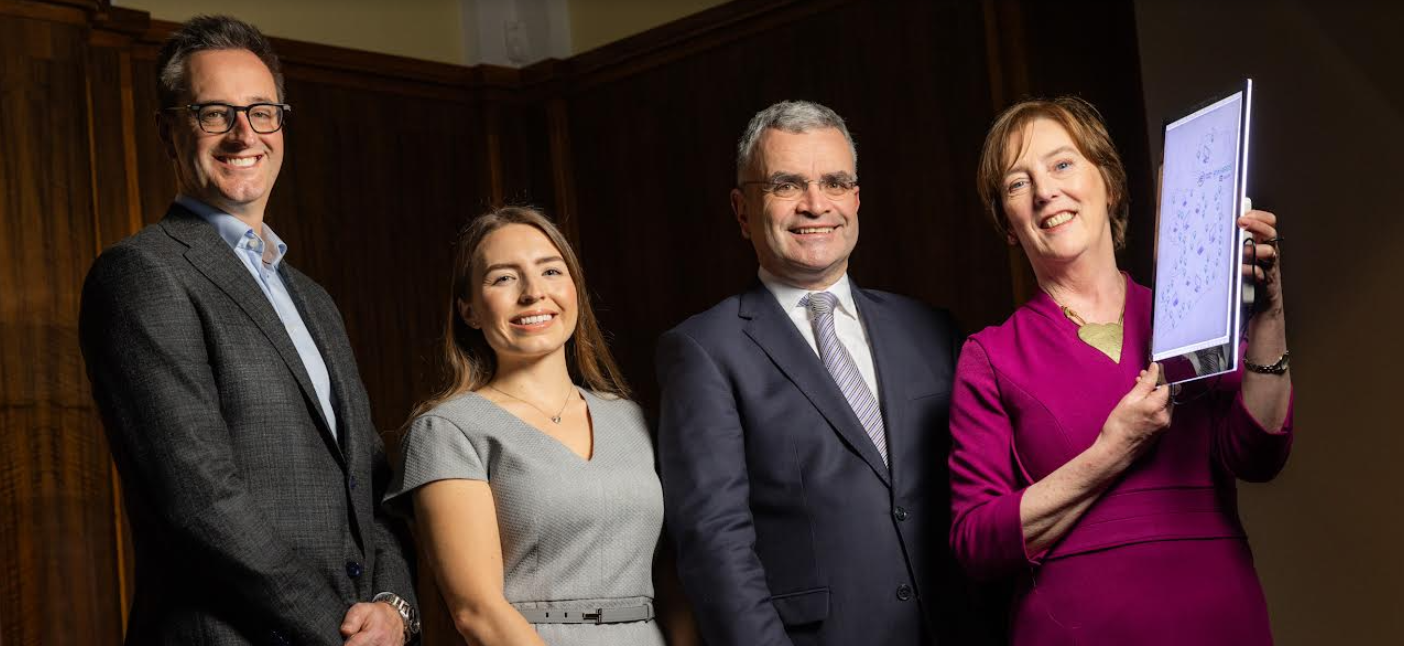
.ie, the trusted national registry for over 330,000 domain names, has marked its 25th anniversary with a celebration at the EPIC Museum in Dublin, attended by Minister for Culture, Communications and Sport Patrick O’Donovan T.D., CEO David Curtin and key stakeholders from Ireland’s digital and business community.
Over the past 25 years, .ie has mirrored Ireland’s digital transformation. In 2000, just 20,000 .ie domains were registered. Today, that figure stands at over 330,000, a 2,000% increase demonstrating the how the .ie domain has become the quiet backbone of Irish small business success and consumer trust over the last 25 years, supporting businesses to thrive during turbulent economic times and global pandemics. Household internet access has also grown from 20.5% in 2000 to 94% today, making online connectivity standard in almost every home and an online presence an expectation of Irish consumers.
.ie is the only domain space reserved exclusively for those with an Irish connection. This level of protection underpins consumer confidence. Independent research shows that 79% of Irish consumers prefer shopping on a .ie website, recognising the trust and security it represents.
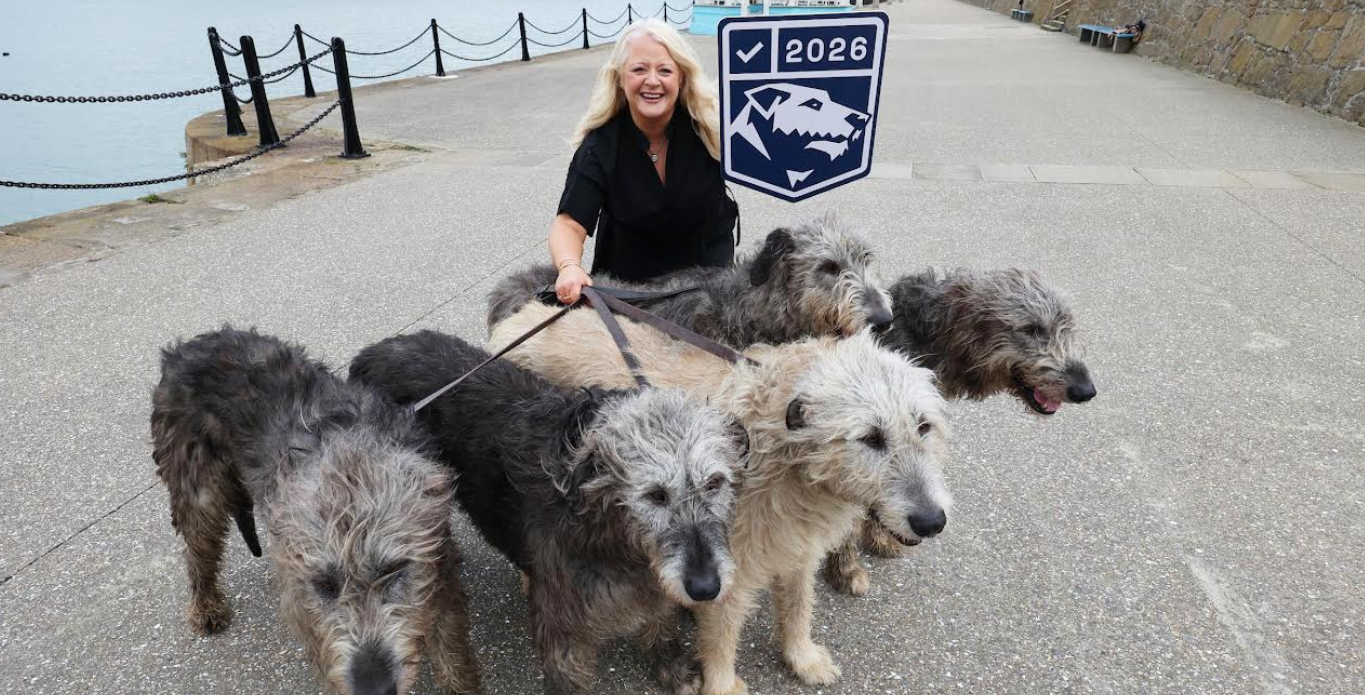
As part of the anniversary, .ie launched .ie Gives Back, a 25-day charity initiative running from 19th September to 13th October where €1 from every .ie domain registration and renewal will be donated equally to five charities: An Cosán, DSPCA, Make-A-Wish Ireland, Focus Ireland and UNICEF Ireland.
Minister Patrick O’Donovan comments,
“For 25 years, .ie has been at the heart of Ireland’s digital journey making it a cornerstone of how we do business, connect as communities and shop online with confidence. For small businesses in particular, .ie has been a leveller, allowing them to compete with larger players on a trusted, distinctly Irish platform. Today, it is as vital to our economy and communities as any other utility we depend on.”
David Curtin, CEO of .ie, adds,
 
“In 25 years, .ie has grown from a niche digital identity into critical national infrastructure. Today, more than 330,000 .ie domains carry the trust and security that Irish consumers expect. This milestone is about looking forward as much as back; at a time of uncertainty online and in the wider world, .ie will continue to provide a safe, reliable foundation for Ireland’s digital future ensuring that businesses and communities can thrive online for the next 25 years and beyond. It has been a privilege to witness and contribute to this evolution. I am proud to be part of a journey that has helped shape Ireland’s digital landscape, and I am excited for what the next chapter will bring.”
Looking ahead, and with the rise of AI, automation and evolving cyber threats, .ie will continue to focus on ensuring Ireland’s businesses, communities and citizens can thrive in a trusted and resilient online environment.
For more information visit weare.ie

.ie Domain Profile Report 2024 shows appeal of owned websites remains strong

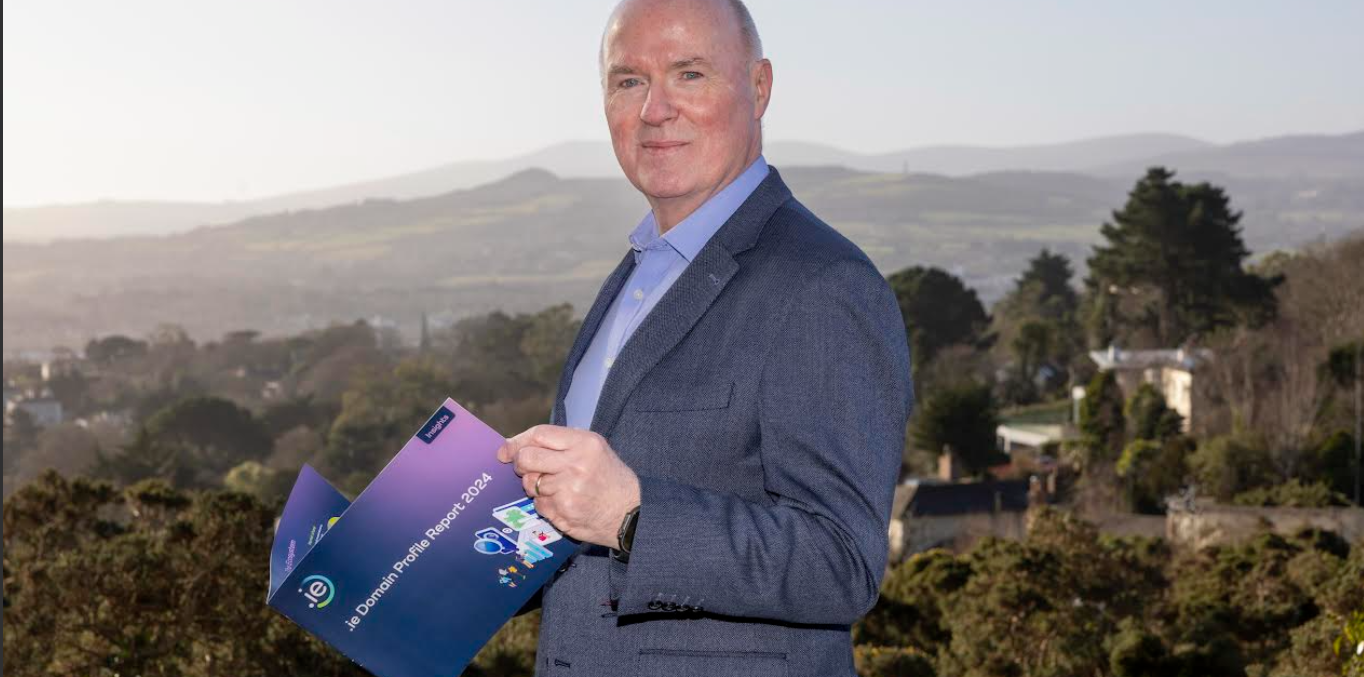
The latest .ie Domain Profile Report 2024, launched today, gives glimpse into future economic activity in Ireland, highlighting the value of a strong online presence in response the rapidly evolving digital landscape.
The report reveals that .ie continues to hold majority share of Ireland’s hosted domains (54.2%) followed by .com (29.43%) and .uk (7.33%) with a 16% increase in the total .ie database over the past five years, despite marginal decrease in total database vs. 2023 (0.5%).
Both nationally and globally, changes in the way consumers engage with eCommerce (for instance via social media platforms) highlights the importance of establishing a stable digital presence via a controlled and secure website.
Now in its tenth year, the report is an annual exploration of the .ie database and is published by .ie, the national registry for .ie domain names. It also highlights the challenges and opportunities faced by internet users, businesses and government within Ireland’s online ecosystem.
Digital Intention vs. Digital Growth
 
.ie’s flagship Digital Readiness Monitor report published last August revealed that one in three (36%) websites in Ireland have a low or very low level of sophistication. A website and the associated technologies it uses, serves as an indicator of how digitally advanced an organisation is. If the website is modern, functional, and user-friendly, it reflects that the overall approach to digital transformation and investment in technology. It is clear from .ie’s Domain Profile Report, and the Digital Readiness Monitor, that there is strong digital intention in Ireland; however websites are under-developed and digital growth is not yet possible.
In last year’s pre-budget submission, .ie called on government to invest in digital skills as an urgent requirement for SMEs and micro-businesses to compete on a global scale. Following the nomination of the current government it is the responsibility of Minister Jack Chambers, Public Expenditure, Infrastructure, Public Services, Reform and Digitalisation, to make grants and programmes more accessible to SMEs to boost export sales through digital marketing and improve productivity through digitalisation.
CEO of .ie David Curtin, emphasizing the importance of driving digital growth has said, ‘Since SMEs account for 99.8% of the number of companies in the Irish economy, supporting their growth and scaling efforts is crucial for a modern future-proofed Ireland.  The .ie Domain Profile Report shows that while there has been a lot of progress made in digital intent in Ireland, there is still a long way to go to convert this to real digital growth. The government must invest more in infrastructure and supports for SMEs to take them onto the next step of digitalisation.’
Overcoming the Digital Divide
The Domain Profile report also emphasises that digital technologies have the “potential to reduce the death of distance” and bridge the gap between rural and urban areas and unlock new opportunities for Irish businesses, regardless of location.  However, the report identifies evidence of an ongoing digital divide based on location, size and sector, in particular for micro-SMEs with fewer than 10 employees.
According to Eurostat, rural areas are falling behind when it comes to digital literacy across the European Union. In Ireland, 35% of people living in rural areas and 37% of people living in Irish towns and suburbs reported having above-basic overall digital skills, while 46.5% of the Irish population living cities reported having these skills.
The digital divide does appear to be lessening in commuter areas such as Kildare, Meath and Limerick where new .ie domain registrations continue to rise, however Connacht and Ulster largely recorded a decline in new registrations in 2024. .ie want to work with government to lessen this divide and ensure businesses can thrive and prosper online regardless of location.
Importance of a Website and Omni-Channel Approach
There has been a notable decline in domain creations on a global scale. CENTR, the association of European country code top-level domain (ccTLD) registries, has highlighted notable shifts in recent years, particularly post-Covid. One potential reason for domain registration decline may be due to a recent surge in social selling – where social media apps such as Facebook, Instagram and TikTok now have eCommerce capabilities on the app.
Reuters reported in December last year that TikTop Shop sales had reached $100million last Black Friday as bargain hunting American consumers spent big online.
While social media presents SMEs with an excellent opportunity to promote products and services, the recent US TikTok ban has revealed just how volatile it can be to use social selling as a business’ sole eCommerce platform.
.ie’s David Curtin advises ‘When it comes to building a credible, trustworthy digital presence, websites should be seen as ‘prime real estate’ for any business online. While social media is an excellent tool for increasing visibility and capturing audience interest, these platforms are limited in their ability to build lasting relationships with customers and, more importantly, convert them to sales. An “omni-channel” approach that offers customers more than one way to engage with business is best – where social media is used as a tool to drive traffic to a secure website. It is crucial that SMEs have control over their own eCommerce channels and are not solely reliant on third party selling platforms such as TikTok Shop which has been proven to be extremely volatile over the past few weeks’
A .ie website also provides reassurance for business owners that their main point of contact with consumers is safe from cyber threats as .ie websites boast significantly lower levels of spam and cyber threats, when compared to other top-level domains like .com.  .ie continuously works to reduce the impact of security threats to the .ie namespace. This includes manually reviewing .ie applications; continuous security scanning the .ie database; and ensuring consumer protection protocols are in line with national regulators and agencies.
Additional Domain Database Findings
 
Leitrim recorded the largest percentage growth (+51%) in new .ie domain registrations compared to 2023, followed by Tyrone (+20%) and Meath (+19%). Fermanagh has the smallest number of total .ie domain registrations in the country as just 191 total domains are registered there.
Keywords used in domain registrations continue to provide insight to public interest as Ireland, Dublin, Home, Design and House were among the top keywords used in registrations last year.
Cork pride appears to be strong as the longest .ie website address at 63 characters is corkcorkcorkcorkcorkcorkcorkcorkcorkcorkcorkcorkcorkcorkcork.ie; and the shortest web address with just 4 characters is 9.ie.
The .ie Domain Profile Report 2024 can be viewed here.
More tech news can be found here

Ireland’s Digital Readiness Monitor Launched

.ie, the trusted national registry for over 330,000 domain names, has launched Ireland’s Digital Readiness Monitor, which analyses the level of digital sophistication of websites in Ireland, and has revealed that 36% of websites in Ireland have a low or very low level of sophistication.

Ireland’s Digital Readiness Monitor which includes websites using the .ie domain, as well as those using .com, .co.uk or any other extension, presents a comprehensive picture of Ireland’s digital readiness with research conducted by .ie in partnership with the Irish Institute of Digital Business, DCU and the JE Cairnes School of Business and Economics at University of Galway.

The Digital Readiness Monitor introduces a new national measure of digital readiness – the Web Technology Intensity Score (WTIS). The WTIS is comprised of eleven indicators that measure the digital readiness of organisations in Ireland including basic website; website with sophisticated functionality; websites with evidence of basic analytics, sophisticated analytics, social media integration, mobile optimisation, online advertising, sophisticated online advertising, internationalisation, selling online and cloud computing.

The Government’s digital strategy, Harnessing Digital: The Digital Ireland Framework, aims to position Ireland as a European and global digital leader. SMEs make up the majority of Irish businesses and the ability of Irish SMEs to adopt sophisticated digital technologies will be fundamental to increasing Ireland’s digital competitiveness.

The report reveals that 36% of websites in Ireland have a low or very low level of sophistication despite various Government grants and programmes to support digital advancement. A website and associated technologies are a proxy for an organisation’s degree of digitalisation, so this statistic demonstrates that SMEs’ websites are under-developed.

At the other end of the spectrum, one in four websites (27%) have a high or very high level of sophistication, showing there is considerable room for improvement.

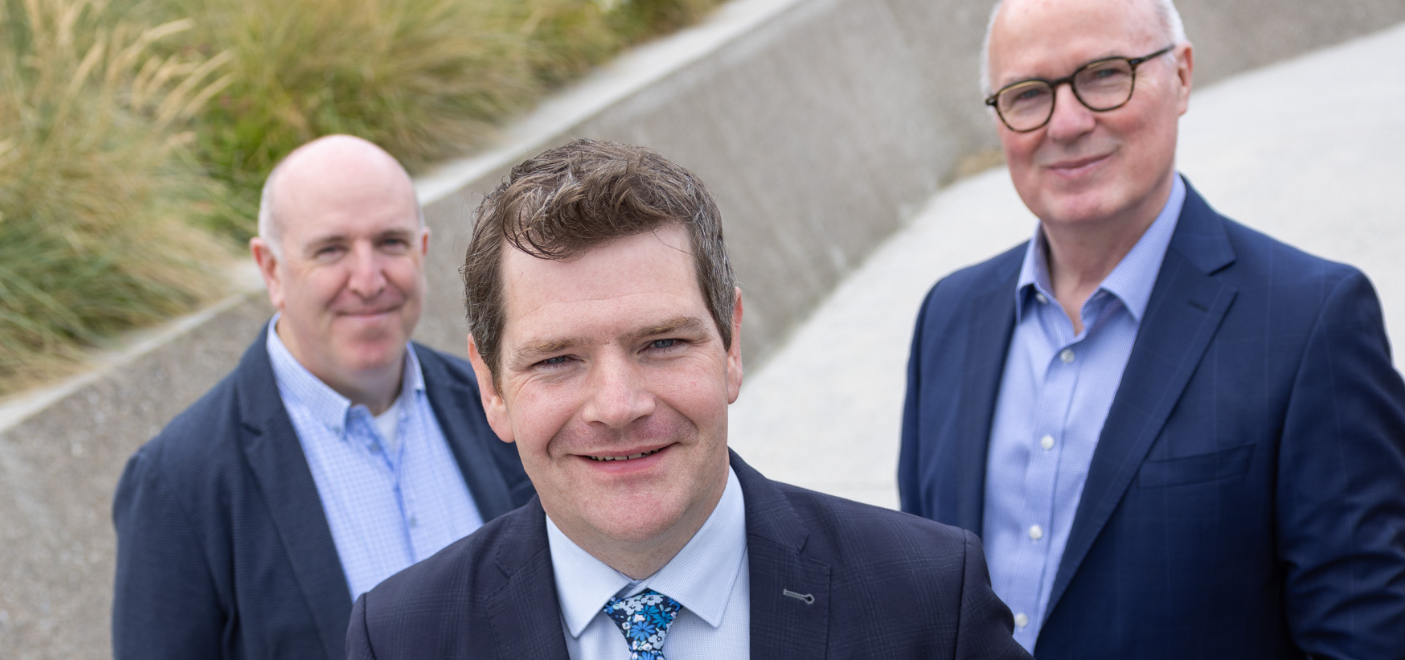
Minister for Enterprise, Trade and Employment, Peter Burke said Ireland has outlined its ambition to be a digital leader, reflecting the key role that digital technology does and will continue to play in shaping our competitiveness and driving productivity. The findings of this report demonstrates that we must continue to drive the digital agenda, ensuring digitalisation and technology remains a priority across all facets of Irish enterprise. My department has implemented a number of grants to support SMEs on their digital transformation – the Digital Transition Fund which will continue to be rolled out to 2026 is particularly supportive of SMEs while the Grow Digital portal is up and running to help businesses assess their digital needs. Together with my colleagues in Government, we remain committed to supporting enterprise in Ireland.”

Speaking on the report findings, David Curtin, Chief Executive at .ie said “The development of the WTIS measure marks a significant step forward in understanding the levels of sophistication of websites in Ireland. Despite the many Government supports in place, it is dispiriting to see that 36% of websites in Ireland have a low or very low Web Technology Intensity Score. For Irish SMEs, digital technologies present the potential of the ‘death of distance’, overcoming the limitations of location for Irish rural and urban businesses. However, there is evidence of a digital divide based on location, sector and size. In order to drive increased adoption of digital technologies by all businesses, but specifically micro SMEs with less than 10 employees, a supportive digital ecosystem optimised for SMEs is going to be required and we need the financial support of Government and key stakeholders to help make that happen.

 Ireland’s Digital Readiness Monitor – Key Findings

 Online Advertising

  • Less than 1% of websites in Ireland make use of sophisticated online advertising tools which utilise targeting techniques to reach specific audience segments
  • The WTIS measured both basic and more sophisticated forms of online advertising being utilised by websites in Ireland

Social Media and Mobile Friendliness

  • The vast majority of websites in Ireland made use of social media integration on their websites
  • Facebook integrated into over 86% of websites analysed in 2021 and 74% in 2022 followed by Twitter (avg. 33%), Instagram (avg. 22%), LinkedIn (15%), and YouTube (13%)
  • Integrating social media into websites acts as a form of social proof, where users can see real-time interactions with the organisation. The motivation for more sophisticated use of social technologies includes increased access and reach to markets, cost reduction and process optimisation
  • It was also reassuring to see that Irish businesses recognise the value of mobile optimisation as part of their offering. While the percentage of domains optimised for mobile has dropped from 68% to 63%, the raw number of mobile-friendly domains has increased suggesting that Irish firms recognise the importance of mobile readiness. Google reports that for many advertisers, a substantial volume of website traffic comes from people on their mobile phones and visitors are five times more likely to leave a website that is not mobile-friendly

 Internationalisation

  • The WTIS measures foreign language support and foreign currency support as signals for internationalisation.
  • These factors indicate an organisation’s commitment to expanding its presence in the global market along with an ambition to move beyond local or regional markets
  • The Digital Readiness Monitor found that less than 10% of websites demonstrate evidence of international activity

Associate Dean of Research, DCU Business School, Professor Theo Lynn said “The Digital Readiness Monitor is a critical methodology and tool for understanding the digital landscape in Ireland. By establishing the Web Technology Intensity Score (WTIS), we can now quantitatively assess and track the digital sophistication and evolution of organisations across the country and compare it with other countries. This study not only highlights the gaps in digital adoption but also provides a roadmap for improvement. In a rapidly evolving digital economy, such insights are essential for guiding SMEs and other businesses in leveraging technology to enhance their competitiveness, both locally and on the global stage.”

Ireland’s Digital Readiness Monitor can be viewed here.

Local digital projects invited to enter the .ie Digital Town Awards 2024

.ie, the trusted national registry for over 330,000 .ie domain names, has announced that entries are now open for the .ie Digital Town Awards 2024.  Now in their 4th year, the .ie Digital Town Awards shine a light on local projects that have a digital element. Town groups, community organisations, regional and national collaboration projects and individual businesses across the country are invited to enter. There is a total prize fund of €60,000 across ten categories and the closing date for entries is Friday 1st March with winners being announced at a Gala awards ceremony in Sheraton Hotel, Athlone, Co. Westmeath on Friday 24th May 2024.

Minister of State for Trade Promotion, Digital and Company Regulation, Dara Calleary TD, welcomed the launch of this year’s awards, ‘Not only do these awards highlight the benefits and possibilities of digital transformation in Ireland, they are fundamental to promoting awareness, use and understanding of digital offerings for our communities, for businesses and for our citizens the length and breadth of the country. Since the foundation of the awards, it has been inspiring to see such positive change brought about in local communities across the country through digital innovation.’

Oonagh McCutcheon, National Director of the .ie Digital Town Awards Programme said ‘The .ie Digital Town Awards create a real sense of pride for towns and communities, big and small, that are making massive leaps with digital technologies. We saw a 15% increase in the number of entries we received in 2023 compared to 2022 and as we enter the fourth year of the awards it is incredibly encouraging to see entries coming in from towns and villages the length and breadth of the country’.   

‘We are also delighted to welcome our new pillar sponsor Square on board this year, a digital-first organisation which shares our passion for empowering small businesses and organisations to thrive online. Square joins our long-term supporter and category sponsor, Western Development Commission.

Business technology platform Square has been unveiled as the awards pillar sponsor for 2024. Square allows business owners to sell anywhere, work more efficiently, to support and empower small businesses and entrepreneurs to thrive online. Speaking about the announcement, John O’Beirne, Executive Director of Square in Europe, said ‘We are delighted to be partnering with .ie for this year’s Digital Town Awards. At Square we believe in the power of technology to bring about positive change, from small projects to large companies. We want to help all types of businesses and communities succeed on their own terms and look at what’s possible. Sponsoring the .ie Digital Town Awards allows us to help recognise and reward this digital success in all of its forms.’

The ten categories in the 2024 .ie Digital Town Awards are:

  • Digital Education
  • Digital Tourism
  • Digital Community
  • Digital Business
  • Agri-tech
  • Digital Sustainability
  • Digital Newcomer
  • Digital Rising Star
  • Digital Change Maker
  • Digital Local Hero

Digital Sustainability, Agri-Tech and Digital Newcomer categories were new additions to the awards in 2023.

The Digital Sustainability category recognises projects which harness digital transformation, such as enhanced connectivity and the Internet of Things (IoT), to improve the environment and support sustainable business operations. The winner in 2023 was Hollymount, Mayo with Eco-powered Cabinets: Two eco-powered cabinets were installed on Croagh Patrick, to securely store defibrillators and life-saving medications to treat cardiac arrests.

The Agri-tech category recognises projects which aim to help the farming community by using digital technology to improve efficiency and profitability. Clonmel, Tipperary were the winners of this category in 2023 with the Smart Skills for Farming Communities project. The initiative was developed to help farmers use new technologies to make their work easier, save time and money as well as improving the sustainability and profitability of their farm. 60% of farmers report that there are barriers to digital training and supports. This project addresses that problem by providing very practical digital training in areas such as soil fertility technology; grassland management technology; tech for time and labour saving; and farm management systems and useful Apps. This project was also selected as the overall winner in 2023.

The Digital Newcomer category is for projects at the early stage of development that are harnessing the benefits of digital to promote a local initiative. Portumna, Galway were winners of this category in 2023 with a project to give the gift of stories to future generations by recording Family Histories.

The 2023 winner case study videos are available to view here.

The Awards are open to community organisations, town groups, regional or national collaboration projects and individual businesses who can demonstrate positive impacts of digital strategies. All categories are now open to businesses that use a digital element within their service.

Closing date for entry submissions is Friday 1st March 2024.


.IE Domain Profile Report 2022 reveals reputational strength of .ie domains

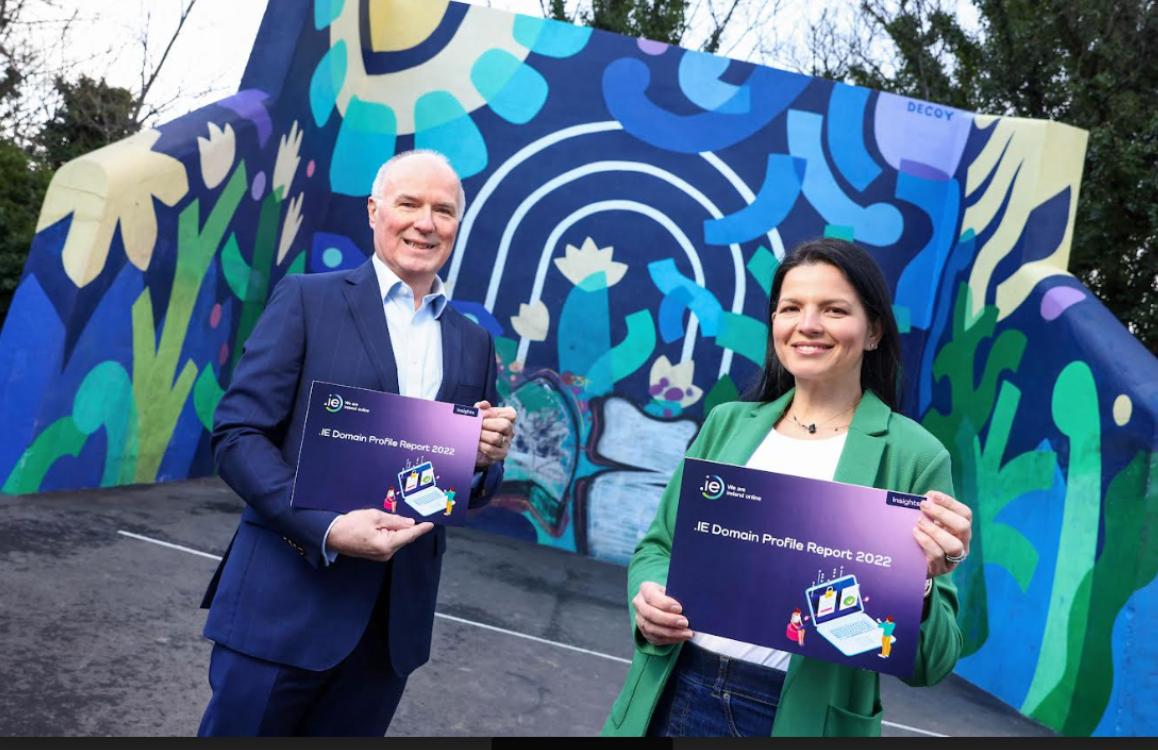
Launched today, the .IE Domain Profile Report 2022 reveals there were almost 330,000 .ie domain names in the database by the end of last year with 48,168 new .ie domains registered in 2022. Now in its eighth year, the .IE Domain Profile Report is an annual exploration of the .ie database and is published by .IE, the national registry for .ie domain names. The report also outlines key advantages that can be leveraged by Irish enterprise with a .ie domain.

Cyber attacks

.IE  provides an additional layer of security to owners of a .ie domain name, free of charge. This service provides a constant scanning of .ie sites and involves instant notification to an SME’s hosting provider, who can help them take the corrective action once a scam has been detected. The report revealed over 500 cyber-attacks were taken down in 2022. Two in five were phishing scams and one in four were malware attacks.

Despite a significant increase in cyber-attacks, websites featuring a security certificate were down six percentage points resulting in more websites being vulnerable to attack. This level of security is crucial to safeguard customer’s data.

The report indicated that threats to a .ie domain are lower than other top level domain names such as .com. Only individuals and businesses with a provable connection to Ireland can register a .ie domain. Applications from new customers are manually reviewed to ensure that they meet this requirement. This process keeps the .ie domain largely free from scams and other illegal activities. 91% of .ie domain names are registered on the island of Ireland, with the total number of internationally registered .ie domains under 30,000. Top international registrants are from Great Britain (10,983), United States (5,117) and Germany (2,535).

Speaking at the launch of the report David Curtin, Chief Executive of .IE said; “At .IE it is a priority to proactively tackle abuse in the .ie namespace to protect both SMEs and their customers. The findings of our .IE Domain Profile Report highlight some security vulnerabilities of .ie profiles, but also demonstrates where we provide enhanced supports to help Ireland’s digital economy thrive.

Our .IE Tipping Point Report 2022 also revealed that SMEs who invested in their online services since Covid, 30% (1 in 3) were busier than they were before the pandemic and 36% maintained the same level of business. SMEs are facing a new wave of economic challenges post Covid but with over 50% planning a significant digital investment in the next five years, we want to make sure they are investing in that digitalisation smartly and are aware of the necessary security features to implement.”

The trustworthiness of a .ie domain is also internationally recognised by The SpamHaus Project, an international non-profit organisation that tracks spam and related cyber threats. They collate a Badness Index for top level domains in real-time with .ie currently listed with a perfect rating of 0.0% in comparison with .com with a Badness Index of 2.5%.

Regional Growth

  • The report identified the counties experiencing the largest growth in new .ie domain registrations, a positive ‘forward-indicator’ of increased regional economic activity, with Tyrone recording the largest growth for 2022 v 2019 at 73.4%. Tipperary came in second overall, with 26.5% growth
  • Mayo had the largest had the largest growth (+24.1%) for any county in Connaught, followed by Galway at 8.4% adding 2,303 new domains
  • Wexford came out on top in Leinster with an 18.2% increase. Amongst the border counties, Monaghan had the largest percentage growth (+8.4%)

Post Covid Growth

The report also indicates that the Covid surge of digital mobilisation has tapered off, identifying a drop in new .ie registrations year-on-year (-22.6% v 2021). This is much less significant at 4% (2022 v 2019) when compared to more normal pre-pandemic levels and demonstrates that SMEs continue to use websites as a core part of their business with the benefits far outweighing a social media ‘shop front’.

Speaking at the launch, Pat Kane, Founder of Reuzi.ie commented, “When I founded my business in 2018 my objective was to inform and inspire people across Ireland, making sustainability more accessible, affordable, and fun. In the process of selecting a domain name for my website it was crucial that I had access to something that represented my business as truly Irish. I chose a .ie domain name because we are proud of what that means to my customers and community in Ireland and across the rest of the world – that we are an authentic Irish business doing great work.

Along with added security, trust and higher search optimisation, there is also a wider choice of available .ie domain names compared to .com. One of the longest .ie websites is 46 characters long at residentialroofingandlandscapingspecialistcork.ie with one of the shortest just one character at w.ie.

The .IE Domain Profile Report can be viewed here.