PayPal study: SME owners in Ireland are prioritising tech investments to drive growth

Small and medium-sized enterprises (SMEs) in Ireland that sell online appear to be experiencing a growth period, with 96 per cent seeing an increase in online sales over the past 12 months. A similar proportion (95%) are feeling optimistic about the growth of their business over the next year.

PayPal’s 2024 ‘Business of Change Report’* revealed that on average, SMEs selling their products or services in international markets generated €240,605 in the last 12 months. Those surveyed that don’t currently sell internationally, but are planning to do so in the future, estimated that the move would generate €122,728 annually for their business.

Cross border trade a catalyst for growth

Further exploration into the prevalence of international commerce uncovered that half (50%) of SMEs in Ireland are presently engaged in international sales, with an additional 30 per cent intending to do so within the next year. Among those already selling internationally, 77 per cent have experienced a surge in international sales volume over the past three years.

The primary impetus behind international expansion is the belief that Ireland is strategically positioned to seize opportunities in global markets (41%). However, a significant 31 per cent of those surveyed indicated that their survival hinges on international expansion.

Not surprisingly, 34 per cent of SME owners prioritise delivering an improved customer experience as a crucial factor for business expansion—second only to providing high-quality products or services, which garnered 38 per cent. Rounding out the top five priorities were adopting emerging technologies, utilising online marketplaces, and ensuring affordability of products or services, each at 32 per cent.

Concerns and challenges

While there is a general feeling of optimism, almost a quarter of SME owners (23%) cited poor purchasing processes for customers as a top barrier to future business growth. Meanwhile, more than a fifth (22%) identified that they lack the skills or resources to fully leverage online platforms.

 As well as internal factors, external trends most impacting SMEs in Ireland that sell online are:

  • A rising demand for more payment methods (such as buy now pay later and digital wallets like PayPal) – 40%
  • More people wanting discounts, promotions and deals – 38%
  • Customers wanting more convenience (such as click and collect, and package tracking) – 37%
  • Three in 10 (30%) are concerned with the trend that fewer people are converting at checkout – more browsers than buyers.

SMEs prioritise tech investments for future growth, eyeing AI, VR experiences

Looking forward, the vast majority (92%) of SME owners prioritise technology investment for their business’s future growth. Nearly a quarter (23%) desire to allocate resources to Artificial Intelligence or Machine Learning, while 21 per cent plan to invest in Virtual Reality experiences.

Regarding specific areas earmarked for investment within the next year to bolster expansion, 38 per cent plan to prioritise enhancing their online presence. Following closely are investments in marketing (33%), additional shipping/delivery capabilities (32%), team expansion (32%), and social commerce (31%).

Moreover, 27 per cent intend to invest in ecommerce capabilities, with secure payment methods and international sales processes on the agenda for 26 per cent of SME owners surveyed.

Jonas Breding, General Manager, PayPal Northern Europe shared, “For over twenty years, we’ve been a trusted partner for Irish entrepreneurs and ecommerce businesses. We recently launched PayPal Complete Payments, our most advanced offering in the market. Our comprehensive solution fosters growth, provides advanced fraud protection, and streamlines cross-border trade, empowering entrepreneurs to thrive.”

For more information, visit https://www.paypal.comhttps://about.pypl.com/ and https://investor.pypl.com/.

Revolut’s revenues surpass $2.2bn, with record profits of $545m in 2023

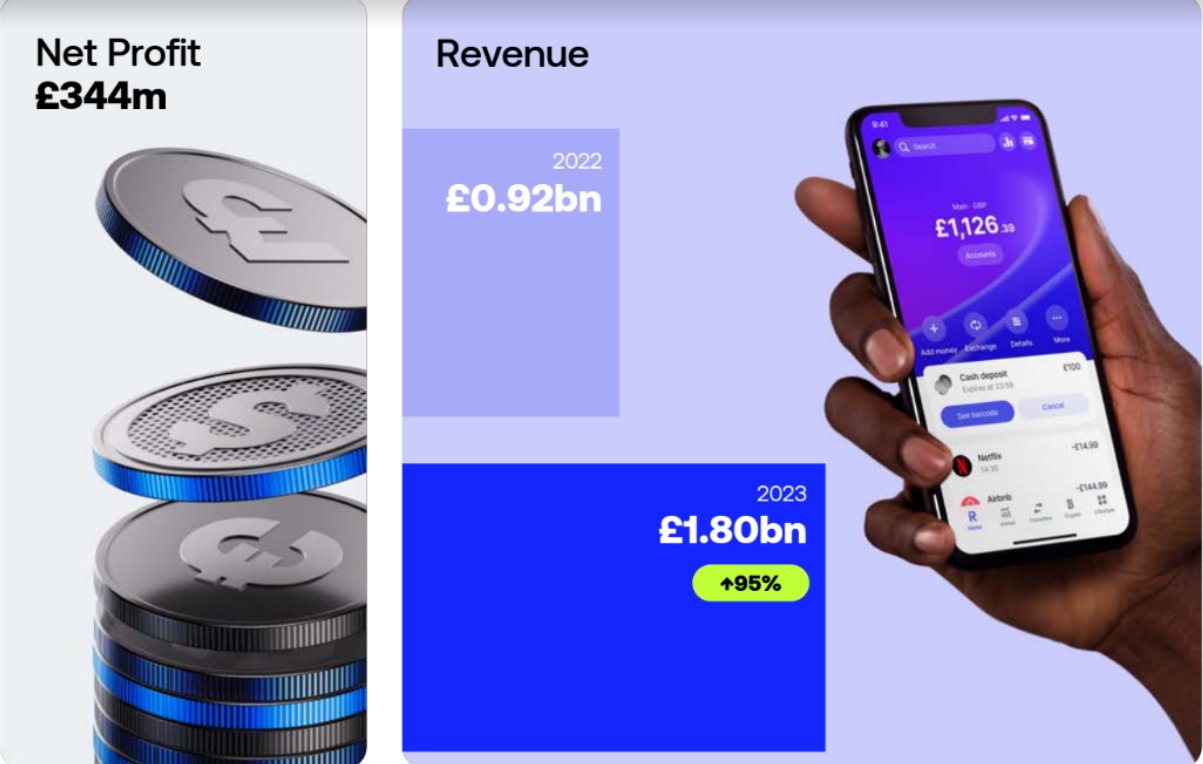
Nik Storonsky, CEO of Revolut said: “This year, we took our biggest steps yet on our mission to deliver the best product and the best customer experience at great value to customers, everywhere. Our customer base is expanding at impressive rates, and our diversified business model continues to fuel exceptional financial performance, delivering revenues of over $2.2bn in 2023 and a record profit before tax of $545m. With a net profit of $428m, 2023 was our third profitable year in a row.

“Every day, our products create value for new customer segments and new global markets. We remain committed to our ongoing UK banking licence application in addition to bringing the Revolut app to new markets and customers around the world. Even as we reached 45 million global retail customers six months into 2024, Revolut remains poised for exponential growth in 2024 and beyond, continuing to redefine the financial services landscape as we’ve known it.”

2023 Performance Highlights 

Strong financial performance amidst wider market challenges (see Figure 1) 

Revolut delivered record profits and revenue growth, while navigating an increasingly complex geopolitical, macro-economic, and regulatory environment. 

– Group revenue increased by 95% from $1.1bn (€1.1bn) in 2022 to $2.2bn (€2.1bn). Revolut has now been net profitable for three years in a row: 

Profit before tax was $545m (€503m), and net profit grew to $428m (€395m), up from $7m (€7m) in 2022 

Net profit margin for the year was 19%, reflecting the inherent efficiency and scalability of Revolut’s business model, improved partner unit costs, and continued growth of high-margin revenue streams. 

Accelerated growth driven by diversified revenue model, expansion into new markets and deepening customer engagement (see Figure 2)

Revolut’s revenue diversification continued to drive sustainable growth with no single product stream or country accounting for more than 30% of total revenue in 2023. Over the year, Revolut added almost 12m new customers globally, the highest YoY increase in the company’s history, bringing the total to 38m in 2023

– 70% of new retail customers joined organically or were referred by someone they know. Word of mouth growth complemented by further investment into marketing and sales functions, including for Revolut Business which was onboarding 20,000 SMEs (small and medium enterprises) each month by the end of the year. 

– This growth was consistent across all revenue streams of Revolut’s diversified business model, with more customers engaging in more its products: Cards & Interchange: $605m (€559m), up 59% from $379m (€352m); FX & Wealth: $491m (€454m), up 46% from $334m (€310m); 

Subscriptions: $303m (€280m), up 53% from $196m (€186.5m); 

Total customer balances increased from $16.4bn (€15.2bn) to $22.7bn (€21bn). – Due to expanded treasury capabilities, higher customer deposits, alongside the tailwind of increases in central bank rates, and acceleration in the credit portfolio, interest income grew to $621m (€575bn) in 2023 compared to $102m (€95m) in 2022. 

– Customer usage accelerated with transaction volume increasing by 58%, reaching close to $870bn (€804bn). Monthly transactions as of Dec 2023 totalled 590m, up 73%. 

– An increasing number of customers have adopted Revolut’s services through paid subscriptions, with 41% growth in customers opting for a paid plan

– As of June 2024, Revolut is the most downloaded app in the Finance category in Europe, ranking first in 17 countries. 

– The company expanded into new markets, including Brazil and New Zealand, bringing its global footprint to 38 countries. 

Investing in best-in-class products and talent to meet consumers and businesses’ financial needs 

With a focus on core banking services in Europe, Revolut doubled down on reinvestment to support future growth, including product development and expansion into new markets. – $300m (€277m) was allocated to advertising and marketing to supplement our organic growth. We also scaled our B2B sales team to over 900 employees by the end of 2023, as we aim to better serve the needs of larger enterprises. Total headcount increased by 38% YoY to 8,152. 

Revolut also developed new local features across key European markets: IBAN: The company expanded local IBAN offerings for retail customers in France, Ireland, Spain and Netherlands. 

Credit: Personal loans were launched in France, Germany, Spain as well as credit cards in Ireland and Spain. 

– Savings & Funds: Money Market Funds was launched across 22 countries in the EEA with balances reaching nearly $1.9bn (€1.7bn) since launch.

2024 outlook (see Figure 3) 

– Continued customer growth: As of June 2024, Revolut has reached 45m customers globally, representing an increase of 7m in the first 6 months of the year. The company is on track to surpass 50m customers by the end of FY24. 

– Expanding products and features: In addition to launching its existing suite of products in more markets, in the first six months of 2024, Revolut has launched: – eSIMs: Allowing customers to buy phone data packages through the Revolut app, signifying our push into non-financial services (available in the UK and select EEA markets). 

– RevPoints: Revolut’s loyalty programme – which enables customers to earn points on everyday spend (available in the UK and select EEA markets). – Revolut Robo-Advisor: A semi-automated tool that uses algorithms to manage investment portfolios, allowing customers to invest in a diversified tailored portfolio without spending hours on research and continuously managing their portfolios (available in the US and EEA). 

New Global HQ: Revolut announced a deal to move its global HQ to the YY building in Canary Wharf. The move will help facilitate the future growth of Revolut’s UK and global operations. 

Focus on Ireland 

Revolut’s profitability has enabled it to invest in building the best-in-class products that Irish consumers rely on, while its growth is a result of continuing to innovate on its market-leading app. Revolut has gained the trust of more customers in Ireland, becoming their primary bank. 

Revolut had 2.7m customers in 2023, an increase of more than 21% from the end of 2022, when Revolut ended the year with 2.2m customers. 

Today, Revolut has fast become the best solution for customers to manage their finances daily. The brand has become a verb in Ireland, with “Revolut me” the typical way to send money between friends and family, or to children. 

– Revolut offers financial products for almost all needs in Ireland, ranging from current accounts, to credit cards, to investing; while mortgages remain firmly in the pipeline. – By the end of 2024, it has set its sights on reaching the 3 million customer mark. – Revolut isn’t just for retail either. At the end of 2023, Revolut had close to 52% more companies in Ireland using Revolut Business than at the end of 2022

As a major player in the Irish financial services sector, Revolut boasts many talented leaders who hold senior leadership roles across the bank, steering the company towards becoming the world’s first truly global financial app. Revolut’s ambitions are matched by its customers. 

– Revolut is an employer of choice, and has 10% more staff in 2023 than 2022 and over 23% more in 2024 (YTD) than 2023. It employs more than 175 people here, many of whom hold highly-skilled roles working out of Dublin and remotely across the country. 

– An increase in trust, talent, and ambition has seen Revolut capture the attention of the Irish market. After the launch of its up to 3.49% interest bearing Instant Access Savings accounts, Revolut received deposits in the region of 9-digits in a fortnight.

– Balances are up across the board by more than 50% (2022 vs 2023) and over 26% (2023 vs 2024 YTD), emphasising how its big ambitions are backed by its customers. 

Revolut was recently recognised by financial comparison site Bonkers.ie as ‘Ireland’s Best Consumer Business’ and ‘provider of the Best Current Account’, whilst it ranked 9th as part of the Ireland RepTrak® 2024 study earlier this year. 

The 2023 Annual Report can be viewed online or downloaded in pdf format at: revolut.com/financial-statements/

Revolut surpasses 2M young customers worldwide on <18 app; bolsters product in bid to put financial power into hands of teens

Revolut, the licensed European bank with more than 40 million customers around the world, has today announced that its <18 app for 6-17 year olds now has more than 2 million young customers worldwide — jumping to a total of 3.5 million worldwide when including guardians. In the last year in Ireland, total customers of the Revolut <18 app — including kids and their guardians — have increased by nearly 35%.

A version of Revolut built especially for Gen-Z and beyond, the <18 app helps young people manage their money in ways that work for them — while providing the right controls to give parents and guardians peace of mind. In line with its growth, Revolut is supercharging its <18 app with a new look and features. These include Analytics to boost financial literacy through budgeting and spending analysis, and Wallpapers to help <18s to help teens express themselves.

The company is also making features like Pockets to set aside money towards specific goals and Spare Change round-ups available to all <18 app users for free for the first time. In Ireland, some of the top 20 goals for young people already using Pockets through a parent or guardian’s paid plan include:

  • Clothes, specifically from fast fashion site SHEIN;
  • Gadgets, such as mobile phones, PCs, and PlayStation 5s — or even cars;
  • And summer holidays — with London the most sought-after destination.

The addition of this new functionality for all will supercharge young people’s ability to put money aside for the things that matter to them — from the latest tech to events with friends. 

Carlos Spada, Head of Product, Revolut <18 commented: “Our <18 app is built for teens and our goal is to be the ultimate financial companion, growing with young people and their financial needs. The features we’re announcing today will empower young people to take the lead on their finances and practise healthy money habits, all with fun opportunities for personalisation and the right level of parental oversight.

“We’re excited to see more and more young people choosing Revolut as the place to build towards financial independence.”

Revolut’s <18 app is also available in more than 20 markets including the UK, EEA, Australia, Singapore and the US. In Ireland, Revolut has seen an increase in average daily <18 wallet balances — up from €38.92 in March 2023 to €42.34 in March 2024, while average monthly <18 spending has decreased — down from €150.18 in March 2023 to €124.79 in March 2024. Alongside that, Irish kids received an average allowance of €9.71 in March 2024 — down from €10.41 last year.

To help young people grow healthy money habits, parents can try:

  1. Finding everyday moments to talk about financial concepts. From budgeting at the supermarket to comparison shopping for a particular purchase, parents can help their kids understand the real-life value of money. 
  2. Giving kids a regular allowance or pay day. By providing regularity, parents can encourage kids to practise money management basics. 
  3. Getting granular on spending habits. Helping kids make use of spending alerts and analytics to stick to their budget, avoid overspending and think about where they might do things differently next time. 
  4. Helping kids put money aside to reach their goals. Whether your kid is after the latest video game or they’re planning ahead for university, help them set goals and stick to them. 
  5. Remembering financial literacy is lifelong. Stick with them and be consistent while they’re learning. Ensure money chats are positive and encourage questions. 

EY launches Global Sustainable Finance Innovation Hub in Dublin to accelerate ESG progress for financial firms

EY today announces the launch of a new Sustainable Finance Innovation Hub in Dublin to help financial institutions around the world accelerate their efforts to meet their environmental, social and governance (ESG) regulatory and reporting requirements.

EY Ireland’s existing financial services sustainable finance team will more than triple in size over the coming months with an additional 40 specialist hires planned to span the three pillars of ESG. The new hub, which will be led by EY Ireland Financial Services partner Sean MacHale, is projecting double digit growth over the next twelve months as it ramps up to meet growing client demand around the world.

The Dublin hub will be augmented by a network of individuals with deep sustainability expertise across Europe, Asia-Pacific and the US, who will come together to deliver the latest thinking and advice to clients on ESG reporting, with a particular focus on the areas of biodiversity & nature, EU regulation, international goals, among others.

Colin Ryan, EY Ireland Financial Services Country Lead, comments: “The financial services sector plays a central role in the transition to a more sustainable future and we are now significantly expanding our capacity to deliver end-to-end sustainable finance transformation services to clients in the sector. The addition of 40 specialist hires across the three pillars of ESG will see our Dublin hub become a globally significant centre for innovation in the area of sustainable financial services. The sector must comply with an increasing volume of regulatory requirements over the coming years, and many firms already face multiple deadlines this year alone. Our new hub will support firms to more effectively report on their activity and will help clients ensure that they remain compliant with the evolving regulatory environment.”

Sean MacHale, EY Ireland Partner and Financial Services Sustainable Finance Leader, says: “The requirement for tangible progress on ESG matters in the financial sector has intensified of late. Firms face pressing regulatory reporting and disclosure demands and must demonstrate transparency and accountability when it comes to the progress they are making towards Net Zero goals and positive environmental impacts in a socially inclusive manner”.

“Managing the global flow of capital means the financial sector has a unique ability to drive material positive change, and we are really proud to support firms on their continuing ESG journey.”

Fidelma Clarke, Financial Services Risk Consulting Partner, comments: “With so much activity in the area of sustainability reporting right now, it’s important that our clients have the resources they need to keep pace. We are delighted to be strengthening our long-standing commitment of delivering positive change”.

Shaun Carazzo, EY EMEIA Financial Services Climate Change and Sustainability Leader, addsSustainability is a top agenda item for all financial services firms worldwide, and covers individual Net Zero transition plans all the way to the development of greener services and products. Our innovation hub demonstrates EY’s commitment to the ESG agenda and will build on our already market-leading sustainable finance advisory business. By bringing the EY network of sustainable finance talent together, we can offer a one-stop-shop to clients, and I look forward to building out the hub as we respond to demand.” 

Sale shoppers urged to walk, not run, this sale season amidst Black Friday scams

Revolut, the global financial app with over 2.5 million customers in Ireland, warns that euphoria and urgency experienced by shoppers seeking to score a deal may come at a cost.

David Eborne, Head of Financial Crime at Revolut shares types of scams shoppers should be weary of:

  • Fake websites: Scammers use the latest and greatest tech to set up fake retailer websites so that they look exactly like genuine online retail stores. Some of the fake stores will send you the product you purchased but their real goal was to obtain your personal and card data.
  • Selling fake goods: Some sites sell luxury items like popular jewellery or clothing brands, or electronics at very low prices. Sometimes shoppers will receive the item they paid for but they will be fake or other times they will receive nothing at all.
  • Temporary fake sites: A newer version of online shopping scams involves the use of social media platforms to set up fake online stores. The stores open for a short time and then disappear after some sales are made.
  • Social media advertising: Scammers use social media to advertise their fake website. Often they use “Swipe up” features and put a time pressure against it to create a sense of urgency.

The Safest Way to Shop Online
For many customers, a fear when shopping online is to have their card details stolen. However, David says this risk can be mitigated by using Revolut’s single-use virtual disposable cards. The cards provide users with a temporary, randomly generated card number, CVV, and expiration date to be used for a single transaction. Once the transaction is completed, the virtual card is automatically deleted, reducing the risk of unauthorised transactions, and safeguarding personal and financial information. David also advises that if a purchase is not received or was misrepresented by the seller, then customers should raise a dispute via the Revolut app.

Last year, over Black Friday and Cyber Monday, Revolut customers in Ireland spent €1.5m on more than 30,000 virtual disposable cards – a year on year increase of 136% as compared to the same timeframe in 2021.

Across the industry, fraudsters stole €84.6m through frauds and scams in 2022, an increase of 8.8% on 2021. The data from BPFI also reported a 19% decrease in authorised push payments (APP fraud) transactions in 2022 compared to 2021*. David encourages even more customers to use virtual disposable cards to help with security when shopping online.

David Eborne, Head of Fraud Operations at Revolut, says: 
“Black Friday shoppers are regularly left deflated and out of pocket after being duped by online scammers, particularly when under time pressure to buy an item.

“At Revolut, our top priority is to help avoid online fraud to keep you and your money safe. Protected by a 2,500-strong, 24/7 fraud prevention team, in 2022 we prevented our customers from falling victim to more than €220M in potential fraud. Our sophisticated fraud detection systems constantly monitor for high risk transactions to keep you safe while you continue saving, sending and spending with ease.”

Why Are ETDs Important In Modern Finance

Exchange-traded derivatives, or ETDs, are financial agreements created by one or more parties, either people or companies. Through these agreements, the parties determine a fixed price for the terms of the present and future asset exchange.

Unique Advantages And Benefits

ETDs are one of the best derivative instruments on the market. They are excellent sources of liquidity for investors. Let’s explore some of the most prominent benefits: 

Protection Mechanisms 

Intermediaries control ETD agreements, ensuring that both parties honour their contract ends. These parties are unbiased and objective, enforcing order and compliance on both sides of the agreement. Therefore, these agreements have little to no counterparty risk. 

Standard Agreement Templates

All ETD agreements follow the same template, meaning the contracts are standardised across the board. While specific prices, periods, and contractual amounts can change, the nature of the contract is essentially uniform. Thus, investors will always know what they get from this agreement. 

Elevated Market Accessibility

ETDs are very liquid and tradable on the open market. Investors can easily find counterparties to make these deals as matching orders are abundant. Thus, these contracts can be obtained without sacrificing optimal prices. 

Closely Monitored By The Regulators

The ETD Industry is closely monitored, regulated and overseen by various government authorities across the globe. Thus, these instruments are relatively secure and free from fraud or other white-collar crimes. These highly reputable instruments are a great signal for investors, further increasing the liquidity metric. 

How Do ETDs Stack Up Against OTCs?

While OTCs and ETDs are pretty similar, they have several key differences. Over-the-counter contracts are less standardised, which gives investors more flexibility to construct custom contracts. However, they are mostly peer-to-peer agreements, which means that the two parties do not have the luxury of intermediaries monitoring the contract’s progress. Thus, OTCs are more freeform and flexible, but they are also riskier and less regulated overall. 

Discover Savings with the Ultimate No-Fee Debit Cards

In today’s fast-paced digital era, financial freedom is a sought-after luxury. With the emergence of the no fee debit card, individuals are finding it easier than ever to manage their finances without the burden of unnecessary costs. Let’s explore how these cards have revolutionized the banking landscape and why they’re a boon for the budget-conscious individual.

1. Understanding the Basics: What is a No-Fee Debit Card?

A zero-fee debit card is, as the name suggests, a debit card that comes without any associated annual or monthly charges. Think of it as a financial tool, akin to a Swiss Army knife in the world of camping – versatile, essential, and cost-effective. But instead of aiding in survival in the great outdoors, this card helps users thrive in the modern financial jungle. They work similarly to traditional debit cards but ensure you keep more of your hard-earned money.

2. The Rising Popularity: Why are Zero-fee debit cards Gaining Traction?

Remember the times when you’d get a shock looking at the bank statement, noticing those sneaky fees? zero-fee debit cards are the antidote to such unwelcome surprises. They’re like that friend who always has your back, ensuring you’re not taken advantage of. Their transparent approach, combined with the growing awareness about financial wellness, has seen a surge in their adoption. After all, who doesn’t appreciate more savings and fewer deductions?

3. The Savings Add Up: Financial Benefits of Using a Zero-fee debit card

Imagine if you saved the money you typically spend on card fees every month. Over a year, it could be enough for a small vacation or even a significant addition to your emergency fund. This is the potential power of a zero-fee debit card. It’s akin to discovering a hidden stream in a desert – a refreshing respite from the parched lands of fees and charges. By cutting out these fees, users find themselves with a little extra padding in their wallets, making it a smart choice for the financially savvy.

“Applying for a Chime Debit Card is totally free, and it just takes less than 2 minutes.”

4. A Glimpse into the Future: How Zero-fee Debit Cards are Shaping the Banking World

The banking industry, much like an old tree, is known for its deep roots and resistance to rapid change. However, zero-fee debit cards are like a new, robust shoot sprouting from this tree, bringing with it the promise of a fresher, more accessible financial future. Their increasing demand is pushing banks to reevaluate their fee structures and customer-centric approaches, ushering in a new era where the customer truly feels valued and prioritized.

5. Making the Right Choice: Tips for Selecting the Perfect No-fee debit card

With numerous options flooding the market, how does one pick the right zero-fee debit card? It’s like choosing the best pair of shoes for a marathon – you want the perfect fit without blisters (or fees). Look for cards that offer additional benefits like rewards or cashback, have widespread acceptance, and come with robust security features. Also, always read the fine print. Doing your research ensures you truly find the card that’s tailor-made for your financial journey.

Zero-fee debit cards are not just a fleeting trend; they’re a testament to the evolving banking world’s dedication to customer convenience and value. As more individuals become conscious of where every penny goes, these cards stand out as a beacon of hope, ensuring every transaction is as smooth and fee-less as possible. So, isn’t it time you dived into the world of savings with the ultimate zero-fee debit card?

Revolut hiring for new roles to drive the development of mortgages

Revolut, the global financial super app with 30 million customers worldwide, announces a significant expansion of its team as it gears up to develop innovative mortgage products. With a vision to revolutionise mortgages and provide customers with seamless digital solutions, Revolut is looking to hire employees across the world to bring the innovative app to the home financing space.

The career roles, being rolled out on the Revolut Careers page, include Mortgage Product Managers, Mortgage Credit Managers, Business Compliance Managers, Software Engineers, Technical Product Managers, and more. The new roles continue Revolut’s mission to create a community of forward-thinking people that are personally and professionally invested in building the global super app’s mortgage offering.

The new teams will bring together experienced talent and inspirational new voices to build a collaborative space to learn and grow. The expansion of the team will ensure Revolut has the expertise and capabilities required to create industry-leading mortgage offerings that meet the evolving needs of its customer base. Mortgages will join Revolut’s existing suite of credit products including Loans, Credit Cards, and Pay Later.

Overall, Revolut is looking for candidates with hands-on experience building products and features for mortgages, strong experience in making data driven decisions, and people who can deliver excellent results that exceed requirements.

Some of the roles are specifically for candidates living and with the right to work in Ireland. Examples include a Mortgage Product Manager and a Mortgage Credit Manager. The Mortgage Product Manager role will set the vision for Revolut Mortgage products and  understand how it connects to Revolut’s goals. The successful candidate will help to build a Mortgage credit product with world class customer experiences and understand the full mortgage credit life cycle of a customer.

The Mortgage Credit Manager role will be responsible for designing the credit risk policies, procedures and strategies for launching Revolut’s retail lending Mortgage product in Ireland. The successful candidate will have a good business intuition on risk adjusted return requirements, and use data to manage and adjust the portfolio returns.

Joe Heneghan, Partner & CEO of Revolut Europe, said, “We’re focused on enhancing our offering to provide our customers with frictionless, accessible products and services. As a next step in our journey we’re exploring the option of adding mortgages to our global financial super app, joining our suite of credit products including Loans, Credit Cards, and Pay Later. We’re looking for talented people to join our team of more than 6,000 employees around the world.”

For those interested in joining Revolut’s talented team and shaping the future of mortgage products, please visit Revolut Careers for more information on available roles and how to apply.

Digital Wallets: The Key to Improving Your Payment Conversion Rate

In the modern era, digital wallets facilitate expedited and secure transactions across various digital domains—within applications, on the web, or in the physical world. These wallets safeguard your financial particulars, including credit card and debit card credentials, obviating the need for repetitive data entry with each transaction. This streamlines your experiences, saving you both time and the vexation of redundancy while concurrently augmenting your prospects of recompense. In this article, we shall delve into the profound impact digital wallets wield in amplifying the conversion rate of financial transactions. We’ll also give tips on how to use digital wallets for a more significant proportion of your payments.

What Is a Digital Wallet?

One can conduct transactions on the internet, in physical settings, and within applications utilising digital wallets—an ingenious software solution tasked with the stewardship of your financial information, encompassing data linked to credit or debit cards. Digital wallets are commonly denoted as mobile wallets, e-wallets, or e-purses.

How do Digital Wallets Work?

When creating a digital wallet, you must submit your payment data, such as your credit card or debit card information. Your bank account or your PayPal account are additional potential payment options. You may use your digital wallet to make purchases by simply scanning a QR code or placing your phone on a payment terminal once your payment information has been submitted.

How Can Digital Wallets Increase the Rate of Successful Payment Conversion?

Digital wallets can increase payment conversion rates in several ways. The top few are listed below:


  • Convenience: Using digital wallets to pay for goods and services is simple and handy for customers. This may result in fewer shopping cart abandonments and improved conversion rates.
  • Security: Digital wallets employ security measures like tokenization and encryption to protect user data. Customers may be inspired to utilise digital wallets as a result of helping to establish their confidence.
  • Speed: Using a digital wallet can make checkout quicker. This is particularly crucial for mobile payments because clients are frequently impatient and want quick, straightforward payment options.
  • Acceptance: An increasing number of retailers now accept digital wallets. Customers may now use their digital wallets to make payments wherever they buy.

How to Raise the Amount of Payments You Receive Using Digital Wallets?

If you want to boost the percentage of purchases made using digital wallets, you can take a few steps to ensure your website or app is prepared. Here are the following suggestions:


  • Put a big “Pay with Digital Wallet” button on your website: Give customers a simple way to access the “Pay with Digital Wallet” button. Your checkout page should prominently feature this button.
  • Ensuring compatibility with various digital wallets holds significance as these platforms diverge in functionality. Ensure you acknowledge a spectrum of e-wallets, encompassing Apple Pay, Google Pay, and Samsung Pay.
  • Streamline the checkout process for optimal efficiency: The objective is to make the checkout process as swift and uncomplicated as feasibly achievable. Use a one-page checkout form and cut out any further procedures to do this.
  • Promote the safety of your digital wallet payments by informing clients that doing business with you is safe. This can be achieved by providing security statements or logos on your checkout page.

Conclusion

Paying for goods and services is simple and secure using digital wallets. By facilitating a quicker and simpler checkout procedure and fostering client trust, they can aid in raising the payment conversion rate. Ensure your website or app is designed for mobile wallets to increase the conversion rate of payments.