Telephone lines in Finland will be silenced for good – Elisa

The landline telephone network, which has been in service since the 19th century, will enter a well-deserved retirement when Elisa will discontinue landline connections by 30.6.2026. The change affects both consumers and companies, and is part of the development towards newer and more functional technologies. Elisa will contact landline customers during the spring. The number of landline telephone network users has decreased drastically in recent decades, as Finns have switched to using modern and more functional mobile networks.

Elisa founder Daniel Waden played a significant role in the development of the Finnish landline network. Even in the 1990s, landlines were a familiar sight in Finnish households. As mobile networks and mobile phones developed rapidly in the early 2000s, the number of landlines began to decline significantly. Despite this, many people still remember the landline numbers of family and friends, even after decades.

Now the moment is coming when the telephone wires will finally stop singing on June 30, 2026.

“The change is part of the development towards newer and more functional technologies, and it affects both consumers and businesses. Currently, Elisa’s customers only have a few thousand landline connections, and the number is decreasing all the time. Landline connections have been used in landline telephones, faxes, switchboard solutions and elevator phones, among other things. New connections have not been sold for years,” says Ilkka Pohtola, Business Director responsible for consumer connections at Elisa .

Modern 4G and 5G mobile networks offer users not only a more affordable option, but also a more weather-resistant and technologically capable one. Elisa’s 4G network covers over 99.9 percent of Finns and the 5G network over 97 percent. Elisa has also launched an independent 5G network, which will help to fully utilize the potential of the comprehensive 5G network.

You can keep your landline number

The aim is to make the transition to newer technologies smooth for both businesses and consumers.

The landline network services will operate until the end of June, so you can replace your old one with a suitable alternative during the spring. For business customers, replacement solutions will be mapped out, and they will receive a customer newsletter during January. All consumer customers affected by the change will be contacted by letter at the end of April, and they will be offered a replacement option. In addition, more information is available on Elisa’s website.

It is possible to keep your landline number even if the landline connection itself ceases to exist. There are subscriptions that utilize the mobile network, to which the familiar number can be transferred as is. The subscription can then be used at home, at work or at the cottage with a regular mobile phone or a GSM desk phone similar to a landline.

This is how the shutdown of the landline network progresses:

  • Elisa says it will discontinue landline connections in January 2026.
  • Until spring 2026, landline connections will continue to function as before.
  • Corporate customers will be contacted starting in January.
  • Consumer customers will receive a more detailed customer letter for changing their subscription and phone at the end of April.
  • The landline network will cease operations on June 30, 2026.

More information for consumer customers:  http:// elisa.fi/lankapuhelin
More information for business customers:  https:// linkapuhelin.elisa.fi/ohje/ lankapuhelinverkko

Finnish innovation stops scam calls – Rest of Europe is following

Scam calls cause up to €850 million in losses worldwide every year, but in Finland, this tool used by criminals has been practically defeated. At the end of November, the action Finland has taken to reduce scam calls will be competing for the European Crime Prevention Award, and Europol is highlighting it as a model case.

Elisa was the world’s first operator to develop a technical method to identify and block caller ID spoofing. As a result, criminals have no longer been able to use Finnish phone numbers in their scams. In 2023, the Finnish Transport and Communications Agency (Traficom) mandated that a scam call blocking solution based on Elisa’s innovation be implemented nationwide in Finland. Since then, a type of scam known as a “technical support scam” coming from abroad has been virtually eliminated in Finland. Elisa alone has blocked nearly 26 million scam calls since 2021. Elisa’s solution was granted a patent in Finland in 2023, and in November 2025, it was also patented in Europe.

“Our employees developed the solution themselves, and we deployed it in our network back in 2021. This solution has allowed us to eliminate the majority of scam calls received by our customers. Criminals’ profits in Finland have dropped from €7 million a year to just a few thousand, meaning Elisa’s actions have already made Finland an unprofitable target for criminals. In 2023, other operators also adopted the solution following Traficom’s decision”, says Karri Jäkkö, Director of Elisa’s Cybersecurity and Service Management Center.

Now this scam call blocking solution has been nominated for the prestigious European Crime Prevention Award. The prize will be awarded on 28 November as part of the EUCPN Best Practice Conference. At the end of September, Elisa and Traficom’s efforts to reduce scam calls also won Rikoksentorjuntakilpailu, a crime prevention competition held in Finland.

From the Finnish model to an international example
Caller ID spoofing remains a tool for criminals elsewhere in Europe: Scam calls are a significant problem, causing an estimated €850 million in losses worldwide annually, according to Europol.

In October, Europol published a report calling for action at EU level: unified technical standards, closer cross-border cooperation, and harmonised regulation to prevent scam calls and hold criminals accountable. The Finnish model is mentioned as a good example. Foreign operators are also actively seeking ways to block scam calls and are interested in the success of the measures adopted in Finland.

“Finland has succeeded in creating a model that effectively protects consumers and prevents criminals from making scam calls from disguised numbers. It’s great to see that this is also attracting international interest. Preventing scams is an arms race between us and the criminals, so we are constantly developing new solutions as well”, says Jäkkö.

In addition to blocking scam calls, Elisa has developed a solution to block calls from unknown foreign numbers. Scam text messages can also be tackled with a solution jointly developed by Traficom and operators.

Elisa’s actions to reduce scams in Finland

  • 2020 – Prevention of “wangiri” scam calls:
    Elisa can identify and block commonly known wangiri numbers (a scam involving missed calls to prompt a costly callback) as well as potential new numbers and prevent the number from being displayed, so the victim cannot call the attacker’s line back.
  • 2021 – Elisa develops solution to block number spoofing:
    Elisa creates a solution that blocks number spoofing, i.e. falsifying Finnish phone numbers and using them in scam calls.
  • 2023 – Nationwide implementation of the number spoofing blocking solution:
    The solution for blocking number spoofing is adopted nationwide by order of Traficom.
  • 2024 – Tackling scam text messages:
    If an organisation has registered their sender name with Traficom, Elisa can block scam messages claiming to be sent by that organisation. For example, the Finnish Tax Administration is one of those who have registered their sender ID, so scam messages claiming to be from the tax authorities will not get delivered.
  • May 2025 – Basic security features for consumer mobile subscriptions:
    Elisa introduces default basic features for consumer mobile subscriptions that protect people using the internet on their mobile phone. These include a secure authentication service (mobile certificate), malicious website blocking and monitoring for data breaches.
  • July 2025 – Ability to block calls from abroad entirely:
    Elisa adds the possibility to completely block incoming calls from abroad using its patented solution.

In Finland, smart collars and satellite positioning put every reindeer on the map

For some, Finland conjures up magical images of Lapland, the Northern Lights, Santa Claus and reindeer. Others know Finland as an innovative powerhouse of telecoms and digital technology. Now, a creative innovation from Elisa is bringing both these views together, utilising satellite-based positioning and smart technology to make the daily work of reindeer herders significantly easier and improve the animals’ welfare.

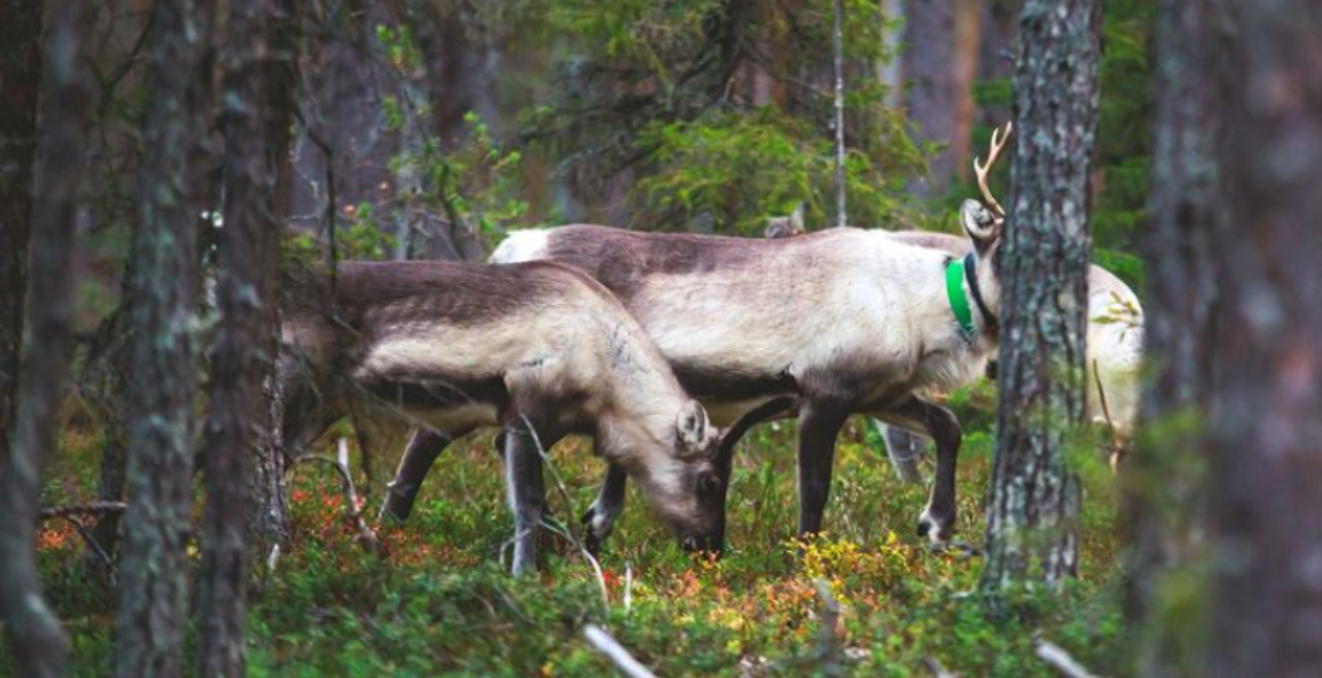
In Finland, reindeer are a normal part of life – a typical herd animal and an important source of livelihood for many people in the wild north of the country. A single reindeer farm can own hundreds of reindeer, which roam freely over vast areas across the frozen landscape in search of food. In the past, tracking their herds required farmers to travel long distances and to have a profound understanding of nature and the local conditions.

Now, Elisa has launched a reindeer tracking service developed in close collaboration with reindeer herders themselves. The system utilises the excellent coverage of Elisa’s mobile network and the Internet of Things to provide precise, real-time data about the location and welfare of each and every reindeer in a farmer’s herd, freeing up a significant amount of time for herders.

A simple yet sophisticated solution

The concept behind the service is simple: a collar with a positioning device is attached to the reindeer’s neck. The collar is designed so that it does not disturb the reindeer. Reindeer herders can monitor the movements and welfare of their herds via an app on their phone or computer, making it easy to follow where their animals are and making their work significantly easier.

“For example, rounding up reindeer from across the wilderness and sorting them or marking and tagging the calves has always been very time-consuming and laborious work. If you know the exact location of each individual reindeer, the work becomes considerably quicker and easier”, explains Markus Ahokangas, Elisa’s Regional Director for northern Finland. “Reindeer also sometimes get trapped in deep snow or by thin ice, and they can get injured by predators or road traffic. This system sends out alerts in real time if an animal’s situation changes, making it much easier for herders to rescue their animals. Without these devices, many of these animals would be trapped in the wilderness with little chance of help.”

Elisa provides the entire solution – positioning device, app and subscription – making it simple to acquire the system and roll it out across the herd.

Similar solutions have been tried before, but the new service takes advantage of the excellent coverage and connectivity of Elisa’s network, which is crucial in the challenging conditions that prevail in Lapland. As reindeer do not respect national borders and will wander between Finland, Norway and Sweden, the system has versatile map views that cover Finland’s neighbours as well.

Developed with reindeer herders to meet real-world needs in challenging conditions

The service has been developed through two years of close collaboration with around 20 reindeer herders in Finland, Sweden, and Norway in real usage environments – the fells, forests and wilderness of Lapland. The aim of the thorough development work was to meet the actual needs that reindeer farmers have, and the system is available to herders in Sweden and Norway as well.

“Our system utilises the latest technology and up to 130 positioning satellites to make sure that location tracking is accurate and extremely precise. Battery life was a core factor in the development of the system, and for example, herders can adjust how frequently the collars send updates to optimise the batteries’ power use and make sure they last throughout the season”, says Jale Naskali, who is responsible for IoT solutions at Elisa.

Reindeer herders have been enthusiastically signing up for the service since its launch in the autumn, with advance sales of hundreds of devices to dozens of customers.

“In Finland alone, there are around 6,000 reindeer herders with about 200,000 reindeer, so there’s a lot of room for growth. We are actively seeking feedback from users to help us in continuing to develop the service. We’re already planning changes and improvements to the map views based on what herders have told us”, says Ahokangas.

With real-time location tracking, reindeer herders can monitor their animals across the vast Arctic landscapes, improving safety and efficiency like never before. Now Santa will always know where Rudolph is.