Dell Technologies Launches New Services for Microsoft 365 Copilot to Speed Productivity and Efficiency

Dell Technologies is delivering a portfolio of professional services for Microsoft, including services for Microsoft 365 Copilot, to help customers adopt a consistent approach to implementing and managing their technology.

With Dell’s technology expertise, organisations can use leading assessment, advisory, operational readiness and implementation services that assist in adopting Microsoft 365 Copilot quickly and at scale.

“Dell is bridging the gap between aspiration and realization of generative AI,” said Scott Bils, vice president of professional services portfolio, Dell Technologies. “By coupling Microsoft 365 Copilot’s real-time intelligence and services from Dell, organisations can more easily implement and scale next generation AI capabilities.”

According to Gartner®, “by 2026, more than 80% of enterprises will have used GenAI application programming interfaces or models, or deployed GenAI-enabled applications in production environments – up from less than 5% in 2023.”

Dell’s new services help organisations develop the strategy, deploy, and test the solution and prepare teams to capitalise on Microsoft 365 Copilot functionality.

“Microsoft 365 Copilot is empowering our customers to accelerate their productivity and efficiency,” said TJ Devine, Sr. Director, Product Marketing, Microsoft. “Dell’s services are a valuable proposition for customers by ensuring they have an AI strategy and implementation plan for Microsoft 365 Copilot, while helping organisations establish user readiness for optimal scaling of this powerful GenAI capability.”

Additional Dell Services for Microsoft Customers

The services for Microsoft 365 Copilot accompany more than a dozen new services designed to help customers take advantage of the functionality and capabilities of their Microsoft technology investments.

The solutions include Dell’s professional services for Microsoft Azure and multicloud management with Azure Arc. These services allow customers to manage resources across multiple clouds to provide greater flexibility and control. New advisory services for Azure help customers strategically consume and optimize cloud resources.

New data platform services provide powerful data visualization and business intelligence to help customers manage, analyse and visualise their data in real time. Companies can make faster decisions about workload placement, cost, and optimisation of their environments. Businesses can protect their data with new security services for Microsoft Defender for Cloud and IoT, which provide advanced features to help protect cloud and IOT devices from potential threats.

Availability

Available globally and through traditional channels

Additional resources

Five Ways Data Storage Can Advance Your Sustainability Ambitions

In Ireland, IT departments are increasingly prioritising sustainability as part of their Environmental, Societal, and Governance (ESG) initiatives. A recent survey Enterprise Strategy Group revealed (93%) of IT decision makers consider asking about a supplier’s ESG programme when making IT purchase decisions and looking to action their digital transformation strategy. Colin Boyd, data centre solutions sales director with Dell Technologies Ireland tells us more. 

Today’s digital age has brought a surge in data usage, placing a significant pressure on Irish organisations to adopt sustainable practices. This is especially relevant given the high energy prices experienced by many businesses. Notably data centers consume approximately 200 terawatt-hours (TWh) of electricity, which is nearly 1% of all global electricity demand. Therefore, it comes as no surprise that implementing a green data center and hitting the “Environmental” aspect of ESG is top of mind for IT decision makers.

That’s where the modern storage solutions are playing a crucial role in promoting sustainability and energy efficiency in data management. There are five key benefits to sustainable data storage that are contributing to a more environmentally friendly and energy-conscious future.

1. Energy Efficiency:

Sustainable data storage solutions are engineered to minimise energy consumption by leveraging cutting-edge hardware technologies and energy-efficient processors. By optimising power usage, organisations can not only reduce their electricity costs but also make substantial reductions in their carbon emissions.

The adoption of virtualisation technologies and cloud computing is a significant driver of sustainable data storage practices in Ireland. Through the consolidation of physical servers into virtual machines, businesses can utilize technology more efficiently, ultimately lowering the energy required to maintain and cool IT infrastructure.

Cloud-based storage solutions are also enhancing sustainability by providing on-demand scalability, allowing Irish companies to efficiently expand their storage capacity when and how they need. The shared infrastructure of the cloud also helps to reduce waste, resulting in more eco-friendly data centers.

2. Cost Savings enabled by advanced technologies:

Embracing sustainable IT data storage practices not only advances sustainability, but it can also result in significant cost reductions for Irish businesses. Through the strategic allocation of resources and the integration of advanced technologies designed to enhance energy efficiency, organisations can effectively lower their expenditures on hardware and maintenance.

Irish companies that opt for high-density storage arrays can make the most of their physical data center space while simultaneously making strides in reducing their carbon footprint and overall environmental impact. Dell’s PowerMax 2500 model can deliver more than five times the effective storage capacity per watt consumed (PBe/watt) compared to the previous PowerMax generation.

New technologies, including Edge Computing and AI, are emerging as sustainable alternatives to traditional centralised data storage methods. These innovations involve decentralising data processing and storage, which brings benefits like reduced latency, enhanced data security and decreased reliance on extensive network infrastructure and you can also check out a hybrid cloud case study for more information.

This shift aligns with Irish businesses’ sustainability goals, enabling them to cut down on energy consumption and achieve greater operational efficiency. AI-powered algorithms play a crucial role in this transformation by analysing and optimising data efficiently.

Machine learning algorithms can identify data usage patterns, allowing for proactive measures like data tiering, where frequently accessed data is stored on faster, energy-efficient drives. By dynamically managing data placement and resource allocation, AI optimization reduces energy consumption and enhances overall storage efficiency.

3. Minimising Data Footprints:

Ireland’s data management landscape is evolving at pace. New data management approaches are gaining traction among IT leaders for their ability to eliminate redundant or duplicate data, which not only reduces storage requirements but also enhances overall system efficiency. By minimising data footprints, Irish organisations can unlock several advantages, including cost savings, improved backup and recovery times, and decreased energy consumption.

4. Environmental Conservation:

Conventional data storage infrastructure has long been associated with significant energy consumption and dependence on non-renewable resources, presenting environmental challenges. Whereas sustainable data storage solutions offer a distinct advantage by harnessing renewable energy sources like solar and wind power This shift not only reduces carbon emissions but also lessens the environmental footprint. Furthermore, the adoption of renewable energy sources to power data centres aligns perfectly with the commitment of Irish organisations to a sustainable future.

5. Regulatory Compliance:

Across the globe governments and regulatory bodies are introducing more stringent environmental regulations, extending their reach to data storage practices. In Ireland, adhering to these regulations is crucial for organisations to avoid penalties and legal entanglements. By adopting to eco-friendly data storage solutions, Irish companies not only ensure compliance with these evolving regulations but also showcase their dedication to sustainable business practices.

Advancing sustainability together

The rise of sustainable data storage in Ireland reflects the technology industry’s dedication to advancing sustainability and accelerating climate action. This commitment spans various innovations, including virtualization, cloud computing, the integration of renewable energy sources, and the adoption of cutting-edge technologies like edge computing and AI optimization.

As Irish organisations embrace and further develop these new technologies and practices, they not only ensure their own future sustainability but also play a vital role in fostering a greener, more efficient, and sustainable future.

As the IT industry plans to increase emphasis on ESG data management initiatives. Dell Technologies is leading the changes in championing ESG initiatives and promoting sustainability with data centers. With a modern storage portfolio, our team at Dell Technologies Ireland can enable organisations to effectively address the demands of a data-driven world while simultaneously reducing their ecological footprint.

Ireland Tops Energy Efficiency in Euromonitor’s first-ever Global Energy Vulnerability Index

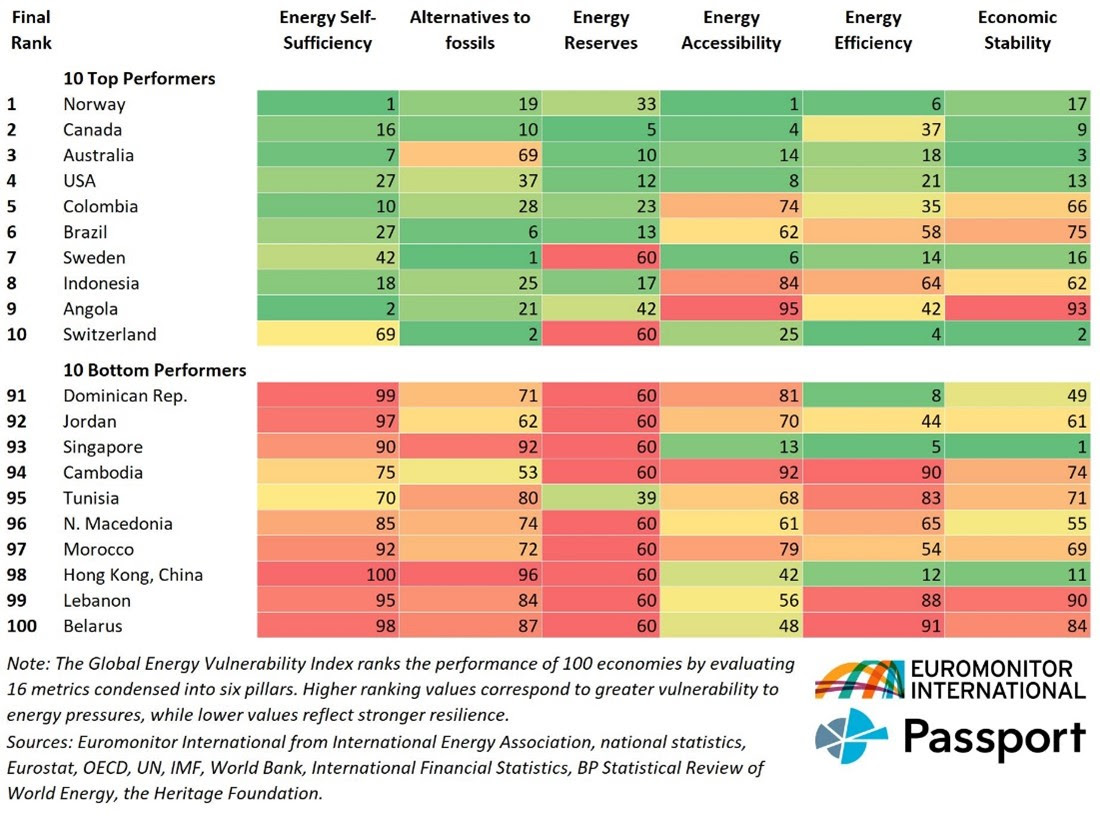
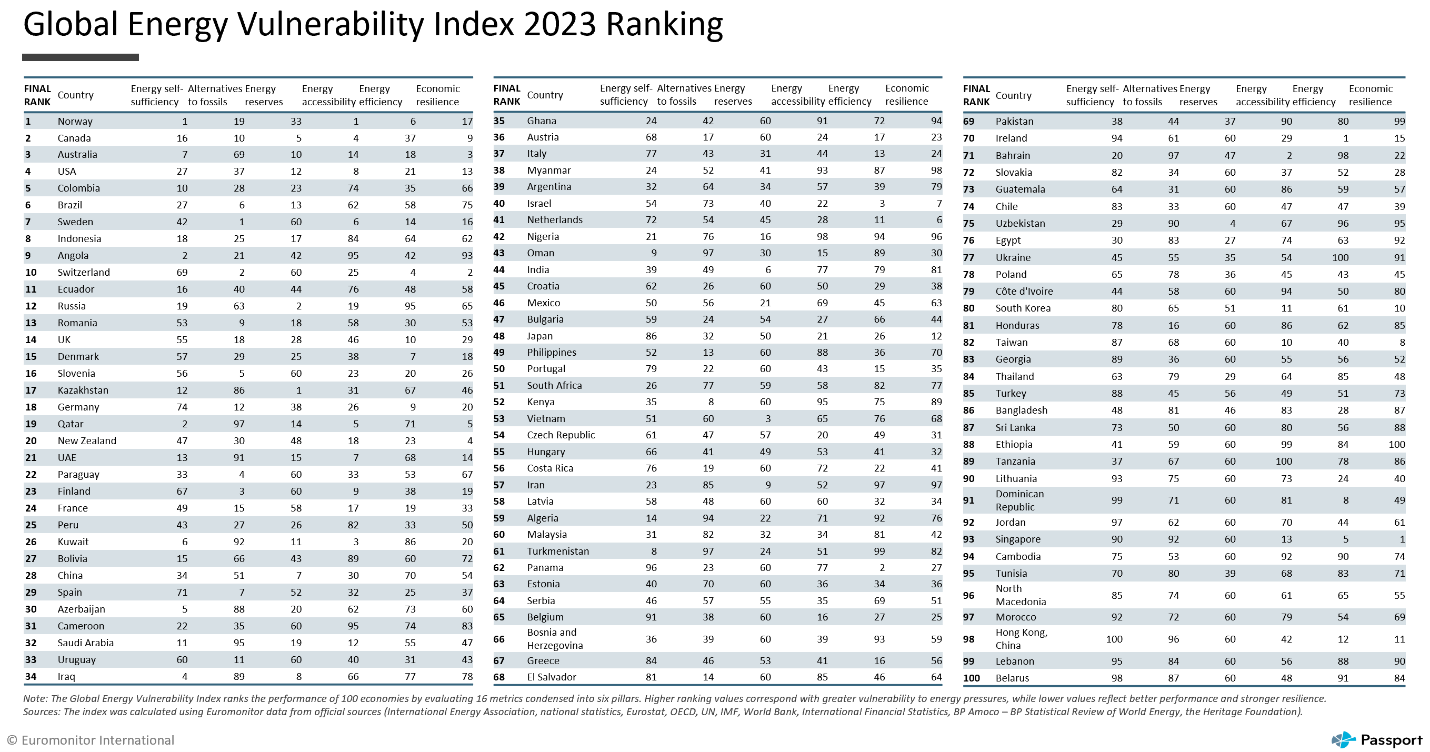
Market research company Euromonitor International has released its first-ever Global Energy Vulnerability Index, as part of its ‘New Economic Reality: Rising Energy Pressures’ report, revealing individual countries’ exposure to energy shocks.

The Global Energy Vulnerability Index 2023 is designed to help leaders and businesses assess and benchmark a country’s energy security, providing insights into potential risks, challenges and opportunities in the markets where they operate or plan to expand into in the future.

Euromonitor International used six groups of indicators to measure each country’s level of energy vulnerability:

  1. Energy self-sufficiency (30% of total score (TS)),
  2. Alternatives to fossils (35% TS),
  3. Energy reserves potential (10% TS),
  4. Energy accessibility (5% TS),
  5. Energy efficiency (10% TS), and
  6. Economic resilience (10% TS)

Ireland ranks highest globally in energy efficiency. Norway, Canada, Australia and the US rank at the top of the index due to their strong energy self-sufficiency, ample energy resources, diverse energy mix and high economic resilience.

At the other end of the table¸ Belarus and Lebanon rank at the bottom as both countries lack energy resources and struggle with poor energy efficiency and economic uncertainty.

Singapore and Hong Kong also rank among the bottom 10 performers because of heavy reliance on energy imports despite their good score in energy efficiency and economic stability. The smaller size of Singapore and Hong Kong also limits renewables capacity, adding to the city-states’ weaknesses.


Aleksandra Svidler, Consultant for Economies at Euromonitor International, said: “Understanding a country or a region’s vulnerability to energy shocks will inform business strategy and enable an optimal plan for energy sourcing, as well as help to identify the white spaces for investment.

“Overall, economies that are heavily reliant on imports, with low adoption of renewables, weak energy efficiency and economic instability are more vulnerable to energy risks.

“Many African countries continue to grapple with underdeveloped infrastructure, poor access to reliable and affordable energy and low investment while developing Asian economies continue to struggle with low self-sufficiency rates, high dependency on fossil fuels and limited access to capital.”

Svidler said that European countries also face challenges ahead. “Although many European countries are better positioned to weather disruptions due to the rising renewables adoption and better access to capital, the region’s high reliance on energy imports raises its exposure to energy shocks.”

Euromonitor International selected six groups of indicators to measure each country’s energy vulnerability known as pillars. Low energy self-sufficiency, due to the weak domestic energy production and high reliance on imports, raises the exposure of an economy to disruptions in energy supply, global price shocks and geopolitical risks. High reliance on a single external energy supplier particularly undermines an economy’s energy security.


Alternatives to fossils pillar reflects the diversification of an energy mix away from fossil fuels by investing in alternative sources, such as green renewables or nuclear power, which can help to raise energy security, reduce exposure to global energy price and supply shocks, and enhance sustainability.

Energy reserves potential helps to assess the future availability of energy resources at current production rates. Reserves of oil, gas and coal can play a key role in boosting energy self-sufficiency of a country. Yet, high resource potential does not necessarily guarantee sufficient future supply due to economical, technological and environmental constraints.

Energy accessibility pillar illustrates the reliability and adequacy of power supply in a country and points to the state of energy infrastructure. Lack of access to power and underdeveloped energy infrastructure can lead to significant social and economic challenges.

Energy efficiency indicates the amount of energy needed to provide goods and services. Higher energy efficiency can help to reduce energy consumption, and therefore reduce costs and reliance on imports, boost competitiveness and environmental benefits.

Countries with greater economic resilience are better equipped to withstand energy price and supply fluctuations, as available mechanisms and reserves allow them to manage energy market shocks. Meanwhile, higher economic freedom fosters investment in innovation and diversification.

For more information, please read the full Euromonitor International report ‘New Economic Reality: Rising Energy Pressures’.

Dell Technologies helps UCC increase energy efficiency & reduce emissions on campus

Dell Technologies (NYSE:DELL) and University College Cork (UCC) have joined forces to harness the power of technology to bolster UCC’s position as a green university.

UCC is the world’s first Green Flag Campus and has a strong commitment to sustainable practices. Its recent five-year strategic plan puts people and the future of the planet at its centre with UCC committed to becoming a carbon neutral campus by 2040.

However, outdated IT infrastructure and minimal data storage capacity hindered the university’s ability to not only reduce its impact on the environment but also to provide a high-quality and flexible digital experience for its 25,000 students and 3,500 staff. This became clear at the onset of the pandemic and the pivot to hybrid ways of learning and teaching.

UCC turned to Dell to help put its technology at the heart of its student experience and ensure that IT transformation contributed towards its overall sustainability goals on campus. With the help of the Dell team locally and using Dell PowerEdge servers and modern storage and back-up solutions, UCC has been able to retire legacy systems and look at new ways in which technology can reduce carbon emissions and energy usage on campus.

Crucially, the new servers help UCC reduce energy consumption and Co2 emissions. Updating to Dell PowerEdge servers has reduced annual greenhouse gas emissions by nearly 70% year-on-year while reducing power usage by over 50% and requiring close to 40% less cooling.

Commenting on the collaboration, Gerard Culley, Director of Information Technology at UCC, said: “When we looked for a partner for our infrastructure needs, we wanted to work with an organisation that shared our values and strategic goals. UCC is committed to working towards a more sustainable future and with that comes an obligation to partner with an organisation that shares this commitment. That’s why we chose to partner with Dell Technologies.

 “With the help of Dell’s PowerEdge servers, we were able to put in place modern, resilient storage and compute solutions and achieve incredible results when it came to our energy and carbon footprints. With Dell’s solutions, we’ve completely modernised our IT infrastructure so that we can deliver more flexible, sustainable, secure and resilient digital services and solutions to our staff and students for years to come.”

Jason Ward, Vice President & Managing Director, Dell Technologies Ireland, said: “With remote and hybrid learning now the reality for most third level institutions, UCC reached out to us to deploy a modern digital infrastructure and help UCC staff and students avail of a central and functional IT system. At Dell Technologies, we are determined to meet the needs of today without compromising the ability to meet the needs of future generations. Since 2013, we have reduced the energy intensity in Dell PowerEdge servers powered by Intel processors by 83%[1]. By harnessing the power of modern storage solutions, we are able to support the university as it continues to thrive as an innovative, competitive and sustainable research-led hub.”