GTA 5’s Graphics Engine: How a 2013 Game Still Looks Good in 2026

Grand Theft Auto V launched in September 2013 on PlayStation 3 and Xbox 360 hardware, consoles with 512MB of RAM and processors from 2005. Thirteen years later, the game not only survives but thrives across three console generations and PC, maintaining visual competitiveness against modern titles. This longevity stems from Rockstar’s RAGE (Rockstar Advanced Game Engine) technology, a sophisticated graphics and physics engine that was over-engineered for its time and designed with scalability as a core principle.

The RAGE Engine Foundation

RAGE debuted with Rockstar Table Tennis in 2006, but GTA 5 represents its most ambitious implementation. The engine combines proprietary rendering technology with Euphoria physics simulation and procedural animation systems licensed from NaturalMotion. This hybrid approach creates the realistic character movement and environmental interaction that define the GTA experience.

What makes RAGE particularly impressive is its scalability. The same codebase runs on hardware spanning four orders of magnitude in computational power, from 2005 console processors to modern RTX 4090 graphics cards. This requires sophisticated dynamic level of detail systems, adaptive texture streaming, and resolution-independent rendering pipelines that few engines achieve even today.

The engine’s renderer employs deferred shading, a technique that separates geometry rendering from lighting calculations. This allows Los Santos to feature hundreds of dynamic light sources simultaneously without crippling performance. Street lights, vehicle headlights, neon signs, and environmental effects all contribute to lighting in real time, creating the atmospheric depth that keeps the game visually engaging over a decade after release.

Texture Streaming and Memory Management

GTA 5’s massive open world presents extreme technical challenges. Los Santos covers approximately 127 square kilometers, filled with detailed buildings, vegetation, roads, and thousands of assets. Loading this entire world into memory is impossible even on modern hardware, requiring sophisticated streaming systems that predict player movement and preload assets accordingly.

Rockstar’s texture streaming technology analyzes player velocity, camera direction, and historical movement patterns to determine which assets need high resolution textures and which can use lower quality versions. This predictive loading happens continuously in the background, invisible to players but critical to maintaining visual quality without loading screens during open world traversal.

The system’s intelligence becomes apparent when players move at high speeds. Textures and geometry ahead of the player load at higher priority than assets behind them. Buildings in the player’s peripheral vision receive medium detail, while structures directly in the view cone get full resolution treatment. This selective quality approach maximizes perceived visual fidelity while staying within hardware constraints.

PC versions leverage additional VRAM to extend streaming distances and maintain higher resolution textures longer, but the fundamental systems remain identical across platforms. This unified architecture simplifies development while allowing each platform to scale performance according to available resources.

Dynamic Resolution and Temporal Anti-Aliasing

Modern GTA 5 implementations on PlayStation 5 and Xbox Series X employ dynamic resolution scaling, adjusting rendering resolution frame by frame to maintain target framerates. When on-screen complexity increases, such as during explosions or high traffic density, the engine reduces rendering resolution slightly. During calmer moments, it scales back up to native resolution.

This technique, combined with temporal anti-aliasing that uses information from previous frames to smooth edges and reduce aliasing artifacts, creates the illusion of consistent high-resolution rendering even when internal resolution fluctuates. Most players never notice these adjustments, experiencing only smooth performance regardless of on-screen chaos.

Temporal anti-aliasing also helps with the thin geometry that plagues open world games: power lines, fences, railings. Traditional anti-aliasing struggles with single-pixel-wide objects that flicker and shimmer during movement. By analyzing multiple frames, temporal solutions stabilize these problematic elements, significantly improving visual stability during gameplay.

Lighting and Atmospheric Effects

GTA 5’s time of day system demonstrates the engine’s lighting sophistication. The game simulates a complete 24-hour cycle with dynamic sun position, atmospheric scattering, and color temperature shifts that affect all lighting in the scene. Sunrise and sunset periods feature particularly impressive volumetric light scattering, creating god rays that stream through clouds and between buildings.

Weather systems add another layer of complexity. Rain doesn’t just add particle effects; it transforms surface properties, creating wet road reflections, changing friction characteristics for vehicles, and affecting visibility through atmospheric fog. These interconnected systems create believable environmental conditions that enhance immersion beyond simple visual spectacle.

The volumetric fog and cloud rendering use ray marching techniques, sampling atmospheric density at multiple depths to calculate light scattering through the medium. This computationally expensive approach was cutting edge in 2013 and remains impressive today, contributing to the game’s distinctive visual atmosphere.

The Player Investment Factor

GTA Online’s persistent nature creates an interesting technical challenge and opportunity. Players invest hundreds or thousands of hours building their criminal empires, accumulating properties, vehicles, and customization options. This long-term engagement justifies Rockstar’s continued technical support and optimization across new hardware platforms.

Services like Gameboost and marketplaces for gta accounts exist partly because the technical investment Rockstar made in the engine allows the game to remain relevant across hardware generations. Players can transfer their accounts from old consoles to new ones, maintaining their progress while experiencing improved graphics and performance on superior hardware.

Future-Proofing Through Modularity

RAGE’s modular architecture allows Rockstar to update specific rendering components without rebuilding the entire engine. The PC version has received multiple graphics updates post-launch, adding features like improved anti-aliasing, enhanced shadow resolution, and higher quality texture filtering. These improvements slot into the existing framework because the engine was designed with modularity from inception.

This approach contrasts with engines that tightly couple rendering and gameplay code, making updates risky and time-consuming. RAGE’s separation of concerns allows graphics programmers to optimize rendering paths while gameplay engineers work on different systems simultaneously, accelerating development and enabling incremental improvements over years.

The Technical Debt Question

No engine survives 13 years without accumulating technical debt. RAGE shows its age in certain areas, particularly texture pop-in during fast travel and occasional geometry streaming issues when pushing hardware limits. The engine’s multi-platform origins create compromises that a ground-up modern engine wouldn’t face.

However, the consistency of these issues across platforms suggests they’re fundamental to the streaming approach rather than implementation bugs. Rockstar has clearly decided that occasional texture loading artifacts are acceptable trade-offs for the seamless open world experience that defines GTA gameplay.

Lessons for Modern Engine Design

GTA 5’s longevity offers valuable lessons for graphics engine architecture. Over-engineering for future hardware proves worthwhile when supporting a live service game across multiple console generations. Sophisticated streaming systems that seemed excessive on 2013 hardware enable the game to scale smoothly to modern platforms with dramatically more memory and processing power.

The engine demonstrates that photorealistic graphics matter less than consistent visual quality and strong art direction. Los Santos succeeds not because it renders more polygons than competitors, but because its lighting, atmospheric effects, and attention to detail create a convincing world that players want to inhabit.

As the industry shifts toward games-as-a-service models requiring multi-year support, GTA 5‘s technical foundation shows the value of building scalable, modular engines designed for evolution rather than obsolescence. The game’s continued commercial success validates this technical investment, proving that well-engineered fundamentals outlive cutting-edge features targeting specific hardware.


CRKD announces new Powered Up Nitro Deck+ for Nintendo Switch & OLED Switch Consoles

CRKD, the new premium collectible brand behind the award-winning Nitr Deck and the recently announced NEO, announced today the Nitro Deck+, an all-new addition to the Nitro Deck range bringing more features, more innovation, and more power to Switch gamers everywhere.
An ingenious all-in-one controller solution for Nintendo Switch and OLED switch consoles, Nitro Deck delivers zero stick drift and offers a feature-rich, precise way to enjoy Switch gaming in handheld mode. Featuring the same comfortable footprint as the original Nitro Deck, the Nitro Deck+ introduces a raft of new features, designed to make Switch gaming better than ever.
Proudly announced today as part of the IGN™ FanFest event, the Nitro Deck+ is the result of extensive community feedback following the release of the original Nitro Deck.
Nitro Deck+ features enhanced ergonomics, adjusting the placement of the right thumbstick, and allowing gamers to play in a more intuitive symmetrical fashion. The Nitro Deck+ can now connect directly to a TV with no need for an external dock! Featuring an integrated USB-C output and complete with an included USB-C to HDMI adaptor, gamers can switch between handheld and TV play without ever needing to remove their Switch console from Nitro Deck+, a quick, slick solution with no need to compromise!
On the front of the Nitro Deck+ to either side of the thumbsticks, two new ‘Sidekick’ buttons have been added, delivering even more customization options. Designed to work in conjunction with the new symmetrical thumbstick configuration, the Sidekick buttons are pre-programmed to replicate the A and B action button commands, allowing for super-fast operation. Replicating the most commonly used action buttons, facilitating speedier reaction times, and when used in combination with the additional re-mappable back buttons that are now mapped to X, Y, A, B out the box, the Nitro Deck+ allows gamers to play faster, score higher and elevate their handheld experience.
The new easy eject system allows for simple removal of the Switch console from the Nitro Deck+ allowing gamers to safely remove their console with no need to touch or add stress to the screen while removing.
Nitro Deck+ has also received an upgraded, adjustable rumble system, delivering more immersion and intense vibration which can be adjusted to suit the gamers’ preference. In addition, Bluetooth® has also been added to the Nitro Deck+, to allow for easy communication to the CRKD App for firmware updates. In the future, the App will include a full suite of customization options including button programming, adjustable trigger sensitivity, and more. The Nitro Deck + can connect via its defaulted USB-C wired connection or via Bluetooth when the switch is inserted into the deck.
The Nitro Deck+ adds these new features without removing any of what made the original Nitro Deck such a beloved product. The full list of features present on Nitro Deck+ include:
  • Ergonomically Built with All-New Thumbstick Placement
  • Zero Stick Drift Made Possible Via Hall-Effect Sensors
  • HDMI Output for TV Play (Play While Docked)
  • Re-mappable Back Buttons
  • Programmable Sidekick Buttons
  • Adjustable Trigger Sensitivity
  • Low Latency Response (direct connection via USB-C)
  • Bluetooth Connection (To update firmware via app)
  • Swappable Stick Tops
  • Adjustable Vibration Feedback
  • Gyro Compatible for Motion Control Games
  • No Deadzone Mode
  • Turbo Mode (Add Turbo Functionality to any Action or Trigger Button)
  • Pass-through Charging Feature
  • Use as an Extra Controller
  • Easy Eject System
  • Integrated Display Stand
  • Connects to the CRKD Companion App (True Collection System)
Commenting on the announcement of the Nitro Deck+, Jack Guinchard, Global Brand Manager for CRKD said, “The Nitro Deck marked our first product release which was warmly received by both gamer and critic. We were taken aback with the positive response, and actively welcomed feedback from our CRKD community to guide us in how the Nitro Deck should evolve. The Nitro Deck+ is a direct response to the feedback we gathered, and we can’t wait to see how gamers respond. Continuing, Jack commented, “At CRKD we’re committed to bringing gamers high-quality, disruptive products that elevate both the gaming and collectible experience. We can’t wait to continue to surprise the community as we build the range further in the months and years to come.”
The Nitro Deck+ is now available for pre-order, available in two colors: Clear Black and Clear White. Both will retail for: $69.99 / €79.99 / £69.99 with early pre-orders expected to begin shipping from late April 2024. Secure yours today at: https://go.crkd.gg/ndplus

4 Ways The Internet Has Greatly Changed The Gaming Console Industry

Gaming has been around for decades, providing entertainment for players of all ages. While some of us may have grown up in the SNES or Sega Mega Drive era, it can be hard to look back and understand how we could ever have played games with such poor graphics and gameplay. Back then, video games were single-player focused, and the idea of online gaming was the stuff of science fiction. These days, many of the big names in gaming are still around but they have changed beyond recognition with the rise of the Internet.

Header image designed by Compare the Market

To help you get a better idea of how far gaming has come, here are 4 ways that the Internet has greatly transformed the whole console industry.

1. Streaming and Communication Platforms

The internet has affiliated multiplayer gaming and interaction with players from all around the world and this has led to the enormous popularity of online platforms like Discord. These allow players to communicate using text-based chat rooms and direct messages and have even enabled popular gamers and streamers to monetize their play. Nontraditional gaming companies such as Facebook, Apple, and Google have even joined in to offer subscription streaming services without the need for a computer or gaming console. Most notably, Amazon’s Twitch has partnered with the big gaming companies to exclusively host worldwide gaming and esports events.

2. Gaming Media

Gaming magazines were all the rage once upon a time, but since the rise of the Internet, developers and console fans have moved on from print media. Instead, they have switched to online publications to cover all aspects of video games. Leading media outlets like IGN and Gamespot used to cover only gaming news and gear reviews, but now they have transformed into major online brands that offer all kinds of gaming and entertainment content.


3. Merchandising

Since gaming consoles are expensive to build, manufacturers have to rely on other income sources like intellectual property and merchandising to increase revenue. The Internet has opened up entirely new possibilities for these revenue streams with Hollywood looking to tap into the gaming market by creating movie adaptations. In recent years, we have seen many popular console games make their ways to the cinema screen, such as Need For Speed, Assassin’s Creed, Sonic The Hedgehog, and Resident Evil. 

4. Vintage Video Games

Nostalgia is powerful, and in recent years, we have witnessed countless remakes of old-school films and shows. New generations of gaming fans are falling in love with online vintage games via the internet like Doom, Diablo, and Blade Runner. This has even led to reboots of these vintage games being released. Many console companies have also seized upon this opportunity to release updated gaming console models – like Nintendo with their Classic Mini and Switch to support their classic video games.  

The gaming console industry has gone through its fair share of dramatic changes, with new technology, new controls, and new experiences being introduced at a rapid pace. Innovation has and always will be a key in video games, and with more players joining in and creating demand for more immersive entertainment, large tech companies will always take notice and look to update accordingly. Gaming has the special ability to bring people together, and with the involvement of the Internet, it is beginning to reach its full social and competitive potential.

Youtubers Life 2’ Will Launch on Console & PC in 2021. #YouTube #Gaming

With the original Youtubers Life smashing through sales of more than 1.4 million units across the world, Raiser Games is today excited to announce it’s once again working with UPLAY Online.

The two parties will bring the world of content creator kings and queens to the hands of their legions of fans in Youtubers Life 2.

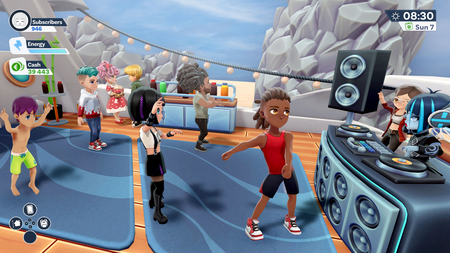
Almost five years has passed since the original game first made waves, with the world of streamers and content creators having shifted radically within that time. With new names and new opportunities coming to the fore on an almost weekly basis, Youtubers Life 2 is set to offer a revised, more contemporary look into the life of this burgeoning profession’s biggest stars, launching on PC, PlayStation, Xbox, and Nintendo Switch.

Building on the foundations laid in the original game, Youtubers Life 2 is being designed to simulate all areas of a content creator’s rise, including:

  • More content options for Youtube videos, including reviews, gameplays, speedruns, unboxings, interviews, and more.
  • Subscriber and video statistics that directly react to a broadening of a creator’s content.
  • A new mechanic called “Trends”, which fluctuates daily and affects your popularity as a YouTuber.
  • More personalization options for your character, and a fully customizable and expandable home.
  • Scores of new and expansive features to be announced in the coming months.
  • Deeper relationships with NPCs, including additional questlines.

It’s an offering that, according to Quim Garrigós – Project Director & Co-Founder at UPLAY Online, will directly reflect the changing nature of being a content creator in 2021.

“The original Youtubers Life has been such a big success and continues to be to this day, but the kinds of things content creators are both doing and achieving now is monumentally different to the world we first looked to simulate back in 2016,” continues Garrigós. “We wanted that original premise to grow with the content creators themselves, which is why we’ve been working on expanding our offering significantly with Youtubers Life 2. There’s nobody else, operating in this space, nobody else simulating Youtubers either big or small, so we’re proud to stand as the go-to game for gamers looking to live out their content creating dreams.”

For Raiser Games, the potential for the IP to continue to expand its reach as the content creator sector similarly grows at a pace meant working with UPLAY Online again was a no-brainer.

“The original game enjoyed the exact same kind of virality the best content creators amass every day,” adds Sergio de Benito, Marketing Director at Raiser Games. “In all, Youtubers Life videos have passed the 350,000 mark, generating more than 500 million views for more than 50,000 content creators. We think UPLAY Online’s plans for Youtubers Life 2 will enable the franchise to cement its position as the ultimate content creator simulator.”