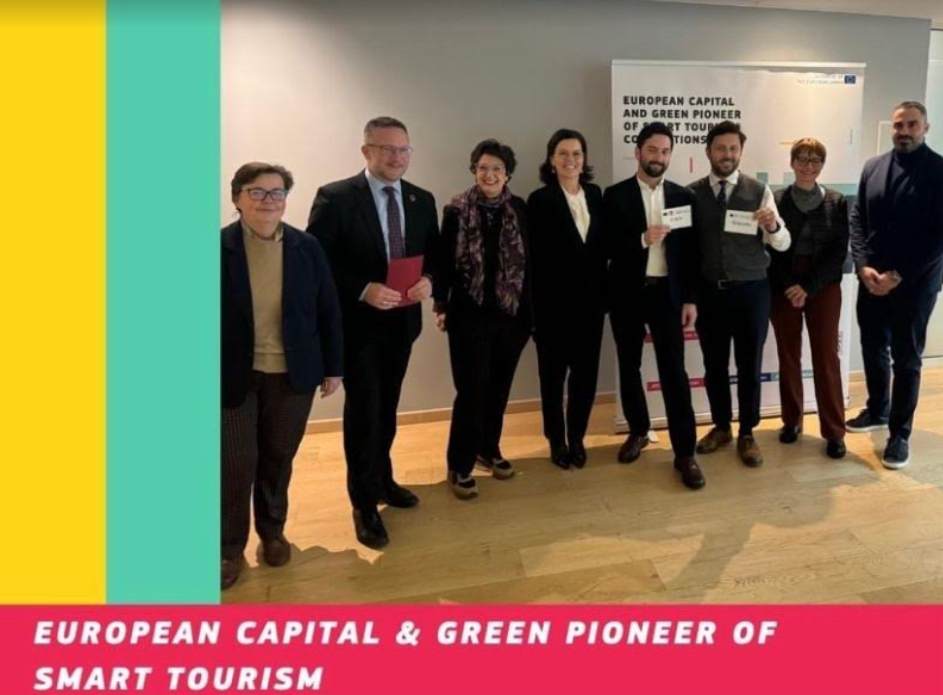
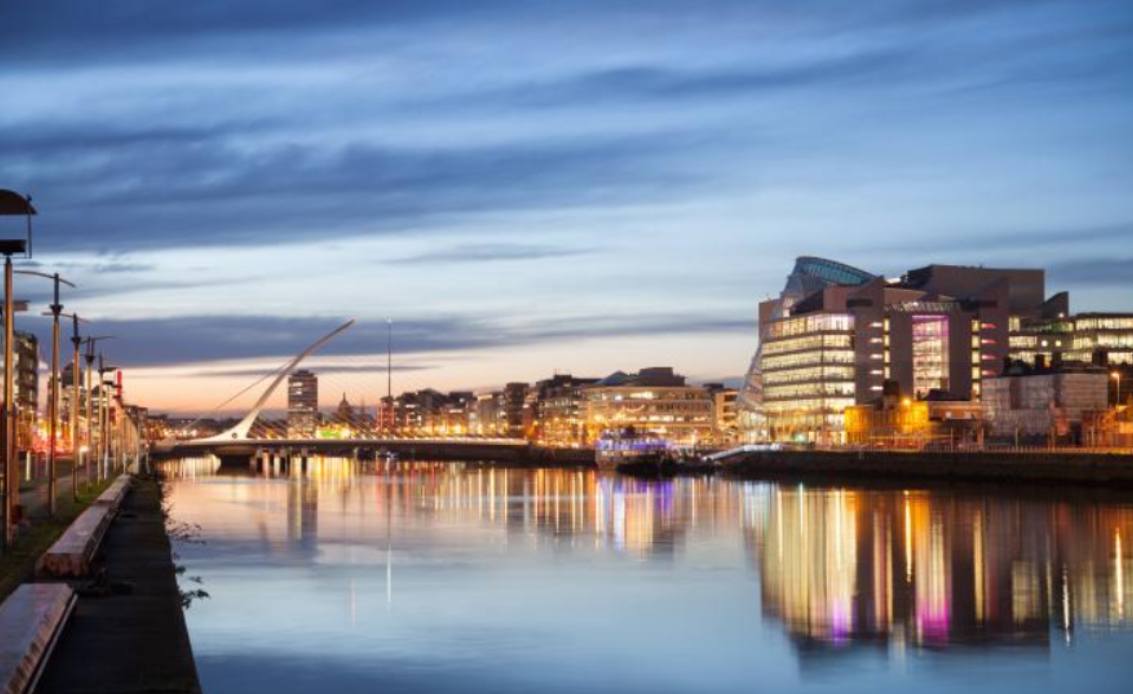
Dublin city shortlisted for 2024 European Capital of Smart Tourism award

Dublin City Council is delighted to announce that Dublin City has been shortlisted for the 2024 European Capital of Smart Tourism award. It is the second time Dublin has been shortlisted for the designation. Last year Dublin City Council also won the prestigious Tourism Innovation Award in Seville.

The shortlist was announced this morning by the European Commission.

From a pool of 30 candidates spanning 17 countries, the selected finalists for the European Capital of Smart Tourism are in alphabetical order, Bremerhaven (Germany), Cork (Ireland), Dublin (Ireland), Genoa (Italy), Helsingborg (Sweden), and San Sebastián (Spain). 

The European Capital of Smart Tourism recognises best practice and innovative tourism practices in European cities.  Dublin is one of the first European cities to prioritise a specific Smart Tourism programme.  Since 2020, Dublin City Council, Smart Dublin and Dublin City Council Culture Company have been working in partnership on Dublin’s first Smart Tourism Programme, with the aim of making the city a smart tourism destination, using the city’s expertise in technology to deliver a superior tourism experience.

Head of Dublin City’s Tourism Unit, Barry Rogers said:  “This shortlisting is a real recognition of many years of consistent collaboration and work across Dublin City Council, Smart Dublin and Dublin City Council Culture Company. This designation specifically recognises cities who are striving to be more digitally advanced, sustainable, accessible and more equitable for locals.   Dublin being shortlisted amongst these other leading destinations is a welcome benchmark of our own progress to date and provides many more opportunities for innovation and collaboration going forward. We very much look forward to representing Dublin in Brussels in our bid to become the 2024 European Capital of Smart Tourism”

Dublin’s Smart Tourism Initiative is a Dublin City Council programme, made in partnership with Smart Dublin and Dublin City Council Culture Company. The programme is led and governed by the Dublin City Tourism Unit and is underpinned by the Innovation pillar of the new Dublin City Council Tourism Strategy 2023-2028 which states: We recognise the enormous opportunity to blend our expertise in technology, culture and tourism to build a more future facing offer in Dublin. We will be a test-bed for innovation within the tourism industry in Dublin, ultimately creating more and better experiences for visitors.  

The goal of the Smart Tourism programme is to establish Dublin as a world-leading ‘Smart Destination’ through innovation, research and partnerships. The programme is responsible for the development of cutting edge visitor experiences such as the new Dublin Discovery Trails App. Last year Dublin City Council received the Digital and Innovation award at the Tourism Innovation Summit in Seville for its development of the Smart Tourism programme.

You can access a brief profile of each of the shortlisted cities here.

The European Capital of Smart Tourism award will be granted to the city that demonstrates an extraordinary commitment to shaping the future of sustainable and innovative tourism. The award also aims to foster networking and the fortification of destinations while facilitating the exchange of best practices in this field.

Following this stage, the finalists will be invited to present their proposals to a European Jury, tasked with selecting the 2024 European Capital of Smart Tourism. The chosen city will receive extensive support in communication and branding. This includes the creation of a promotional video, installation of a hashtag sculpture for public exhibition in the city, and the implementation of tailored promotional campaigns aimed at boosting visibility at both the EU and global levels, ultimately resulting in an increase in the number of visitors.

The competition welcomed participation from cities within the European Union and non-EU countries that are eligible to the Single Market programme. An impartial panel of experts conducted a thorough evaluation of the applications, and those applicants who achieved the highest cumulative score across all categories successfully advanced.

Dublin City Council Launch ‘DiscovAR Dublin’ – Ireland’s First Augmented Reality Map

Dublin City Council has today announced the launch of a new augmented-reality (AR) mapping feature that allows users of the Dublin Discovery Trails app to open up a 3D map of Dublin on their device and allow them to explore the city in a new, innovative way.

‘DiscovAR Dublin’ is a first for Ireland in utilising new open Google Maps technology to form an interactive 3D map where users can be transported into the city to interact with the map to uncover Dublin landmarks, museums and attractions. Users can also learn more about the history and significance of locations such as the Guinness Storehouse, EPIC – the Irish Emigration Museum and 14 Henrietta Street.

The project is a collaboration between the Dublin City Council, Smart Dublin and Virgin Media Business alongside Peel X, who developed the feature for the Dublin Discovery Trails app.

Launched last year, the app is a platform on which the Dublin local authorities can develop new and exciting immersive experiences combining the real-world history with smart technologies. Already there are unique experiences published including Doors into Docklands, Balbriggan and Castleknock heritage tours.

Lord Mayor of Dublin, Daithí de Róiste, launching this exciting new feature said, “This is first for Ireland, the user can ‘literally’ step into the city from anywhere in the world and explore Dublin in the palm of their hand. This innovative technology will help further position Dublin as a world-class destination with this new experience. I’m delighted to launch DiscovAR here today and I’d encourage everyone to download the app and try it today to explore the best of what Dublin has to offer.”

Tourists and locals alike can use the app before they visit the city, or while they are in the city with the vision that it will assist users to learn more about Dublin and its extensive history, sights, monuments and streets across the capital city.

Also commenting on the launch of ‘DiscovAR Dublin’, Jamie Cudden, Smart City Lead, Dublin City Council said, “DiscovAR offers a new way for visitors and locals to experience the capital city. Through our Smart Dublin programme, we are always thinking about how we can embrace new technologies to enhance how people engage with our Capital City. This app through its immersive AR technology is a new and fun way to explore the City’s culture and history and we see huge potential to expand this.”

The Dublin Discovery Trail app is part of a larger Smart Tourism strategy to invest in digital to transform Dublin’s tourism experience for how we tell the story and history of the city and was developed as part of the new Dublin City Council Tourism Strategy 2023-2028 – Innovation Pillar. Using new and immersive technologies, such as augmented reality, will help further position Dublin as a world-class tourism destination with this new digital experience and allow for further unique and tailored customer experiences that will keep the city relevant for tourists.

For more information on ‘DiscovAR’ and to download the app visit http://dublindiscoverytrails.com or search Dublin Discovery Trails on Apple App Store or Google Play..

What to Look for in a City Car

Getting around in a dense urban area often means resorting to a certain kind of car. Ideally, it should be compact and manoeuvrable enough to be able to get through dense traffic, and to easily nick those parking spaces.

There’s a very competitive market for this kind of vehicle. But if you’re looking to make a purchase, it can be difficult to know what to look for. So, what qualities make for a great city car?

Size and Maneuverability

Let’s kick off with the two qualities we’ve already touched on. Smallness tends to correlate with manoeuvrability, especially when space is limited (as it often is in places where the land price is sky-high). A small car carries less weight than a big one. Moreover, that weight tends to be lower to the ground, meaning that you can easily swing around corners without feeling like the vehicle is going to topple.

You’ll find plenty of vehicles of this type on the second-hand market. For example, you could look for a used Vauxhall car from an approved dealer in your local area.

Visibility 

In a city car, being visible can be very useful. It’ll make it easy for other motorists to see you, for one thing. For another, a conspicuous vehicle is easier to spot in a packed-out car park. As such, it might be a good idea to go for something brightly-coloured – provided that it suits your taste.

Fuel Efficiency

City driving involves lots of starting and stopping. You can think of yourself travelling over many short journeys, rather than a few longer ones. Because of this, fuel efficiency really matters. Look for an efficient vehicle, and adopt efficient driving habits.

Running costs

We should also think about running costs outside of fuel. Look at your road tax, insurance, and consumables. You might also consider that clean-air charges are being rolled out in major cities throughout the UK. Go electric, and you’ll avoid them entirely.

The infotainment system

You’ll be spending a lot of time behind the wheel, often in gridlocked traffic. Staying entertained is vital, and that means a good infotainment system that can integrate easily with your phone. A navigation app like Waze might make all the difference to your experience, so make sure you can actually use it.

City driving isn’t as stressful as it’s cracked up to be, provided that you’re driving something appropriate. By putting a little thought into the decision, and shopping around for the best possible vehicle, you’ll have a much better experience on those early-morning commutes!

Cellnex and Dublin City University (DCU) partner on Ireland’s first 5G enabled ‘Smart Campus

Cellnex Ireland, Ireland’s largest independent telecoms infrastructure provider, has partnered with Dublin City University (DCU) to develop Ireland’s first 5G-enabled smart campus, which will further the objectives of the ‘Smart DCU’ initiative.

Smart DCU is a collaboration between Dublin City Council and partners Enable Insight SFI Research Centre for Data Analytics, and DCU Alpha. The goal of Smart DCU is to develop, test and trial cutting-edge technology innovations utilising three campuses with almost 19,000 students from 55 countries worldwide. Smart DCU is an ongoing program to make the DCU campuses a microcosm of a smart city, and thereby offer great insights into how a smart city can better function for the benefit of its citizens and stakeholders.

The partnership, officially launched today, will see Cellnex install a range of telecommunication infrastructure to ensure there is uninterrupted 5G coverage across the main campus, the nearby DCU Alpha Innovation Campus, and the DCU sports campus, and ultimately support smart city, connected vehicle (V2X) and internet of things (IoT) applications across three DCU campuses.

Rolling out 5G coverage of this scale will facilitate Mobile Edge Computing (MEC) capabilities on the campuses. MEC allows for the increased adoption of bandwidth-heavy applications, such as internet of things, virtual and augmented reality, remote medical monitoring and connected and autonomous vehicles. MEC is heavily reliant on 5G, and the partnership with Cellnex will now give DCU students, staff, researchers and partner companies the ability to trial new technologies in a real-world environment.

Cellnex and Smart DCU are now seeking to collaborate with mobile network operators to develop 5G capabilities across the campuses.

The partnership will be particularly advantageous to university start-ups, spin outs and partners, with a testbed becoming available to trial the latest innovations to tackle the problems of tomorrow. This live smart city testbed environment will assist in commercializing collaborative research which takes place across DCU.

It is expected that DCU will utilize the infrastructure in a number of ways, including:

  • Smart building monitoring to encourage sustainable energy use
  • Smart parking to reduce bottlenecks
  • Enhanced robotics and ‘last mile’ delivery capabilities
  • Augmented reality learning experiences
  • Video analytics and IoT for sports teams

Ronan O’Connor, Commercial Director of Cellnex Ireland, said:

“DCU is a vibrant and research-focused university, with an existing innovation pedigree through DCU Alpha. This partnership will allow DCU to take its IoT and smart campus activities to the next level. Continued adoption of 5G and IoT applications is vital in creating a competitive economy, while also solving pressing issues at a societal level which would not have been possible without this groundbreaking technology. This is a partnership which is incredibly exciting for Cellnex, and we look forward to collaborating with the mobile network operators to facilitate what will be truly unique testbed for a third level setting in Ireland.”

Kieran Mahon, Smart DCU Projects Facilitator, said:

“Smart DCU, under the auspices of the Smart Dublin programme, has been established as a microcosm of a smart city, allowing the campus infrastructure to be used as a testbed for new technologies like Mobile Edge Computing, in partnership with world leading innovative companies like Cellnex. DCU is very excited about the innovation and research possibilities that this partnership will help unlock”.

Andrew Fleury, CEO Luna Systems, said:

“The presence of this MEC capability in DCU Alpha, opens up a whole new field of research and commercialisation opportunities for Luna. Our computer vision safety technology for micromobility already operates on the ‘edge’, meaning our technology is computing safety parameters in real-time on the scooter or bike equipped with Luna hardware. The Cellnex infrastructure brings this opportunity to the next level, by allowing us to investigate how 5G and mobile edge computing could ensure fast, reliable communication between road infrastructure, vehicular traffic, micromobility riders and pedestrians to reduce collisions”.

New Dell research ranks Dublin amongst top 25 cities globally on ability to foster women entrepreneurship

A new study from Dell Technologies unveiled today has ranked Dublin as 23rd out of 55 cities globally for its ability to attract and foster women entrepreneurs.

 The 2023 Women Entrepreneur Cities (WE Cities) Index ranks cities across the world based on their ability to attract high potential women entrepreneurs (HPWE) who want to do more, scale faster and thrive.

This year’s Index shows positive, forward progress for Dublin since Dell first launched the research in 2016. While it ranked 23rd in the Index overall this year, Dublin also demonstrated consistent progress as it registered the 3rd highest momentum score. The city climbed 11 positions since 2017, when it ranked 34th.

Dublin also excelled in the list of the most advanced cities for women entrepreneurs in the technology sector, ranking 7th. The research specifically highlighted the city’s advantage in the access to a qualified and diverse workforce and its central role as a major global hub for cybersecurity.

Dublin ranks 8th out of the 55 cities in gender equality in leadership in the tech industry and 12th for its access to mentors and role models for women.

Commenting on the research, Ciara Dempsey, Regional Sales Senior Manager at Dell Technologies Ireland, said: “The Dell WE Cities report is a key piece of research that not only highlights the importance of creating an environment where women entrepreneurs can thrive but also how collectively we can empower a greater number of female leaders to create and grow their business here in Ireland.

“While there’s still much progress to be made, it’s fantastic to see Dublin recognised as an emerging hub for talented women entrepreneurs, especially in the technology industry. By further investing in high potential women entrepreneurs and equipping policymakers with data-driven insights, we can foster an ecosystem where business leaders and entrepreneurs can grow regardless of gender.”

 Building on the annual research, the survey by Dell serves as a tool to advise policymakers on how to better support women in business, and profiles global centers of commerce by their overall suitability for women entrepreneurs.

WE Cities Ranking and Methodology

The 55 cities included in the Dell WE Cities 2023 were ranked on five important characteristics: capital, technology, talent, culture and markets. These pillars were organized into two groups — operating environment and enabling environment. The overall rating is based on 72 indicators; 45 of these (nearly two-thirds) have a gender-based component. Individual indicators were weighted based on four criteria: relevance, quality of underlying data, uniqueness in the index and gender component.

Dell WE Cities 2023 Ranking – Overall

  1. London
  2. New York
  3. Bay Area
  4. Paris
  5. Stockholm
  6. Chicago
  7. Los Angeles
  8. Toronto
  9. Sydney
  10. Boston
  11. Washington DC
  12. Melbourne
  13. Seattle
  14. Wellington
  15. Berlin
  16. Amsterdam
  17. Copenhagen
  18. Auckland
  19. Vancouver
  20. Atlanta
  21. Portland
  22. Singapore
  23. Dublin
  24. Austin
  25. Miami
  26. Barcelona
  27. Minneapolis
  28. Taipei
  29. Hong Kong
  30. Beijing
  31. Houston
  32. Warsaw
  33. Pittsburgh
  34. Belfast
  35. Shanghai
  36. Munich
  37. Tel Aviv
  38. Milan
  39. Kuala Lumpur
  40. Dubai
  41. Seoul
  42. Johannesburg
  43. Nairobi
  44. Hamburg
  45. Tokyo
  46. Bangalore
  47. Montpellier
  48. Mumbai
  49. Delhi
  50. Istanbul
  51. Sao Paulo
  52. Lima
  53. Mexico City
  54. Jakarta
  55. Guadalajara

Dell WE Cities 2023 Ranking – Technology Pillar

  1. Copenhagen
  2. Beijing
  3. Stockholm
  4. Shanghai
  5. Wellington
  6. Singapore
  7. Dublin
  8. Auckland
  9. Montpellier
  10. Warsaw

To read the full study, visit: https://dwen.com/en-us/we-cities-2023/

Dublin City and Virgin Media To Field Trial a WiFi4EU-Compliant Network Utilizing Telecom Infra Project OpenWiFi Solution

Telecom Infra Project (TIP) OpenWiFi is ideal for publicly sponsored urban Wi-Fi deployments. It allows the selection of the most appropriate solution based on use case rather than a single vendor’s products, facilitates the independent replacement and upgrading of components, and is compatible with municipalities’ procurement needs for vendor diversity and state-of-the-art technologies.

Dublin City Council, Ireland, supported by Virgin Media Business, the city’s internet service provider, is installing Wi-Fi 6 Access Points that are compliant with TIP OpenWiFi as a trial of open, disaggregated solutions for potential use in the city’s public Wi-Fi network. TIP OpenWiFi is compliant with the technical requirements of the European Commission’s WiFi4EU initiative, the benchmark for public Wi-Fi deployments in Europe.

WiFi4EU is a ground-breaking initiative that promotes free access to Wi-Fi connectivity for citizens in public spaces including parks, squares, public buildings, libraries, health centers and museums in municipalities throughout Europe. Municipalities receive a voucher that pays for the network  including maintenance of the equipment to offer free and high-quality Wi-Fi connectivity for at least three years. Dublin City’s WiFi4EU Wi-Fi network will be a free Wi-Fi network and available throughout  its historic city center.

“A smart city is built around collaboration and openness. We are delighted to be trialing Wi-Fi options that are built with an open source architecture that enables multi-vendor interoperability,” said Jamie Cudden. Smart City Program Manager, Dublin City Council.

Dublin City Council’s public Wi-Fi  trials are using TIP OpenWiFi-compliant products and software including a cloud-based controller from NetExperience and access points from Edgecore and HFCL.

“Virgin Media is recognized for providing ‘clever tech’ with ultrafast speeds and ultra-reliability. We’re industry leaders offering our customers the latest technology and it just made sense to trial Dublin City Council’s Wi-Fi network using TIP OpenWiFi standards as part of our innovation partnership with the council ,” said Noel O Reilly, Business Products and Solutions Manager, Virgin Media Business.

TIP OpenWiFi is an open source-based Wi-Fi architecture that enables multi-vendor, interoperable Wi-Fi networks. The TIP OpenWiFi-based solution enables the Dublin City Council and Virgin Media to seamlessly mix and match additional access points and controllers from any TIP OpenWiFi compliant manufacturer, enabling it to easily expand the city center network.

A TIP OpenWiFi network can also support OpenRoaming, with no change in hardware or software. This demonstrates the innovation and maturity of TIP OpenWiFi.

OpenRoaming, based on Wi-Fi CERTIFIED Passpoint and the Wireless Broadband Alliance’s Wireless Roaming Intermediary eXchange (WRIX) standards, allows users to automatically connect to Wi-Fi networks without logging in. It also offloads mobile connectivity and enables wireless convergence.

Municipalities can learn more about TIP OpenWiFi and get involved in this initiative here.