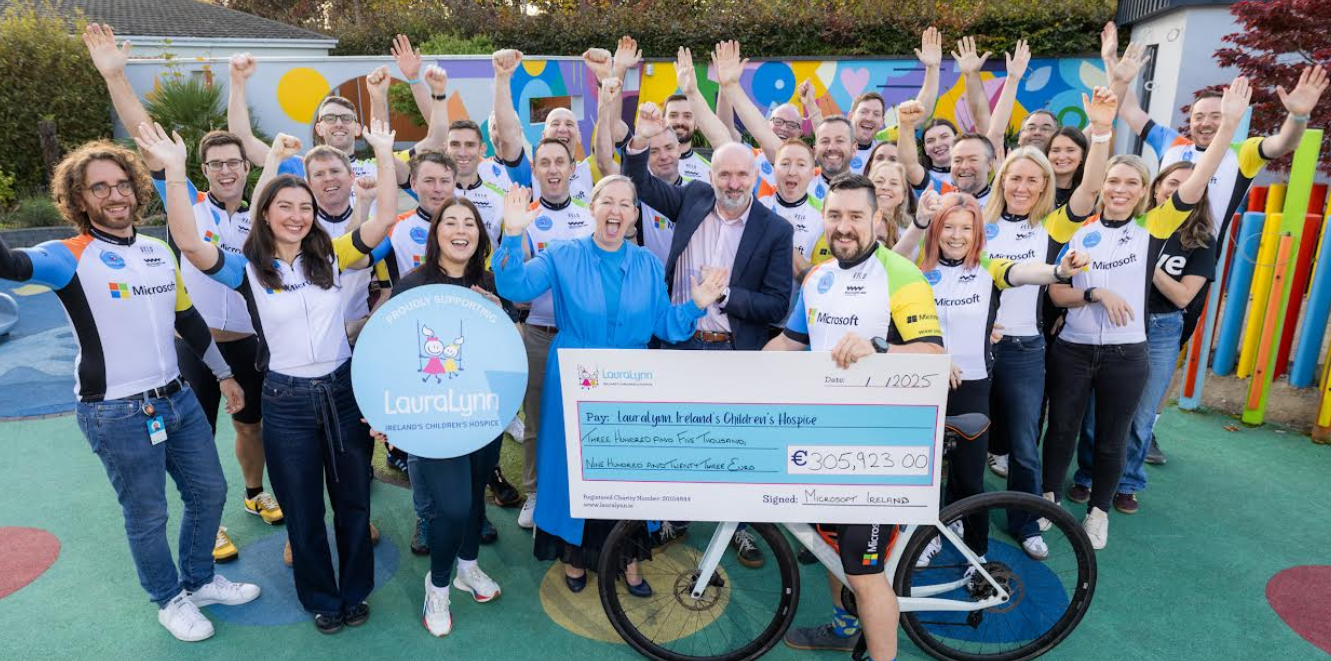
Microsoft Ireland employees have completed the final 360km stretch of the Wild Atlantic Way as part of their annual charity cycle, raising more than €300,000 – the most they’ve ever raised in a single year – in support of LauraLynn, Ireland’s only children’s hospice.
The charity cycle, which began in 2014 with just 10 cyclists, has grown into a major annual fundraising event. This year, 100 cyclists and support crew took on the three-day and 360kms cycling challenge from Letterkenny to Buncrana, County Donegal, battling wet weather, steep climbs, and winding roads – all in the name of supporting children with life-limiting conditions and their families.
Over the course of the last 12 years, the Microsoft team have raised more than €1.7 million for LauraLynn, having cycled more than 4,560km. The funds raised go directly to LauraLynn to help provide care in the Hospice, symptom management, short breaks, emergency and end-of-life care, as well as family supports and bereavement care to children with life-limiting conditions and their family units across Ireland.
In 2024 alone, LauraLynn supported 670 families across Ireland, with 119 new referrals accepted to its hospice service providing 1,677 nights of care to those who need it.
This year’s cycle is particularly significant as it coincides with Microsoft’s 40th anniversary in Ireland, reflecting the long-standing commitment of its employees to giving back and making a meaningful impact in their local communities.
James O’Connor, Site Lead at Microsoft Ireland and Corporate Vice President Microsoft Global Operations Service Centre, said: “We are so proud of our employees and supporters who continue to give their time, energy, and resources to the annual charity cycle. Completing the Wild Atlantic Way this year is a remarkable achievement and a fitting way to mark 40 years of Microsoft in Ireland, supporting NGOs and the communities we operate in.
“LauraLynn is a close neighbour and a cause that is very close to our hearts. We are continually inspired by the incredible work they do to provide care, comfort, and support to children with life-limiting conditions and their families. Taking part in this cycle allows our employees to give back in a meaningful way and support the important work undertaken by the LauraLynn team. To have raised €305,923 by way of this year’s cycle and €1,742,091 since the cycle began is truly an incredible achievement.”
Kerry McLaverty, Chief Executive at LauraLynn, added: “Every year, the Microsoft Ireland team shows up not just with bikes and gear, but with compassion and care. What they’ve achieved through wind, rain, and relentless hills is nothing short of inspiring. This year was especially meaningful, marking the final leg of their journey along the Wild Atlantic Way, a challenge they’ve taken on piece by piece over six years. Their commitment goes far beyond fundraising; it’s a message to the children and families we support that there is a huge community standing with them. This partnership is built on something special. A huge congratulations to everyone who took part.”
Cyberattacks are no longer rare events – they’re an everyday threat, and the cost of each breach is climbing fast. In the UK alone, over 38% of small businesses reported being targeted by a cyberattack in the past year, with many facing significant financial and reputational damage. At Support Tree, we’ve seen firsthand how vulnerable organizations can be when cybersecurity isn’t a priority. In this article, we’ll explore which industries are most at risk, why they’re targeted, and what steps businesses can take to protect themselves.
Why Cybersecurity Matters for Every Business?
Cybercrime isn’t reserved for big corporations with vast databases and deep pockets. Small and medium-sized businesses (SMBs) are often prime targets because hackers know their defences are usually weaker, and a single breach can cause devastating consequences.
Criminals don’t discriminate by size; they look for opportunity. For many SMBs, that opportunity comes in the form of outdated software, untrained staff, or a lack of robust security measures. The result? Cyberattacks can halt operations, drain bank accounts, and damage hard-earned reputations.
Some of the most common threats include:
Phishing – fraudulent emails or messages designed to trick employees into revealing passwords or payment details.
Ransomware – malicious software that locks you out of your systems until a ransom is paid.
Insider threats – intentional or accidental data leaks caused by staff or contractors.
Data breaches – unauthorized access to sensitive customer, financial, or intellectual property data.
The truth is simple: in today’s digital landscape, every business is a potential target. Taking action before a threat materializes is not just smart — it’s essential for survival.
High-Risk Sectors for Cyberattacks
Some industries are targeted more aggressively than others because of the type of data they hold, the financial reward for criminals, or the potential disruption an attack can cause. While no sector is immune, understanding where the highest risks lie can help businesses prioritize their defences.
Sector
Why They’re Targeted
Examples of Attacks
Compliance / Key Risks
Financial Services
Direct access to money and high-value personal data.
Data breaches at banks, fintech platform hacks, and insurance fraud cases.
PCI-DSS for payment security, FCA guidelines for financial conduct.
Healthcare
Patient data is highly valuable on the black market.
NHS ransomware incidents, private clinic data leaks.
Loss of patient trust, disruption to critical services.
E-Commerce & Retail
Payment card theft and account takeovers.
Online store breaches, fraudulent transactions.
Risks peak during major sales events like Black Friday.
Manufacturing & Supply Chains
Ransomware can halt production and operations.
Cyberattacks on suppliers are causing production delays.
Industrial espionage, theft of trade secrets.
Professional Services
Store sensitive client and financial data.
Law firm data leaks, insider data theft.
Insider threat risk, professional reputation damage.
Businesses operating in these sectors cannot afford to take cybersecurity lightly. The combination of high-value data, financial incentives for attackers, and regulatory pressure means prevention is far more cost-effective than recovery.
Overlooked but Vulnerable Sectors
When people think of cyberattacks, they often picture large corporations, banks, or hospitals. But some of the most vulnerable targets are in sectors that don’t make the headlines. These industries can be easier prey for cybercriminals because they often lack the same level of security resources as bigger players.
Here are a few examples where risk is high but awareness is low:
Charities & Nonprofits
Why at risk: Often run on tight budgets with limited IT investment.
Typical threats: Phishing emails aimed at staff and volunteers, breaches of donor databases, and ransomware disrupting fundraising events.
Impact: Loss of donor trust, reputational harm, and reduced ability to operate.
Education
Why at risk: Schools, colleges, and universities hold vast amounts of personal data on students, parents, and staff.
Typical threats: Ransomware shutting down systems, leaks of student records, and phishing attacks on staff.
Impact: Disruption to learning, safeguarding concerns, and compliance breaches.
Hospitality
Why at risk: Booking platforms and payment systems store valuable customer and financial data.
Typical threats: Point-of-sale (POS) system hacks, booking system breaches, and card data theft.
Impact: Loss of customer confidence, direct financial loss, and damage to brand reputation.
Local Government
Why at risk: Councils and local authorities manage critical public services and store sensitive citizen records.
Typical threats: Ransomware attacks causing service shutdowns, breaches of public databases, and phishing targeting officials.
Impact: Public service disruption, political fallout, and exposure of personal data.
The common thread across these sectors is the assumption of low risk a dangerous mindset that makes them attractive to attackers. Even with smaller budgets, implementing basic cybersecurity measures can dramatically reduce exposure.
Consequences of Poor Cybersecurity
Failing to protect your systems and data can have far-reaching effects, often more damaging than the initial attack itself. Understanding these consequences is the first step in appreciating why prevention must be a business priority.
Financial Loss
Direct costs: ransom payments, fraud, stolen funds.
Indirect costs: legal fees, system recovery, and hiring specialists to repair the damage.
Example: A ransomware demand might be £50,000, but the true recovery bill can run into the hundreds of thousands once lost revenue is considered.
Legal Penalties
Non-compliance with regulations like GDPR, PCI-DSS, or sector-specific rules can lead to hefty fines.
Example: Data breaches involving personal information can result in penalties up to 4% of annual global turnover under GDPR.
Reputational Damage
Customers lose trust when their data is compromised.
Negative media coverage can harm a brand’s image for years.
Example: Studies show that up to 60% of small businesses close within six months of a major breach due to lost customer confidence.
Operational Downtime
Cyberattacks can bring daily operations to a standstill.
Example: Manufacturing firms hit by ransomware have had to halt production for days or even weeks, leading to missed orders and broken contracts.
The reality is that the cost of prevention is far lower than the cost of recovery. Every business, regardless of size or sector, should view cybersecurity as a fundamental part of its risk management strategy.
Essential Cybersecurity Measures for All Businesses
No matter the size or industry, every organization can take practical steps to strengthen its defences. These measures don’t require a massive budget, but they do require consistency and commitment.
Implement Strong Password Policies
Require complex, unique passwords for all accounts.
Enforce regular password changes and ban password reuse.
Use Multi-Factor Authentication (MFA)
Add an extra layer of security to logins, even if passwords are stolen.
Prioritize MFA for email, banking, and administrative systems.
Regularly Back Up Data
Store backups securely, offline or in a protected cloud environment.
Test backups periodically to ensure they can be restored quickly.
Train Employees on Cybersecurity Awareness
Provide regular training on spotting phishing emails, social engineering tactics, and safe internet use.
Encourage a “stop and check” culture before clicking links or opening attachments.
Secure Endpoints and Networks
Use antivirus, anti-malware, and firewalls on all devices.
Keep all software and systems updated with the latest security patches.
Control Access to Sensitive Data
Restrict permissions so employees only access what they need.
Monitor and review access rights regularly.
Consider Cyber Insurance
Provides a financial safety net in case of a breach.
May also include access to rapid incident response services.
Cybersecurity is not a one-time project but an ongoing process. By embedding these practices into daily operations, businesses can significantly reduce the likelihood of becoming a target and be better prepared to respond if an attack does occur.
Cybersecurity is no longer an optional extra – it’s a core part of doing business in the digital age. Whether you’re running a financial institution, a local charity, or a growing e-commerce store, the risks are real, and the consequences of inaction can be devastating.
The good news is that you don’t have to tackle these challenges alone. At Support Tree, we help businesses of all sizes assess their vulnerabilities, strengthen their defences, and respond effectively to incidents. The earlier you act, the more control you have over your security and your future.
Don’t wait for a cyberattack to force your hand. Start by reviewing your current protections today, train your team, and put robust safeguards in place. Your customers, your reputation, and your bottom line depend on it.
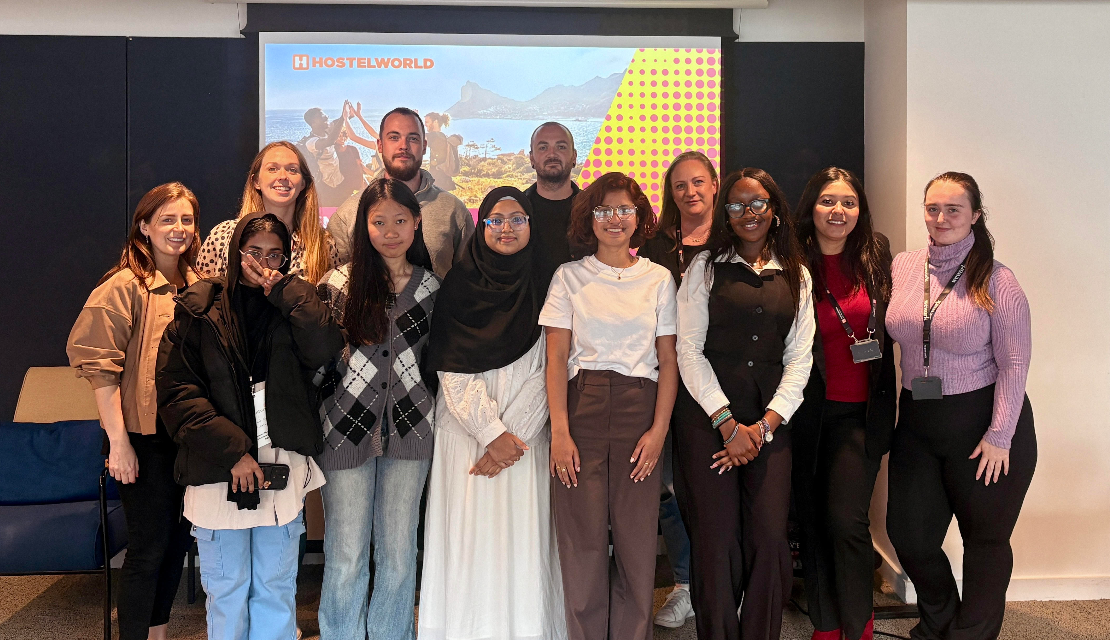
“If you had told me a few weeks ago that I’d be seriously considering a future in tech, I probably would have laughed, flipped my short hair, and gone back to minding my own creative business. But here we are,” says Fortunate, one of five teenage girls who recently completed a two-week placement at Hostelworld through the Teen-Turn programme.
Teen-Turn, an Irish charity, works to increase female participation in STEM by giving teenage girls from underserved communities practical, hands-on industry experience. Known as “Teenturnships,” these short placements pair participants directly with professionals in the field.
“The Teen-Turn and Hostelworld collaboration is seeing young women from underserved communities gaining the confidence, career insights, and skills needed to participate in the knowledge economy. The experience for the girls is particularly impactful because, as an Irish-founded company changing its industry through technology, they learn first-hand the potential of homegrown innovation in global business,” explains Joanne Dolan, Co-Founder of Teen-Turn.
While many of their peers were binge-watching the new Wednesday season or planning summer festivals, Fortunate, Lanyan, Sabah, Sania, and Janice spent their days in Hostelworld’s sunlit Dublin office. Their schedule was packed: machine-learning workshops, analytics sessions, meetings with just about every department — from finance to the data science team — and even a company-wide meeting with 200 employees joining from around the world.
“Standing in front of the entire company, even virtually, was definitely nerve-wracking,” says Sania. “My heart was racing, but as soon as I started speaking, I realised it was an incredible opportunity to put myself out there. This moment reminded me how important it is to project confidence even when you’re feeling nervous.”
Between training, there were also glimpses of office life — coffee runs, the unspoken competition for the best desk, and lunches by the Grand Canal. By the final afternoon, the five teenagers were presenting their projects, reflecting on the skills they had learned and the confidence they had gained.
“Hostelworld wasn’t just a workplace these past two weeks — it was a place where I laughed, learned, drank far too many lattes, and met people who genuinely cared about what I had to say,” says Fortunate.
Barry McCabe, Hostelworld’s Chief People Officer, says the benefits flow both ways:
“This is our third year partnering with Teen-Turn, and the benefits to both Hostelworld and the students continue to grow. Over two weeks, they explored roles across the business, building confidence and discovering new career paths. Their questions encouraged us to reflect on how we work and communicate. The programme is a great reminder of the value in opening up our workplaces and learning from the diverse perspectives of those just starting out.”
For Ireland, still grappling with a shortage of women in STEM despite tech’s explosive growth, Teenturnships offer more than skills. They chip away at systemic barriers, giving participants the confidence and experience to pursue careers that will shape the country’s future workforce.
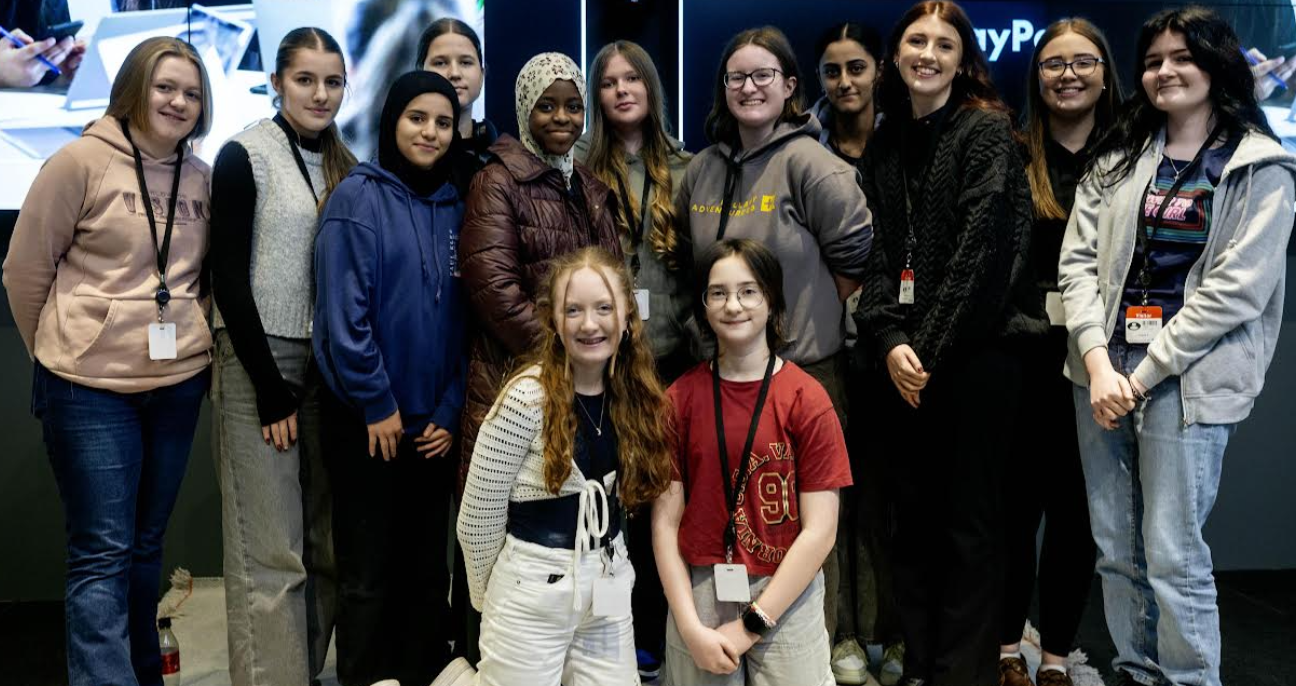
Teen-Turn and PayPal recently joined forces to host a coding and app development boot camp at PayPal’s Dublin campus. This boot camp saw approximately 50 participants from schools and colleges across Ireland working with mentors and volunteers from PayPal for the global Technovation competition.
Teen-Turn, a volunteer-led organisation and registered charity, aims to support course decision-making processes, advise on education and career options, and promote the accessibility of STEM career environments for girls from underserved and underrepresented communities. Meanwhile, Technovation is a tech education nonprofit that offers interactive learning programs in which young people and adults learn how to use technology to solve real-world problems.
Whilst many of the attendees are taking part in this year’s Technovation competition, some of the attendees on the day were from previous years of the competition and presented the apps they have created and the social enterprises they have launched through the Teen-Turn Incubator and Accelerator Program – including HerdSync and UNdump. In addition to coding and app development, boot camp participants worked with mentors and volunteers on business plans to support the rollout of their innovations.
The attendees came from a range of areas and schools including Archbishop McHale College (Galway), Belmayne Educate Together Secondary School (Dublin), Coláiste Bríde (Dublin), Coláiste Nano Nagle (Limerick), Dominican College (Galway), Dunmore Community School (Galway), Galway Educate Together Secondary School, Glenamaddy Community School (Galway), Kylemore College (Dublin), Millstreet Community School (Cork), Mount Carmel Secondary School (Dublin), Mount St Michael Secondary School (Mayo), Mungret Community College (Limerick), Presentation Secondary School Warrenmount (Dublin), Salerno Secondary School (Galway), St Jarlath’s College (Galway), St Patrick’s Comprehensive School (Clare), and St Vincent’s (Cork).
Speaking about the event, Jacquie Murphy, Munster Co-ordinator with Teen-Turn, said: “We were blown away by the number of mentors in attendance to work with the girls on the day! The range of expertise was second to none, as was the warm welcome and friendly atmosphere. The girls were given expert advice, help and encouragement to make significant progress on their apps.
“Working with mentors in the STEM industry, including leaders such as PayPal, gives the girls an opportunity to visualise themselves in those roles in the future. Visiting the campus is an invaluable experience that many girls would not get to do as a second-level student in Ireland. We are incredibly grateful to the team at PayPal for their work on this boot camp visit.”
Siobhan Grogan, Community Impact lead for Dublin, PayPal, added: “We were delighted to host the Teen-Turn Technovation event at our Dublin campus. The talent and potential of the participants were truly awe-inspiring, with their innovative thinking impressing even our most experienced colleagues! Their passion, entrepreneurship, and determination, combined with the incredible support from our employees, made for an unforgettable experience. The future is certainly in great hands with the next generation.”
At PayPal, Employee Community Impact is important as a means of both helping the communities in which the organisation operates and empowering employees. Every year, PayPal employees make a positive impact through volunteering, charitable giving, and other engagement programmes. In 2023, PayPal employees contributed more than 118,000 volunteer hours in their local communities. The company’s ongoing commitment to making employee impact opportunities more accessible resulted in 67% of PayPal employees globally mobilising to support their communities.
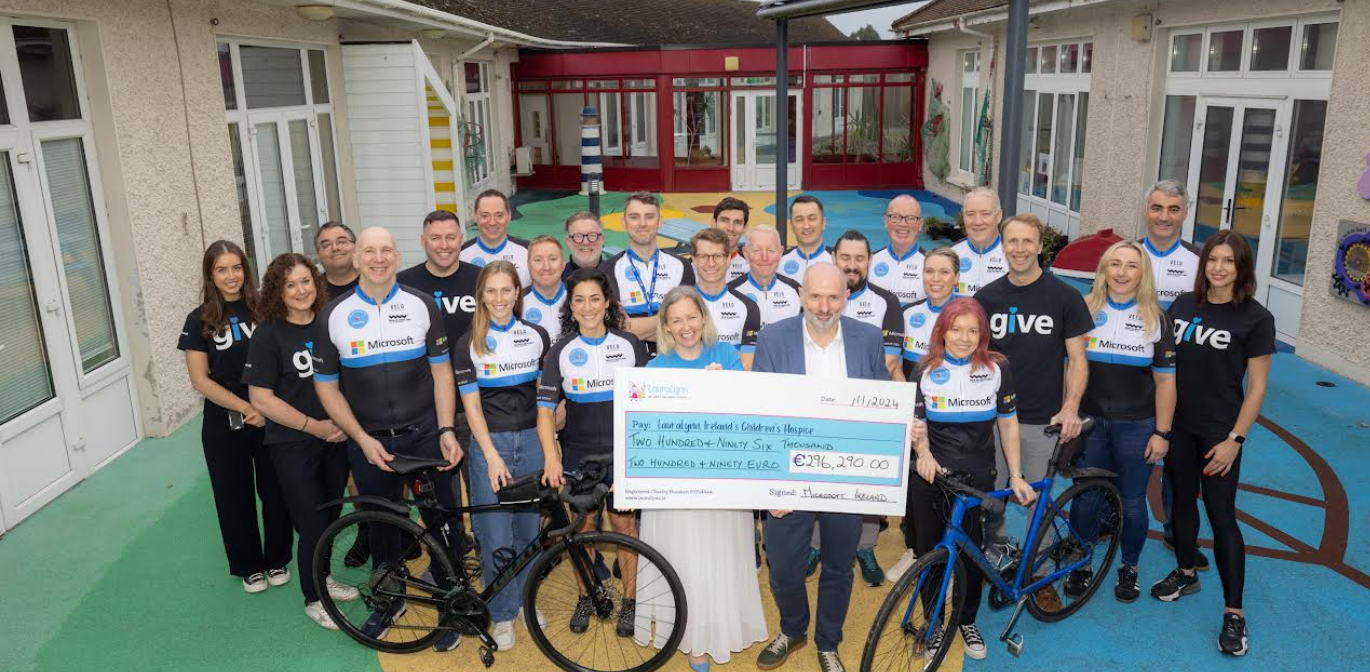
Building on a decade long legacy of giving and community, Microsoft Ireland employees have once again completed their annual charity cycle along the Wild Atlantic Way, raising over €296,000 this year for LauraLynn, Ireland’s only children’s hospice.
Now in its 11th year, the annual fundraising challenge brought together 105 cyclists and support crew who over the course of three days undertook a 360-kilometre journey from Ballina, Co. Mayo, to Letterkenny, Co. Donegal.
Since its launch in 2014 with just 10 participants, the Microsoft Ireland annual charity cycle has raised over €1.4 million for LauraLynn. The vital funds help to support LauraLynn’s work in providing palliative care and support to children with life-limiting conditions and their families. This includes expanding the reach of services LauraLynn offers, including symptom management, planned short breaks, emergency and end-of-life care, crisis care and bereavement support.
In more recent years, this expansion has seen LauraLynn’s hospice care being provided to children and their families in their own home. LauraLynn has added two new community teams in Cork and Galway, and it has been able to extend the reach of the Dublin team throughout the greater Leinster region. In 2024 LauraLynn provided 2,471 community visits across the country.
For this last cycle the Microsoft team set out with an ambitious goal of raising €100,000 but proudly exceeded it due to the team’s deep commitment to the hundreds of families who benefit from LauraLynn’s services.
James O’Connor, Microsoft Ireland Site Leader, and Corporate Vice President of Microsoft Global Operations Service Centre said: “The Microsoft Ireland team and giving spirit consistently go above and beyond for LauraLynn, one of our closest neighbours to our campus in Leopardstown, and this year has been no exception. Our team of cyclists and volunteers have cycled more than 4,400kms over the past 11 years, raising over €1.4m over that period. The annual cycle is Microsoft’s way of recognising the vital work undertaken by this very special charity. With more than 600 families relying on LauraLynn’s care across Ireland, the additional funds raised this year – more than €296,000 – will go directly towards expanding services for the increasing number of children and families seeking support.”
Kerry McLaverty, CEO of LauraLynn, commented: “The unwavering commitment and generosity shown by the Microsoft Ireland team year in and year out is incredible. The long-term support provided by their employees has helped us to make a lasting impact over the past decade and the funds raised this year will allow us to continue to meet the needs of children and families who avail our services and activities across the country including in newly expanded areas like the West, Northwest, and Midlands. Dedicated corporate supporters like Microsoft are central to our ability to grow and enhance our services year after year, supporting more and more children and their families across Ireland.”
In addition to Microsoft Ireland’s annual fundraising cycle, Microsoft also donates software and provides training to the charity, and Microsoft employees regularly volunteer their time at LauraLynn House, lending support to the hospice and its mission to improve the quality of life for children with life-limiting conditions.
A charity supporting families affected by stillbirth has received a €1,000 donation from the team at Amazon’s fulfilment centre in Dublin.
Féileacáin was formed by a group of bereaved parents to offer support to families affected by stillbirth or neonatal loss. The charity provides hospitals in Ireland with a ‘Gifts of Remembrance’ service which includes memory boxes, clay imprints, sibling support and more.
The donation from Amazon will be used to provide memory boxes to Maternity and Children’s Hospitals that are then gifted to parents after the loss of their baby.
Darragh Kelly, General Manager at Amazon in Dublin, said:
“Experiencing the loss of a child will never be an easy journey but with the right support and guidance, families have a safe space to grieve. Féileacáin is run by an amazing team of staff and volunteers who give everything to support families in the community. We hope that this donation can help support the important work they do across Ireland.”
Joe Monahan, an employee from Amazon in Dublin who nominated the charity for support, said:
“Féileacáin is a charity very close to my heart. The endless support the charity’s volunteers provide is outstanding and can be such a blessing for people experiencing the loss of a child. I’m pleased Amazon is showing their appreciation with this donation.”
Nina Doyle, from Féileacáin, added:
“Féileacáin relies on the support of the community to function, and without donations like this, we couldn’t provide our vital services to individuals and families who need it. Thank you, Darragh and everyone at Amazon in Dublin, for believing in what we do.”
The donation to Féileacáin was made as part of Amazon’s programme to support the communities in and around its operating locations in Ireland.
Since opening its doors one year ago, the Dublin fulfilment centre has supported many community organisations locally, with donations totalling €46,000. Charities supported by the team at the fulfilment centre include Cliona’s Foundation, Jigsaw and LauraLynn Children’s Hospice.
The Amazon fulfilment centre in Dublin, the first of its kind in Ireland, opened in August 2022 providing more than 500 new permanent jobs. The 630,000 square foot centre at Baldonnell Business Park in Dublin holds millions of items that are picked, packed and shipped to customers across Ireland and the rest of Europe.
Amazon provides competitive pay, excellent benefits and a modern, safe and engaging work environment for its employees. Amazon pays all its employees in Dublin, whether they are full-time, part-time, temporary, or seasonal, at least €14.25 per hour employees are offered a comprehensive benefits package including include private medical insurance, life assurance, income protection and an employee discount as well as a company pension plan.
Over the past decade, almost 20 million meals, or 7,900 tonnes of food, have been redistributed to people living in food insecurity across Ireland, thanks to Tesco Ireland’s Surplus Food Donations Programme. On average, Tesco Ireland redistributes and donates up to 40,000 meals every week to over 350 charities across the country.
New research commissioned by FoodCloud, a social enterprise with a mission to transform surplus food into opportunities, shows that families with children are the single largest group of people accessing donations from Tesco Ireland’s Food Surplus Redistribution programme.
According to the study, conducted in July of this year, families with children make up almost half (47%) of all those accessing food donations, while three quarters (75%) of community groups, who distribute surplus food, report that they have experienced an increased demand for food in the last six months.
In ten years of partnership, diverting this surplus food from going to waste to those in Irish communities who need it, Tesco has significantly reduced emissions associated with the processing of this waste.
Working with FoodCloud and Olio, as well as over 350 local charitable and voluntary groups nationwide, Tesco redistributes surplus food at the end of each day to those who need it most in our communities. This food is perfectly edible but because it is nearing its use by date, it will be removed from the shelves in store. Typical donations comprise fruit and vegetables, bakery goods, meat and more.
In 2013, Tesco Ireland became the first retailer to partner nationally with FoodCloud, and this year the two organisations are celebrating 10 years of working together. The programme, which began in one Tesco Express store on Talbot Street in Dublin city, is now in operation across Ireland, and has since expanded into the UK, Czechia, and Slovakia.
Marking this important milestone, Tesco Ireland Communications Director, Rosemary Garth said: “We are very proud of what has been achieved since we launched our national Surplus Food Donations Programme 10 years ago. As a grocery retailer we have no time for waste and are absolutely committed to ensuring that no good food goes to waste when there are people in our communities who need it.
Since we launched this programme, which is powered by our partners FoodCloud and Olio, we have provided almost 20 million meals to the most vulnerable in our communities. This has enabled the charitable and voluntary sector in Ireland to reduce their food bills by over €23 million, which, according to FoodCloud, has empowered them to invest in providing an even greater level of support services in towns and cities nationwide”.
Co-founder of FoodCloud, Aoibheann O’Brien said: “Tesco’s commitment to eliminating edible food waste from their stores has positioned us as a global leader in tackling food waste. Through our strong partnership with Tesco, we have continued to grow our impact, innovate, and push boundaries around what is possible around food redistribution. We have worked together to reduce food waste for 10 years, expanding across four countries.”
A group of Amazon employees from Amazon sites and offices across Ireland have participated in a cycling challenge between Cork and Dublin to raise money for two children’s charities.
Team members from Amazon’s fulfilment centre in Dublin, Amazon Web Services (AWS), Amazon offices in Dublin and Amazon Customer Services (ACS) in Cork, joined forces on a charity cycle for Cliona’s Foundation and Jack and Jill Children’s Foundation.
The group commenced the 400-kilometre cycle, in recognition of the 400,000 children diagnosed with cancer each year, from the ACS headquarters in Cork, finishing the route at the fulfilment centre in Dublin. The team arrived at the fulfilment centre after three days, raising €22,000, including a €5,000 donation from the fulfilment centre in Dublin, which will be divided between Cliona’s Foundation and Jack and Jill Children’s Foundation.
Cliona’s Foundation works across Ireland to support families who are dealing with financial issues whilst caring for a child with life-limiting illnesses. The foundation was set up after the passing of Brendan and Terry Ring’s daughter, Cliona, from an inoperable brain tumour. In honour of their daughter, they have helped over 1,200 families across Ireland.
In memory of their son, Jack, Jonathan Irwin and Mary Ann O’Brien set up Jack and Jill Children’s Foundation to support families across Ireland who are in the same position they were. The charity provides in-home nursing care and respite support for children with severe to profound cognitive delay. Jack and Jill Children’s Foundation has helped more than 2,600 families across Ireland.
Darragh Kelly, General Manager at Amazon’s fulfilment centre in Dublin, said:
“We couldn’t be prouder of the teams from Amazon sites across Ireland who took part in the fundraising cycle from Cork to Dublin. This was the first-time representatives from all sections of our business in Ireland came together for a fundraising event. We are pleased to be building our relationship with the teams from Cliona’s Foundation and Jack and Jill Children’s Foundation. All involved should be extremely pleased with the amount they raised for these two important charities.”
Dave Carney, an employee from Amazon who took part in the fundraising cycle, added:
“I am very proud to have completed the cycle alongside such an amazing team, as well as raising an incredible amount of money for Cliona’s Foundation and Jack and Jill Children’s Foundation. Weather conditions were tough on the last day, but to see everyone cheering us on at the finish line was incredible!”
Brendan, CEO and Co-Founder from Cliona’s Foundation, said:
“On behalf of the staff and volunteers at Cliona’s Foundation, I would like to say thank you to the Amazon teams in Dublin and Cork for their support. I would also like to thank and congratulate the inspiring team who took part in the cycle – their efforts mean so much to us.”
The donations to Cliona’s Foundation and Jack and Jill’s Children’s Foundation were made as part of Amazon’s programme to support the communities in and around its operating locations in Ireland.
Since opening its doors last year, Amazon’s Dublin fulfilment centre has supported many community organisations locally. Charities supported by the team at the fulfilment centre include Jigsaw and LauraLynn Children’s Hospice.
The Amazon team also donated €5,000 each to Cliona’s Foundation and Jack and Jill Children’s Foundation when the site opened in 2022.
The Amazon fulfilment centre in Dublin, the first of its kind in Ireland, opened in August 2022 providing more than 500 new permanent jobs. The 630,000 square foot centre at Baldonnell Business Park in Dublin holds millions of items that are picked, packed and shipped to customers across Ireland and the rest of Europe.
The donation of cryptocurrencies to charity is on the rise, and more people are choosing to donate without paying much attention to Bitcoin price or the price of other cryptocurrencies.
Crypto Giving Tuesday, a campaign created by The Giving Block, a crypto donation and fundraising platform for NGOs and individuals, had a 583 percent increase in digital asset donations in 2021 compared to 2020.
Cryptocurrency investments, such as Bitcoin, held for more than a year, may give a unique opportunity for philanthropic-minded individuals to use highly appreciated Bitcoin prices to achieve maximum effect with charitable giving.
Donating long-term held Bitcoin investments can help charities raise more money. First, you may be able to avoid paying capital gains tax if you sell at any Bitcoin price yourself and donate the earnings, potentially increasing the amount available for charity by up to 20%. Second, if you list deductions on your tax return rather than accepting the standard deduction, you may be able to claim a fair market value from your Bitcoin price charitable deduction for the tax year in which the donation is made, and you can choose to use the savings to give more.
Many prominent charities and foreign relief organizations, such as the American Red Cross and Save the Children, have established systems to accept cryptocurrencies donations or use platforms that allow them to turn them into cash quickly. Smaller organizations, which account for the vast majority of registered NGOs, are attempting to figure out how to accept cryptocurrencies donations and whether it makes sense to do so.
Donating with cryptocurrencies is appealing because it allows donors to avoid paying capital gains tax. If donors convert the virtual currency to cash before giving it away, they will be liable to the tax, which means less money will go to their chosen charity. This is widely regarded as an added benefit.
According to cryptocurrency owners who have donated parts of their assets to charity, tax savings was a primary motivation behind their crypto gifts. Many investors said they had trouble locating organizations that would accept the virtual currency, which could be risky for charities to hold.
What is the Best Way to Donate Cryptocurrency to a Charity?
Due to the difficulty of setting up a digital wallet, most charities cannot accept direct cryptocurrency donations.
If a donor creates a wallet for a charity but keeps the keys to the wallet, it may not be deemed a donation. Instead, a charity can accept Bitcoin donations through a third-party processor or a donor-advised fund.
For a nominal Bitcoin price charge, 1%, third-party processors like Crypto for Charity facilitate cryptocurrency payments to nonprofits. On behalf of the charity, the processor turns the donation into cash.
For example, the Center for Excellence in Education (CEE), a nonprofit organization that promotes scientific and math programs and competitions for high school students and instructors, has recently begun taking Bitcoin and other cryptocurrencies through Crypto for Charity.
How Bitcoin Intends To Aid Cryptocurrency Donations
Bitcoin can be converted to cash and invested by a donor-advised fund that accepts Bitcoin donations, such as the Fidelity Charitable Gift Fund. The donor can take a charitable tax deduction and then recommend a particular charity to whom their donation should be directed.
Bitcoin, like stocks and other assets, can be donated to charity. Although donating cryptocurrency can be a little difficult, Bitcoin aims to bridge the gap between charities and cryptocurrencies donations.
If taxpayers send Bitcoin directly to a charity, they can avoid paying capital gains taxes while claiming the full payment as a charitable deduction. The difference between the purchase Bitcoin price (the basis) and the selling price is capital gains.
If a taxpayer sells Bitcoin and contributes the after-tax proceeds to charity, the capital gains will be subject to either short-term or long-term capital gains taxes, depending on how long the taxpayer held the Bitcoin before selling it. Short-term capital gains are taxed as regular income at 10% to 37%. Long-term capital gains tax rates of 0%, 15%, or 20%, depending on the amount of taxable income, will apply if they kept the asset for at least a year.
If you list your deductions, you can claim a charitable deduction based on the amount of money you donated. Otherwise, the Taxpayer Certainty and Disaster Tax Relief Act of 2020 limits them to a $300 (single) or $600 (married filing jointly) above-the-line charitable deduction.