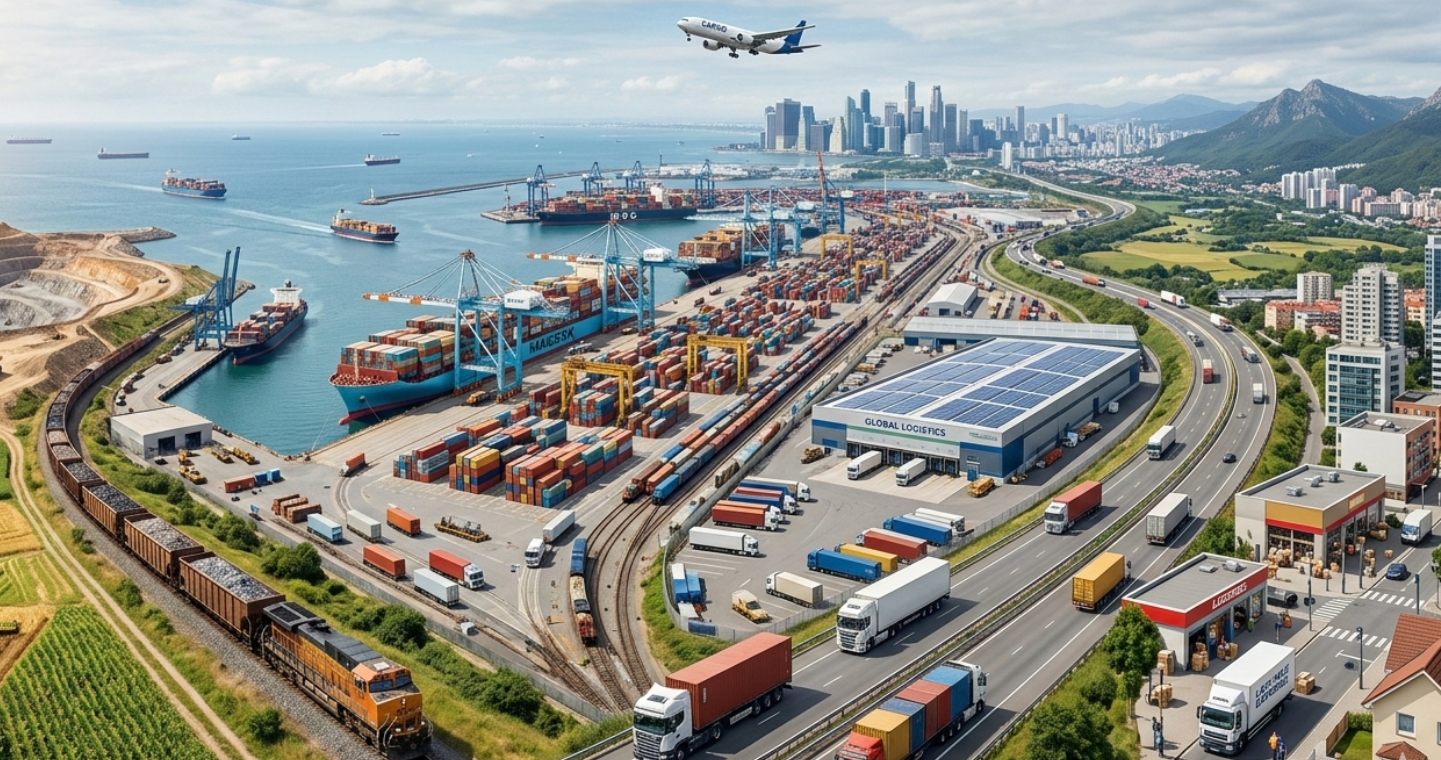
3 in 10 Irish businesses say supply chain disruption has worsened in the last five years

Three in ten (30%) Irish business leaders believe that supply chain disruptions have worsened in the past five years. The rising cost of materials is cited as the biggest supply chain threat being currently faced by Irish businesses, with more than six in ten (63%) of Irish business leaders stating this to be the case. Tariffs and cyber threats were also found to be major supply chain risks currently faced by Irish organisations (60%).

According to results of new research into business supply chains, conducted by the global insurance brokerage, risk management and consulting firm, Gallagher, one in ten (10%) Irish businesses expect supply chain issues to worsen in the next five years.

The results of the research, which are unveiled in a new global supply chain research report, provide a comprehensive view of the concerns, strategies, and risk management needs of business leaders in today’s uncertain world. The report, Supply Chains, Redrawn: Lessons from Business Leaders Across Industries, is informed by views from company directors in seven countries, across a broad cross-section of business sizes and industries. Ireland and the UK are two of the seven countries included in this report.

Other risks to supply changes as highlighted by the research include natural disasters/climate change (57%); geopolitical risks (50%); and labour disruptions (50%).

Commenting on the findings of the research, Laura Vickers, Managing Director of Commercial Lines for Gallagher said:

“Some of the biggest supply chain disruptions ever experienced have arose in recent years. These include the Covid 19 pandemic, the 2021 Suez Canal blockage, the Russian-Ukraine war, and recent extreme weather events and natural disasters. So, it’s no surprise that supply chain issues have really come to the fore for businesses worldwide in recent years, and Irish businesses are facing these challenges as much as others.”

Table 1: Current and potential supply chain risks faced by Irish businesses

Looking Ahead

Irish business leaders are slightly more optimistic than their UK counterparts – one in ten (10%) Irish business executives expect supply chain issues to worsen in the next five years compared to almost one in five (19%) respondents in the UK.

Further highlights from the Gallagher report include:

  • Labour disruptions (labour movement, workforce mobility, or strikes) and human rights issues top the list of supply risks which Irish business leaders are expecting in the future, with more than four in ten (43%) Irish business leaders anticipating that each of these issues will pose a risk to their firm (see Table 1).
  • Four in ten (40%) Irish business executives expect sanctions and export controls to present a supply chain risk into the future, with a similar number (37%) citing cargo theft.
  • Interestingly, while the rising cost of materials and tariffs top the list of the supply chain risks currently facing Irish businesses, the research found that Irish business leaders expect these risks to subside in the future.
  • Only 27% of Irish executives expect the rising cost of materials to be a supply chain issue into the future, while 30% cited tariffs.

Managing future supply chain risks

Over six in ten (63%) business executives in Ireland are investing in technology – specifically digital tools, AI, or monitoring systems – to help improve oversight and responsiveness and help manage supply chain risks. This is a slightly lower number than in the UK, where almost seven in ten (68%) of business executives said they were doing so. More than seven in ten (73%) Irish business leaders are also looking to alter supplier relationships in some capacity, due to past, current, and predicted future supply chain disruption. This compared to 64% of UK respondents.

More than six in ten (63%) Irish business executives and 61% (UK) also confirmed that they are adopting onshoring[1], nearshoring or friendshoring to help manage the supply chain risks currently impacting their business. This reflects the growing concerns held by Irish business leaders around geopolitical developments.

Just over a quarter (28%) of Irish businesses who experienced supply chain losses in the last 12 months had insurance in place to fully cover losses, leaving many firms facing potentially substantial costs to bear. This figure is significantly lower than the response from businesses in the UK (with 46% of affected businesses having losses fully covered) and the global response (32%).

Ms Vickers added:

“Irish businesses aren’t alone in facing ongoing supply chain disruption, and many of the issues that are affecting trade here are global. Escalating geopolitical conflict, the rising price of materials, and an influx of cyberattacks all presented unique and complex challenges to businesses last year and continue to concern decisionmakers in 2026. The continued disruption underscores the need to consult a risk management advisor to assess individual concerns and source comprehensive risk management and insurance products that may help to boost financial resilience.”

Nokia supplies private wireless to Maersk’s fleet for real-time cargo tracking

Nokia today announced that it has signed a contract with Danish global integrated logistics leader, Maersk, to equip 450 vessels in its fleet with Nokia’s industry-leading private wireless network solutions. This important deployment is part of Maersk’s IoT connectivity platform, OneWireless, which offers numerous benefits to its customers, including real-time cargo tracking, enhanced supply chain visibility, and improved operational efficiency.

The evolving environment of logistics and maritime operations is uniquely complex and highly mobile, requiring resilient and flexible technology for real-time asset tracking and positioning. By transitioning to Nokia’s private wireless technology, Maersk will overcome the challenges of its current infrastructure onboard both its own and chartered vessels and gain access to increased scalability and future-proof connectivity.

The new unified mobile network powered by Nokia’s radio portfolio is designed to support numerous IoT devices and secure interoperability between private and public networks, ensuring Maersk customers’ cargo is reliably monitored at sea, port, or land. This is especially important for tracking parameters such as temperature and humidity for fruit and other perishables.

“With our next-generation connectivity platform, we will be able to offer our customers notable benefits, including real-time cargo tracking, enhanced supply chain visibility, and improved operational efficiency. This platform is designed to support thousands of IoT devices, ensuring optimal performance for reefer tracking and fleet IoT,” says Kjeld Dittmann, Head of Vessel & Cargo Connectivity at Maersk.

“Nokia’s technology leadership in private wireless goes far beyond just connectivity, as demonstrated by this major new contract with Maersk. Our Radio Access portfolio and MantaRay network management solution will deliver reliable, real-time, and future-ready mobile networks that will optimize Maersk’s marine operations. We look forward to working collaboratively with them on this important project,” said Tommi Uitto, President of Mobile Networks at Nokia.

The solution leverages Nokia’s small cells portfolio, including Nokia Shikra Remote Radio Heads (RRH) and compact baseband, along with custom-designed antennas. Each vessel has a small core connected to the radio, utilizing satellite communication for backhaul. Additionally, Nokia’s intelligent network management system, MantaRay NM, located in Maersk’s operations center, provides a consolidated network view for optimal monitoring and management.

The deployment is underway and is expected to be completed in the first quarter of 2026.

Multimedia, technical information, and related news

Product Page: Shikra remote radio heads

Product Page: MantaRay NM

Web Page: Private networks