Apple opens new Dublin Office and expands in Cork

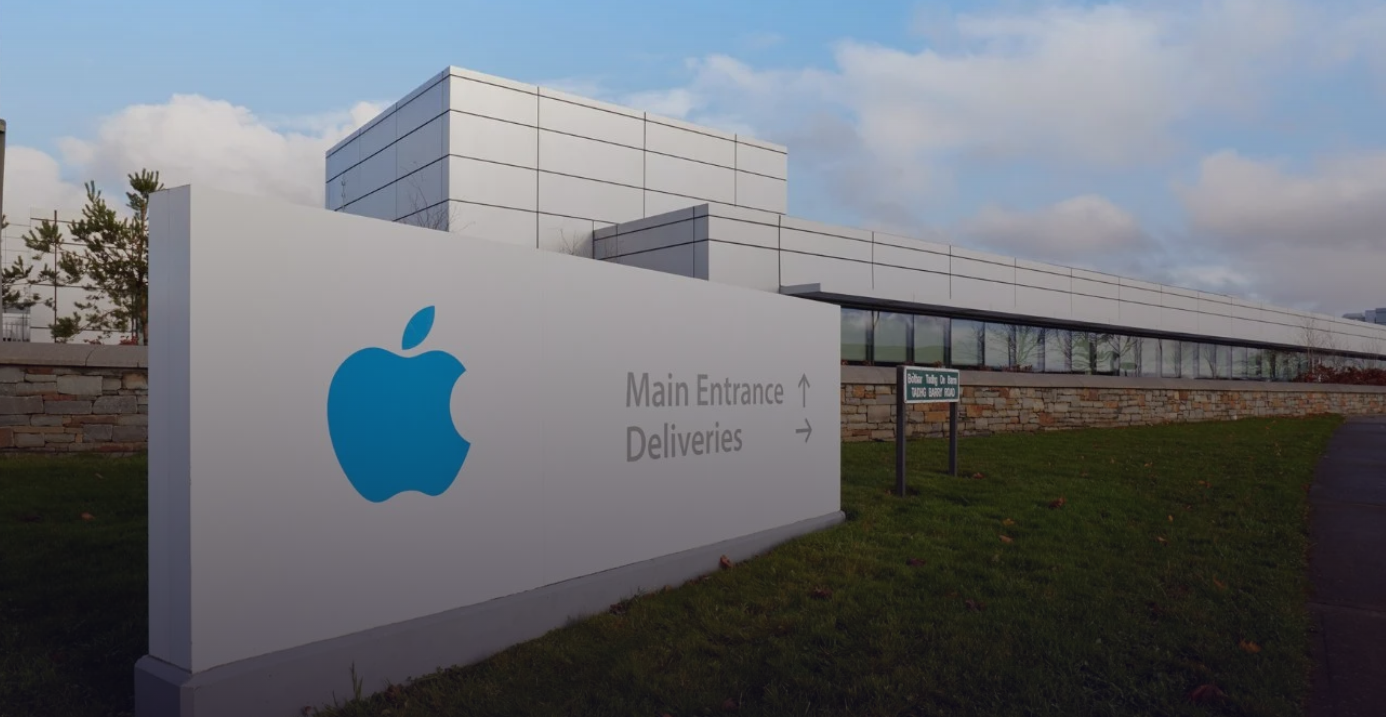
IDA Ireland today welcomes Apple’s official opening of its new Hollyhill 5 building in Cork, representing another strong endorsement of Ireland as a location for global innovation and advanced operations. The purpose‑built facility, which can accommodate 1,300 employees, reinforces Apple’s long-term commitment to the South West region and builds on more than four decades of continuous strategic investment in Ireland.

Taoiseach Micheál Martin TD said: “I’m delighted to open this state-of-the-art new facility in Hollyhill today and to see firsthand the major investment that Apple is making here. The contribution Apple has made in Cork and Ireland over the last 45 years cannot be overstated  – creating thousands of highly-skilled roles and continually investing in their Irish operations.”

Apple’s presence in Ireland has evolved significantly since 1980, growing from a small manufacturing facility to become the company’s European, Middle East, India and Africa headquarters. Its continued expansion reflects both the strength of the Irish talent pool and the competitive environment that supports global technology leaders.

Cathy Kearney, Vice President, Operations, Apple said: “We’ve called Ireland home for more than 45 years and are proud to continue expanding our operations and investing in our people and community here. Our 6,000 team members in Ireland play a critical role in supporting Apple’s customers in Europe and beyond and we’re delighted to build on this later this year with our new office in Dublin.”

IDA Ireland also congratulates Apple on the opening of its new Dublin office – the company’s first permanent presence outside Cork –  which will support the ongoing diversification and development of its Irish operations.

Dónal Travers, Executive Director, IDA Ireland, said: “Apple’s continued investment demonstrates clear confidence in Ireland as a strategic base for its global operations. The new Hollyhill 5 facility, together with Apple’s new Dublin City Centre office, further strengthens the company’s ability to grow, attract talent and innovate from Ireland. We look forward to deepening our partnership with Apple and supporting its continued success.”

From Classrooms to Careers: Dell Simplifies Learning With Purpose-Built Education PCs and Future-Ready Programs

We’re at a critical moment in education. New research and emerging technologies, such as Generative AI, have the potential to reshape how we teach and learn. With decades of leadership in education technology, Dell Technologies is supporting schools in this transformation – equipping students and educators with tools and programs designed for the AI era, ensuring they are prepared for the opportunities ahead.

This commitment is reflected in Dell’s expanded education portfolio – including new Dell Pro Education and Dell Chromebook devices – alongside programs that help prepare students for the future. These new PCs are purpose-built for modern learning environments: durable enough to withstand the school day, serviceable enough to maximize institutional investment and powerful enough to support the curricula.

Expanding the Portfolio: New Purpose-Built Devices for Education 

Dell is expanding its education portfolio with new devices designed to meet the diverse needs of modern learning environments.

These PCs are engineered for the realities of student life – ruggedized to military standards (MIL-STD 810H) with reinforced corners, spill-resistant keyboards and 180-degree lay-flat hinges tested to withstand tens of thousands of cycles. Powered by Intel N-Series processors, they deliver all-school day battery life and the performance modern curricula demand.

Serviceability is built in from the start, with customer-replaceable batteries, shared parts across models and up to five years of warranty coverage to maximize investments and reduce e-waste. Wi-Fi 6E connectivity, built-in security and robust device management give IT teams the tools they need to deploy and support technology at scale, while Dell’s Managed IT Services offer schools 24/7 monitoring, proactive issue resolution and dedicated support options.

The lineup includes:

  • Dell Pro Education 11 Laptop & 2-in-1 (Windows OS): Compact and lightweight with optional touch capability, ideal for younger students.
  • Dell Pro Education 14 Laptop (Windows OS) and Dell Chromebook 14 Laptop (Chrome OS): New 14-inch additions to the portfolio offer larger screen real estate for multitasking, well suited for high school students. Schools can choose the operating system that best fits their environment and curriculum needs.

This expanded portfolio joins the Dell Chromebook 11, launched late last year, giving schools more choice in how they equip their students and staff.

Shaping the Future Through Education Programs & Partnerships

Beyond technology solutions, Dell has focused on making lasting impact through collaboration with educators, non-profits, and community leaders to foster critical skills for the digital era. Recent examples include:

  • Student TechCrew (U.S.): A program that helps schools create a student-led helpdesk, teaching 9th -12th graders about technology and repair while supporting peers and school staff with tech issues. Learn how to start a Student TechCrew chapter at your school here.
  • Girls Who Game (U.S./Global): Fosters early interest in STEM fields while building leadership and critical thinking skills. This program was developed in partnership with Microsoft and Intel.  Learn more about Girls Who Game here.
  • Tech Career Circuit (Global): In partnership with Discovery Education, this initiative equips students in grades 6-12 with complementary hands-on resources, digital skills and AI-focused learning to prepare for in-demand IT careers. Access the Tech Career Circuit resources here.
  • Data Dunkers (Canada): A program that uses basketball statistics to teach students in grades 5-12 data science and AI skills, fostering critical thinking and career exploration. Learn more about how to bring Data Dunkers to your school here.
  • U.S. Presidential AI Challenge (U.S.): Dell is the technology partner to the U.S. Presidential AI Challenge, expanding access to free, on-demand training for K-12 students focused on tech literacy and workforce readiness. Learn more about the Presidential AI Challenge and access resources here.


A Legacy of Leadership in Education

“Dell’s leadership in education is rooted in a deep understanding of how learning evolves alongside the students and teachers who shape it,” said Kevin Terwilliger, head of product, Client Devices, Dell Technologies“When we design technology for the classroom, we look beyond utility to create tools that foster resilience, spark curiosity, and enable meaningful connections. Our expanded portfolio of purpose-built education devices reflects this commitment—offering durable, high-performing solutions that meet the real-world demands of students and educators alike.”

Availability and Pricing
The new Dell Pro Education and Dell Chromebook devices will be available for order in February 2026. Dell Chromebook 11 is already available at Dell.com. 

The Quiet Hardware Race Behind Crypto: Why ASIC Miners Are Getting Smarter

If you glance at crypto news, you might think only prices and rules matter. Out of sight, a far less dramatic contest is changing the whole field: the push to build hardware that is more efficient and more reliable.

That hardware is the ASIC miner — a chip built for one task, and nothing else. The idea has been around for years, but the pace of fresh designs keeps rising, pushed by high power prices, thin profit margins, and the need for data-centre-grade gear instead of home-built rigs.


ASICs in 2026: Less “Garage Tech,” More “Industrial Compute”

At the start, anyone could mine on a laptop over the weekend — now the job looks like running a small server hall. Current ASICs are heavy-duty boxes that pull large currents, pour out heat, and demand fast network links. Because of that, talk has moved away from “Which coin?” toward “What’s the real total cost of ownership?”

Operators today weigh the same points a classic IT manager would:

  • Energy efficiency (J/TH) — the watts needed for one unit of hash work
  • Thermal management — how to shift heat, guide airflow, hold down noise, and keep rooms cool
  • Uptime and reliability — firmware that stays steady, hash rate that holds, and parts that do not fail often
  • Logistics — import tax, warranty length, delivery dates, and whether spare boards are on the shelf

In short, ASICs now behave less like household electronics and more like dedicated infrastructure assets.


Why Efficiency Became the Main Battleground

Power bills remain the largest day-to-day cost. When the gap between “profitable” and “painful” rests on a few percent gain, every improvement counts. New generations of machines therefore aim at:

  • Cleaner power rails, as well as finer voltage steps
  • Tighter chip design and careful binning
  • Hash rates that stay high even when intake air reaches 45 °C
  • Smarter fans and extra thermal probes

Operators also see that efficiency is not only about cost — it decides who survives. As networks grow more crowded and rewards swing, wasteful rigs end up unplugged first.


The “Operational Layer” Is Now Part of the Product

A miner is no longer a metal crate you plug into the wall — the room around it decides success. Power rails, monitoring, and upkeep form one system. Many first-time buyers learn this the hard way.

Noise can equal a jet taking off. Heat can push a garage past 50 °C in minutes. Home wiring rarely meets the sustained load. One wrong firmware flag can turn a stable box into a reboot loop.

That’s why buyers now study the whole purchase journey — where the unit comes from, whether it is genuine, how it will be delivered, and who will help months later — not only the big hash rate number on the advert.

Half-way through your search, you will land on supplier pages that line up models and stock. If you want to buy asic miner gear by type and see what is actually on the market, a tidy list saves time before you pick the route that suits your site.


What Tech Buyers Should Check Before Purchasing

For a small farm, a hosted hall, or a corner of the house, treat the order like IT hardware, not a spur-of-the-moment buy.

Authenticity and provenance
Fake trackers, second-hand rigs dressed as new, or plain non-delivery happen every day. Stick with vendors that publish clear rules and let you check every step.

Power requirements
Note exact voltage, amperage, and plug shape — many miners need 220–240V lines and their own breaker, not the socket that feeds the kettle.

Cooling plan
Without a way to move hot air out, the unit will slow itself or die. Extractor fans or open racks are often mandatory.

Noise constraints
Many machines roar like a server hall — if neighbours are close, decide whether the room can stand the din.

Support and spare parts
Fans, power supplies, and control boards wear out — the ease of getting replacements counts far more than most people expect.


The Sustainability Angle Is Getting Real

Sustainability is no longer a slogan. Operators pipe waste heat into greenhouses, balance loads to spare the grid, or place farms where power is steady and clean.

This matches Europe’s push for energy accountability. In that light, “better hardware” is not only extra hash — it is more work per kilowatt, and a set-up that rising power tariffs will not shut down.


Final Thought: ASIC Mining Is Becoming a Tech Discipline

The biggest shift is cultural: mining is now viewed as a technical operations job. Victory rarely goes to whoever grabs the latest rig — it goes to teams that design power, cooling, buying, and risk the way professionals run a data centre.

For people who work with technology, the important point is straightforward. ASICs are just custom-built chips for one job, and the support network around them is growing up quickly. Treat them as basic equipment, not as a quick fix, and you will choose more wisely, stay away from costly errors, and create a system that keeps working for years.

Dwayne – New AI Vasculitis Chatbot

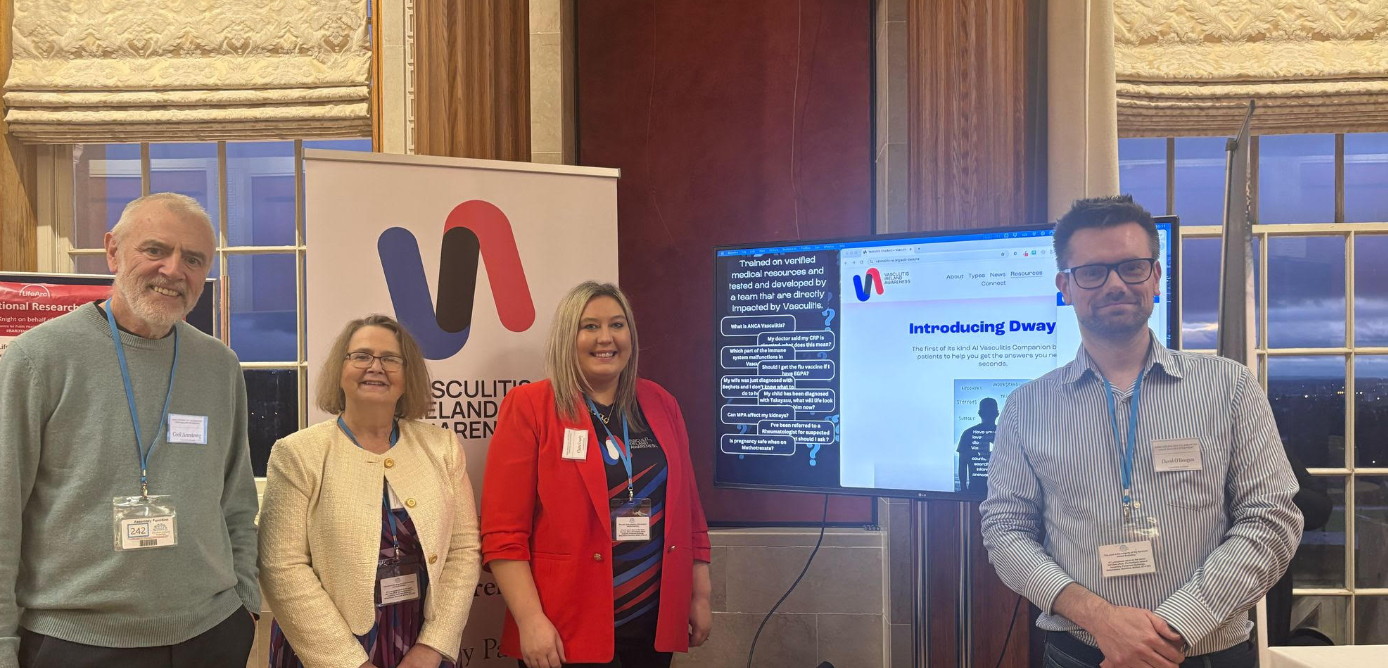
Meet Dwayne, a new custom-built AI chatbot designed to provide crucial support and information to those affected by vasculitis. Named in honour of Dwayne, a man who tragically lost his life to the disease, the chatbot was created in collaboration with Vasculitis Ireland Awareness (VIA). Dwayne is trained on verified content from the VIA website, the Vasculitis UK website, and other documentation to offer accurate, accessible, and instant information. This initiative aims to bring the benefits of AI directly to patients, allowing them to find answers to their questions in seconds.
ReganByte is a Wicklow-based tech company specialising in custom AI solutions like chatbots and automation. The founder is David O’Regan, a former Product Manager (and a Cork-based musician in a past life) who spent 10 years in the corporate tech sector before setting up his own AI & Automation consultancy in 2024. He and his wife Ciara both know first-hand the effect that a rare disease diagnosis like Vasculitis can have.
Ciara was diagnosed with Vasculitis in 2021 after many years of confusing and sometimes debilitating symptoms. She is also now permanently visually impaired after suffering a sudden bilateral haemorrhage during a meeting at work. It took countless visits to doctors and consultants and an almost endless list of tests to arrive at Vasculitis, and yet her journey continues still with changes to medication and the constant threat of another flare.
Vasculitis is a rare and often misunderstood condition that causes inflammation of blood vessels, leading to serious complications. According to Vasculitis Ireland Awareness, many patients struggle to access reliable information before, after and in between their consultant visits. AI in healthcare has made significant and exciting progress in the areas of flare prediction and diagnosis, but patients still struggle to understand their own condition and are often left confused and without answers.
By carefully limiting Dwayne’s training data to trusted and verified sources, ReganByte ensures that patients and caregivers have access to up-to-date, accurate information in a matter of seconds without having to sift through mountains of data to find it.
When I was diagnosed with vasculitis, I experienced first-hand how difficult it was to find the right information and support,” said Ciara. “Dwayne is more than just a chatbot. It’s a tribute, a source of reassurance, and a tool to help others with rare diseases find answers to their questions.” David added: “We see this as just the beginning. AI can revolutionise how rare disease communities access support, and we’re excited to see what else we can do with this technology.”
Looking ahead, ReganByte plans to expand Dwayne’s impact by partnering with other rare disease charities and health organisations to develop similar AI-powered solutions tailored to their needs. These are low cost but high impact solutions that can really make a difference and help organisations stand out and reach their members quicker.
Unveiled at a Northern Ireland Rare Disease Partnership event in Stormont Parliament Buildings in Belfast on Feb 26th, Dwayne will be officially released on Feb 28th, International Rare Disease Day.
Try it out at www.vasculitis-ia.org/ask-dwayne or reach out to ReganByte at david@reganbyte.com for a free demo or to discuss how this could help your organisation.