The AI Avatar Generator Revolution: How Brands Are Building Virtual Identities at Scale

The AI avatar generator has evolved from experimental novelty to essential business infrastructure. Content creators, marketing agencies, and global brands now rely on AI avatars to produce studio-quality images and videos at a scale that traditional photography cannot match. Research shows the AI avatar generator market reached USD 1.27 billion in 2024, forecasted to grow at a CAGR of 34.6% through 2033 — reflecting genuine commercial adoption across industries, not speculative hype.

The broader AI avatars market was valued at USD 9.78 billion in 2025, projected to reach USD 142.62 billion by 2035. Year-over-year growth of 30.9% between 2024 and 2025 signals an acceleration phase, with cloud-based AI avatar generators dominating at USD 4.46 billion of 2023 market value. These figures reflect a structural shift in how organisations approach content creation and brand identity.

What Is an AI Avatar Generator?

An AI avatar generator is software powered by generative AI that creates digital avatars — synthetic visual personas customisable across images, videos, and marketing materials. Unlike stock avatars assembled from templates, modern AI generators produce lifelike avatars with hyper-realistic skin textures, natural facial expressions, and anatomically correct hands — addressing quality problems that made earlier AI-generated content unconvincing.

From Static Images to Lifelike Digital Versions

The evolution from stock avatars to lifelike digital versions is the defining shift in AI avatar creation. Today’s platforms maintain character consistency across hundreds of generated images — same face, same identity, across different outfits, scenes, and lighting. Character consistency is the technical achievement that unlocked commercial-scale avatar deployment. Without it, AI avatar generators produce inconsistent outputs that undermine the value of any synthetic brand persona.

How Generative AI Builds Realistic Avatars

Generating realistic AI avatars requires multiple model components: a base generative AI engine, an identity-preservation module that locks facial features across outputs, and separate subsystems for avatar styles, body proportions, and clothing variation. The result is an AI avatar generator where non-technical users access advanced AI technology through simple template selection — no prompt engineering required.

Custom Avatars Versus Stock Avatar Approaches

Custom AI avatar creation differs fundamentally from using stock avatars or pre-built persona libraries. Custom avatars are designed with specific age ranges, facial features, hairstyles, and avatar styles aligned to a brand’s target demographics. Personalised avatars for different audience segments — each representing a distinct identity — can be deployed simultaneously across campaigns, bringing targeting precision to creative production.

Why AI Avatar Generators Are Transforming Content Creation

The business case for AI avatars is fundamentally economic. Scale content creation across multiple social media channels, seasonal campaigns, and language markets — and traditional photoshoot logistics collapse under volume. AI avatar generators decouple content creation volume from production cost. Once avatars are created, the marginal cost of additional avatar videos, personalised avatars, and promotional videos approaches zero.

Video Creation Without a Production Team

Video creation is the highest-value application for AI avatar generators. Short video dominates social media engagement, yet video production remains the most resource-intensive content format. AI avatar video generators produce dynamic videos — talking avatars, promotional videos, lifestyle content — from a single image, in seconds. Creating personalised videos at scale, tailored to different platform formats and audience cohorts, is now a single-operator workflow rather than a full production team effort. Traditional video production costs are eliminated entirely.

Social Media Content Demands and AI Avatars

Social media algorithms reward consistent posting volume. AI avatars allow creators and brands to maintain daily posting cadences with studio quality videos, without proportional increases in budget. Content creation workflows that previously required photographers, editors, and production scheduling can now run from a single AI avatar generator platform. Independent creators and small businesses gain access to the same quality of content production previously available only to teams with dedicated creative resources.

Key Features of the Best AI Avatar Generators

Professional AI avatar generators share several defining capabilities that separate them from basic image editors. Evaluating these features determines whether a platform can serve real production requirements or only experimental use cases.

Character Consistency Across Every Avatar

Character consistency is the feature that makes AI avatars commercially viable. Without it, generated avatars show uncanny inconsistencies between images — undermining any synthetic persona strategy. The best AI avatar generators enforce consistency at the model level, so every avatar output — regardless of outfit, setting, or pose — maintains the same facial features and identity. This allows organisations to create avatars once and generate unlimited content variations without manual quality control between each output.

Realistic AI Avatars: Skin, Hands, and Facial Features

Realistic AI avatars depend on three technical capabilities: hyper-realistic skin rendering, accurate hand generation, and stable facial feature preservation across outputs. Skin quality — the rendering of pores, freckles, and natural lighting — distinguishes photo-realistic avatars from obviously artificial imagery. Hands represent the hardest technical challenge; most AI avatar generators produce anatomically incorrect hands that immediately identify content as AI-generated. Leading platforms invest specifically in hand generation accuracy as a core quality benchmark for realistic AI avatars.

Free AI Avatar Generator Options Versus Premium Features

The market separates into free AI avatar generator tools for entry-level use and premium paid plans for professional-scale production. Free versions provide core avatar creation with limited monthly output — basic avatar styles and lower resolution. Premium features required for professional applications include advanced avatar customisation, faceswap, voice cloning, and priority processing. For agencies managing AI avatars across multiple clients, and for e-learning courses requiring consistent talking avatar content, paid plans provide the volume and capability necessary for professional production.

Voice Cloning and Lip Sync for Talking Avatars

Voice cloning and lip sync extend AI avatars from visual to audiovisual. A talking avatar with perfect lip sync and human-like speech transforms avatar videos into active communication tools. Brands producing video content at scale can clone a consistent voice paired with lip sync accuracy, enable content delivery in multiple languages, and eliminate dubbing costs entirely. Voice cloning paired with consistent AI avatars enables brands to build a recognisable audiovisual identity that scales across every content vertical.

Avatar Generation Across Multiple Styles

Leading AI avatar generators support multiple styles — fashion editorial, lifestyle, portrait, urban streetwear, studio photography — across the same avatar identity. Multiple styles output enables a single AI avatar to match the aesthetic requirements of different platforms and campaign objectives. Artistic styles extend this further, enabling avatar creation for gaming, animation, and stylised marketing contexts. The availability of diverse avatar styles within a single AI generator platform determines its versatility across content verticals and audience demographics.

AI Avatar Video Generators: Beyond Static Images

AI avatar video generators represent the convergence of avatar creation and automated video production. Instead of generating static photo avatars, video generators animate the avatar — producing short video content, dance reels, promotional videos, and talking-head presentations from a single image source. The AI avatar video generator market is one of the fastest-growing segments within the broader AI avatar creation space.

Dynamic Videos for Social Media

Dynamic videos — content where avatars move, speak, and react — drive substantially higher engagement than static imagery on short-form video platforms. AI avatar video generators produce dynamic videos across libraries of predefined scenarios: product demonstrations, lifestyle vlog content, reaction videos, educational explainers. Each template outputs a final video featuring the user’s avatar, adapted to the selected scenario. Brands that previously produced weekly video content can now generate daily dynamic videos from a centralised avatar identity, maintaining consistent brand representation across every output.

Talking Avatar Technology for E-Learning and Professional Use

Talking avatar technology has particular value for e-learning courses, corporate training, and customer communications. An AI twin — a lifelike digital version of a specific instructor or brand representative — delivers course content with cloned voice accuracy across multiple languages, maintaining visual consistency across every module without additional recording sessions. Personalized videos in which the avatar addresses specific audience segments extend this capability to marketing and customer service. AI twin technology allows educators and brands to create video content at a volume that would be economically impossible through traditional video production methods.

Traditional Video Production Versus AI Video

Traditional video production involves location costs, talent fees, equipment hire, and post-production cycles spanning weeks. AI video generation produces comparable studio quality videos in seconds. For short video formats optimised for social media, the speed and cost advantage is decisive. Creating AI avatars for video production shifts creative effort toward concept and strategy rather than execution logistics — a fundamental reallocation of creative resources that benefits organisations at every scale.

How Brands Are Using AI Avatars in Marketing

Personalised Avatars for Campaign Targeting

Sophisticated brand applications use personalised avatars as campaign variables. Multiple avatar identities — different age ranges, facial features, and avatar styles — are deployed across different audience segments. Performance data identifies which avatar persona drives highest engagement and conversion for each cohort. This approach applies the targeting logic of programmatic advertising to creative production, enabling continuous optimisation of AI avatar selection based on real audience response data from social media, email, and paid channels.

Promotional Videos and Studio Quality Content at Scale

AI avatar generators produce studio quality videos for promotional campaigns at speeds that transform content marketing economics. Agencies report completing multi-piece promotional video campaigns — each version adapted to different platform format requirements — in hours rather than weeks. Promotional videos, avatar videos for product demonstrations, and personalised videos for audience segments are all produced from the same avatar identity, maintaining brand consistency across every output. The result is a fundamentally different model for content creation at scale.

The Market Opportunity in AI Avatar Creation

Market Growth and Regional Data

North America currently holds 37.1–39.2% of the global AI avatar market, while Asia Pacific is growing fastest at a CAGR of 39.1% through 2033, driven by gaming, social media, and expanding internet penetration across China, Japan, and India. The fragmented market structure — with no single dominant AI avatar generator yet established — creates sustained opportunity for specialised platforms serving specific use cases across content creation, e-learning, retail, and customer service applications.

Generative AI and Scale Content Creation

Generative AI is the underlying technology enabling this generation of AI avatar tools. Unlike rule-based systems that assembled avatars from predefined components, generative AI learns statistical patterns and synthesises novel outputs — enabling the hyper-realistic skin, consistent character generation, and lifelike videos that define current quality standards. Organisations that invest in AI tools for scale content creation establish compounding advantages: growing avatar content libraries that can be repurposed, versioned, and combined to generate new content without proportional cost growth. For agencies managing AI avatars across multiple clients, a centralised platform fundamentally changes content production unit economics.

A Platform Focused on Consistent AI Avatar Generation

Advanced AI Technology for Character Consistency

Among platforms addressing consistent character generation for commercial content, RYLA AI has built a particular technical focus on this challenge. With over 10,000 creators using the platform, more than 2 million AI avatars and images generated, and a content reach exceeding 50 million views across 120 countries, RYLA AI’s published metrics reflect deployment at commercial scale across multiple content verticals. Independent feature comparisons have rated the platform at 9.5 out of 10 overall, with character consistency, realistic AI avatars, and video generation identified as the platform’s standout capabilities versus generic AI image tools and other AI avatar generators.

Real Creator Outcomes with AI Avatars

Creator testimonials published on the RYLA AI platform include accounts of tripled social media engagement within two months of adopting consistent AI avatar content strategies, accounts reaching 100,000 followers in three months, and digital agencies managing 12 distinct AI influencer identities for clients simultaneously. These outcomes reflect a pattern consistent across creators and agencies that successfully integrate AI avatar generators into their content workflows: content velocity and brand consistency that would be economically impossible through traditional production methods.

Evaluating AI Avatar Generators for Professional Production

Lifelike Avatars Across All Output Types

When evaluating AI avatar generators for professional use, test lifelike avatar quality across all output types — not just static photo avatars. Studio quality videos, avatar videos for social media, and talking avatars for e-learning courses should all maintain equivalent visual standards. Platforms that produce excellent photo avatars but inconsistent video output reveal model limitations that surface only in real production conditions. Testing generate-an-ai-avatar workflows, avatar video quality, and talking avatar lip sync accuracy together provides a complete picture of production capability.

Avatar Customisation, Multiple Languages, and Professional Applications

Avatar customisation depth — control over facial features, age, body type, hairstyle, and avatar styles — determines whether a platform supports diverse campaign requirements or only a narrow template range. The best AI avatar generators combine custom avatar creation with video generation, voice cloning, and multiple language support. Multiple languages paired with voice cloning allow a single avatar identity to deliver content for a global audience — same face, same brand persona, localised message — without multilingual production teams. Professional applications across e-learning, retail, HR training, and social media marketing all benefit from this combination of avatar customisation depth and language flexibility.

The Future of AI Avatars and Digital Content

Human-Like Speech and Natural Facial Expressions

Human-like speech and natural facial expressions represent the remaining quality frontiers for AI avatar generators. Current platforms produce impressive results but retain subtle artificialities in vocal cadence and micro-expression rendering that trained observers can identify. Ongoing research in voice cloning and neural video synthesis is closing these gaps. Platforms investing in human-like speech and facial expression accuracy now will define the next generation of quality benchmarks for realistic AI avatars and lifelike videos across every content application.

AI Twin Technology and Endless Possibilities

AI twin technology — where generative AI creates a lifelike digital version of a specific individual, rather than a synthetic persona — represents the most advanced current application of avatar generation. AI twins deliver e-learning course content, respond to community questions at scale, and maintain consistent content cadence in multiple languages without the individual’s direct involvement. The endless possibilities of AI twin deployment, combined with continued advancement in generative AI capabilities, reinforce why the AI avatar generator market is positioned for sustained growth. As avatar generation quality continues to improve and costs continue to fall, the case for integrating AI avatars into content strategy grows stronger across every industry and audience segment.

Choosing the Right AI Avatar Generator: A Practical Checklist

Creators looking to create an ai avatar — whether building their own ai avatar from scratch or starting with a free avatar generator — should evaluate platforms against real production requirements. The ability to create custom avatars with consistently high quality avatar output, create realistic avatars with accurate hands and skin detail, and own an avatar persona that maintains identity across every output are the core criteria that separate professional platforms from basic tools. Owning your own avatar identity — a persistent, consistent digital persona — is increasingly a strategic asset for creators and brands building long-term audience relationships.

In evaluations comparing heygen ai avatars, Synthesia, and other AI avatar generators, artificial intelligence platforms that achieve character consistency while preserving a creator’s own voice and own ai avatar identity consistently outperform avatar generator ai tools that optimise for novelty over consistency. Practical factors also matter: maximum file size limits, output resolution, and credit allocation affect real production workflows. For agencies that need to create custom avatars for multiple clients or create an ai avatar at volume, these operational details determine which platform delivers sustainable value beyond the initial demo.

Conclusion

The AI avatar generator has become a core content infrastructure component for brands, agencies, and creators at every scale. With AI avatar creation market growth exceeding 34% CAGR, commercial adoption spanning social media to e-learning to customer service, and rapid technical improvement in character consistency and video quality, AI avatar generators represent a durable strategic investment. The fundamental value proposition — unlimited studio-quality content from a single avatar identity, at a fraction of traditional production cost — continues to strengthen as the technology matures and the market expands across new industries and use cases.

Prove Accelerates Global Innovation with Expansion of Ireland R&D Hub

Prove, the leader in digital identity, is expanding its Ireland operations to support global product development and growth, reinforcing the country’s role as a central hub for the company’s product development, culture and international growth. The company plans to invest more than $5 million in Ireland-based operations and create 50 jobs in the country, with many new opportunities opening this year. These efforts will strengthen Prove’s ability to deliver faster, safer and more frictionless digital identity experiences for businesses and consumers worldwide.

Since establishing operations in Ireland in 2022, Prove has rapidly scaled its Dublin presence, growing local headcount by 50% in the past six months alone. What began as a small regional footprint has quickly become a cornerstone of Prove’s global innovation engine, supporting customers across markets and enabling the company to meet the increasingly complex identity and fraud challenges facing enterprises worldwide.

Over the past year, teams based in Ireland have played a critical role in the rapid acceleration of innovation at Prove. During this period, the company launched several new solutions, including Prove Unified Authentication, ProveX and Prove Verified Agent, alongside foundational platform elements such as the Global Fraud Policy and the Prove Identity Graph.

Together, these innovations are redefining how businesses verify people, businesses and AI agents securely and at scale in an increasingly digital and AI-driven economy.

Prove’s technology today supports thousands of enterprises globally, including many of the world’s leading banks, fintechs, and global brands across industries. As Prove’s customer base continues to expand internationally, its Ireland-based teams play a growing role in supporting customers with global needs, helping ensure consistent, high-quality identity experiences across regions.

“The growth of our Ireland team has been an important chapter in Prove’s journey,” said Laura Brittingham, Senior Vice President of People at Prove. “The talent we’ve found there brings deep technical expertise and a collaborative, innovative and dependable spirit that has led to an outsized impact at Prove. There is no version of Prove’s future that doesn’t include Ireland at its center.”

Prove’s expansion in Ireland is supported by the Irish government through Ireland’s Foreign Direct Investment Agency (IDA Ireland). IDA Ireland is the national agency responsible for attracting and supporting foreign direct investment, partnering with global companies to drive job creation, innovation, and long-term economic growth across the country.

Commenting on the announcement, Peter Burke, Ireland’s Minister for Enterprise, Tourism and Employment, said: “I welcome Prove’s decision to expand its operations in Ireland. This significant investment and the creation of 50 new high-value roles reflect great confidence in Ireland’s talented workforce and in our strong environment for RD&I. Ireland is well positioned to support companies like Prove at the forefront of digital transformation. I wish all the team at Prove every success in the years ahead.”

“I am delighted that Prove is deepening its presence in Ireland through this investment and the creation of high-value roles,” said Michael Lohan, Chief Executive Officer of IDA Ireland. “Prove’s decision to expand its R&D and innovation footprint here highlights Ireland’s strength as a global hub for advanced digital identity, data, and technology development. This expansion underscores Ireland’s ability to support companies as they scale internationally, innovate at pace, and serve global markets.”

The expanded Ireland team will support a range of high-value roles across product, software engineering, research and development and data science. As Prove continues to scale globally, Ireland will remain a critical hub for advancing the next generation of identity solutions and supporting customers navigating the evolving digital trust landscape.

Software That is Improving the Customer Experience

Creating memorable experiences for customers is crucial for long-term success. Thankfully, there are a number of tools and solutions out there that are making it easier for businesses to prioritise the needs and preferences of their customers, improving brand interactions. 

With that in mind, here are just some of the pieces of software that are positively influencing customer experiences. 

Help Desks and AI-Powered Live Chats 

Help desks make it easy for businesses to manage and prioritise customer enquiries, meaning nothing gets missed and customers are always given the support and attention they need. And, AI-powered live chats offer 24/7 immediate support for customers with simple questions or issues, resolving them quickly and efficiently.  

Social Listening Tools and Feedback Forms 

Knowing what customers think of your brand and your offering is vital for improving your relationship with them. Feedback regarding what your customers do and don’t like can help you make more informed, customer-centric decisions on everything from website layout and usability to shipping and pricing. 

You can gather feedback from customers directly by incentivising them to complete surveys. For example, you could offer 10% off their next purchase in exchange for completing a feedback form. There are plenty of ways to do this too – you can leverage tools like SurveyMonkey or create a custom form on your website using a plug in. However, although you should invite feedback, remember that it’s unethical to incentivise positive feedback only!

Alternatively, you can use social listening tools, like Brandwatch, to gauge what people are saying about your brand online. This is an effective way to get open and honest feedback without having to offer incentives.  

HR and Internal Team Support 

The role of employee satisfaction in building positive customer experiences is more important than you might think. Happier employees are generally more loyal, hard working, and willing to go the extra mile for a customer, all of which can have a positive effect on customer satisfaction. 

Using tools like AI payroll software to ensure employees are always paid on time, shifts are allocated fairly, and bonuses are transparent, is just one of the many ways you can keep employees happy to indirectly improve the customer experience. 

Customer Satisfaction is the Key to Success 

Prioritising customer satisfaction by providing 24/7 support and resolving any issues effectively and in a timely manner, monitoring brand reputation and taking feedback on board, and keeping internal teams happy, are all highly effective ways to improve customer satisfaction.

80x More Transactions Than Ethereum – NFTs Are Moving Into Games

NFTs no longer function as speculative collectibles. They have evolved into digital assets, and increasingly into in-game assets with clear utility.

Ethereum-based collections dominate headlines with high-value trades and large aggregate volumes. This focus makes NFTs seem like speculative assets tied to broader crypto market cycles, but price shows only part of the market.

When you measure transaction activity, asset usage, and behavioral patterns, a different structure appears.

The 51 Games team collected and analyzed the data, and the results show that gaming NFT ecosystems – mostly operating on non-Ethereum chains generate 80-100 times more transactions than Ethereum-based NFTs. 

Source: The Block

This gap does not come from scale alone, it reflects a fundamental difference in how these systems operate. The NFT market has evolved into two distinct economies: a low-frequency, high-value layer and a high-frequency, utility-driven layer.


Structural Split: Premium vs Utility Economies

The data reveals a clear split between Ethereum and non-Ethereum NFT activity. Ethereum still dominates total trading volume and has historically accounted for more than 50% of the market.


This dominance comes from premium, collectible assets, which typically involve:

  • higher prices
  • lower transaction frequency
  • investor- and collector-driven demand

Gaming NFT ecosystems – mostly outside Ethereum – follow a different pattern:

  • lower asset prices
  • significantly higher transaction frequency
  • player-driven activity


Analysis shows that non-Ethereum gaming NFT activity is 4-6 times higher than Ethereum gaming volume

Source: The Block


This data points to a clear functional split:

  • Ethereum → speculative / collectible layer
  • Gaming ecosystems → operational economic layer

Transaction Intensity as a Primary Indicator

Transaction volume highlights the strongest difference between these systems.

Gaming NFT ecosystems operate at a much higher level of activity than Ethereum NFTs, driven by continuous in-game interactions rather than occasional trades.

In gaming environments, NFTs act as transactional primitives. Players constantly buy, sell, upgrade, and exchange assets as part of gameplay, which creates ongoing economic activity.

Ethereum NFTs follow a different pattern. Users acquire assets, hold them, and trade them occasionally, often in response to market signals rather than ongoing usage.

As a result:

  • Ethereum concentrates value per transaction
  • Gaming ecosystems maximize transaction throughput

Market Structure: From Fragmentation to Reconcentration

The 51 Games dataset also tracks how the NFT market structure has changed over time.

  • 2021 → high concentration in a small number of collections
  • 2022–2024 → fragmentation across a wider set of projects
  • 2025–2026 → renewed reconcentration, now led by utility-driven ecosystems 

Today, 6 out of the top 11 NFT collections are gaming-related, compared to 1 out of 5 in 2021 and 3 out of 11 in 2024. 

This shift shows that:

  • users increasingly prefer assets with real utility
  • successful projects integrate NFTs into broader ecosystems

At the same time, several established NFT brands have expanded into gaming models, reinforcing this direction.

Chain-Level Divergence

Ethereum still serves as the main infrastructure for high-value NFT transactions. But it no longer dominates gaming activity.

Analysis shows that non-Ethereum chains, including gaming-focused ecosystems like Ronin  capture the majority of gaming NFT transactions and volume. 

This split reflects different system requirements:

  • Ethereum supports high-value, low-frequency transactions
  • Gaming ecosystems require low-cost, scalable environments that support continuous activity

As a result, NFT activity now spreads across specialized infrastructures designed for specific use cases.

Divergent Responses to Market Conditions

The two NFT economies respond differently to market cycles. Premium NFTs on Ethereum track the broader crypto market. When market capitalization rises, demand for high-value assets increases. Users feel wealthier and allocate more capital to speculative purchases. 

Gaming NFT ecosystems behave differently.

Data shows that activity in gaming NFTs often increases during market downturns. Users shift toward systems that provide ongoing engagement and more predictable value through usage. 

This creates a clear contrast:

  • premium NFT demand depends on capital
  • gaming NFT activity depends on engagement

Economic Implications

The data shows that the NFT market no longer functions as a single system, instead, it operates as two parallel economies:

  1. A speculative asset layer, where scarcity, branding, and market sentiment drive value
  2. A utility-driven economy, where continuous interaction and participation generate value

These systems differ across key dimensions:

  • transaction frequency
  • user behavior
  • volatility patterns
  • infrastructure requirements

High transaction volume in gaming ecosystems signals active, functioning economies, not passive asset markets.

Sum Up

The dominant narrative around NFTs focuses on declining prices and reduced speculative interest, that view captures only part of the market.

The 51 Games team’s data shows that while premium NFT activity remains concentrated on Ethereum, most transaction activity has shifted to gaming ecosystems on alternative chains.  This shift marks a transition from ownership-based models to usage-driven systems, where NFTs function as components inside digital economies.

The NFT market has not contracted, it has reorganized. One segment operates as a high-value, low-frequency market tied to capital flows. The other operates as a high-frequency, utility-driven system embedded in user behavior.

To understand where real activity, and long-term value exists, you need to look beyond price- you need to look inside games.

From Reach to Real Impact: 7 Smart Social Media Strategies for Growing Brands

In today’s digital world, social media is at the heart of brand engagement. It is no longer merely a medium related to visibility; it is an important vehicle for building identity, trust, and engagement with an audience. All interactions, posts, and comments contribute to brand perception and impact purchasing decisions. Brands that want to persistently grow must do more than look at vanity metrics—likes and shares—to create real engagement that resonates emotionally and intellectually. Expert branding consultancy services drive this process, assisting organizations with creating and sustaining an online presence aligned with their values and audiences’ preferences. Building from reach to real impact requires a thoughtful approach to an authentic narrative that promotes connection, relevance, and purpose.

7 Smart Social Media Strategies for Growing Brands

1. Harnessing Cultural Insights to Create Deeper Connections

Identifying audiences requires more than simply demographic analysis; it requires an understanding of the culture in which the audience inhabits. Utilizing cultural insights equips brands to engage in the social conversations tied to the audience and reflect their values and trends that matter to them. When brands engage with their audience’s beliefs and cultures, it creates authenticity that cannot be bought and manufactured through paid campaigns. Recognizing and celebrating community moments, tying into relevant conversations, or highlighting regional influences places the brand in a comfortable, relatable, human pillar rather than the traditional corporate voice.

2. Developing a Consistent and Distinct Brand Voice

Each post, comment, or caption plays a role, however big or small, in developing how a brand is perceived.  Being consistent with a tone (professional, conversational, funny, or inspirational) creates familiarity and builds trust. Visuals, language, and responses should all reinforce this voice across all platforms. If a tone is inconsistent, audiences can become confused, and the identity can be weakened.  When a style guide is built to outline the tone and imagery to use as the model for your voice, it ensures that every brand communication showcases the same essence, so the audience can recognize the brand in any format.

3. Prioritizing Storytelling Over Selling

Social media is all about storytelling—stories that inspire people by touching on emotion, value, and the personal side of a brand. Instead of promoting products constantly, the best stories are about journeys, struggles, and stories behind the success. Sharing a customer’s experience, a behind-the-scenes look at a service or product, and the people who work at your organization creates transparency and relatability. A better story ties back to the purpose we often refer to; that story goes further and sticks with the reader longer than one that is only about ‘selling’ and positions the brand as a brand that connects with people rather than simply an advertisement.

4. Embracing Data Analytics for Smarter Decision-Making

Numbers have their own stories to tell. Social media analytics provides insights into audience behavior, content performance, and engagement trends. By observing key metrics, such as engagement rates, demographic audiences, and sentiment, brands can determine how to optimize and adjust. Data helps turn strategy into information. Frequent analysis gives a brand the ability to be agile to shifts in trends while maintaining a consistent message.

5. Leveraging Influencer Partnerships Strategically

Influencers are still incredibly important in linking brands to communities. The right influencer partnership builds credibility, especially if the influencer aligns with brand values. Rather than counting up followers, for successful partnerships, we prioritize authenticity and audience trust. For example, micro-influencers often create more engagement due to their niche communities. As part of a larger marketing effort, brands can grow reach and maintain authentic connections with their audiences by leveraging influencer content.

6. Integrating Social Responsibility into Brand Messaging

Contemporary consumers expect brands to operate positively. Showing sustainability initiatives, community projects, or good ethical conduct earns trust and affinity from consumers. When a brand shares social media content that truly demonstrates a commitment—like a commitment to environmentally-friendly practices, or inclusivity, for example—it shows it is accountable in ways beyond profits. The more a brand provides transparency about its impact, the better it creates a positive reputation when trying to attract values-driven consumers who prefer to only engage with brands that make an impact.

7. Encouraging Two-Way Engagement and Community Building

Social media should not be a simple broadcast for only one party. Participating in the dialogue (replying to comments, resharing user posts, or hosting activities) fosters community and trust. Audiences enjoy being acknowledged and included. Polls, Q&As, and participation campaigns help convert a passive follower into an active contributor. Once people feel that they are all on the same journey together, they will advocate for your brand. The most powerful social presence does not dominate; it starts a conversation.

End Point

Sustainable growth on social media requires more than being seen. It is built on authenticity, connection, and adaptability. Combining creativity with data, empathy with analysis, and storytelling with responsibility can help brands create impact and improve their overall presence online. These seven strategies serve as a guide for growth that doesn’t go away, turning brands into members of their community, rather than a voice in the crowd. Real impact occurs when social media is more than a marketing tool, but a device driven by purpose.

Techlabs – Ireland’s Ultimate Tech Playground in Dublin’s RDS This Weekend

TechLabs, Ireland’s only expo dedicated to the latest in consumer tech, electronics, and lifestyle, has announced an exciting roster of additional household brand names and unmissable experiences for its upcoming event on Saturday, 18 October at Dublin’s RDS.

Dubbed as Ireland’s ultimate tech playground, the show will feature leading brands including Volvo, Dyson, Samsung, JBL and Tesla alongside additional interactive experiences such as the adrenaline-fuelled Formula 1 Sim Racing Competition and immersive roaming VR experiences.

TechLabs promises an immersive, future-forward showcase for anyone eager to discover the next big thing in technology and lifestyle. From an indoor drone display to the Tesla Optimus Gen 2 Robot, step into the future of technology under one roof.

Up to 10,000 tech enthusiasts are expected to explore cutting-edge innovations from these leading global brands in consumer electronics and smart technology. With Porsche and Harvey Norman already confirmed, TechLabs is thrilled to unveil even more highlights:

  • The ES90 Irish Debut – Volvo’s newest all-electric car powered by next-generation core computers, will be revealed to the Irish public for the first time
  • Lifestyle and Luxury – get up close with the latest speedboats and motorbikes, perfect for motoring and speed enthusiasts
  • Innovation Stage – live product reviews, interactive demos, and special guest speakers will share insider insights and unveil next-gen tech

What’s more – joining the already packed show floor of cutting-edge innovation are Hisense, the global leader in smart TVs and home entertainment showcasing Ireland’s largest TV; Eufy, known for its sleek smart-home gadgets from robotic vacuums to security cameras, Total Rethink, an Irish brand championing sustainable, low-waste tech and lifestyle products, and Telefunken, the legendary German name in premium audio and consumer electronics. TechLabs arrives just in time for visitors eager to test-drive the latest products ahead of Black Friday deals and the Christmas shopping season to spark some gift inspiration for the tech lover in your life.

TechLabs is created by the organisers of GamerFest, Ireland’s leading games convention which has welcomed over 35,000 gamers to the RDS, and the NEXUS Games Conference, a leading games industry conference bringing together global decision makers and industry leaders.

CEO of TechLabs, Stuart Dempsey, says: Techlabs is about bringing the future into the present and making it accessible for everyone. We’re creating Ireland’s tech playground – a space where families, enthusiasts and industry professionals can experience the latest innovations, explore world-class brands, and get hands on with the technology shaping tomorrow.”

www.techlabsexpo.ie

Advise AI investment surpasses €8M as it launches GenAI agent for brands

Advise, the automated data, analytics and AI platform provider helping retail manufacturers and brand-owners to unlock revenues and margin growth, today launches a new GenAI-powered agent. The expert GenAI assistant has been trained by Advise engineers to enhance customer decision-making, giving them competitive advantage. It represents an €8M investment by the Dublin-based company in the development of its AI platform.

Advise’s GenAI agent is a major update to the company’s AI-powered SaaS platform and can help brands to reach actionable insights 10X faster than previous methods. The platform collates and harmonises sales, inventory and customer data from multiple sources into a single platform. The Advise analytics engine filters out data noise, identifies key patterns and presents the most critical information in real-time. The customised GenAI agent further enhances this process by translating complex analytics into clear, natural language explanations and recommendations, turning statistical outputs into human-digestible insights.

The latest release was created by Advise’s Dublin-based engineering team, using a customised and trained large language model (LLM). While more widely available LLMs are typically limited to chatbot-style interactions, Advise’s agent moves beyond this. The GenAI agent has been trained to augment the role of the category manager – the expert responsible for understanding product performance and optimising new product, pricing and promotion strategies. In doing so, the platform empowers consumer-packaged goods (CPG) brands such as Kerry, Dr. Oetker, Pilgrim Food Masters, Tayto and Britvic, to take decisive action that will result in revenue growth.

Advise has programmed the customised GenAI agent to work from a structured set of instructions and best practices. With the ability to personalise its output according to each customer, it can detect market shifts, anticipate trends and deliver guided and relevant insights tailored to business needs. The agent also ranks, through a News Feed on the Advise platform, its insights based on relevance and urgency, ensuring users receive tailored, high-value recommendations on their next steps.

Kevin McCarthy, CEO, Advise, said: “Many businesses are still focusing on data collection and analytics, but we have moved beyond that. We have automated data processing and evolved GenAI to augment and act as a valuable assistant to category managers; turning data into insights and decisive actions that drive margin growth and competitive advantage.

“At Advise, we believe that the future of category management isn’t just about gathering more data; it’s about making smarter decisions, faster. Our new GenAI agent doesn’t just analyse; it anticipates. It learns, adapts, and prioritises what matters most for each brand, providing tailored recommendations that translates directly into growth. It enables users to move beyond spreadsheets and dashboards to proactive decision-making.”

 LLMs are hugely powerful and are impacting every industry, but their output is non-deterministic and they suffer from creative hallucinations. This can make them unsuitable for numeric and statistical analysis unless carefully managed. What we have created is the next generation of CPG decision-making: where you don’t just gain trustworthy information, but a strategic advantage using GenAI. In a world where speed and precision define success, this is how the best brands will stay ahead.”

Amazon launches Amazon.ie and comes with Prime

Amazon.ie has officially opened its virtual doors, offering customers in Ireland a wide selection of over 200 million products with low prices in Euro, and fast, convenient delivery and returns.

Customers will enjoy One-Day Delivery on millions of products, and can browse products with clear, local pricing and without additional customs charges. Irish businesses small and large will also soon be available on a dedicated Brands of Ireland page to help customers find their favourite Irish brands while helping local businesses achieve greater success.

Starting today, customers can also join Prime on Amazon.ie for just €6.99 per month and enjoy the very best of shopping, savings, and entertainment—including fast, free delivery; exclusive deals and shopping events like Prime Day; popular TV shows, movies, and live sports on Prime Video; free games on Prime Gaming; and exclusive offers from partners like Odeon cinemas and Deliveroo. Customers in Ireland who already have UK Prime memberships can easily switch, and will automatically have their UK Prime membership canceled and refunded. All customers, including those switching from a UK membership, can sign up for a 30-day free trial of Amazon.ie Prime.

“Our teams across the country are unbelievably proud and incredibly excited to launch Amazon.ie,” said Alison Dunn, Ireland country manager at Amazon. “The store brings a wide selection of great value products with fast delivery to customers in Ireland, a local Prime membership with incredible benefits and savings, and lots of opportunities for Irish businesses to reach more customers. We have been building towards this moment since the launch of our fulfilment centre in Dublin in 2022, and we can’t wait to write the next chapter of our story in Ireland.”

“This expansion by Amazon will give consumers more choice and better value, as well as help small, medium, and large businesses across the country promote their own Irish and international products,” said Micheál Martin, Taoiseach (Prime Minister) of Ireland. “By using Amazon, people know that they will get a well-trusted, great service. It’s good news for all.” Peter Burke, Ireland’s minister for Enterprise, Tourism, and Employment, also welcomed the news, calling it a signal of Amazon’s “continued commitment to Ireland.”

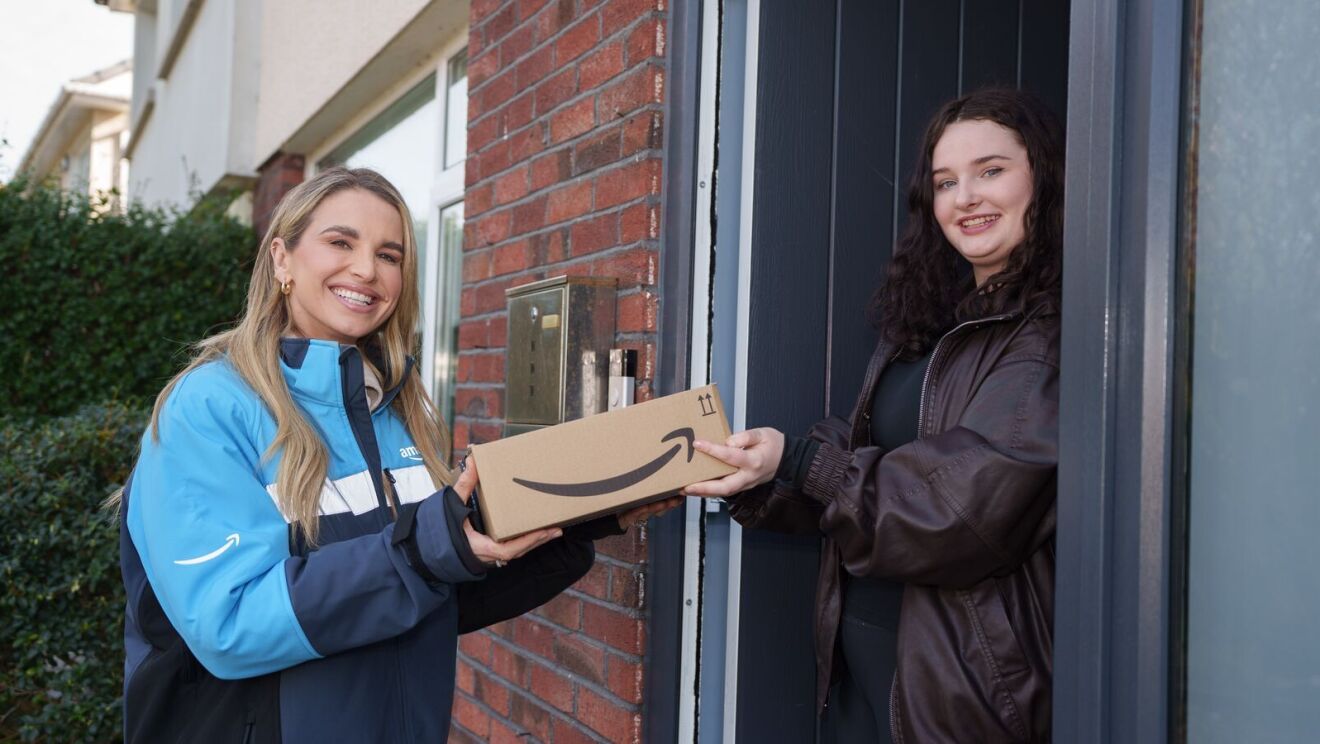
The launch is also being celebrated by Irish cultural icons like Westlife’s Nicky Byrne, footballing legend Shay Given, and media personality Vogue Williams, who have been making a series of special Amazon.ie deliveries to fans, including signed records and footballs.

Introducing Amazon Prime for Amazon.ie

There are more than 200 million paid Prime members around the world. While many Irish customers already use Prime on Amazon.co.uk, today sees the launch of a new local Prime membership on Amazon.ie. It costs just 6.99 per month or 69.90 annually, and offers vast benefits including:

  • Fast and free delivery: Enjoy One-Day Delivery on millions of eligible products.
  • Exclusive deals: Shop popular brands, as well as deals events like Prime Day.
  • Prime Video: Watch hit movies and TV shows, award-winning Amazon Originals such as The Lord of the Rings: The Rings of Power and The Boys, and live sports like UEFA Champions League.
  • Prime Gaming: Check out in-game content and free games to download every month, as well as a free channel subscription on Twitch.
  • Amazon Photos: Enjoy unlimited full-resolution photo storage and 5GB video storage.
  • Exclusive offers: Get great savings with partner offers, including one year of free restaurant delivery with Deliveroo Plus Silver, and discounted tickets at Odeon cinemas.


‘Brands of Ireland’ page makes it even easier to shop your favourite Irish brands

Amazon is launching the Brands of Ireland page in collaboration with Enterprise Ireland, the Irish government’s enterprise development agency. Irish brands available at launch include Barry’s Tea, Bewley’s, and independent fitness brand Swifter.

“The launch of Amazon.ie is great news for Irish businesses and consumers,” said James Madden, co-founder of Swifter. “For Swifter, it means we are able to reach more local customers and grow in our home market.”

Amazon in Ireland

Amazon already has a rich history in Ireland, and employs around 6,500 people in Cork, Dublin, and Drogheda in a diverse range of roles, from data engineering to operations management to finance. Since 2004, Amazon has made direct investments in our Ireland operations of more than €22 billion, and opened six sites across the country. In 2023, Irish small businesses selling on Amazon recorded over €170 million in export sales, with over half of those outside the EU. They’ve also gone on to create more than 2,500 jobs in Ireland to support their businesses on Amazon. Amazon has also supported thousands of authors in Ireland to self-publish via Kindle Direct Publishing. The Amazon Literary Partnership has given annual grants to nonprofit literary organizations across Ireland since 2019, and last year Amazon released LOL: Last One Laughing Ireland— its first Irish Originals production, which was filmed entirely in Ireland and is available on Prime Video.

Sustainable packaging for products purchased on Amazon.ie

Since 2015, Amazon has reduced the weight of outbound packaging per shipment by more than 43% and eliminated more than 3 million tons of packaging material. To significantly decrease the use of plastics in its packaging, Amazon.ie only uses recyclable paper bags and cardboard envelopes for orders shipped from Amazon’s fulfilment centres, and has also replaced protective air pillows with 100% recycled and 100% recyclable paper filling. This includes items sold by Amazon and third-party selling partners that use Fulfilment by Amazon (FBA). Amazon is also increasing the number of products it sells that can be shipped in original packaging provided by the manufacturer, with only an address label added.

Amazon.ie is available on desktop and mobile browsers, as well the Amazon mobile shopping app. All customers will also enjoy free delivery on their first order when delivered by Amazon, whether a Prime member or not. For more information, go to amazon.ie. Sign up for a 30-day free Prime trial at Amazon.ie/prime.

Business Leaders Say The Nature Of Business Travel Has Changed Forever Due To Technology

The latest business leader research from International Workplace Groupthe world’s largest provider of flexible workspace with brands including Regus and Spaces, underlines the changing nature and frequency of business travel.

The International Workplace Group report highlights how business executives are prioritising strategically important meetings for corporate spend, while routine meetings between global participants are taking place largely online using the available technology, amidst rising costs, environmental concerns and geopolitical uncertainty.

The study among more than 500 business leaders highlighted that the rapid development of digital infrastructure means functional meetings can now be held online. More than three quarters (77%) of business leaders say technology has enabled them to continue to conduct pure ‘business as usual’ meetings virtually to drive efficiency.

That’s not to say business travel has been made redundant by hybrid working. In fact, the majority (87%) of CEOs firmly believe that technology will never replace the value of strategically important face-to-face meetings, and business travel will invariably play a crucial role in strengthening relationships and when signing key commercial deals.

The rising cost of business travel

A third of business leaders cited escalating costs as an influential factor for their post-pandemic travel decisions. Research into the cost of business travel by Harris Williams found that airfares had risen by 38%** when compared to pre-pandemic prices and hotel costs had risen by at least 82%***. With an expectation of continued growth in 2025, 77% of CEOs noted that the ability to host meetings virtually enables them to reduce the number of business trips, allowing for a focus on crucial face-to-face meetings.

Geopolitical uncertainty

Looking at other macro trends, CEOs said that increasing geopolitical uncertainty had significantly impacted the nature of travel at their companies. One in five said that the current geopolitical climate has had a major impact on business travel, with changes in the global health landscape (19%) and visa regulations (19%) also influencing how they prioritise strategically important travel.

Environmental considerations

As companies look to reduce their environmental footprint, many are more considered in their approach to corporate travel. Three quarters (75%) of leaders said that the development of hybrid work and the adoption of online platforms has enabled them to reduce the number of environmentally unfriendly trips. For larger organisations facing greater scrutiny over their carbon emissions, corporate ESG reporting and policies have led to leaders being more strategic with their travel plans.

Extending business trips to maximise efficiencies

Three quarters (75%) of corporate leaders said that business travel is now more efficient and more than half (61%) say they tend to travel less but stay longer due to the availability of flexible workspaces enabling them to remain productive between meetings. A quarter (26%) now extend their travels to fit in additional meetings, reducing the need for short visits, whilst others (23%) have attended industry events or conferences to maximise their trips.

As leaders enjoy greater flexibility in their working patterns, 87% are spending the extra time to enjoy their destination and experience local culture. One quarter (24%) said they had actually combined a work trip with a holiday. In an encouraging move for the whole business, the benefits of travel and leisure are not exclusive to leaders – with 74% encouraging their employees to work from abroad to make the most of travelling, too.

Mark Dixon, International Workplace Group CEO stated“Advancements in digital technology coupled with the rising cost of international travel, geopolitical uncertainty and environmental considerations mean the world of business travel has been transformed and we are unlikely to see a return to pre-pandemic levels.   “Executives are now prioritising travel for the most strategically important meetings such as major business deals or nurturing significant relationships with partners. For these types of occasions, technology can and will never replace the value of in-person transactions for the most valuable meetings.”

*Research among 500 CEO participants in June 2024 by Mortar. Mortar is Market Research Society (MRS) accredited and the research adhered to MRS guidelines.

** Global Travel Outlook Spring 2024 Report by Harris Williams, OC&C Strategy Consultants

*** Data sourced for i by hospitality data intelligence firm Lighthouse.