Ireland’s Age-Friendly AI Training Programme Launches in Cavan

The Age-Friendly AI training programme, Ireland’s National Artificial Intelligence Literacy Initiative for Older Adults, was officially launched at Johnston Central Library in the Farnham Centre in Cavan on Monday. The programme is delivered by researchers from Technological University Dublin and the ADAPT Research Ireland Centre. Funded by Research Ireland, the initiative will roll out in public libraries across Ireland throughout 2026 in partnership with Libraries Ireland, managed by the Local Government Management Agency.

Age-Friendly AI was developed in partnership with older adults and leading ageing-focused organisations across Ireland. This training programme follows a year-long public dialogue exploring their hopes, concerns and expectations regarding artificial intelligence (AI) and its role in everyday life. Accompanying resources and training materials for librarians and other educators will support lifelong learning in their communities.

Speaking about the launch, Minister of State with responsibility for trade promotion, artificial intelligence and digital transformation, Niamh Smyth TD said:

As technology accelerates, we must ensure our progress is measured not just by the speed of innovation, but by its inclusivity. No citizen should be left behind in the wake of advancement. That is why the work being done through ADAPT’s Age-Friendly AI programme is so vital, it bridges the generational divide, ensuring that the rewards of AI are accessible, equitable, and empowering for everyone, regardless of age. I was delighted to work alongside the team at ADAPT to arrange for the Launch of Phase 2 of the Age-Friendly AI project held in Johnston Library, Cavan, and wish the project continued success.”

Stuart Hamilton, Head of Libraries Development for the Local Government Management Agency (LGMA) said

“Libraries Ireland is proud to support the Age Friendly AI initiative as part of our national Skills for Life programme. Libraries are trusted, welcoming spaces at the heart of every community and play a vital role in ensuring learning is inclusive and accessible as society evolves. Already this year, we have seen Age Friendly AI engagements in libraries across several counties, and over the rest of 2026, libraries across Ireland will host a national rollout of the programme. Ultimately, this is about ensuring older people are part of the conversation on AI, giving them the time, support and confidence to engage at their own pace.”

Dr Emma Clarke from the ADAPT Centre said,

“Ongoing dialogue, enabled by the #DiscussAI national conversation on Artificial Intelligence, is at the very heart of this programme. By listening to older people from the outset, we ensure that the individuals this training aims to reach are actively involved at every stage of the process. This collaborative approach ensures that the programme is relevant and resonates with the real-life experiences and needs of older adults across Ireland.”

Paula Kelly, Age-Friendly AI Lead at TU Dublin, added:

“We are delighted to be partnering with the LGMALibraries Ireland, under their Skills for Life programme, as well as over twenty other community partners, to bring this training to every corner of the country. The Age-Friendly AI initiative isn’t just about teaching AI technology; it’s about making sure older adults aren’t left behind as AI becomes part of our everyday products and services, from healthcare to banking to staying in touch with family.”

The launch event began with an introductory workshop on artificial intelligence (AI) delivered by Paula Kelly. Participants explored what AI is, where it appears in daily life and how it is shaping areas such as healthcare, banking and communication. The session also examined both the benefits and potential risks of AI and allowed attendees to try AI tools in a supportive, hands-on environment.

The event also featured remarks from Paula Butler, Assistant Chief Executive and Head of Local Government Strategy, Research and Communications at the Local Government Management Agency, who highlighted the role of libraries in supporting community learning and digital inclusion.

Following the formal launch, attendees tried out interactive demonstrations, including “Spirit of Radio,” a vintage radio with a modern AI twist; an “Art or AI?” exhibit that challenged participants to distinguish between human-created and AI-generated artwork; and a voice-activated smart lamp.

The Age-Friendly AI training programme will continue to roll out in libraries across Ireland throughout 2026, providing accessible, community-based opportunities for older adults to learn about and experiment with artificial intelligence technologies. No previous knowledge of AI is necessary.

For updates on upcoming workshops and programme developments, members of the public can sign up to the Age-Friendly AI newsletter.

International Cybersecurity Expert to Explore the Disruptive Danger of Disinformation in the Age of AI at Public Lecture

Trinity College Dublin and the ADAPT Research Ireland Centre today announced an upcoming visit of internationally renowned expert in cybersecurity, Professor David J. Hickton of the University of Pennsylvania, in March. Professor Hickton will deliver a public lecture titled: “The Disruptive Danger of Disinformation in the Age of AI” on Wednesday 5th March at 5pm in the Swift Theatre in Trinity College Dublin’s Arts Building.  The event is free and open to the public.  Registration here: https://forms.gle/rSNvsQaJXaccQpd66

Professor Hickton, a former U.S. Attorney and Founding Director of the University of Pittsburgh Institute for Cyber Law, Policy, and Security, will deliver this lecture as part of his March visit to Trinity College Dublin. During his time in Dublin, he will also engage with faculty, researchers, and students along with policymakers and other stakeholders through workshops, guest lectures, and roundtable discussions. During his visit, Professor Hickton will also assume the role of Adjunct Professor in the School of Computer Science and Statistics at Trinity College Dublin.

This timely public lecture will examine the pervasive influence of disinformation in an era defined by rapid technological advances and the rise of generative AI. Professor Hickton will explore the historical roots of disinformation, its role in undermining trust in institutions and science, and the urgent need for global cooperation to address these challenges. The lecture will also discuss potential pathways to address this growing crisis, balancing free speech with the urgent need for regulation.

Professor Hickton’s visit builds on the Memorandum of Understanding (MOU) signed last year between Trinity and the University of Pittsburgh, establishing a partnership to drive innovation in AI safety and governance. “This collaboration reflects our shared commitment to addressing the complex challenges of the digital age,” said Professor John Kelleher, Director of ADAPT. “We are honoured to welcome Professor Hickton to Dublin and look forward to the rich insights and contributions he will bring.”

To learn more about Professor David Hickton and his work, please visit: https://www.cyber.pitt.edu/people/david-j-hickton-jd

ADAPT Collaboration with Hayes Culleton to Revolutionise Collaborative Learning with AI Tools

ADAPT and Hayes Culleton recently completed a collaboration aimed at developing innovative AI-driven tools that enhance learning and collaboration. The project, led by Dr Liting Zhou from ADAPT at Dublin City University (DCU), focused on designing solutions for educational and training environments, with a global, all-female team of experts from four countries at the helm.

Hayes Culleton, led by founder and financial expert Susan Hayes Culleton, specialises in high-impact education, finance training, and innovative learning technologies. Through its proprietary platform, Active Peers AI, Hayes Culleton empowers teams and individuals to engage effectively in peer-driven learning, a key component of the new tools created in partnership with ADAPT.

Dr Liting Zhou commented: “This collaboration with Hayes Culleton has been an exciting opportunity to apply ADAPT’s AI expertise in real-world educational settings. By developing tools tailored for collaborative learning, we are breaking new ground in how teams and students can connect and engage meaningfully in both virtual and in-person environments.”

This partnership forms part of ADAPT’s broader mission to lead impactful change in educational technology, offering powerful tools that can transform learning experiences across diverse settings.

Google Unveils New AI Education Programmes for Irish Students

Google Ireland is today announcing the launch of two new AI education programmes to improve AI literacy across Ireland, via Kinia and ADAPT. These initiatives will equip students and teachers with the essential skills needed to thrive in an AI-driven future.

Experience AI has been co-developed by the Raspberry Pi Foundation and Google DeepMind to provide teachers with free classroom resources and professional development, enabling them to teach students about AI technologies and how they are changing the world. In Ireland, Raspberry Pi Foundation is working with Kinia, funded by a €360,000 grant from Google.org, to ensure that young people can actively participate in shaping their own futures. Kinia will provide bi-lingual (Irish and English) interactive and engaging AI content to 800 educators and meet the skills needs of over 14,000 young people in Ireland.

AI Literacy in the Classroom, led by ADAPT, is a training initiative designed to help secondary school teachers boost their AI literacy and empower students to use AI critically. The programme will comprise workshops and online resources, co-created with teachers to ensure it aligns with their needs. Developed in alignment with current AI education policies and training provisions from the Department of Education, the programme aims to equip teachers with the essential AI knowledge and practical insights to navigate AI in the classroom and guide students to use AI-powered tools safely and ethically. With support from Google, the initiative is designed to ensure AI is taught responsibly.

Speaking at the launch, Vanessa Hartley, Head of Google Ireland, said:

“AI has the power to reshape our approach to society’s biggest issues, promising extraordinary breakthroughs that can improve billions of lives. That’s why we want to equip Ireland’s young people and educators with the skills needed to understand and navigate this transformative technology. Our support for Kinia and ADAPT underlines our commitment to making AI literacy accessible across Ireland, ensuring that students are prepared to shape an AI-enabled future that benefits all of society.”

Obum Ekeke OBE, Head of Education Partnerships at Google DeepMind, said:

“We are incredibly excited to see the launch of Experience AI in Ireland. AI is rapidly shaping our world, and we believe every young Irish student deserves the opportunity to understand and engage with this transformative technology. By making AI education more inclusive, we can help young people make more informed decisions about using AI applications in their daily lives, and encourage safe and responsible use of the technology.”

Marianne Checkley, CEO of Kinia, said:

“We are very proud and delighted to introduce Experience AI to schools and youth services in Ireland. As a programme co-created by educators and industry, Experience AI offers a unique chance for young people in Ireland to access immersive content that brings together real world relevance and the future view of artificial intelligence. Underpinned by our mission at Kinia this funding support also addresses a critical societal need, to make sure that all young people will be in a position to seize the opportunities and tackle the challenges of the future.”

Professor John Kelleher, Director of Adapt, said: 

“We have seen first hand how excited teachers are to bring AI into their classrooms but also how daunting it can be without the right support in place. That’s why we’re launching the ‘AI Literacy in the Classroom’ programme. It is all about helping teachers gain the AI knowledge and skills they need in a practical, hands-on way. We want to make sure they can use AI tools confidently and critically, so both teachers and students can thrive in this AI-driven world. This initiative reflects ADAPT’s commitment to real-world education and ensuring we’re equipping the next-generation to embrace the future as responsible digital citizens.”

Philip Colligan, Chief Executive, Raspberry Pi Foundation said:

“We are delighted to welcome Kinia to our Experience AI global network of partners. Working together with Kinia, we look forward to equipping teachers with the skills needed to teach AI confidently, ensuring it’s both engaging and relevant for their students. Through the partnership, we aim to ensure that over 14,000 young people in Ireland develop a foundational understanding of AI technologies and the role that they can play in their lives.”

For more information and to sign up for the Experience AI, teachers can visit experience-ai.org/. For more information and to sign up for the AI Literacy in the Classroom Programme, teachers can visit www.adaptcentre.ie/ai-literacy-in-the-classroom

Dublin City launches ‘Data Insights for Active Travel’ Project to determine impact of Active Travel infrastructure as part of Global Network of Cities

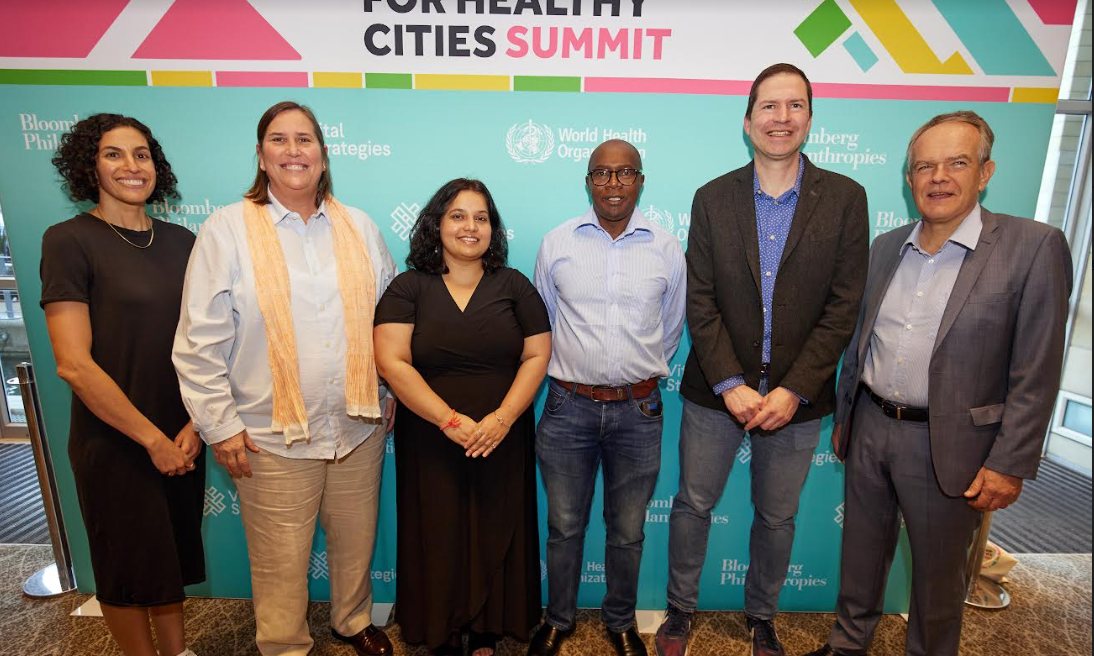
Lord Mayor Daithí de Róiste has announced that Dublin City Council (DCC) has joined forces with the Partnership for Healthy Cities to pilot new cutting-edge technologies for evaluating and measuring the impact of the city’s active travel investments (walking and cycling). Other partners include the National Transport Authority (NTA), ADAPT, the Science Foundation Ireland Research Centre for AI-Driven Digital Content Technology, and Trinity College Dublin (TCD).

This unique partnership is set to boost understanding on active travel patterns in the city. The project will generate new data, which will be used to inform future infrastructure planning and improve safe and active transit options for city residents.

“Over the coming years, Dublin is investing in a city-wide Active Travel Network to provide 310 km of safe, accessible, and convenient pathways for walking, cycling, and other forms of active transportation. While this capital investment will be transformative for the city we need to think beyond the physical infrastructure and ensure that we are investing in the right technologies to generate better data and actionable insights to help evaluate and justify these investments,” said Lord Mayor of Dublin, Daithí de Róiste.

“The last three years have seen a significant ramping up of NTA investment in Active Travel projects across the country, with many large projects, such as Clontarf to City Centre, now coming to fruition. The monitoring and evaluation of these projects needs to keep pace through the deployment of detection and counting equipment. Smart detection technology may have an important role to play in understanding trends and patterns to inform decision-making and monitor the impact of schemes. The NTA recognises that new technology and data captured will greatly improve our ability to monitor and communicate the impacts of Active Travel schemes,” said Joe Seymour, Head of Active Travel Investment, NTA.

The project will fill a gap in current methodologies by developing an Active Travel Data Toolkit, replacing the ad-hoc approach of data collection with a systematic and integrated process that supports and guides future investments in active travel.

“This project stands as a testament to DCC’s commitment to active travel as a cornerstone of health and well-being. By integrating advanced monitoring technologies, and data visualization techniques, DCC aims to set a new standard for active travel infrastructure. The ultimate goal is to achieve a measurable positive impact on citizen behaviour, emissions reduction, and overall public health, while also influencing active travel policies to foster healthier urban spaces,” said Andy Walsh, Director of Active Travel Programme Office, DCC.

By establishing a robust framework for data gathering and analysis, DCC, in collaboration with the NTA will be able to measure the true value of active travel enhancements more accurately. The initiative will be working through DCC’s Smart City team, leveraging the existing partnerships with ADAPT and collaborating with Prof Brian Caulfield, TCD.

Phase 1 of this project will target two active travel schemes – the Clontarf to City Centre (C2CC) corridor and the Kilmainham to Thomas Street scheme and the surrounding areas. The initial steps will focus on sourcing, validating, and implementing the latest innovations in active travel monitoring. During Phase 2, the insights gained will inform the development of a toolkit to enhance policy-making and active travel project implementation citywide.

Through the Partnership for Healthy Cities, cities commit to one of 14 proven interventions, from improving safety for vulnerable road users to strengthening public health surveillance systems. The network is supported by Bloomberg Philanthropies, in partnership with the World Health Organization (WHO) and the global health organization Vital Strategies.

“Sustained investment in a city’s safe and active transit infrastructure can reduce noncommunicable disease risks and health inequities,” said Ariella Rojhani, Director, Partnership for Healthy Cities at Vital Strategies. “Today, we congratulate Dublin on its commitment to the health and safety of its residents and look forward to seeing how this new data is used to improve their quality of life.”

The announcement comes as this week DCC presents its work to public health leaders from more than 50 cities at the Partnership for Healthy Cities Summit in Cape Town, South Africa. The annual event provides cities from around the world with the opportunity to advance solutions and exchange ideas on how to create healthier, safer and more equitable urban centres.

New EU project focusses on fighting online manipulation and interference

Researchers from ADAPT, Dr. Brendan Spillane (UCD) and Prof. Owen Conlan (TCD), have announced their involvement in a new Horizon Europe project named ATHENA. This €3.1 million Horizon Europe project, titled “An exposition on THe forEign informatioN mAnipulation and interference,” aims to detect and analyse disinformation associated with Foreign Information Manipulation and Interference (FIMI). The work of the ATHENA project is crucial for the protection of democratic processes in Europe in light of recent FIMI campaigns using disinformation and the surge in cyber-attacks originating from countries like Russia and China.

The project’s primary goal is to understand the Tactics, Techniques, and Procedures employed by perpetrators in these activities and to provide policymakers and stakeholders with ATHENA the necessary tools for combating FIMI and disinformation. This will enable the project to develop countermeasures and evaluate their impact.

ADAPT researchers contributions to ATHENA include in depth case study explorations of known FIMI campaigns in Europe, the creation of a FIMI detection platform including a toolbox for analysis, a knowledge graph to store the data, and a dynamic dashboard to enable European policy makers to monitor FIMI activities to devise effective counter-strategies. ATHENA will additionally conduct a comparative legal and regulatory analysis of how eight EU Member States address FIMI, identifying areas where policy enhancement is feasible. The consortium will devise an accessible questionnaire for public utilisation, enabling individuals to recognise encounters with FIMI in their daily lives.

Dr Brendan Spillane highlighted ADAPT’s significant experience of research into disinformation: “The research being undertaken by ADAPT researchers in ATHENA builds on their coordination from another Horizon Europe VIGILANT project (https://www.vigilantproject.eu/) which will equip European Police Authorities with technology to detect, analyse and combat disinformation linked to criminal activities, and a previous H2020 project called PROVENANCE which developed technology to warn end users of disinformation when using the Internet or social media.

Engagement with stakeholders is a key aspect of the project, as ATHENA will engage a diverse range of stakeholders in interviews and workshops. Additionally, ATHENA will focus on knowledge dissemination and training in universities and schools, amplifying widespread awareness of FIMI and fostering defences against it.

Dr. David Wright from Trilateral Research, coordinator of the Project said: “The ATHENA project is not just a response to current threats but a proactive step towards a more secure digital future for Europe”.

“Disinformation spread as part of FIMI campaigns has the potential to negatively impact societal values and undermine political processes. ATHENA will develop advanced AI-informed countermeasures and playbooks to help policy makers combat FIMI.”, said Prof. Owen Conlan from Trinity College Dublin and ADAPT.

ATHENA involves 14 partners including Foundation for Research and Technology – Hellas (FORTH, Greece), the University of Cyprus (UCY), the Bavarian Police Academy (Germany), the Research Institutes of Sweden (RISE), Laurea University of Applied Sciences (Finland), Fundació Eurecat (Spain), Storyzy (France), Trinity College Dublin (Ireland), the European Organisation for Security (Belgium), Maldita (Spain), EU-Disinfo (Belgium) and University College Dublin (Ireland).