A Closer Look at the Technology behind Online Casino Software and Gaming

Online casinos are possible due to advanced programs that power gaming and gambling platforms. It’s not a secret that online gambling uses technological solutions to support virtual games, thus making it possible to build a serious online casino from almost anywhere in the world.

That’s exactly how online gambling in Australia became so popular. But the popularity goes well beyond this continent to win over the entire world. In this article, we will take a closer look at the technologies behind online casino software and gaming. Let’s check out the top five tech solutions in this industry.

Live online casinos

A live casino is an online gambling experience that allows players to interact with real dealers in a live gaming environment. Live casinos use cutting-edge technology to broadcast live video footage of a real casino floor, complete with actual dealers, players, and gaming tables.

Players can chat with the dealers and other players in real-time. Sometimes they can even see (and often hear) the other players at their table. Live casinos offer a wide range of games, including blackjack, roulette, baccarat, and poker.

Live casinos use state-of-the-art technology that allows players to experience the same level of excitement and interaction as if they were actually at the casino. That’s the biggest benefit of live casinos for real money – they take the best from both worlds, allowing gamblers to enjoy the privileges of analog and digital realms.

2FA

How do you know that a casino is reputable and trustworthy? The answer is simple – your favourite gambling platform has a high-security level that keeps every participant safe and sound. And that’s where 2FA plays its role.

Two-factor authentication, or 2FA, is an extra layer of security that requires not just a username and password but also something that only the user has on them, like a physical key or a code sent to their phone.

This makes it almost impossible for someone to gain access to your account even if they know your username and password. The reason is clear – hackers would also need to have access to the second security factor to register on your behalf.

This extra layer of security helps to protect your account from unauthorized access, even if someone manages to steal your login credentials. 2FA is available for many online accounts and is becoming more common as people become more aware of the importance of cybersecurity.

Online casinos in Australia – and all over the globe – use this cybersecurity feature to let players feel safe and sound, knowing that no one will ever be able to take advantage of their private data.

Blockchain technology and cryptocurrencies

A blockchain network casino is a type of online casino that uses a distributed ledger, called a blockchain, to store all the player and game data. This makes it possible for players to verify that the games are fair and that their bets are secure.

It also allows the casino to operate without a central authority, which means there is no need for a third party to mediate transactions or manage player funds. Besides that, blockchain-based platforms are also crypto pokies sites that enable users to pay with cryptocurrencies instead of traditional currencies.

Blockchain casinos are still in their early stages of development, but they offer a number of advantages over traditional online casinos. For example, they provide greater transparency and security, they allow players to control their own funds, and they can be more profitable for operators since there is no need for costly licensing fees.

AR technology

If you’ve ever played Pokemon Go, you already know what Augmented Reality (AR) is. AR is all about the real world, but it comes with a simple tweak. This revolutionary technology lets you experience a whole new level of gambling by changing your surroundings in real-time. 

AR is a technology that combines digital information with the user’s environment in real-time. This information can be anything from text to video to 3D objects. AR is often used for marketing and education purposes, and it has the potential to change the way we interact with the world around us.

With AR in online casinos, you can see additional information about the game and the platform itself. That includes their hours of operation, menus, and prices – overlaid on the real-world image. AR technology is very useful for people who want to gamble while exploiting additional features and data.

VR technology

Virtual Reality (VR) is the latest development in online gambling, which allows players to experience a real casino environment through their computer or mobile device. With VR, players can walk around the casino, interact with other players, and even spin the wheel on a real slot machine.

This technology provides an immersive experience that is unmatched by any other form of online gambling. A VR headset can bring the gaming experience to a whole new level thanks to built-in motion-tracking technology. Players are immersed in an amazing virtual world where they are free to explore every corner of the screen.

This technology is designed to let users feel like they are inside the game itself. All they need to do is put on a VR headset and start playing, once again allowing them to experience something that was previously available only in video games. Today, many online casinos use VR headsets to provide an even more realistic gaming environment for their players.

Conclusion

New technologies change the face of online gambling every day. Are you already taking advantage of them?

5 Modern Day Technologies used in House Construction

Technology is revolutionising every aspect of everyday life. It has improved the longevity and quality of modern-day structures in several ways. The construction industry has rapidly evolved with new high-tech devices being installed into homes and builders using advanced equipment and tools to build structures that will last a lifetime. Innovative construction technology enables huge improvements in the productivity, efficiency, and safety of large-scale construction projects. Here are some of the latest and modern-day technologies that are used in home construction.

5 Technologies used in house construction:

· Drones

· Precast walls

· Telematics

· Construction robots

· Building Information Modelling


Drones

Drones have made a huge impact and contribution to the construction industry in recent years, and they are set to grow even further. A drone can drastically improve the accuracy, speed, and safety standards of many parts of the construction cycle. The drones have high resolution cameras and once the data is collected it can create 3D or interactive topographical maps. Drones can make a huge impact and difference on construction sites in the following ways:

· Equipment tracking

Rented or purchased equipment used on a job site can get misplaced quite quickly, however with the use of a drone they can be located and always tracked while on site.

· Security surveillance

Construction and building sites are vulnerable to theft of equipment and materials on non-working days. A drone can be used to monitor and survey the site for a purpose of security while the workers are not present.

· Topographic maps

During the preconstruction phase, mapping is vital to this process. Aerial drones can be used to survey a wide range of land efficiently and quickly, reducing the costs of mapping by as much as 95%.


Telematics

Telematics is revolutionising the construction industry, powering efficiency and visibility. Telematics is all about data and is used by well-known companies such as drivewaypaving.ie. It allows you to send and receive data through telecommunications technology. Telematics is used in the construction industry to track vehicles, construction machinery, and heavy equipment. The technology provides safety, GPS

tracking, remote diagnostics, and fleet management. Telematics used during the housing process will allow a company to manage multiple job projects and sites, monitor usage hours to determine when a piece of equipment is up for maintenance, know exactly where construction assets are always, and monitor asset utilisation to maximise output.

GPS enabled telematics is essential for keeping a construction site operating by locating and tracking construction assets and equipment. It is important to know what assets you have for the project to keep the construction under budget and on a proper timeline. Several job sites can be monitored easily by using on-screen locations to ensure all sites are stocked with the equipment they require, monitoring engine hours for preventative maintenance, and keeping the whole operation as fuel efficient and safe as possible.

Construction Robots

Robotics are yet to see a significant role in the construction industry. However, construction sites are becoming smarter and with the rise in technology robots can be programmed and used during construction projects today. There are 3 main types of robots that seem positioned to reshape the construction industry, these include the following:

· Fully autonomous robots

Fully autonomous robots can scan the environment and perform many difficult tasks with tools on its own.

· Collaborative robots

Collaborative robots can be used on a construction site to help a human carry the appropriate equipment and tools.

· Factory robots

Factory robots can perform a simple manufacturing task perfectly and repeatedly.

Cartesian robots are the most popular robots due to their ability and ease for 3D printing. Cartesian robots use a 3-axis system X, Y, and Z of cartesian coordinates. 3D printing is one of the most popular applications to enter the construction industry. This is due to the ability to create a variety of products including a 3D printed home. The efficient, affordable, and quick way of 3D printing a home.

Building Information Modelling

Building information modelling is a process used in construction creating a digital presentation of a structure before the building commences. An accurate presentation of the building will enable everyone involved in the construction to determine logistics, anticipate difficulties, increase efficiency, and eliminate all risks. The high priority for any construction project team is to keep within budget and the BIM will help considerably with this. BIM uses tools such as 3D laser scanners and robotic total stations to give the designer more in-depth insights into projects. BIM can be used for all stages of construction.

· Before construction

Building information modelling helps reduce the need for future change orders by anticipating challenges.

· During construction

BIM improves efficiency and communication by offering a central hub for accurate and up to date reference documentation.

· After construction

BIM software can create the possibility for building management for the structures entire life cycle by providing owners with valuable information about every detail of the building. BIM has become one of the most important developments in construction due to its effects and improvements on every aspect of the construction process.

Technology is consistently changing and evolving, and it now plays a huge role in the construction of new homes—something the best home builders are leveraging to deliver smarter, more durable housing solutions.

Precast Walls

Precast construction is a sustainable and cost-efficient building technology that is used in the latest and modern-day housing projects without compromising on the quality of the building materials. Precast concrete is a superb construction material offering durable and flexible solutions for roofs and walls during home construction. Precast is more efficient and requires less labour. It helps save time and money. Precast concrete walls are manufactured off site in a controlled environment. The construction process speeds up with the use of precast walls. It is an optimal technology for developers of large housing projects where reduced risks of project delays, low costs, and high productivity are essential. The technology also uses less steel, cement, water, and labour in comparison to traditional slabs and walls.

JOBY Debuts New Innovative Wavo Mics for Pro and Mobile Creators, and Streamers

JOBY’s newest suite of Wavo mics are upgraded with pro-grade sound features, adding reference audio to complete JOBY’s content-creating ecosystem already packed with premium video, lighting and stability.


JOBY – the reference brand for content creator gear – is releasing a new lineup of flagship audio mics for pro, on-the-go and desktop creators and streamers. JOBY creators know that it’s not enough to have great lighting and stability; audio is 50% of the perfect content equation! The new release includes five new additions to the WavoTM line, led by all-new flagships Wavo PRO and Wavo AIR. With the beloved GorillaPodTM and BeamoTM lighting lines, JOBY’s debut in audio capture is the last piece of the puzzle for a one-stop-shop for content creation gear, be it video stability, lighting, and now, pro-grade audio.

The flagship Wavo PRO is designed as the ultimate audio capture solution for expert creators. JOBY leveraged design breakthroughs from its existing Wavo range to deliver the lightest microphone without sacrificing unprecedented performance.

The entirely new Wavo lineup is available today online at JOBY.com and in select retailers, with products and kits ranging from £43.95 – £257.95.


Wavo PRO (£257.95)

The all-new Wavo PRO is an unequaled, innovative shotgun microphone built for storytellers, filmmakers and expert creators on the go. The premium mic is equipped with an intelligent hybrid analog/digital system to power onboard active noise reduction, a sound management app, and integrated second 3.5mm mic input. Designed to pair with the latest in mirrorless camera hardware to bring broadcast-caliber audio to JOBY’s dynamic audience, Wavo PRO’s features include:

  • An active noise reduction (ANR) system that leverages enhanced onboard Rycote technology to process and clear sounds made from on-the-go creation, removing self- generated structural noise.
  • A simple dedicated digital sound management app for iOS and Android, that connects via Bluetooth to Wavo PRO to provide creators real- time and remote visual monitoring of sound

input, independent dual-mode EQ, and customized, shareable sound setups.

  • LEDs in front and back to provide real time monitoring no matter the orientation.
  • Seamless secondary mic input for easy interviews or dual channel recording.
  • Onboard -10db safe track for mono or dual channel recording.
  • Auto power mode to switch the mic on/off automatically together with the camera.
  • Perfectly pairs with the entire JOBY content creation kit, including tripods, lights and mics.


Wavo PRO DS (£228.95 – Available starting March 4, 2022)

The mid-range Wavo PRO DS is the perfect companion for creators looking for a solid upgrade. The shotgun microphone shares most of the pro-grade components of the flagship Wavo PRO, but is designed to deliver high-quality audio with a more streamlined user experience. Wavo PRO DS features include:

  • A plug-and-play, simple user interface with a few key controls for audio content creation.
  • A high-pass filter that cleans sound from unwanted low frequencies in real-time.
  • Onboard safe track for mono or dual channel recording.
  • Integrated LEDs indicate battery and audio levels.


Wavo AIR (£214.95)

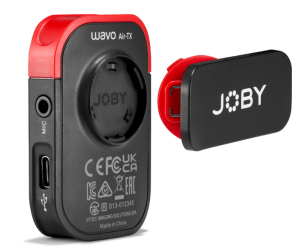
The Wavo AIR is an ‘instant-pairing’ wireless microphone kit designed for creators who need freedom in front of the camera. From food vloggers to virtual fitness instructors, Wavo AIR is perfect for delivering tight, broadcast-quality sound – even at a distance. Its high-quality audio is only outdone by its incredible modularity, designed to pair easily with a variety of custom accessories, and be placed in any environment ready for action. The Wavo AIR Kit comes standard with double transmitters, two (2) lavalier mics and cable adapters for both cameras and phones. Creators can pair their wireless mic with audio enhancement accessories including stability and support mounts, or even additional lav mics and transmitters. Wavo AIR features include:

  • High-quality, 2.4 GHz wireless audio capture technology in a lightweight, pocketable form factor.
  • Hands-free audio capture with lav mics, including a unique JOBY designed mounting system that goes from magnetic mount lanyard, belt clip or cold shoe mount, to GorillaPod leg clip and many more.
  • Compatible out-of-the-box with smartphones and cameras using TRS and TRRS cables, and two transmitters for interviews.
  • Long-range wireless capture lets you exit close-up shots and still record up to 50m (164ft); mics can even be placed in different locations to record specific audio far from the camera to enrich the video content.


Wavo POD (£85.95)

Wavo POD is JOBY’s large-diaphragm, USB condenser microphone for audio streamers. The mic is designed for the everyday podcaster or game streamer, featuring the versatility of both cardioid and omnidirectional pickup patterns with 24bit/48kHz high-res sampling rates. In addition to its modern JOBY design, Wavo POD features include:

  • A zero-latency headphone monitoring 3.5mm jack along with a volume and gain knob with one-click integrated mute functionality.
  • Includes a JOBY designed pop filter accessory – designed to remove voice plosives – and a desk stand. A secondary filter is available as a separate purchase ($9.95) that shields the back side of the mic for multiple or simultaneous recording angles, and crisp, pop-free vocals.
  • Industry-standard USB Type-C connection for seamless, plug-and-play use with laptops, desktops, tablets and smartphones.
  • Two ¼-20 mounts on either side of the mic stand can attach accessories, and position the mic using a GorillaPod or boom arm for any streamer’s customized setup.
  • Equipped with a detachable base and U bracket, native ⅜” female screw and included ⅜” to ⅝” adapter, to easily connect to any boom arm.


Wavo Lav PRO (£68.95)

JOBY’s first pro-grade lavalier mic is designed for big sound with a small footprint. The Wavo Lav PRO introduces a high-quality lavalier microphone with discreet capsule dimensions and sound fit for the Wavo PRO. While all its functions are purpose-built to work in harmony with the Wavo PRO and other JOBY audio gear, other key features include:

  • A pro-grade capsule and included foam windscreen creates crisp, warm and true tone audio, and removes vocal plosives or soft wind.
  • A 2.5m long, high-quality cable made from soft materials, connects to the Wavo Lav PRO for the ultimate interview setup that minimizes transferring vibrations.
  • A small footprint of Wavo Lav PRO makes it easy to conceal while a durable aluminum mounting clip keeps it locked into position.
  • A 3.5mm TRS connector pairs perfectly with Wavo PRO and works with standard camera attachments.


The Top Five Benefits Of Hiring A Logistics Software Developer

It’s time for logistics and transportation companies to rethink their processes to keep up with today’s fast-paced business environment. Technology has played a major role in the upgrade. Logistics, like any other industry, is impacted by technological advancements. Because of this, they’ve started using software for logistics. Using logistics software for small enterprises is also an option. In order to meet the expanding needs and complicated processing of the logistics industry, professionalism and efficiency are required. These factors are also making this domain extremely competitive right now. You’ll be one step ahead of your competitors if you use logistics software development.

Benefits of Using a Logistics Management System


Transportation Refinement

The logistics industry relies heavily on transportation. Tolls, energy, gasoline, labour, and shipping charges can add up to more than estimated costs. Processing and analysing the data will be made easier by the programme. To save money, you can look into other choices. Increasing efficiency and reducing costs are both easier when data is readily available.

Logistics Software Development Allows for Faster Delivery

 Product delivery times can be reduced by using logistics software. For your purchases, it will select the most expedient shipping service. Interfering with the production process can also have a positive impact on speed. You’ll be able to complete more orders and gain satisfied consumers as a result of faster service.

Human Error Reduction

Human errors can be minimised with the use of logistics software. It takes a lot of energy, time, and effort to sift through the vast amount of transportation data. As a result, there is a slim risk of making mistakes if you do it yourself. All the data processing will be done by the programme, which will save time and eliminate the risk of human error. It will also expedite the process without delaying it.

Logistics Software Development and Function Automation

The business will be greatly impacted by automation. To run a successful logistics business, you must select the shipping routes, organise the distribution of the loads, and tender the loads to the cargo. All of this can be handled by the software, cross-platform development and the paperwork will be eliminated. With the help of software, you can perform all of these tasks more quickly and accurately.

Reducing the Price

The logistics software is guaranteed to save both time and money. The software compares shipment costs, transportation options, gasoline rates, shipping agencies, and other factors.. The automation of all data will also let you examine the total process and then choose the most profitable one.

After reading about the benefits of logistics software, you may want to design one of your own. It’s understandable that people get mixed up with so many names. Let me assist you in finding the best software development company for your logistics needs.

You can rely on Intellias, the most efficient logistics software development company. They offer a team of experts who can handle all of your logistics software development needs. They have a lot of knowledge in the logistics field, so they’ll be able to give you the greatest potential outcome. Please know that their services will exceed your expectations because they will not only assist you to design your software but also help you grow your business. If you’ve made up your mind, the next step is to get in touch with them.

HP Introduces Durable Devices for Blended Learning Environments

HP Inc. introduced HP Fortis laptops, a new portfolio of PCs built to withstand the rigours of education environments.

Teaching and learning has forever changed. Before the pandemic, student PCs typically stayed in the classroom for occasional use. Today, learning is happening beyond just the classroom including the playground, on the bus, and at home. The PC is a critical tool for digital learning and students want devices that stand up to daily wear and tear, help them connect to the digital classroom, and make it easier to get more done.

“While hybrid work is the new standard for business, blended learning is the new standard for education. This requires technology with increased durability, enhanced connectivity, and large screens so content can be accessible and engaging from wherever learning happens,” said Bill Avey, General Manager and Global Head of Education, Personal Systems, HP Inc. “Designed with features that reduce accidental drops, keep keys and ports intact, stand up to heavy wear and tear, and make it easier to clean and sanitise, HP is committed to providing students with the devices and PC experiences they need to be successful in these new learning environments.”

Introducing HP Fortis – Built Tough, Designed for Blended Learning

When it comes to education devices, strength and durability reduces downtime which translates to increased instructional time. Built for active and mobile learners, the new HP Fortis portfolio embodies the strength and durability needed to help withstand drops, resist spills, and keep keys where they belong: on the keyboard. The textured surfaces make it easier for students of all ages to grip and handle the lightweight devices. The reinforced power and USB-C® ports limit damage from accidentally tugged cables, while the mechanically reinforced corners and co-molded rubber trims absorb shocks and reinforced hinges reduce stress on the hinges from repeated opening and closing. The full-skirted anchored keyboards prevent keys from being removed when students are fidgeting and may want to pick at them during class. The keyboard also resists spills up to 350 ml/11.8 oz.

With more students going back to the classroom, it’s important to keep devices clean. The chassis, keyboard, and display for the devices can be wiped down using commonly available household disinfecting and cleaning wipes. For enhanced safety and protection, the devices feature a new metal shield that helps protect the battery from external damage from daily drops or tumbles.

Large Screens for More Room to Work

Built for the greater demands being placed on today’s students, the HP Fortis 14 devices feature 14” diagonal displays giving students large visual screen space to stay productive – whether it’s taking notes while watching a lecture or creating visual stories with ease. Large screen space gives students the freedom to engage content while consuming it at the same time. Students can also see their work clearly with optional bright anti-glare displays.


The HP Fortis 14” G10 Chromebook is purpose-built for cloud-native learning. Powered by Intel® processors with optional 4G LTE for reliable connectivity, the Chromebook allows students to access their classroom from almost anywhere. The 180-degree lay-flat hinge combined with the 88-degree wide-viewing angle HD camera and dual mics provide an excellent collaborative learning experience. The integrated HP Privacy Camera provides peace of mind to protect users from malicious surveillance, while Chrome Education Upgrade makes the device easy to deploy and simple to manage.


Designed to provide students reliable access to digital classrooms, HP Fortis 14” G10 Chromebook is the world’s first 14” rugged Chromebook for education with 4G LTE.


The HP ProBook Fortis 14” G9 and the HP ProBook Fortis 14” G10 help students to confidently move through their day. 

  • HP ProBook Fortis 14” G9 – Powered by Intel processors with Windows 11 Pro, Windows 11 Pro Education or Windows 11 SE, students can easily collaborate and reliably access assignments with Wi-Fi 6[i] and optional 4G LTE connectivity.
  • HP ProBook Fortis 14” G10 – Powered with Intel 12th Gen Intel® i3/i5 processors and Windows 11 or Windows 11 Pro Education, students can transition quickly between writing documents, running STEM applications, editing video, and more. The latest in connectivity – Wi-Fi 6E – allows students to cut through crowded networks, while the battery learns students’ work patterns and optimises power consumption with intelligent charging. HP Wolf Security for Business makes it easy for IT to protect student devices with a hardware-enforced, always-on, resilient defense.

Built to stand up to tough handling, the HP ProBook Fortis 14” G9 is the world’s first rugged Windows laptop for education with 4G LTE and a 14” display. The HP ProBook Fortis 14” G10 protects student devices with HP Wolf Security for Business.


Adaptable to Support Multiple Learning Styles

The HP Pro x360 Fortis 11” G9 and HP Pro x360 Fortis 11” G10 embrace the different ways learning happens. The 360-degree design gives students the freedom to choose the mode that best suits them and their assignment. The optional world-facing 5 MP cameras and rechargeable pen with reinforced tip allows students to create, capture, and draw in laptop, tablet, tent, stand, or book mode. The rechargeable pen is stored and charged in an optional water-resistant garage so it’s ready to go whenever creativity strikes.

  • HP Pro x360 Fortis 11” G9 – Powered by Intel processors with Windows 11 Pro, Windows 11 Pro Education or Windows 11 SE, students can access assignments and apps seamlessly with Wi-Fi 6 and optional 4G LTE.
  • HP Pro x360 Fortis 11” G10 – Powered with Intel 12th Gen Intel® i3/i5 processors and Windows 11 Pro or Windows 11 Pro Education, the device helps students tackle demanding assignments, like editing videos for media class or analysing lab data. Wi-Fi 6E delivers fast, dependable network connections for learning in the cloud. HP Wolf Security for Business provides a resilient defense against malware and hacking. Equipped with intelligent charging, the device’s battery learns students’ work patterns and optimises power consumption.

With a flexible 360-degree hinge, HP Pro x360 Fortis 11” G9 and HP Pro x360 Fortis 11” G10 allows students to learn in interactive and personalised ways

Designed for Mobile Cloud-Native Learning

The HP Fortis 11” G9 Q Chromebook, powered by the robust Snapdragon® 7c compute platform, is exceptionally equipped for cloud-native mobile learning and provides secure and reliable access to the classroom. This Chromebook is HP’s thinnest and lightest Fortis device built for the rigors of today’s students and providing ultimate portability. It boots in seconds so students can spend more time learning and less time waiting. The device’s 4G LTE connectivity makes education more accessible and equitable for all students to learn from virtually anywhere.

HP Fortis 11 G9” Q Chromebook is HP’s thinnest and lightest Fortis device built for the rigors of today’s students.


HP’s Commitment to Education

As part of HP’s Sustainable Impact strategy, HP is aiming to empower millions of people with what they need to participate in the digital economy. HP is committed to enabling better learning outcomes for 100 million people by 2025 and accelerating digital equity for 150 million people by 2030.

Pricing and Availability

  • HP Fortis 14” G10 Chromebook is expected to be available in March for a starting price of €245.
  • HP ProBook Fortis 14” G9 PC is expected to be available in March for a starting price of €358.
  • HP ProBook Fortis 14” G10 PC is expected to be available in May for a starting price of €478.
  • HP Pro x360 Fortis 11” G9 PC is expected to be available in March for a starting price of €358.
  • HP Pro x360 Fortis 11” G10 PC is expected to be available in May for a starting price of €478.
  • HP Fortis 11” G9 Q Chromebook is expected to be available in August for a starting price of €245.

Cyrus Audio to Join the BluOS High-Resolution Multi-room Audio Ecosystem

Cyrus Audio, the iconic British brand of audiophile electronics and Lenbrook International, the owner and developer of the market-leading BluOS high-resolution multi-room platform, announced a global partnership to bring the BluOS streaming platform into upcoming Cyrus Audio products.

“Music streaming remains complex with the wide variety and rapidly changing list of services and features that are demanded by the modern music consumer. We realised that being part of a well-established and class-leading ecosystem provided the best option for both our customers and dealers to minimise this complexity.  As such, we always found ourselves coming back to BluOS. Throughout our conversations, Lenbrook made clear their strong commitment to providing all customers a premium user experience, combined with access to the best of the hi-res music streaming services. That aligns so perfectly with the Cyrus brand values that it became a rather straightforward decision for us,” says Nicholas Clarke, Managing Director of Cyrus Audio. “Our team is naturally excited as we go forward, planning the latest expansion of the Cyrus Audio product range.”

“Our goal with BluOS continues to be being highly selective about the brands we add to the platform since it is so important that the shared ecosystem model be represented by totally like-minded and committed partners,” explains Gordon Simmonds, CEO of Lenbrook International. “Cyrus Audio is one of those well aligned brands that the Lenbrook team has long admired. We’re pleased they have come on board to share our BluOS high res music vision again reaffirming the significant investment we continue to make into this platform.”

BluOS is an award-winning proprietary, but brand-agnostic platform meaning that any BluOS Enabled product connected to the same Wi-Fi network can share music libraries and playlists, regardless of the brand of speaker or audio component. Found in products that range from amplifiers through to powered speakers and rack-mounted installed audio, BluOS Enabled products satisfy a wide range of use cases and applications, making it the most versatile hi-res multi-room streaming audio platform available on the market today.

How To Beat A Progressive Slot Machine

Whether they’re playing slot machines, blackjack, poker, or any other casino game, people all over the world love to play games. Gambling is supposed to be a fun thing to do. Even when people are worried or depressed, they still bet on slot machines because they make them feel like they’re having a good time.

Having read a bunch of free online slots, author Konstantin Terekhin writes about how to win at progressive slots strategically. You’re here because you’re obviously interested in learning about slot machines strategies, so read on!

What Are Progressive Slot Machines?

When a slot machine has some of the bets raised to the maximum jackpot, it is called progressive. When progressive slot machines are started for the first time or when the progressive jackpot has been won, an initial jackpot is set. In fact, this jackpot is hardly worth anything at all.

As the slot machine is played, the jackpot grows “step by step,” starting with this first payout. The progressive jackpot grows in proportion to how much money is bet. A £1 bet, for example, could lead to a £0.25 increase in the jackpot’s value.

Progressive slots also have a maximum progressive jackpot that they can’t go over. That means that the progressive jackpot must be won before or at the same time that it reaches its maximum value.

It doesn’t matter when the progressive jackpot has been won or when the machine is turned on. The amount of the new winning progressive jackpot is chosen at random from the initial and maximum amounts that were shown.

As more bets are placed on the machine and the progressive jackpot grows, it gets closer to the maximum amount of money permitted. The jackpot moves up to that randomly set amount when a player bets on a progressive slot machine. After that, the process starts again.

Progressive Slots Have Some Drawbacks

Those wonderful casino operators want you to win once in a while, but they don’t want you to stroll out the door every day with a progressive jackpot in your pocket. That would be a bit pricey.

Furthermore, when those jackpots do occur, someone has to pay for them, and that someone is you. Actually, we all pay for them. A portion of our bet goes to the jackpot with each spin of the reels. Progressive slots online and in live casinos frequently have a lower payout rate than ordinary slot games because the big prize is the allure.

It’s a negative that can quickly become a positive, and the vast majority of gamers are ready to take that chance.

Tips to Beat the House

Payback 

The payback ratio is the best way to use and measure the chances in slot machine casino gambling. This is a numerical average of slot machine outgoings stated as a percentage of each bet that must be returned to the gambler over time. The payback portion is simply to let you know how much you’ll win for any bet multiplied by the probability of winning that bet. Winning at slot machines is a long shot, but if you’re lucky enough to win, it may alter your life.

Probability and Chances

Let’s face it: gambling is, without a doubt, about winning and losing. The fact is that learning all of these strategies on how to win like a pro at online casinos takes a lot of time. In fact, there isn’t a single approach that will ensure your success. You can improve your odds by making a deposit and playing the slot machines wisely. The odds of winning progressive slots are the same as those of winning the lottery. Slot machines, on the other hand, can offer more opportunities to win per hour than lottery games.

Conclusion

Are there any ways to guarantee a win on progressive and classic skill-based slots? In general, no. You should make sure you’re betting enough to get a chance at the progressive slots. There may be games that require you to bet more money, and there may be games that require you to bet less money. It is up to you to read the terms and conditions and compare the differences and percentage of slot machines revenue on different casino websites. Also, try more spins so that you have a better chance of winning. However, you should never use your savings. You can win money without spending all of your cash on progressive slots.


How To Track Your Website Visits: A Brief But Informative Guide

Web analytics is an important part of successfully running a website. Analytics can help you understand how your visitors are using your site, which pages they find most interesting, the bounce rate (the percentage of people who leave your site after viewing one page), and other data that can improve search engine optimization and conversion rates for your business. This article will provide some tips on tracking visits to your website to better analyze what’s happening on-site. Let’s get into the details.


What is Website Visitor Tracking?

Website visitor tracking is the process of recording and analyzing data about how visitors interact with a website. This data can include which pages were visited, how long they stayed on each page, where they came from (referral sources), and what actions they took while on the site (such as clicking through to other pages or making a purchase).

Website visitor tracking isn’t an entirely new concept and has been around since the early days of web analytics. With a tool for visitor tracking, businesses can easily track website visitor behavior and activity, understand how their website is being used, and make changes to improve the user experience. Website owners must track their website visitors because it can help them decide what content to keep or remove from their site, how to improve the user experience, and even where to allocate resources for marketing purposes.

How Does Website Visitor Tracking Work?

Several tools will help you track website visitors. Some sites will offer free options for tracking your visits to your site, while others may require paid subscriptions to advanced packages with additional features.

Website visitor tracking requires the use of web beacons or tags, which can come in many forms, including images, scripts, or even invisible pixels that are embedded in a site’s code. These beacons can work by setting cookies on your computer, allowing you to track visits from the same device and browser over time without setting a new cookie each time you visit a website.

Another form of web beacon is typically seen as an image within a site page. These images are typically very small, and the only purpose is to send data back to a server. The way this works is by using information from your web browsers such as your IP address, language settings, referrer URL (where you came from), timestamp of when you visited the site, and other relevant details that can be used to identify you and your visit.

What Can You Track with Website Visitor Tracking?

You can track several different things when using website visitor tracking software. They include:

  • The number of visitors to your site over time
  • The number of visitors from different countries
  • What pages are being visited on your site
  • How long do people stay on each page
  • Where people are coming from to visit your site (referral sources)
  • What actions people are taking while on your site (such as making a purchase or filling out a form)

This data is valuable for understanding how people use your website. You can use it to improve the user experience by changing the design, layout, or content of your site. You can also use it to decide where to focus your marketing efforts and understand what is working well for you and what isn’t.

Can Visitor Tracking Drive Growth?

Website visitor tracking can certainly help drive growth by providing you with the data that will allow you to make better decisions about your site. Data from website visitor tracking will enable marketers and business owners to understand what content is working, where their audiences are coming from, how engaged visitors are with their pages, and more. This, in turn, helps them create a better user experience and content that is more likely to convert visitors into customers.

It’s important to note that website visitor tracking isn’t a one-time fix-all solution, but rather it should be used as part of an overall strategy for growth. By taking the data collected from your website visitor tracking and using it to make changes on your site, you can continue to improve your site and increase engagement, leading to more conversions and better results for your business.

How Do I Get Started with Website Visitor Tracking?


There are several different ways to get started with website visitor tracking. You can use existing analytics software that your current marketing or internet service provider may offer, but these options typically have limited features, and you would need to upgrade for more advanced capabilities. There are also some free tools available online if you don’t want to pay anything out of pocket, but these typically have limitations.

Another option is to purchase your website visitor tracking software with advanced capabilities, doesn’t require you to use existing services or other tools, and allows for full customization of how the data is collected. Depending on what you are trying to track, some options will be more affordable than others with different features.

It would be best if you took the time to evaluate what you are trying to track on your website and then find a tracking software solution that will work for you. There are many tools and capabilities available, but the important thing is to make sure you have all the information needed before making any decisions.

Which Apps Are The Best: Routing Apps Vs. GPS Apps

Despite their growing similarities, GPS and navigation apps have distinct objectives, particularly in quickly getting from A to B.

So, let’s begin by comparing the two, starting with the difference: routing apps vs. GPS apps.

This will simplify your selection and assist you in selecting the ideal one for you.

Discovery

Although routing software is primarily a navigation tool, it has advanced discovery features equivalent to GPS.

Both apps have similar features that help you find nearby attractions and businesses.

They have a search bar and unique buttons that cut out most intermediate steps and show you precisely what you want.

You can quickly locate a store or gas station, whether you need one or both. But, as is so often the case, GPS wants to give you more.

It features more specialized buttons. Whether you’re searching for an electronics store or a sports store, GPS’s discovery buttons have you covered. However, routing software makes things simple.

When it comes to finding things, less is more, mainly because you can always utilize the search box to accomplish the same result. Unfortunately, routing software location cards don’t supply as much data as GPS.

The first one gave information on local parking but just supplied the essentials: website, address, and phone. Smaller businesses in your neighborhood have similar issues, but significant chains have many more.

GPS doesn’t catch up on everything, but it does pick up on a lot. One of the adjacent takeout restaurants has no online presence—not even a map. Despite this, GPS knows their phone number, when they’re open, and even when they’re busy.

A routing program’s supplemental information is hit or miss, but GPS contains almost everything you might want since it gets data from so many sources.

Navigation

In GPS, you input a destination, and it will find a way to get you there. There’s something for everyone in GPS. It may also alert you of potential traffic challenges and suggest other routes.

On the other hand, routing applications are built for trucks and cars. A routing program continually monitors situations to find the quickest single path to bring you there as soon as possible.

Both systems can assess traffic circumstances based on user counts, but routing programs act, unlike GPS, displaying obstacles or traffic on the screen.

Also, routing software will happily keep you on the same road regardless of changes. It may recommend a different route based on traffic, but it isn’t aggressive.

Early this year, GPS changed its route calculation algorithm. The service will now analyze factors like real-time red lights and traffic to make the route safer and eco-friendly.

You will conserve petrol and be less likely to get in an accident. In other words, when GPS tells you where to go, it considers more than just your ETA.

It also shows you how much a journey would cost if you paid tolls.

Routing software is meant to shorten your travel time and get you to your destination quickly.

Instead of asking for permission to modify your course, it quickly offers you directions to navigate around any obstacles—all to get you to your destination as fast as possible.

Consequently, consumers are often sent to random destinations by the program.

However, a routing app’s unique manner of navigating delays makes it a beneficial tool for motorists. Routing software is ideal for those willing to take detours.

Design or interface

The GPS seems like a typical app, including on-screen information, while the routing application is much simpler, with fewer components.

Since these two apps serve pretty different goals, they are distinguished. Routing applications let drivers go from A to B while avoiding traffic and road hazards.

However, GPS may be utilized for nearly everything, including navigation, discovery, and even business communication.

In terms of navigation, the two apps seem to be quite similar. The apps eliminate all unnecessary data and only show you what you need to know.

This includes your destination, symbol, and other information such as road hazards and speed limits.

Routing software wins this one because it removes all the unnecessary data and shows you what you need to see.

Everything is orderly if you’re receiving directions or just looking at the map. The GPS’s extra information is beneficial, but it obstructs eyesight.

And, if you live in a city, it might seem like a complete mess at times.

Bottom line

GPS offers a more comprehensive navigation service. It’s not just more comprehensive and has more resources than routing software.

More importantly, GPS can help you no matter how you travel.

If you want to go there quickly and don’t care about the route, you should use routing software.

GPS can monitor and anticipate road conditions when things become complicated, but it isn’t as active in guiding you.