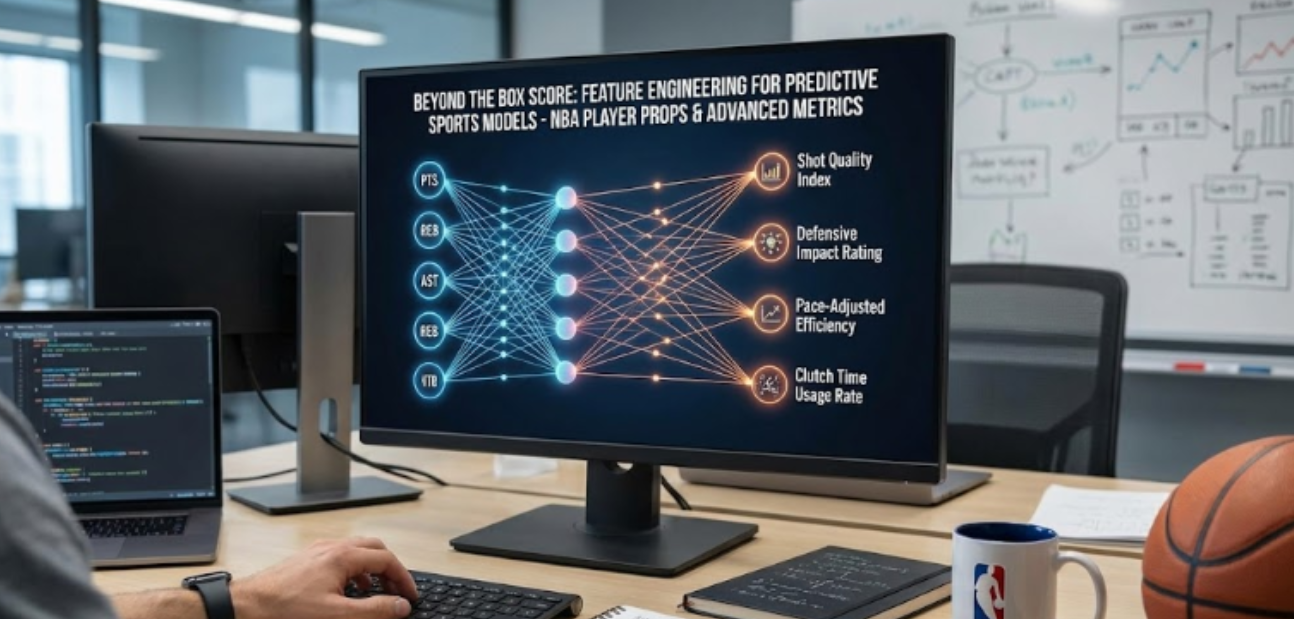
Beyond the Box Score: Feature Engineering for Predictive Sports Models Focusing on NBA Player Props and Advanced Metrics

Basketball analytics has experienced a revolution that is just as big as the industrial revolution. What we have moved away from is a cottage industry of manual tabulation and have gone to a high-fidelity, automated surveillance state. To data scientists and hardcore bettors who have to design predictive models for NBA Player props, this transition is a complete change in the unit of analysis. We have left the discrete and retrospective, the simple box score, behind and entered the continuous and probabilistic world of the spatiotemporal tracking.

Bookmaker algorithms are very efficient in the new betting ecosystem. Using “Macro-Level” statistics, such as the Points Per Game (PPG), is a clear drawback in competition. The exploitable edge, the Alpha, has been moved to the Micro-Level data, the X, Y, Z position of the players recorded at 25 frames per second. This paper outlines the theoretical models and operational procedures necessary to create state-of-the-art feature engineering pipelines to predict individual players’ performance beyond the box score by modeling the process, not just the result.

The Data Ecosystem: Building the Foundation

A predictive engine is based on the infrastructure of its data. To the NBA Player Prop modelers, the ecosystem is hierarchical, whereby disparate data sources must be combined based on their latency and granularity differences. The knowledge of this order is the initial step to creating a model that will be able to outperform the market.

The Hierarchy of Data Granularity

The modern data pipeline processes three distinct strata of information, each offering unique insights and requiring specific engineering approaches:

  1. Box Score Data (Structured/Low-Latency): This forms the foundation of historical analysis. It tells us what happened—LeBron James scored 25 points—but not how. Although it would work well with ground truth targets, its predictive capability is restricted by the fact that it is retrospective.
  2. Play-by-Play Data (Sequential/Event-Based): This layer provides a chronological sequence of events. It is essential in converting the so-called contextual features, including lineup-specific usage rates. With substitution logs, it is possible to compute the performance splits of a player when particular teammates are on or off the floor, which is an essential part of nullifying projections when receiving breaking injury news.
  3. Tracking Data (Spatio-Temporal/High-Volume): This forms the frontier of analytics. This data is originally offered by SportVU and currently by Second Spectrum and is a set of coordinates of every player and the ball. It enables one to calculate velocities, accelerations, and inter-player distances.

The Alignment Problem

One of the ongoing engineering challenges is the “Alignment Problem. There are usually inconsistencies between manually recorded timestamps in Play-by-Play (PBP) logs and tracking data generated by the machine. To generate reliable training sets (such as training a model to predict whether or not a shot will be successful based on the distance of the defenders), these streams need to be synchronized via the use of fuzzy matching algorithms or by detecting the abrupt change in the ball velocity to identify the frame of a shot.

Temporal Dynamics: Modeling Time, Fatigue, and Schedule

In NBA Player Props, the basic assumption of the performance of a player being independent and identically distributed (i.i.d.) is incorrect. Performance is a time-series phenomenon that is heavily affected by biological limitations of the human body and logistical strictness of the NBA schedule.

The Mathematics of “Recent Form”

The reason why static season averages are not good predictors is that they fall behind in the position or physical shape of a given player. Recency should be given priority in feature engineering, coupled with stability in the sample size.

  • Exponentially Weighted Moving Averages (EWMA): EWMA does not use an ordinary moving average but rather uses exponentially decreasing weights for the aged observations. This is better at identifying the breakout players whose position has permanently changed because of a change in the lineup or coaching decision.
  • Rolling Window Variance: In addition to the mean, the variance of a player is a very important feature. A player whose variance in shooting splits is large is a more dangerous bet to place on an over bet, but can be of huge value in an alternate line market where tail outcomes tend to be inefficiently priced.

Circadian Biology and Schedule Fatigue

The NBA schedule is a complicated variable, which creates physiological strain. It is necessary to encode this stress in smart models in order to predict diminished performance.

  • Rest Matrices: There is a statistically significant negative Effective Field Goal Percentage (eFG%) and Defensive Rating on 0 days rest (Back-to-Backs), and it has been observed to be especially true among high-usage veterans.
  • The “3-in-4” and “5-in-7”: Binary flags on schedule density (3 games per 4 nights) are used to define schedule losses, where player output is minimized in all parts of the board.
  • Altitude Adjustment: Aerobic capacity is affected by games that are played in elevated areas such as Denver or Salt Lake City. This attribute has to be heavily incorporated in predictive models of 4th-quarter props because starters tend to have fewer minutes or reduced efficiency in the later parts of games.

Advanced Box Score Derivatives: Deconstructing Efficiency

In order to forecast the amount of production (Points, Rebounds, Assists) in NBA Player Props, it is necessary to know the quality of the role and efficiency of the player. There is no more data, the artifacts of these underlying drivers, which are raw box score counts.

True Shooting and Shot Selection

Field Goal Percentage (FG%) is a very primitive statistic that considers all shots equal. Current-day modeling is based on derivatives such as the True Shooting Percentage (TS%), which uses both free throws and 3-pointers. TS percent is very predictive since it reflects the capability of a player to produce points in the line, which is a skill that is not as fluctuating as jump shooting. It is common to identify players with large TS% and small recent point totals as a good opportunity to buy, since their efficiency predicts that point totals will be recovered positively when volume returns to normal.

Usage Dynamics and The “Wally Pipp” Effect

Usage Rate (USG%) approximates the level of team plays utilized by a player on the floor. But there is not enough historical usage when the injuries strike. The concept of the redistribution of opportunity, as a result of an injury to a starter, due to which the opportunity is lost, is called the Wally Pipp effect. Dynamic Usage Projections should be a part of feature engineering. In case of a high-usage star being sidelined, his/her holdings are forced to be taken up by other players who are left on the roster. With/Without query features are used by the models to forecast the new hierarchy, and lineup-level data is processed to compute usage differentials, player-specific.

The Physics of Basketball: Optical Tracking Features

Quantified Shot Quality (qSQ) is, perhaps, the most powerful predictor of regression. This measure utilizes the XY-intercepts of the shooter and all the defenders to determine the likelihood of a shot being made, regardless of the eventual outcome.

Quantified Shot Quality (qSQ) and Expected Points

Luck can be detected by determining the Shot Quality Delta (Actual eFG% – Expected eFG%). A very positive delta is an indication of a player who is running hot (taking unsustainable shots), which indicates a Sell or Under bet. A negative delta is a bad omen on good shots, representing a “Buy” or an Over bet.

The Geometry of Rebounding

Rebounding has been considered as an effect of effort, but tracing data indicates that it is, in most cases, an effect of geometry.

  • Voronoi Tessellation: The court is divided into areas depending on the location of players. The most common theoretical probability of the rebound will be the player who currently has the biggest Voronoi region around the rim when he or she misses the ball.
  • Deferred Rebound Rate: This is a measure of how the percentage of uncontested rebound opportunities a player passes to a teammate.
  • Adjusted Rebound Rate: This measure isolates the Contested Rebound Rate. Proficiency in this area means that the players will be able to resist difficult playing situations compared to stat-padders, who are dependent on board space.

Potential Assists and the “Passer’s Bias”

Assists are obnoxious since they are based on the receiver’s shooting. The process of playmaking is measured by Potential Assists, which are a pass that results in a shot attempt. When a player has a high potential assists and low actual assists, then his or her conversion rate is probably experiencing variance. Their future help would be projected by a predictive model and regressed to the mean, with this detecting that the box score is missing.

Quantifying Defense: The Holy Grail of Context

The most important contextual variable in prop prediction is modeling the defense of the opponent. Nonetheless, such standard measures as Opponent Points Allowed are not enough. We have to design functions that pick out a certain matchup dynamics.

Hidden Markov Models for Matchup Estimation

We cannot just assume positions guard positions (e.g., PG guards PG). Currently, defenses change and cross-match. Hidden Markov Models (HMM) are the models used to predict the player who will be guarding the target player. The hidden variable is the defensive state, and the observable emissions are the spatial locations of the players. This then enables us to build a weighted Matchup Difficulty Score, which is player-specific.

Scheme Identification

Defenses employ different tactical schemes (Drop, Hedge, Blitz, Switch).

  • Aggression+: A metric of the frequency with which a defense uses two defenders on the ball.
  • Variance+: Quantifies the frequency of a change in coverage of the defense. Terms of interaction are important here. A ball handler, with high turnover, against a high “Aggression+” defense is a good indication of “Over Turnovers” props. On the other hand, a pull-up shooter compared to a drop coverage scheme is considered more efficient by projection.

Machine Learning Architectures and Feature Selection

These features are complicated and demand advanced techniques of modeling, as they will prevent over-fitting and non-linear interactions.

  • Dimensionality Reduction: As tracking data produces millions of data points, compressing data on trajectories into understandable ways that can be interpreted requires methods such as Principal Component Analysis (PCA) and Non-Negative Matrix Factorization (NMF).
  • Gradient Boosting (XGBoost/LightGBM): They are the industry standards of tabular sports data, and do well with the non-linearities, and offer metrics of feature importance.
  • Graph Neural Networks (GNNs): An innovative strategy that constitutes the court as a graph, with the players being the nodes and the interactions being the edges. GNNs can uniquely be learned on tracking data, learning complicated dynamics of chemistry and spacing.

The Betting Market: Execution and Strategy

The predictive model can only be useful to the extent to which it has been applied to the market. The last step will be locating inefficiencies and controlling your bankroll.

Market Inefficiencies

  • The “Under” Bias: There is a psychological bias among people towards Overs (rooting against action). As a result of this, lines are usually overstated by bookmakers. Models will tend to have a higher Expected Value +EV on “Under” bets, especially when it comes to role players whose mileage is shaky.
  • Rotation Risk: The minutes distribution is not normal. Depending on the score of the game (blowout risk), starters may play 35 minutes or 28 minutes. It is important to model the distribution of the minutes and not just the mean.

The Kelly Criterion

Bet sizing must be Kelly-based (betting by the Kelly Criterion) to maximize long-term growth, which is computed by the Kelly Criterion based on your edge and odds. Since NBA Player Props are highly varying, practitioners frequently apply the strategy of the fractional Kelly (e.g., bet half of the recommended value) in order to eliminate the effect of a volatile bankroll and, nevertheless, gain the benefit of the model.

Nike and EA SPORTS join forces a first within EA SPORTS FC

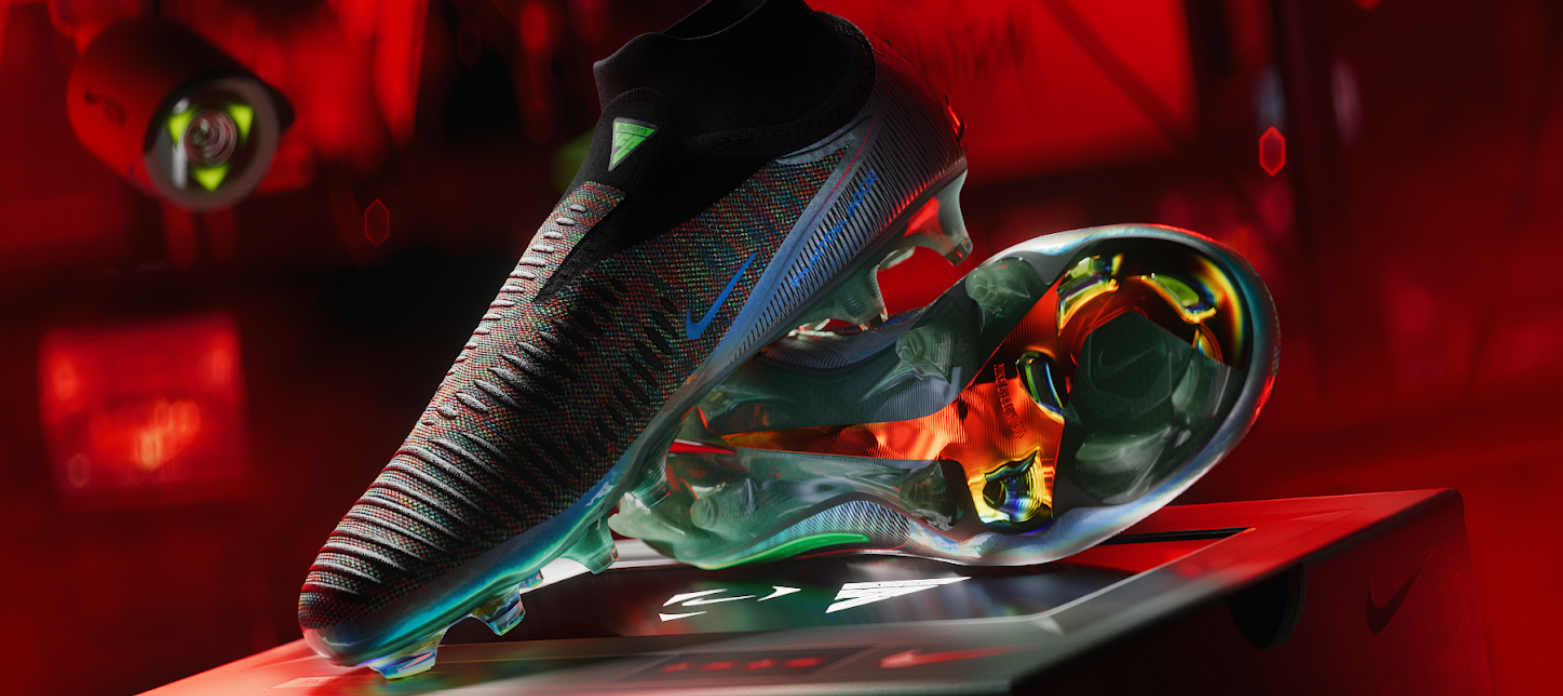
Nike and EA SPORTS have joined forces for a first within EA SPORTS FC. The Nike and EA SPORTS FC collaboration blends the real and digital worlds of football by crafting unique, virtual-first designs for both players and football fans.

The soon-to-be-released co-branded Nike Phantom boot is inspired by EA SPORTS FC 26 and its community — bringing a digital-first design to life.

  • Launch: September 29 on Nike.com and at select retailers
  • In-Game: A digital version of the Nike EA SPORTS FC Phantom will also be earnable in FC 26


Product Names:

  • Nike Phantom 6 Low SE “EA SPORTS FC”
  • Nike Phantom 6 High SE “EA SPORTS FC”


Design Details:

The EA SPORTS FC colourway is the first of its kind. From the pixel-heavy Swoosh to the 3D render-inspired design and limited-edition colourway, this boot shows everyone that the pitch is yours for the taking. Multi-colour threading keeps the game looking as electric as it feels, while pixelated textures on the lateral Swoosh and iridescent outsole triangles nod to the 3D rendering elements of gaming.

Aviva Insurance Ireland and ClubberTV join forces in multi-year partnership

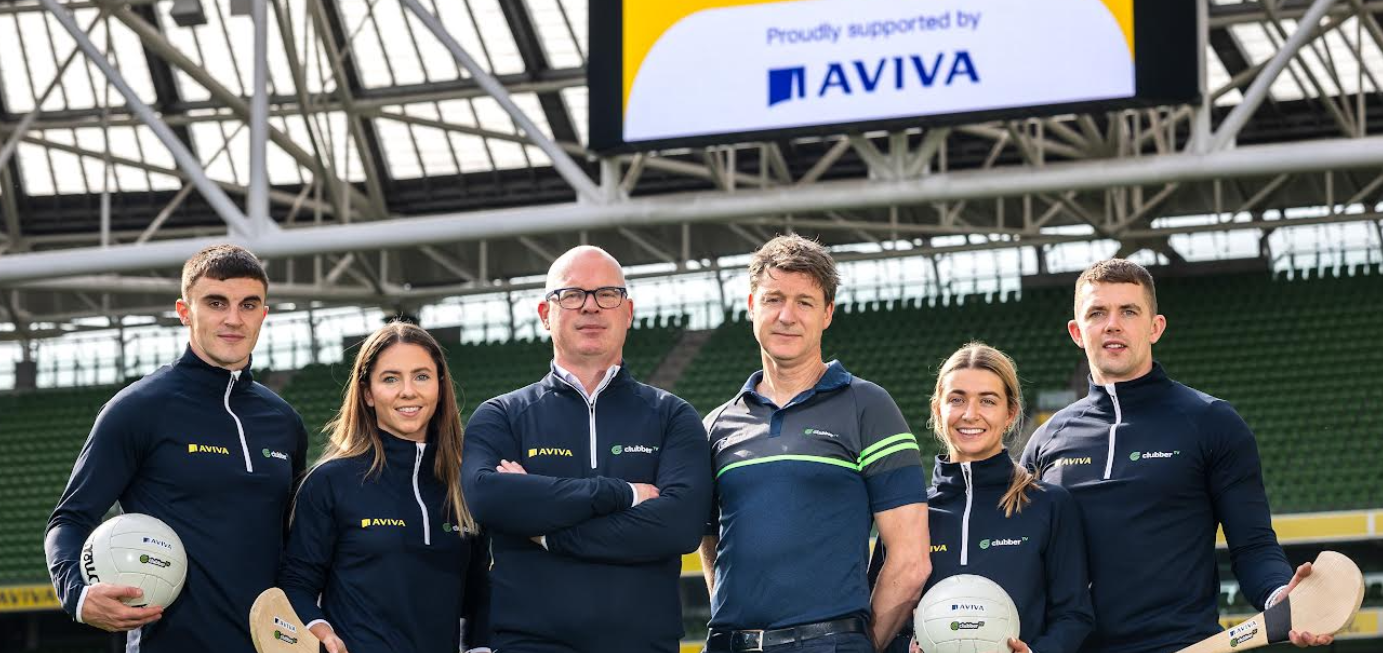
Aviva Insurance Ireland, one of Ireland’s leading insurance providers, has today been announced as a major partner of ClubberTV, the fast-growing sports streaming platform transforming how grassroots GAA and community sport are brought to fans across Ireland and beyond.

The new partnership marks a significant moment for both organisations, bringing together Aviva’s long-standing commitment to Irish sport with ClubberTV’s innovative approach to live and on-demand sports coverage.

Under the new agreement, Aviva will become an official partner of all ClubberTV coverage for the upcoming 2025/26 season, with prominent branding integrated across Clubber’s live match broadcasts, digital platforms, and community outreach initiatives, reinforcing both organisations’ dedication to growing grassroots sport.

Speaking at the announcement, Declan O’Rourke, CEO at Aviva Insurance Ireland commented, “At Aviva Insurance Ireland, we understand the power of sport to connect communities, and grassroots GAA is at the heart of communities throughout the country. We are proud to support the growth and development of ClubberTV in making our national game more accessible to national and global audiences. We’re delighted to support a platform that gives communities more in terms of access, entertainment and inspiration”.

Founded in 2020, Clubber has become Ireland’s leading live streaming platform for local and grassroots sport. Using cloud-based technology, it removes the need for traditional broadcast infrastructure, enabling high-quality, live coverage from any location. This year alone, it will stream over 1,500 games, cementing its position as the go-to platform for grassroots and semi-professional sports. Clubber holds exclusive, multi-year GAA broadcast rights across Ireland and is actively expanding its footprint into additional counties, sports, and international markets.

Jimmy Doyle, CEO of Clubber TV added, “To welcome Aviva Insurance Ireland as our first major partner is a proud moment. It validates the vision we’ve had from day one: to unlock the power of local sport and bring it to fans everywhere. Together with Aviva, we look forward to increasing the visibility of grassroot sport.”

 Fans can watch games from 14 counties including the Tipperary, Cork and Kilkenny Club Hurling Championships, as well as the Kerry, Kildare and Meath Club Football Championships, plus some of the Camogie Club Championships with flexible subscription options.

Collaboration between academia and industry could give Irish sprinters an edge at the 2028 Olympics in Los Angeles

Elite Irish sprinters participating in a study at Lero, one of the world’s leading software research centres at the University of Limerick, to determine the effectiveness of super spike sprint shoes, could boost their chances of success at the 2028 Olympics.

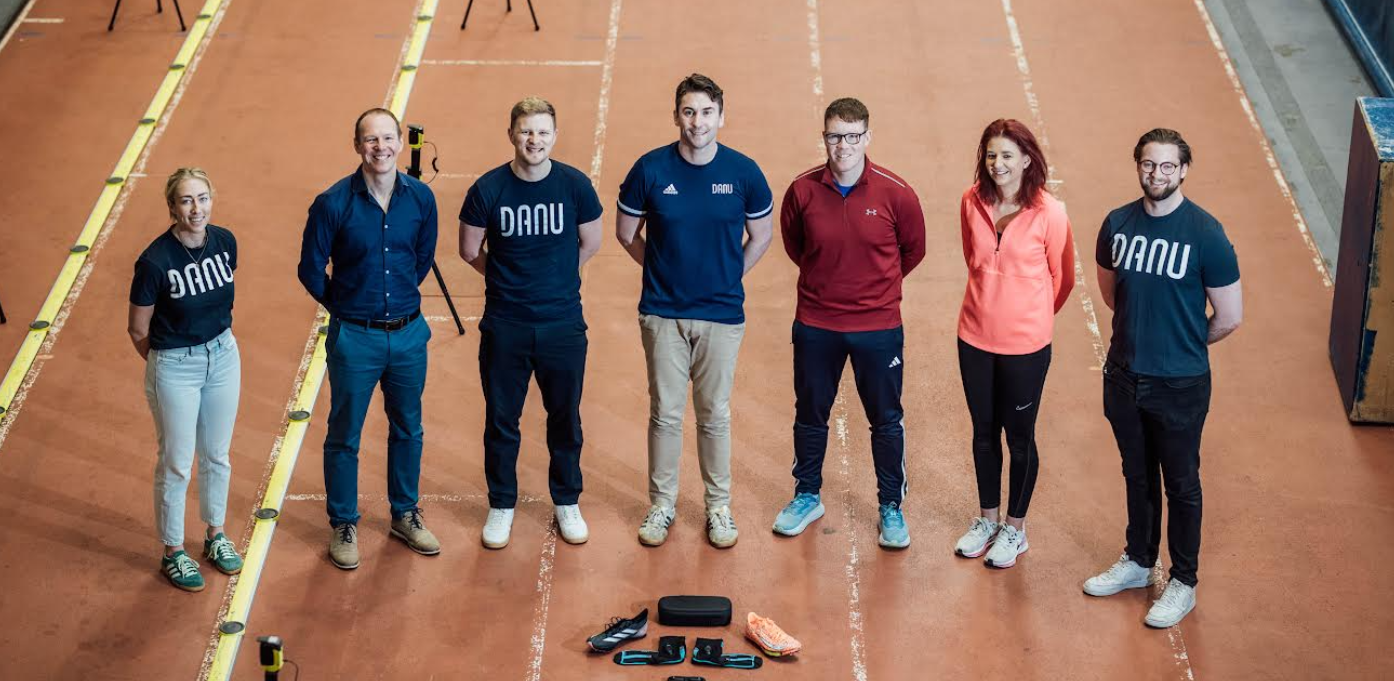
Lero researchers at the University of Limerick’s Sport and Human Performance Research Centre (SHPRC) have embarked on the research in collaboration with innovative Irish sports analytics company DANU are still recruiting elite Irish athletes to use DANU’s groundbreaking wearable smart socks technology to capture and analyse athlete-specific data, focusing on the biomechanical assessment of super spike shoes.

Professor Ian Kenny questioned whether athletes at the 2024 Olympics choose super spikes due to sponsorship deals or for their technological benefits and injury prevention.

“Using real-world metrics on the track and not the lab, we will gain key insights into the benefits of DANU’s technology, super spikes, and their impact on our elite sprinters – gaining a fraction of a second could give an Irish athlete a podium finish and a medal,” he added.

Lero researcher Shane Hassett said the research will quantify performance outcomes such as speed, ground contact time, flight time, muscle activation, and ankle kinematics to distinguish super spike shoes from other running spikes.

“We will investigate if the DANU sports system can be used to monitor biomechanical changes in gait when wearing the super spike shoes, focusing on how specific components biomechanically change an athlete’s sprint profile,” he added.

DANU founder and CEO Oisín Lennon said they are delighted to continue their collaboration with the University of Limerick and LERO, who he described as leaders in software and research innovation.

“UL supported us in our early development, playing a vital role in validating our technology and shaping the direction of our platform. That early partnership was instrumental in helping us move from concept to a scientifically grounded product.

“Now, it’s incredibly rewarding to see LERO and UL using our technology to drive groundbreaking research in elite sprinting – pushing the limits of what’s possible in biomechanics and performance science.

“Collaborating with researchers of this calibre not only validates our approach but also ensures we stay at the forefront of innovation. We’re excited to contribute to work that has the potential to impact sport at the highest level.”

Sport Ireland digitally maps over 12,000 recreational facilities in Ireland

Esri Ireland, the market leader in Geographic Information Systems (GIS), today announces that its digital mapping system is being used by Sport Ireland to digitally map over 12,000 recreational locations and facilities across the island of Ireland.

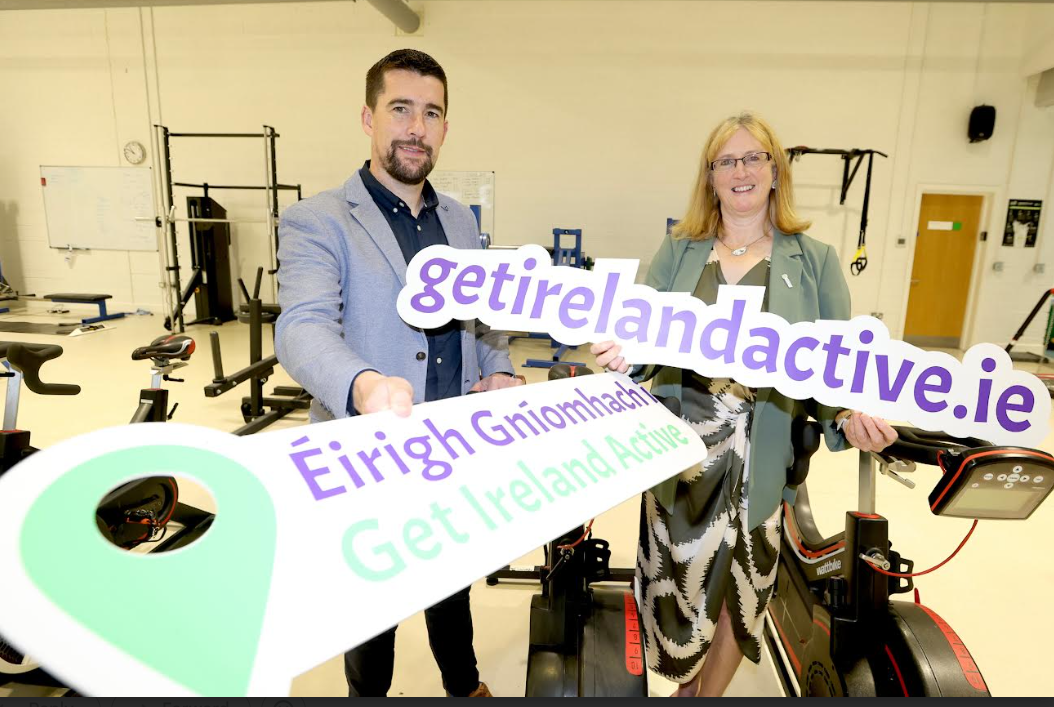
Sport Ireland has launched Get Ireland Active, a national digital hub which maps sports and recreation facilities, walking and cycling trails, public parks, and other amenities around the country to promote higher levels of physical activity.

Sport Ireland is the national authority responsible for developing sport and outdoor recreation in Ireland. Based on Esri’s ArcGIS system, Sport Ireland and Derilinx created Get Ireland Active, which anticipates over 15,000 visitors per month and aims to inspire people to get involved in sport and other recreational activities to improve their health and wellbeing.

The interactive digital map addresses the need for a single, authoritative source of data about sports facilities in Ireland that can provide ways for citizens to become more active, and can also be used to support policy decisions and inform the development of new facilities.

Validated data, for the whole of Ireland, is available to stakeholders via the fully interactive online data hub, created with ArcGIS Hub Premium. Users can collate, verify, analyse, and share data in real-time, including development, planning, and socio-demographic information. This provides actionable insights and allows policy makers in central and local government, sporting bodies, and other stakeholders to analyse gaps in the provision of services and easily identify development land or other potential areas that might be available to site new facilities.

Sport Ireland conducted audits of all sports facilities in Ireland to create the central data hub, which is flexible and scalable and will continue to be updated as data is made available.

Dr Úna May, CEO, Sport Ireland, said: Esri Ireland’s expertise has been crucial in bringing the Get Ireland Active database to life. Their technology allows us to offer a user-friendly platform that has comprehensive information about recreational activities across Ireland.

“Technology is transforming how we approach our everyday lives, and it’s vital that we use this to our benefit. Our collaboration with Esri Ireland has made this a reality, and we are excited to build upon this work through the continued development of the Get Ireland Active database.” 

Padraig Quinn, Senior Account Manager, Esri Ireland, said: “We are proud to have supported the development of the Get Ireland Active national database, Ireland’s interactive activity, sport, and recreation hub. The benefits of having an interactive hub which can direct members of the public to their closest sport or recreation facilities are invaluable, especially coming into the winter months. Furthermore, the hub will continue to inform future development of sporting facilities across Ireland and embed a love of sport and the outdoors for both present and future generations. We are looking forward to continuing to work with Sport Ireland as the hub continues to grow.”

EA SPORTS FC and Nike Collaborate on Exclusive Nike x EA SPORTS FC Founders Shirt

EA SPORTS FC and Nike are merging digital and on-pitch football at a new level with an exclusive, physical Nike x EA SPORTS FC Founders shirt. For the first time, fans will be able to access digital products and purchase a physical  shirt for themselves through .SWOOSH, Nike’s home for gaming. Nike members will be able to link their EA account associated with their FC Founders status with Nike Membership and pre-order the product beginning November 13 (9:30am PT / 5:30pm GMT / 6:30pm CET) in order to redeem access to the product.

The Nike x EA SPORTS FC Founders shirt is inspired by retro kits from the ’90s and is made exclusively for Founders, the biggest fans of the game. Founders build the future of FC, and this piece is a celebration of the FC Founder community.

Additionally, Nike and EA SPORTS’ expanded partnership  also includes exclusive, in-game Nike kits for Founders and Club members within EA SPORTS FC 25.

BUY

TELUS Digital and Ringmahon Rangers Partner up to Promote Local Sports

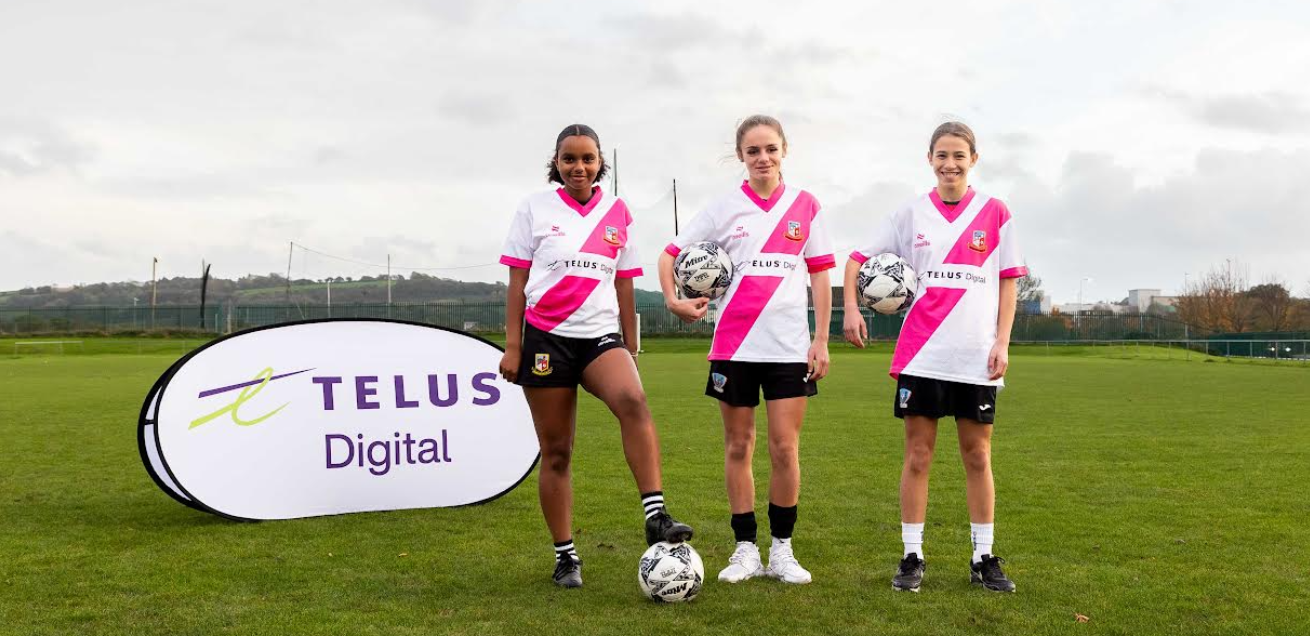
For the second year, TELUS Digital has announced their sponsorship of the Ringmahon Rangers AFC, U14s/15s girls team. TELUS Digital has partnered with the football club in the Southside of Cork City, in an effort to support young women who are choosing to pursue sport.

Commenting on the community sponsorship, Miriam Manning, Director of Human Resources at TELUS Digital said: “Ringmahon Rangers FC is right on our doorstep in Cork. We are so proud to sponsor a team here in our community in Mahon. The team are absolute rays of sunshine and their love of the game is clear for all to see. We’re proud to encourage their continued participation, particularly in the early years of their sporting life.”

Ringmahon Rangers AFC was founded in 1951 and is based in the Southside of Cork City. The club offers training for a range of ages from 4 years old to seniors.

Welcome to the world of “Nike x EA SPORTS FC: WHAT THE FC” in EA SPORTS FC 24

The ‘WHAT THE FC’ takeover of EA SPORTS FC 24 Season 6 will bring focus to the heritage and innovation of Nike’s most iconic football collections

Today, the out of this world “Nike x EA SPORTS FC: WHAT THE FC” takeover comes to EA SPORTS FC 24. Nike and EA SPORTS FC have teamed up to create a one-of-a-kind experience that takes football to places it’s never been before. Players will experience a world that celebrates the beautiful game and all things football, including customization items, objectives and more across Ultimate Team™, Clubs and VOLTA FOOTBALL™.

“We’re excited to create amazing new possibilities for FC 24 players with Nike” said DJ Jackson, VP, Franchise Strategy and Marketing. “WHAT THE FC blurs the virtual and real worlds of football culture, through designs that celebrate Nike and EA SPORTS FC heritage, as worn by stars of the game, past and present.”

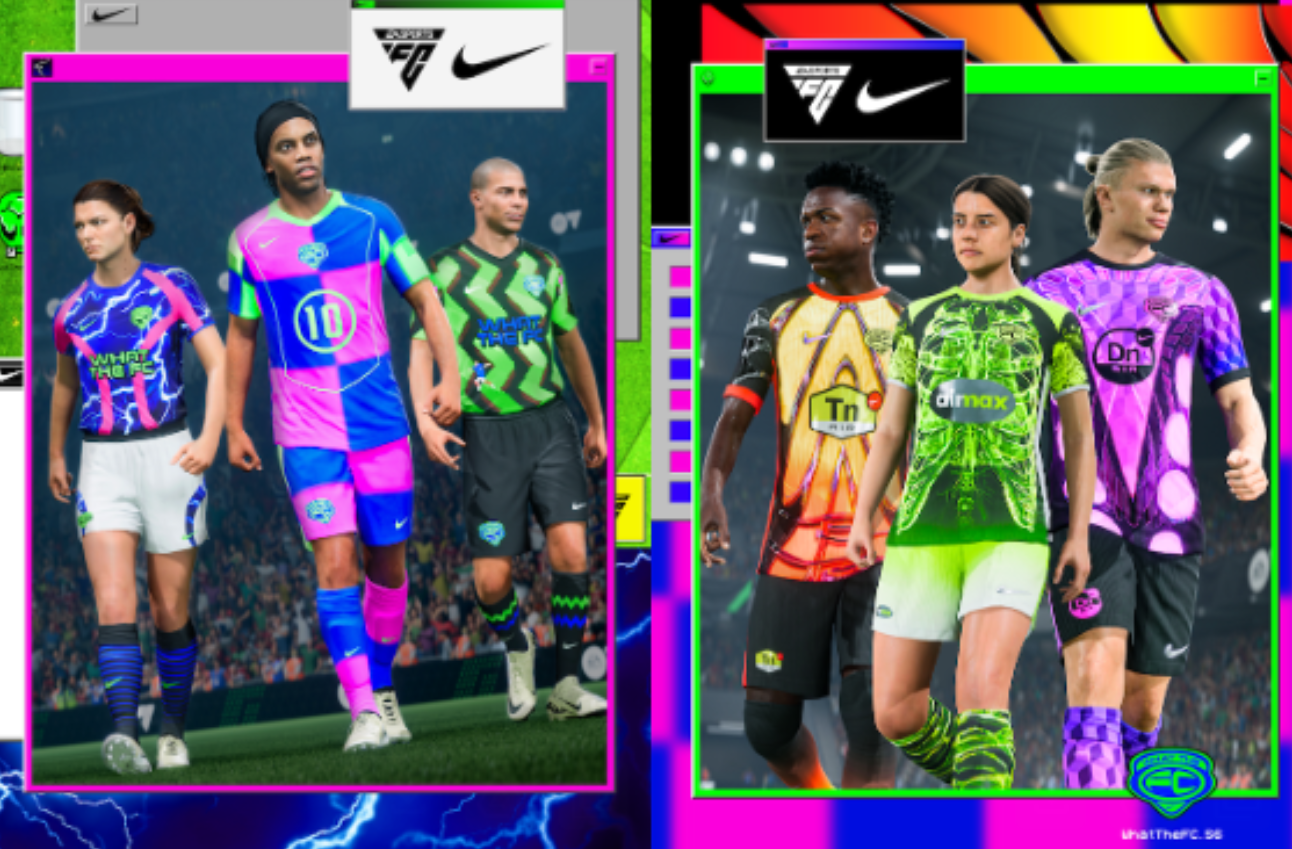
‘WHAT THE FC’ will feature two headline Kit and Stadium collections:

Nike Air Max Collection: Inspired by legendary Nike Air Max innovations past and present, and vetted by stars of today such as Sam KerrVini Jr. and Erling Haaland, the Nike Air Max collection represents virtual-first designed items inspired by the popular Nike Air Max Plus Tn, Nike Air Max 95, and all new Nike Air Max Dn collections.

Nike x EA SPORTS FC Heritage Collection: Honouring legends of the game such as Mia HammRonaldinho, and Ronaldo and featuring iconic Nike Football kits, the Nike x EA SPORTS FC Heritage collection is inspired by EA SPORTS FC’s heritage with a retro twist.

In addition to this, players can earn other ‘WHAT THE FC’ seasonal customization items; such as crests, stadium themes, TIFOs, VIP areas, trophies, VOLTA FOOTBALL apparel, footwear and more.

International Rugby Experience to be Gifted to People of Limerick

One of Ireland’s leading visitor attractions, the state-of-the-art International Rugby Experience (IRE) on O’Connell Street, Limerick, will be donated by JP McManus and his family to the people of Limerick.
The IRE, initially funded through a €30 million investment by the JP McManus Charitable Foundation, is a fully immersive, hands on, multi-sensory experience designed to engage and inspire families and individuals alike. Inspired by World Rugby’s values of Passion, Discipline, Integrity, Solidarity and Respect, visitors hear the stories, feel the passion and test their own skills as they move through six, awe-inspiring stages inside the ‘Home of Legends’.
Following a process of due diligence, the 30,000 square foot centre will be owned and operated by Limerick City & County Council. It is envisaged that Discover Limerick DAC, a wholly owned subsidiary of Limerick City and County Council, will oversee the day-to-day operations, while the IRE will continue to be managed by the existing team appointed on opening last year.
Heads of Terms have been signed by both parties and the transition process will commence once due diligence is completed. This transaction will enhance the current offering of Discover Limerick DAC particularly for visitors also travelling to their other attractions, such as King John’s Castle, Lough Gur Visitor Centre and Adare Heritage Centre.
Designed by renowned architect, Níall McLaughlin, the Royal Institute of the Architects of Ireland (RIAI) announced the IRE as the winner of the Public Choice category at the Irish Architecture Awards 2023 and the building has since been recognised internationally for its world class design and structure. The ground floor retail space, first floor café and event spaces will also come under the remit of the local authority.
It has been an eventful first year in operation for the IRE, with a star-studded launch last May featuring legends of the game such as Jonathan Sexton, Martin Johnson, Sean Fitzpatrick, Bryan Habana, Joy Neville, Matt Dawson, Danielle Waterman and Francois Pienaar.
International Rugby Experience CEO, Barry Hannon said: “Over the course of the first year in operation, we have seen our corner of O’Connell Street revitalised by the International Rugby Experience with visitors to the building from far and wide to partake in the AV experience, for our local food offering or to support one of the many local artists who are displaying in our gift shop. We would like to recognise Paul O’Connell and Keith Wood for their incredible insight and expertise to ensure the successful outcome of the project. The IRE has truly become the public and civic building we sought to create and this next stage of the journey in public ownership will protect the buildings legacy, outlasting us all for generations.”
Deputy Chief Executive of Limerick City & County Council, Gordon Daly added: “This is an exciting opportunity for the Council to add International Rugby Experience to our existing successful tourist attractions; King Johns Castle, Lough Gur, Limerick Greenway and Adare Heritage Centre and build stronger synergies to drive tourism development and promotion in Limerick. We are working closely with IRE to advance the due diligence process and commence the transition.”
For more information, or to book tickets, visit: www.internationalrugbyexperience.com