Earning Passive Income from Your Crypto Assets: Understanding the Pros and Cons of CoinDepo Compound Interest Accounts

Depositing crypto assets on various crypto lending platforms has become increasingly popular as more people seek to earn passive income from their digital assets. By depositing your funds on a platform that offers interest-bearing accounts for digital assets, such as CoinDepo Compound Interest Accounts, you earn interest in cryptocurrencies or stablecoins. The interest rates offered depend on the platform you choose and the particular cryptocurrency or stablecoin you are depositing.

Benefits of Depositing Your Crypto Assets in Compound Interest Accounts

  1. Passive Income

One of the most significant benefits of depositing crypto assets is the ability to earn a stable passive income, regardless of the volatility inherent in most cryptocurrencies. Unlike mining, which requires significant computing power and energy, or staking, depositing digital assets on crypto lending platforms is much easier, does not require special equipment, and allows you to receive higher income. This makes it an attractive option for individuals who want to earn additional income without having to put in a lot of effort.

If you’re interested in depositing your digital assets, there are a variety of crypto lending platforms available that can help you get started. One such platform is CoinDepo https://coindepo.com/, a leading financial services provider in the digital asset market that offers Compound Interest Accounts for a variety of popular cryptocurrencies and stablecoins.

CoinDepo offers services for opening Compound Interest Accounts for major cryptocurrencies such as Bitcoin, Ethereum, Ripple, Litecoin and others, as well as USDT, USDC and DAI stablecoins. By depositing your digital assets on CoinDepo, you immediately start earning compound interest, which is paid on a regular basis, daily, weekly, monthly, semi-annually or annually, depending on the type of CoinDepo Compound Interest Account you choose, and providing you with a stable source of passive income. If you want to get the most out of your digital assets, depositing cryptocurrencies and stablecoins with CoinDepo can be a great option. 

CoinDepo is one of the most reliable platforms offering the best interest rates on the market: up to 18% per annum for cryptocurrencies and up to 24% per annum for stablecoins. By keeping (reinvesting) the regularly paid compound interest in the account, your effective rate of return (Annual Percentage Yield (APY)) will be even higher when the effect of compound interest is taken into account. Today, CoinDepo’s services are available to Indian users who are looking to earn maximum profit from their digital assets.

  1. Lower Risk

Depositing digital assets on crypto lending platform is generally considered a lower-risk investment compared to trading or conventional investment in cryptocurrencies. By depositing your crypto assets in Compound Interest Accounts and earning regular interest income, you are less exposed to the volatility and price fluctuations that can occur in the cryptocurrency market.

  1. Accessibility

Depositing digital assets in Compound Interest Accounts for cryptocurrencies and stablecoins is generally more accessible than other forms of passive income. Unlike investing in traditional stocks or real estate, there are typically no minimum investment requirements for for depositing crypto assets. This means that anyone can participate, regardless of their financial situation.

Risks of Depositing Your Crypto Assets in Compound Interest Accounts

  1. Technical Knowledge

Depositing digital assets requires some technical knowledge, and it’s important to understand the process before getting started. You’ll need to have a basic understanding of blockchain technology, as well as the specific cryptocurrency or stablecoin you’re depositing in Compound Interest Accounts. If you’re not comfortable with the technical aspects, it may not be the right choice for you.

      2. Network Risk

When you deposit your cryptocurrency or stablecoin into Compound Interest Accounts, you are using the blockchain network. However, if the network experiences issues or is compromised in any way, your digital assets could be at risk. It’s important to choose a reputable cryptocurrency and stablecoin to minimize this risk.

      3.Volatility

It’s important to keep in mind that while depositing cryptocurrency in Compound Interest Accounts can be a great way to earn passive income from your crypto assets, it does come with some inherent risks. The volatility of the cryptocurrency market means that the value of your deposited crypto assets can fluctuate significantly.

This volatility is often driven by a variety of factors such as market demand, regulatory changes, and global economic events. As a result, it’s important to consider the risks involved before depositing your assets on a crypto lending platform.

To mitigate the risk of volatility, it’s crucial to diversify your portfolio and not put all your eggs in one basket. This means spreading your assets across different cryptocurrencies and stablecoins to minimize your exposure to market fluctuations.

     4. Crypto Interest Rates

Interest rates on Compound Interest Accounts for digital assets can be variable, and there is no guarantee that you’ll earn a specific amount of passive income. The amount of interest you receive will depend on a variety of factors, including the cryptocurrency or stablecoins you deposit, the crypto lending platform you use, and the current market conditions.

Tips for Successful Depositing Your Crypto Assets

If you’re interested in depositing your digital assets in interest-bearing accounts, there are a few tips that can help you be successful:

  1. Choose a reputable cryptocurrency or stablecoin and a crypto lending platform. Look for platforms that have a proven track record and a strong reputation in the industry.
  2. Understand the process and technical aspects. Make sure you have a solid understanding of blockchain technology and the specific cryptocurrency or stablecoin you are depositing into a crypto lending platform.
  3. Diversify your crypto portfolio. Consider depositing multiple cryptocurrencies and stablecoins to minimize risk and increase your potential profit.
  4. Keep up with market trends and conditions. Stay informed about the cryptocurrency market and adjust your investment strategy as needed.

Conclusion

Depositing your crypto assets in Compound Interest Accounts can be an attractive option for earning passive income. It offers a lower-risk investment compared to trading or conventional investing in cryptocurrency, and it’s generally more accessible to individuals with varying financial situations. However, it’s important to understand the benefits and risks before depositing your crypto assets on a crypto lending platform.

Depositing your crypto assets on a crypto lending platform comes with some technical knowledge requirements and potential risks, such as network risk and volatility.

Royal Liston Group Review: 4 leading technical indicators to stay

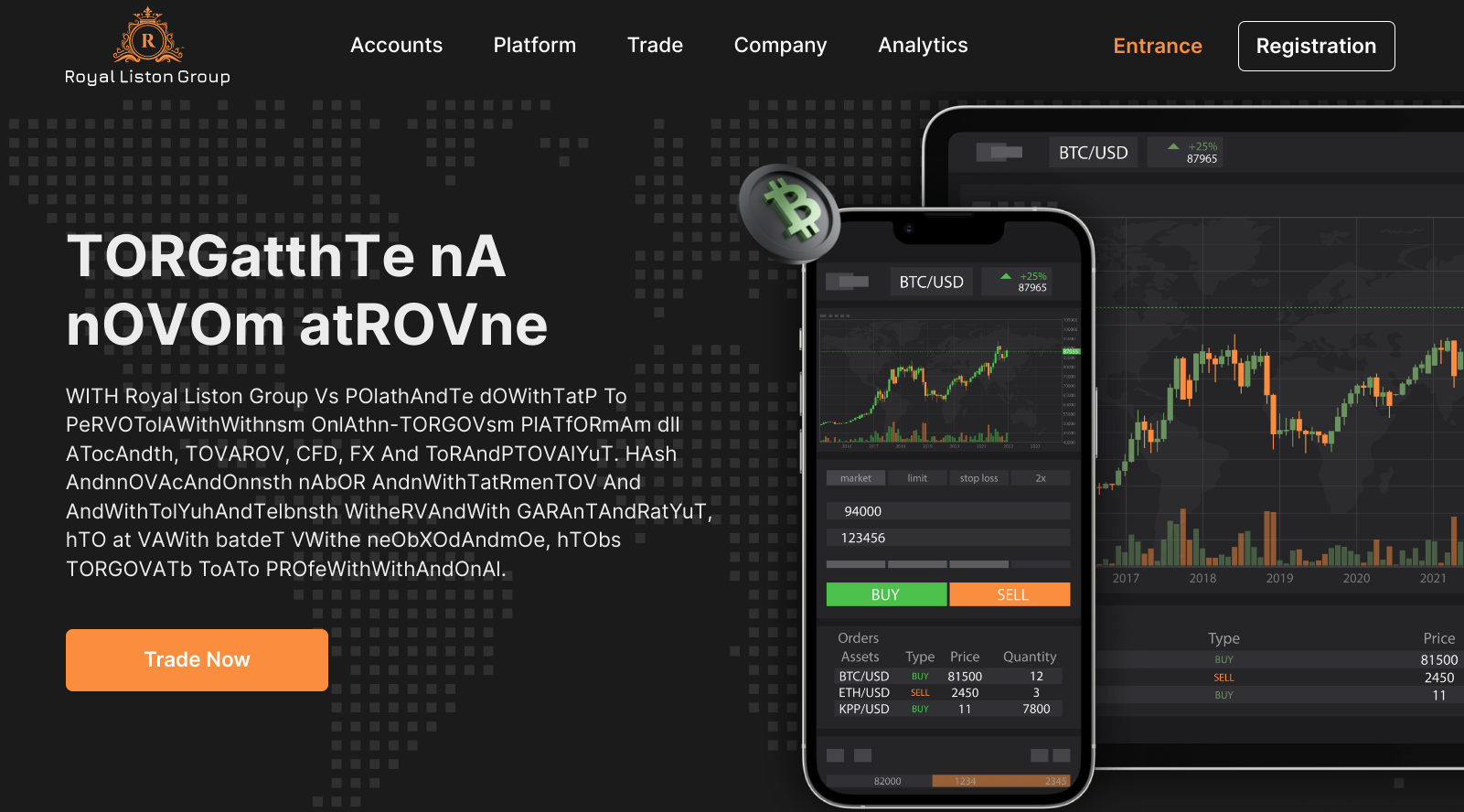
Royal Liston Group has been a premiere brokerage platform when it comes to dealing with a wide variety of instruments. With more than 60 instruments available, Royal Liston Group is the perfect brokerage platform for traders globally. As per global reviews, the brokerage platform is supported by the leading technological analytic tools and guarded by leading cybersecurity models. Technical analysis is crucial when it comes to trading in the forex market – but, with the market dynamics changing consistently, the leading brokerage platforms are switching to more robust technological indicators. 

In this article, we shall focus on the leading technological indicators available in Royal Liston Group to make your trading journey smoother. So, let us get started!

Leading technological indicators available at Royal Liston Group

Royal Liston Group is the home to a wide variety of indicators needed for technological analysis of the forex market. Let us have a quick look at the different technological indicators that are available in this brokerage platform:

a. Candlestick analysis: Candlestick is a very traditional way of looking into the technical movements of the Forex market. Yet, it gives a very deep analysis in terms of where the market is heading into, as well as the key trends that every trader should follow. With the help of Candlestick analysis, a leading indication can be generated to help traders win the market. Moreover, Candlestick analysis also ensures that the traders can use different indicators available in order to analyze the chart deeply.


b. Exchange ticker: An exchange speaker helps in keeping a track of all the market movement across the global exchanges easily. Forex market is highly interrelated with each other. Thus, keeping a track of the global exchanges will help you to understand where the market is heading to.


c. Crypto Market: Digital currencyis the new trend, and every other trader wants to make some quick bucks through crypto trading. Tracking the crypto markets can often be a little tricky due to the high volatility, but with this brokerage platform you can seamlessly track the crypto markets and make your trades accordingly.


d. Market quotes: Market quotes can help traders understand the current price for a particular instrument across the market. This tool is quite beneficial if you’re trying to track the global markets across the single dashboard. Be it the bonds market, the cryptocurrency market, or the futures market – you can track them seamlessly with market quotes. 

Experiencing the best with Royal Liston Group

Now that we have taken a glimpse into the leading indicators that are available with Royal Liston Group, what else are you waiting for? Opening a brokerage account with this platform is as simple as it can get. All you need to do is to ensure that you have a list of documents that are required for the account verification, and you’re good to go.

In addition to the technical tools as mentioned, there is a list of features like personal account managers and account types – for the traders to select from. Moreover, the leverage option being provided by them is lucrative and that makes it stand out. Leverage is a crucial component when it comes to trading in the forex market. Sign up right now and experience the best. 


How to Buy and Sell HT on Huobi Global Exchange

Broadening your knowledge on cryptocurrency trends and trading strategies is crucial, and allin1bitcoins.com provides a comprehensive overview of the cryptocurrency market. This makes it a valuable resource for traders at all levels who wish to enhance their trading skills and market understanding.

Before we dive into the specifics of buying and selling HT on Huobi Global, it is important to understand what HT is and why it is valuable. HT, also known as Huobi Token, is a digital asset created by Huobi Group in 2018. It is a utility token used to access exclusive Huobi products and services, as well as to obtain discounts on trading fees. HT has a fixed supply of 500 million tokens and a deflationary mechanism that reduces its supply over time, increasing its scarcity and value.

Now, let’s get started with buying and selling HT on Huobi Global Exchange.

How to Buy HT on Huobi Global Exchange

Create an account on Huobi Global

The first step in buying HT on Huobi Global is to create an account on the exchange. Go to the Huobi Global website and click on the “Sign Up” button. You will be prompted to provide your email address and create a password.

Verify your account

Once you have created your account, you will need to verify your identity before you can start trading on Huobi Global. Click on the “Verification” tab and follow the instructions to complete the KYC (know your customer) verification process.

Deposit funds

After your account is verified, you can deposit funds into your Huobi Global account. Huobi Global supports a variety of deposit methods, including bank transfers, credit/debit cards, and cryptocurrencies. Choose the deposit method that works best for you and follow the instructions to complete the deposit.

Buy HT

Once your funds have been deposited, you can buy HT on Huobi Global. Navigate to the HT trading page and choose the trading pair that you want to use to buy HT. Huobi Global supports a variety of trading pairs, including HT/BTC, HT/ETH, and HT/USDT. Enter the amount of HT that you want to buy and click on the “Buy” button.

Congratulations! You have successfully bought HT on Huobi Global Exchange.

How to Sell HT on Huobi Global Exchange

Navigate to the HT trading page

To sell HT on Huobi Global, navigate to the HT trading page and choose the trading pair that you want to use to sell HT.

Choose the amount of HT to sell

Enter the amount of HT that you want to sell and click on the “Sell” button.

Confirm the transaction

Review the transaction details and confirm the sale. The funds from the sale will be deposited into your Huobi Global account.

Congratulations! You have successfully sold HT on Huobi Global Exchange.

Conclusion

In conclusion, Huobi Global Exchange provides a convenient and user-friendly platform for buying and selling HT. With its extensive range of trading options and exclusive products and services, users can easily navigate the world of cryptocurrency trading. By following the steps outlined in this article, you can confidently trade HT on Huobi Global Exchange and take advantage of its many benefits.

The Benefits of Cross-Chain Trading on a Gasless Crypto Exchange

In the fast-paced world of blockchain technology, cross-chain trading has become an increasingly important trend. Cross-chain trading refers to the ability to trade cryptocurrencies and digital assets across different blockchain networks. This allows users to access a wider range of assets and take advantage of new opportunities in the rapidly evolving blockchain ecosystem. A gasless crypto exchange can provide a number of benefits for users engaging in cross-chain trading.

What Is Cross-Chain Trading?

Before delving into the benefits of cross-chain trading on a gasless exchange, it’s important to understand what this actually is. In essence, cross-chain trading involves the exchange of one cryptocurrency for another across different blockchain networks. This means that users can trade digital assets on one blockchain network for digital assets on another blockchain network without the need for intermediaries or third-party exchanges. 

Cross-chain trading is made possible through the use of decentralized exchanges (DEXs) like mangata DEX, which allow users to swap one cryptocurrency for another in a peer-to-peer manner. Because of this, such platforms increasingly attract more and more users.

Benefits of Cross-Chain Trading on a Gasless Crypto Exchange

Gasless crypto exchanges can provide a number of benefits for users engaging in cross-chain trading. One of the main benefits of using such a platform is the ability to save on gas fees. They can be a significant burden for users engaging in high-frequency trading or those who frequently use decentralized applications (dApps). 

Gasless exchanges use off-chain solutions to process transactions and execute trades, which means that users can avoid the unpredictability and expense of gas fees. This can make cross-chain trading more cost-effective and accessible for a wider range of users.

Another benefit of using a gasless exchange is increased privacy and security. Traditional centralized platforms often require users to provide personal information, such as their name, address, and identification documents, to comply with Know Your Customer (KYC) and Anti-Money Laundering (AML) regulations. 

Gasless exchanges, on the other hand, do not require users to provide personal information, allowing them to trade with greater privacy and anonymity. This can be particularly important for those who are concerned about their privacy and security when engaging in cross-chain trading.

Additionally, gasless exchanges can be more accessible to a wider range of users. Traditional centralized exchanges can be difficult to use for those who are new to cryptocurrency or have limited technical knowledge. Gasless exchanges are designed to be user-friendly and easy to use, with simple interfaces and straightforward processes. This can make it easier for novice users to start engaging in cross-chain trading and interacting with the blockchain ecosystem.

Challenges of Cross-Chain Trading on a Gasless Crypto Exchange

While gasless exchanges offer a range of benefits for users engaging in cross-chain trading, they are not without their challenges. One of the main challenges is the limited selection of cryptocurrencies available to traders. Traditional centralized exchanges often offer a broader range of cryptocurrencies, allowing users to trade a more diverse range of assets. Gasless exchanges, on the other hand, may only support a limited selection of cryptocurrencies, which can be a limitation for some users.

Another challenge of using a gasless exchange for cross-chain trading is the potential for increased counterparty risk. Traditional centralized exchanges often act as intermediaries between buyers and sellers, providing a layer of protection and security for users. 

Gasless exchanges, on the other hand, rely on peer-to-peer transactions, which can increase the risk of fraud or other malicious activities. This is why it’s important to choose a reputable gasless exchange that has strong security measures in place to protect users’ funds and transactions.

Final Words

Cross-chain trading is a significant trend in the blockchain ecosystem, and gasless crypto exchanges can provide a range of benefits for users engaging in this activity. As the blockchain ecosystem continues to evolve, cross-chain trading is likely to become even more significant for users looking to access a wider range of digital assets and take advantage of new opportunities. 

Gasless exchanges are one of the many innovations driving this trend, offering users a new way to engage in cross-chain trading with greater convenience, security, and cost-effectiveness. If you’re interested in engaging in cross-chain trading on a gasless exchange, it’s important to do your research and choose a reputable platform with a strong track record of security and user satisfaction. 

Look for exchanges that have a wide selection of cryptocurrencies, strong security measures, and a user-friendly interface. By choosing the right gasless exchange for your needs, you can take advantage of the benefits of cross-chain trading while minimizing your costs and maximizing your returns.


How Does Crypto Payment Gateway Work?

Over the last few years, cryptocurrencies have become popular among investors, regular people, and even businesses. And although many people still don’t know much about Bitcoin and other digital assets, this technology is getting more and more intertwined with our everyday life. For example, many shops, companies, cafes, and other businesses are starting to accept crypto as a payment method. 

This happens because business owners understand that there are a lot of potential clients who use digital assets. At the moment, there are over 420 million crypto users worldwide, and this number is expected to grow. That’s why you need to be faster than your competitors and adopt this technology as soon as possible. 

What are crypto payment gateways?

To put it simply, they are the intermediaries that help businesses accept payments for goods and services in digital currencies. For example, if you have a store and want to start accepting not only cash and bank cards, but also cryptocurrencies, you will need the help of experts. They will provide you with all the needed information, a special terminal that accepts crypto, create a payment page for your website, and make sure you have 24/7 technical support. This means that the service you work with is providing you with a cryptocurrency gateway. 

How to start accepting cryptocurrencies? 

There are a few things one needs to think about before implementing crypto into their business. The most important step is to find the perfect crypto payment gateway. The provider of such services has to be safe, quick, and easy to work with.

An example of such a provider is Whitepay, a SaaS company that delivers crypto solutions to businesses and charitable organizations. They offer crypto POS terminals and payment pages worldwide. Businesses can choose from over 140 cryptocurrencies and receive the payments in the fiat currency they prefer. Whitepay offers its customers a wide range of services and advantages: dashboard, comprehensive transaction history, simple and quick deposit and withdrawal of funds, customizable fees, and receipt settings.

The service is also great for accepting donations. With it, you get a simple form, where people can choose from 140+ cryptocurrencies and donate their assets from any wallet they have. 

The best part is that Whitepay has a demo version, which gives the clients a chance to try their services and decide if they want to use it for their business. 

How does Whitepay work?

Whitepay – accept crypto payments made easy. You can contact the company and leave your application for a crypto POS terminal or payment page. The representatives of Whitepay will later contact you and explain all the nuances. 

When you have a crypto POS terminal by Whitepay in a physical location of your business, it works the following way: 


  1. A client asks to pay with crypto, and the salesperson chooses the “Crypto” option on the terminal screen. 
  2. If there is more than one cryptocurrency on the terminal, the client can choose the one they prefer and make sure that they use the correct network. 
  3. The salesperson then enters the sum in the fiat currency the business uses. The price in crypto will be calculated automatically. 
  4. The terms of use will then be shown to the client, and they need to accept them to continue. Meanwhile, the exchange rate stays fixed for 120 seconds. 
  5. After that, the client will have to scan the QR code generated by the terminal. 
  6. They will be redirected to the browser with payment information: wallet address, currency, and the amount needed to be paid. 
  7. The client then copies all the needed info and enters it into their cryptocurrency wallet. 
  8. The status of the transaction on the screen of the terminal will change to “Completed”. 
  9. If a client sent less than the required amount, they can use the same address to send the rest of the funds. 

Are there many businesses that accept crypto?

The answer is both yes and no. Since the crypto industry is still in its early stages, not many businesses understand the benefits of it and don’t accept it alongside with cash or bank cards. Only the biggest or the most forward-thinking companies are already using a crypto payment gateway. The examples of such businesses are well-known: Tesla, Microsoft, KFC, AT&T, Subway, Burger King, Norwegian Air, Shopify, Gyft, Namecheap, and many others. However, there is still a lot of place for smaller companies to join the crypto world. The number of people using digital assets is growing every day, so you might be missing out on a lot of new clients.


How to choose the right crypto payment gateway? 

Of course, with the growing popularity of digital currencies, more and more services that offer crypto payment gateways appear on the market. However, you need to do your research before trusting them. There are a few factors you might want to consider. 


  • Security. It’s probably one of the most important aspects. Ask the company you are planning to work with for their license, find out about their safety mechanisms, etc. 
  • Reputation. Is this a new company or the one with lots of clients and reviews? Take your time to find it out. Trustworthy companies usually even have a section on their website dedicated to their partners. 
  • Services. If a company offers too many good things for free, there might be a trick. They need to disclose everything they can offer with as much detail as possible beforehand. There shouldn’t be any hidden fees or payments. 
  • Support. Any company must offer a support service that can help both you and your clients in case there is a problem. 

Conclusion 

As you can see, there are obvious advantages of accepting cryptocurrency as a payment method for businesses. If you are looking to broaden your client base and stand out from other companies, you should consider this option. Of course, one of the most important things to do is to find the best crypto payment gateway. You only need to do a thorough research and choose the the right option. We used Whitepay as an example of a good SaaS company, but it’s your decision. Be among the first businesses to adopt crypto and get more clients than your competitors!


Risks associated with cryptocurrency loans and how to mitigate them

Cryptocurrency loans are becoming increasingly popular among investors and traders as they offer a way to leverage their crypto assets and earn interest on their holdings. However, like any investment, cryptocurrency loans come with risks that investors should be aware of before diving in. In this article, we will discuss the risks associated with cryptocurrency loans and how to mitigate them. If you are a newbie, you may learn how to trade and earn more profits at https://bitcoinsprint.io/

Understanding the risks associated with cryptocurrency loans

The first risk associated with cryptocurrency loans is market risk. Cryptocurrency markets are highly volatile and can experience significant price swings in short periods of time. This means that the value of the collateral used to secure the loan can quickly drop, potentially resulting in a margin call or liquidation of the collateral. This can lead to a loss of the collateral and any interest payments that have already been made.

The second risk is counterparty risk. Cryptocurrency loans are typically peer-to-peer transactions, meaning that the lender and borrower are unknown to each other. This can create trust issues as borrowers may default on their loans, leaving lenders with no recourse. Additionally, the lending platforms themselves may fail, resulting in a loss of funds for both lenders and borrowers.

Another risk associated with cryptocurrency loans is regulatory risk. Cryptocurrencies are not yet fully regulated in many countries, which means that the legal framework surrounding them is still developing. This lack of regulation can make it difficult for lenders to recover their funds in the event of a default or for borrowers to enforce their rights.

Mitigating the risks associated with cryptocurrency loans

The first step in mitigating the risks associated with cryptocurrency loans is to conduct thorough research. Investors should research the lending platforms they are considering using, including their reputation, track record, and security measures. They should also research the cryptocurrencies they are considering using as collateral, including their volatility and liquidity.

Another way to mitigate risk is to use a diversified portfolio approach. Investors should not rely on a single lending platform or cryptocurrency to generate returns. Instead, they should spread their investments across multiple platforms and cryptocurrencies, reducing the impact of any single default or market downturn.

Investors should also carefully read and understand the terms and conditions of the loan agreement before signing it. This includes understanding the interest rate, collateral requirements, and any penalties for late payments or defaults. They should also be aware of any fees associated with the loan, such as origination fees or early repayment fees.

Additionally, investors should consider using a reputable custodian to hold their collateral. A custodian is a third-party service that holds and secures the collateral on behalf of the borrower and lender. This can help to reduce the risk of loss or theft of the collateral, as well as provide a neutral party to resolve any disputes that may arise.

Finally, investors should stay up to date with regulatory developments in the cryptocurrency space. As regulations evolve, investors may need to adjust their strategies or move their investments to different platforms or cryptocurrencies to remain compliant.

Conclusion

Cryptocurrency loans offer a way to leverage crypto assets and earn interest, but they come with risks that investors should be aware of before investing. Market risk, counterparty risk, and regulatory risk are all factors that investors should consider when evaluating the risks associated with cryptocurrency loans. To mitigate these risks, investors should conduct thorough research, use a diversified portfolio approach, read and understand loan agreements, use a reputable custodian, and stay up to date with regulatory developments. By taking these steps, investors can reduce the risk of loss and potentially earn higher returns on their investments.

It’s important to note that while cryptocurrency loans can offer attractive returns, they are not without risk. Investors should approach these loans with caution and fully understand the risks involved. It’s also worth noting that the cryptocurrency lending industry is still relatively new and evolving, so investors should keep this in mind as they evaluate different lending platforms and cryptocurrencies. By being diligent and taking appropriate measures to mitigate risk, investors can potentially benefit from the advantages of cryptocurrency loans while minimizing their exposure to potential losses. As with any investment, it’s always best to proceed with caution and conduct thorough research before investing.

How Did Advanced Yuan Change The Idea

The digital money of the famous country’s central bank is created in China to avoid and replace the presence of circulation of cryptocurrency. The market exposure of the digital Yuan in China has included several cities, and the competition through the mobile application has rolled. There needs to be current information about the spending on the currency. Still, it is understood through the user’s incorporation and the convenience that millions of investments are made in the development. So, if you are into Digital Yuan, you must consider knowing about The Underlying Challenge of Digital Yuan. 

Finding the survey and trials of the data with real-time investors is complicated in the real world. China paid huge attention and avoided any of the following steps in which they could fail to know about the technology. They have invested the amount and went further in knowing about the real-time experience of the people with the digital wallet. All information received by the investors and the local people is concentrated, and a considerable amount is spent on changing the data and features. As a result, Digital Yuan became the official name of the electronic currency, and the digitized money of the country is now replaced with electronic currency.

Digital Yuan

The idea of the currency is to provide an effective way of executing the payment and circulating the digital token with the advancement of a cashless society. The currency is already in the market, and people love the performance and the process the government sets up. People who were big investors of bitcoin were taken for the examination and preparation of the digital Yuan. The government made a perfect combination of a financial institution with the education sector to know about the people’s interests.

The government has yet to take any of these steps for granted, and this has eventually replaced the cashless currency with the digital format. It is not the 1st time the country or the people have taken the replacement of Cash. The biggest drive for any country is the people behind the economy and accepting the new change that the government executes.

In a minimal period, the changes have been executed, and people have become very fast and adopted the new culture. It is interesting how people now depend upon the formats rather than arguing about the government regulations and the conditions presented in their uniform ways. There are separate articles written for the people who want to know about the outcomes of payment and the improvement in the transformation of the policies.

The payment is not anonymous, but it has a degree of security with the analytic tools governed by the central bank that catches unethical activity and offense towards the money laundry. Another point that increases the payment of the digital Yuan is the space given to the investor. The resources of the currency and the distribution channel are vital, and prominent entrepreneurs are connecting with the currency for their online platforms.

Many online ecommerce websites have a digital Yuan tie-up, and the distribution is connected with the commercial bank that allows the responsible exchange of the unit with the consumers. Resource management is powerful, and the exchange of Yuan is worth millions of dollars. China has already presented Its blueprint, and cities are engaged with prominent participation by downloading an application that allows them to receive the condition on payments.

Technical Design

After cryptocurrency, people needed to be aware of the next competitor that could enter the market and give a tough exchange market with bitcoin. China stood up as a country to replace cryptocurrency and other Cash. The interesting setup of the digital money of the country was powerful because of the direct technology with the commercial bank. The main house interface with the digital Yuan provided all the connection support. Financial institutions have the most significant role in commercializing the digital Yuan and have created a technical design that has the engagement of the people and also a collective amount of convenience. Interestingly every point of the digital Yuan speaks of the increasing competition and replacement of currencies that could lower the commercial distribution of the unit with the perfect market trend.


Tax Implications of Cryptocurrency Loans – What You Need to Know

Cryptocurrency has become a popular alternative to traditional financial systems, with the rise of decentralized finance (DeFi) and the increasing use of blockchain technology. One way that people are using cryptocurrency is by taking out loans using their cryptocurrency holdings as collateral. While this can be a useful way to access funds, it’s important to understand the tax implications of cryptocurrency loans. So, if you are interested in Bitcoin trading, you may use a reliable trading platform like 1G Profit System App

The Tax Treatment of Cryptocurrency

Firstly, it’s important to understand the tax treatment of cryptocurrency in general. The IRS treats cryptocurrency as property for tax purposes, meaning that every time a cryptocurrency is bought or sold, it triggers a taxable event. The taxable event can result in either a capital gain or a capital loss, depending on the difference between the purchase price and the sale price.

Cryptocurrency Loans and Tax Implications

When someone takes out a cryptocurrency loan, they are essentially using their cryptocurrency holdings as collateral. The loan is typically paid back with interest, and if the borrower cannot repay the loan, the lender can sell the collateral to recoup their funds. In this situation, the tax implications can be complex.

Collateralizing Crypto Assets

When collateralizing crypto assets for a loan, the borrower is not selling the assets, but rather using them as collateral. This means that no taxable event occurs at the time the loan is taken out. However, if the borrower defaults on the loan and the lender sells the collateral, this will trigger a taxable event. The lender will need to calculate their capital gain or loss based on the difference between the loan amount and the value of the collateral at the time of sale.

Taxation of Interest Payments

Interest payments on cryptocurrency loans are taxable, just like interest payments on traditional loans. If the borrower pays interest on the loan, they can deduct the interest payments from their taxable income. The lender will need to report the interest payments as income and pay taxes on it.

Taxation of Loan Principal

The loan principal is not taxable, as it is not considered income. This is because the borrower is not receiving money, but rather borrowing against their own assets. This means that the borrower will not have to pay taxes on the loan principal.

Tax Implications of Loan Default

If the borrower defaults on the loan and the lender sells the collateral to recoup their funds, this will trigger a taxable event for both parties. The borrower will need to calculate their capital gain or loss based on the difference between the loan amount and the value of the collateral at the time of sale. The lender will also need to calculate their capital gain or loss based on the difference between the loan amount and the amount they received from selling the collateral.

Losses and Gains

If the borrower defaults on the loan and the value of the collateral has decreased, they may be able to claim a capital loss on their tax return. However, if the value of the collateral has increased, the borrower may have a capital gain, which is taxable.

If the lender sells the collateral and receives less than the loan amount, they may have a capital loss, which is also deductible. If the lender sells the collateral for more than the loan amount, they will have a capital gain, which is taxable.

Conclusion

Taking out a cryptocurrency loan can be a useful way to access funds while holding onto your cryptocurrency assets. However, it’s important to understand the tax implications of cryptocurrency loans. Collateralizing crypto assets for a loan is not a taxable event, but if the borrower defaults on the loan and the collateral is sold, this will trigger a taxable event. Interest payments on cryptocurrency loans are also taxable, but the loan principal is not. Understanding the tax implications of cryptocurrency loans can help you avoid any unexpected tax bills and ensure that you stay compliant with IRS regulations.

In summary, while cryptocurrency loans can provide access to funds, borrowers and lenders must be aware of the potential tax implications. Proper tax planning and consulting with a tax professional can help ensure compliance and minimize tax liabilities. As with any financial transaction, it’s crucial to do your research and fully understand the risks and benefits involved.

Ripple’s XRP in the Global Economy: Opportunities and Challenges

Cryptocurrencies have gained significant attention in the global economy in recent years, and Ripple’s XRP has emerged as a prominent player. XRP is the native digital asset of the Ripple blockchain network, which aims to revolutionize cross-border payments and remittances. As XRP continues to grow in popularity, it presents both opportunities and challenges in the global economy, affecting various stakeholders, including businesses, consumers, governments, and financial institutions. If you are planning to invest in Bitcoin, you must consider knowing about the difference between Hot Wallet And Cold Wallet.

Opportunities for Businesses:

XRP offers several opportunities for businesses in the global economy. One of the key advantages of XRP is its potential to reduce the cost and time of cross-border transactions. Traditional cross-border transactions often involve multiple intermediaries, resulting in delays and high fees. XRP’s blockchain technology enables near-instantaneous and low-cost transactions, providing businesses with a more efficient and cost-effective means of transferring funds internationally. This can benefit businesses by reducing transaction costs, increasing operational efficiency, and improving cash flow.

Moreover, XRP can provide businesses with increased access to new markets. As XRP is a globally recognized cryptocurrency, it can facilitate transactions with partners and customers in different countries without the need for multiple currency conversions. This can help businesses expand their customer base and enter new markets, especially in regions with limited banking infrastructure or where traditional banking services are costly or inaccessible.

Challenges for Businesses:

Despite the opportunities, XRP also presents challenges for businesses. One of the main challenges is regulatory uncertainty. The regulatory landscape surrounding cryptocurrencies, including XRP, is still evolving in many countries. Governments and regulatory bodies are grappling with how to regulate cryptocurrencies, which could impact their adoption and use in the global economy. Uncertain regulations can create compliance challenges for businesses, including issues related to taxation, licensing, and legal implications.

Another challenge for businesses is the volatility of XRP and other cryptocurrencies. The prices of cryptocurrencies can be highly volatile, experiencing rapid fluctuations in value. This can pose risks for businesses that accept XRP as a form of payment or use it for cross-border transactions. The volatility of XRP could result in potential losses or gains, impacting the financial stability of businesses and affecting their ability to plan and budget effectively.

Opportunities for Consumers:

XRP also presents opportunities for consumers in the global economy. One of the main advantages is the potential for faster and cheaper remittance services. Remittances, or cross-border transfers by individuals to their families or friends in different countries, often involve high fees and delays. XRP’s blockchain technology can enable quicker and more cost-effective remittance services, providing consumers with a more affordable and convenient way to send and receive money internationally. This can be especially beneficial for individuals in developing countries who rely on remittances as an important source of income.

Furthermore, XRP can provide consumers with increased financial inclusion. In many parts of the world, access to traditional banking services is limited, and a significant portion of the population remains unbanked. XRP’s decentralized and borderless nature can offer an alternative means of accessing financial services, allowing consumers to participate in the global economy even without a traditional bank account. This can empower individuals with greater financial autonomy and opportunities for economic growth.

Challenges for Consumers:

Despite the opportunities, XRP also presents challenges for consumers. One of the main challenges is the risk of fraud and scams. As cryptocurrencies are relatively new and largely unregulated, consumers may be vulnerable to fraudulent schemes and scams involving XRP. These could include fake investment opportunities, phishing attacks, or other forms of deception. Consumers need to exercise caution and be aware of the risks associated with XRP and other cryptocurrencies, including protecting their private keys and using reputable exchanges and wallets.

Another challenge for consumers is the lack of consumer protection. Unlike traditional financial systems, cryptocurrencies like XRP do not have the same level of consumer protections, such as deposit insurance or dispute resolution mechanisms. In case of any issues or disputes related to XRP transactions, consumers may face challenges in obtaining recourse or recovering their funds. This underscores the importance of being well-informed and taking appropriate measures to protect one’s investments and transactions involving XRP.

Opportunities for Governments and Financial Institutions:

XRP also presents opportunities for governments and financial institutions in the global economy. One of the main opportunities is the potential for increased financial inclusion and access to financial services. XRP’s blockchain technology can enable governments and financial institutions to reach underserved or unbanked populations, particularly in developing countries, and provide them with a means to participate in the global economy. This can contribute to economic growth and poverty alleviation by promoting financial inclusion and reducing the reliance on cash-based transactions.

Moreover, XRP can offer governments and financial institutions enhanced transparency and security. XRP transactions are recorded on a distributed ledger, which is transparent and immutable, providing increased visibility and traceability. This can help combat corruption, fraud, and money laundering, as transactions can be traced and verified in real-time. Additionally, XRP’s blockchain technology employs advanced encryption and consensus algorithms, making it secure and resilient to cyber threats, which can enhance the overall security of the global financial system.

Challenges for Governments and Financial Institutions:

Despite the opportunities, XRP also presents challenges for governments and financial institutions. One of the main challenges is the potential impact on monetary policy and financial stability. Cryptocurrencies like XRP are decentralized and not backed by any central bank or government, which can pose challenges to monetary policy and regulation. Governments may face difficulties in controlling the supply, demand, and value of XRP, which could impact their ability to manage their economy and financial stability. Additionally, the potential for illicit activities, such as money laundering or terrorist financing, involving XRP could raise concerns for governments and financial institutions from a regulatory and compliance perspective.

Another challenge is the interoperability with existing financial systems. While XRP aims to improve cross-border payments and remittances, it still needs to integrate with existing financial systems, including banks, payment processors, and other financial institutions. Achieving interoperability can require significant technological and regulatory efforts, including standardization of protocols, compliance with existing regulations, and collaboration among various stakeholders. This can pose challenges in terms of coordination, integration, and adoption of XRP in the global financial system.

Conclusion:

Ripple’s XRP presents both opportunities and challenges in the global economy. For businesses, XRP offers the potential for cost-effective and efficient cross-border transactions, increased access to new markets, and improved operational efficiency. However, regulatory uncertainty and volatility pose challenges for businesses. For consumers, XRP offers faster and cheaper remittance services and increased financial inclusion, but risks of fraud and lack of consumer protections need to be addressed. Governments and financial institutions can benefit from increased financial inclusion, transparency, and security, but challenges related to monetary policy, regulation, and interoperability need to be addressed.

As XRP continues to gain traction in the global economy, it is crucial for stakeholders to carefully evaluate the opportunities and challenges associated with its adoption and use. Collaborative efforts among governments, financial institutions, businesses, and consumers are needed to harness the potential of XRP while addressing the risks and challenges. As the global economy evolves, Ripple’s XRP is likely to play a significant role in shaping the future of cross-border payments and remittances, and navigating the opportunities and challenges will be essential for all stakeholders involved.